

Reverse Index
Referencing “Grain Keeper”
Every codex entry that links to Grain Keeper. 43 entries.
Return to Grain Keeper

Alfold
The plain that remembered hooves after hunger learned to count
The Alfold was the cattle plain of old Hungary, where herds vanished with Debrecen's stores and the registers survived the hooves they were made to count.
Codex Ref. II.4.09-046
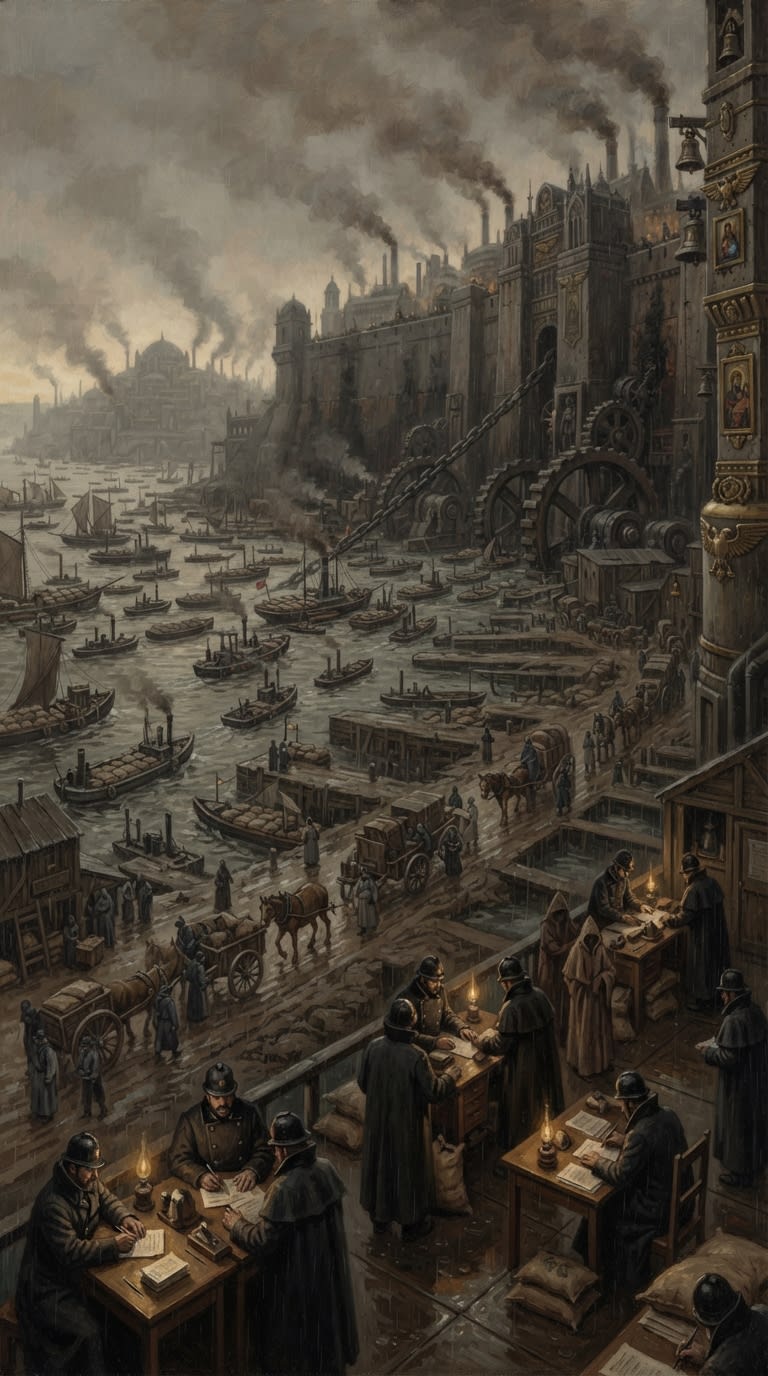
Anatolian grain convoys
The wall stands because the wheat arrives, usually lighter than declared
Constantinople's grain lifeline: Anatolian hulls, Green permits, Passage windows, Tithes arithmetic, and the persistent miracle by which every convoy arrives smaller than it departed.
Codex Ref. VI.4.21-068
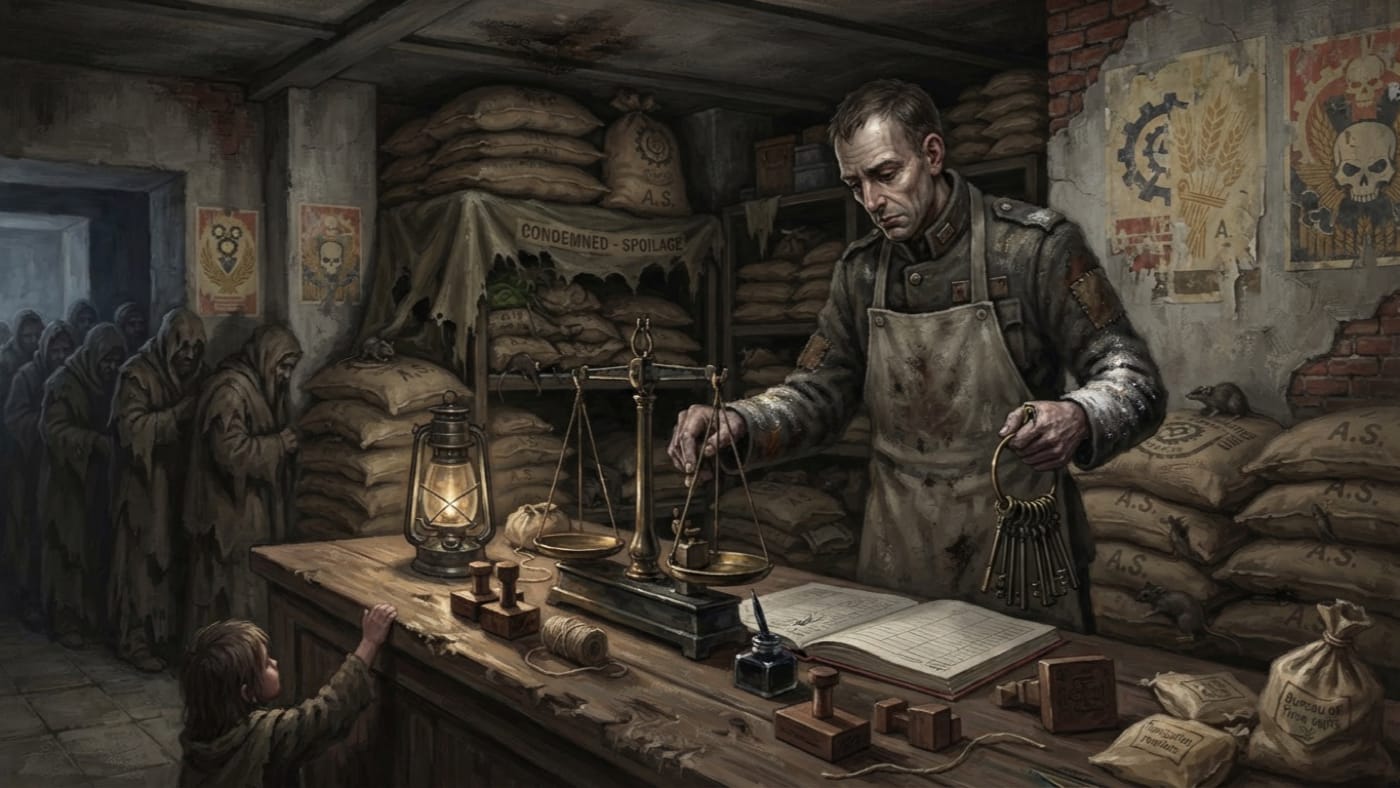
Auxiliary Store Warden
The keys are lawful; what they unlock is another question.
The licensed granary custodian whose scales, keys and ration ledgers give Grain Keepers lawful access to food. Some Wardens keep honest books; the Bureau cannot tell which by the flour on their sleeves.
Codex Ref. XII.8.02-001
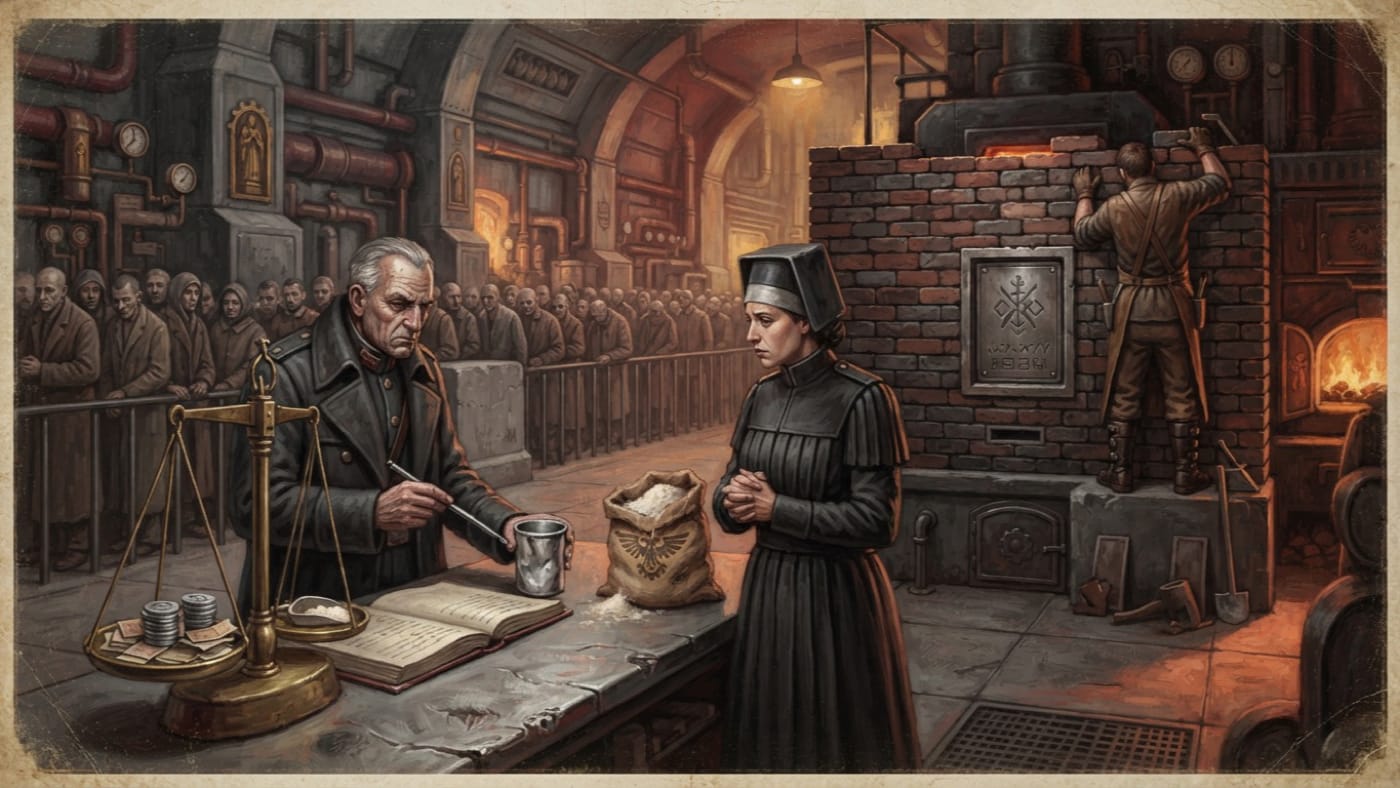
Bread Heresy
A short measure, a sealed wall
Bread heresy names the Church's charge against flour skimming, forged chits, hoarding, and unauthorized feeding. The cup measures the shortfall; the wall receives its assigned name.
Codex Ref. XIII.1.06-001
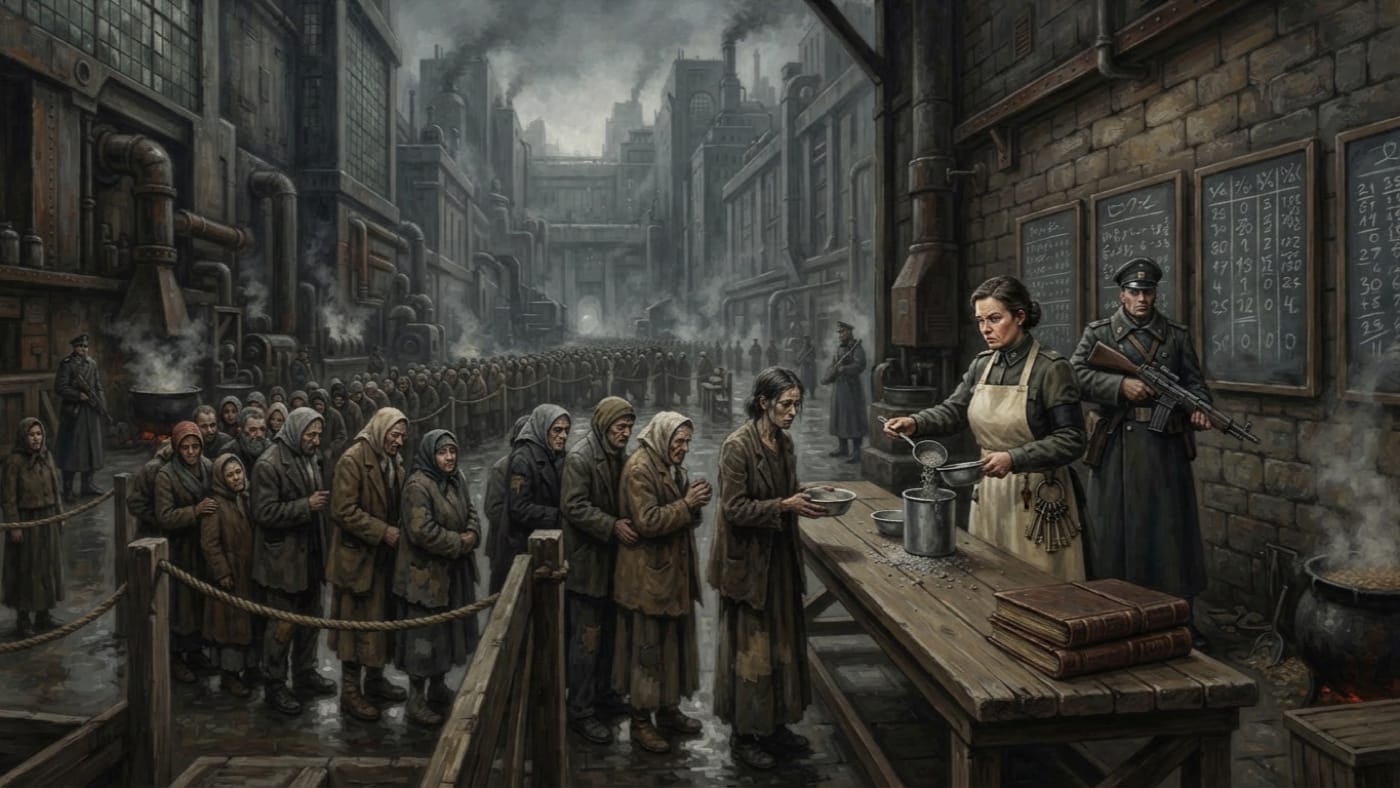
Breadfire Week
The ledgers burned; the guards remained
An A.S. 201 survey of Breadfire Week: ration halls burned in three unnamed bastion cities, records went with them, and the Mothers of Plenty gained guards and enforcement authority. The year remains disputed; the queue remains governed.
Codex Ref. VII.8.10-337
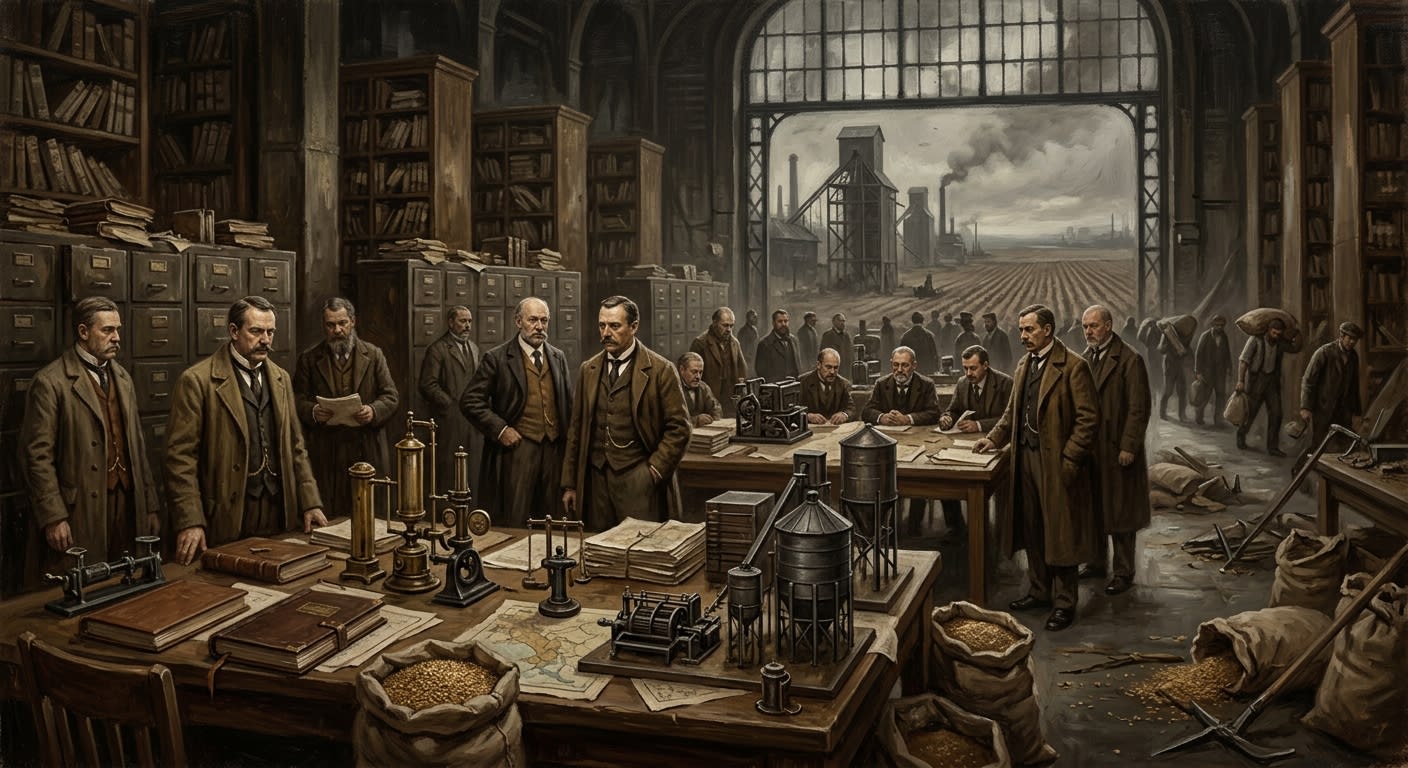
Bureau of Agriculture
The office that owned the wheat, but never the air inside the silo
The dissolved Bureau of Agriculture once governed seed, soil, yield, storage, and famine reports before the Weevil Year let Tithes inherit its grain authority.
Codex Ref. VIII.4.02-001
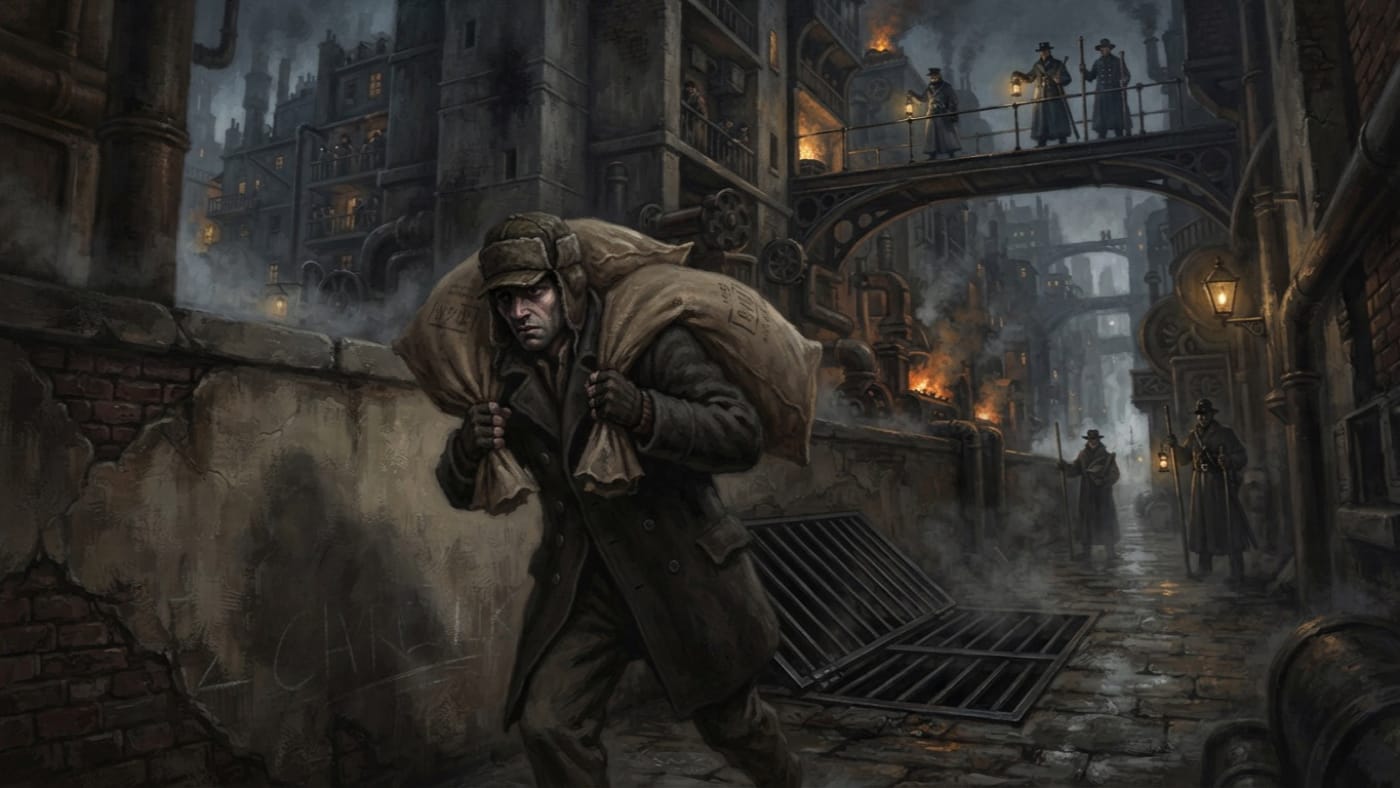
Cache Runner
The clerk hides the absence; the runner carries the weight
The Cache Runner is the Grain Keeper's route specialist, moving diverted grain through curfew to hidden stores and hungry households. One interception gives the Bureau a cellar, a ledger, and a ward.
Codex Ref. XII.13.07-001

Caretaker Saints
Mercy with a rent book, a candle, and no licence whatsoever
Caretaker Saints are the conscience-stricken branch of Grave-Field Shanty Brokers: unchartered grave-lane landlords who keep rents low, names whispered, and mercy barely deniable.
Codex Ref. XII.27.02-001
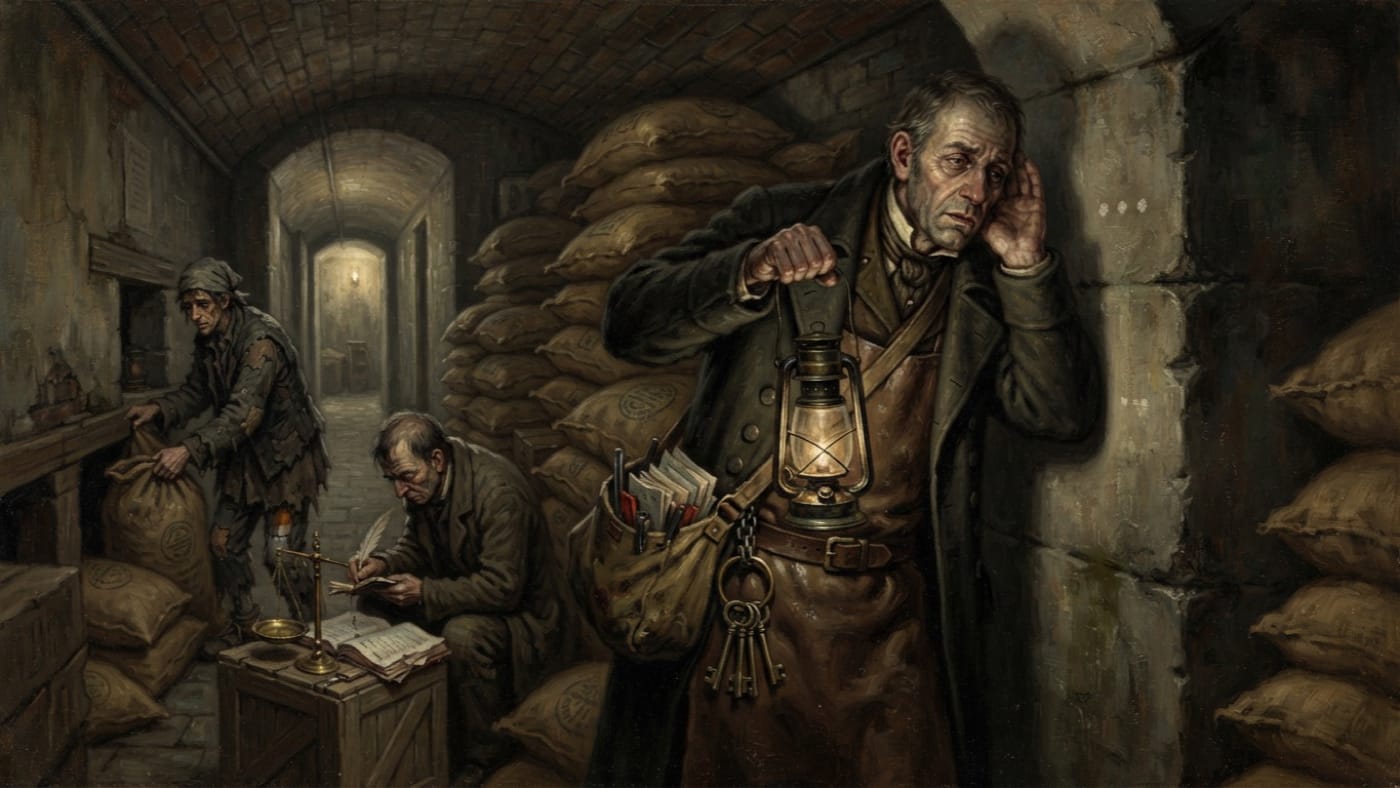
Cellar Warden
The keys are unlawful; the bread is still required
The Cellar Warden guards a district's concealed grain, coordinates clerks and runners, and keeps reserves edible. The Bureau prosecutes the keys while quietly relying on what they unlock.
Codex Ref. XII.13.08-001
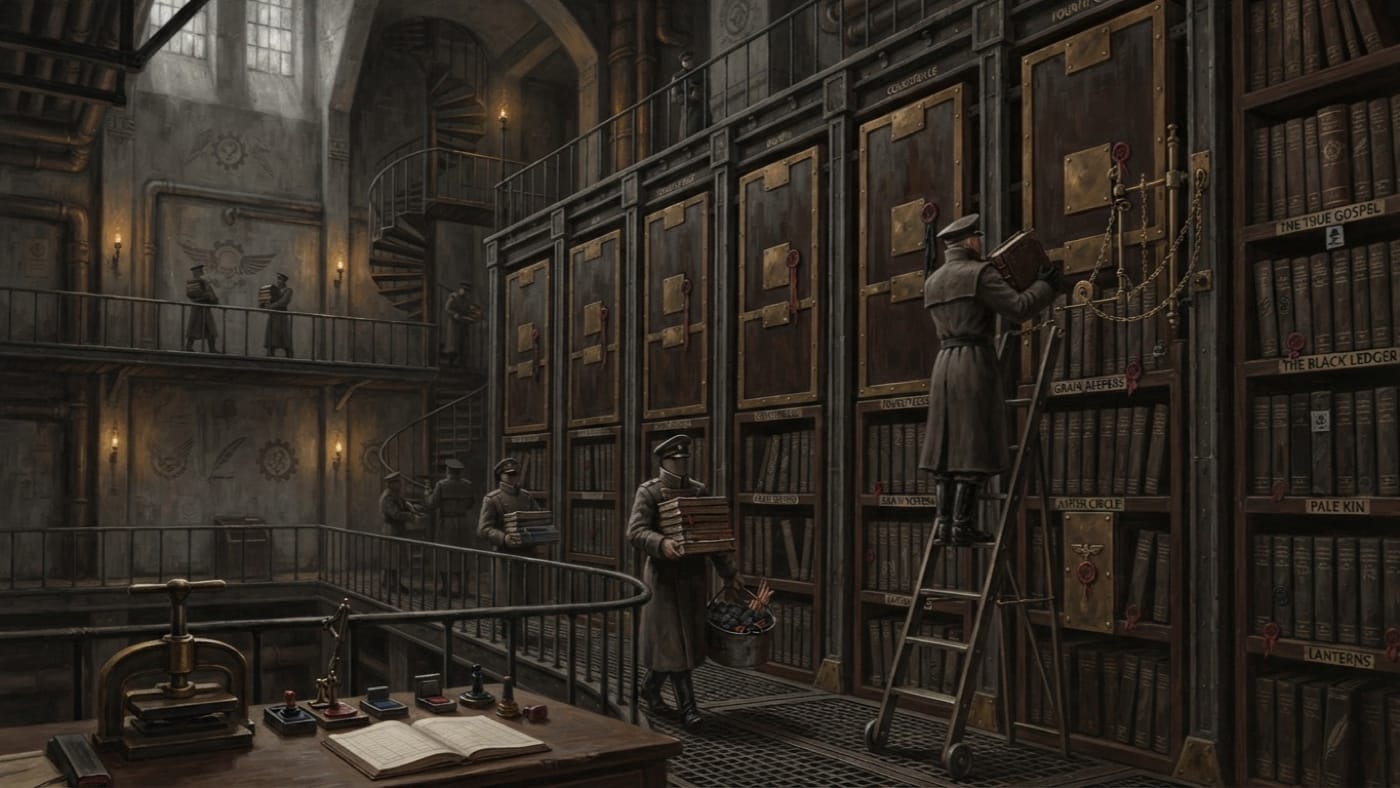
Compendium of Proscribed Errors
Every grievance gets a shelf; the clerk supplies the kindling
The Bureau of Doctrine's register of eight proscribed heresies: every grievance receives a shelf, and every clerk learns which kindling to fetch.
Codex Ref. XIII.1.37-002
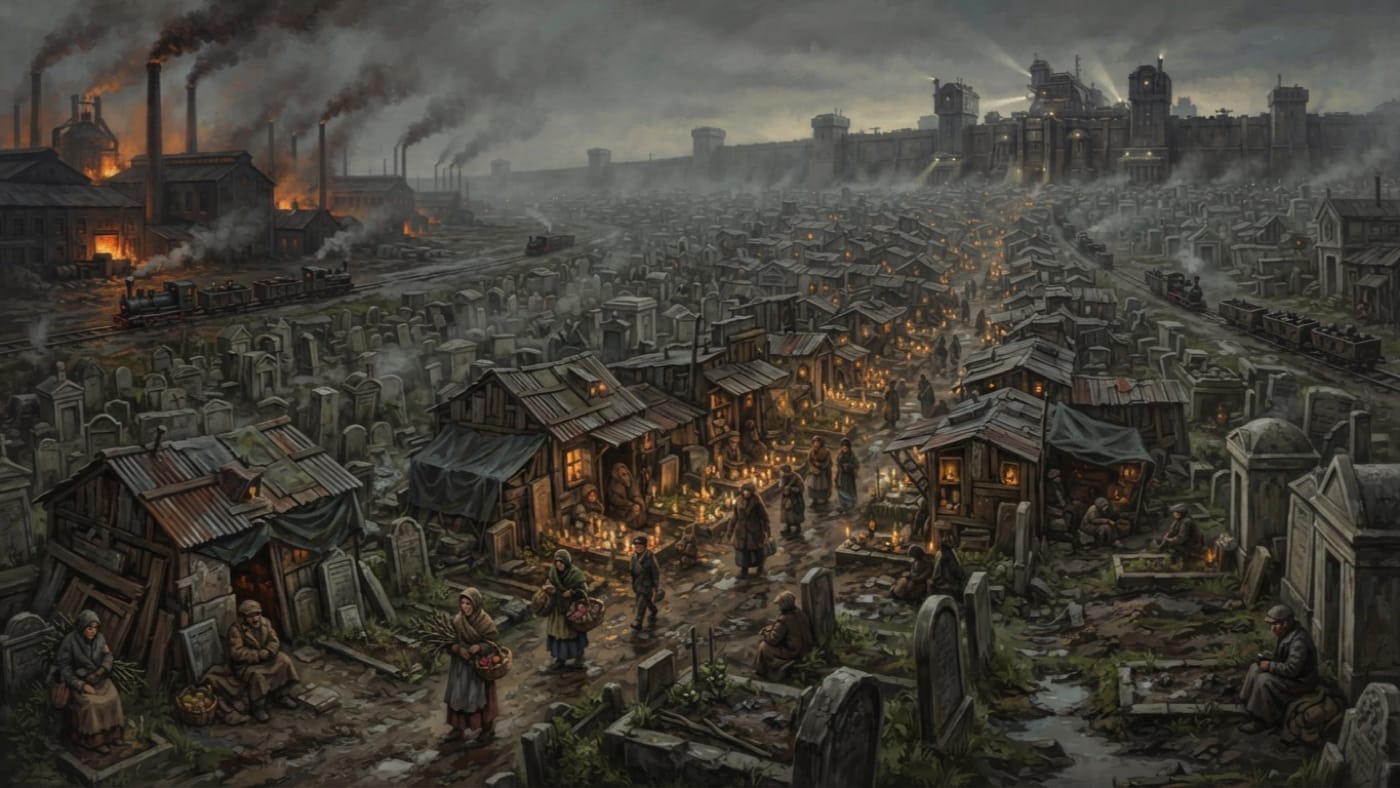
Constantinople Hintermark
The country that feeds the Last Lock and roofs its widows between graves
West of Bastion-Constantinople, the Hintermark sends fruit, castings and levy replacements to the southern anchor. Its widows and refugees find roofs between graves, where the paperwork recognises maintenance and denies habitation.
Codex Ref. II.3.06-201
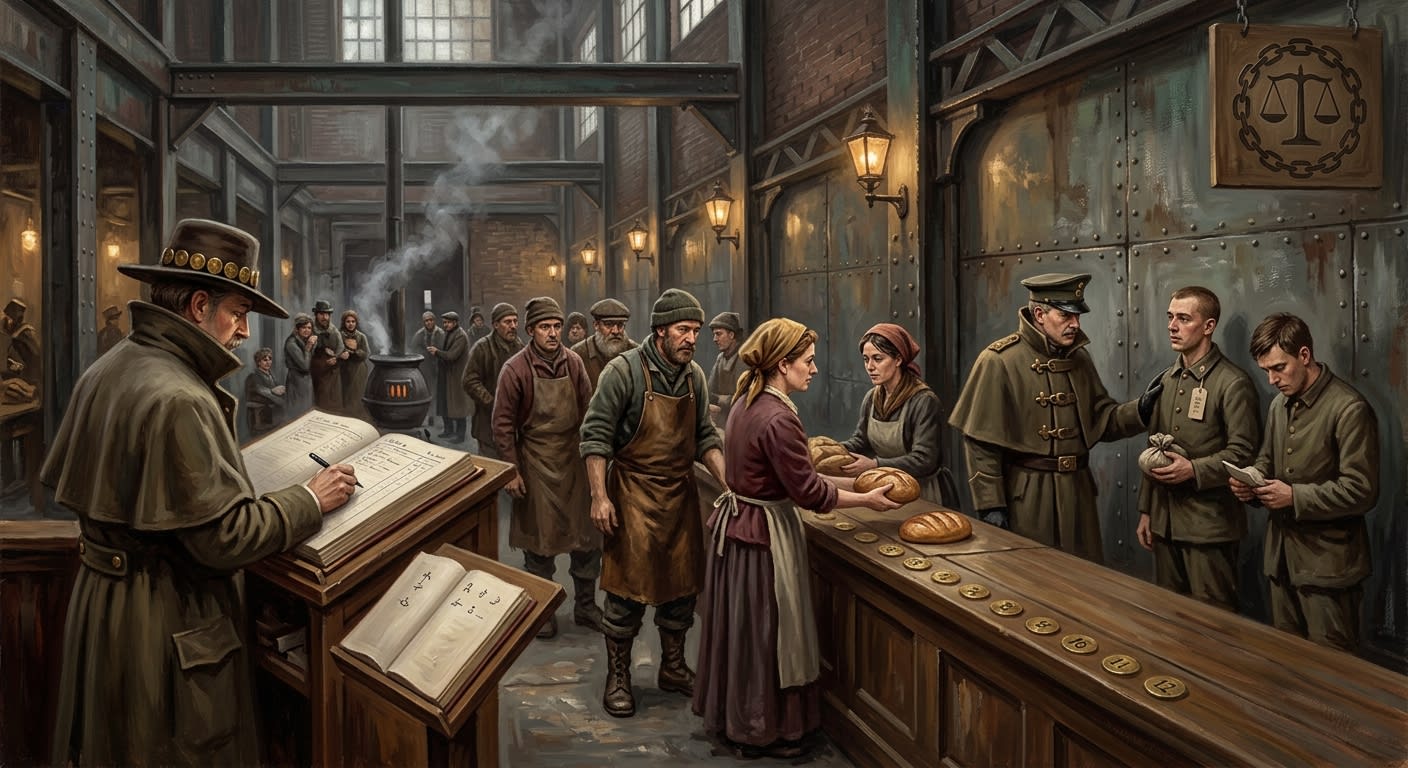
Covenant
The leash with bread on it, sanctified for public use
Covenant is the Synod's master noun: sacred pact in sermon, enforceable belonging in ledger, bread-chain in queue, and body-debt at the Line.
Codex Ref. XIII.1.04-090

Eight Proscribed Heresies
Eight quarrels with the Synod, filed in one drawer
A.S. 201 survey of eight proscribed movements, their doctrines and the limits of their classification. They share a drawer; the surviving files establish neither common command nor settled ordinal ranks.
Codex Ref. XIII.4.08-001
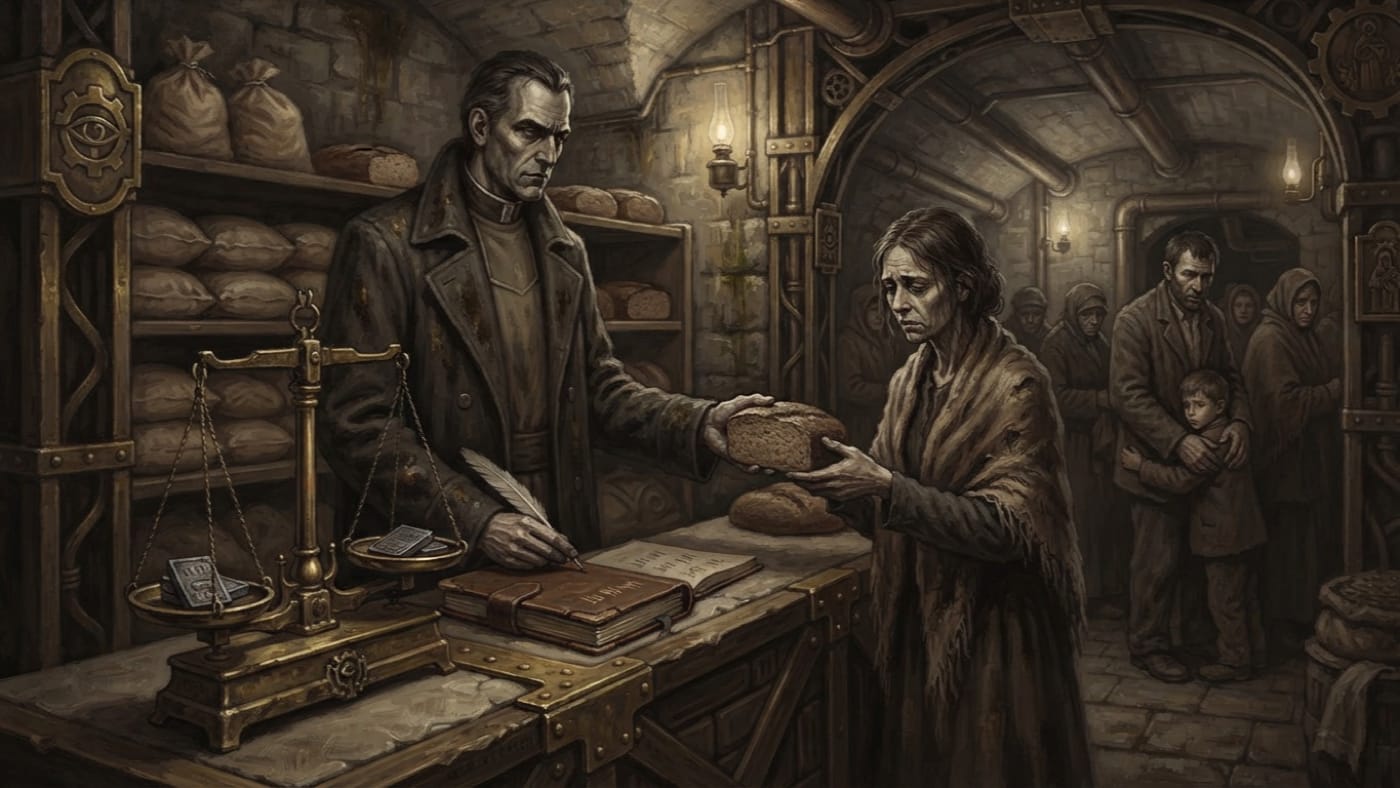
Famine Interest
The loaf is eaten; the obligation survives
Famine interest advances bread against property, silence, service, and persons. The Hunger Broker's ledger compounds because the debtor keeps eating.
Codex Ref. XIII.1.13-001
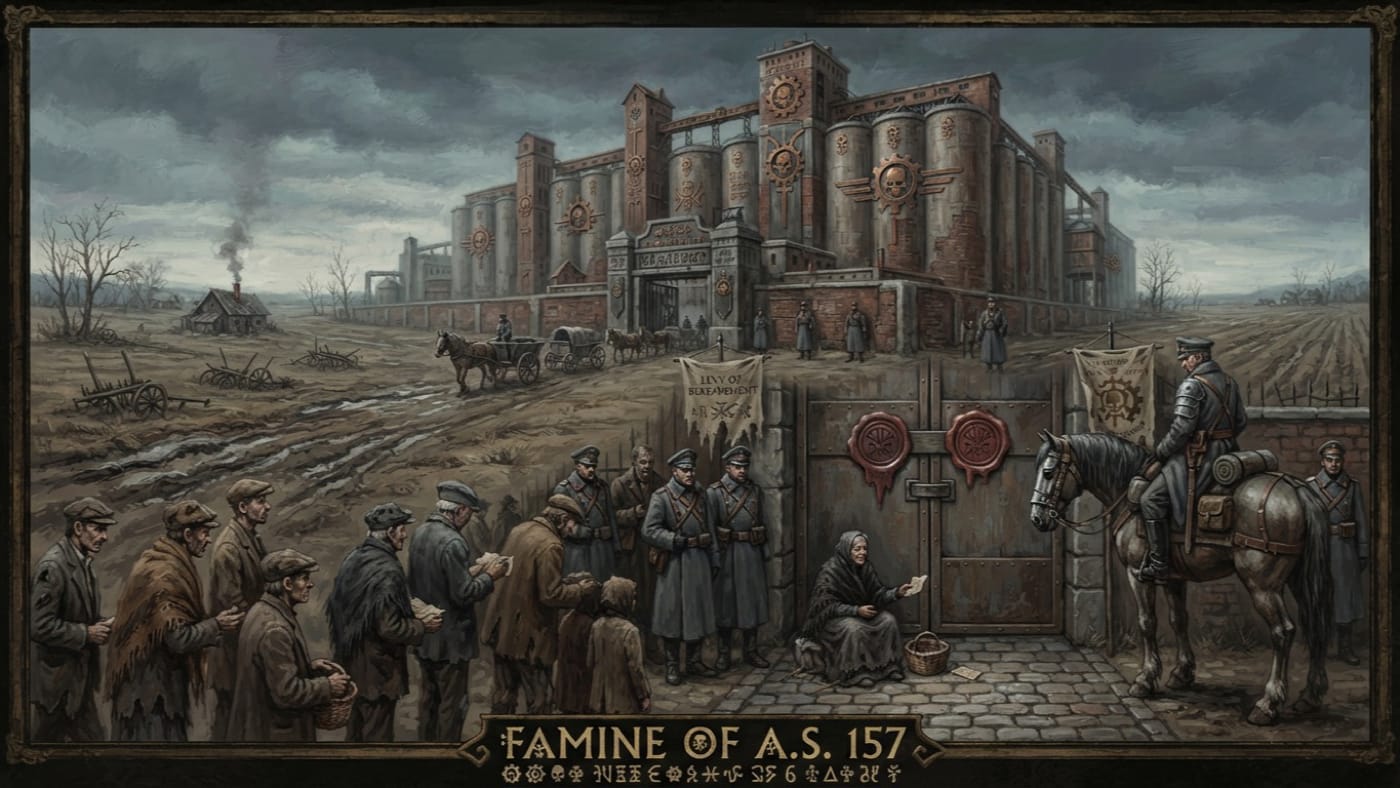
Famine of A.S. 157
Every missing sack had a receipt
In A.S. 157, western districts starved after granary requisitions and sealed-silo rot. Tithes taxed the widows; Agriculture wrote the report and inherited the blame.
Codex Ref. VII.4.21-002
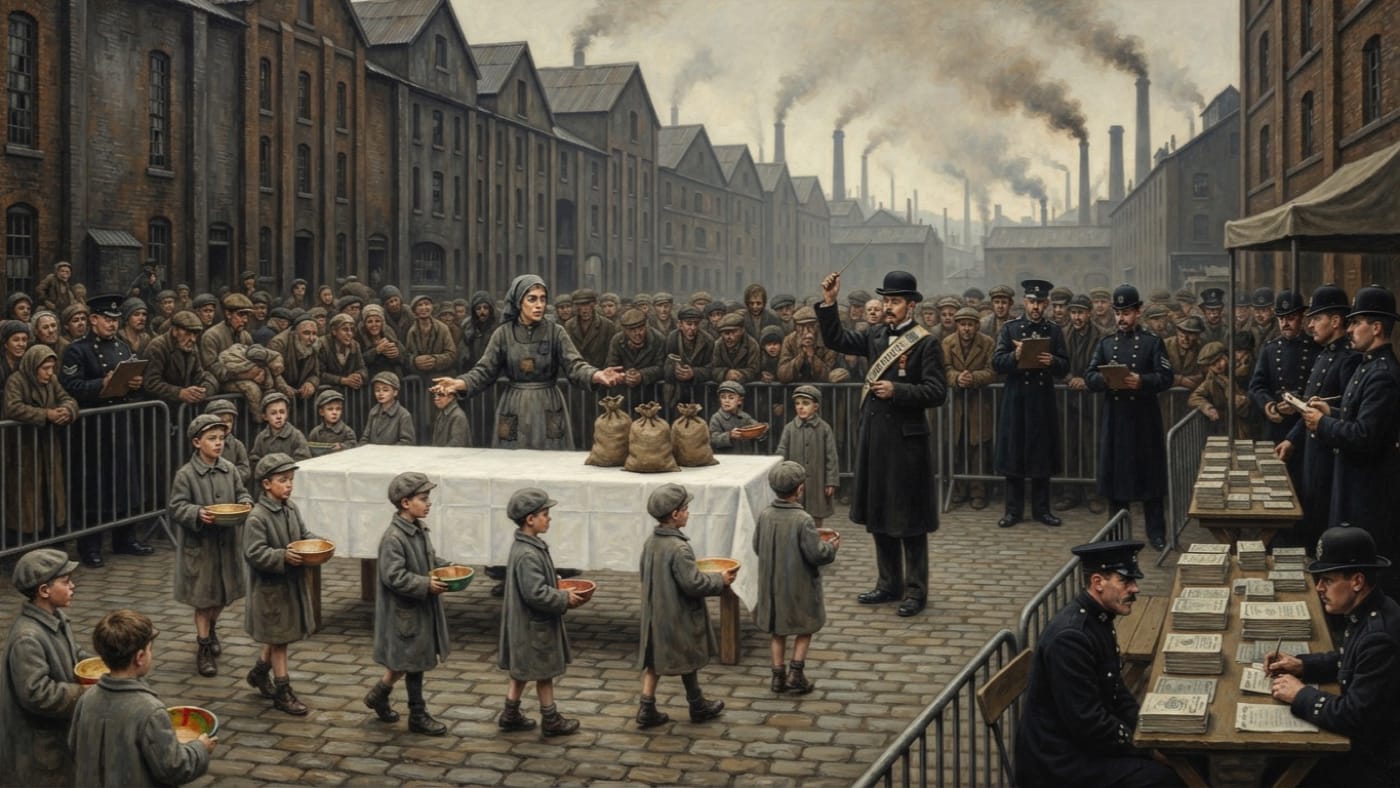
Feast of the Empty Table
Three sacks, no wall, and fourteen seconds of licensed grief
An annual licensed pageant turns Saint Silo-Agnes into a charity martyr. The sacks remain, the wall disappears, and the Bureau permits fourteen seconds of applause.
Codex Ref. XIII.1.25-002
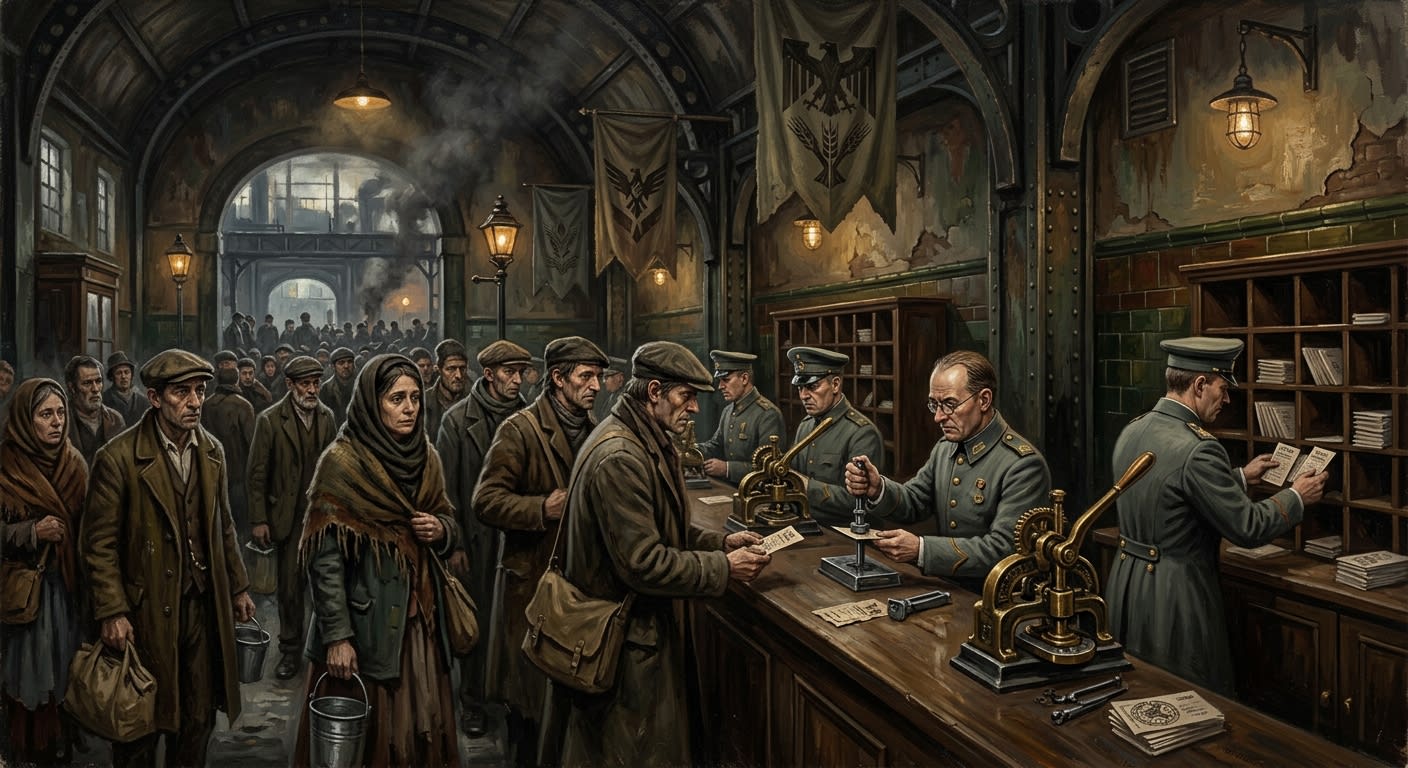
First Ration Reforms
The year hunger became portable, printable, and politely deniable
The A.S. 104 First Ration Reforms standardised ration chits across eight provinces, making hunger legible to Tithes and teachable to Grain Keeper fraud.
Codex Ref. VII.8.10-037
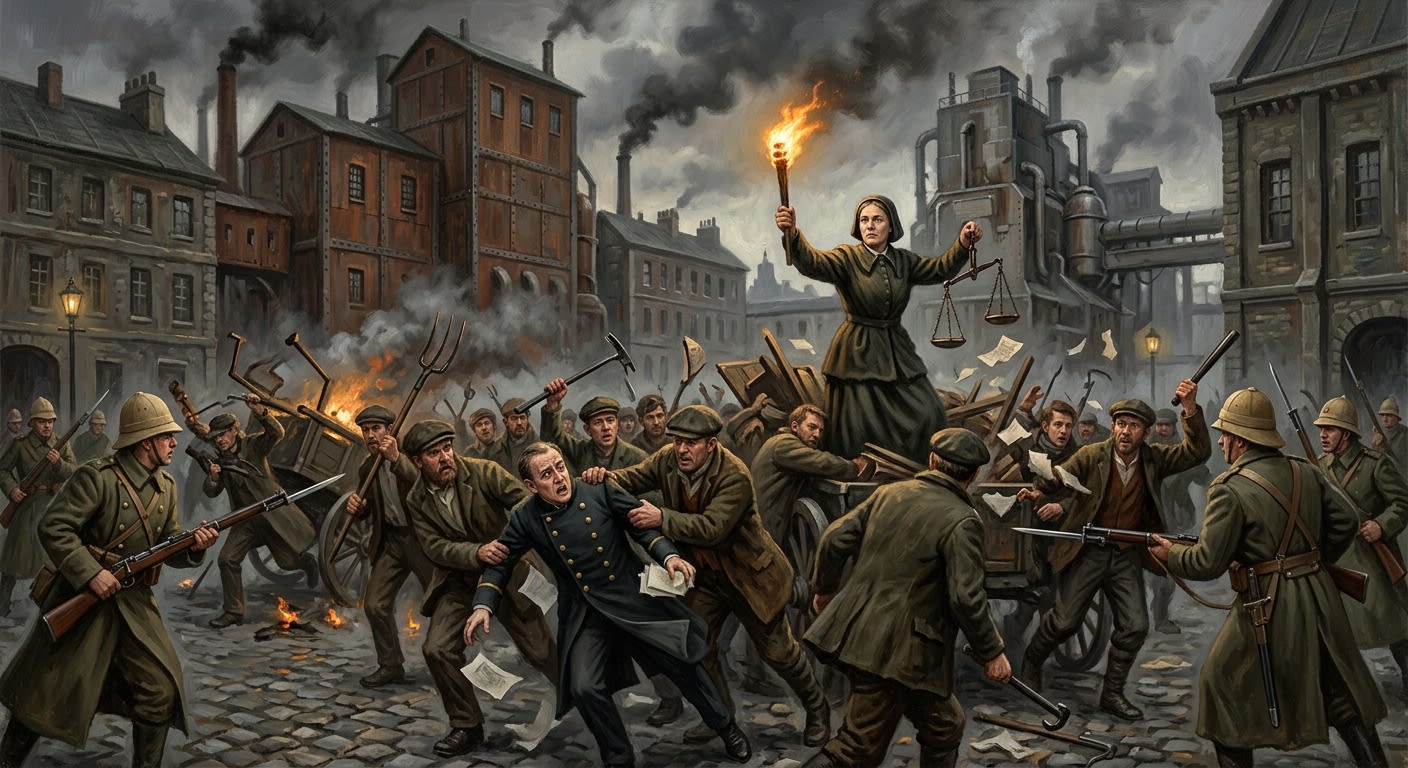
Grain Tithe Riots
Where hunger learned arithmetic and Hildegarde brought fire
The Grain Tithe Riots of A.S. 160 killed three Tithes Assessors, condemned forty Rhenish villages, and made Hildegarde of Mainz a saint with a scale in one hand and a torch in the other.
Codex Ref. VII.8.10-160
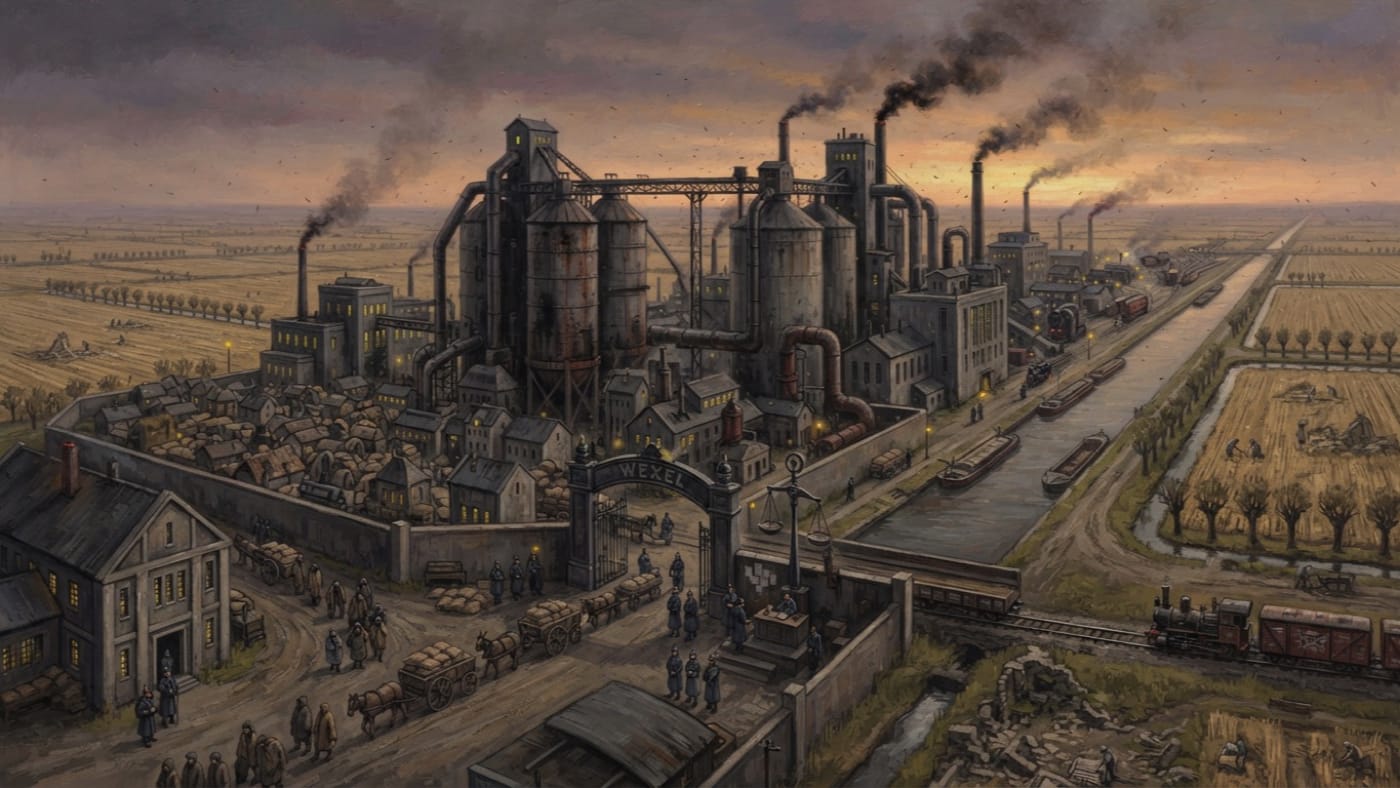
Hessian Lowlands
The fields grow the grain; Wexel grants permission to eat it
The Hessian grain country feeds Wexel's scales and the Heartlands' bread trains. Its boundaries remain unfiled, its people uncounted, and its permission to eat belongs to a town.
Codex Ref. II.2.04-002
Hospices of Departure
Where Mercy warms the cup and counts the breath
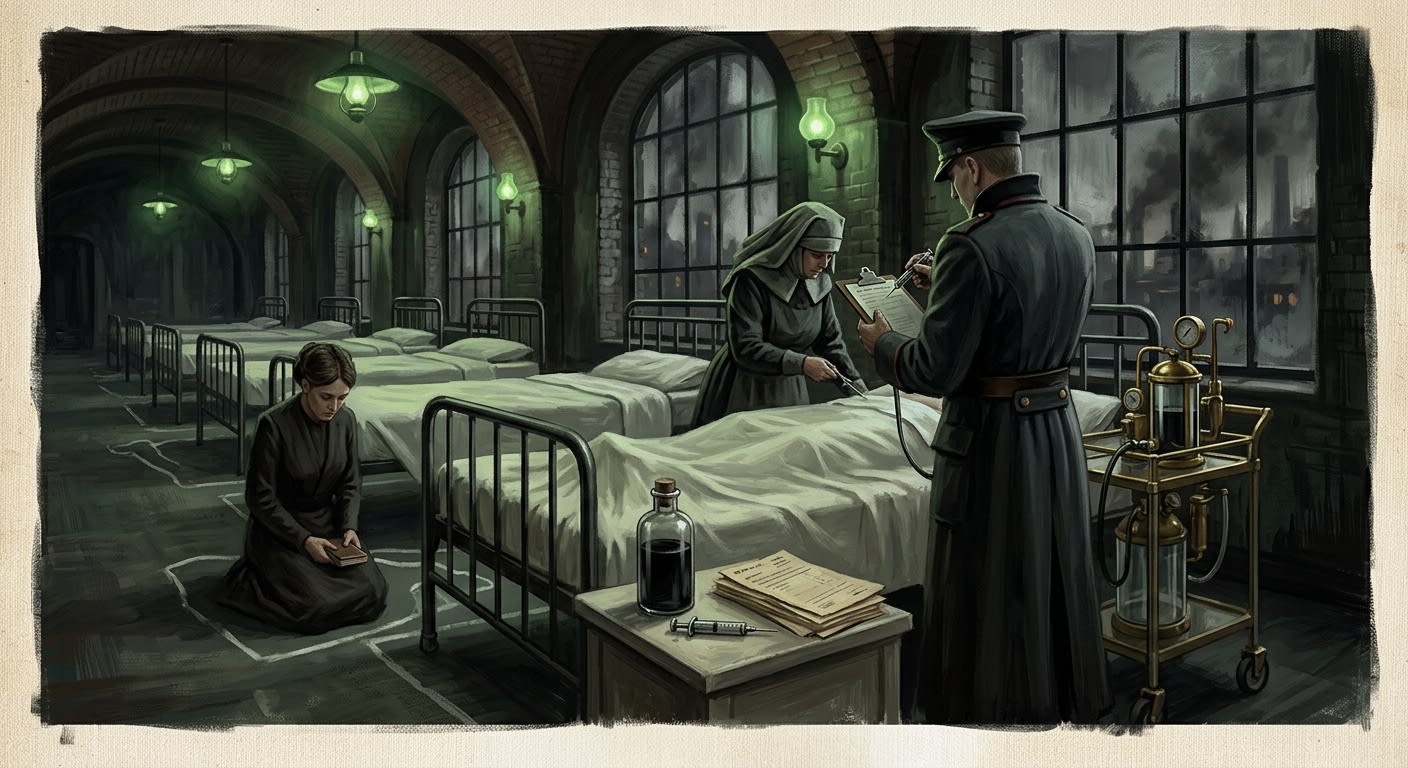
The Hospices of Departure are Mercy's immaculate terminal rooms: clean linen, black elixir, family chalk-lines, final slips, and the doctrine by which the Synod makes death kind, lawful, useful, and recorded.
Codex Ref. XIII.1.88-112
Hungary
The breadbasket that [[hell|Hell]] ate and [[strasbourg|Strasbourg]] filed by the slice
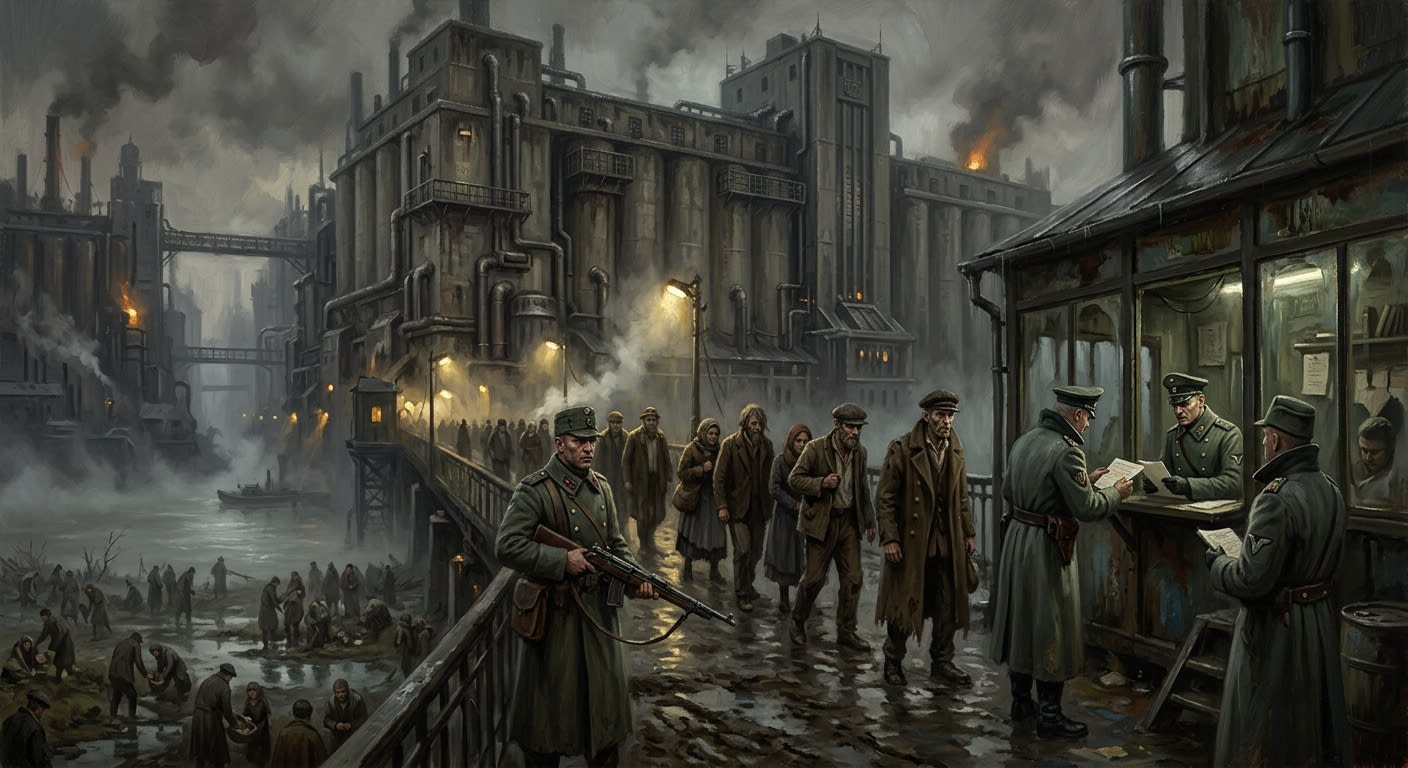
Hungary is the old grain kingdom remade into Budapest's held bank, Pest's visible absence, Blightmarsh hunger, southern corridor necessity, refugee memory, and every office's damp-fingered embarrassment.
Codex Ref. II.4.09-045
Hunger Antiphon
The bowls go round; charity waits for its cue
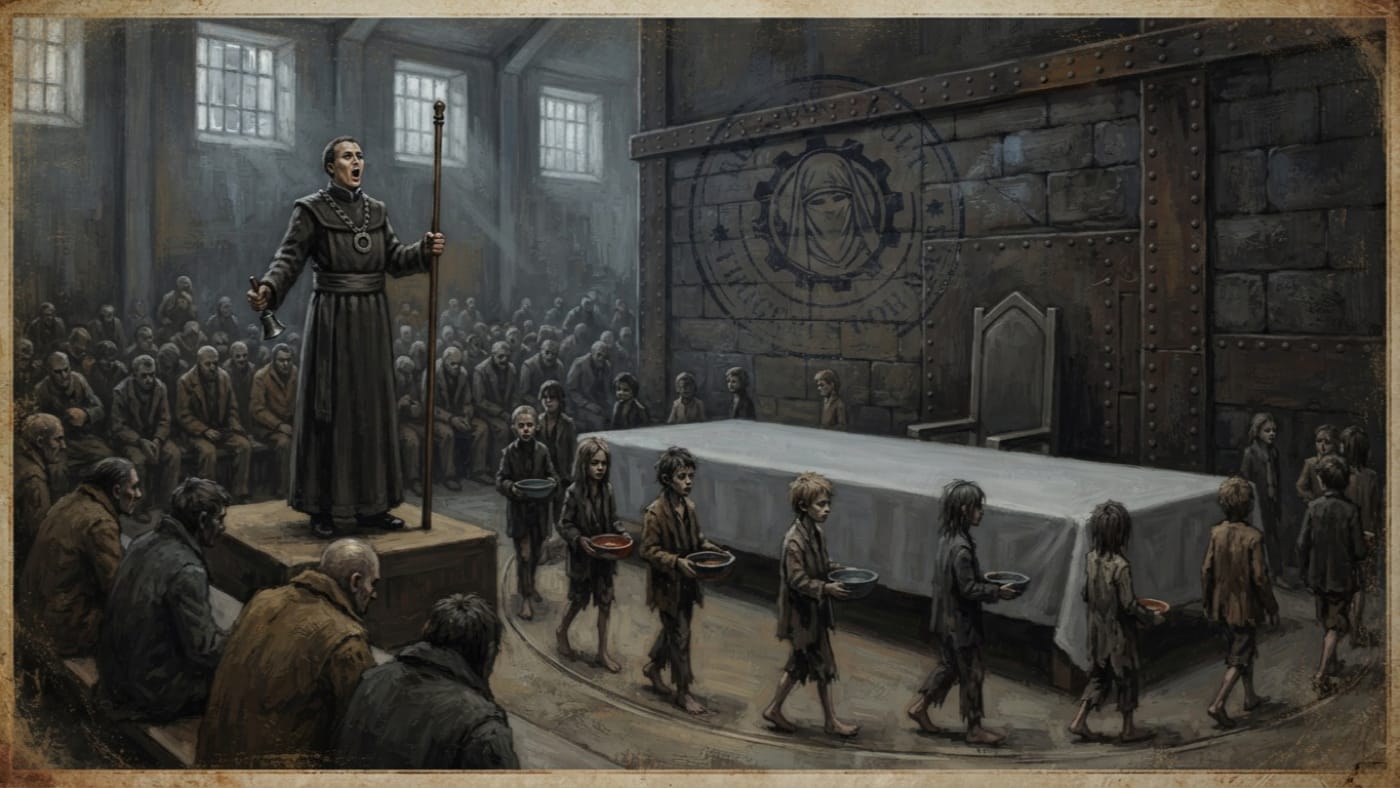
The Hunger Antiphon accompanies painted bowls at the Feast of the Empty Table. Its key flatters thin voices; charity arrives when the Bureau permits it.
Codex Ref. XIII.1.97-201
Hunger Brokers
The loaf becomes a chain when tomorrow is sold by the slice
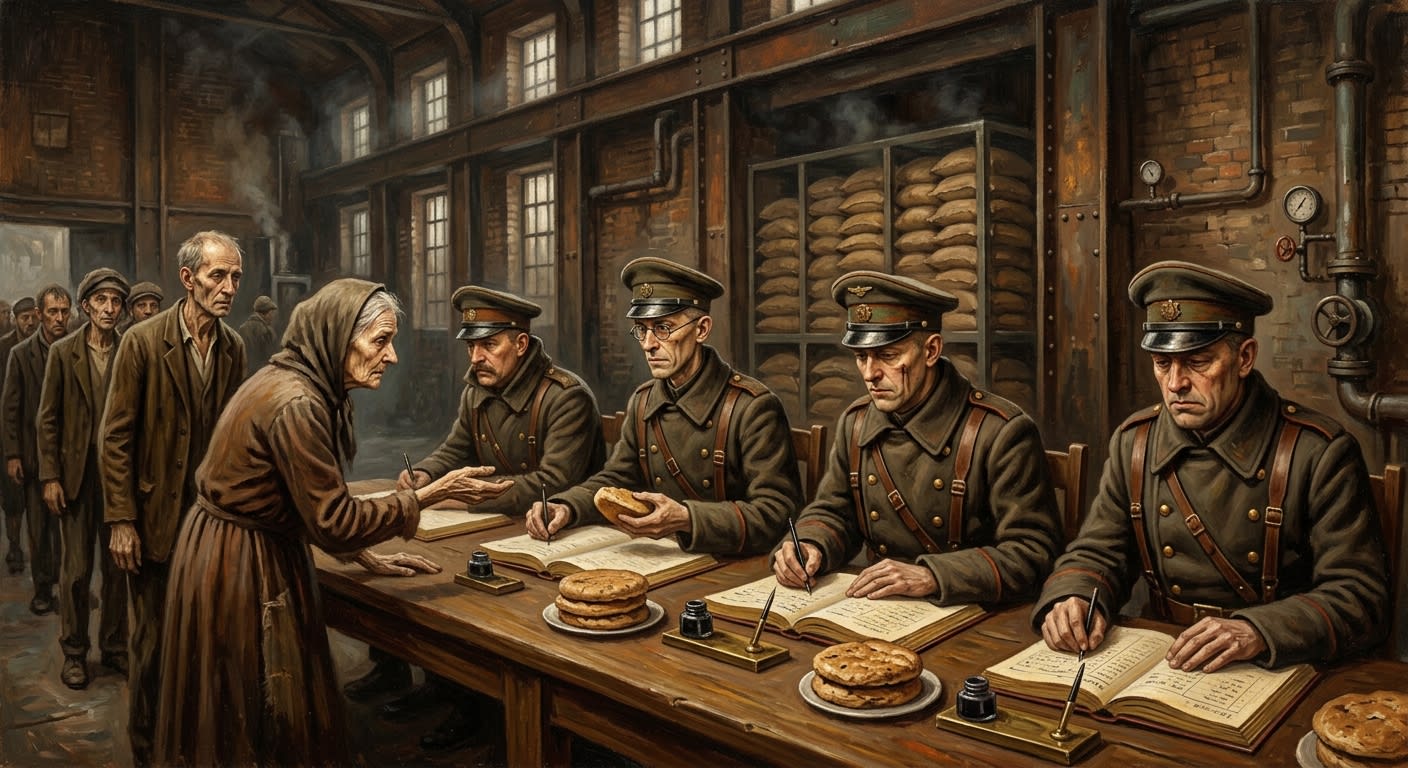
Hunger Brokers are the tyrant faction of Grain Keepers, turning bread into debt, recruitment, silence, and ward sovereignty by ration ledger.
Codex Ref. XII.13.06-001
Iberian Campaigns
The West was conquered first by salt, then by silence
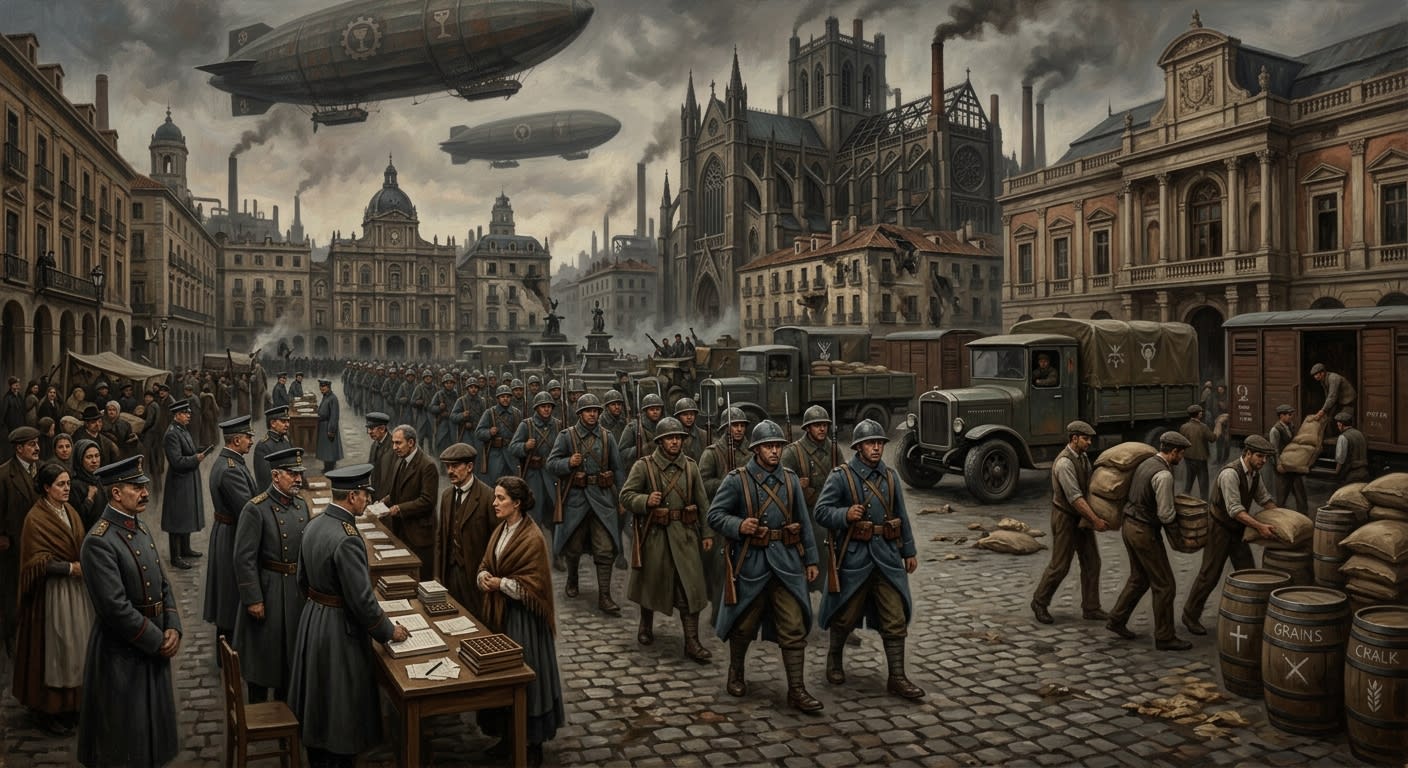
The Iberian Campaigns were the Synod's western correction: salt dues, harbour ledgers, Seville's silenced plazas, stripped granaries, and conquest filed as housekeeping.
Codex Ref. VII.5.10-092

Klem's Courtesy
Give the inspector a mistake he can afford to find
Klem's Courtesy plants an obvious error near the top of a grain ledger so the auditor may correct it, feel diligent and stop reading. This A.S. 201 survey records the device; its origin remains undated.
Codex Ref. XIII.1.97-1546
Known Heresies
Eight offences. One drawer.
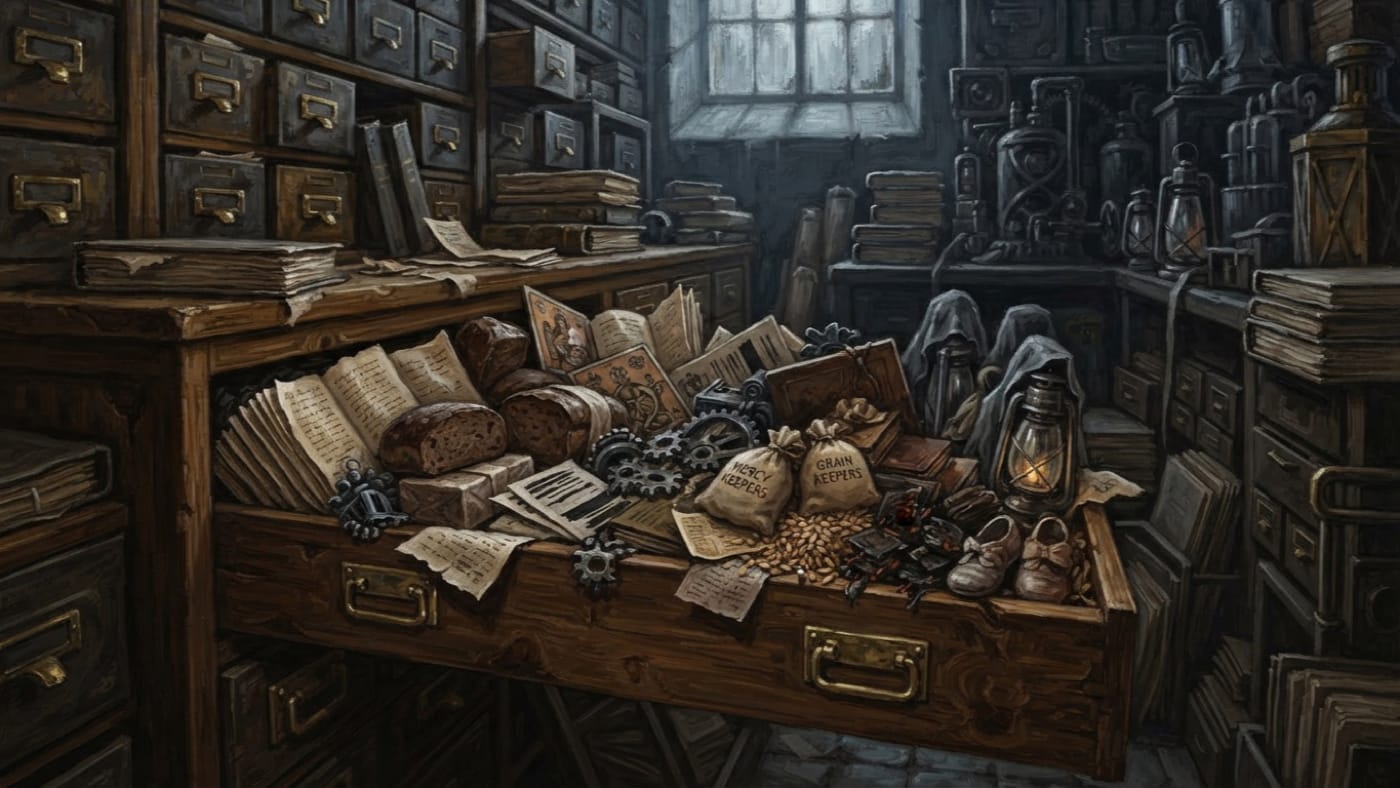
Eight movements condemned under one jurisdiction: scripture without a gloss, stolen bread, unbelief, demonic accommodation, hidden grain, forbidden inquiry, unregistered children and unauthorized mercy. The drawer is full.
Codex Ref. XIII.1.38-001
Ladle Debt
The bowl is warm; the account remains open
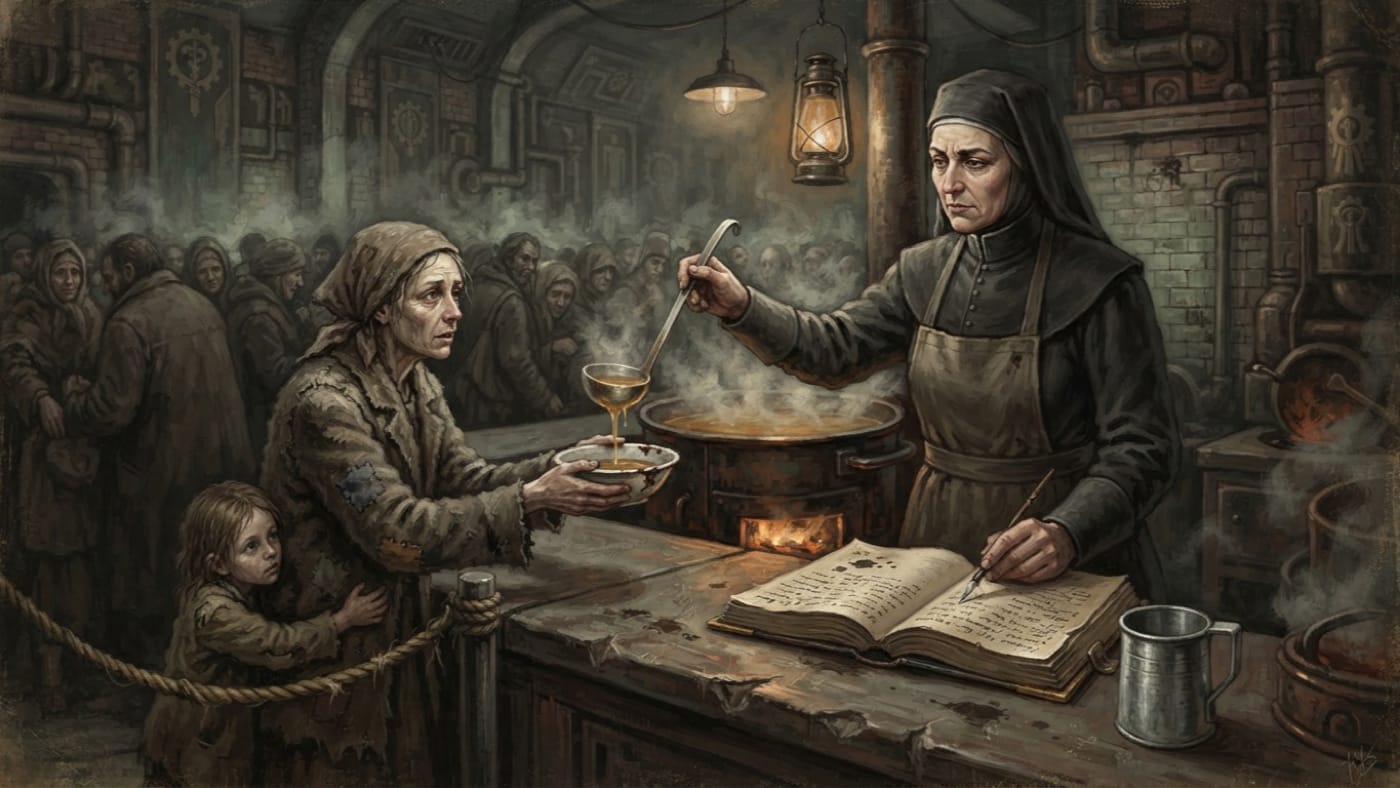
An extra ladle today buys an unspecified future service in a Matron's book. Mercy may leave the debt uncalled; desperation or cruelty may collect it. The broth is real. So is the name in ink.
Codex Ref. XIII.1.06-001

Ledger Hand
Legible, and therefore unread
Ledger Hand is the Grain Keeper art of making fraudulent ration pages look too dull to read. Attributed to Old Klem, it conceals grain misapplication beneath competent penmanship.
Codex Ref. XIII.1.100-201

Ledger Prefect
The Captain kisses the hand and watches the nib.
The Ledger Prefect controls permits, paper and patronage. One signature equips a Pageant Captain; another ends his career. The same office may sponsor the city's irregular trades, provided the stability arrives without scandal.
Codex Ref. XII.33.02-001
Mercy Keepers
The softest heresy is always the one that feeds before it counts
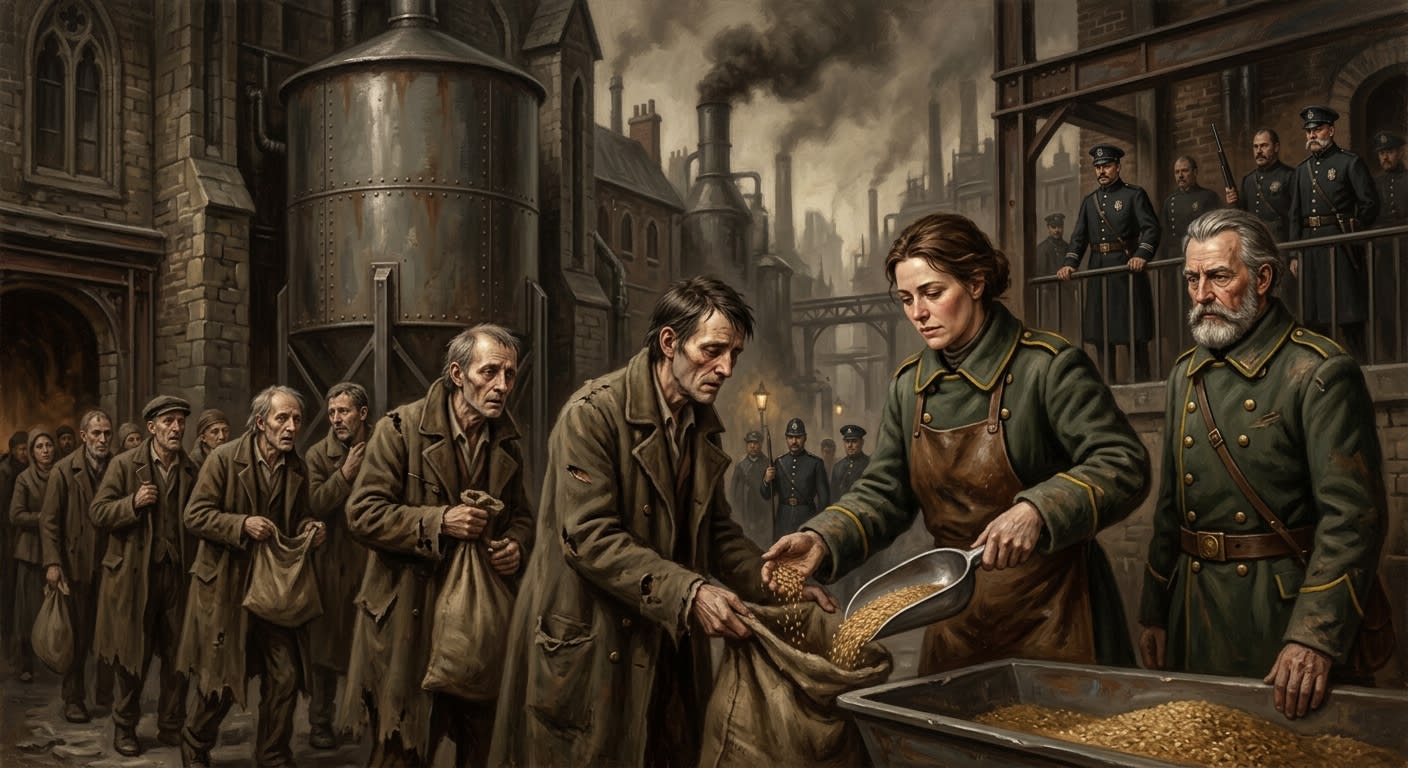
Mercy Keepers are the beloved, ruinous Grain Keeper faction that gives bread without fee, receipt, or permission, thereby offending every profitable theology.
Codex Ref. XII.13.04-001

Metric Saturation Syndrome
The holy arithmetic enters the skull and finds office space
Internal medical classification for Auditors gone to numbers: the service deformation by which citizens become compliance probabilities before they remain human.
Codex Ref. XIII.1.83-001
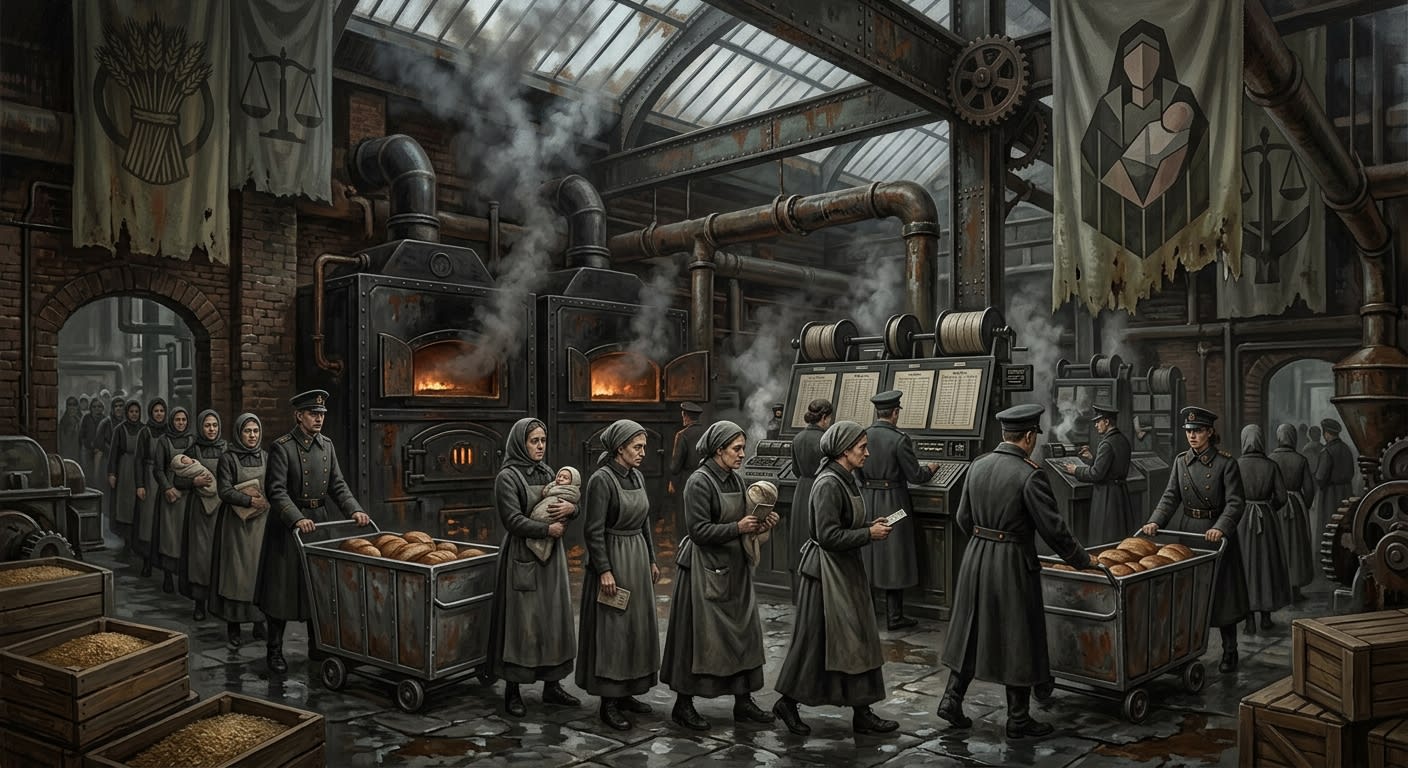
Mothers of Plenty
The queue kept warm, the cradle kept counted
The Mothers of Plenty govern bread and birth as one obedient system, turning ration queues, pregnancy ledgers, and infants not yet weaned into instruments of state continuity.
Codex Ref. XII.6.05-001
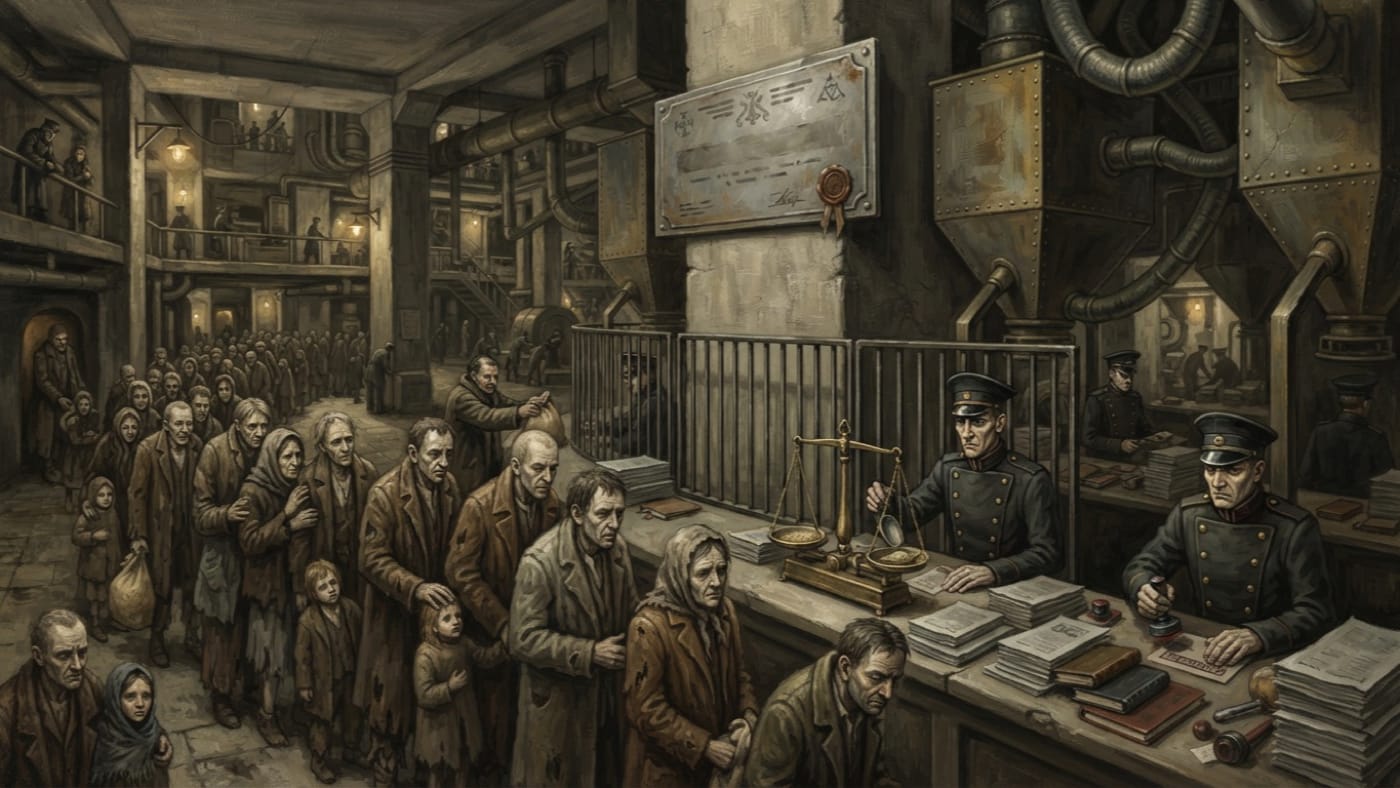
Office of Ration Compliance
Hungry enough to queue, fed enough to complain
The Office of Ration Compliance permits orderly complaint and tolerates the Quota Men who sustain it. Its undated training note is frank about hunger and silent about authority.
Codex Ref. VIII.4.02-201

Old Klem the Ledgerman
He did not hide the sack; he hid the absence
Old Klem the Ledgerman is the condemned founder-figure of Grain Keeper ledger fraud, the clerk who taught spoiled grain to become bread again.
Codex Ref. III.2.01-122
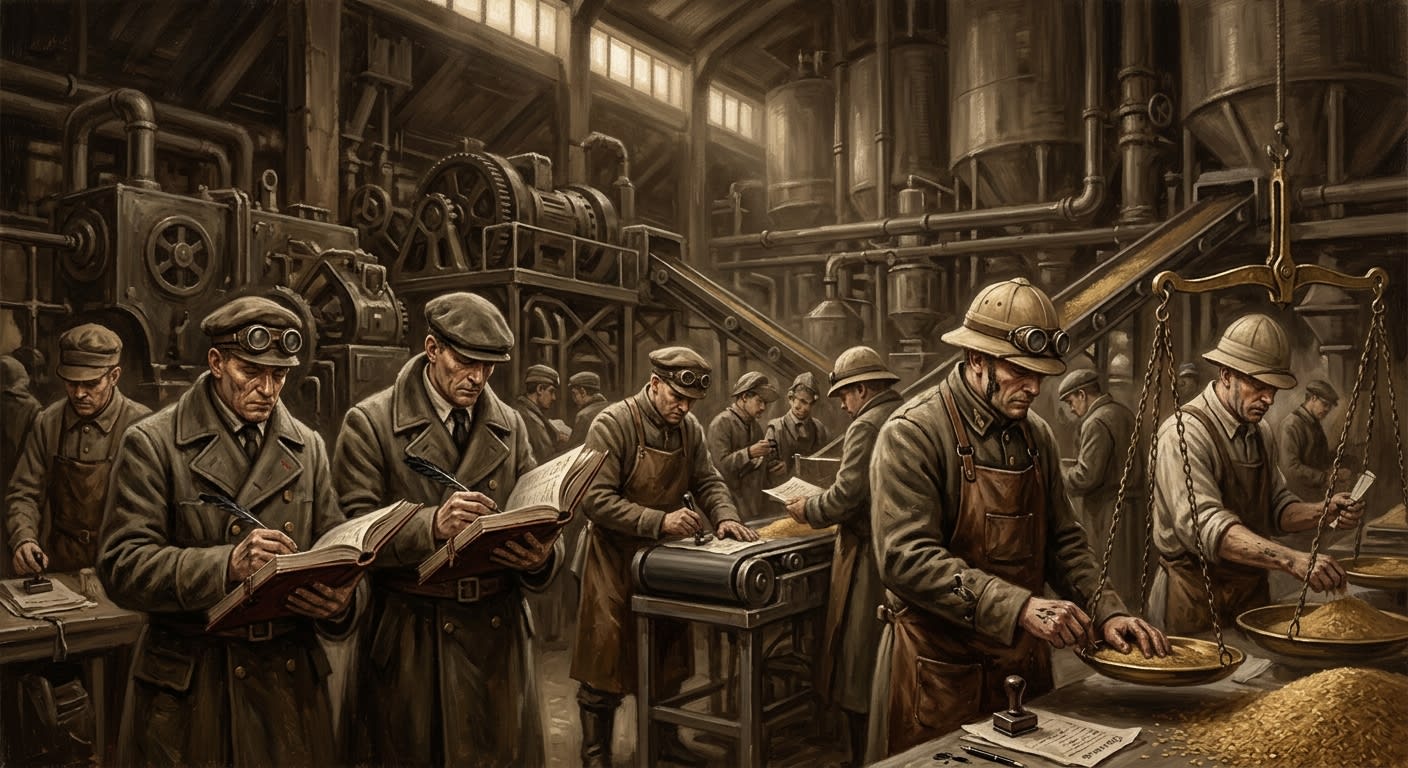
Quota Men
Modest theft is what famine calls governance when the pantry has witnesses
Quota Men are the Grain Keeper faction of modest diversion and immaculate ledgers, preserving wards by stealing little enough to keep collapse boring.
Codex Ref. XII.13.05-001
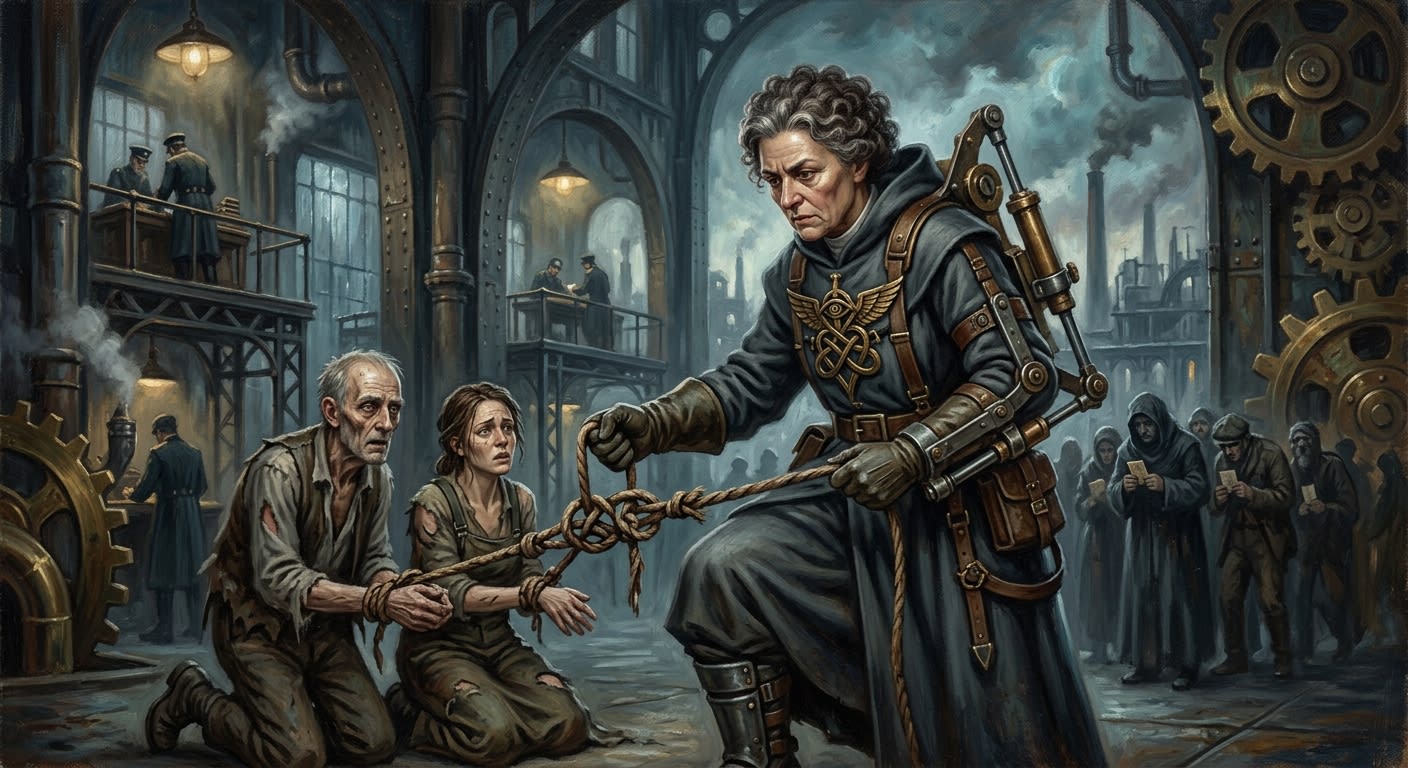
Saint Liora Knot-Hand
Thirty knots, thirty doors, and the miracle of obligation made visible
Patron of the Bureau of Oaths, Saint Liora Knot-Hand bound thirty hungry households into survival with witnessed vows and a strip of cloth. Mercy counted; the knot remembered.
Codex Ref. III.2.01-012
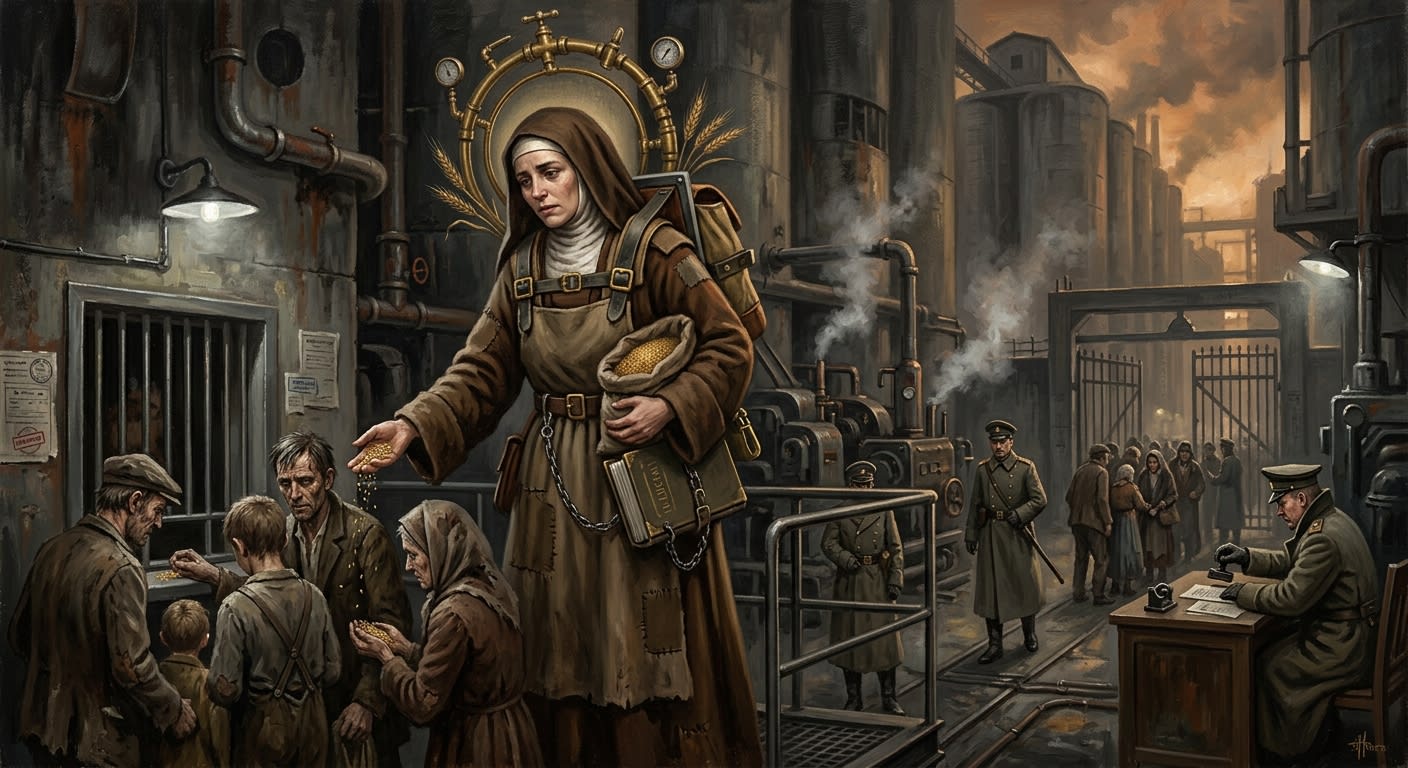
Saint Silo-Agnes
The hungry remember the woman in the wall more accurately than the pageant
Saint Silo-Agnes, unofficial patron of Grain Keepers, was condemned for hidden millet and later improved into a charity martyr fit for ticketed grief.
Codex Ref. III.2.01-121
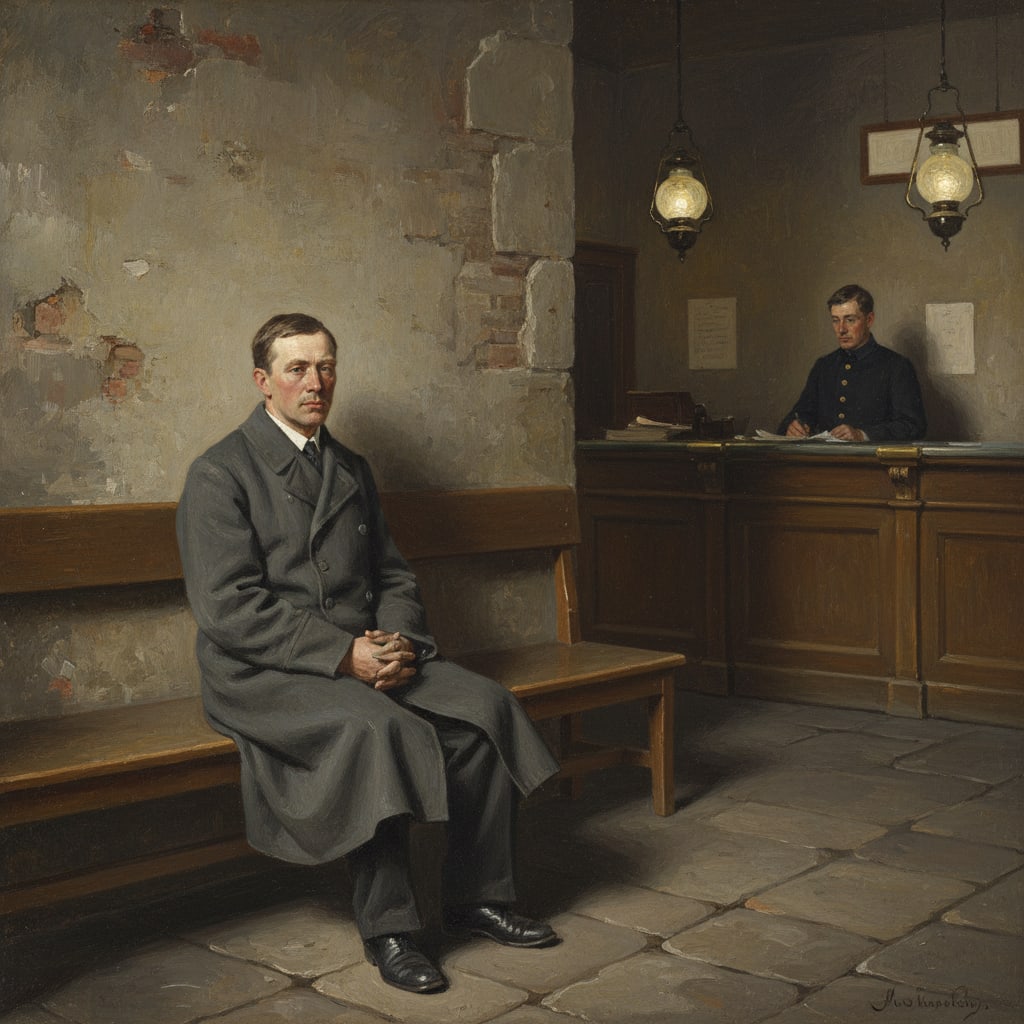
Silent Godless Cell-Organizer
The question that travels farther than any sermon the Bureau has ever commissioned
The Silent Godless are the enemy the Bureau cannot silence — silence is their element. A survey of their method, their founder, and organised emptiness: assembled from confiscated documents, nine days of confession, and an archive the Bureau requested be burned.
Codex Ref. XI.4.01-001

The Coexistence Heresy
The treaty Hell offers while still chewing the witnesses
Fourth of the eight proscribed heresies, the Coexistence Heresy teaches that mankind should bargain with demons; Doctrine answers that Hell only negotiates while digesting.
Codex Ref. XIII.1.37-001

The Crimson Concord
It does not recruit heretics. It promotes competent ones.
Velkara's instrument of command-structure infiltration. The Velvet Choir seduces. The Crimson Concord administers. The Bureau of Purity cannot find the cells. The cells are the Bureau.
Codex Ref. V.5.03-007
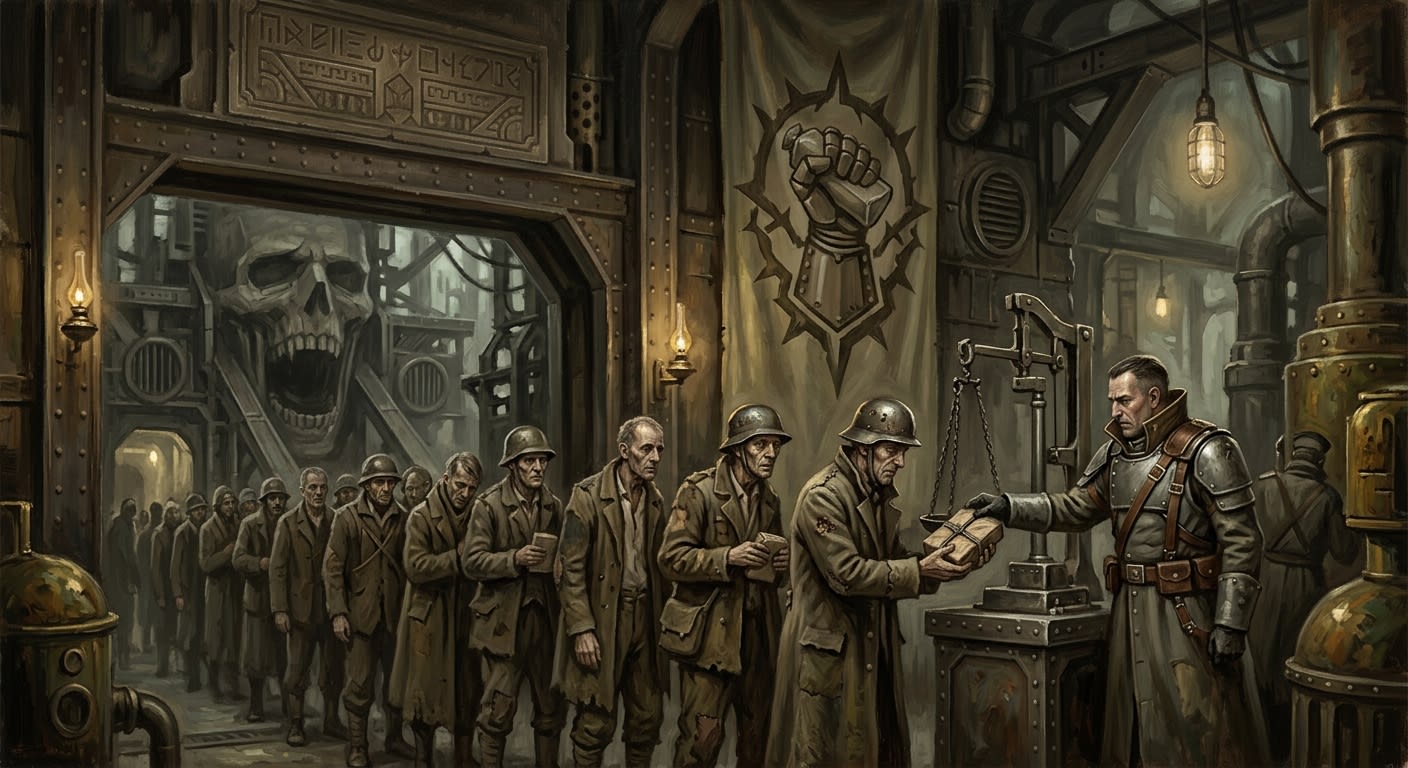
The Doctrine of Enough
The crust is counted because the soul is counted first
The Doctrine of Enough teaches the hungry that what is sealed is sufficient, and that desire beyond allocation gives Kargath a mouth.
Codex Ref. VI.3.01-002
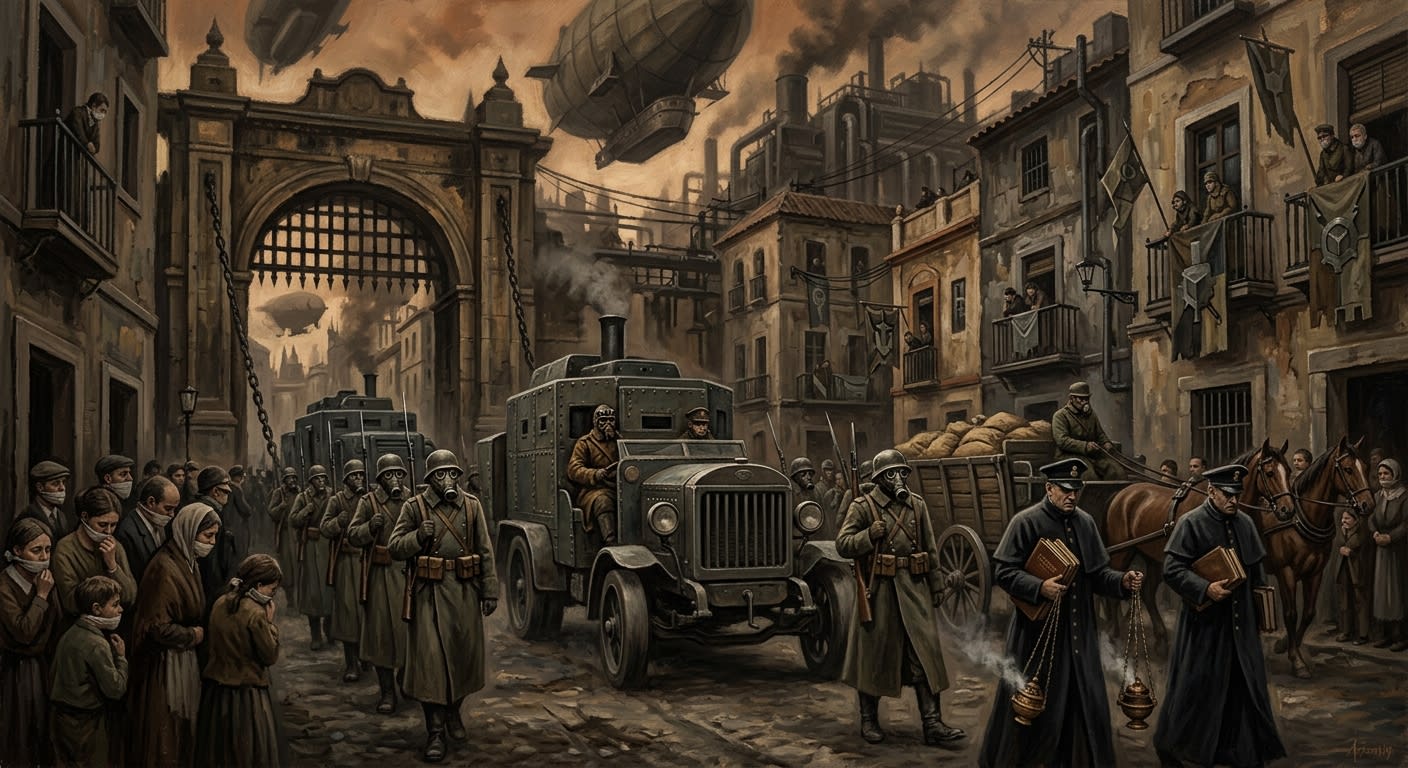
The Subjugation of Seville
A siege so well dressed in liturgy that the Ledger called it a procession
In A.S. 155, Seville was corrected by procession: gates opened under writ, calendars shortened, mouths disciplined, granaries emptied, and conquest taught to smell like incense.
Codex Ref. VII.8.02-002
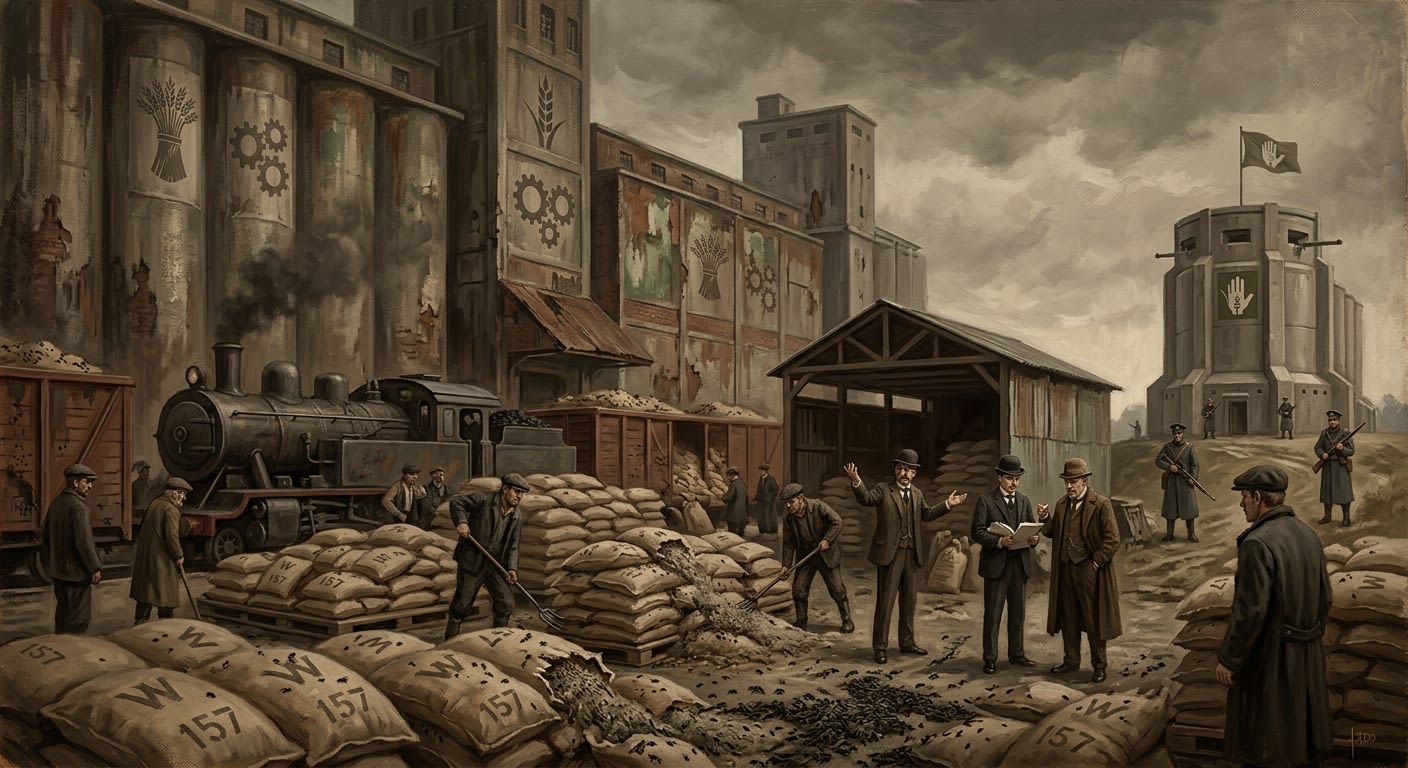
Weevil Year
The famine in which the illegal cellars breathed better than the state
The Weevil Year of A.S. 157 rotted western reserve grain under lawful custody, exposed Bureau incompetence, strengthened Grain Keeper caches, and killed the Bureau of Agriculture.
Codex Ref. VII.4.21-001