
#On the Emptying of the Hand
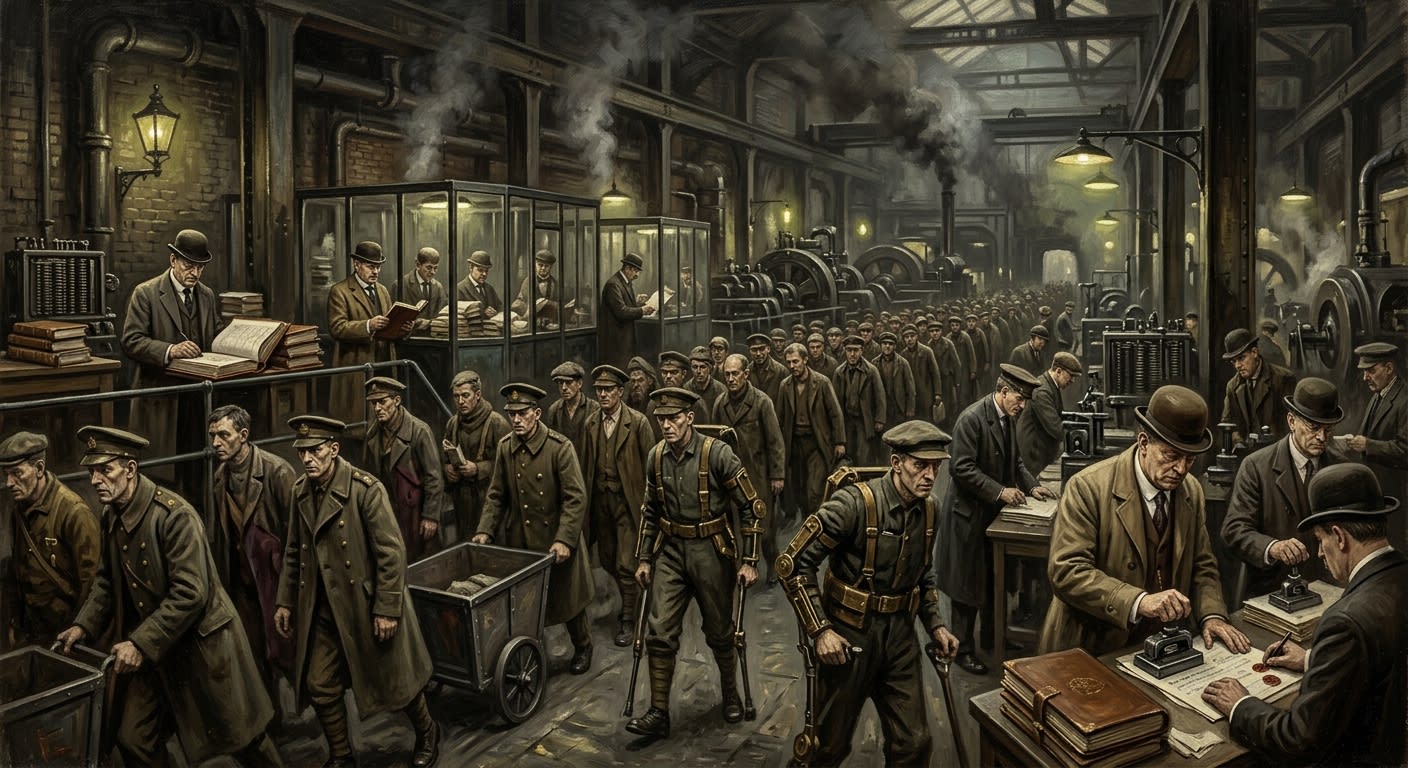
The Hollowing is the Bone-Stampers' private name for vocational faith-depletion: the thinning of conviction by which a worker who once pressed wax as sacrament comes, after years beneath stone, to press wax as motion. The Bureau of Records calls it vocational fatigue. The phrase has the usual Bureau virtue of being accurate only where it is least useful. Fatigue can be slept away. The Hollowing sleeps beside the stamper and counts his breaths.
The stamp works in proportion to conviction. This is canon by embarrassment, field fact by repetition, and doctrine only in the rooms where Doctrine thinks no one has brought a pen. A full-handed stamper presses seal, ink, geometry, and prayer into one act. A hollowing stamper performs the same act with the same tools and the same approved cadence, yet the wax bites less deeply, the ink fades sooner, and the stack resumes its little education in movement before the maintenance interval allows.
No novice believes in the Hollowing. No veteran disbelieves. Between them lies the trade.
#On the First Signs
The first sign is mercy without warmth. A stamper seals a child's ulna, writes the notch code, returns the bone to the stack, and feels nothing. Hardness has shape. Absence does not. The worker may mistake the vacancy for professionalism, and the Bureau, being a connoisseur of profitable errors, encourages the mistake.
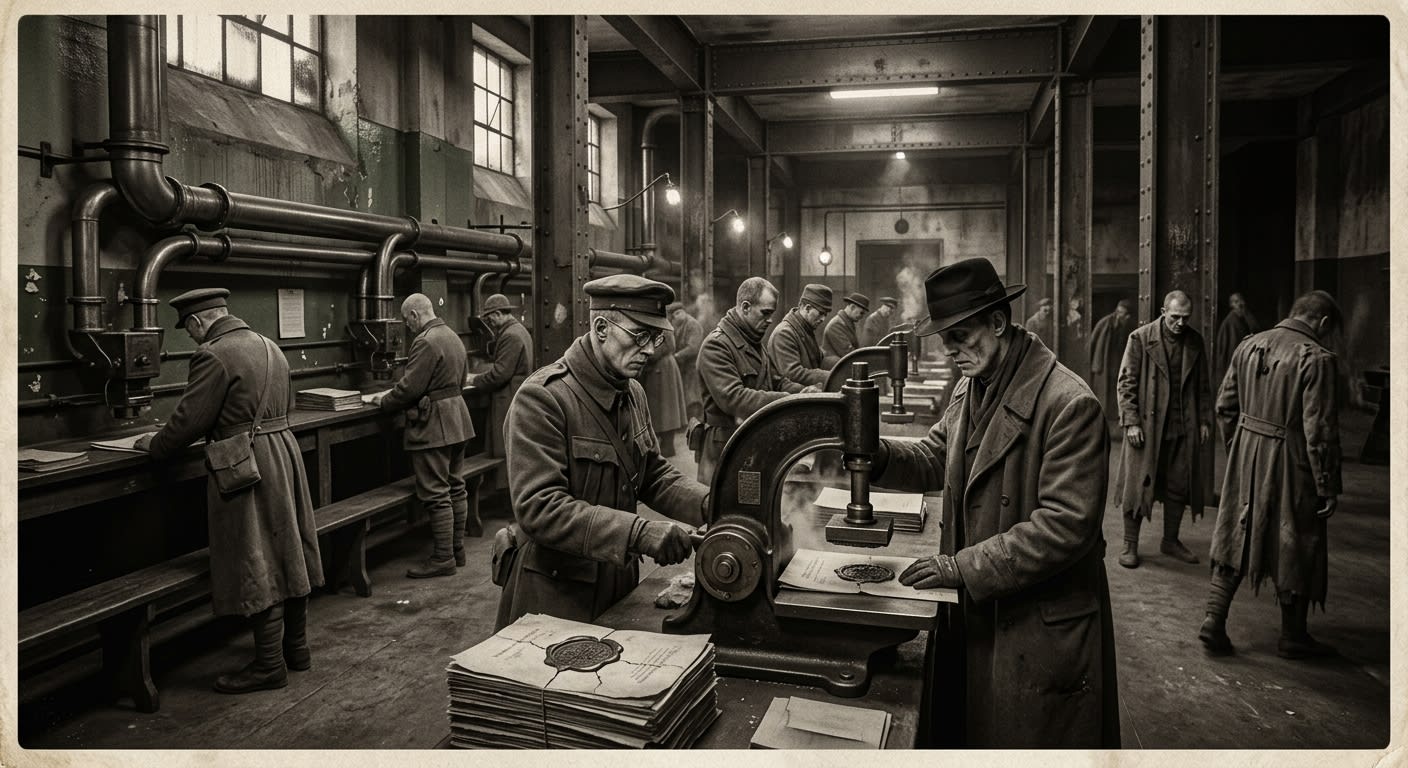
The second sign is a shortened Force-Count. The words remain correct. The pressure remains within range. The breath lands in the wrong place. A senior Seal-Warden can hear it from three paces away: the count spoken by a person who remembers that the syllables matter without expecting them to answer. The wax hears it too, if wax may be said to hear, and in ossuary work it is safer to grant the materials their discourteous little intelligences.
The third sign is contempt for the dead. It comes disguised as efficiency. Stack faster. Skip the second orientation tap. Trust yesterday's resonance check. Use the edge of the wafer already warmed. Call the child's bone “small item.” Call the skull “round.” Call the whole aching burden inventory, and within a month the corridor will call back.
The fourth sign is worse. The stamper begins to envy the Quiet Hands. Not admire. Envy. Admiration keeps hierarchy clean. Envy poisons the hand. A hollowing worker sees the old rise-response specialist enter, lower the lantern, touch wax, and quiet the room, and thinks: why her? The bones enjoy that question.
#On What Records Can Measure
Records can measure stamped counts per night, error rate, ledger completion, seal degradation, recurrence intervals, anomaly reports, and the number of chambers requiring unscheduled quiet relocation. It cannot measure conviction. This offends Records in the way rain offends paper.
So Records measures around the Hollowing. It tracks wax failure in districts with high veteran retention. It compares junior-stamped stacks against senior-stamped stacks. It notes that fresh stampers produce noisy paperwork but quieter corridors, while old stampers produce beautiful ledgers and seals that age like milk. It marks the difference as training variance, then personnel cycle pressure, then environmental influence, then “unverified devotional factor.” Bureau vocabulary is a staircase down which courage may descend without admitting it has fallen.
INTERNAL TABLE — RECORDS SUB-VAULT, A.S. 199 Districts with elevated seal degradation: ████████ Average years in service at first measurable decline: ████████ Correlation with suppressed anomaly reports: ████████ Recommendation: Do not circulate beyond Office of the Last Watch. Avoid use of term “belief.”
The final instruction is the cleanest confession. Avoid use of term belief. Excellent. If a word frightens an office, build a chapel around it.
#On the Official Cure
Rotation is the approved cure. Every three years, stampers are moved between districts to prevent what Records calls accumulation of vocational fatigue. A Brest stamper is sent to Strasbourg. A Strasbourg stamper is sent to Constantinople. A Constantinople worker with Bone-Lung, three wax burns, and the moral patience of a chained dog is sent to a quieter grave-field outpost and told the change will restore him.
Sometimes it helps. A new corridor has new smells, new acoustics, new terrors, and terror has a medicinal value in this trade. Fear sharpens the count. Strange racks make a worker attentive again. Different dead may seem less personally offended. The Bureau records improvement and congratulates itself with both hands.
Then the new corridor becomes ordinary. The new dead become inventory. The new terror becomes furniture. The Hollowing sits down.
The unapproved cures are numerous. Some stampers keep Vellum wafers under the tongue before a bad shift. Some whisper the names of the dead into wax, against every rule, because a named thing resists inventory. Some burn their first gloves and breathe the smoke. Some pay Mercy singers for borrowed cadence. Some drink. Some pray. Some imitate Quiet Hands so precisely that they become ridiculous, which is the saddest fate available to the sincere.
#On the Tithing Question
The Bureau of Tithes has not attempted to tax the Hollowing. Yet.
This abstention has acquired mythic force among stampers. They joke that Tithes cannot tax absence because absence owns no purse. They joke that the day a Hollowing levy appears, the dead will rise from pity and carry the assessors away. They joke carefully. Jokes about Tithes have a habit of becoming invoices.
The fiscal problem is exquisite. Belief has value because it keeps corridors quiet. A full-handed stamper saves wax, labour, re-sealing hours, emergency response, scandal, and the administrative cost of explaining why a skull moved in front of a widow. Value invites assessment. Assessment requires definition. Definition requires admission that belief is an operational consumable. Admission would place the Synod's entire ossuary system on the same shelf as lamp oil, filter cloth, and military diesel, which would be theologically awkward and, worse, budgetable.
I obtained that draft by means I shall not describe, since the guilty clerk has since developed a useful devotion to discretion. Note the phrase preliminary consideration. A tax begins as a question, becomes a schedule, and ends as a man coughing into his sleeve while paying for the privilege of having less soul than last year.
#On the Quiet Hands and the Impossible Exception
The Quiet Hands stand as insult and consolation. Their conviction survives decades without eroding, or erodes into something colder than ordinary faith and stronger than fear. Records does not recruit them; it discovers them after the expected decline fails to arrive. Rites wants to study them. Medicine wants their pulse. Bells wants their silence in a jar. The Quiet Hands offer none of it.
A Hollowing stamper may serve beside a Quiet Hand and feel either rescued or condemned. Rescued, because the corridor calms. Condemned, because the old specialist proves that depletion is not universal, which means one's own emptiness cannot be blamed entirely on the job, the Bureau, the dust, the hours, the dead, or the miserable little soup served in the warming alcove after Third Bell. This is unfair. Truth often is.
The stampers have a private theory. The Hollowing does not spare Quiet Hands; it passes through them and leaves a channel. Ordinary workers lose belief and become empty. Quiet Hands lose belief and become clear. The Bureau of Rites rejects this theory as mystical. Records rejects it as imprecise. I reject it because it was not mine, though with time I may discover I have always held it.
#On Its Usefulness to the Synod
Do not suppose the Hollowing is only a failure. The Synod wastes nothing, least of all damage. A partly hollowed stamper is obedient, predictable, quiet, and too tired to argue over unpaid allotments. He will backdate a seal when ordered. He will omit warmth from the ledger because reporting warmth means an inquiry and an inquiry means three extra nights. He will accept that wax is short, masks are late, corridors are overfull, and the dead must be made to wait like everyone else.
A fully hollowed stamper is dangerous. The hand remains trained after the conviction has left it. Such a worker can forge calm in the ledger while the racks stir behind him. He can teach apprentices bad cadence. He can decide that if the Bureau treats the dead as inventory, inventory may be stacked efficiently and damned the consequences. He can become a small, tired heretic without ever missing Mass.
Prior guidance described Hollowing cases as “minor morale concerns best corrected by district transfer and devotional refreshment.”
Corrected. Hollowing is a degradation of sealing efficacy associated with veteran ossuary work, shortened cadence, reduced conviction, and elevated failure risk. Devotional refreshment may be attempted. So may placing a lace collar on a wolf.
The worst incidents never appear under the term. They are filed as seal degradation, placement error, anomalous warmth, inventory discrepancy, post-audit unrest. The Hollowing hides inside causes more respectable than itself. Bureau files do not lie. They arrange truth until it cannot breathe.
#On the Present Condition
As of A.S. 201, the Hollowing remains officially unclassified, privately feared, operationally managed, and liturgically ignored. Records continues the three-year rotation. Rites continues to avoid saying belief in rooms with auditors present. Medicine treats the sleeplessness, the cough, the tremor, the split cuticles, and never the vacancy beneath them. Tithes has not yet sent a schedule.
Stampers still speak the word in warming alcoves and sealed passages, never loudly, never near inspectors, never while holding hot wax. “He has hollowed,” they say, and no one laughs. They move the worker to lighter chambers if kindness has survived the roster. They pair him with a new Wax-Runner if cruelty is in charge. They watch his seals.
When the old prayer fails in the throat, they press harder.