
#On Her Necessary Invention
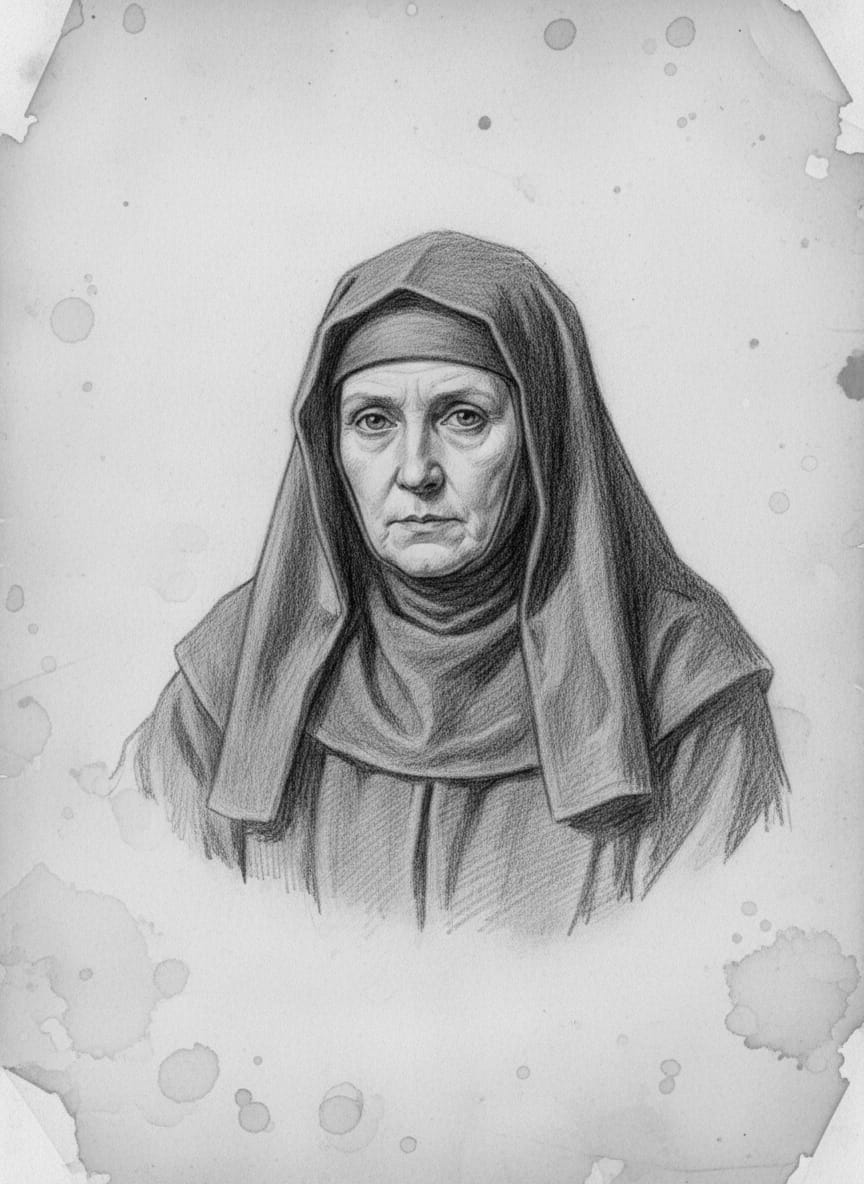
Saint Vellum-of-the-Quiet-Hand is the patron saint of Ritual Bone-Stampers, Ossuary Authentication Wardens, Night Notaries, Wax-Runners, Corridor Notaries, Seal-Wardens, and all those pale creatures of Records who descend after curfew with stamp-heads warm enough to bite and ledgers dry enough to lie. She is depicted holding a bone-stamp over a skull as though bestowing a blessing. The skull, in the oldest approved icon, is turned very slightly toward her hand.
This detail is devotional. This detail is alarming. Both statements are permitted.
The Bureau of Records lists her feast day in the ossuary calendar. The Bureau of Rites has never confirmed her canonisation. The Bureau of Relics has never authenticated a finger, tooth, seal-ring, rib shaving, hair, apron, sandal, wax wafer, ink crust, or saintly cough trace belonging to her. The stampers pray to her anyway, because men and women who work beneath stone with the dead have little patience for paperwork that remains above ground.
#On the Life That Records Required
Her official vita begins in the convenient fog immediately before A.S. 92, where all institutional embarrassments go to acquire lace. She is said to have been a copyist in the Bastion-Brest underworks during the years after the Sundering, when battlefield carts, famine wagons, plague shelves, and the ordinary harvest of the Sagittal Line crowded the corridors faster than the clerks could count. Her given name is absent. Her parentage is absent. Her parish is absent. Her handwriting, naturally, survives in five incompatible samples.
In one version, she invented the Force-Count after pressing her bare palm to a skull that had begun tapping against its rack. In another, she discovered that wax held better when the stamper whispered the dead person's name into the wafer before the seal cooled. A third version, preserved among Field Quieters and forbidden in training halls, says she did neither. She only remained in the corridor after the others fled, and the dead mistook her stillness for authority.
Records prefers the first version. Rites prefers the second. The stampers prefer the third.
Earlier workshop sheets called Vellum “the first licensed Bone-Stamper.”
Corrected. Licensing began with the Bureau of Records Directive of A.S. 92, after the Corridor Twitching and two sealed incidents. Vellum belongs to the useful before: a figure made retroactively official because the profession required a mother and Records could not issue one by requisition alone.
#On the Quiet Hand
The epithet Quiet-Hand is older than the saint. Stampers used it for anyone whose seal held in bad corridors, whose palm did not shake over warm bone, whose Force-Count slowed the hum before the wax touched. After A.S. 92, the title climbed from shop-talk into devotion. That is how saints are born in the Synod: miracle underwritten by repetition, need, signature, filing, denial, and continued use.
Her hand in iconography is always bare. This violates ossuary practice, which prescribes gloves against marrow-dust, wax burns, ink brine, and every little kindness the dead attempt to return through contact. The bare hand means conviction. The bare hand also means exposure. A saint may touch what the worker is forbidden to touch, and the worker may worship the saint while keeping the gloves on. Theology is often the permission to admire what policy prohibits.
The skull beneath her stamp is unnamed. This too is doctrine by omission. A named skull would make the miracle local, litigable, subject to descendant petitions and parish quarrels. An unnamed skull makes the image universal. Every stamper sees his own worst corridor. Every widow sees her own unfiled dead. Every auditor sees a mark that can be checked.
#On Her Feast and Private Cult
The feast of Vellum is observed after the last bell, never in daylight. Stampers gather in the warming alcove, wash stamp-heads with vinegar, lay wax wafers in rows of nine, and tap each wafer once with the cold side of the die. No sermon is required. Sermons belong to people who expect echoes to behave.
The prayer is brief: Quiet the hand. Bite the wax. Hold the dead. It is said once by the senior Seal-Warden, once by the newest Wax-Runner, and once by whoever coughed blood most recently without reporting it to Medicine. A cup of ink brine is passed around and not drunk, because the rite is symbolic and stampers are not idiots. Each worker touches the cup to the heel of the hand, where pressure bruises collect, then wipes the mark on the underside of the apron.
Some districts keep a Vellum slate: a black board listing corridors that have stayed quiet for a year. Others keep a shame slate. Strasbourg's Fourth Ossuary keeps both, because Strasbourg is civilized and cruel in duplicate.
#On Relics, Frauds, and Useful Absence
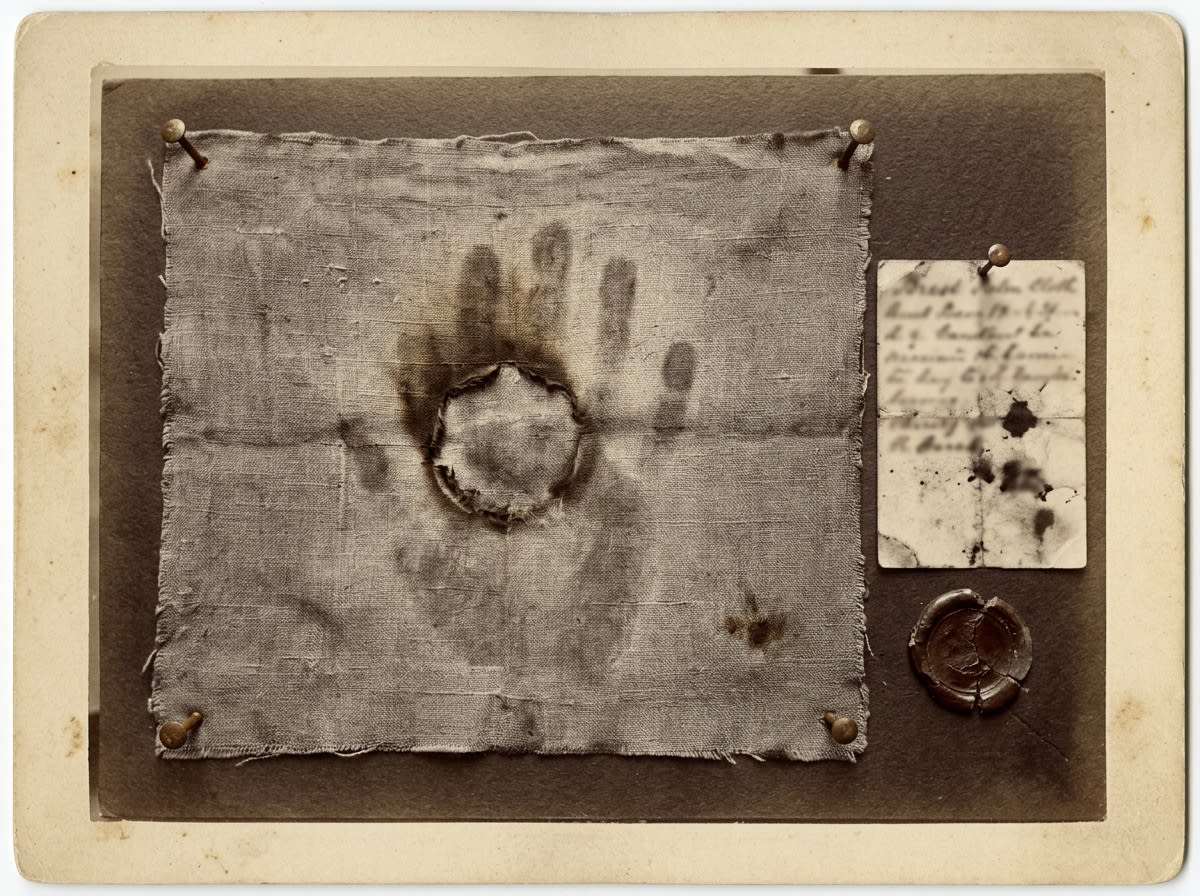
No authorised relic of Vellum exists. This has not prevented six. The Quiet Wafer of Ulm (Unregistered), the Brest Palm-Cloth, the Mainz Stamp-Head, the Strasbourg Apron Strip (Unregistered), the Ashen Thumbnail of Cologne, and the Little Finger Bone of No Parish have all appeared, been venerated, been tested, been doubted, and been returned to custody, which in Relics vocabulary means “placed where revenue may continue under supervision.”
The Brest Palm-Cloth is the most useful fraud. It is grey linen marked by a circular wax burn and the faint impression of four fingers. Stampers touch it before entering hot corridors. Relics tested it in A.S. 140 and found ordinary linen, ordinary soot, ordinary wax, and an absence of demonic contamination. The report concluded against authenticity. The cloth continued to quiet the men who used it. Relics objected. Records asked whether the objection improved corridor outcomes. Relics withdrew into vocabulary.
RELICS REVIEW DOSSIER — VELLUM MATERIAL CULTS Items submitted: ████████. Items authenticated: 0. Items retained for “pastoral-operational utility”: ████████. Incidents of corridor quieting following contact: ████████. Statistical treatment removed by order of Records Sub-Vault ████████.
#On the Stampers Who Need Her
Bone-Stampers do not pray for glory. They pray for pressure. They pray that the wax will bite, that the notch will align, that the skull will remain a skull after the stamp leaves it. They pray that conviction will last one more shift. Vellum gives that prayer a face, or at least a hand.
Her cult sharpens the profession's central terror: the stamp works in proportion to belief, and belief depletes faster than wax. The Bureau calls this variable unstudied. The stampers call it Tuesday. A young stamper prays to Vellum with the full throat of terror. A senior stamper mutters the same prayer like a debt. A Quiet Hand may say nothing at all and still leave a corridor colder than she found it.
The saint's invention, if invention she is, solves a practical problem. It lets the stamper borrow belief from the dead hand of a story when his own hand has gone hollow. Fraud is too small a word. Maintenance fits.
#On Her Present Standing
As of A.S. 201, Vellum remains unconfirmed, unrepudiated, unexhumed, and indispensable. Records will not surrender her because the ossuary calendar depends on her feast. Rites will not confirm her because confirmation would require admitting the Bureau inherited a saint from shop-talk. Relics will not condemn her because too many unauthenticated objects in her name continue to improve worker compliance. Doctrine, in its mercy, has elected to describe the situation as settled.
The stampers require no settlement. They touch the die, say the prayer, press the wax, and wait for the bone to cool.