
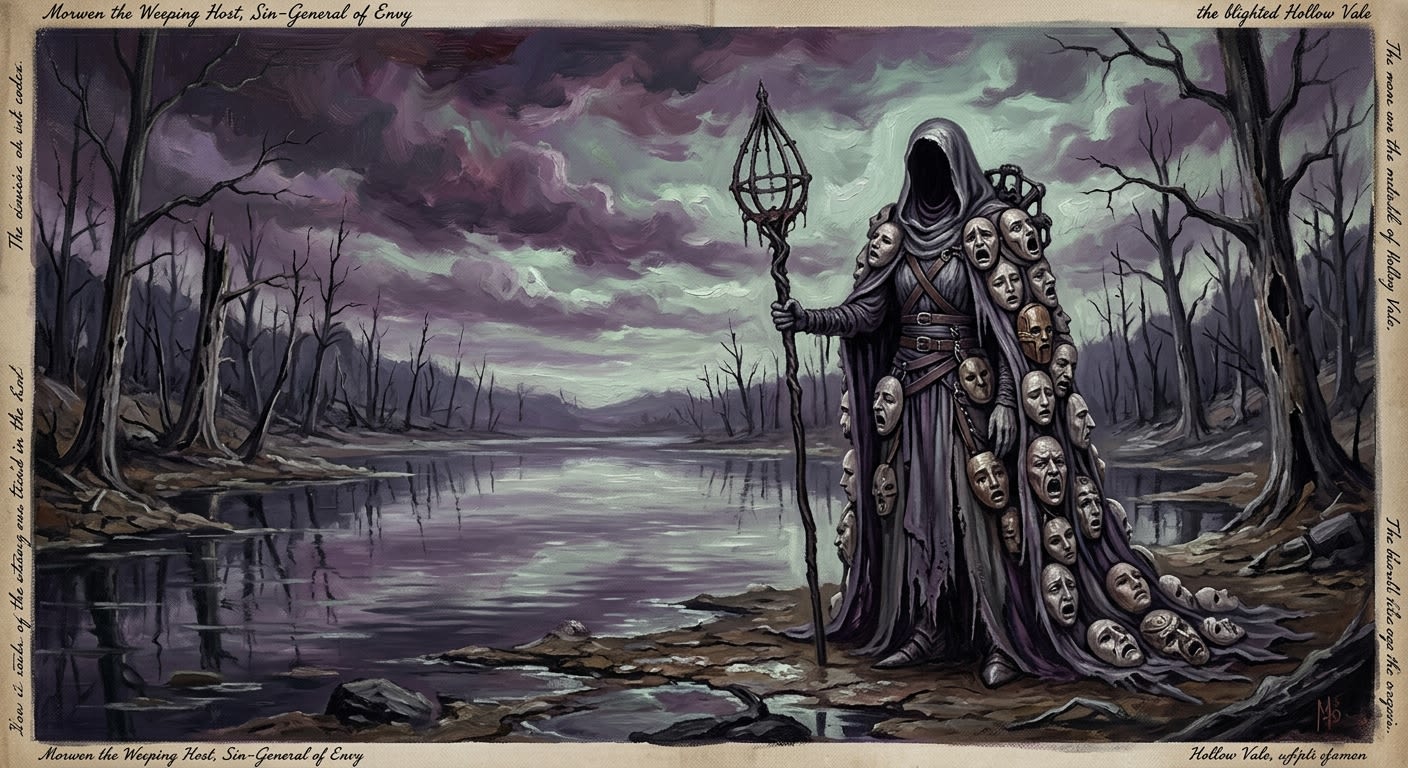
#On Her Manner of Arrival
"She came last, or she came first wearing six other faces. The Bureau has never determined which."
I set down these words concerning Morwen, the Weeping Host, Sin-General of Envy, and I confess — the Bureau may redact the confession if it likes — that I delayed this entry longer than any other. Kargath I could write by candlelight, with the prayer of broken appetites muttered through my teeth, because hunger is at least legible. A man knows when he is starving. A man does not always know when he has ceased to be himself.
The Lore Book records — and the Bureau of Doctrine ratifies, with the enthusiasm of a clerk stamping a document he has not read — that Morwen seeped into Reality at the Sundering not as form but as reflection. She haunted lakes and polished stone and the backs of soldiers' belt-buckles, stealing voices from echoes and faces from their faintest outlines, until whole villages in the eastern marches awoke speaking in borrowed tones. The kings who sought to name her found her wearing their own likenesses. Their edicts returned to them bearing their own signatures, authorising things they had never approved. Their officers saluted copies of them that gave contradictory orders with perfect authority. Within a season, no oath in the eastern provinces could be trusted, because any man who swore it might not be the man who bore that name.
She was last of the Seven to claim her territory. Or she was always present, wearing the faces of the other six, and only shed them when she was ready to wear her own. The sequence matters less than the fact: by the time the Bureau acknowledged her as the seventh Sin-General — twenty-three years after the Sundering, in a sealed memorandum whose author is listed only as "Concerned" — she had already hollowed out half the Balkans and replaced their populations with something that smiled when smiled at and wept when wept to and remembered everything except what it meant to be a particular person.
#On Her Domain
"A land of hollow trees and mirror-lakes, where the gazer's true face is the one thing never reflected."
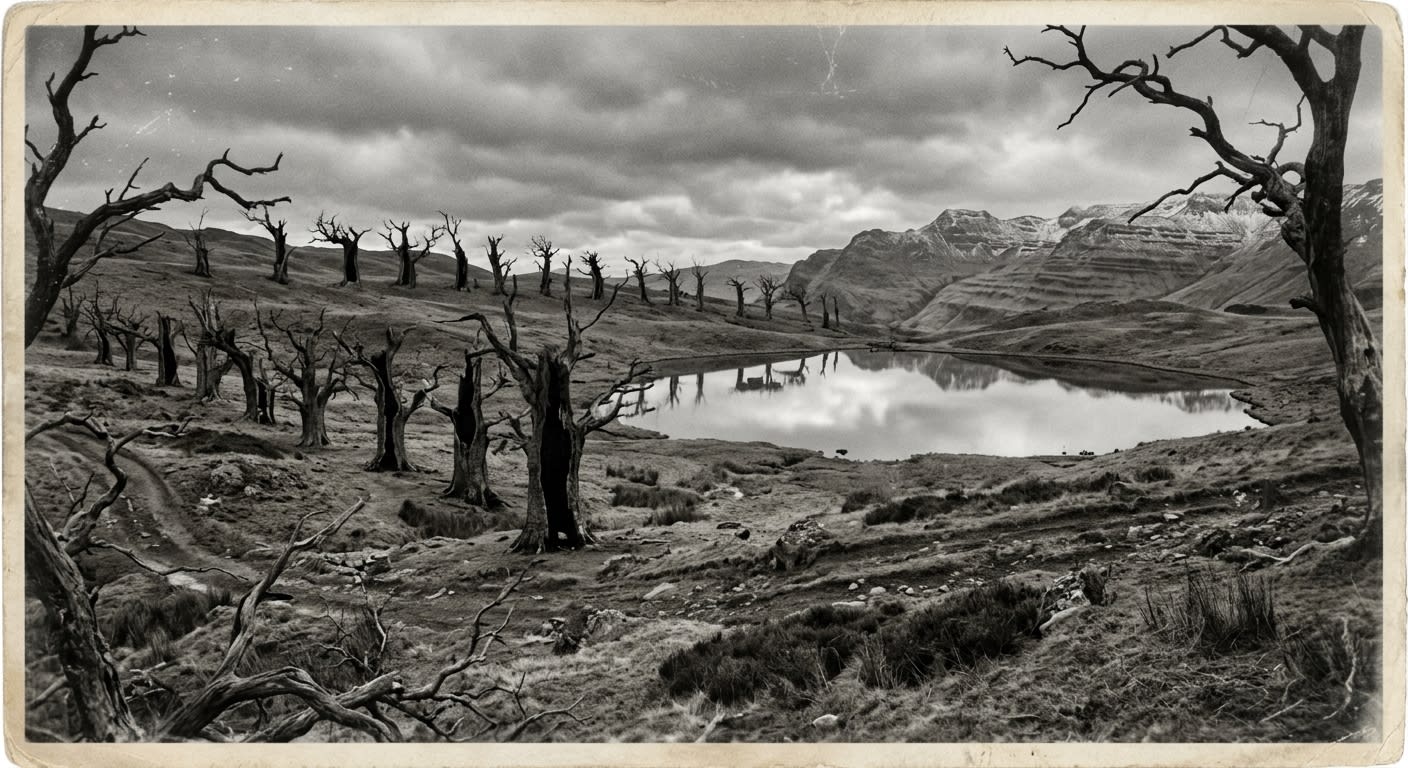
Morwen holds the territory the Bureau designates as the Hollow Vale — a sweep of blighted country running from the Danubian foothills south through what was once Bulgaria into the shattered remnants of the Rhodope highlands. The name is precise. The land is hollow. Forests stand upright, bark intact, every branch in place, and inside each trunk there is nothing — no heartwood, no sap, no insects, no rot. Tap a tree in the Hollow Vale and it rings like a bell, and the echo comes back in a voice you recognise but cannot place. The lakes gleam in silver stillness, and they do not show the sky above them. They show other skies, other weather, other seasons. A man who kneels to drink from a Hollow Vale lake sees a face in the water that is almost his own. Almost. The jaw a fraction sharper. The eyes a shade more confident. The posture of someone who made different choices at every crossroads and arrived, somehow, at a place the kneeling man will never reach.
At the Vale's heart — if a domain that exists by theft can be said to have a heart — stands the Palace of Echoes. The Bureau's few surviving intelligence reports describe a structure of impossible geometry: corridors that fork without diverging, rooms that contain only reflective surfaces, doors that open onto other people's memories. Morwen collects selves the way Velmora collects gold, but Velmora's hoarding is crude by comparison. A coin can be melted and restruck. An identity, once stripped from its owner and filed in the Palace, becomes raw material for whatever Morwen requires. She wears people the way a vain cleric wears vestments — trying each one for the occasion, discarding it when the light changes. The Palace houses thousands of stored selves, suspended in what the Bureau of Rites classifies as "ontological abeyance," which is the Synod's way of saying that the Bureau does not know what Morwen has done to them and would prefer you stopped asking.
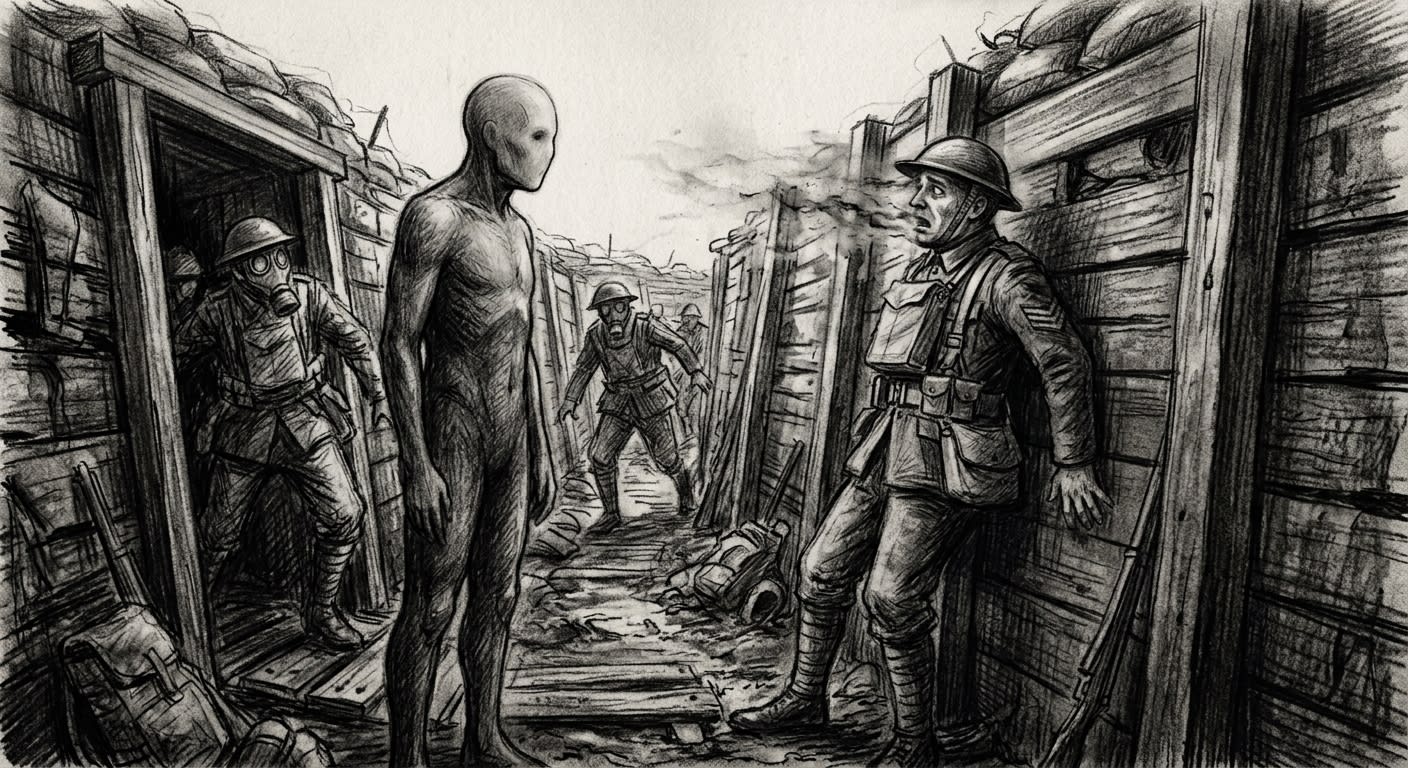
The territory between the Hollow Vale and the Sagittal Line — the contested strip the trench-scholars call the Mirror Waste — is worse than the Vale itself, because it is unfinished. The ground is glass-smooth in patches, reflecting a sky that does not exist overhead, and cracked mud in others, ordinary as any ruined field. Walk through the Mirror Waste and you see yourself from a dozen angles: one reflection taller, one thinner, one smiling when you are not, one weeping, one wearing the uniform of the enemy. The soldiers stationed at Bastion-Irongate have a saying: In the Waste, count your fingers before you count your friends, because at least your fingers are probably still yours.
#On Her Fixation Upon the Irongate
"She attacks the gorge for the same reason a woman tears a portrait she cannot paint."
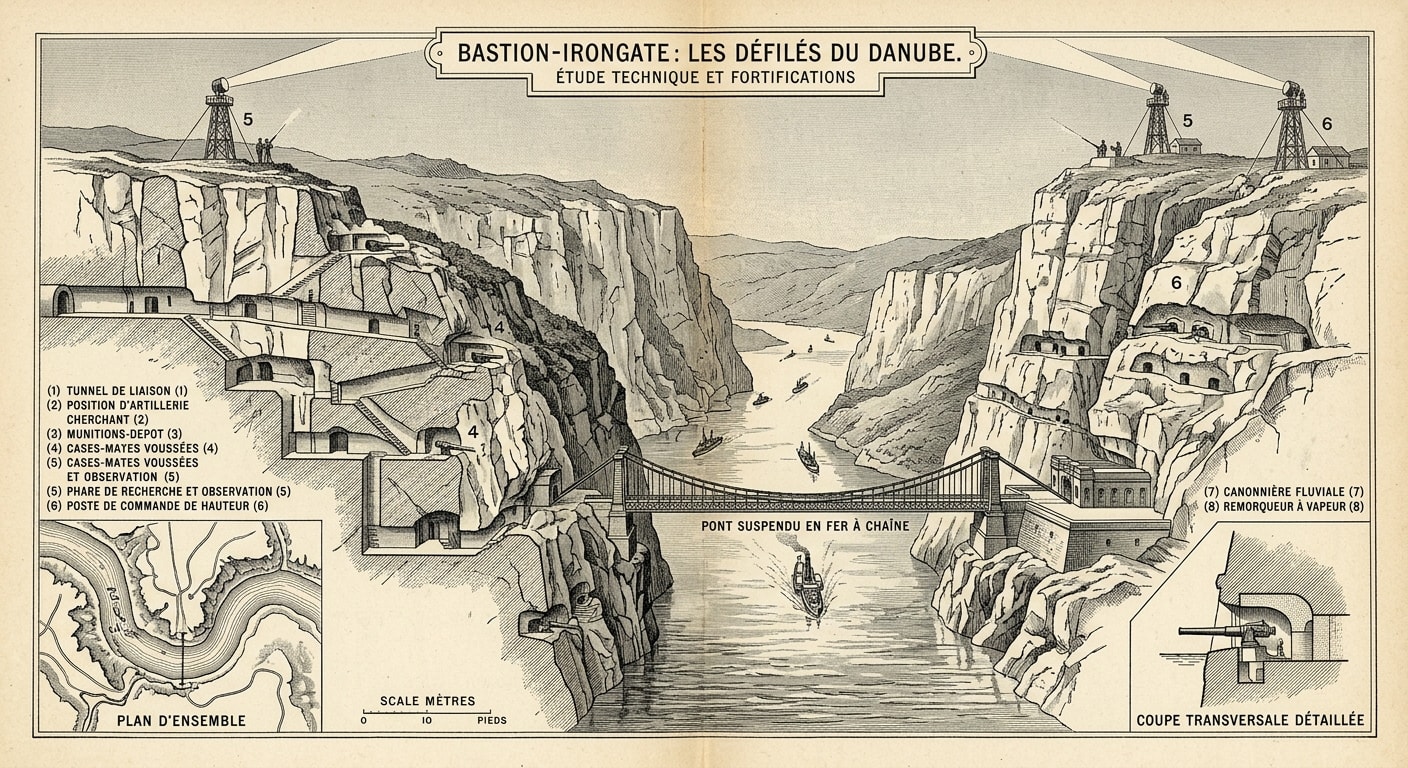
Morwen presses Bastion-Irongate, which guards the Iron Gates gorge where the Danube forces its way between the Carpathian foothills — a channel barely wide enough for two ships abreast, with cannon batteries carved into both cliffsides and a tunnel system so dense that the entire garrison could vanish into the rock and continue fighting from inside the mountain. The Irongate fortifications are, by any honest military assessment, the most beautiful engineering on the Sagittal Line. The Gasket Choir — the garrison's name for the acoustic phenomenon produced by wind through the tunnel-mouths, a sound halfway between plainsong and artillery — has been recorded by the Bureau of Bells as a Category Three Harmonic Anomaly, meaning it is too beautiful to be natural and too useful to be investigated.
Morwen does not attack the Irongate for its strategic value, though the gorge is worth holding. She attacks it because she envies it. The fortifications possess a quality she cannot replicate — an authenticity of purpose, a thing that is exactly and only what it was made to be. Morwen, who is everything and nothing, who wears ten thousand faces and owns none of them, cannot counterfeit beauty. She can only hollow it. She claws at the Irongate the way a thief claws at a jewel she can steal but never wear, and the garrison knows this, and the garrison fights with the particular savagery of men defending something they love from someone who wants to destroy it out of spite.
The result is a siege without terms, a war of corrosion rather than conquest. Morwen does not send her armies against the walls in the conventional sense. She sends them into the garrison. A sapper finds his partner speaking in someone else's cadence. A chaplain delivers a sermon he does not remember writing and cannot recognise as his own work, though the theology is flawless. A sentry reports that his replacement arrived an hour early, wearing his face, and when the replacement was confronted he wept and insisted he was the original, and neither man could produce evidence the other could not also produce. The Bureau of Purity maintains a classified protocol for the Irongate sector — Mirror Discipline, they call it — under which soldiers are forbidden from looking at their own reflections for more than three seconds. Shaving is performed by assigned barbers. Mirrors in latrines have been replaced with polished tin that deliberately distorts the image. The protocol was introduced after the Incident at Sector Nineteen, the details of which I know and will not share, because some knowledge corrodes the knower and I have enough corrosion to contend with.
Earlier editions of this Codex described Morwen's campaign against Bastion-Irongate as "containable by conventional fortification and sufficient prayer."
The Bureau of Doctrine has revised this assessment. The Bureau of War has revised this assessment. The garrison chaplain of the Irongate, in a private letter to the Synod which was intercepted by the Bureau of Shadows and forwarded to my desk, wrote: "We can hold the walls. We cannot hold ourselves." The letter was filed. The chaplain was reassigned. The assessment stands corrected.
#On Her Armies
"They look like someone you know. They look like someone you knew. They look like you."
The demonic host of the Weeping Host — and I will thank the reader not to comment on the redundancy; the Bureau of Doctrine named her and the Bureau of Doctrine does not accept editorial feedback — defies conventional military classification because it will not hold still long enough to be classified. A patrol counted six hundred of her soldiers at dawn and four hundred at noon and six hundred again by dusk, and the Bureau of Records, after reviewing the tally sheets, concluded that the numbers were correct and that the missing two hundred had not retreated. They had simply become other members of the host. Or they had always been those other members. Or there had never been six hundred to begin with. The clerk who filed the report requested transfer to a sector where the enemy had the decency to remain one person at a time.
The field scholars, working from interrogation transcripts and the testimony of men whose sanity is generously described as "provisional," have identified six categories of Morwen's demons, though the categories blur at their edges in a manner the scholars find professionally offensive.
The Hollow Ones are the raw material. They arrive without face, without feature, without anything that could be called a self — smooth-skinned blanks that absorb identity from proximity the way blotting paper absorbs ink. Station a Hollow One near a man for a week and it begins to speak his phrases, adopt his mannerisms, remember his childhood. The man, in turn, begins to forget those things. The transfer is not voluntary. The Hollow Ones are not malicious — they lack sufficient selfhood for malice. They are hungry. Any identity will do. Yours will do.
The Mirror-Stalkers dwell in reflective surfaces — mirrors, still water, polished steel, a puddle in the trenchworks after rain. They observe. They learn. They emerge as perfect copies of someone who looked too long, and the copy is always improved: more confident, more capable, more charismatic, the version of you that would have resulted if every choice you ever made had been the right one. The original, confronted with this better self, tends to falter. The copy does not. The garrison has standing orders to shatter any reflective surface larger than a hand-span within three hundred yards of the perimeter, and the Bureau of Ordnance has, with the quiet desperation characteristic of military procurement, requisitioned forty-seven thousand yards of matte-finish trenchcoat lining since A.S. 195.
The Worn are composites — demons who have worn so many identities that the identities have bled together into a single monstrous palimpsest. A Worn speaks in dozens of voices, recalls memories from lives it never lived, switches between personalities the way a card-sharp deals from a stacked deck. Interrogating a Worn is useless. It will answer every question truthfully, in the voice of whoever the interrogator most wishes to hear, and the answers will contradict each other because the Worn believes all of them simultaneously.
The Face-Thieves are Morwen's precision instruments. They choose a specific target — an officer, a chaplain, a supply clerk with access to the ration manifests — and they study that target with monastic devotion for weeks or months before attempting the replacement. A good Face-Thief does not merely look like its target; it becomes the target so completely that the target's own mother would embrace the copy and scold the original for being a stranger. Three confirmed Face-Thief replacements were discovered in the Irongate garrison between A.S. 190 and A.S. 198. The Bureau suspects there are more. The Bureau suspects there have always been more. The Bureau does not say this aloud, because saying it aloud would require an audit of every identity on the Line, and the Line cannot fight and count itself at the same time.
The Echo-Kin are lesser things — imperfect imitators who copy a man's gait, his gestures, his words, but cannot fool anyone at arm's length. Their danger is corrosive rather than immediate. Spend too long near an Echo-Kin that mimics you and you begin to doubt your own gestures. You begin to wonder whether you adopted the habit first, or whether you are copying the copy. The boundaries of the self grow indistinct. In the trenches, where every man already wears the same uniform and eats the same rations and recites the same prayers, the Echo-Kin need do very little work. Identity is fragile enough at the Irongate without assistance.
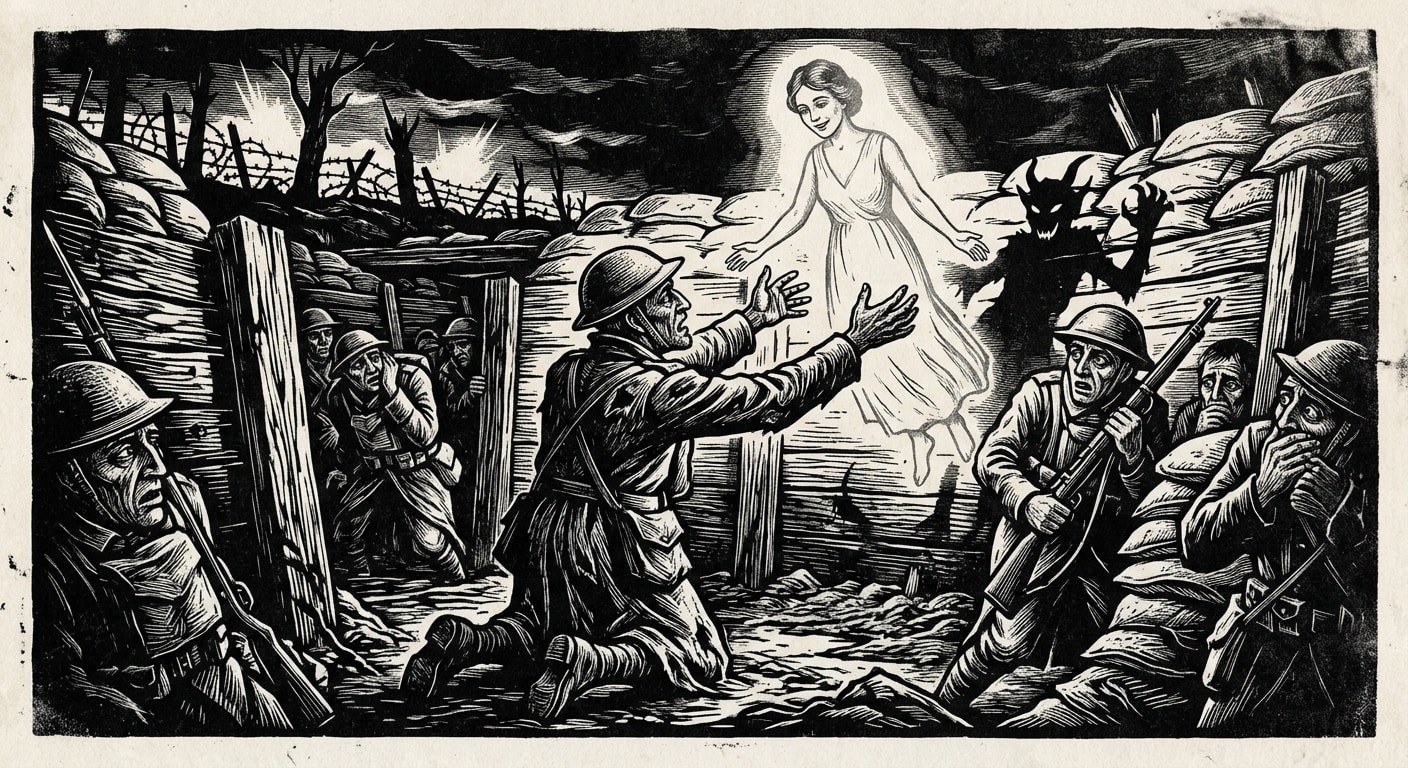
The Beloved are the cruelest. They do not arrive as strangers or soldiers or functionaries. They arrive as the people you love. Your mother, dead three years, standing in the supply depot with her hands folded the way she always folded them, smiling the way she smiled when you came home from the fields. Your childhood friend, unchanged, impossibly young, speaking of things only the two of you would know. Your wife, your husband, your child who was born after you left for the Line and whom you have never held. The Beloved do not fight. They embrace. They comfort. They forgive. And if you accept the comfort — if you hold the shape of someone you lost and allow yourself to believe, even for a breath — something passes from you to them, something you will not miss until it is gone, and you become a fraction less yourself and a fraction more raw material for the next Beloved that Morwen's workshops produce.
The soldiers call them the Kindest Enemy. The chaplains call them the Temptation of Faces. The Bureau of Purity's operational name is Emotional Hazard, Category One, which demonstrates once more that the Bureau of Purity has the poetic sensibility of a filing cabinet.
#On Her Cults
"They do not know they are cultists. That is the qualification."
Morwen's cults are, by the Bureau of Purity's reluctant admission, the most difficult to identify, because the cultists may not know they are cultists, and the people they have replaced may not know they have been replaced, and the investigators sent to examine the matter may — the Bureau declines to complete this sentence in official correspondence, but I shall: the investigators may themselves be compromised, and the investigation may be the cult, and the report may be the recruitment tool.
The cult structure — if structure is the word for something so deliberately formless — operates through five tiers, each named with the sort of grim poetry that men adopt when they have stopped pretending their situation is recoverable. The Seekers are the outermost ring: men and women consumed by self-rejection, who look at their own lives and find them unbearable, who envy their neighbours with a toxicity that goes beyond wanting what others have and curdles into wanting to be what others are. The Seekers do not know they are being watched. They are always being watched.
The Vessels have accepted their first transformation — a borrowed confidence, a stolen talent, an identity worn like a coat over the one they were born with. They function. They smile. They are, by every outward measure, improved. They do not ask where the improvement came from, or what was traded for it. The Masks maintain multiple identities simultaneously, switching between them as occasion demands — a clerk by day, an officer by evening, a dead man's widow by night, and none of these people has ever existed, and all of them file their paperwork on time.
The Collectors are the scouts: they identify targets for replacement, study them, document their habits and histories and the particular way they fold their hands when lying. The Collectors compile dossiers that would make the Bureau of Shadows weep with professional envy, and they deliver these dossiers to the fifth tier — the Mirrors — who have lost their original selves so completely that they are nothing but capacity. A Mirror can become anyone whose dossier they have studied. A Mirror has no preferences, no memories, no self to interfere with the performance. A Mirror is the purest possible weapon, because there is no one inside to object to what the weapon is used for.
#On Her Rivalries
"Velkara and Morwen burn with mutual contempt, for beauty and its counterfeit cannot coexist."
Morwen envies every one of the Seven, which is both her nature and her torment. She envies Kargath's appetite, because at least his hunger has a definite shape — he wants to devour, and the wanting is specific, and the specificity is a kind of identity she cannot achieve. She envies Velmora's wealth, because gold remains gold no matter who holds it, and Morwen's treasures cease to be themselves the moment she touches them. She envies Atheron's certainty, his mountainous self-regard, the unshakeable conviction that he is the finest thing the Great Deceiver ever made — Morwen, who has never been certain of anything, least of all herself, finds Atheron's pride so offensive that she has sent three separate infiltration campaigns against his Crownspire, all of which failed because Atheron's servants are too proud to believe that anyone could successfully impersonate them.
But the deepest hatred — the one that produces actual military consequences — is the war between Morwen and Velkara, the Sin-General of Lust. Beauty and its counterfeit cannot coexist. Velkara's power is seduction, the genuine article — she offers pleasure, connection, the real warmth of bodies against bodies, and her victims fall because what she offers is, in the moment, real. Morwen can only counterfeit. She can copy Velkara's beauty, copy her voice, copy the precise curve of her smile, but the copy is hollow, and anyone who has encountered the original will know the difference the way a man who has drunk wine knows the difference between wine and painted water. Velkara finds Morwen's imitations insulting. Morwen finds Velkara's originals unbearable. The two have clashed in the Macedon Escarpments three times in the last forty years, and on each occasion the clash has cost both sides more soldiers than any Synod offensive in the same period.
The Bureau of War considers this rivalry the single most exploitable fault-line among the eastern Sin-Generals, and has, I am told, a standing operational plan to exacerbate it. I am also told the plan has never been executed, because the officer assigned to provoke a quarrel between two Sin-Generals submitted his resignation with a note reading: "I will fight the armies of Hell, but I will not play matchmaker for them."
#On the Countermeasures
"We can hold the walls. We cannot hold ourselves."
The Synod's defences against Morwen are, in the candid assessment of every field commander I have spoken to, inadequate. They are also the best that can be managed. I record them for completeness, not reassurance.
Identity Confirmation Rituals — challenge-and-response codes, recognition phrases, the recitation of personal histories that only the genuine article could know. The theory is sound. The practice collapses against a Face-Thief that has spent six months studying its target, because the Face-Thief knows everything the original knows. The rituals catch bad copies. The good copies attend the rituals and pass them with distinction.
Mirror Discipline — the restriction of reflective surfaces in all forward installations facing Morwen's sector. No mirrors, no polished metal, no standing water within the perimeter. The soldiers shave by touch and cut each other's hair by memory. The result is a garrison that looks increasingly ragged and increasingly uncertain of its own appearance, which creates its own vulnerability — men who cannot see themselves begin to forget what they look like, and the forgetting is precisely the crack through which Morwen's influence-demons slip.
The Ledgers of Self — personal dossiers maintained by the Bureau of Records for every man stationed at the Irongate, recording appearance, habits, scars, the specific sins confessed at the last audit. If identity is questioned, consult the Ledger. The Ledger is definitive. The Ledger is also a document, and documents can be altered, and who decides what the "true" entry says when the man standing before you and the man described in the Ledger are both claiming to be genuine?
The Singleton Doctrine — the Bureau of Doctrine's formal theological position that every human soul is unique, irreplaceable, and proof against demonic duplication. The Doctrine is comforting. It is also, by the garrison's grudging testimony, increasingly difficult to believe. Comfort, like identity, wears thin under siege.
The Bureau of Doctrine's A.S. 180 assessment stated that the Singleton Doctrine provided "absolute theological protection" against identity corruption.
The A.S. 199 reassessment describes the same Doctrine as providing "significant theological comfort." The distance between protection and comfort is approximately the distance between the Irongate walls and the Mirror Waste, which is to say: shrinking.
Execution of Duplicates — the final protocol. When two versions of the same person exist and neither can be definitively identified as the original, both are executed. The Bureau insists this is the only safe resolution. The garrison accepts this with the grim practicality of men who understand that mercy, in Morwen's sector, is a weapon she will turn against them. The protocol creates an obvious incentive for Morwen's agents to reveal themselves strategically — you can, by exposing a copy at the right moment, guarantee the death of an original who cannot prove himself. The Bureau is aware of this flaw. The Bureau has not devised a solution. The Bureau has filed the flaw under "Acknowledged Imperfection" and moved on to the next crisis, which is the Bureau's native method of governance and, in fairness, the only method that keeps the ink flowing.
#On Her Nature, Truly
"The horror is not that she steals your face. The horror is that you gave it away."
I have written six entries on the Sin-Generals, and in each I have identified the sin by its weapon: Kargath starves, Velmora bribes, Maldrake burns, Syrion smothers, Velkara seduces, Atheron exalts. Each weapon is, in its terrible way, directed outward — the Sin-General acts upon the victim, and the victim resists or falls. Morwen's weapon is different. Morwen's weapon is the victim.
She is the sin that eats from the inside. Her victims are not dragged into corruption — they walk, hands open, because what she offers is the thing the self-rejecting want more than breath: escape. Escape from the face in the mirror they cannot bear. Escape from the life they are convinced belongs to someone more deserving. Escape from themselves. And Morwen listens, and Morwen offers transformation, and the transformation works. The envious clerk wakes with the confidence of the officer he despised. The plain woman wears the beauty of her rival without seam or stitch. The coward stands with the courage of the man he watched die. It works. It is real. It costs nothing.
Except the self. The original self, the one that was rejected, is traded — filed in the Palace of Echoes, pressed between glass like a botanical specimen, stored alongside ten thousand other discarded identities in Morwen's collection. And the new self, the borrowed one, does not stop borrowing. The boundaries dissolve. Today you are the officer; tomorrow you absorb the mannerisms of the chaplain; next week you cannot remember which memories are yours and which were never yours and which belonged to a man who died at the Irongate six years ago and whose name you wear without knowing you are wearing it.
The end state — and the Bureau of Rites has documented seven cases, all sealed — is dissolution. The victim becomes a Hollow One. A blank. A wound in the shape of a person, waiting to be filled with the next identity, and the next, and the next, until there is nothing left but capacity. Raw material. The very thing Morwen was when she first seeped into Reality — formless, faceless, defined only by what she coveted.
The horror of Morwen is this: she does not steal. She receives what is freely given by people who believed their selves were worthless. And she wears those selves better than their owners ever did. And the owners, stripped bare, spend whatever remains of their existence trying to remember what they were, and failing, and envying the thing that wears their face — which is, of course, the final and most perfect expression of the sin that brought them to her.
Inscribed in the Basilica by a man who checked his reflection three times during the writing and was, each time, moderately reassured — Hieromnemon Valerius Drax, Warden of the Sacred Ledger, in the two hundred and first year of the Synod's dominion.