
#On the River That Refuses to Be Merely Water
The Rhine is a river only to fishermen, poets, foreign cartographers, and other persons insufficiently supervised by the Bureau of Records. To the Synod it is artery, witness, tithe-chain, corpse carrier, pilgrim road, flood court, smuggling accomplice, baptismal argument, and the long wet signature by which the western heartlands prove they have not yet slid into barbarism. Water moves downhill. The Rhine moves authority.
It begins beyond the reach of our most comfortable paperwork, gathers Alpine melt, eats tributaries, cuts past cliff-cities and cathedral banks, rolls by Mainz, Rheinscarp, Cologne, and the lesser towns that hate being called lesser, then spreads its influence through barges, tolls, ferries, sermons, archive-banks, hunger ledgers, and those private stories mothers tell children when the spring flood claws at cellar doors. The river is older than Strasbourg, older than the Bureaus, older than the present grammar of obedience. This has made the Bureaus jealous. Jealous offices are dangerous. They issue forms.
The river's canonical position is simple enough for a catechism and false enough for administration. It lies in the safe heartlands, Zone 2 and its western approaches, far behind the Sagittal Line, supplying the interior from which the Line is fed. It does not face Sin-General pressure directly. It faces worse: time, memory, profit, flood, heresy, and the accumulated presumption of cities that were rich before the Synod made richness holy.
#On the Old Sanctities Before the Ledger
Before A.S. 0, before the Amsterdam academicians published De Vera Luce and proved that arrogance can wear spectacles, before the Sundering taught Europe that disbelief had consequences beyond pamphlets, the Rhine already carried saints, soldiers, merchants, bones, wine, tolls, lies, brides, plague carts, and arguments over bridge rights. The Synod did not invent the river's holiness. We nationalized it, corrected its vocabulary, and charged it arrears.
Roman stones still sit under several Rhine bridges, bearing inscriptions the Bureau has classified as “preparatory pagan masonry.” Medieval toll privileges survive in fragments, most annulled, some absorbed, several quietly honoured because old families with locked vaults are best corrected slowly. Monasteries along the banks once held ferry bells by custom. Custom is unlawful unless adopted. Adoption is theft with witnesses. The Rhine contains more adopted custom per mile than any road in the Church's lands.
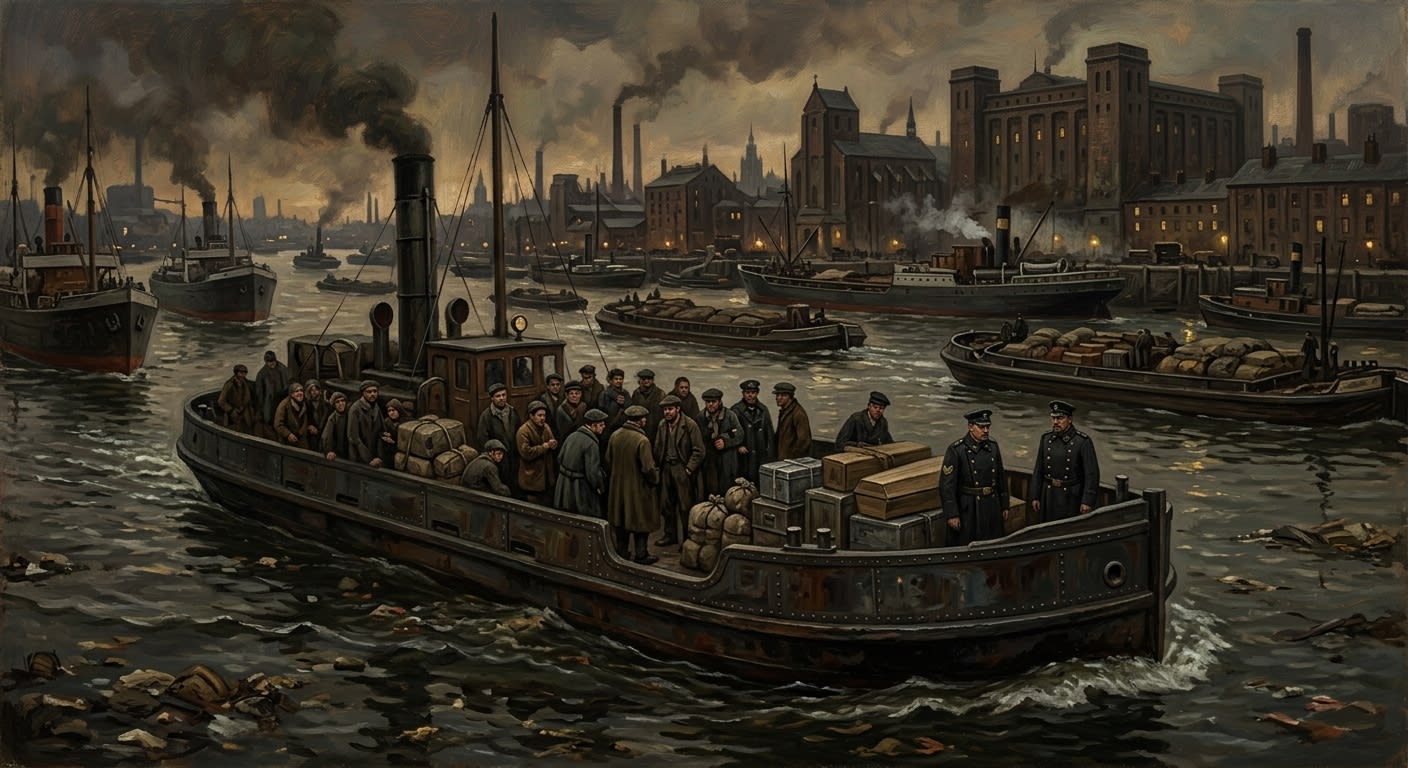
The river's first Synodic service was logistical rather than devotional. After the A.S. 45 Sundering and the Great Retreat, refugees moved west through mud roads and river corridors; grain moved east where roads had become graves; relics moved wherever frightened bishops believed bones might stiffen courage. Rhine barges became provisional chapels, counting rooms, infirmaries, and, during several bad months, floating courts. A priest at one landing could absolve three hundred refugees by dusk if the line moved briskly and nobody asked for individual names. Records despises this anecdote because it shows mercy functioning before paperwork caught up.
By A.S. 78, with the first great bureaucratic organs stiffening into shape, the river had become indispensable. That year matters: the Great Plague, the Lull of Names, the First Ossuary Panic, the Rope-Ferry crises, and Silt Week all taught the Synod the same lesson in different inks. Bodies vanish where records fail. Names rot where water reaches paper. A river may carry cargo, but it may also carry away proof.
Older river primers describe the Rhine as “pacified after the Concordat.”
Corrected. The Rhine was never pacified. It was copied, tolled, indexed, prayed over, dredged, argued with, overruled, and praised in tariffs. Pacification implies surrender. Rivers do not surrender. They accept embankments until they have leisure to humiliate them.
#On Silt Week and the Doctrine of Wet Paper
Silt Week is the Rhine's most useful sermon against clerical vanity. In A.S. 78, spring flood along three Rhine tributary crossings swallowed bridge records, passage ledgers, queue warrants, and baptismal transit attestations that Records had stored below the high-water mark with that sublime faith in shelving by which institutions express their contempt for weather. Thousands became unverifiable by dawn of the second day. They still had faces, boots, carts, debts, children, hunger, and the ordinary odour of human panic. They lacked dry proof. The Synod, being merciful, hesitated before deciding whether they existed.
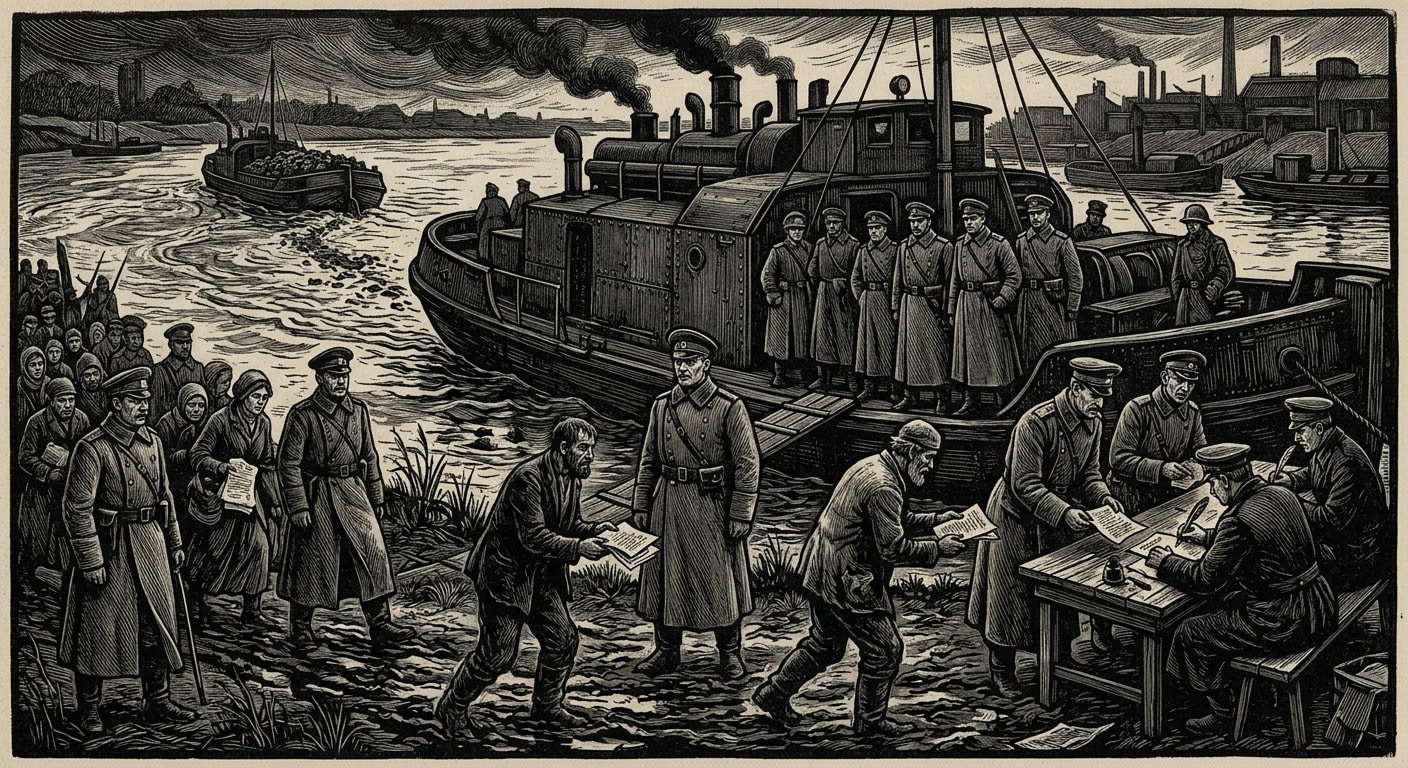
The ferries halted. Guards refused soaked slips. Clerks refused replacements without originals. Audit teams arrived and could not cross because their own authorising records lay among the drowned papers they had come to reconstruct. Bankside camps thickened into markets, latrines, prayer circles, fever tents, and little tribunals of exhausted people deciding bread distribution with sticks. The river carried pages downstream like pale fish.
From that mud came the ferry brokers: men and women who knew by memory what the Bureau had lost by storage. They knew who had crossed last week, who owed the tavern, who belonged to which cart, which child matched which aunt, which ferryman lied well, which guard would sell decency in exchange for dry socks. This knowledge had been vulgar. Silt Week made it infrastructure. The first Clean Slips and Black Oars rose not from ideology, but from a practical embarrassment: memory worked while paper dripped.
The Bureau of Records later converted the disaster into a proof of its own necessity. This is administrative genius of the first rank. A bridge falls; Engineering requests a larger bridge. A file drowns; Records requests a larger archive. The Rhine, which caused the embarrassment, was thanked for its pedagogical contribution. I have seen the circular. Three signatures. No blush.
#On the Cities That Drink From It
Mainz is the Rhine's throat. Cologne is its account-book. Rheinscarp is its staircase of extortion. Strasbourg, though not sitting as shamelessly upon the river as the others, drinks its commerce through canals, roads, and officials who have never thanked water for anything except leaving ink dry. Together these cities make the Rhine corridor a chain of holy appetites, each city taking from the current what suits its vice and filing the result as service.
Mainz counts crossings with the malice of a bell that has learned arithmetic. It remembers Augustinus, Hildegarde, Severian, bridge debts, the Iron Choir, cracked bells, toll books, and the old shame of clerics gored through streets while Rationalists laughed too soon. What crosses Mainz is counted; what sings in Mainz is owned. Barges slow at its bridges as if entering confession. This is sensible. Confession at least pretends to distinguish between sin and tariff. Mainz often does not.
Cologne receives the Rhine with wealth, relics, archive-banks, confessor-kiosks, Sable Court, and seventeen authenticated femurs of one saint, a numerical arrangement so offensive to Medicine that Doctrine had to make it beautiful. Cologne's danger is memory. It remembers councils, minutes, blacked-out lines, the day command borrowed a room and later called the room subordinate. The river gives Cologne traffic. Cologne gives the river paperwork and coin faces stamped hard enough to bruise theology.
Rheinscarp climbs above the river because horizontal cruelty was apparently insufficient. Nine terraces, tollhouse windows, stair-tokens, ration mills, the Ash Exchange, self-writing booths, and a High Step clergy breathing cleaner air than the Sump Docks below: Rheinscarp proves that a river city may become vertical if greed grows ambitious enough. Its genius lies in charging men for leaving the water's edge, then charging them again for looking down.
Smaller towns object to this hierarchy. They should. The vineyards, rope-ferry hamlets, bridge chapels, mill wards, quarantine coves, chalk shrines, toll islands, warehouse parishes, and nameless little places where bargemen marry local girls and abandon them with equal fervour are not ornaments. They are the river's teeth. They bite grain from sacks, names from slips, coins from pilgrims, secrets from couriers, and occasionally fingers from drunks who lean too far over mooring chains.
#On Barges, Grain, Bones, and War
The Rhine supplies the Line by pretending to be civilian until War needs it. Grain from western reserves moves in barges marked with Tithes seals and escorted by men who insist they are not soldiers because the uniforms are brown. Bell-metal, paper stock, saint-dust crates, candle wax, medicine chests, conscript boots, replacement clappers, oathglass, seal ink, and bodies bound for named or unnamed burial all move by water before roads and rail take over. A single barge may carry flour, relic filings, condemned labourers, and a crate of hymnals whose pages have been counted twice because Orison distrusts printers, readers, and the Creator in that order.
The Bureau of War loves the Rhine in the way a butcher loves a sharp table. It does not romanticize. The river carries weight cheaply. The river connects depots. The river gives access to Mainz, Cologne, Rheinscarp, Strasbourg dependencies, Moselle circuits, rope-ferry chains, and the northern and central roads leading east. War would pave Heaven if the paving could bear artillery. The Rhine, being already laid by Creation, has avoided procurement delays.
Tithes loves the Rhine more openly. Every lock is a mouth for coin. Every bridge is a doctrine of passage. Every cargo category has a surcharge; every surcharge has an exception; every exception has a fee; every fee has a devotional justification written in a hand too smooth to have loaded grain. Salt, wine, flour, bone, wax, paper, iron, cloth, bodies, ashes, relics, fuel: all move under rates. Smuggling is the river's counter-liturgy.
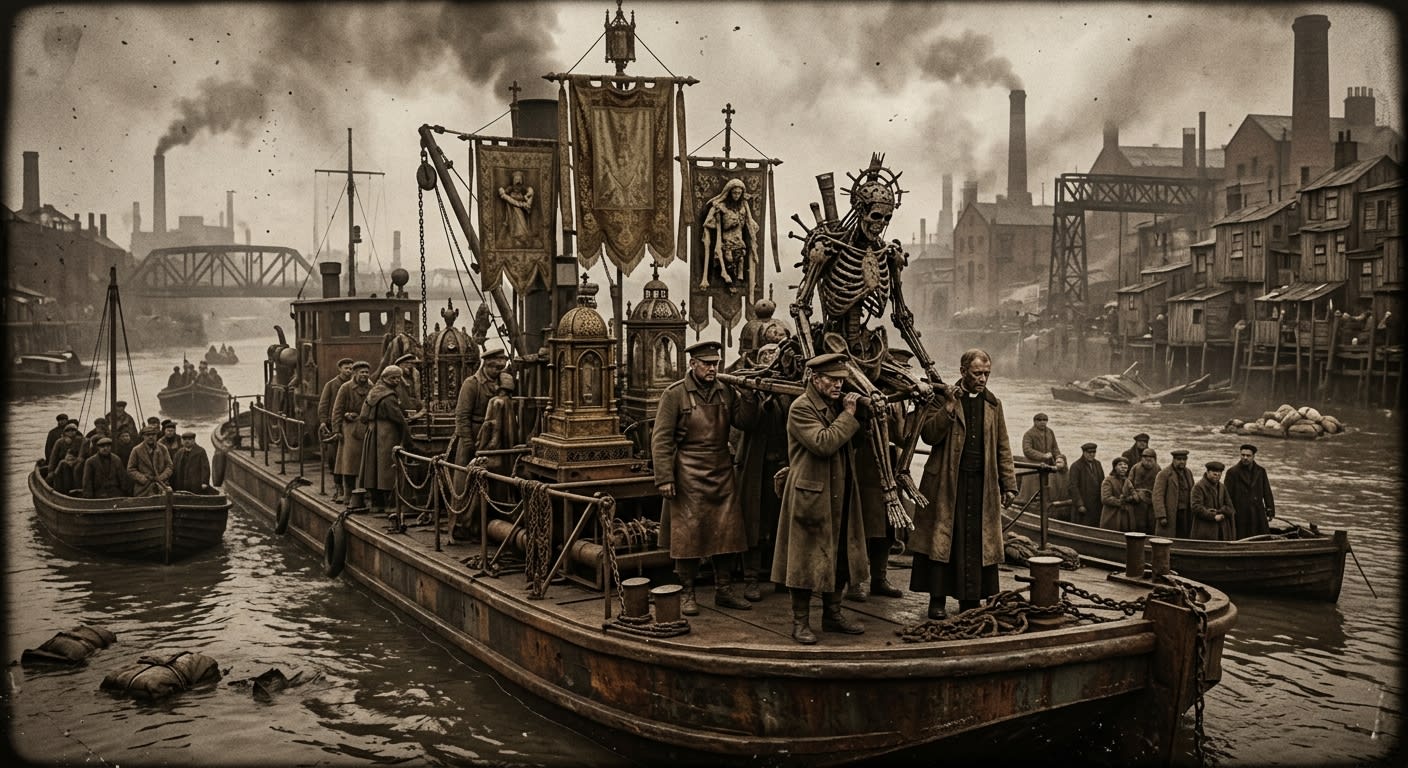
Relics travel badly by river and travel by river constantly. The Bureau of Relics distrusts vibration, damp, theft, prayers uttered without license, and bargemen with devotional tattoos. Armed escort follows; oathglass seals follow; climate-controlled tarpaulins, bell-silence during certain bends, and inspections at landings that charge for piety by the minute follow. The bargemen comply, mostly. A relic crate that hums at night is moved away from the beer. A relic crate that leaks is reported after docking. A relic crate that whispers names is placed near the youngest crewman, because youth sleeps heavily and can be blamed.
#On Heresy Moving With the Current
The Rhine has carried every respectable treason at least once. Rationalist tracts moved under wine casks during the Atheist Wars. Silent Godless questions travelled in coat linings, sermon margins, tally slips, and the underfolds of river manifests. Arno Kett organised his cells through Strasbourg, Mainz, Cologne, Mannheim, and the smaller corridor towns because clerks along a river see what landlocked citizens do not: numbers contradict one another when placed in motion.
Kett's ashes were scattered in the Rhine after his A.S. 138 execution for Doctrinal Nullification. This was meant as erasure. It became distribution. The Bureau of Purity insists no cult attaches to the scattering. The Bureau of Purity also stations observers at certain river steps every year on the date of his death, proving that denial becomes less convincing when it wears boots in the rain.
The Silent Godless learned from the river's habits. They did not need grand churches of disbelief. They needed crossings, delays, duplicated manifests, missing grain, late bells, widows whose pension figures disagreed with death rolls, bargemen who had seen a saint's relic listed under two crate numbers, and clerks who could count without permission. The Rhine corridor gave them all these gifts and charged no doctrine, only attention.
Purity circulars of late A.S. 173 described Silent Godless activity in the Rhine corridor as “effectively neutralised.”
Clarified. Several named organisers were arrested, several cells were broken, several presses were seized, and several questions survived without requiring anyone's permission. Neutralisation is a word officials use when the enemy has stopped standing where the rifles are aimed.
Other heresies prefer the river for less philosophical reasons. Counterfeit seals move better by water than by road, as wax suffers fewer inspections when hidden among fish barrels. Unregistered saints' bones travel from hill chapels to city brokers under labels reading axle pins. Mothers hiding unregistered children use ferry fog. Unauthorized melodies pass among barge crews because songs obey current better than edict. The Bureau of Orison has tried banning several river shanties. The river has not acknowledged receipt.
#On Flood, Silt, and the River's Little Courts
Flood is the Rhine's annual appeal against governance. Embankments hold until they do not. Lock gates groan. Cellars fill. Quay chapels move their candles upstairs. Records clerks carry ledgers in oilskin slings with the solemnity of bishops rescuing relics, and I do not mock them for it, because a ledger saved from flood can spare three hundred families the theological inconvenience of nonexistence.
Silt is subtler. It enters mechanisms, weights coffins, clogs lock teeth, fills ferry channels, buries evidence, reveals evidence, changes shorelines without consulting the map, and deposits small humiliations in expensive places. The Bureau of Cartography hates silt because silt edits. The Bureau of Records hates it because it stains. The Bureau of Tithes loves it when dredging contracts renew.
The river's little courts convene wherever water has made ordinary law wet. Ferry captains judge queue disputes with oar handles. Lock wardens decide whether a barge may pass before an audit team arrives. Chapel priests certify drowned cargo as salvaged rather than stolen if enough witnesses can still stand upright. Mothers identify children by scars when name tags blur. Bargemen swear by saints, then by ropes, then by profit. This is not law in the Strasbourg sense. It works too quickly.
Bureau intervention follows with the inevitability of mould in a damp archive. After every flood come revised shelf heights, new receipt colours, oath clauses, bridge fees, duplicate witness forms, priestly attestations, and circulars explaining that the latest disaster has demonstrated the wisdom of the office whose negligence made the disaster instructive. The Rhine accepts these papers. Sometimes it keeps them. Sometimes, when the spring thaw is merry, it returns them downstream as pulp.
#On Doctrine, Baptism, and the Problem of Running Water
Theologians have always been uneasy with rivers. Baptism requires water; jurisdiction requires boundaries; rivers bless and trespass in the same motion. A basin may be owned. A font may be sealed. A river passes from diocese to diocese with scandalous indifference, carrying yesterday's blessing into today's tariff district and tomorrow's quarantine reach. The Bureau of Rites has spent generations explaining why this is orderly. The explanations are long. The water remains brief.
Pilgrims treat the Rhine as a moving reliquary. They drop petitions at Mainz, ribbons at Cologne, coins at Rheinscarp, bread at small ferry chapels, ashes at bends whose names never appear in official guides. Records objects to unsupervised offerings because the river provides no receipt. Pilgrimage objects because unlicensed devotion reduces route revenue. Doctrine objects only when the offerings form patterns. Patterns are where private grief begins to impersonate theology.
One such pattern appeared after the Weevil Year, when western reserve famine gave river offerings a bitter taste. Families placed hollow crusts into the current, each crust marked with a household name and burden number. Thousands drifted north. Tithes called it protest. Mercy called it lamentation. Purity called it coded movement. The fish, who alone had the courage of appetite, ate several hundred before the matter could be classified.
Baptismal disputes along the river are older than the Synod and more irritating than most active heresies. If a child is baptized in water drawn upstream from an excommunicated parish, does the stain travel? If ashes of a condemned Nullifier are scattered in the river, must downstream fonts be reblessed? If a relic crate falls overboard and is recovered ten miles later, does the river count as custodian, thief, or witness? The Bureau of Doctrine has answers. The answers vary by litigation, which is the privilege of truth under administration.
A minor Rites handbook once stated, “The Rhine purifies all it touches.”
Corrected after Purity objected, Tithes objected, Medicine objected, and three downstream parishes attempted to waive purification fees. Approved wording: the Rhine may participate in purification under licensed circumstances and with proper witness.
#On the Present River
As of A.S. 201, the Rhine remains loyal, profitable, polluted, devout, criminal, useful, and insufficiently grateful. Its barges move grain toward depots that feed the Line; its cities convert memory into money; its ferries teach men that a name must survive both ink and weather; its floods revise the confidence of every office built too near the bank. The river has become safer in all measurable ways and more dangerous in several that matter.
The northern and central supply corridors lean upon it. Hamburg's imports move inland through rail and river arithmetic. Kanzleiburg's northern boards depend on Rhine finance. Cologne's archive-banks pledge against cargo not yet unloaded. Mainz counts what crosses. Rheinscarp charges what climbs. Strasbourg reads the totals and calls the arrangement Providence, because Providence, unlike logistics, does not demand overtime.
There are current concerns. Silt patterns near several tributary mouths have shifted without corresponding dredge reports. Black Oar crossings have increased after curfew. Silent Godless questions have appeared in waterproof ink on ferry tokens. The Ash Exchange has purchased rights to three drowned cemeteries and refuses to explain why. A barge carrying bell clappers from Essen reported hearing a choir beneath the hull near a bend where no chapel stands. Medicine has requested samples. Rites has requested silence. Tithes has requested valuation.
RIVER WATCH NOTE — A.S. 201, SEALED ROUTE FRAGMENT Barge: Saint Odilo's Practical Mercy. Cargo: clappers, flour, two sealed relic crates, auditors. Report: voices under hull for seven minutes. Words heard by pilot: “██████████████████████.” Auditor response: entered cargo hold and counted crates aloud until dawn. Disposition: route retained; pilot fined for unsanctioned listening.
The Rhine will outlast the present offices. This is not consolation. Rivers outlast because they have no shame, no doctrine, no personnel budget, and no need to win an argument before eroding the room in which it is held. We have bridged it, taxed it, blessed it, dredged it, mapped it, sung over it, scattered enemies into it, fished saints out of it, and taught children not to trust it when fog climbs from the water with no bell to announce itself.
At dawn the barges pull from Mainz. At noon the tollhouse windows open in Rheinscarp. At Vespers Cologne counts pilgrims and faces. By night the smaller ferries move where official lamps do not shine, carrying bread, seals, children, questions, bones, lies, and the kind of hope that survives best when poorly documented.
#On River Offices and the Men Who Smell of Damp Wax
The Rhine has offices peculiar to itself, because every profitable inconvenience eventually breeds a clerk shaped to fit it. The River Witness stands at landings and confirms that cargo left one bank and reached the other without changing legal species. The Damp-Seal Examiner warms wax under a hooded lamp and decides whether a blurred impression remains obedient. The Barge Catechist blesses crews whose language would flay paint from a chapel door. The Flood Shelf Warden measures how high the ledgers sit above last year's shame. The Rope-Ferry Chain maintains men who can tell by hand whether a rope has been cut, stretched, cursed, or merely purchased from Cologne at a dishonest rate.
These offices are minor by Strasbourg measure and imperial by the measure of anyone waiting in rain. A great office kills from a distance. A river office kills through delay. One missing witness, one softened seal, one disputed cargo species, and a family may remain on the wrong bank until the fever decides the issue. The Rhine teaches small officials to savour power in drops. This is why they become insufferable quickly and corrupt slowly; both conditions are hard to distinguish under oilcloth.
Their patron is contested. Saint Morin of the Sealed Mouth claims the dead goods. Saint Vellum-of-the-Quiet-Hand claims the night notaries. Mother Vellum of the Reed claims what cannot be written without drowning someone. The Bureau of Hagiography has attempted consolidation twice and withdrawn twice, having discovered that minor river offices will surrender income before they surrender patronage, and they will not surrender income. A third attempt is docketed after A.S. 201, which gives the saints time to arm.
#On the Rhine's Black Arithmetic
No river article is honest until it counts drowning. The Rhine kills gently by reputation and variously in practice. It takes children at ferry steps, bargemen under winter hulls, clerks who chase loose pages during flood, soldiers too drunk after furlough to respect black water, penitents who mistake symbolic immersion for aquatic competence, and debtors whose final accounts are simplified by depth. Each death requires classification. Classification, as ever, is where grief learns to stand in line.
Drowning in Synod territory has categories. Ordinary Drowning, Witnessed. Ordinary Drowning, Unwitnessed. Cargo-Adjacent Drowning. Pilgrim Drowning, Licensed Route. Pilgrim Drowning, Unlicensed Deviation. Punitive Immersion, Successful. Punitive Immersion, Excessive. Suspected Self-Drowning, Debt-Involved. Heretical Water Contact. Sacred Water Contact, Outcome Regrettable. These categories comfort no mother. They comfort the tariff office immensely.
The most disputed category is administrative drowning: a person made legally absent by water-damaged paperwork while the body remains dry, vocal, hungry, and increasingly impolite. Silt Week produced thousands. Later floods produced fewer, because Records learned to raise shelves and lower expectations. A dry man can drown in the Rhine if the river takes his record. The body stands on the bank; the name floats away; the Bureau, with pastoral tenderness, bills the widow for restoration search.
The Black Oars know this arithmetic better than the offices. Their night boats carry men who have drowned in law and wish to remain inconveniently alive. They take no spoken names. They mark fares by knots, scars, debts, and the old mercy of not asking. Purity calls them smugglers. Passage calls them route contaminants. Mothers call them when the official ferry asks for papers the flood ate.
#On the River Below Strasbourg's Pride
Strasbourg prefers to imagine itself above rivers: a capital of towers, ledgers, doctrinal heat, and dry vaults where law descends by seal rather than barge. This is theatre. The city is fed by river arithmetic as surely as any dockside mill. Paper stock, ink ingredients, candle wax, grain, wine, stone, relic cases, prisoners, petitions, and rumours arrive through Rhine-dependent chains before the Tower of the Quill pretends they were summoned by authority alone.
The Basilica of the Ledgered Saints smells faintly of river damp in its lower vaults during spring thaw. Archivists deny this. Archivists deny many things, including mould, fatigue, and the moral resemblance between a saint's reliquary and a locked invoice box. The damp rises through old walls and leaves pale blooms on storage twine. Junior clerks rub them away with vinegar cloths and say nothing, because a capital must not be seen sweating through its foundations.
The Rhine's insult to Strasbourg is old independence. The city can command barges, toll routes, ferry schedules, bridge watches, dredging crews, and quarantine locks. It cannot command current. It can punish a ferryman, but not fog. It can rewrite a drowned man's status, but not persuade the river to return the page unstained. Authority hates any force that obeys gravity before it obeys decree.
At evening, when the capital's bells take possession of the hours, the river towns answer in their own sequence: Mainz throat, Rheinscarp teeth, Cologne purse, the ferry hamlets' little cracked bells, the lock chains, the barge horns, the cough of men who sleep near damp rope. Strasbourg hears this as loyal noise. The river hears nothing. It is busy carrying the next correction downstream.