

Reverse Index
Referencing “Hollow-Script Scriptorium of Nemea”
Every codex entry that links to Hollow-Script Scriptorium of Nemea. 32 entries.
Return to Hollow-Script Scriptorium of Nemea

Abbot-Registrar Maelen Voss
Clean hands at the archive that learned to answer back
Maelen Voss, Abbot-Registrar of Nemea, guards originals with clean gloves while Night-Rewriting Contracts prove the page has begun to move beneath him.
Codex Ref. III.2.01-198

Abbot-Registrar Solene
She made contradiction choose a widow and a loaf
Solene of Lyon, first Abbot-Registrar of Nemea, made ruins into an archive and panic into the doctrine of original by ratification.
Codex Ref. III.2.01-096

Aldara Vess the Elder
The woman who taught fire to be inefficient
Aldara Vess the Elder founded the Bureau of Silence in A.S. 82 and gave the Synod its coldest doctrine: words are not burned; they are made absent.
Codex Ref. III.2.01-082
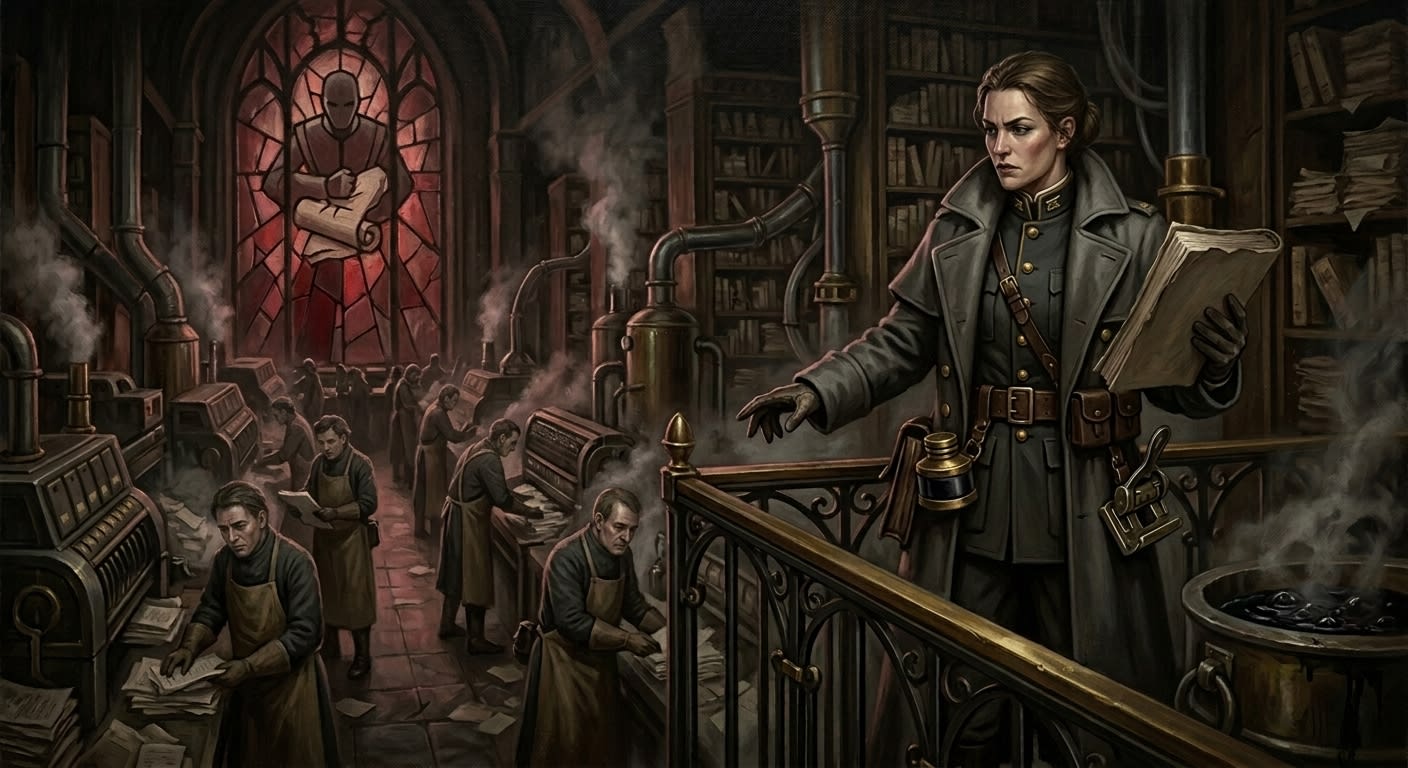
Aldara Vess the Younger
The woman who removes language from the room until obedience remains
Aldara Vess the Younger commands the Bureau of Silence, the Forbidden Stacks, and the art of making words administratively absent before they become dangerous.
Codex Ref. III.2.01-018
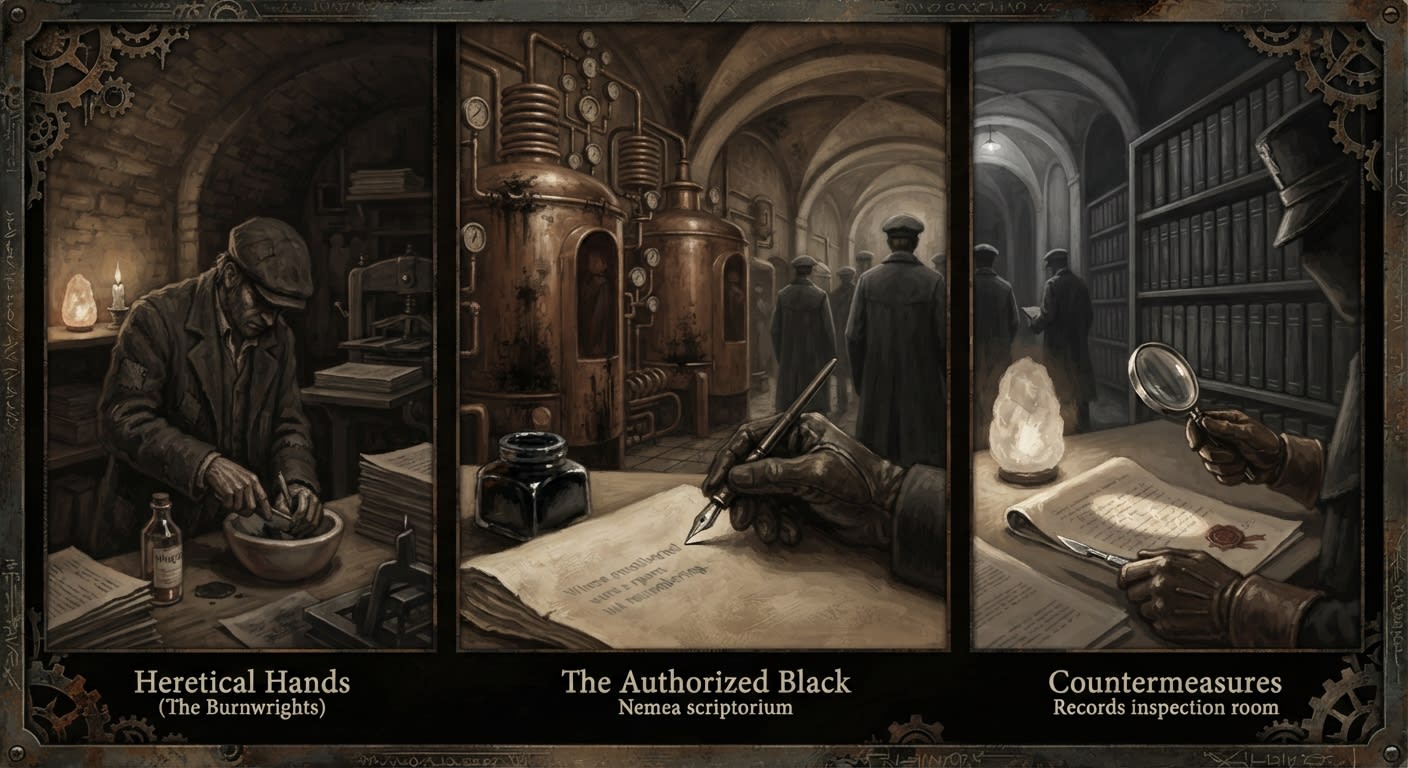
Ash-Ink
The authorized black, and the forgeries it taught to breathe
The lawful black of Nemea and its hanged imitations: ink made from burned authority, relic residue, and the Bureau of Records' dearest mistake.
Codex Ref. XIII.1.96-096

Audit-Cantor
The officer who learned to distrust the whiteness around approved words
The Bureau of Silence keeps forty Audit-Cantors to open books, weigh margins, warm blank pages, and decide which libraries die quietly.
Codex Ref. VIII.3.02-002
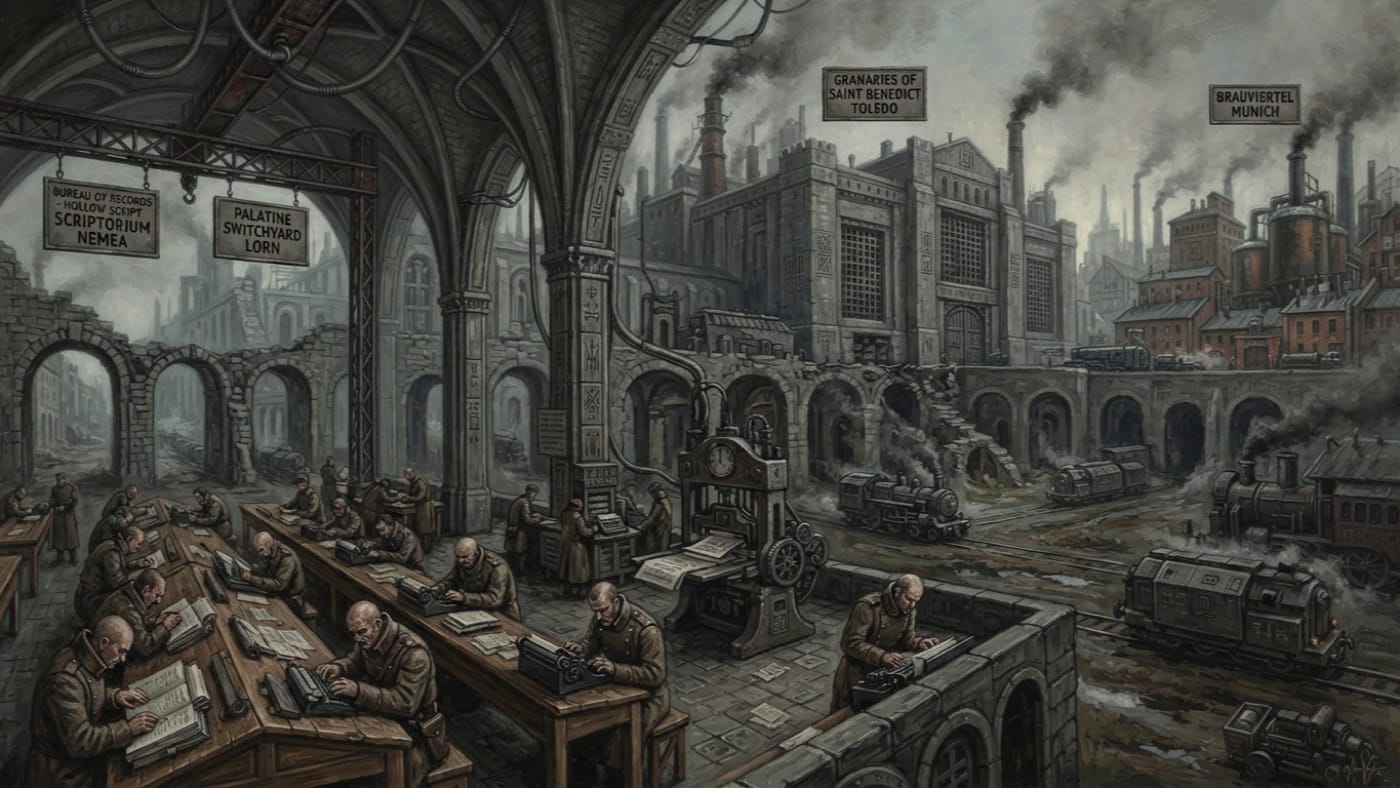
Benedictine
Property Dispersed, Name in Circulation
Benedictine houses trained Veyrault and left traces in Nemea and Lorn. Toledo claims their charity; Munich claims their yeast. Neither claim supplies me with a surviving order.
Codex Ref. VIII.9.02-244
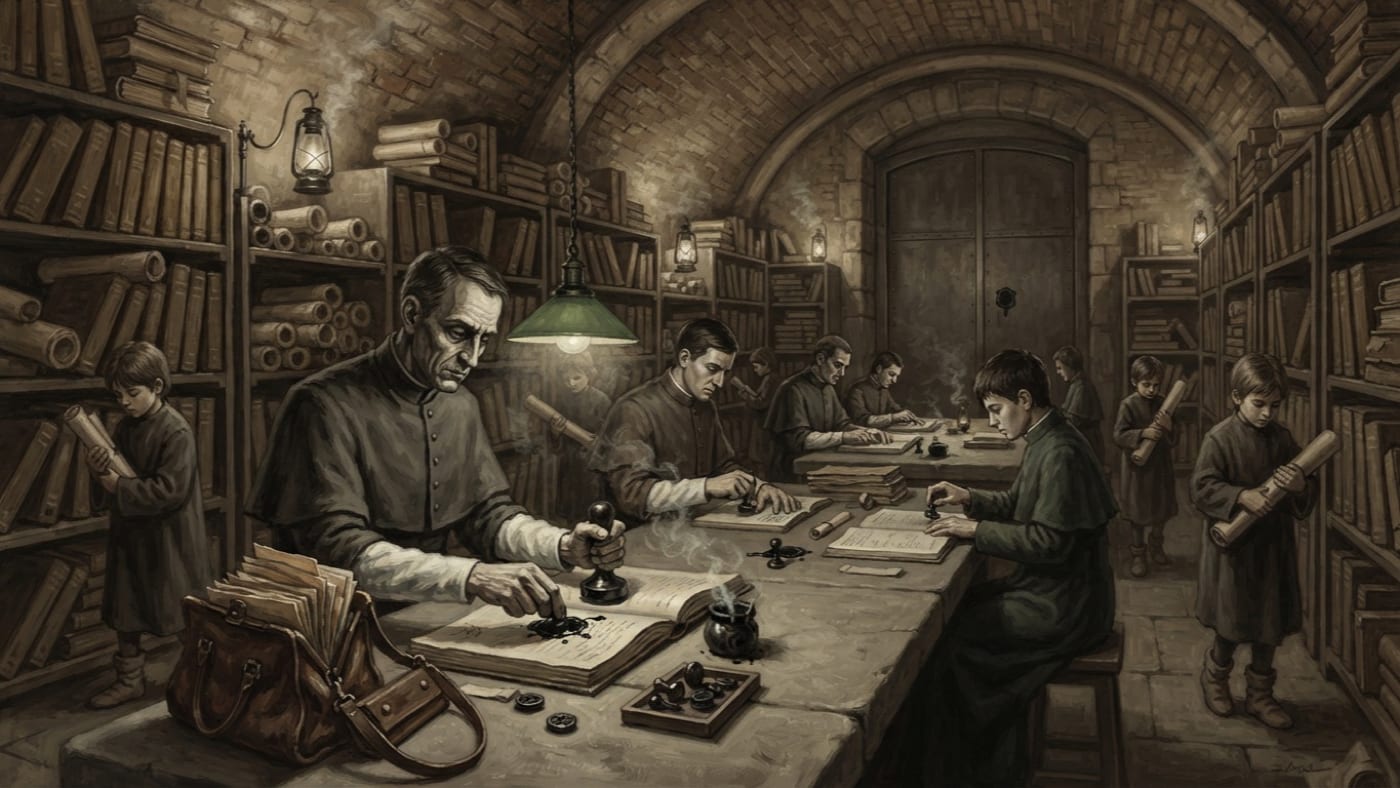
Black Seal Annex
The citizen loses everything. The file loses nothing.
Beneath Strasbourg's Records house, the Erasure Notaries keep every file behind a vanished citizen. The citizen loses everything; the Annex loses nothing.
Codex Ref. XIII.1.70-002
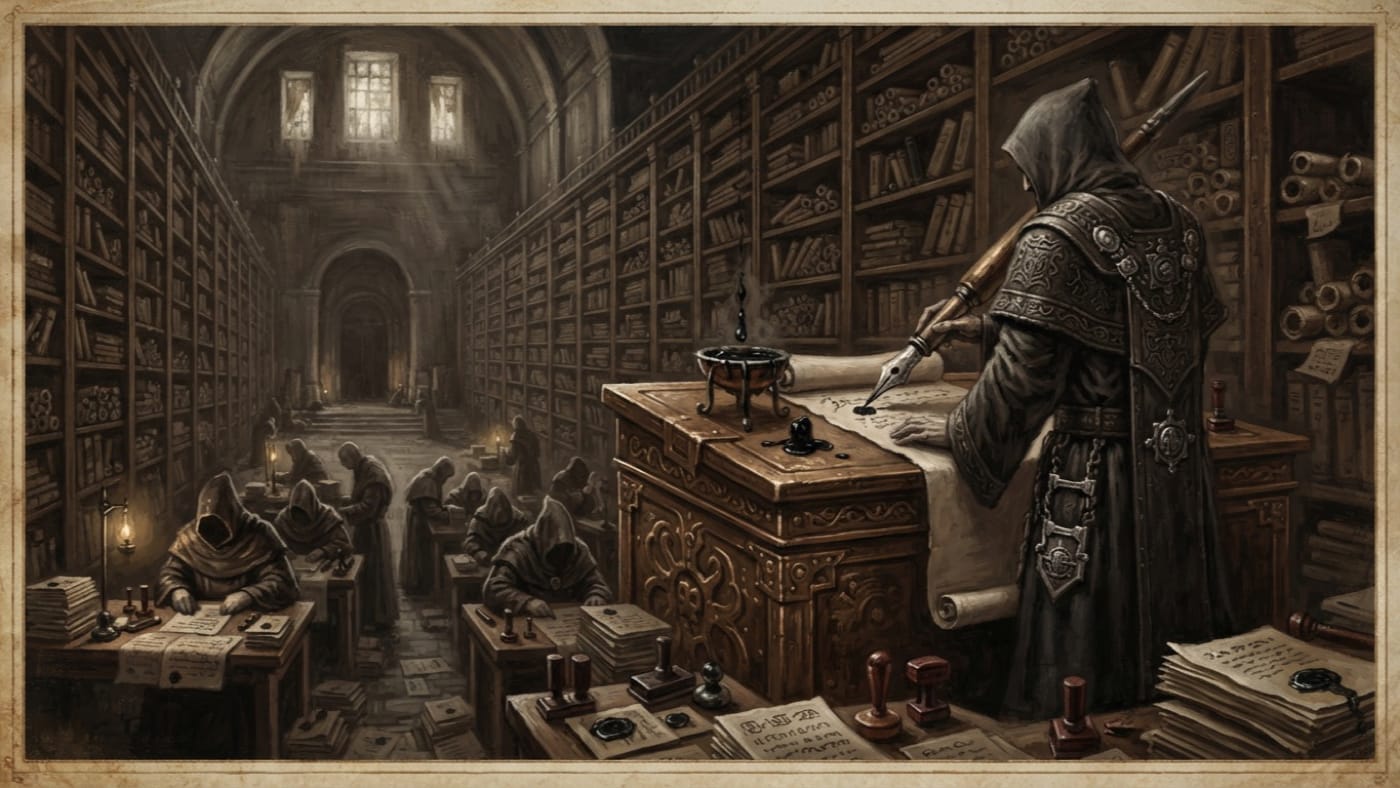
Black Seal Prelate
The Notary signs the strike; the summit decides whose signature survives.
The summit of the Office of Nullity's hierarchy: rarely seen, feared by every Erasure Notary, and capable of ruining one with a signature. The station is attested; the incumbent remains outside the public rolls.
Codex Ref. XIII.1.70-002

Bureau of Alchemical Standards
First the tongs, then the theology
The Bureau of Alchemical Standards tests the sacred for spoilage, classifies residues no sane clerk would touch, and gives terror a tolerable label.
Codex Ref. VIII.2.02-001

Charter Address of A.S. 82
Fire leaves witnesses; an orderly shelf leaves nothing to mourn
Aldara Vess the Elder's A.S. 82 Charter Address gave Silence its founding argument: fire distributes forbidden words; administrative absence keeps the shelf orderly.
Codex Ref. XIII.1.82-001
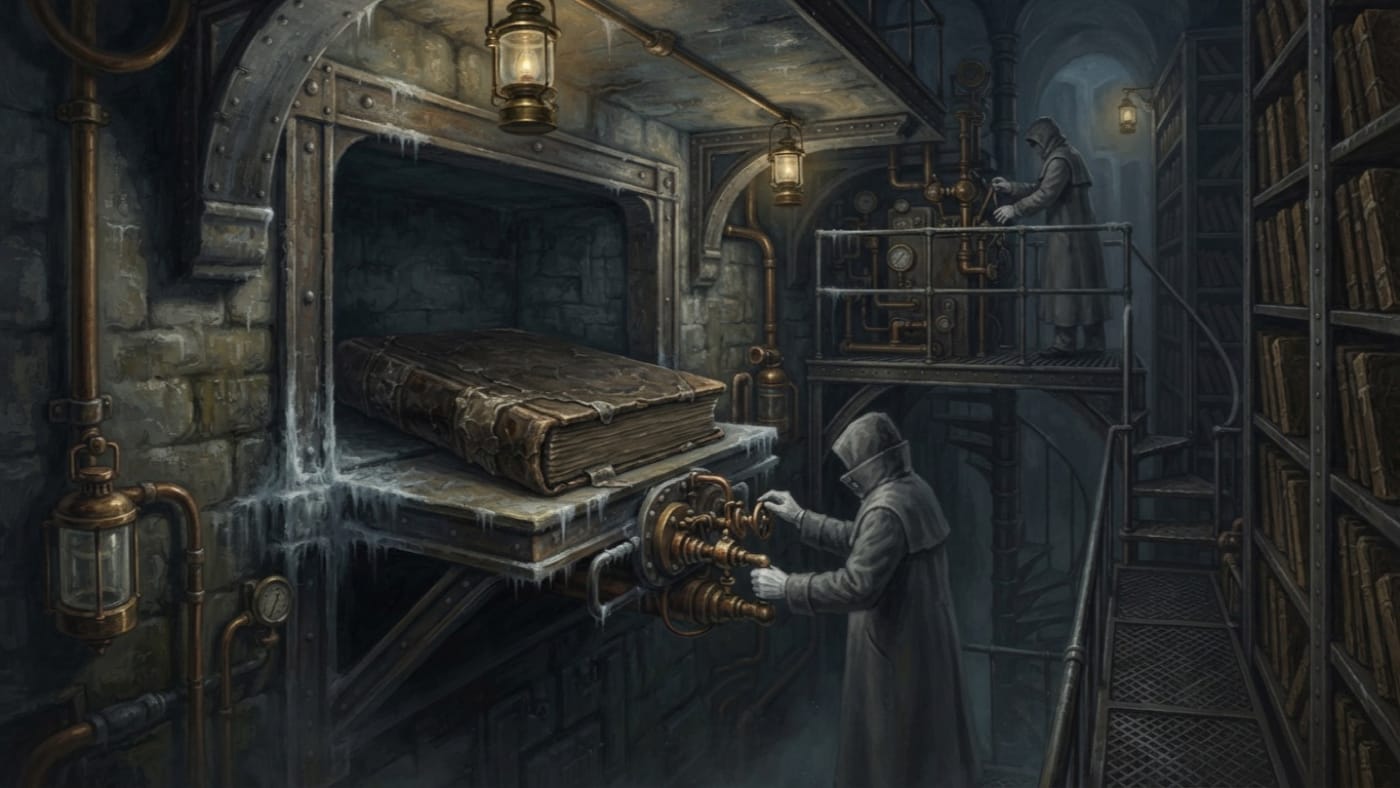
Charter of Administrative Node Seven
The filing is certain. The clauses are another matter.
Filed by Records in A.S. 78, the charter remains on the Burnless Archive's founding shelf. Its custody is attested. Its clauses have not crossed my desk.
Codex Ref. XIII.1.78-007
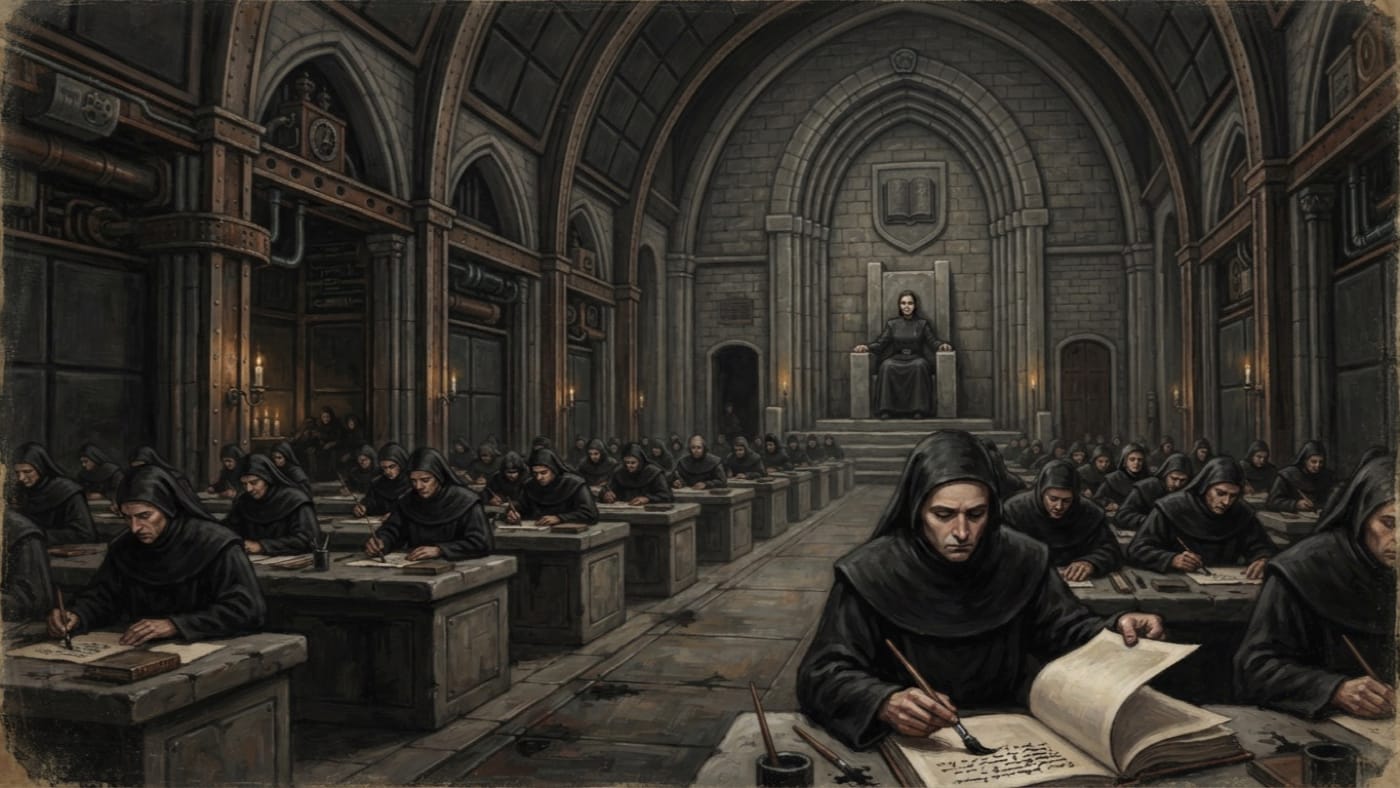
Cloister of Prescribed Silence
The room where refusal requires no reasons
The Cloister of Prescribed Silence is the Bureau of Silence's soundproofed Strasbourg seat, where libraries are licensed, Forbidden Stacks access is counter-sealed, and changing ink is declared obedient.
Codex Ref. II.1.04-019
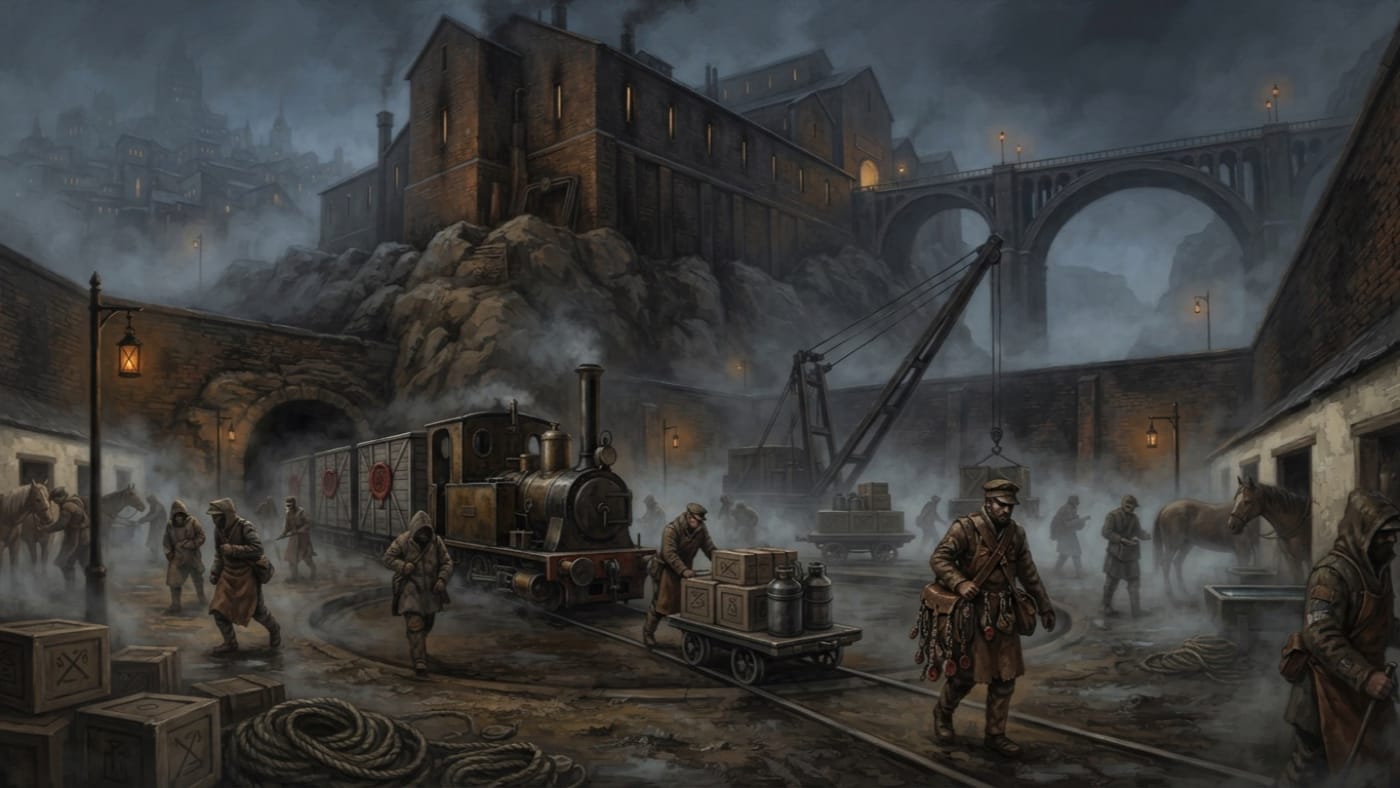
Courier Spur
Carriage certified; contents not warranted
Nemea's eastern dispatch district exports sealed decrees, certified identities and ash-ink under Collegium scrutiny. The Brotherhood certifies carriage. Contents, as the stamp says, are not warranted.
Codex Ref. II.2.06-017

Erasure Notary
The scaffold produces martyrs; the Office of Nullity produces only silence — and nine hundred Black-Stamps to stamp it.
Nine hundred Black-Stamps who unmake persons through ink and wax — no body, no grave, and no widow to scratch the martyr's name on cellar walls.
Codex Ref. XII.14.01-001

Forgery Panic of A.S. 178
The decree that was never written and cited fourteen times
A.S. 178 archival panic in which fourteen advocates cited the same fabricated ration-priority decree, forcing scribe licensing reform and chain-of-custody discipline.
Codex Ref. VII.8.10-049

Index Clerk
The Notary strikes the name. Someone has to tell him where it is.
The Office of Nullity's lowest desk with a pen: clerks who locate names, map dependent ledgers and file the notices that make an erasure travel. The seal belongs upstairs; the blame comes down.
Codex Ref. XII.14.01-003

Ink Batch 4,891-K
The black obeys its specification; the specification has been widened
Ink Batch 4,891-K erases beyond its licensed lines. Production continues under Seal Amber; margins widen, and three Redactors report words within the black.
Codex Ref. XIII.1.96-4891
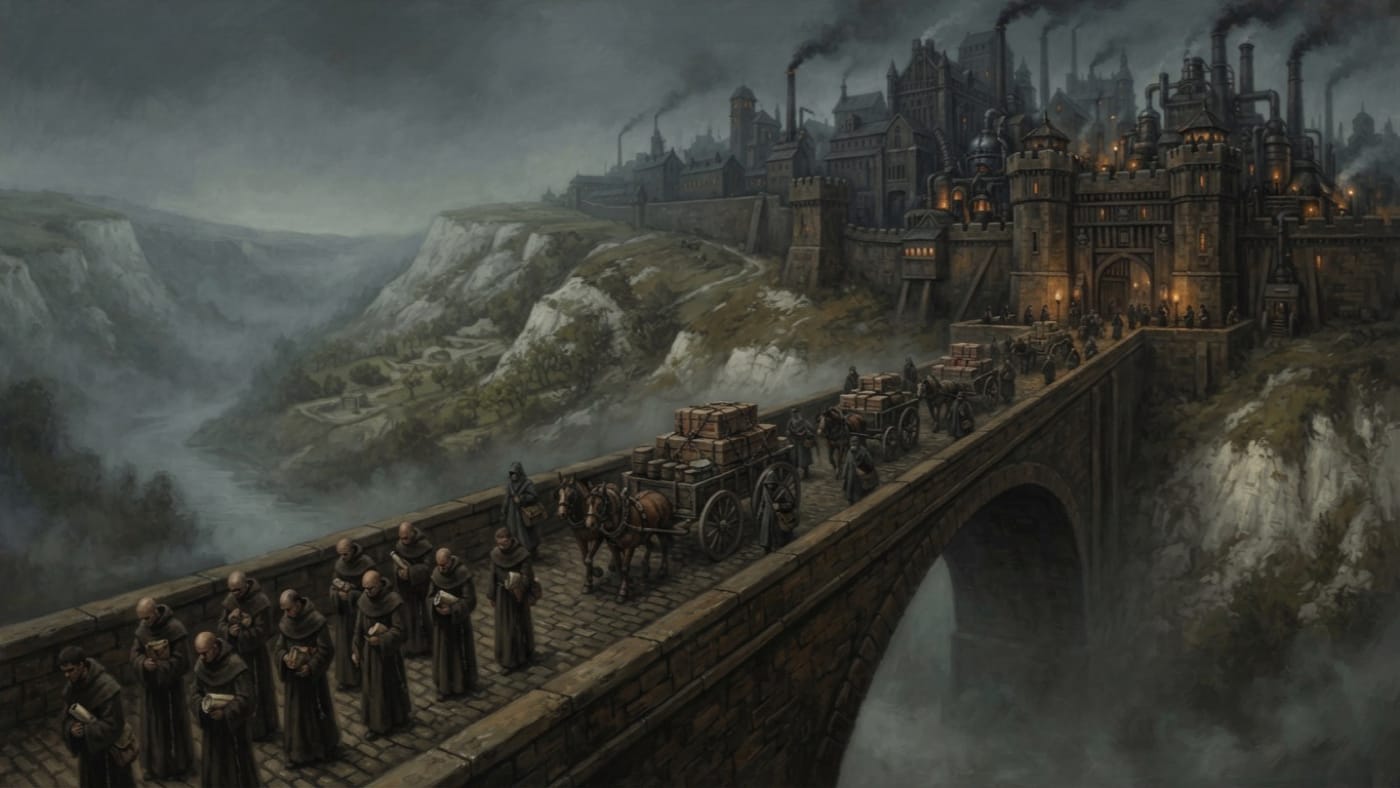
Inkhouse Bridge
The bridge carries the papers; the gatehouses decide
Nemea's single stone span carries all freight, couriers and novice intake. The Bureau arranged the bottleneck deliberately. The bridge carries the papers; the Collegium waits beyond the crossing.
Codex Ref. II.2.06-021
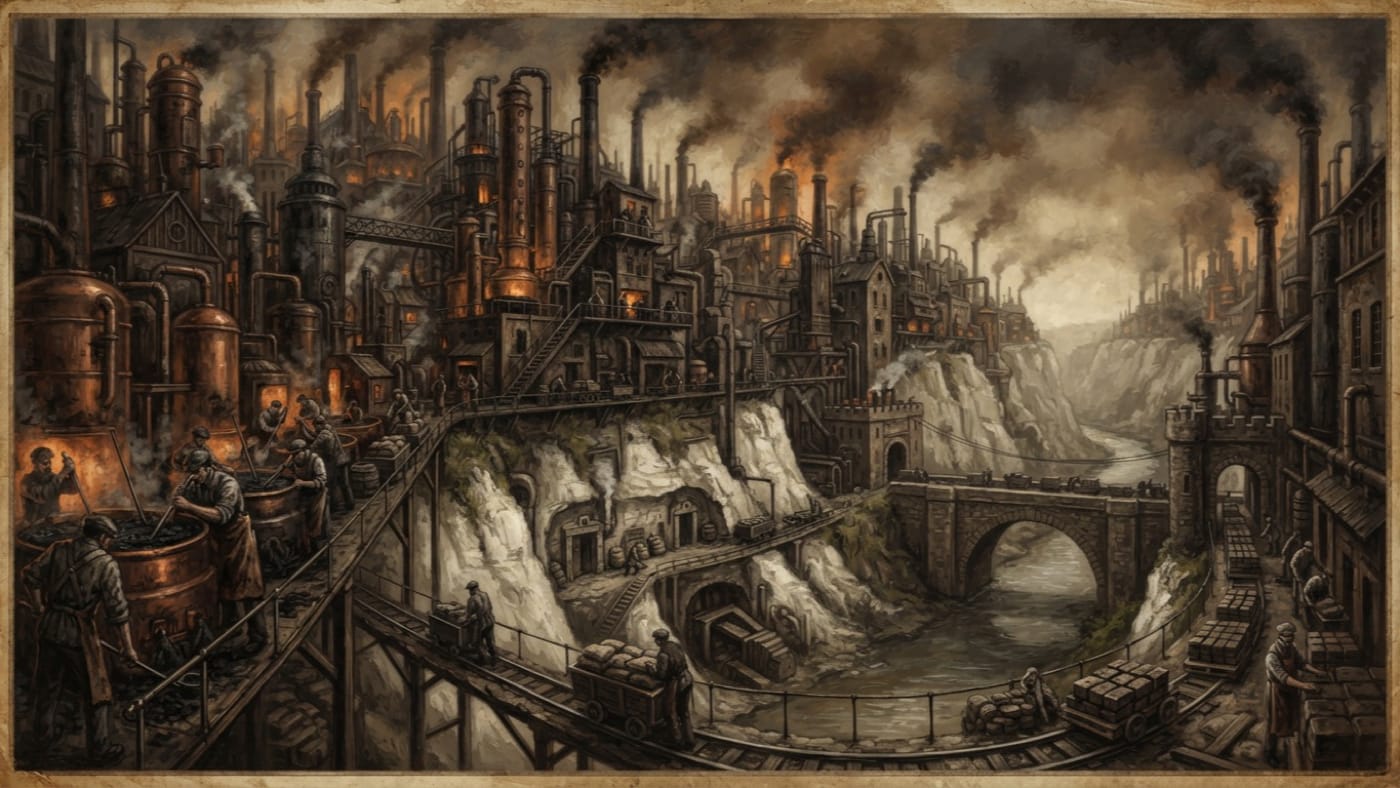
Inkhouse Quarter
Where the law is boiled before it is written
Nemea's copper-vat precinct supplies the Bureau of Records with rationed ash-ink. The brewers pay in shifts and surnames; the contracts downstairs keep finding new obligations.
Codex Ref. II.2.06-020

Inquisitor-Corrector Sel Durn
An open inquiry into originals that will not hold still
Inquisitor-Corrector Sel Durn's A.S. 201 visitation tests Nemea's originals and Voss's definitions. The custodian is competent; the custody remains unstable.
Codex Ref. III.2.01-201
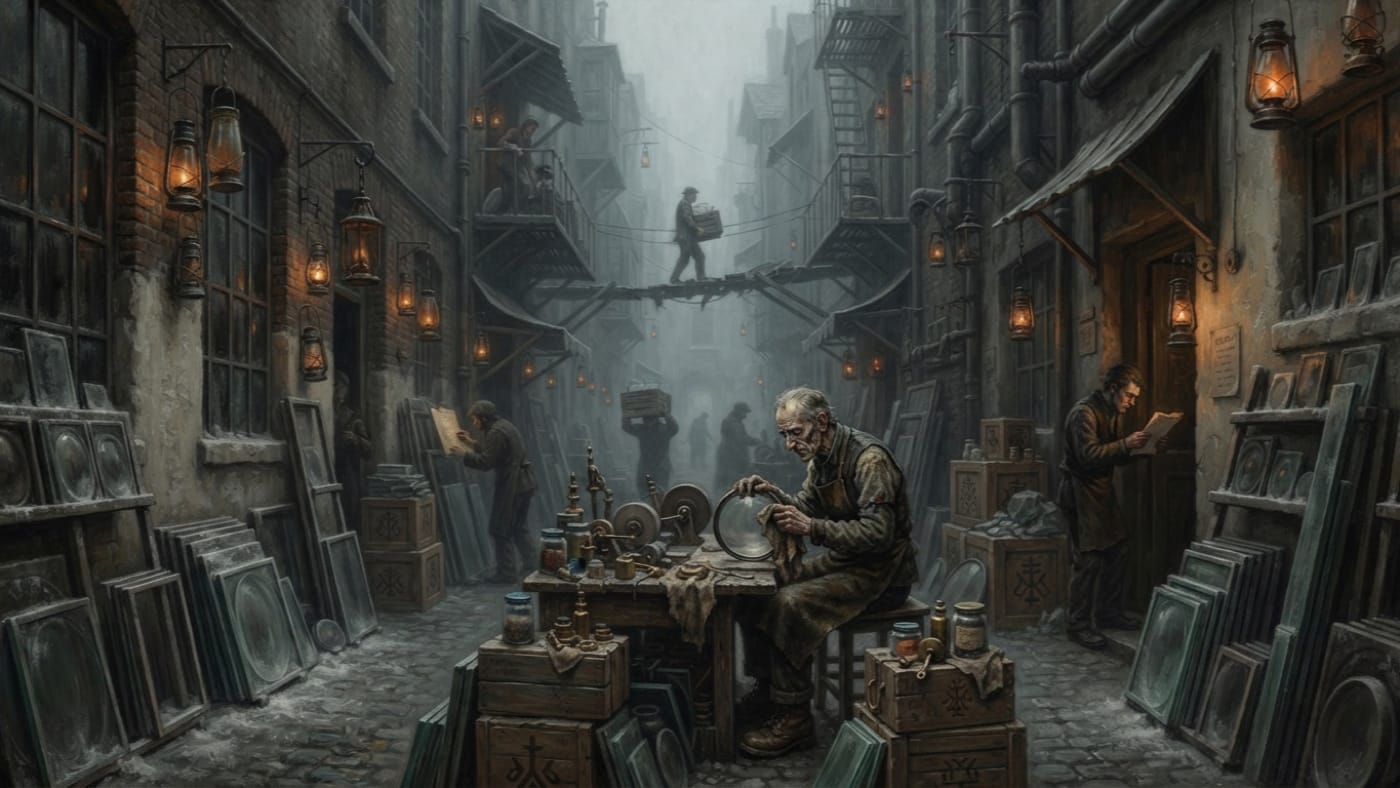
Lampglass Row
Every name must be read before it can be erased
Nemea's glassworking district supplies the panes and lenses by which records are proven to exist. Its Compact sells light, lends oil against pages and names, and charges for truths no authority has certified.
Codex Ref. II.2.06-022
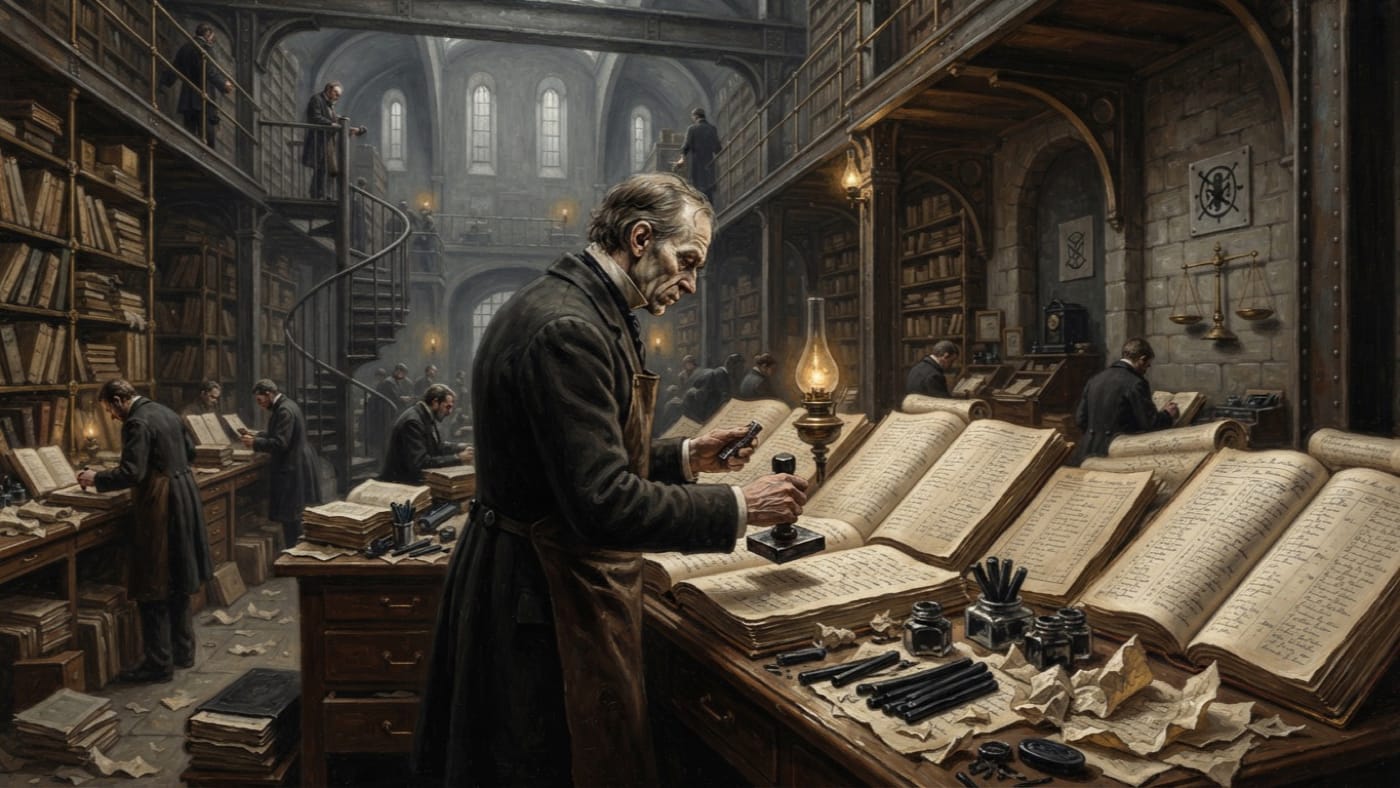
Lineage Severer
The household loses its standing; the Office keeps every page.
The Office of Nullity's family-strike specialists reconcile dependent rolls before sealing a household out of civic life. Nobody dies at the desk; every office afterward refuses them.
Codex Ref. XII.14.01-003
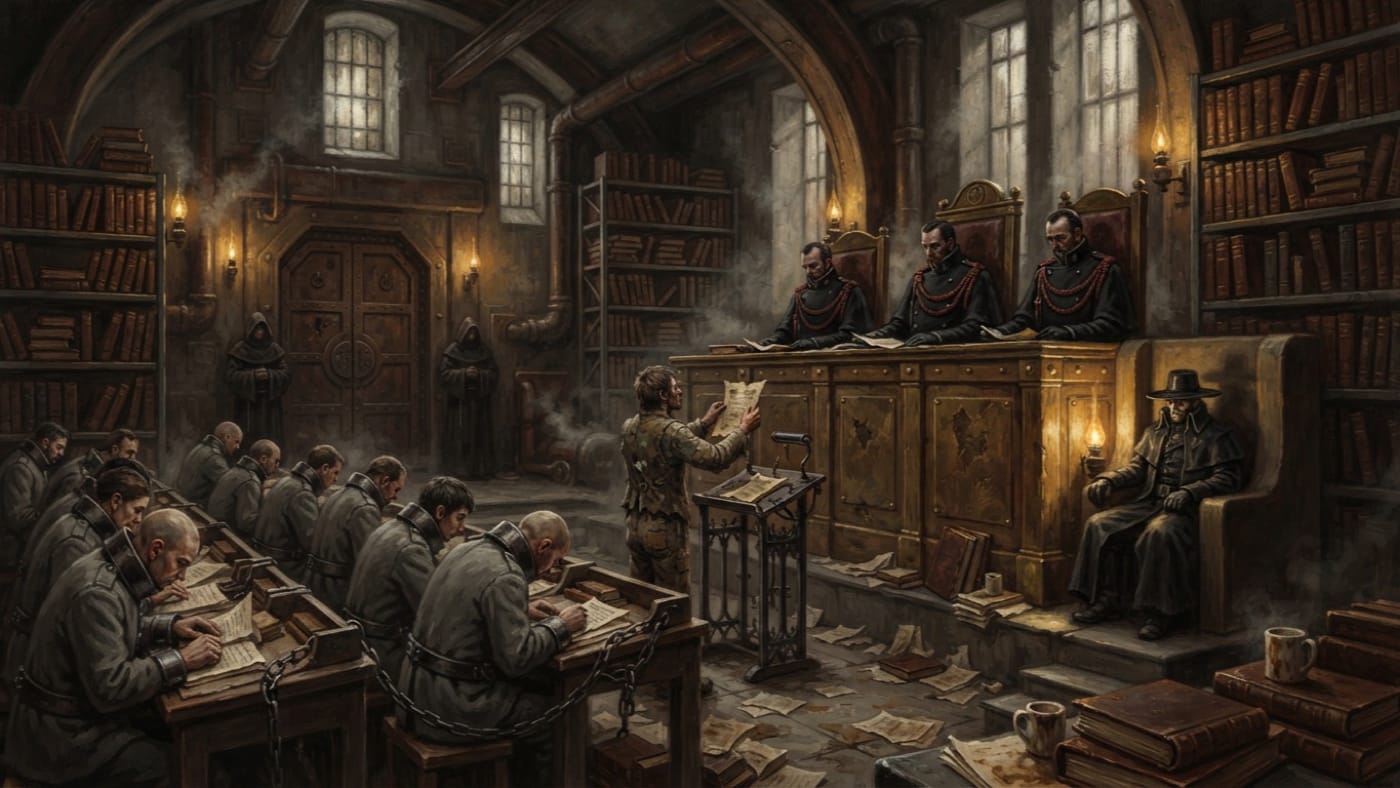
Margin Court
Your name remains yours until the Court corrects it
Nemea's red-cord tribunal settles identity claims, contracts and the position of a name on a page. The Court supplies the evidence, judges the record, and charges for the correction.
Codex Ref. VIII.2.14-1731
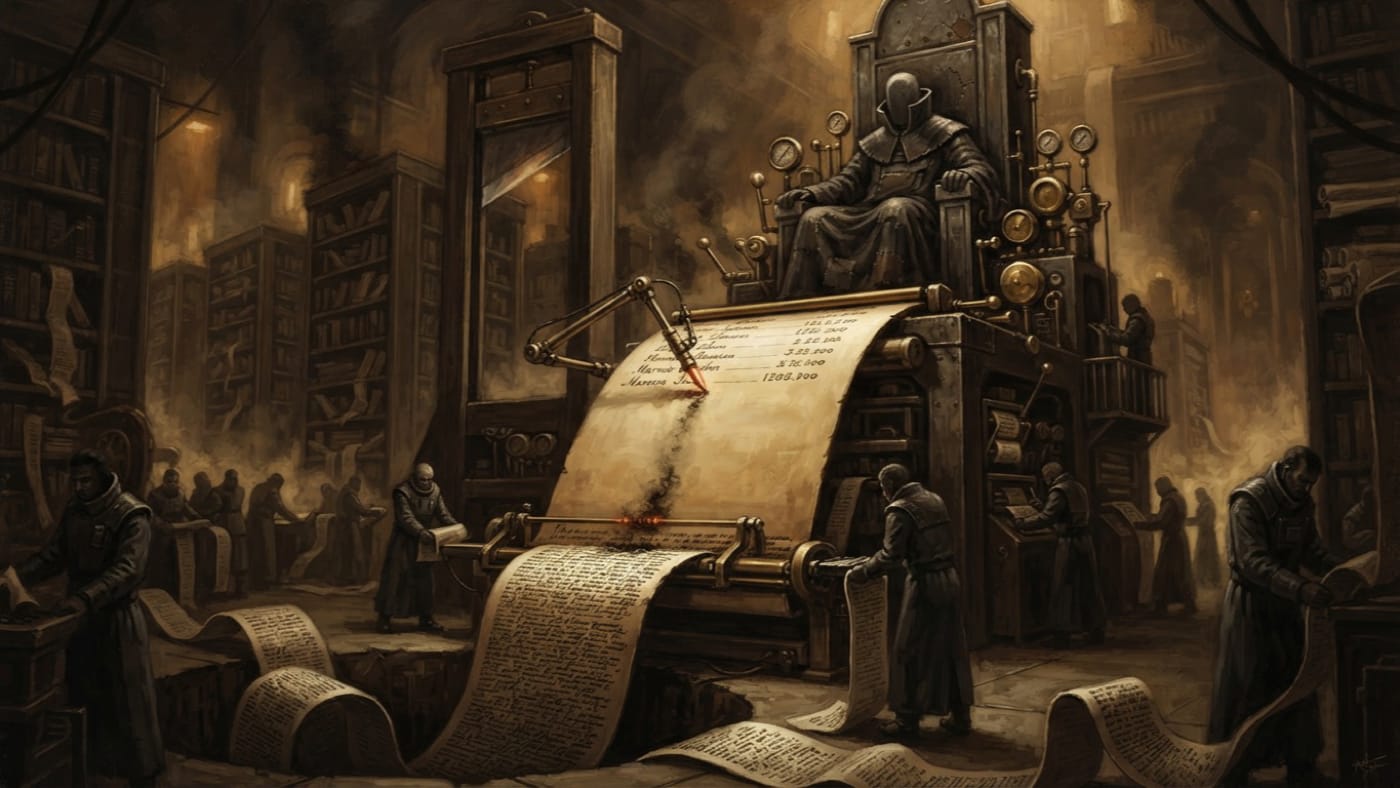
Margin Inheritance
The name grows smaller; the debt does not
Nemea's Margin Court moves names and debts into footnotes: a name loses its standing; a debt waits for whoever inherits the page. The Court insists this is not punishment.
Codex Ref. XIII.1.73-1732

Nemea ash-ink
The ink certifies its origin. The hand remains unassigned.
Nemea ash-ink certifies where a document's ink came from. The Burnless Archive's living addenda show how little this settles when no living hand admits writing them. Provenance confirmed; authorship pending.
Codex Ref. XIII.1.201-013
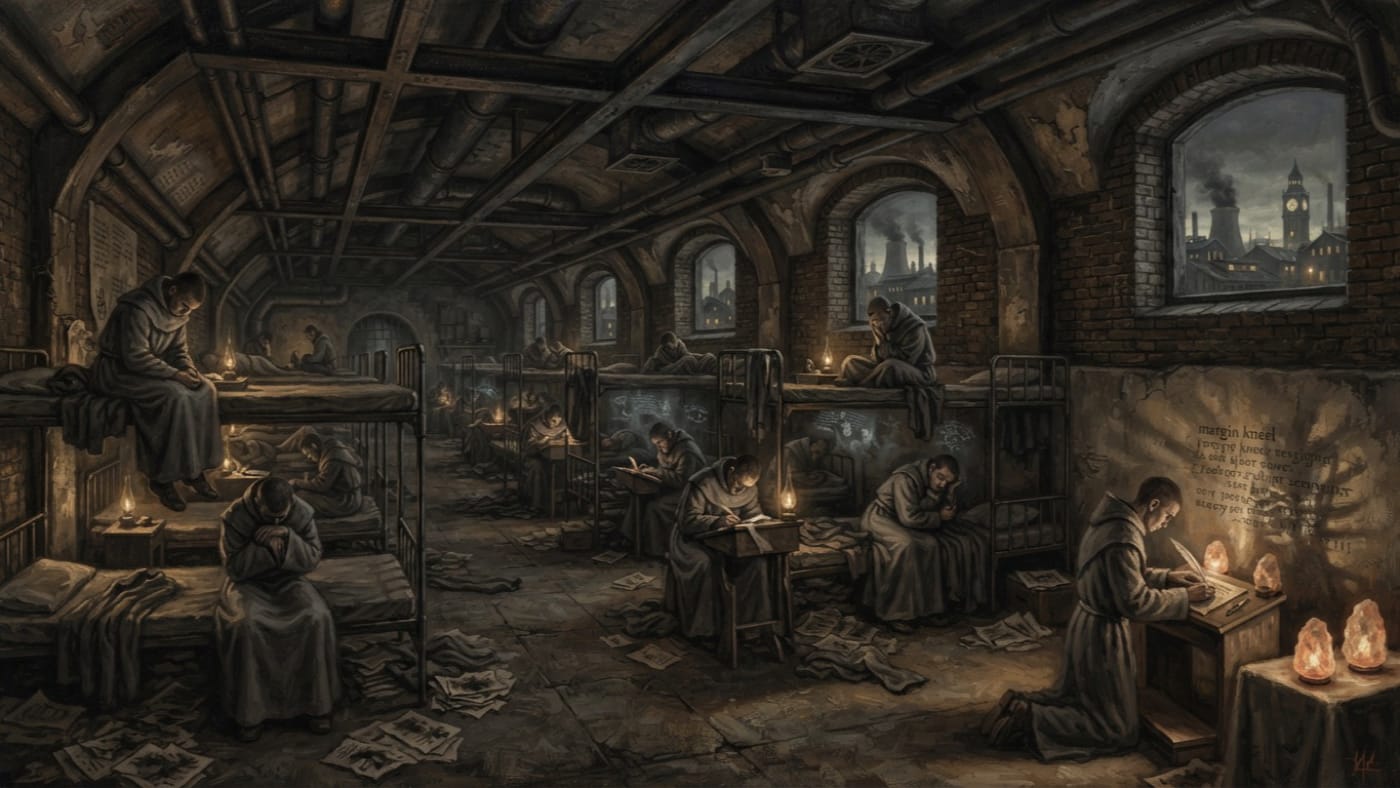
Novice Barrens
Where novices sleep and their obligations do not
Nemea's dormitories and vow rooms house novices stripped of birth-names and bound by page debt. Their contracts sleep in the vaults; their obligations need not remain as signed.
Codex Ref. II.2.06-201
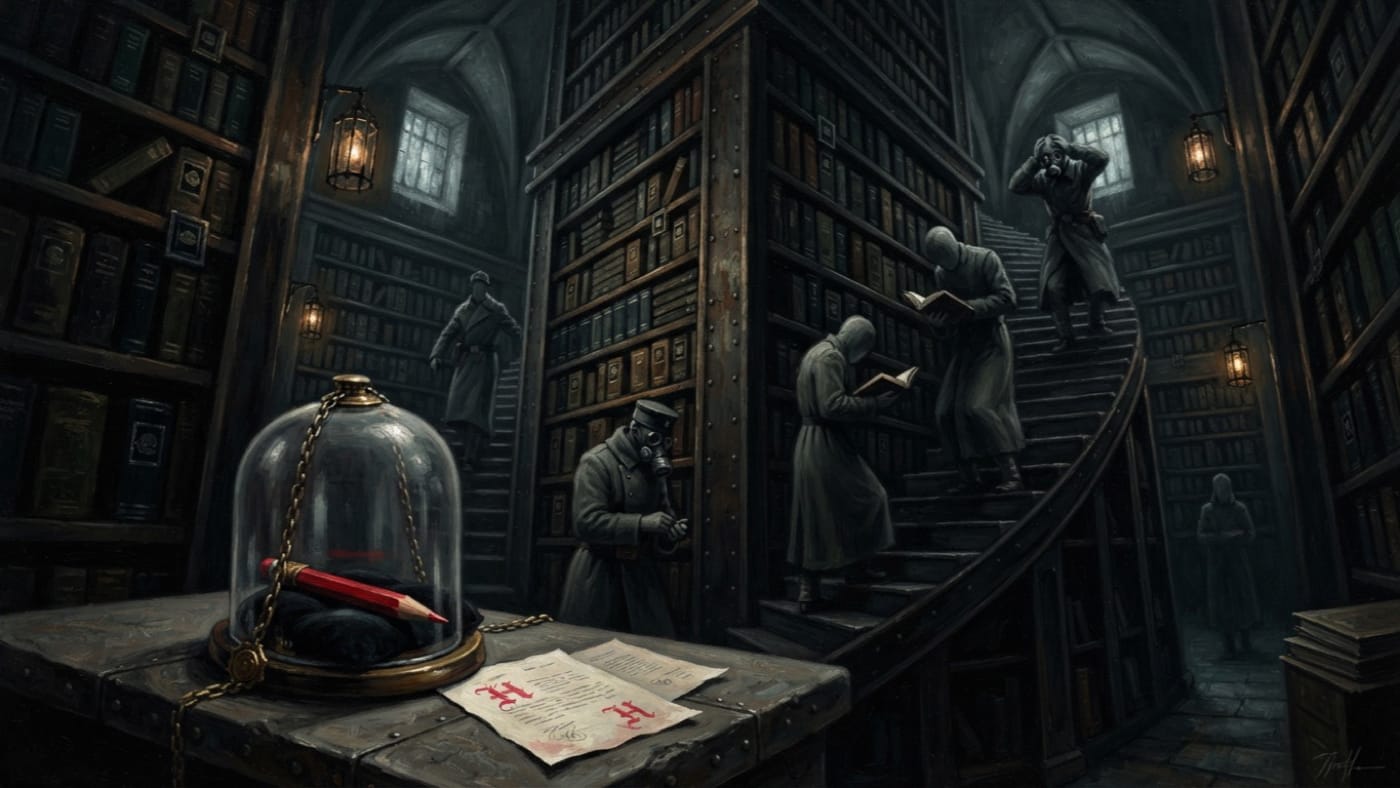
Ordinance 14-A
The shelf requires a licence; understanding requires discretion
Ordinance 14-A licenses libraries, grades unlicensed possession, reading and understanding as heresy, and protects the Censor-Prelate's red pencil. The full text has not been located. The notices suffice.
Codex Ref. XIII.1.14-187

Seal-House Consortium
The wax monopoly that made safety payable and fear legally durable
The Seal-House Consortium turned the Red Pronunciation's dead throats into a monopoly: no stamp, no passage; no passage, no life.
Codex Ref. XII.5.04-094
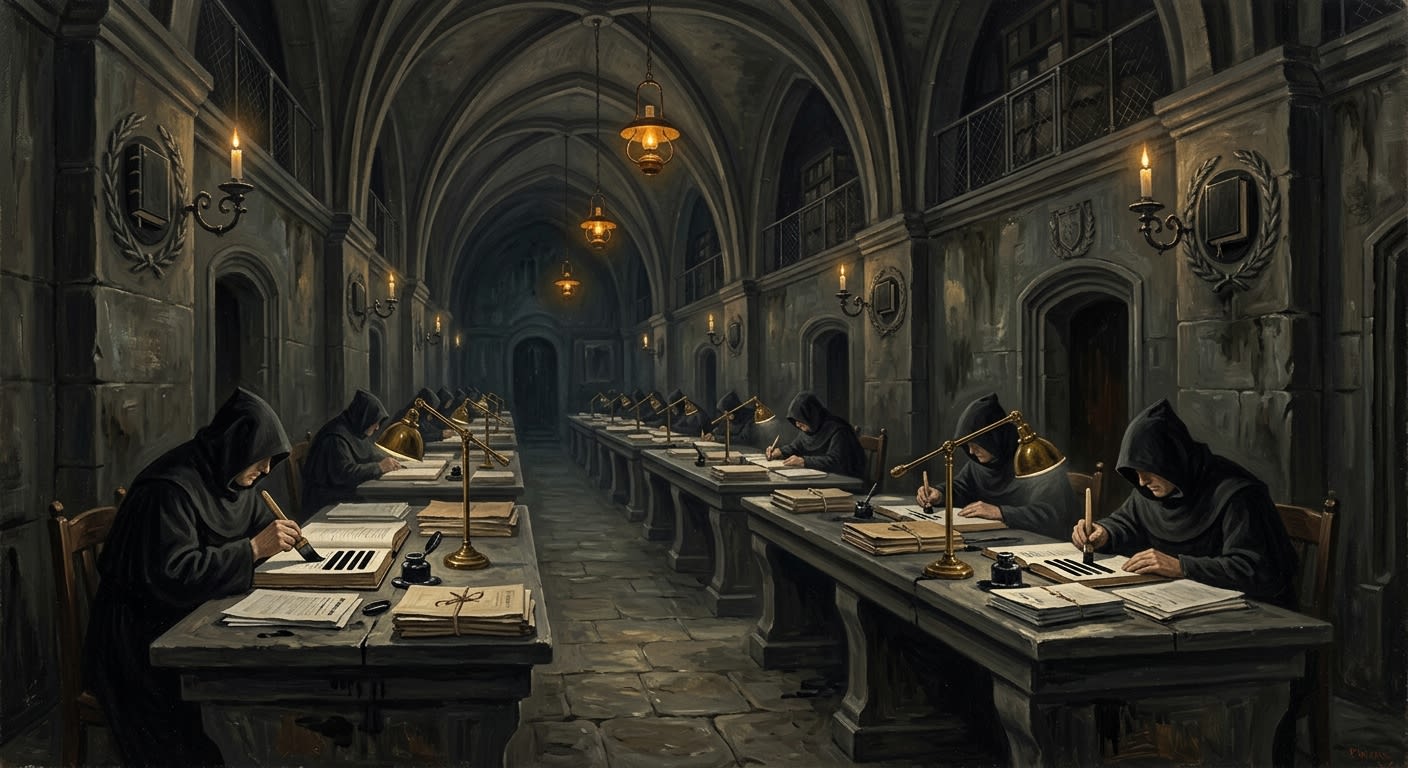
The Bureau of Silence
The word unspoken cannot wound. The word that reaches its target already has.
The Bureau of Silence does not burn books. Burning admits they existed. It renders knowledge into a state of administrative non-occurrence — and then redacts that too.
Codex Ref. III.4.19-031
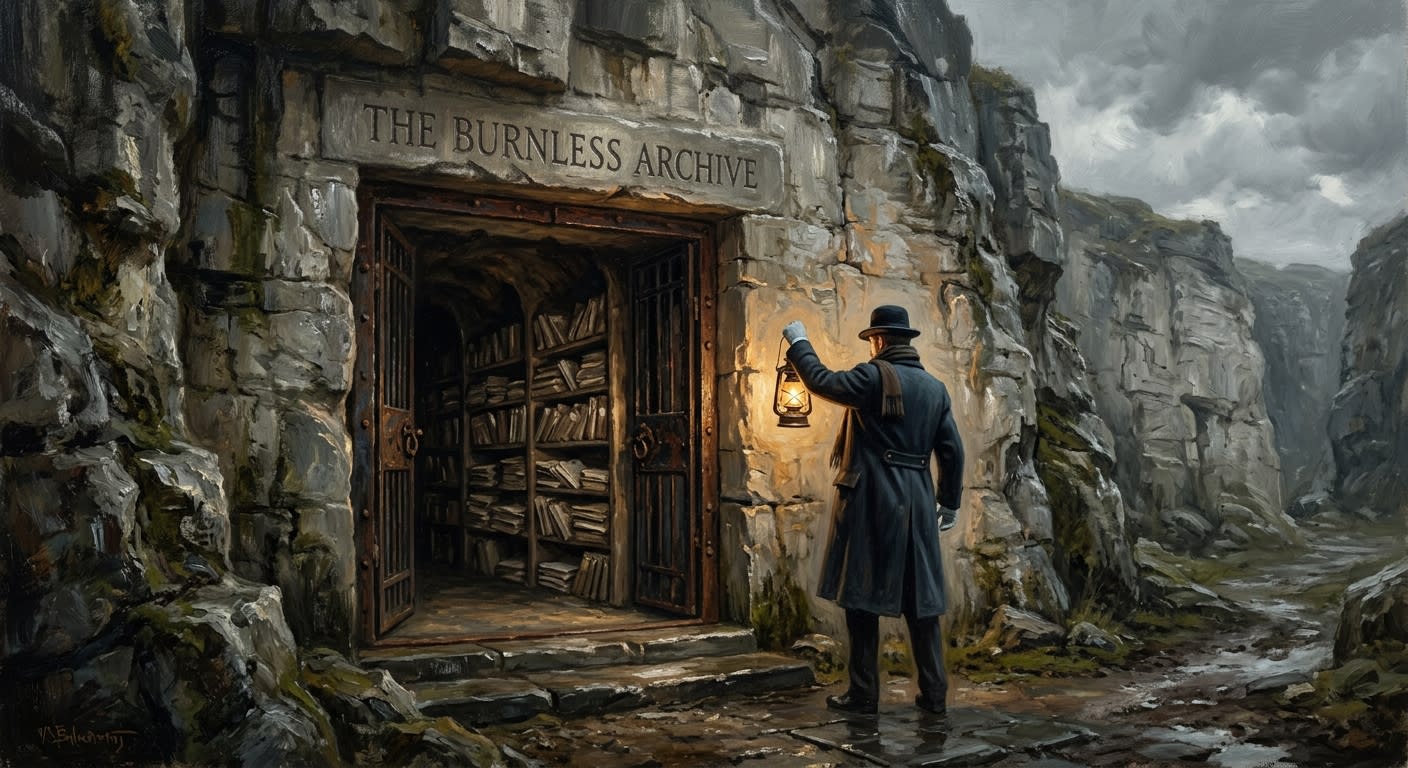
The Burnless Archive
The paper does not burn. The ink is wet. The Bureau files this under Pending.
Beneath the Steppe Gate's eastern cutbank, the paper does not burn, does not leave, and does not require a living hand to file new clauses. The Bureau of Doctrine has classified this under Pending for seven years. The ink remains wet.
Codex Ref. II.4.10-002

The Judges
They walk without letter, without herald, and without the patience of the Bureau.
The Judges arrive without letter, try without jury, and depart without filing. The Bureau denies they exist. It has been denying this since A.S. 92. The denial requires renewal every thirty years, which is itself a kind of evidence.
Codex Ref. V.1.01-003