

Reverse Index
Referencing “The Night of the Three Bridges”
Every codex entry that links to The Night of the Three Bridges. 22 entries.
Return to The Night of the Three Bridges
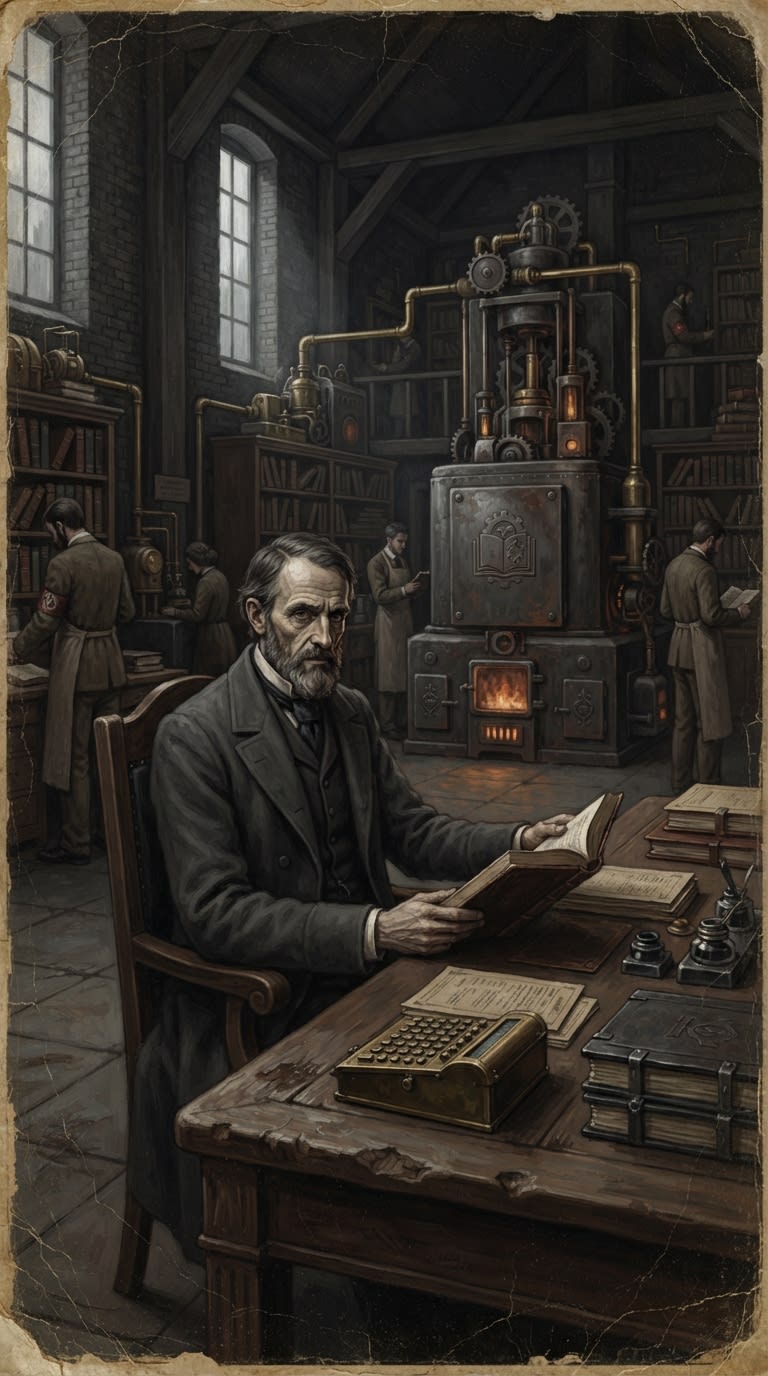
Aristotle
The pagan who lent the Church its knife
Aristotle gave the Church no doctrine, no obedience, and no permission. Unfortunately for him, he did leave behind a very useful machine for arguing.
Codex Ref. III.2.01-073
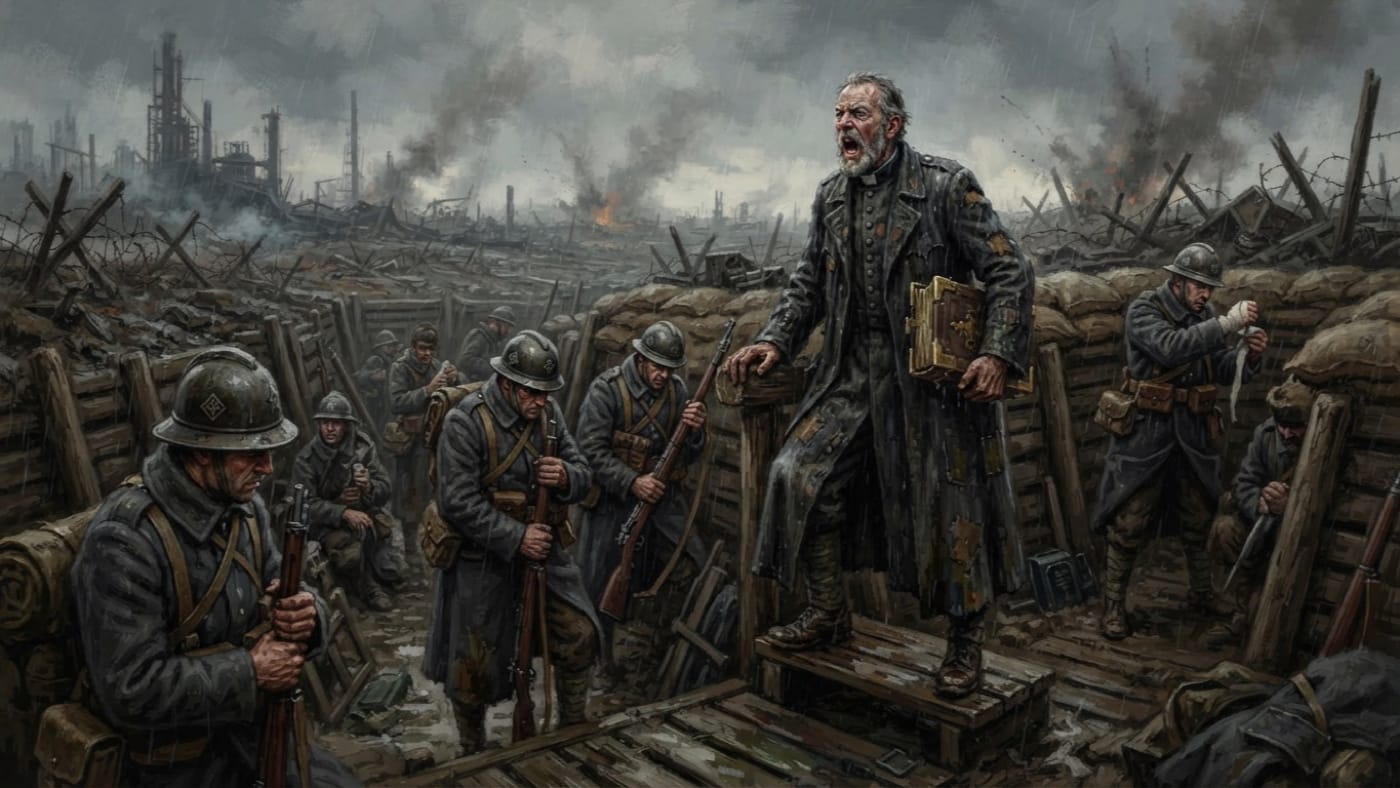
Battle-Preachers
A grandfather who left no papers
The old field-preaching tradition claimed as the Tribune-Chaplains' ancestry. A.S. 201 finds a useful pedigree and no founding papers; the heirs keep the silence.
Codex Ref. VIII.5.06-002
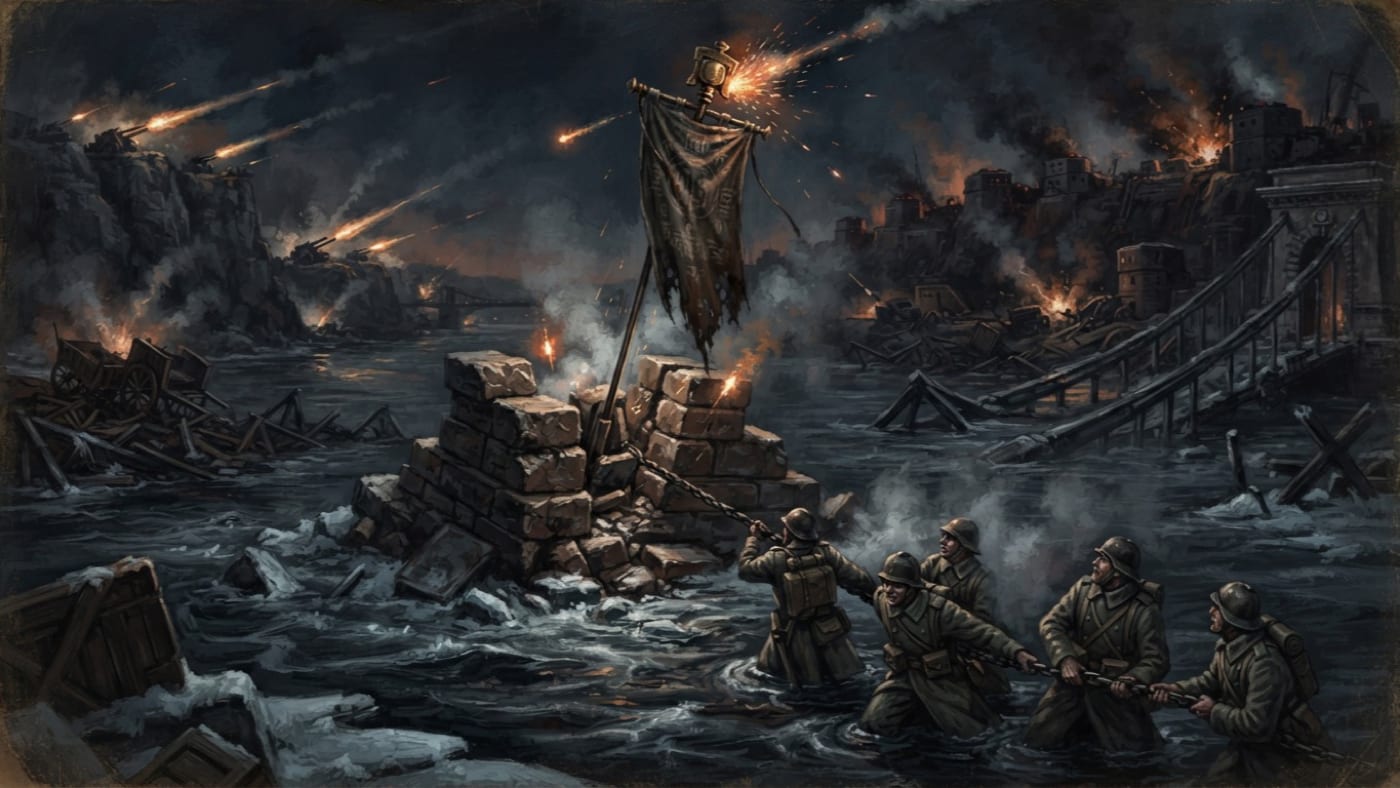
Brass-Lipped Banner of the Sixth Levy
Lorn climbed; the socket held; Providence received the Sign
At the Chain-Pier Ruin in A.S. 172, the Sixth Levy's banner stood unattended under fire for ninety seconds. Lorn climbed; the socket held; Providence received the Sign.
Codex Ref. VII.5.01-003
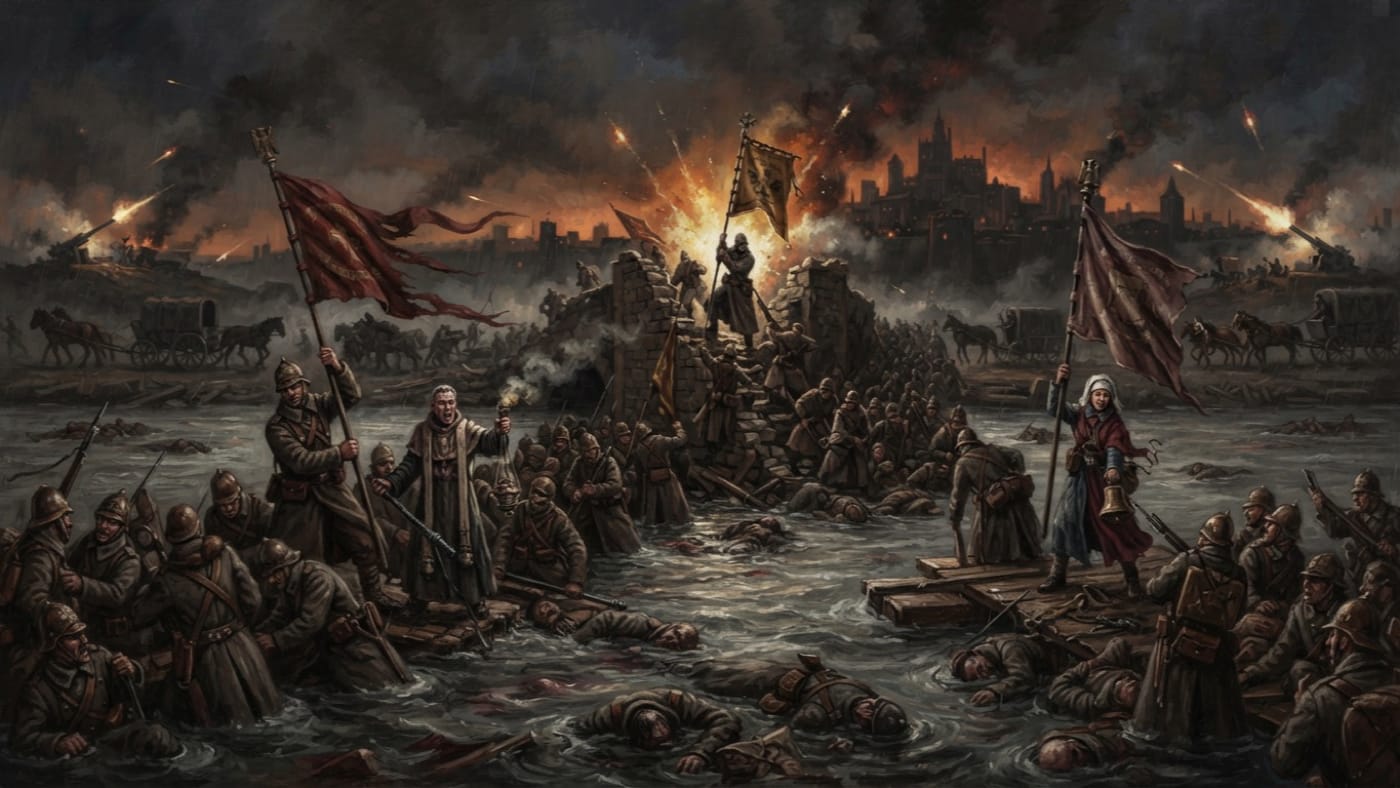
Bureau doctrine
The cloth creates the formation; the ledger decides who was carried
War teaches men to follow cloth, cadence and calibrated powder. Doctrine decides what carried them across the Danube; Records decides what their families may claim.
Codex Ref. III.2.07-042
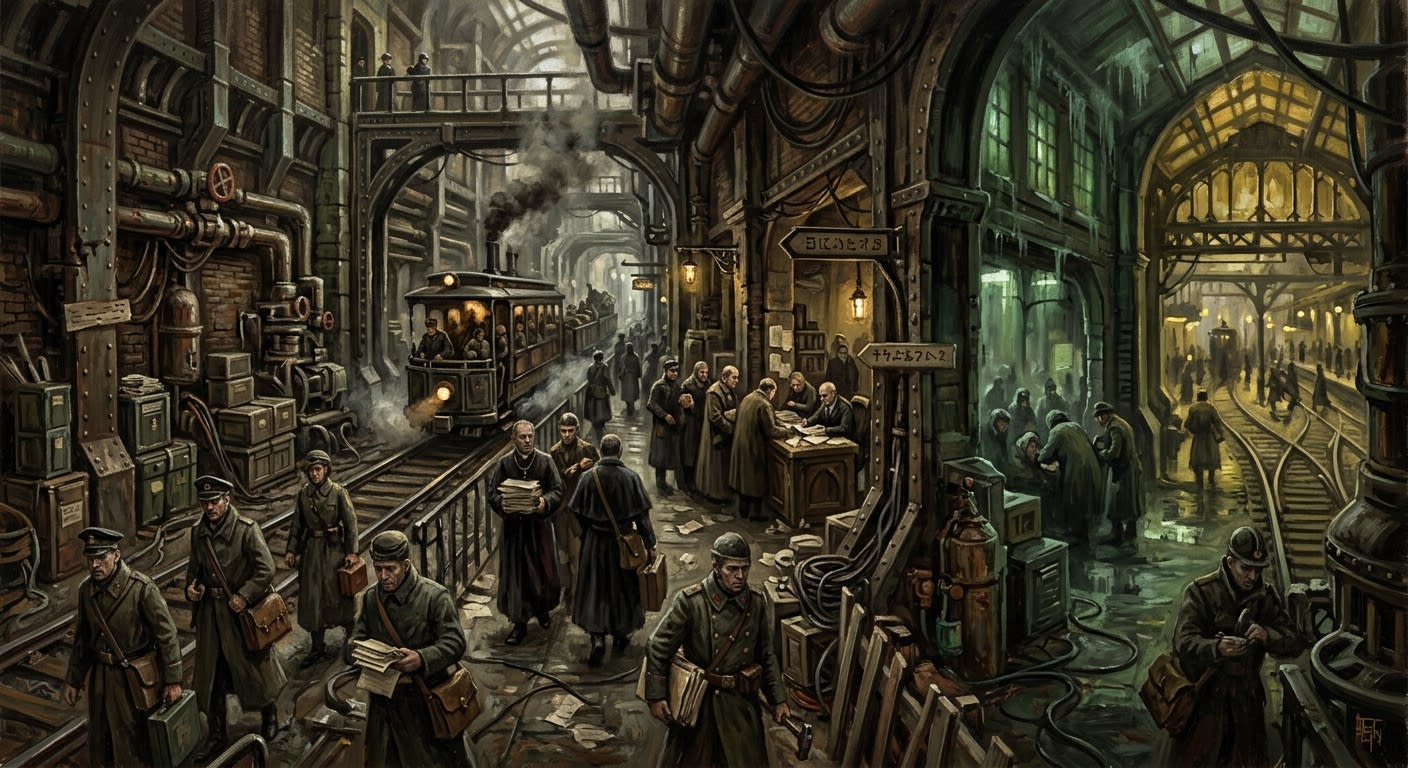
Central Corridor
Motion blurs the screams, which is why the Ledger loves trains
The Central Corridor is the Synod's middle artery: Munich's packed motion, Vienna's holy delay, Bratislava's damp throat, and Budapest's yellow pins.
Codex Ref. II.4.09-201
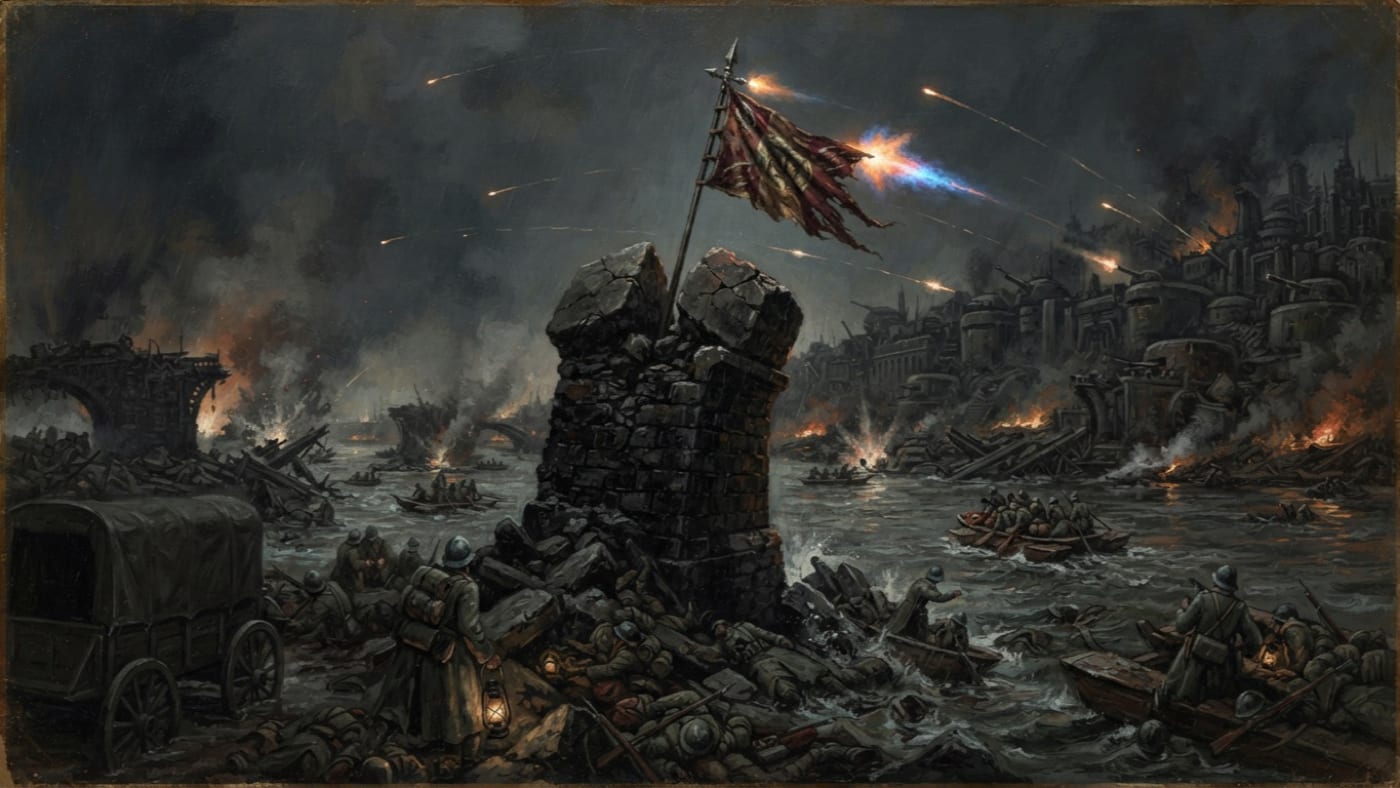
Chain-Pier Ruin
Ninety seconds upright; two explanations on file
Ruined Danubian passage used in A.S. 172, where Lorn of Metz's banner stood unattended for ninety seconds: Doctrine cites Sign One; veterans cite the weighted socket. The stones offer no opinion.
Codex Ref. II.3.05-172
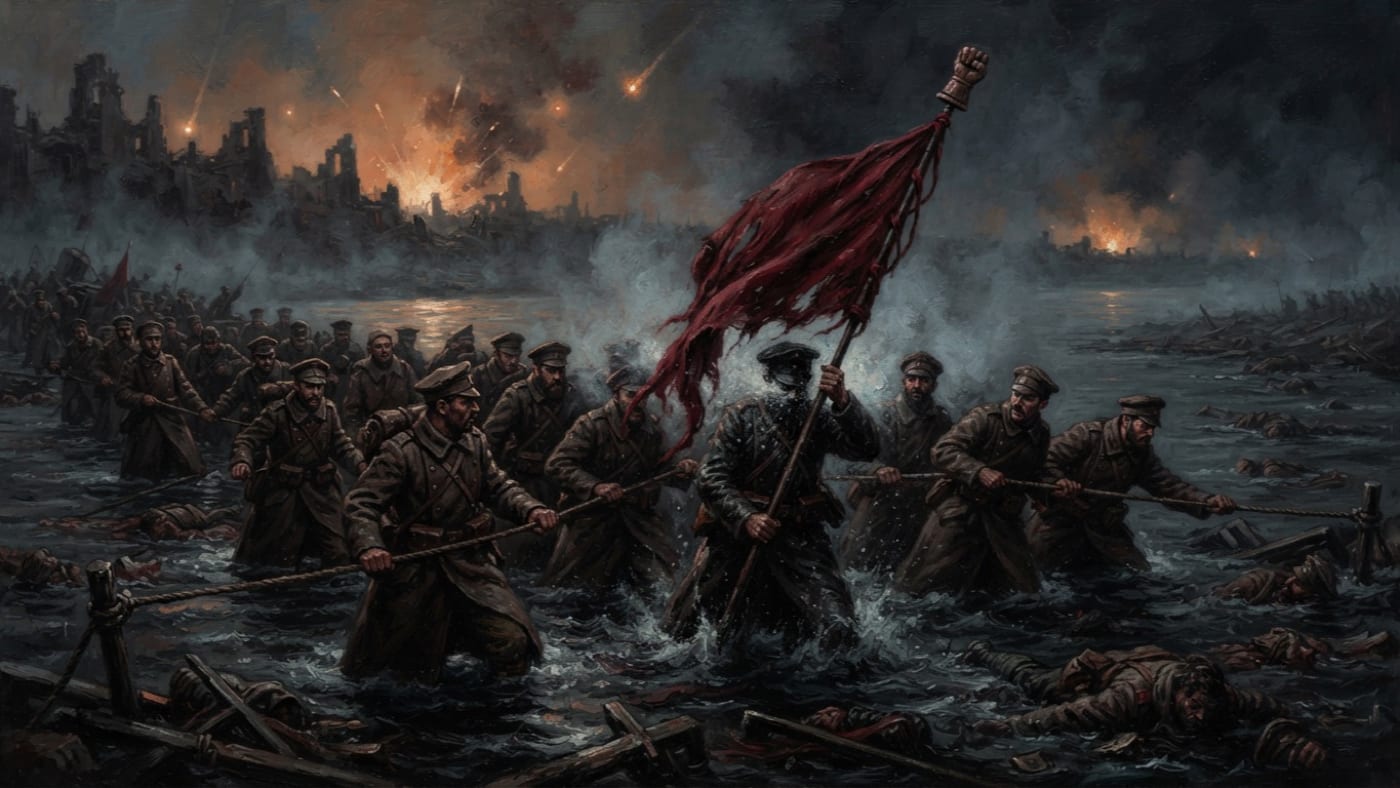
Crimson Pennant of Saint Marcellus
The cloth survived; the address remains blank
Crimson campaign standard carried through Saint Hadrien's Ford in A.S. 172. The pennant survived the Night of the Three Bridges; its bearer and later custody remain unrecorded.
Codex Ref. III.2.04-172
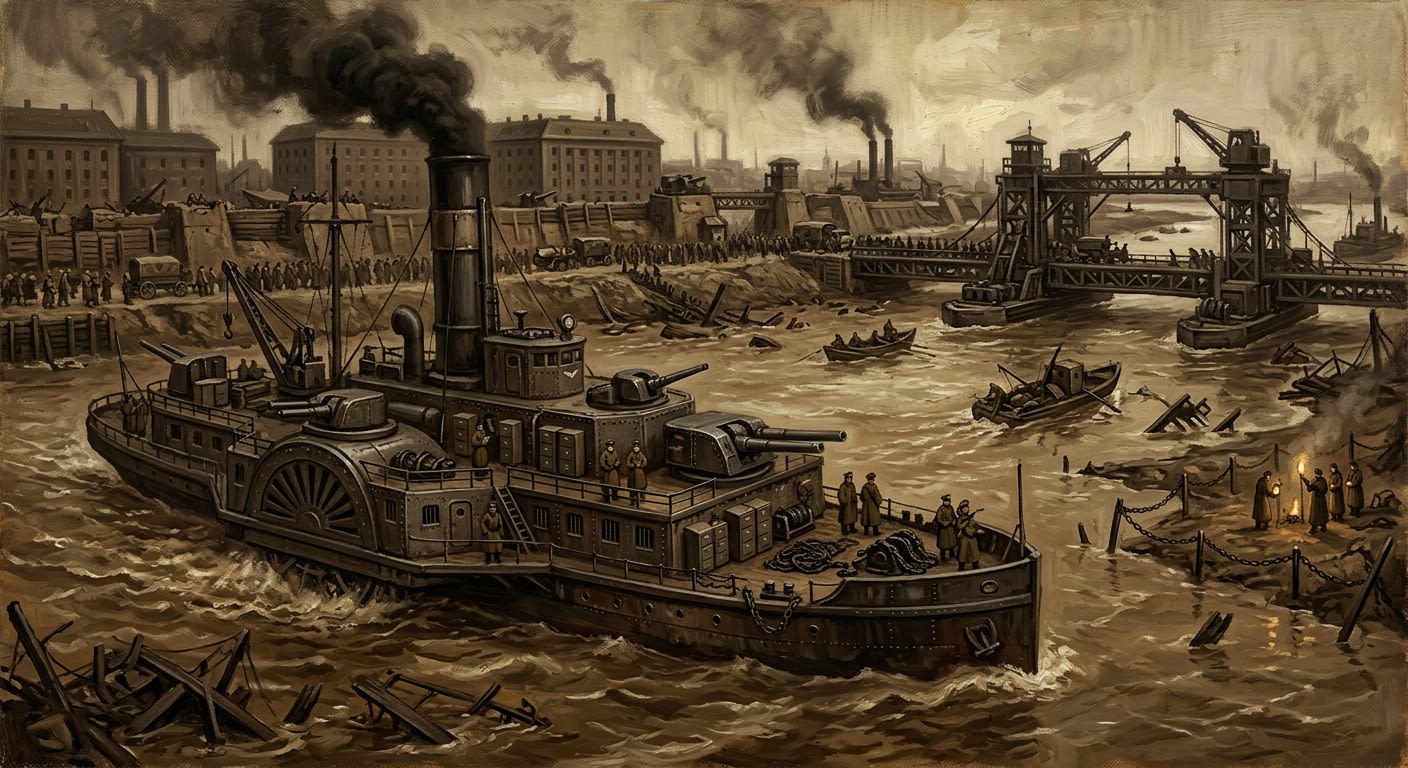
Danube
A moving jurisdiction, interrupted by Hell
The Danube is the Synod's brown moving jurisdiction: road, border, weapon, archive, tariff, grave, miracle-site, and contested throat of Irongate.
Codex Ref. II.4.09-034
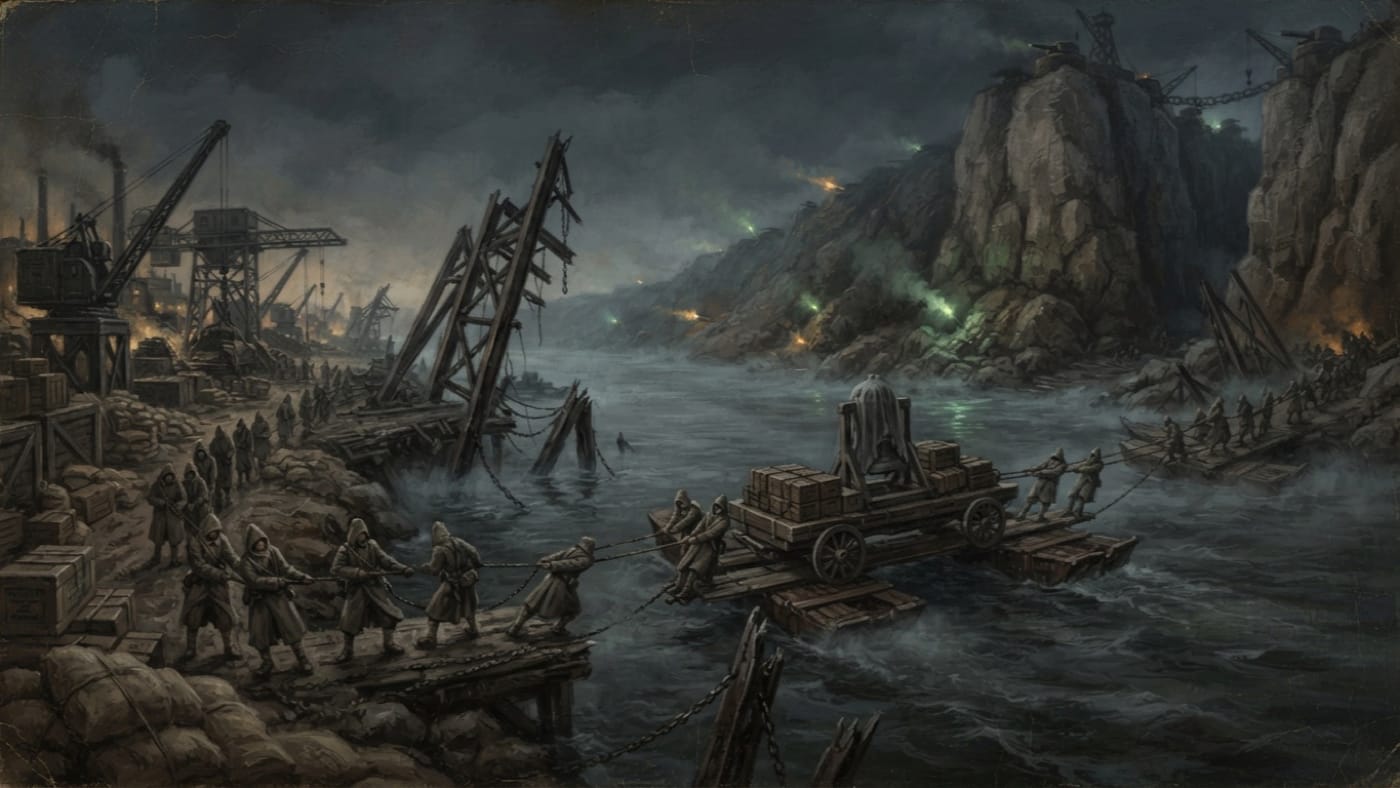
Danubian forward corridor
The grain arrives; the river keeps the difference
Between Budapest and Bastion-Irongate, the Synod moves grain, cartridges and bells through ruined crossings. The cargo is counted; the river keeps the difference.
Codex Ref. II.4.09-172
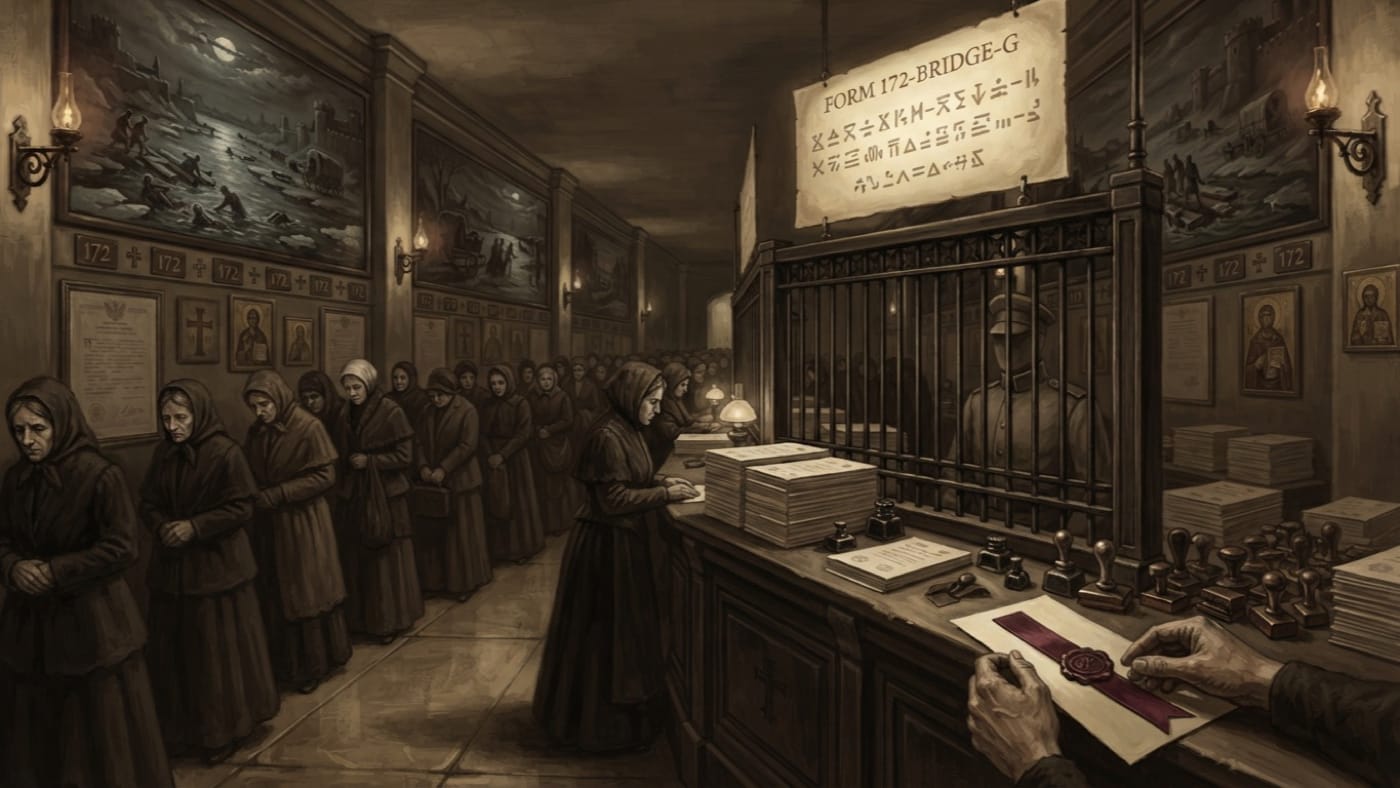
Form 172-Bridge-G
Permission is cheaper than coin
In this A.S. 201 survey, I examine Form 172-Bridge-G: families may apply for commemorative ribbon in lieu of pension after Records' roll revision. Permission is a remarkably economical gift.
Codex Ref. XIII.1.172-201
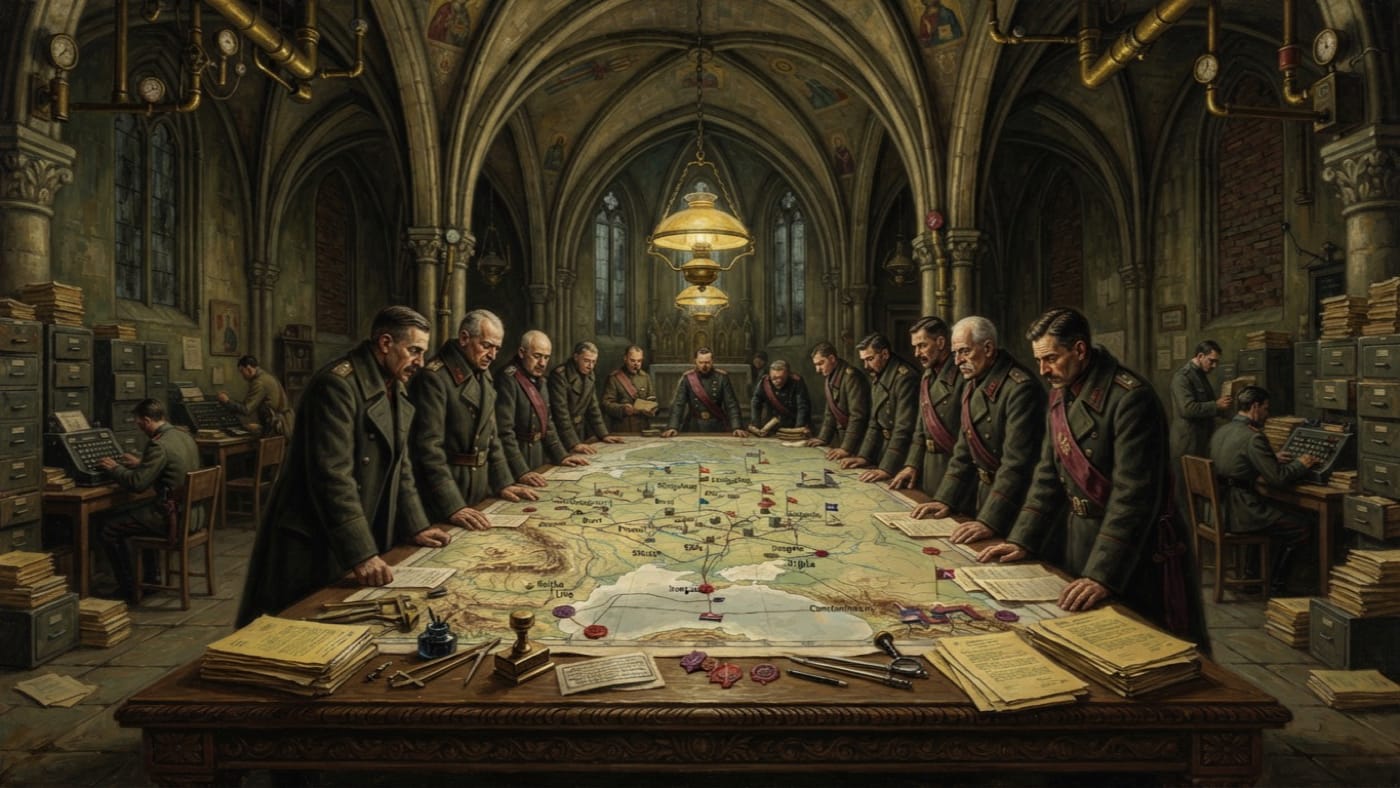
Grand Strategy Chamber
The Part of the War That Can Be Sealed
A chapel beneath Strasbourg's Arch of Campaigns where the Bureau of War moves armies on paper. Doctrine and Purity seal the plans; the frontier, regrettably, is not bound by their signatures.
Codex Ref. II.3.06-201
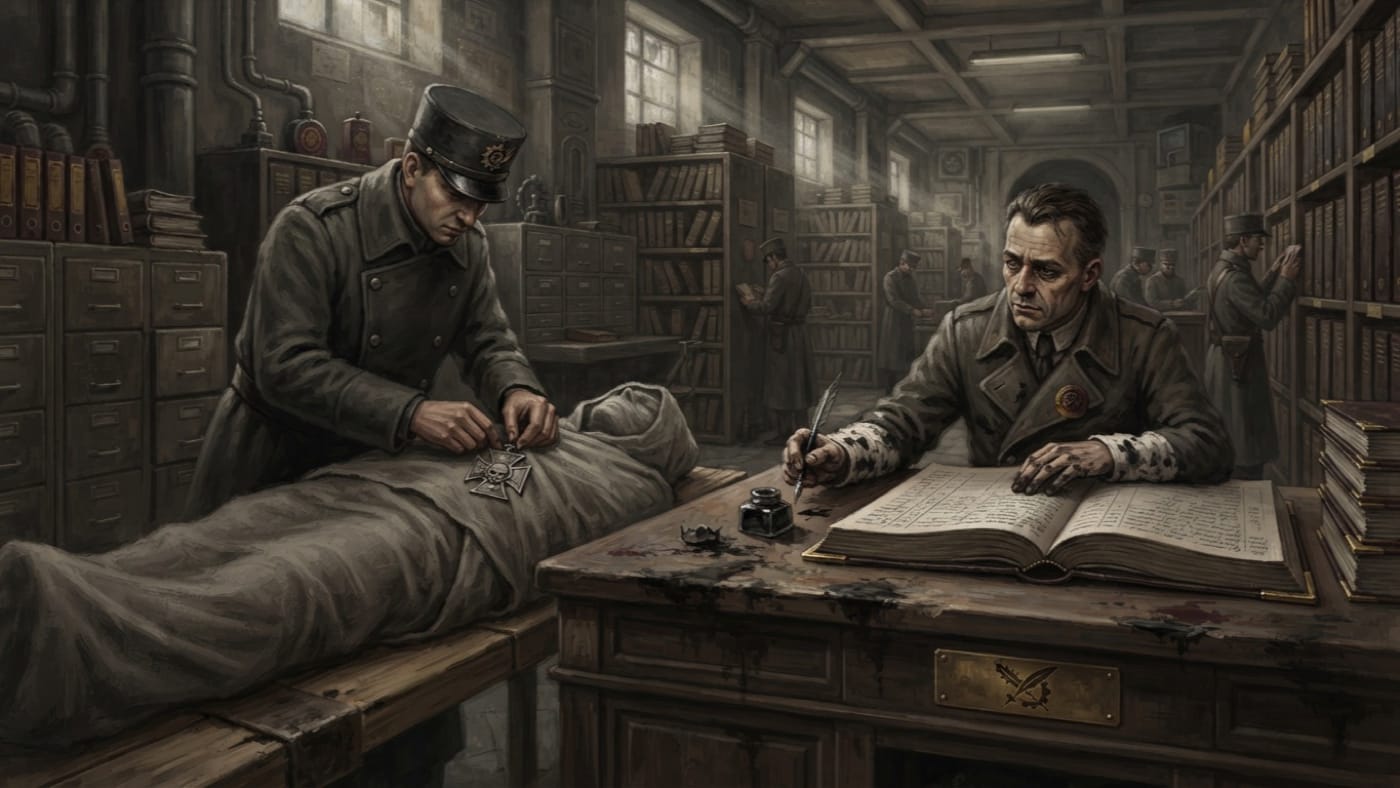
Ledger of Honourable Dust
The recipient cannot embarrass the award
An A.S. 201 survey of War's posthumous honours: a medal through the shroud, an entry above ground, and no guarantee that the widow will be paid.
Codex Ref. XIII.1.56-001
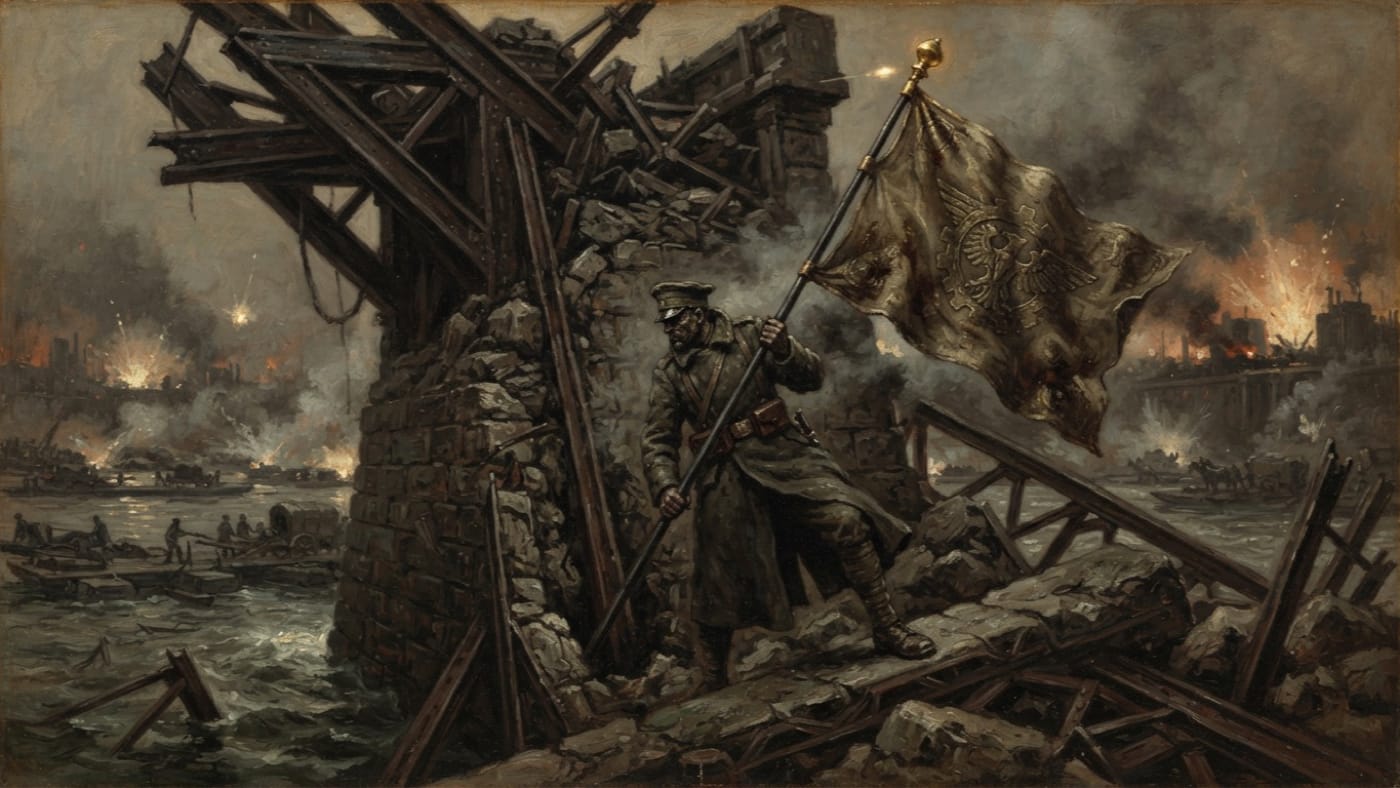
Lorn of Metz
Ninety seconds of standing cloth, and a bearer left out of the miracle
Lorn of Metz fixed the Brass-Lipped Banner at the Chain-Pier Ruin in A.S. 172. Doctrine retained ninety seconds of miracle; the Ledger retained the bearer.
Codex Ref. III.2.01-172
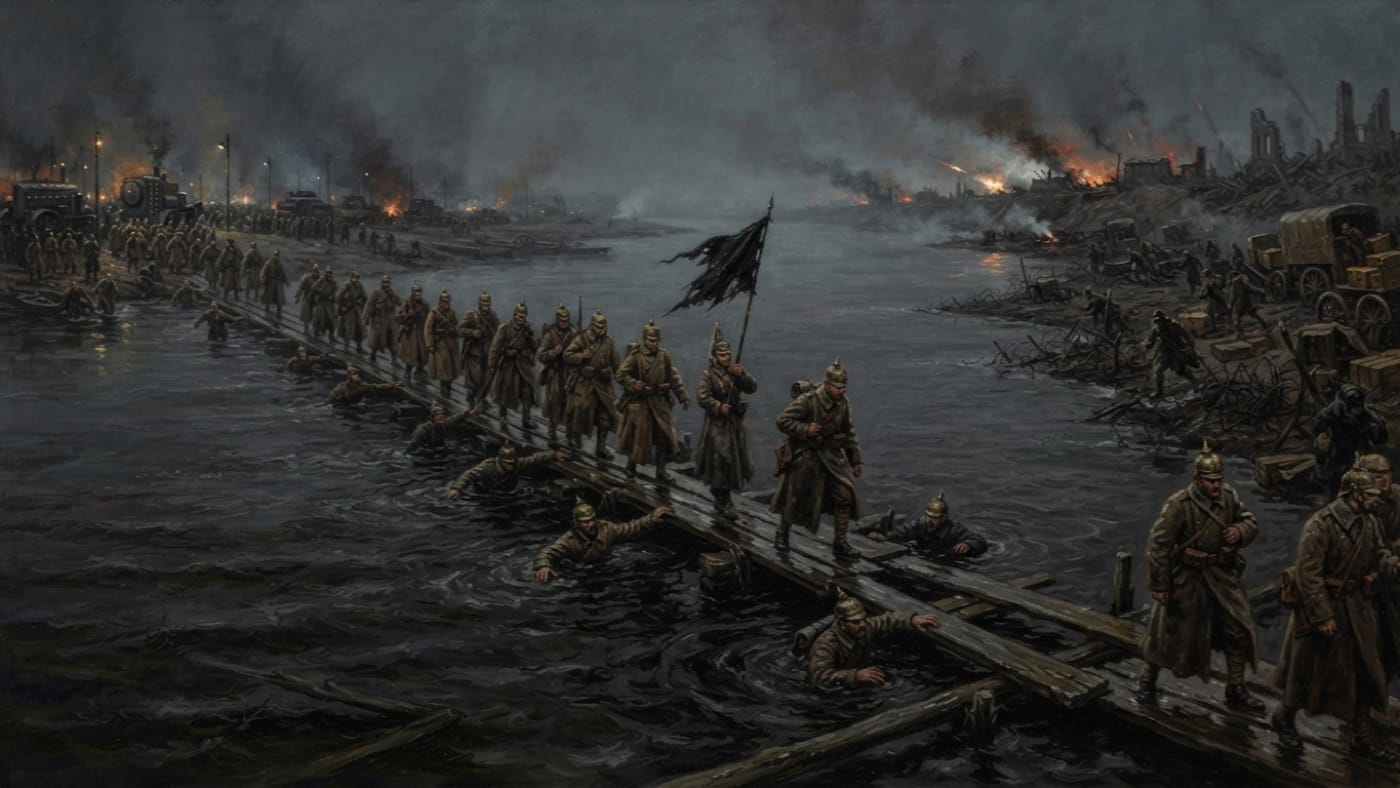
Mark Seven
The floor was taken on faith; the dead were entered by column
A drowned Danube pontoon used in A.S. 172: its returning soldiers furnished Sign Two, while its dead received no separate subtotal.
Codex Ref. II.4.09-007
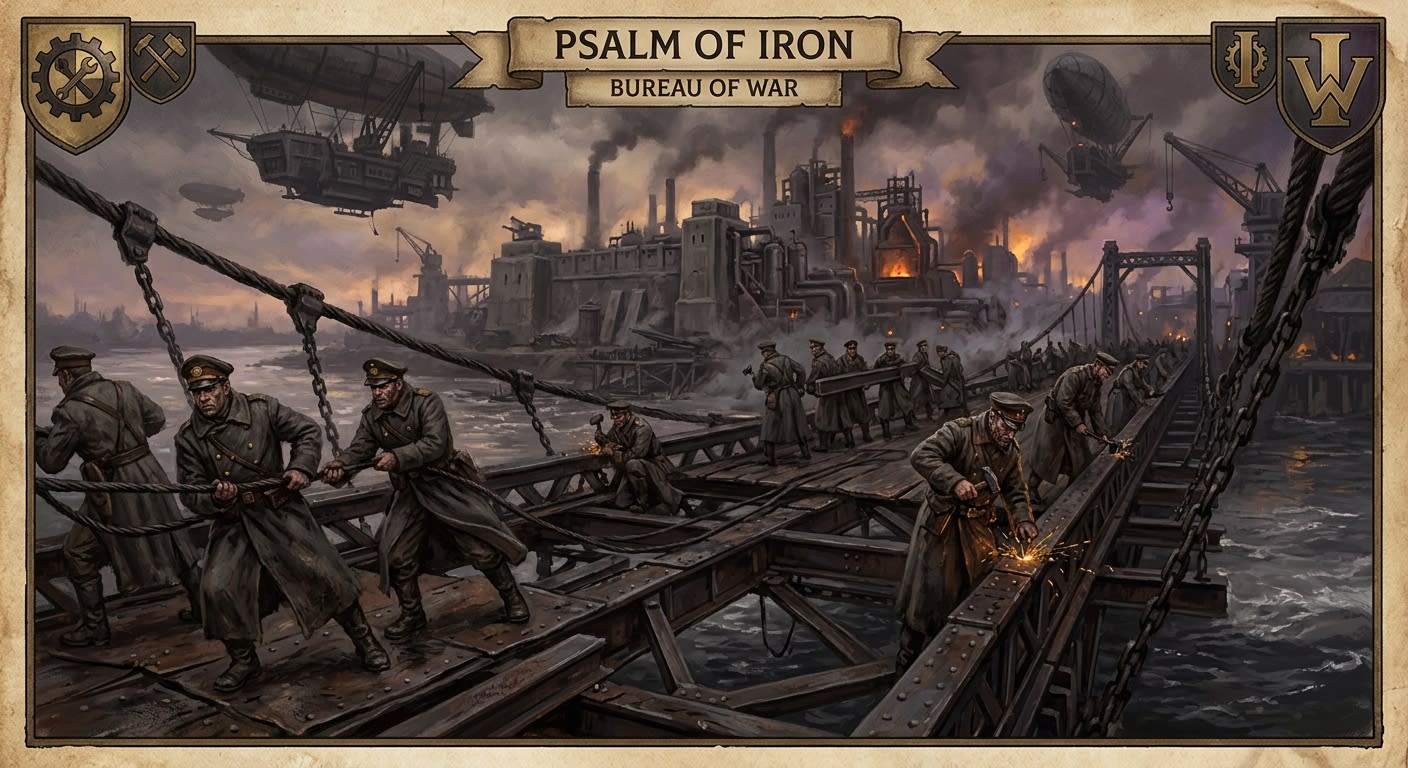
Psalm of Iron
Sing it softly and it curdles; sing it under fire and men cross
The Bureau of War's ugly, useful crossing-psalm turns breath into bridgework, teaching men to keep moving after timber, officers, and mouths fail.
Codex Ref. XIII.1.96-172
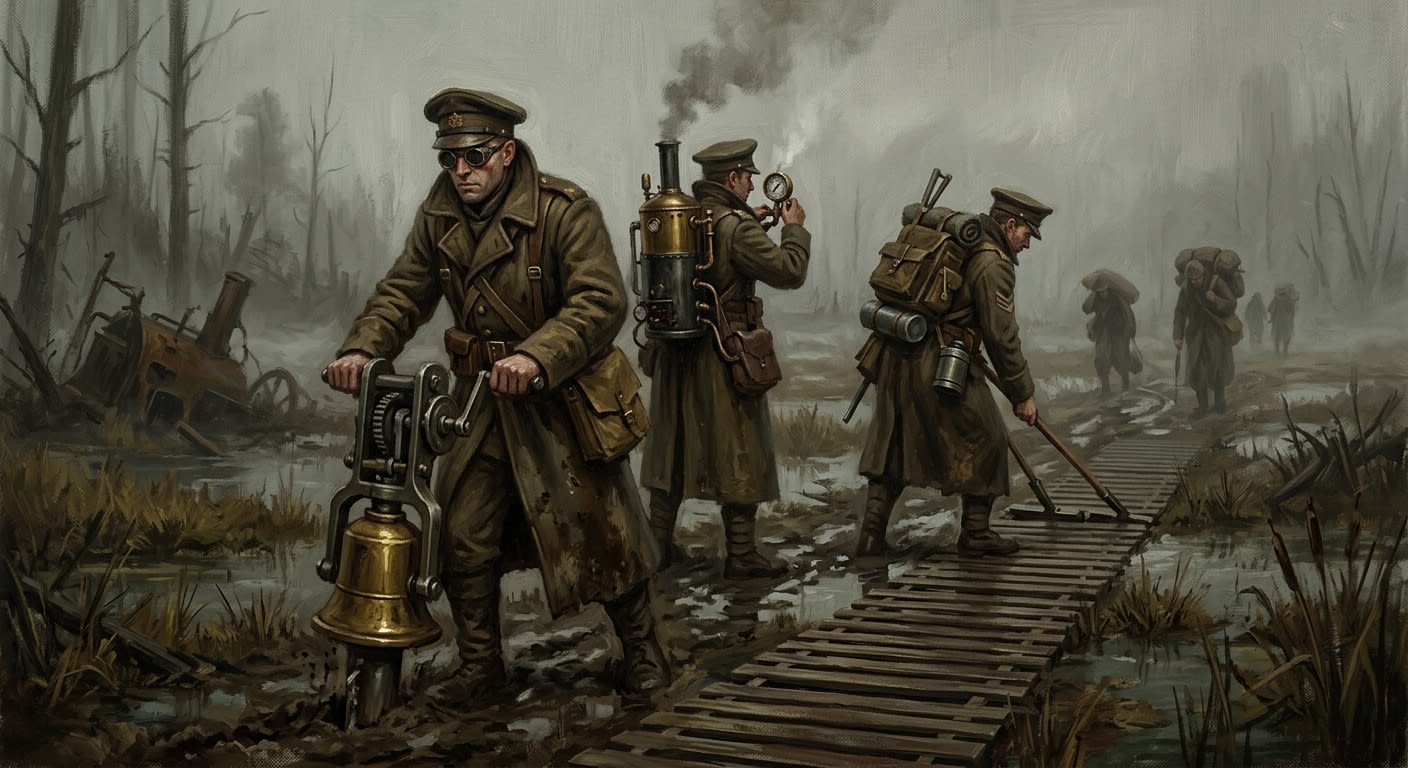
Route Pragmatists
The road speaks before the table learns its name
Field-expedient Route-Stamper faction that adjusts bell-hour cores to fog, water, marsh, demon-resonance, and the rude survival of travellers.
Codex Ref. XII.2.06-003
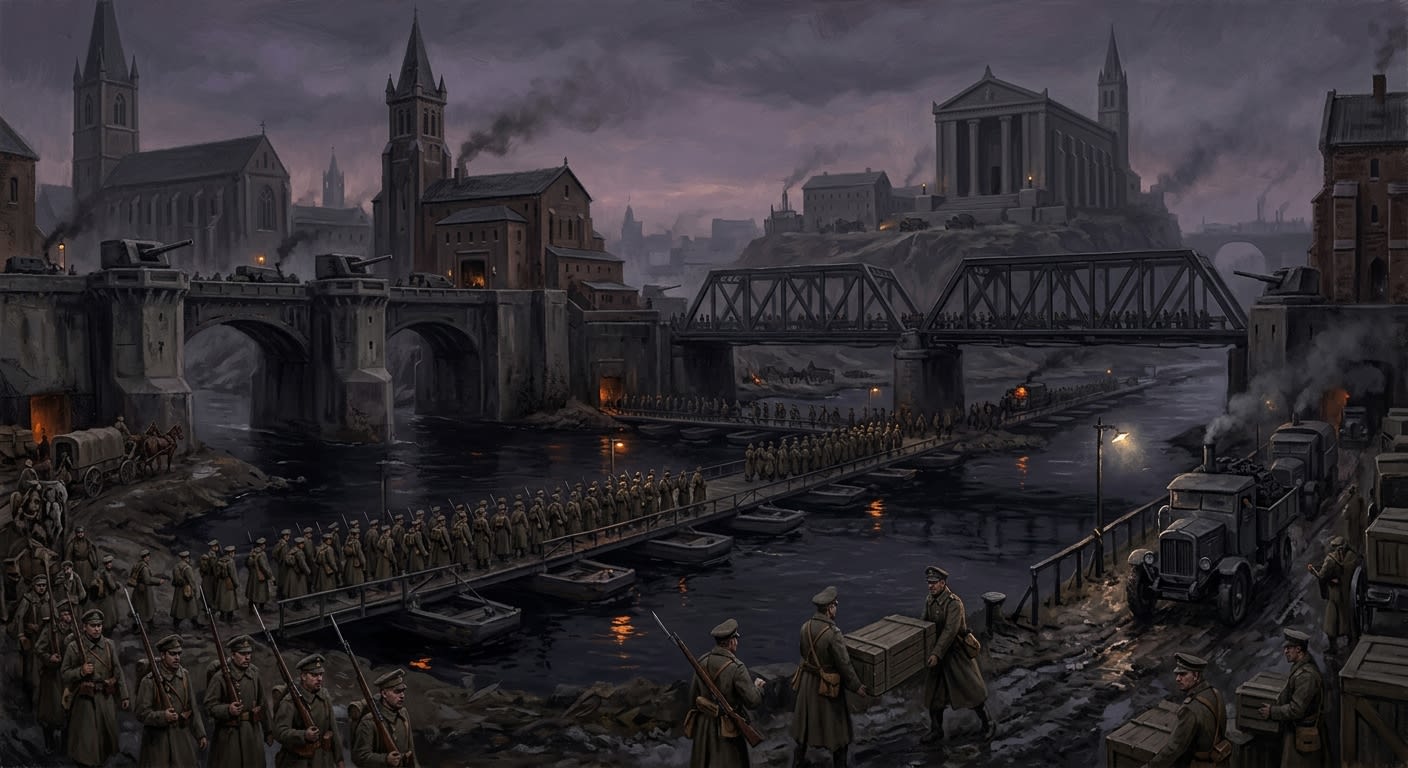
Saint Hadrien's Ford
The river-crossing where biography drowned and doctrine learned to wade
Saint Hadrien's Ford is the Danubian crossing where an old river saint became military property, and black water learned to invoice courage.
Codex Ref. II.4.09-172
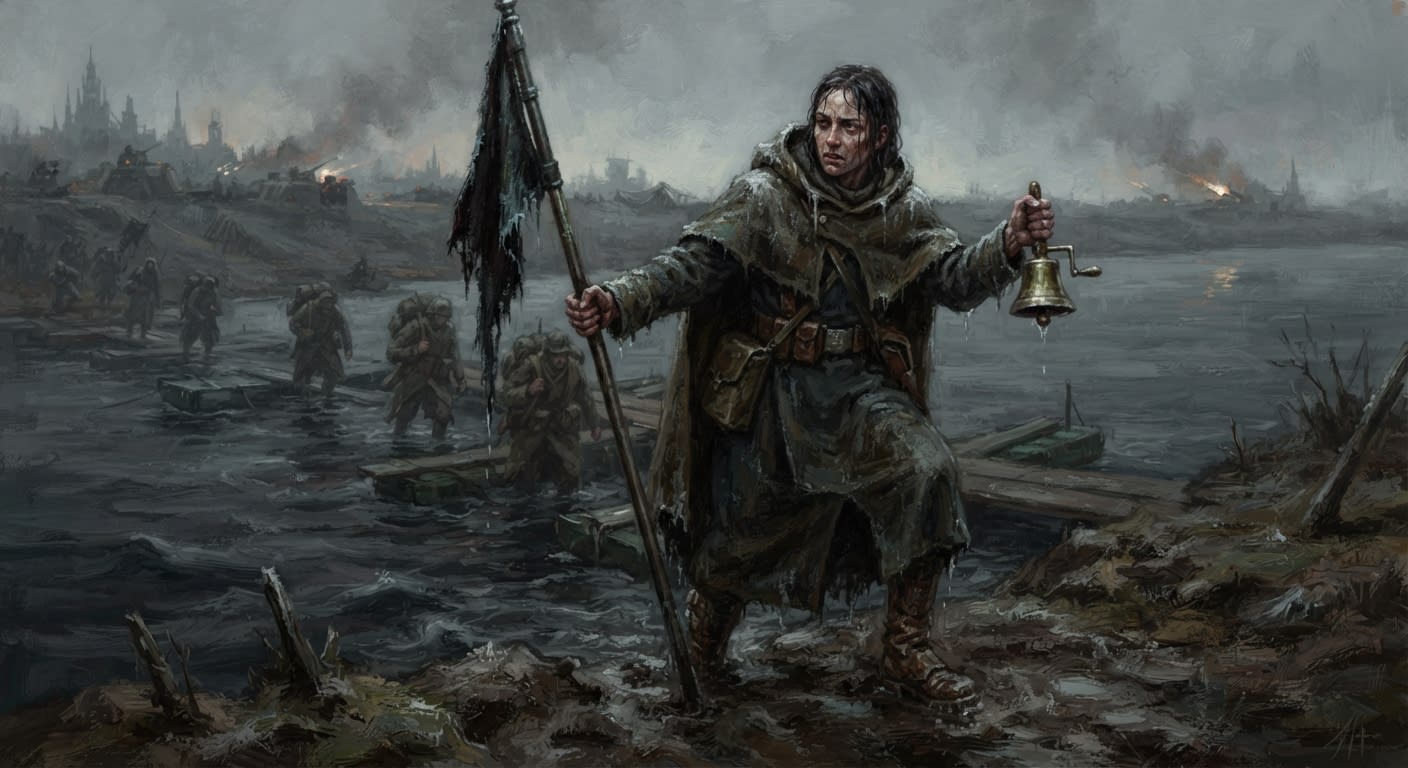
Sister-Vexillator Anje Rusk
The cloth stood, the bell rang, and Records misplaced the woman
Anje Rusk is certified at Mark Seven by one standard, one frozen bell, and one conspicuous absence from every useful casualty column.
Codex Ref. III.2.01-172
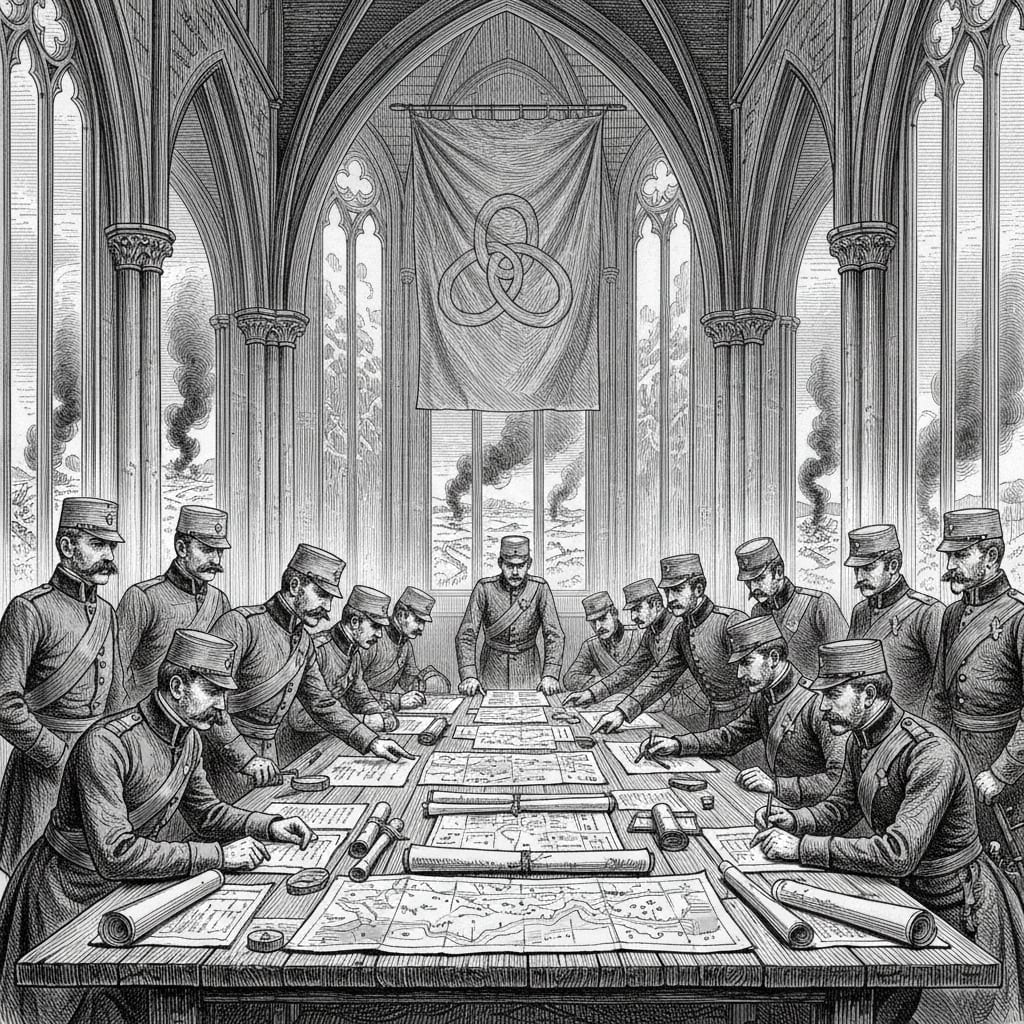
The Bureau of War
The Crimson Sash and the Sanctified Bayonet
Founded after the Siege of Vienna so that the Faith would never again beg feudal lords for swords. War raises the levy, baptizes the bayonet, and writes after-action reports indistinguishable from scripture.
Codex Ref. III.2.07-041
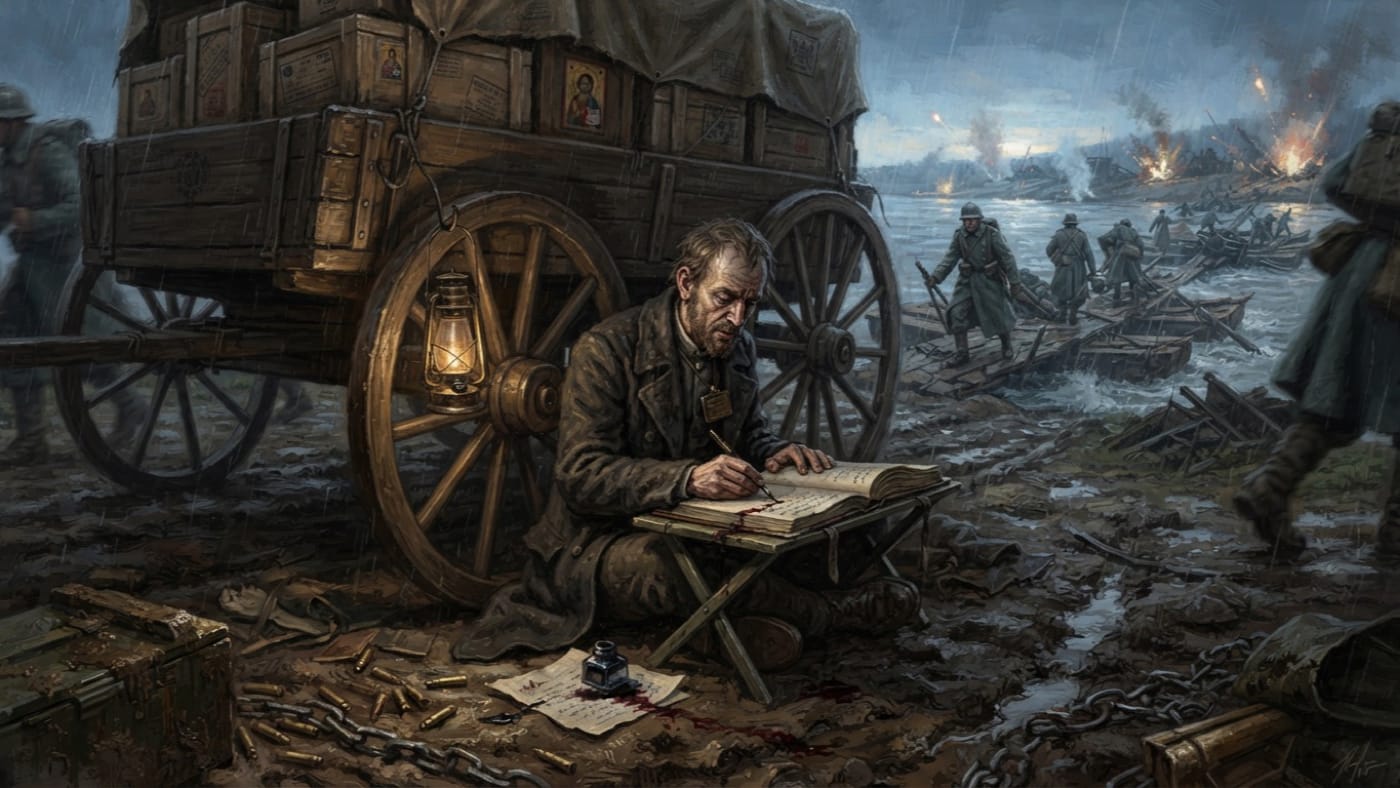
Tribune-Clerk Othmar Vey
He wrote the sentence; the offices supplied Providence
Othmar Vey wrote the A.S. 172 Danube report; War made it a miracle of locomotion. The file preserves his sentence, while his intentions and later fate remain beyond the Ledger's account.
Codex Ref. III.2.01-172
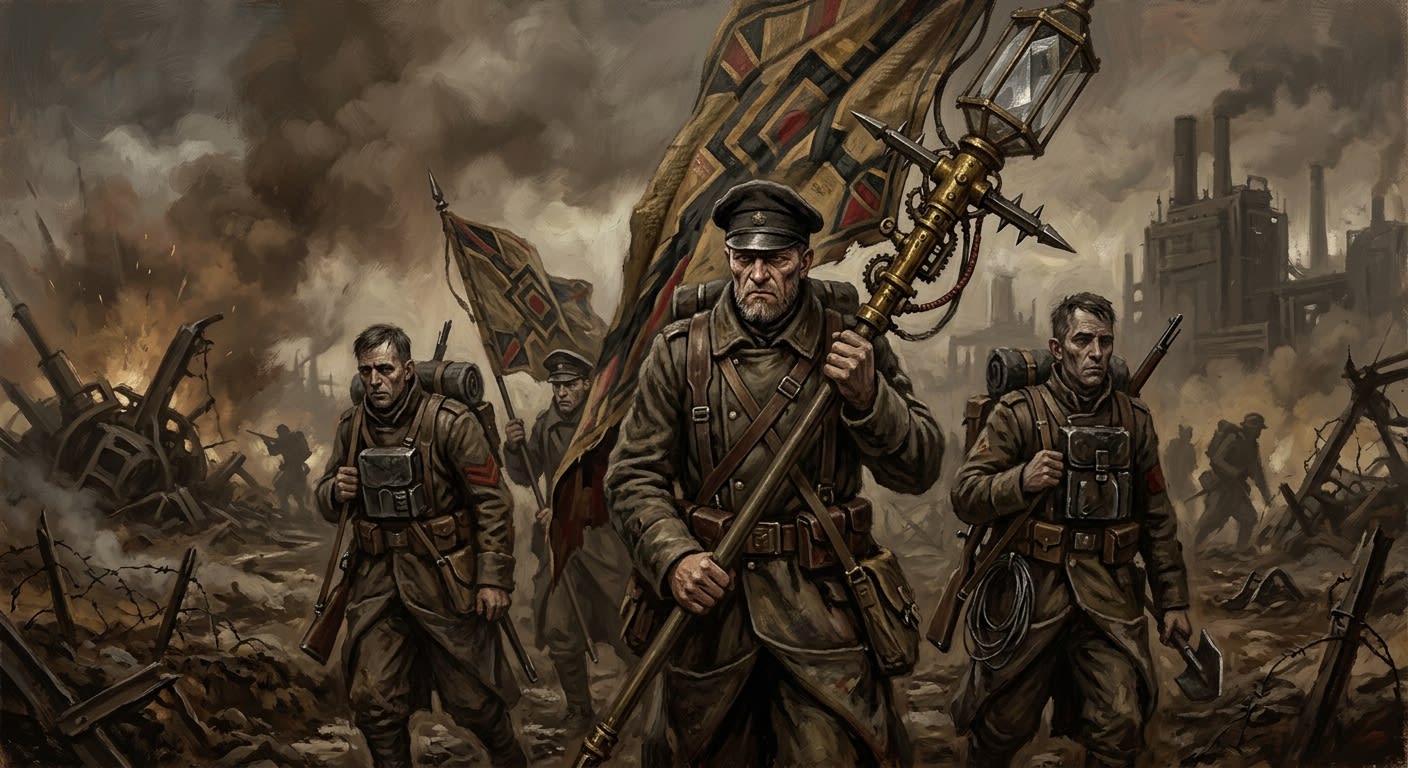
Vexillators
Keep the cloth upright, or permit panic to govern
Bureau of War standard-bearers and visible formation anchors whose sanctioned cloth turns panic into geometry when officers, drums, and voices fail.
Codex Ref. VIII.5.07-001
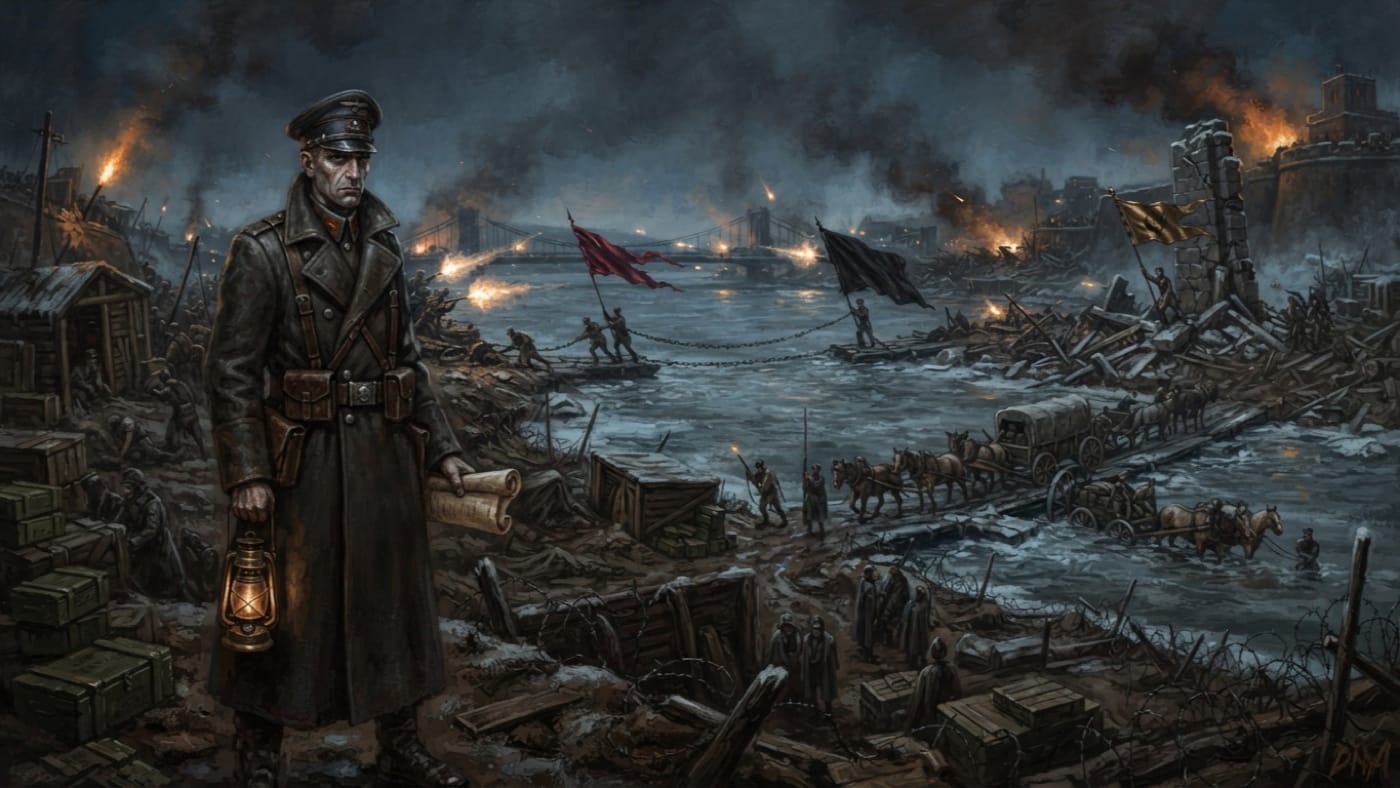
Warden-Submarshal Calev Rohn
Three crossings, one order, and a ledger improved afterward
Rohn ordered three crossings at once on the Danube in A.S. 172. Forty-seven supply wagons crossed; 4,200 men were removed from formation. The Bureaus improved the arithmetic afterward.
Codex Ref. III.2.01-172