
#On Purchased Legs
“The packet must arrive. The law is less fastidious about whose lungs performed the miracle until the audit begins.” — relay-house proverb, struck from three training walls and found on four more.
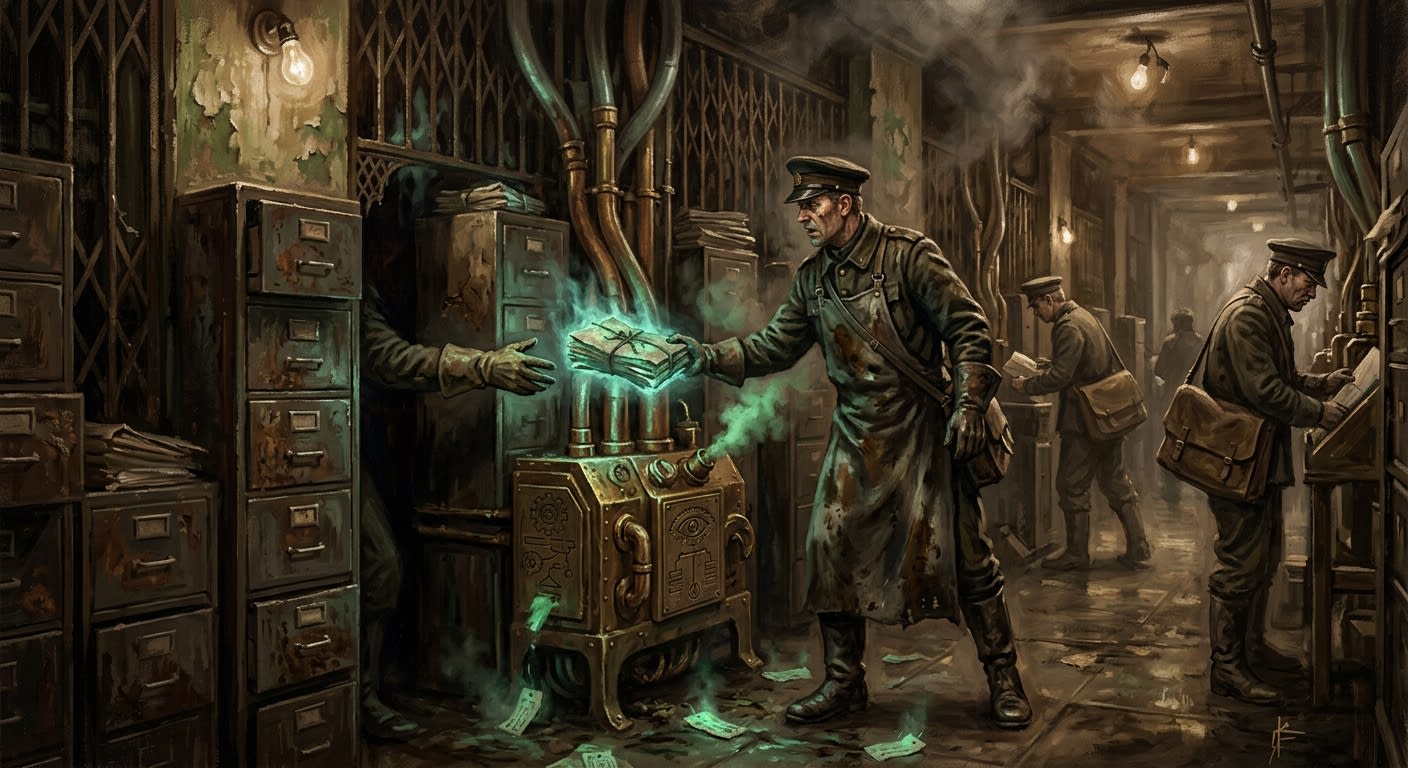
A Shadow Relay is the unauthorised transfer of an Index Damnatus packet from a licensed Runner to unlicensed legs: street boy, debtor, dock sprinter, cellar courier, Black Ledger limb, hungry niece, fast thief, frightened saint, any body that can cross a ward faster than the official carrier and vanish before the receipt is checked. The Runner later files the handoff as his own. The receiving node records lawful arrival. The packet travels through a person the law has not admitted exists.
This is corruption. It is also efficiency. The distinction becomes visible only when someone is caught, which is why the Bureau of Purity condemns Shadow Relays with one hand and builds route schedules with the other that make them inevitable.
The practice emerged wherever Runner routes crossed the older underways of cities: ferry lanes, orphanage courtyards, shrine backs, dock alleys, market roofs, and those nameless breaches between two jurisdictions where a child can pass because no adult official wants to admit the gap is large enough for a child. The Runner buys one bell-hour. The relay buys bread, pardon, salt, debt remission, or the temporary pleasure of being needed by power without being owned by it. Everyone lies afterward. The receipt is the altar where the lie is blessed.
#On the Mechanism
The ordinary mechanism is simple enough to fit inside a glove. A Runner receives a time-locked packet at Matins, throat-tag stamped, route-board witnessed, satchel sealed under daily cipher. The first nodes are lawful. Gatehouse. Orphanage registry. Ferry office. Then weather turns, a riot closes a bridge, a bell window narrows, a second packet is added by a Route Captain with no respect for bone. The Runner turns into an alley and gives the packet to a waiting shadow.
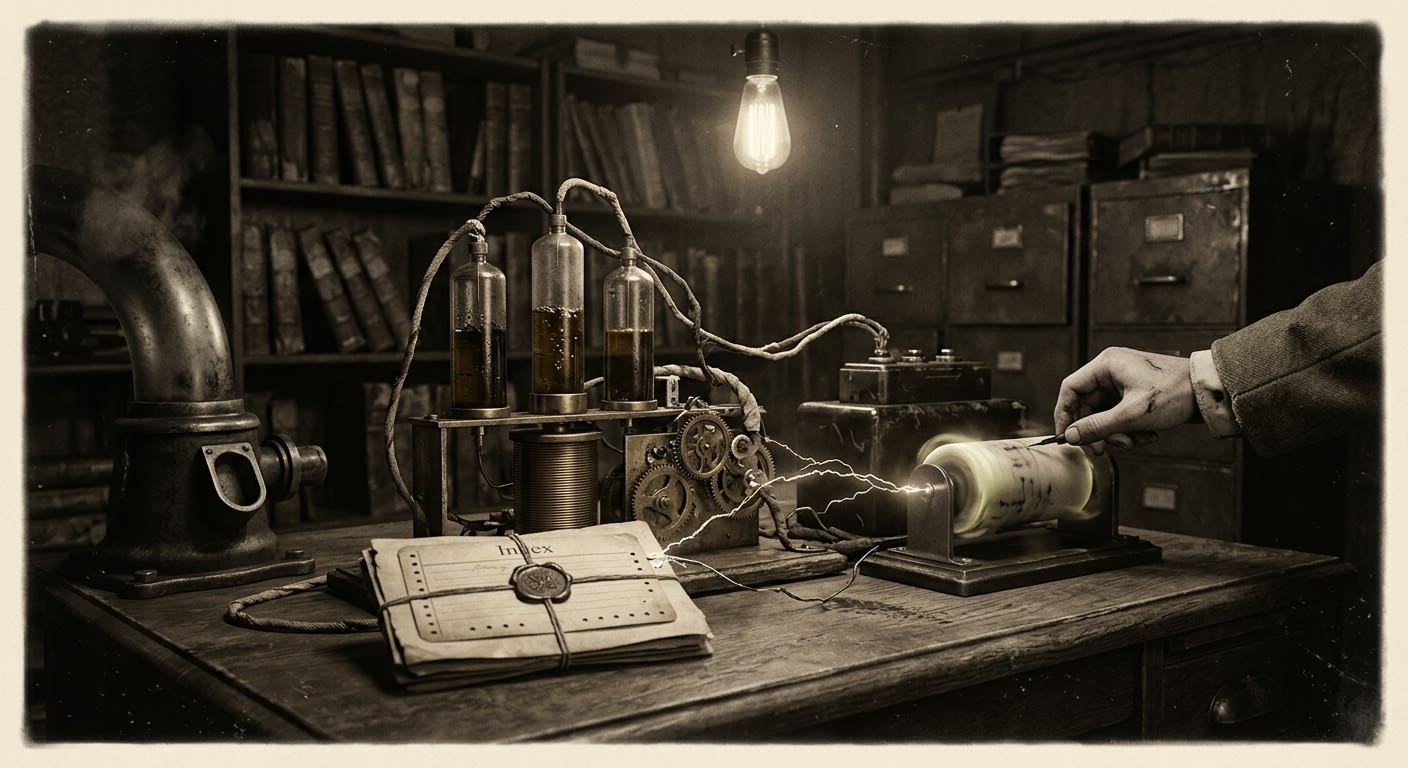
The shadow knows the route because shadows always know routes before the Bureaus name them. He cuts through a slaughter court, under a laundry bridge, over chapel roofs, across a fish-market awning, through a widow’s back room where nobody looks up because nobody wishes to owe an explanation. At the node, he delivers the packet under the Runner’s route-token, receives a stamp, or passes the receipt back through the same gut of the city. The Runner scratches the bell-hour into his log. The chain remains unbroken on paper.
The best Shadow Relays do not open packets. Professional shadows know that a sealed name is more dangerous than coin; coin can be spent, while a name spends the carrier. The worst shadows sell what they cannot resist. A blacklist bundle is warm meat in a hungry city. One slit in the wax can become four warned households, two changed ferries, a counterfeit marriage, and a dead clerk whose only mistake was being able to read.
#On Those Who Run in the Shadow
Unlicensed sprinters come from the populations the Synod counts badly: debt children, dock boys, bell-rope climbers, orphanage escapees, Black Ledger Runners, unemployed message brats, ferry bribe-carriers, and apprentices dismissed for speed in everything except obedience. They know the city by smell, by roofline, by which priest sleeps after noon, by which Warden limps, by which butcher leaves the back gate unbarred during Angelus.
The Black Ledger professionalised the trade without inventing it. Its own Runners had long carried second-book notices, stolen ration chits, seal scraps, and warnings between cells. Index packets were merely a finer class of danger. The Ledger pays some shadows in coin, some in loaves, some in the erasure of private debts. It prefers to handle Purity materials through children because children are searched less thoroughly and condemned more quietly.
Earlier Purity memoranda described Shadow Relays as “rare deviations committed by isolated Runner personnel.”
Corrected. The practice is recurrent wherever route pressure exceeds legal anatomy. Isolated personnel do not create slang, pricing schedules, roof marks, or the phrase “buying legs,” which appears in six separate interrogation transcripts and one regrettably catchy dock song.
A shadow may never know what he carried. He may know only that the packet had black wax, that the Runner’s hand shook, that the receiving clerk went pale, that three houses were empty by dawn, that two were not empty enough. That ignorance is prized. A shadow who knows too much becomes a Name-Merchant by appetite or a witness by accident. Both end badly, though the merchant usually eats better first.
#On the Receipt Fraud
The packet is holy. The receipt is holier. A Runner who delivers through a Shadow Relay must counterfeit not the packet but the history of its movement. He records a continuous route. He files his own arrival. He explains the mud on his boots, the mismatch in breath, the suspicious absence of witnesses at the corridor turn, the half-bell gained where the route-board permits no such mercy. Auditors live for these arithmetic sins.
Some frauds are crude: the same hand signing two nodes, a bell-hour impossible under weather conditions, a throat-tag stamp missing the violet edge left by the morning cipher. Better frauds use collusion. A gate notary writes the Runner’s arrival before the Runner arrives. A shrine clerk stamps a blank receipt and later remembers what he was paid to remember. A ferry guard records a handoff during fog, that magnificent weather of bureaucratic convenience.
The receipt chain exists to make law visible. Shadow Relay makes invisibility visible only to those paid to suspect it. Della Torre’s system was built after Veyrel and the Night of Six Names to prevent condemned persons from outrunning paper. Shadow Relay is the system’s own fever: paper outrunning the body assigned to carry it.
#On the False Packet Panic
The False Packet Panic of A.S. 134 changed the penalty. Before the Panic, Shadow Relay was described in Transit Division papers as outsourcing without authorisation, a phrase so bloodless that even the ink looks bored. After forged blacklist bundles moved through three Rhineland cities and four hundred citizens were arrested on invented names, the same act became route contamination. A Runner who passed a packet to unlicensed legs was no longer merely cheating the timetable. He was opening the route to false paper.
The logic is unpleasant and correct. A lawful packet carried by an unlawful body teaches nodes to trust bodies they cannot verify. A false packet needs exactly that lesson. The shadow who delivers correctly today prepares the clerk to accept counterfeit authority tomorrow. The Bureau, having trained its servants to fear delay more than doubt, discovered that doubt had become expensive.
POST-PANIC INTERROGATION EXCERPT — RHINELAND RELAY AUDIT, A.S. 134 Question: “Did you inspect the carrier’s throat-tag?” Answer: “He had the token.” Question: “Did you inspect the seal?” Answer: “The wax was black.” Question: “Did you inspect the man?” Answer: ███████████████████████████ Auditor’s note: receiving clerk reassigned to a route not present on current maps.
Triple-witness handoffs, tamper-evident seals, daily cipher rotation, witnessed strip burning — all followed. Shadow Relays continued. Reforms rarely kill a profitable sin. They teach it to charge more.
#On the Moral Arithmetic
The defence is always the same. The packet arrived. The condemned was seized. The orphanage registry was amended before the child could be adopted into innocence. The ferry was blocked before the household crossed water. The Runner broke procedure to preserve function. In another Bureau this argument might earn a reprimand and a medal in the same envelope. Purity hates mixed envelopes.
A Shadow Relay may save the Index from lateness. It may also sell the Index to the street. The Bureau cannot celebrate the former without licensing the latter, so it condemns both and quietly adjusts route estimates that assume both. This is not hypocrisy. This is governance under a black hood, and I will thank the reader not to confuse artistry with accident.
The shadow’s moral position is uglier. He is not the author of condemnation, not the named courier, not the receiving authority. He is the breath between seals. If he delivers cleanly, he vanishes. If he fails, the Runner is immured and the shadow becomes rumour. If he sells the name, a family may live, a riot may start, a child may vanish into a clean ledger, or a counterfeit packet may learn the route by following the hole he opened.
#On the Present Practice
As of A.S. 201, Shadow Relay persists in every city with enough alleys to embarrass a map. Strasbourg has disciplined six Runners in three years. Cologne has disciplined nine and quietly rehired two as route consultants after their sentences were commuted into usefulness. Marseille refuses to produce reliable numbers, which is port administration’s native dialect. Bastion districts report fewer cases than heartland cities because bastion walls reduce casual shortcuts and increase fatal ones.
The Black Ledger remains the most dangerous buyer of shadow knowledge. Its Theatres want early warning for public rescues. Its Accountants want condemned households entered into the second book before Purity reaches them. Its Knives want route data so that a Runner can disappear with just enough evidence to blame weather. The Ledger does not need to defeat the Index. It needs only to know which packet is worth arriving before.
Transit Division posters warn: “A Shadow Relay serves the enemy.”
Clarified. A Shadow Relay serves speed first, coin second, fear third, and the enemy whenever those three have made the introduction. The poster remains approved because accuracy has never been required of wall text.
The practice will endure while routes are longer than lungs, while bells are stricter than weather, while clerks trust tokens more than faces, while children can still fit through gaps the Bureau refuses to name. Purity will punish it, use it, deny using it, and punish the denial if necessary. The packet must arrive.