
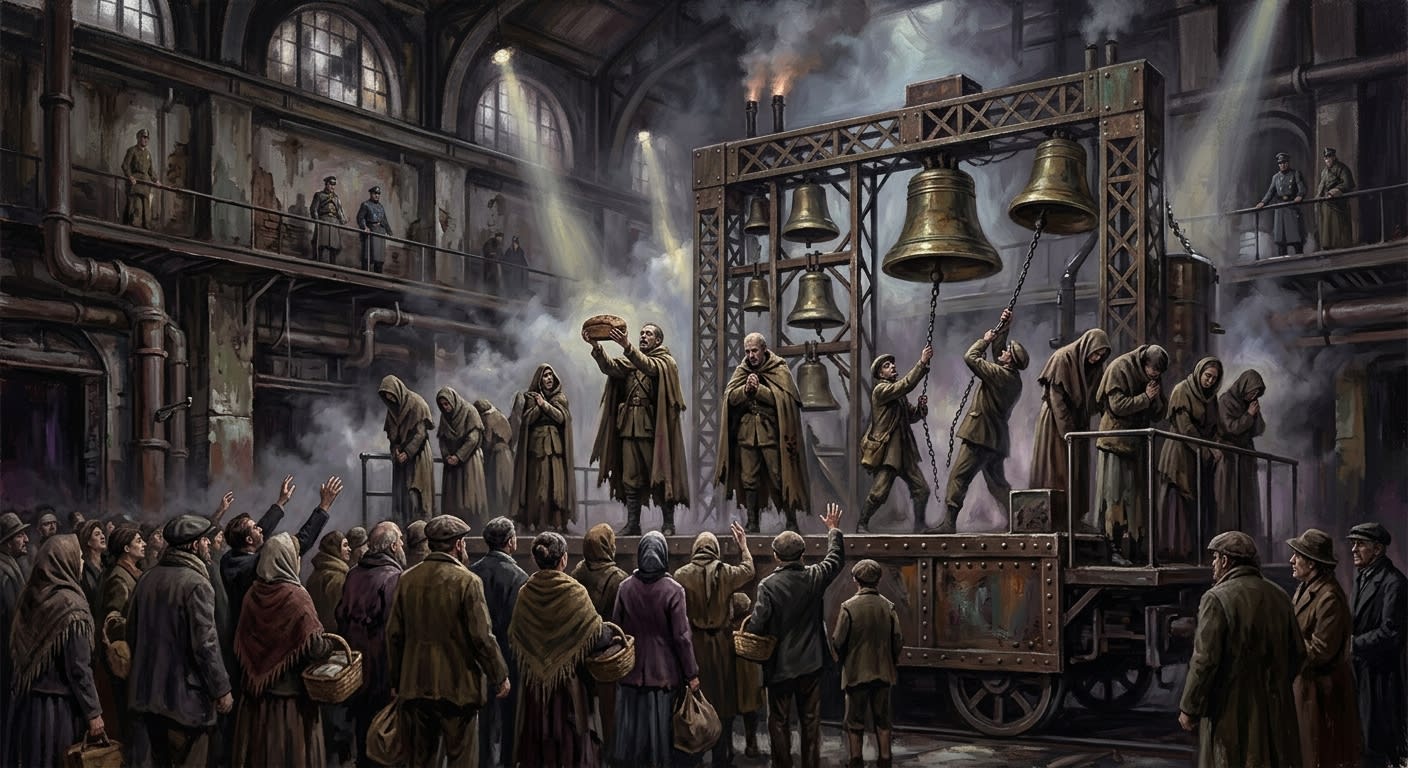
#On Charity Performed Under Bells
The Theatres are the Black Ledger faction that believes crime fails unless it is witnessed. This, regrettably, marks them as intelligent.
A Ledger cell may steal quietly, forge competently, murder efficiently, and keep accounts with a neatness that would make the Bureau of Records blush beneath its dust. None of that feeds the myth. Theft in a cellar remains theft. Theft in a ration queue, under the second bell, with a Queue-Saint (Unregistered) holding up a broken Tithes seal while hungry children count loaves aloud, becomes theatre, accusation, sacrament, recruitment, and civic sabotage served warm.
The Theatres hold that the Ledger's public face is the weapon: the bread distributed under bells, the widow embraced before witnesses, the stolen stamp “found” in a saint niche and returned with a tearful apology to the woman whom the Bureau had overcharged, the Queue-Saint with clean cuffs and borrowed grief. Without performance, the Black Ledger is a gang. With performance, it becomes a cause.
Causes recruit what gangs purchase.
#On the Queue-Saint as Actor
The Queue-Saint is the Theatre's beloved instrument. He or she appears in the ration line after hours of lawful waiting have softened anger into stupor. The cart arrives late; the warden shouts; the scale clerk consults the posted deficit; a child faints with the impeccable timing of starvation. Then the Queue-Saint steps forward. The cart seal has already been cracked elsewhere. The bread is real. The cuffs are clean. The face bears that practised mixture of sorrow and firmness which parish statuary attempts and rarely achieves.
“By the mercy denied you,” the Queue-Saint says, or some local variation less elegant and more effective. The loaves pass hand to hand. Someone sobs. Someone curses Tithes. Someone kisses the Queue-Saint's sleeve. Three Runners note the useful households. Two Wardens see too much and are later approached by men with questions about families.
Early Purity manuals described Queue-Saints as simple distributors of stolen food.
Corrected. Distribution is the least of the act. The true offence is witnessed tenderness without licence. Bread enters the stomach and vanishes; the performance enters neighbourhood memory and starts issuing orders.
Theatres train Queue-Saints in posture, timing, diction, and visible restraint. Too much weeping disgusts. Too little chills. A hand placed briefly on an old woman's shoulder recruits three houses; a hand left too long invites mockery. The voice must carry without sounding official. The body must appear generous without appearing rich. The exit must occur before gratitude becomes questions.
#On Bread, Bells, and Public Memory
The Theatres prefer bells because bells confer sequence. A theft performed at dawn is a theft. A theft performed between Matins and Prime becomes a memory with brackets. The Bureau itself trained the continent to hear time as authority; the Theatres merely stole the habit and filled it with contraband loaves.
In Ghent dock quarter, the A.S. 193 bread-cart action lasted eight minutes. Shadows reconstructed the incident from nine depositions, four hostile statements, and one child's drawing found tucked into a catechism primer. The cart was taken two streets from the ration office. The seal was displayed, not hidden. The first loaf was handed to a widow whose husband had been executed under a counterfeit debt notice; the second to a dock-worker with two sons at Bastion-Brest; the third to a child too young to understand symbolism and perfectly qualified to receive it. By the fourth minute the crowd had begun chanting the Bureau's own ration formula back at the wardens with one word changed.
CHILD'S DRAWING, GHENT DOCK QUARTER, A.S. 193 — CONFISCATED A black cart. Three bells. A woman with long hands giving bread. A white-cloaked officer drawn without eyes. At the bottom, in a school hand: “THE SAINT CAME BEFORE THE OFFICE.” Bureau annotation: █████████████████████████████████████████████████ Disposition: primer burned; child relocated; mother classified as unreliable witness.
The Theatres understand that the poor do not require innocence from their benefactors. They require visibility. They know the bread is stolen. They know the smile is rehearsed. They know a debt is forming behind the loaf like wax cooling behind a seal. They eat, watch, remember, and decide which lie has fed them.
#On the Argument with the Accountants
The Accountants despise Theatre extravagance. They call it wastage: public action increases exposure, burns safe routes, risks informants, and turns profitable debt into dangerous affection. A family that owes quietly can be collected. A district that loves loudly may riot on its own initiative, and initiative is untidy.
The Theatres reply with contempt sharpened by applause. A second book binds the fed; a story recruits the unfed. Debt compels the household already touched. Myth travels across streets the Runners have not mapped, into churches, laundries, funeral queues, munitions sheds, and schoolrooms where children draw eyeless wardens. The Accountants own obligation. The Theatres own appetite.
The Knives attend the dispute as men attend weather. If the performance succeeds, they protect the Queue-Saint. If it fails, they correct the witnesses. If an Accountant speaks too long, the Knives discover an anatomical objection. Theatres call this vulgar. Accountants call it necessary. Knives do not call it anything.
#On the Bureau's Unwanted Education
The Theatres offend the Synod because they imitate us too well. We understand spectacle. We built the Procession of Tongues, the Iron Choir, the licensed festival, the penitential route, the public erratum, the sermon posted in three sizes according to parish income. We taught Europe that truth becomes durable when staged with bells, witnesses, and paperwork. The Theatres studied the lesson and removed the licence.
This is theft of method, which is worse than theft of bread.
A Bureau of Doctrine commentary once advised that Theatre actions be countered by reducing public notice.
Withdrawn after the Marseille dock-cell action of A.S. 197, when silence allowed three contradictory songs to become six districts' preferred history within a week. The Bureau now recommends immediate authorised narration, preferably before the crowd has finished chewing.
The current countermeasure is ugly and, for that reason, promising: seize the performance's grammar. Wardens now arrive with authorised bread following major raids, distribute it through licensed Mercy clerks, and announce that illegal loaves carry spiritual debt. The Theatres answer by calling the Bureau's bread “apology bread,” which is effective because it is funny. Never underestimate a joke with flour on it.
The Theatres remain a low faction by numbers and a high infection by influence. A single competent Queue-Saint can cost the Bureau twenty witnesses, four informants, and a street's willingness to answer questions. A failed Queue-Saint costs the Ledger one actor and teaches the next one where to stand.