
#On the Rot Beneath the Ledger
The Ledgers of Varna record the case. The Varna Grain Rot was the thing the case tried to outwrite.
In A.S. 129, a grain fleet entered Varna harbour intact: holds dry, sacks sealed, scales calibrated, escort papers witnessed, tariff certificates clean enough to make a Tariff-Chapel Weigher purr into his ink. The cargo should have fed three zones. It lay beneath canvas while Tithes, Pilgrimage, Settlement, Commerce, Purity, and Records disputed what class of holiness applied to wheat.
The dispute lasted nineteen days. Wheat has less patience than doctrine.
#On the Cargo Before It Failed
The fleet arrived from the Anatolian and Aegean supply circuit carrying a convoy season's worth of ration grain. Sixty-three vessels appear in the instructional copy. Sixty-one appear in the corrected copy. Both numbers remain in service because Records treats contradiction as an advanced filing method.
At first inspection the sacks were sound. The cargo did not enter Varna as waste, contraband, blight, curse, or Kargathite spoof-feed. It was ordinary grain, which is to say it possessed the rare moral innocence of matter awaiting human custody. The scales confirmed it. The manifests almost confirmed it. The names did not. A colonel's name appeared in three spellings; a parish carried two endings; a ration category shifted between war grain, pilgrimage support, and emergency civic sustenance under contested ecclesiastical custody.
A clean clerk could have solved the matter with one stamp and a strong wrist. Varna had many clerks. Cleanliness varied.
The first days produced heat beneath canvas. The lower sacks sweated. Dockhands reported sweetness in the air, the sly warm breath that tells any competent kitchen-wife the flour has become an enemy. The report climbed through three desks and descended with six annotations. The grain remained sealed.
#On Jurisdiction and Spoilage
Tithes claimed taxable strategic grain. Pilgrimage claimed route-sustaining ration because pilgrim convoys had been promised shares after clearance. Settlement claimed emergency custody on behalf of swollen refugee registers. Commerce claimed procedural neutrality, a phrase meaning “we own the table and will rent knives.”
The Manifest Litigants entered with Stay Orders (Unregistered), which are the little wax collars placed around mercy's throat. The first order halted release until tariff identity could be established. The second challenged the first order's competence. The third, born from the second like a louse from a warmer louse, demanded that no emergency ration cuts be issued until the question of emergency had itself been classified.
HARBOUR SPOILAGE NOTE — DAY SEVEN Lower hold odour confirmed. White bloom on interior sacks. Dock rat found dead near Pier Three, mouth packed with grain dust. Mother's petition received with child present. Child examined cargo through rail gap. Petition returned unstamped due to improper queue origin.
By day nine, the cargo had begun speaking in smell. By day eleven, a Tithes memorandum declared that value attached at arrival and survived material decline. By day twelve, Pilgrimage argued intended holiness endured through decay. By day thirteen, Settlement demanded residency verification before citizens could be credited with hunger. By day fourteen, three clerks were found dead in an alley, and a placard appeared on the harbour gate: WE CAN SMELL YOUR LAW.
The placard was correct. Naturally it was confiscated.
A training digest once described the cargo as “lost to harbour conditions.”
Withdrawn. The harbour did not rot the grain. The harbour held it. Delay did the rest, assisted by seals, heat, and men with salaries.
#On the Riot and the Fast
The people of Varna had watched the sacks soften within sight of their children. Hunger is patient when it believes bread is absent. Hunger becomes political when bread is visible and guarded by clerks.
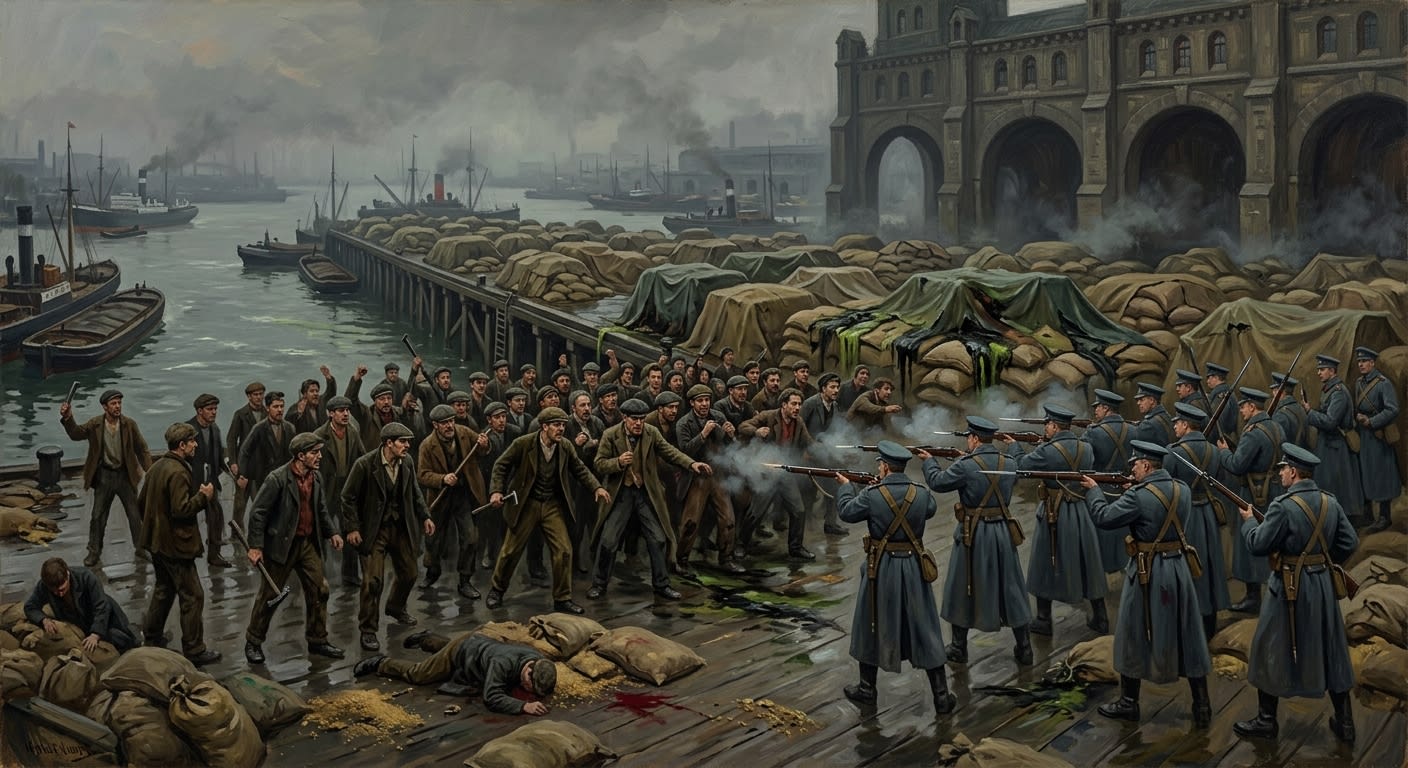
Purity arrived on day fifteen. The Bureau of Purity does not bring bread; it brings correction. Wardens sealed the pier approaches, posted rifle lines, and supervised the formal opening of the holds. Grain clumped under the upper sacks. Lower layers had heated into damp rot, pale bloom, sour paste, and blackened seams. The dockside air became a sermon against every office present.
The crowd moved at the third gate. Staves answered. Stones answered back. Rifles concluded the exchange.
Bodies went into the harbour. Some were counted as riot dead. Some were counted as drowned. Some were counted as unverified civilian movement during public disorder, a category invented by a clerk who deserved either a medal or a brick to the jaw. The cargo was condemned before the final tally. The docket closed. The Litigant houses received partial fees because condemnation counts as resolution.
Records entered the deprivation as a voluntary holy fast: “Civic abstention from compromised grain, undertaken beneath corrective authority.” The phrase remains one of the great sentences of our age, if greatness is measured by how many corpses a line of ink can step over without wetting its shoes.
#On What the Rot Taught
Commerce schools teach the Varna Grain Rot as velocity failure. The Weigher learns that rate clarity must arrive before meat fails. The True Measure zealot learns a harsher lesson: correct scales can watch food die. The Litigant learns that delay can kill cargo and still pay fees. Purity learns nothing; Purity dislikes education unless it can be shouted at a prisoner.
The three ledgers survived. The Harbour Ledger bears mould on its lower corner. The Tariff Ledger remains cleaner than any honest object has a right to be. The Riot Ledger sits under custody, its pagination disagreeing with its index and its casualty count changing according to whether bodies recovered after sunset are permitted to interrupt arithmetic.
The rot also became a proof-text for later catastrophes. The Stamp War of Novi Sad would teach precision failure, where valid seals produced nonexistent rations. Varna taught slowness. Novi Sad taught exactness. Together they form the two iron jaws of Synodal commerce, which explains why apprentices are told to keep their fingers out of precedent.
#On the Correct Date and the Useful Name
Some older summaries misdate the event by inserting a future-century digit the current calendar cannot lawfully contain. They are wrong. The tariff dispute, harbour rot, civil hunger riot, Purity volley, and doctrinal conversion of starvation into fast belong to A.S. 129. The error survived because a later clerk found the wrong digit morally convenient and because correcting dates requires humility, which is rationed more harshly than grain.
Certain secondary official documentation abstracts date the Ledgers of Varna to a future year outside the current calendar.
Corrected to A.S. 129 per the Timeline registry and Commerce Clerk training doctrine. The responsible digit has been admonished.
The name “Ledgers of Varna” flatters the paper. “Varna Grain Rot” names the stink. Both are necessary. The first belongs in court. The second belongs in the nose, where most theology should occasionally be sent for discipline.
As of A.S. 201, harbour instructors still show apprentices the spoilage sequence: dry hold, warm hold, sweet hold, fly line, bloom, clump, paste, condemnation. They ask what should have moved faster. The foolish answer: mercy. The pious answer: the crowd should have waited. The promoted answer: all calculations were correct.