
#On the Year the Grain Learned to Move
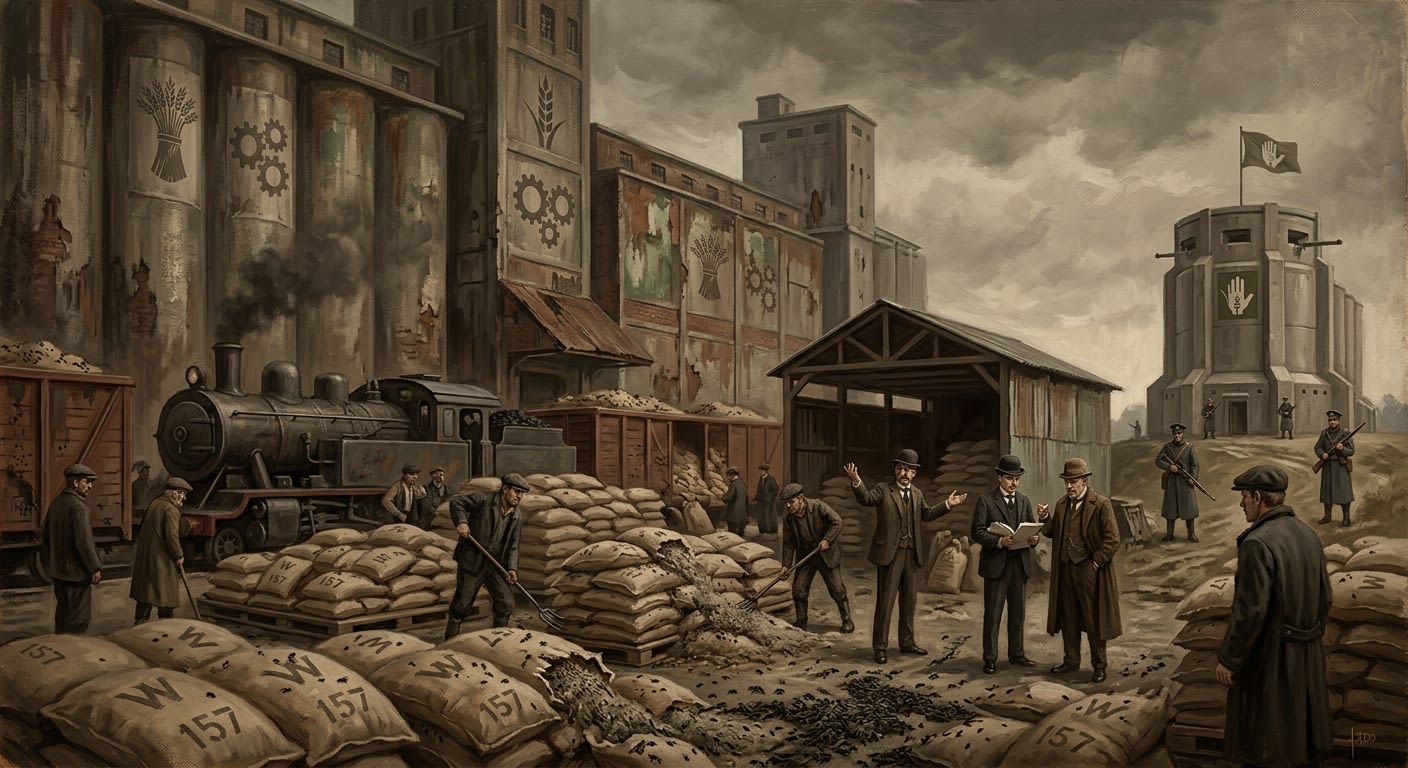
The Weevil Year of A.S. 157 began with a sealed door, a correct form, and a smell so thick that a clerk in Cologne fainted before he could finish stamping the receipt. Official grain stores had rotted in their silos. The ledgers remained healthy. Whole districts starved beneath paperwork showing adequate reserve, acceptable ventilation, lawful transfer, proper blessing, and no immediate cause for alarm.
Alarm arrived anyway. It came with teeth.
The year belongs to the same black season that followed the Subjugation of Seville, revived western hunger levies, stripped storehouses for the southern theatre, and taught comfortable offices that hunger travels faster than memoranda. In the public calendar it is called a famine. In Grain Keeper memory it is called proof.
#On Four Bureaus and No Air
The disaster had authors, which is why the Bureau later preferred weather. The Bureau of Agriculture insisted that emergency stores be centralised for scientific oversight. Engineering designed the storage facilities with admirable attention to locks, walls, access ramps, and load-bearing piety. Rites maintained blessing schedules, fumigation prayers, and sanctified closure intervals. Records inspected custody sheets and seal continuity. Four Bureaus touched every sack. None owned the air inside the silo.
Grain does not respect jurisdiction.
The western stores heated. Damp settled. Weevils bred in the dark with the enthusiasm of parish clerks given fresh ink. Sacks blackened from the core outward, so outer inspection passed while inner rot multiplied. A bin could smell faintly sweet at dawn and turn sour by Vespers. By the time the first emergency silo was opened, the grain had become an argument with legs.
Earlier editions attributed the Weevil Year to “meteorological misfortune and logistical delay.”
Corrected. Rain did not countersign the silo plans. Delay did not bless sealed rot. The catastrophe proceeded through lawful custody, regular inspection, and perfect inter-Bureau ignorance.
#On the Hidden Caches
The lawful stores failed. The unlawful stores fed people.
Behind altars, beneath stairwells, inside ossuary walls, under mill lofts, and in the false floors of licensed granaries, Grain Keeper caches survived because criminals distrust official architecture. Their grain had been moved in small lots, aired at night, divided among three houses, wrapped in waxed cloth, blessed only when a priest could be bribed to bless quickly, and inspected by noses rather than forms. The method was heresy. It was also dry.
Mercy Keepers opened high shelves and fed children first. Quota Men released reserve fractions with the restraint of men who knew winter had not finished speaking. Hunger Brokers sold bread at famine interest and recruited half their future tyrannies in that season. All three factions emerged stronger, dirtier, and harder to uproot. The Weevil Year did not create the Grain Keepers. It made the ward remember them.
Purity interview fragment, Rhine ward circuit, A.S. ███: Question: “Who supplied bread after the public stores failed?” Response: “No one.” Question: “Then how did the ward survive?” Response: “We were corrected by Providence.” Note: witness had flour beneath both fingernails. Disposition: █████████████████████
The Synod quietly stopped asking questions. Quiet is a tool, not a mood. Patrols saw night sacks and looked elsewhere. Parish canons discovered alms cupboards they had forgotten owning. Tithes officers accepted lowered unrest totals without investigating the miracle. Purity made a list, folded it, and waited for the bodies to regain enough weight to arrest properly.
#On the Death of Agriculture
A.S. 158 brought the official answer. The Bureau of Agriculture was dissolved for “administrative redundancy and doctrinal irrelevance.” Its records went to the Bureau of Records sub-registry. Its staff went to the Paper Mines of Ulm. Its authority over grain allocation passed to Tithes, which had already been exercising that authority since approximately A.S. 143 without the vulgarity of permission.
The dissolution was declared unrelated to the Weevil Year. It has always been unrelated. The Bureau said so after sending the clerks away.
Post-famine notices implied that Agriculture's dissolution followed a routine efficiency review.
Amended. The review became routine after the result was chosen. The Bureau failed to preserve grain, failed to own its air, failed to keep Tithes from stealing its living functions, and failed at the oldest duty of any office: making its failure someone else's before the stamp dried.
#On the Present Use of the Year
By A.S. 201, the Weevil Year remains a lesson taught badly on purpose. In public homily it proves patience, ration discipline, and the sin of hoarding. In Tithes training it proves that food belongs under offices willing to count it as revenue before counting it as bread. In Grain Keeper cellars it proves the proverb: no one audits a famine. In Purity files it proves that a heresy may save a district and still deserve the wall once the district can stand.
The surviving widows remember less theology. They remember the smell of opened silos. They remember black grain pouring like dead insects into the yard. They remember children licking flour from chapel stones. They remember the first illegal loaf arriving at dusk, passed hand to hand without sermon, receipt, or seal.