
#On the Plain That Carried Cattle
"Alfold, the: lowland pasture, eastern Pannonian basin. Livestock register transferred. See Hungary; see Debrecen; see Former Agricultural Zone East-7." — Bureau of Records, Index of Settlements and Regions, cross-reference slip
The Index gives the Alfold four lines and three instructions to look somewhere else. That is how the Bureau tells you a place is gone and only the directions to it are left. I decline the instruction. The Alfold was the great flat lowland of old Hungary, the grazing floor of the Pannonian basin. It lay between the Danube roads and the eastern edge where Debrecen kept its grain exchange. No one with the authority to fix its boundaries ever did. County surveyors drew it one way, drovers another and tax farmers a third. The cattle paid no tithe and walked across all three.
Grain articles remember sacks. The Alfold remembers hooves.
I intend to keep that difference, because for a century and a half the Bureau has filed the lost east as a wheat problem. Wheat was half of it. The other half had horns and moods and walked itself to market. The Alfold's cattle-runs grew grass so thick that drovers' boots left no mark, and from April to October the air smelled of clover. Drovers measured wealth in dust. A man who raised a large cloud on the road east of the Tisza was a man whose daughters married well.
#On Hooves, Dust, and Ledgers
The plain's grazing trade was vulgar and fragrant, and it wasted nothing. Grass became beef, milk, hide, tallow, horn, glue and bone meal. The manure went back onto the Debrecen wheat, a closed circle of the kind theologians admire in diagrams and despise in farmyards. Hides went west to the tanners of Vienna. Tallow lit chapels whose priests would never have stood downwind of where it came from. Salt beef filled the barrels of armies that did not ask where the barrels were packed. Draught oxen hauled the harvest columns to the river crossings. Remounts for three cavalries were broken on the pasture edges. The Debrecen cattle-market stank so thoroughly that Vienna smelled it on a good wind and called the smell prosperity.
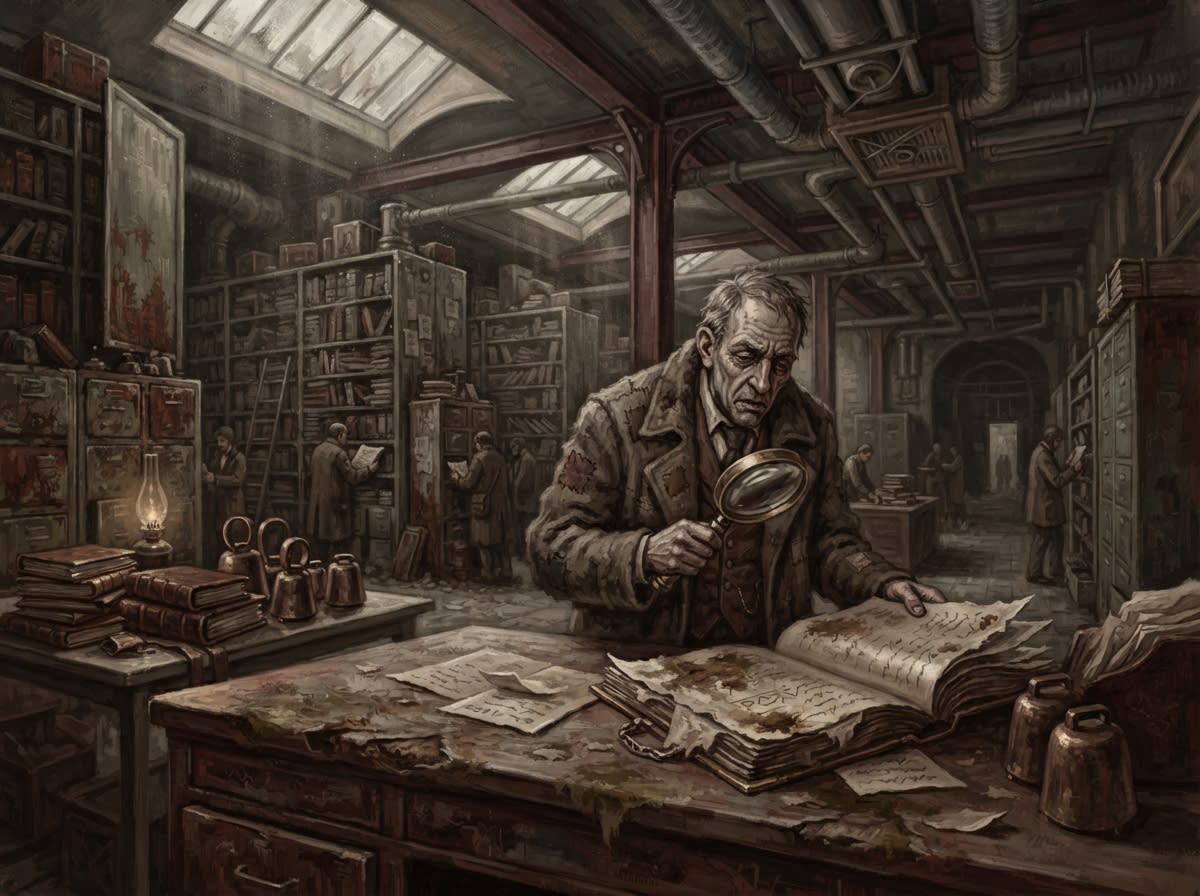
Someone counted all of it. The old county and imperial rolls listed herds by brand, pasture by parish, calvings by season and losses by cause: bloat, wolves, murrain, theft, and a bull with ambitions. After the Sundering, the salvage clerks of the newly public Church gathered what survived of those rolls in pieces. Much later the pieces passed to the Bureau of Agriculture, which kept cattle registers from the Alfold beside its Pannonian yield tables and Tisza orchard ledgers. The clerks who annotated them had mud on their boots. Strasbourg noticed, disapproved, and eventually dissolved them for it.
The Livestock Abstract of the eastern sub-registry described the Alfold herds as "lost to ordinary wartime requisition during the Rationalist withdrawal," and classed the name "Alfold" as a deprecated pastoral usage.
Corrected. Requisition implies a receipt. The herds nearest Debrecen were eaten with the city's stores on All Saints' Day, A.S. 45. The rest died, scattered or were eaten on the retreat roads. The name is still in use. Refugees say it every day, and that is the only test of a place-name the Bureau has never learned to apply.
#On the First Hunger
The warnings came during the Eastern Silence of A.S. 38, and the animals gave them first, because animals do not wait for a circular. Cattle swelled and died with feed still in the trough. Herds refused wells their herdsmen drank from without harm. A cow would stand at the edge of good grass with her head lowered and neither eat nor explain herself. Beside her stood a drover, just as silent, starting to understand that the land had changed masters. Each case was priced and filed. The registers said bloat, bad water, a bad year.
Then came the night of 1 November, A.S. 45. The Sundering opened the east, and Kargath turned his appetite on Debrecen. The public accounts record forty-two thousand souls and one hundred thousand Rationalist soldiers whose rations were devoured in a single night: every sack, barrel and loaf within a forty-mile provision radius. Those accounts were written by men who think in rations. The salt beef in the garrison barrels, the oxen in the commissariat traces, the milk cows in the town byres and every herd grazing inside the forty-mile ring that week were rations too, on four legs, and they went the way of the flour.
Fragment, drover's deposition, taken at a western collecting station, year of filing illegible: "The bells stopped before dawn. Not all together. One, then the next, then the next, across the whole run, like someone walking along the herd and ███████. When it was light there were no cattle. The grass was still flat where they had lain. It was warm." Remainder struck by later order of the Bureau of Purity.
The soldiers who lived ate their horses on the road to Bratislava. The dead went into what became the Famine Pits. The drovers who lived had nothing to eat and nothing to drive. They kept their bells, their brands and a trade with no animals left to practise it on.
#On the Retreat Roads
From A.S. 48 to A.S. 65 the Alfold's cattle roads carried the Great Retreat westward. Generations of hooves had laid those roads wide and shallow, around the bogs and past every well and ford between the Tisza and the Danube. They were the only roads on the plain that knew where the water was. The refugee columns took them for that reason and died on them for others.
The drovers knew the fords, so they became guides. A man who can turn a stampede can turn a mob, so they became guards. Every cow left on the western roads was worth more than the family walking beside it, so they became smugglers. They also died in great numbers, because that same arithmetic occurred to everyone else. The surviving herds were eaten by the columns and stolen by deserters. Commanders requisitioned them on receipts made out to nobody. The rest were driven west toward the Drava at a pace that killed the calves first. By the end of the Retreat the registers had outlived the herds they described. Paper walks badly, but it does not need grass.
#On What Answers Now
As of A.S. 201 the Alfold survives in four forms, and none of them contains a cow.
The first is paper. The Agriculture cattle registers sit in the Bureau of Records sub-registry. The Bureau that kept them was dissolved in A.S. 158, after the Weevil Year rotted the lawful silos and left Tithes holding the grain.
The second is memory, kept in the refugee quarters of the west. There a drover from the Alfold keeps a cattle bell for animals that no longer exist, and old men still judge a flat field by whether a herd could cross it without breaking stride.
The third is danger. The Blightmarsh covers former Hungarian and Pannonian farmland, some twenty-three thousand square miles of it, and advances about one hundred and forty square miles a year. No survey has worked out how much of that grey ground was pasture and how much was wheat, because the Blightmarsh does not let surveyors finish. The Abundance Fields bloom along its edge. Seventeen are confirmed. The largest, AB-7, measured about three square miles at the A.S. 199 survey. Their food fills the belly and doubles the hunger. Standing Order 119-F forbids approaching any cultivated land within ten miles of the boundary, and since A.S. 199 the smell has counted as contact. Some patrols on that boundary report clover on the wind in months when nothing green should grow. They are sent to the Bureau of Medicine.
The fourth form should trouble Strasbourg most. The knowledge that turned grass into beef, leather, tallow and oxen strong enough to haul a convoy survives in a handful of old drovers and a few cabinets, and no office owns it. Tithes holds ration authority, and where it counts cattle at all, it counts them as revenue. The Agriculture remnant is three clerks in a Strasbourg basement who annotate Blightmarsh boundary reports. They have twice asked to see the Alfold registers so they can compare the old pasture lines with the advance of the Fields. Records granted the first request after four years. The second is pending.