

#On Her Office Without Office
Aunt Velka holds no stamped appointment, draws no stipend, wears no mantle, occupies no clerk's chair, and answers to no Bureau except in that broad penal sense by which every breathing citizen answers to all twelve. She is, in official Thessalonikan phrasing, “a displaced civilian elder of practical influence within the Refugee Sheds.” This is the sort of description produced by a man who has never needed soup, blankets, a silence kept, a child hidden from Quarantine (Unregistered), or a dead man's name preserved after Records mislaid him for administrative convenience.
The city calls her Aunt.
In Thessaloniki, titles are weighed against usefulness. Harbor Prefects control manifests. Chainmasters control iron. Pilots control passage. Aunt Velka controls the Sheds after dark, which is to say she controls the hour when the Drowned Choir presses its mouth against the walls and children begin to answer in their sleep. A title conferred by panic and retained by obedience has more force than many seals. I regret to inform several Archons of this principle.
She is not named in the first harbor charters, nor in the A.S. 121 Drowned Choir file, nor in the A.S. 145 Crying Choir intake ledgers that made the Refugee Sheds a permanent moral indictment with roofs. She appears later, in supply petitions, disciplinary notices, night-watch complaints, ration adjustments, and the testimony of children who describe her by smell before they describe her face: tallow smoke, vinegar cloth, boiled lentils, and the sharp black herb she chews to stay awake.
#On the Sheds and Their Arithmetic
The Refugee Sheds were built as temporary shelter, which grants them the longevity of all temporary arrangements blessed by official neglect. They cling against the city wall beneath Bellhouse Heights: plank rows, tarred roofs, patched sailcloth, stove pipes, shared cisterns, shrines made from broken crate slats, and sleeping platforms stacked close enough that one family's nightmare becomes another family's weather. The first residents came from coastal shelling. The next came from burned farms, quarantined coves, failed convoy camps, and villages where the soil had learned salt. By A.S. 201, several children born in “temporary shelter” have children of their own.
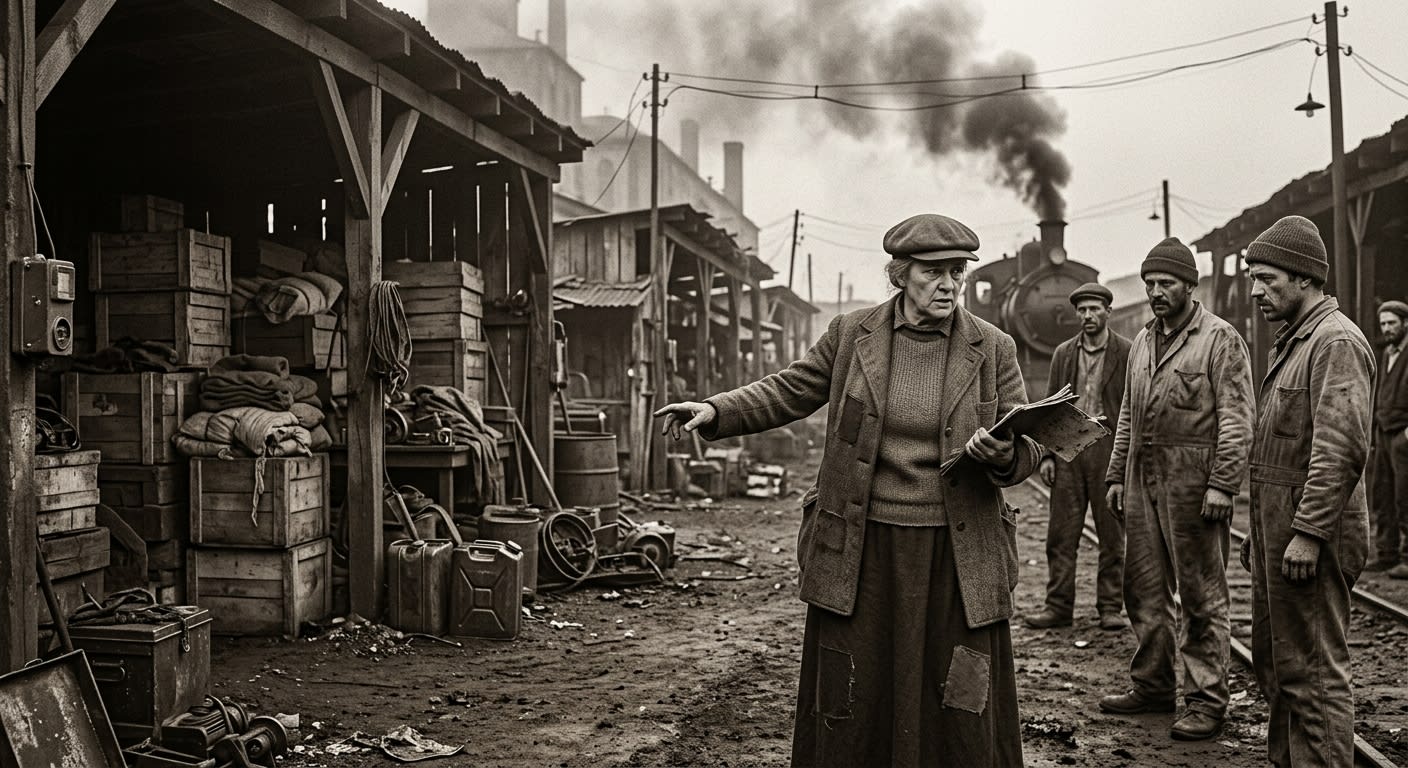
The Sheds survive by arithmetic. How many bowls from one pot. How many blankets when fog comes wet. How many names can be spoken before curfew. How many sleepers can be watched by three waking women and one boy with a cracked bell-cup. Aunt Velka's genius, if the Bureau will permit genius in an old woman without Latin, lies in ratios. She knows which widower will pretend not to need food until he collapses. She knows which child hums sharp when feverish. She knows which families must never sleep beside the north wall because their dead came by water and the Choir favours familiar routes.
The Bureau of Mercy has studied the Sheds. It produced recommendations. Aunt Velka used the paper to seal stove gaps. This may be the finest practical review the Bureau has ever received.
#On the Night the Bells Failed
On 14 Ashmonth, A.S. 198, the bells stopped. The Elder and Younger Towers received their blows and gave back nothing. In the harbor offices, the absence produced memoranda. On the quays, it produced stalled traffic. In the Refugee Sheds, it produced listening.
The communal hum was already old by then. It began after the Crying Choir incident of A.S. 145, when children sleeping beneath tower stone sang through the night and woke with their tongues dissolved into salt water. The Sheds learned what the Bureaus classified later: rhythm interrupts the under-song. A low shared drone, rough, ugly, constant, timed against the bells, keeps sleep from sliding toward the tide. It is not music. Music asks to be admired. The hum asks only that morning arrive with the same number of children.
Without the bells, the hum lost its spine.
Velka did not convene. She did not issue doctrine. She struck three pot-lids with a spoon, summoned every adult who could stand, and divided the night into throat-shifts. Old women took first watch because they lied best about exhaustion. Men with dock lungs took second because their voices carried through wet timber. Children who were too frightened to sleep were placed between singers and told to count breaths. Those who began to sleep-sing were slapped awake, kissed, named aloud, and made to drink vinegar water until they cursed. The curse mattered. A cursing child was still answering the room.
REFUGEE SHEDS NIGHT LIST — THIRD WATCH, A.S. 198 Persons restrained from waterline: 12 Children found in shallows at dawn: 3 Phrase produced: “bell-note, but from below” Names withheld by Aunt Velka pending assurance of non-seizure: ███████████████ Quarantine request: denied at Shed gate by civilian obstruction Filed charge: interference with emergency medical custody Disposition: not pursued; crowd density unfavorable
The first night held. The second frayed. On the third, something below the note entered the Shed hum: lower than men's chests, thinner than children's throats, a pitch that made the stove-flames lean toward the wall. Velka heard it and did the correct thing, which is to say she did not name it. She changed the rotation, moved the tongueless children inward, and ordered the oldest women to sing the burial antiphon used for babies too small to receive full rites. The under-note receded. Three children still reached the shallows before dawn. All three lived.
Harbor summaries describe the Shed response during the Silence as “spontaneous civilian devotional resilience.”
Corrected for internal use. The response was organized by Aunt Velka, resisted by Quarantine staff, ignored by the Bureau of Rites until it became useful, and later praised in language broad enough to steal credit without creating liability.
#On Her Methods of Governance
Velka governs through kitchens, sleeping rows, laundry ropes, whispered shame, and the unanswerable authority of having remembered everyone correctly. Her registry is a basket of cloth strips tied by family, death, ship, village, and tongue. Records hates this basket in the private way institutions hate any archive that works without them. Each strip bears marks made by women who may not read Bureau script but know whether a boy belonged to the Rados line, the south cove, the burned mill, the blue boat, the mother with the missing thumb. The Bureau calls such marks nonstandard. The dead call them sufficient.
She keeps three rules after dusk. First: no one sleeps alone. Second: no full names near the north wall. Third: if the water sings a name, speak two others over it, loudly and badly. The principle is crude and effective. The Choir loves precision. Velka answers with clutter.
Her quarrels with officials follow a pleasing pattern. Quarantine arrives with stretchers. Velka asks for names. Quarantine produces forms. Velka asks for mothers. Quarantine threatens custody. Velka raises one eyebrow and thirty women place themselves between the stretchers and the sleeping rows. The official record then notes “access difficulty due to temporary congestion.” I have seen infantry retreat with less dignity.
She does not oppose all Bureau action. This disappoints romantics and terrifies professionals. She permits Warden-Physic Iri to treat fever. She permits Bell auditors to listen from the threshold if their boots are clean and their hands visible. She permits Diver-Matron Sera to stand by the east wall when the sleep-singing thickens, because Sera's presence thins it. She does not permit Purity novices to question children after dark. Her reasoning is precise: after dark, the Choir questions them enough.
#On Children, Tongues, and the Second Line
The children trust Velka because she does not lie prettily. She tells them the water wants names. She tells them the hum works until it does not. She tells them the bells are wrong now and must be treated as wrong things that still perform a duty. She does not tell them the Bureau will protect them. Children detect that sort of blasphemy faster than theologians.
Since A.S. 199, the Shed hum has developed a second line. No teacher supplied it. No choir-master approved it. The children produce it first, especially the tongueless remnants of Crying Choir households, who cannot sing in the ordinary sense and yet shape breath, click, throat, and chest into a harmony that the Bureau of Orison and Song cannot transcribe without adding symbols no sanctioned hymnal permits. Velka says she has never heard the line before. Sera says the chain-hum recognizes it. Kosta says nothing and listens harder.
The second line is not sweet. Sweetness would be easier to condemn. It is practical, like rope biting a palm. When held under the ordinary drone, sleep-singing weakens. When sung too clearly, the north wall sweats salt. Velka enforces ugliness. She makes the children rasp, stagger, cough, interrupt, and muddy the note until it becomes less attractive to whatever listens beneath the harbor. The Bureau calls this “lack of musical discipline.” The Bureau may go boil itself in clean ink.
#On Her Present Usefulness
As of A.S. 201, Aunt Velka remains in the Sheds, which is to say she remains at a post no one assigned and no one else can hold. The annual Night of Quiet Bells has made her more dangerous to the Bureau, because voluntary silence frightens institutions more than riots. Riots can be charged. Silence must be interpreted, and interpretation invites doctrine, and doctrine invites me. Naturally, everyone suffers.
Strasbourg's external audit will ask whether the refugee hum is doctrinally supervised. Velka will say yes if supervision means she watches it. She will say no if supervision means a Bureau wrote it down. She will offer tea in a chipped cup, seat the auditors where the roof drips, and answer questions in the exact measure required to prevent useful knowledge from becoming confiscated knowledge. No deceit there. Custody.
The Drowned Choir continues beneath the chains. The bells ring in exchanged voices. The Sheds hum through damp boards and bad winters. Velka's cloth-strip basket grows heavier. Three children from the Silence year now lead throat-shifts of their own. The under-note comes sometimes before rain.
A draft recommendation from the Bureau of Rites proposed licensing Aunt Velka as a Civilian Drone-Matron attached to coastal harmonic defence.
Rejected. Licensing would require training, training would require standardisation, standardisation would destroy the practice, and the practice currently keeps children from walking into the sea. Even the Bureau can identify a bad bargain when it threatens shipping statistics.