
#On the Square City and Its Excellent Corners
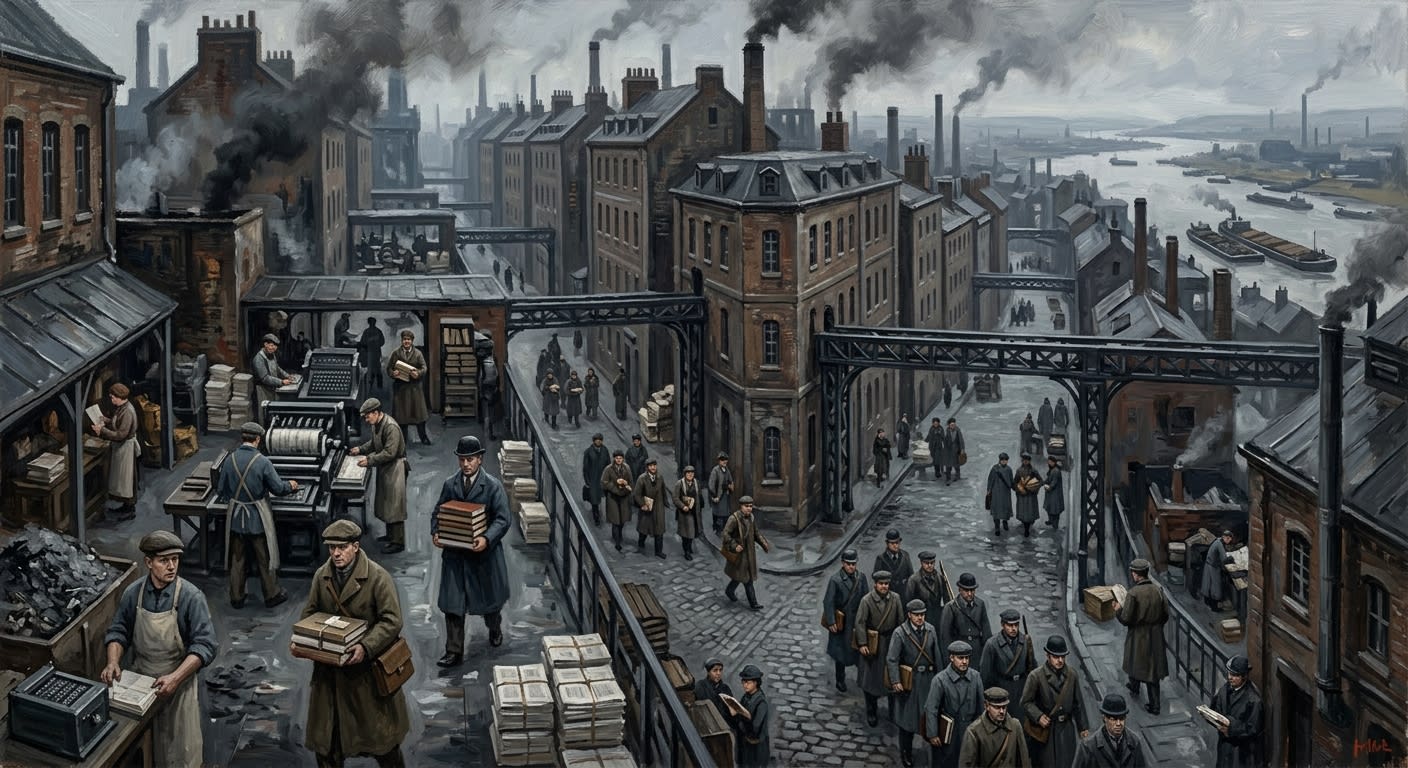
Mannheim is the Rhine Corridor’s most geometrically smug city, a gridded burgher machine set where river, road, copyhouse, tariff habit, and suspicious arithmetic learned to share a table. Beside Strasbourg it lacks grandeur; beside Cologne it lacks archive-fat; beside Mainz it lacks theatrical wounds; beside Rheinscarp it lacks vertical fee-drunkenness. Mannheim’s vice is squareness. Streets meet cleanly. Blocks answer numbers. Warehouses line the docks with the stiff backs of men waiting for inspection. Even the sinners appear to prefer right angles.
This is why it breeds excellent heresy.
Mannheim lies within the Rhine Corridor, in Zone 2 heartland custody, where the Synod’s rear becomes paper before becoming war. Its docks receive grain, paper, ink, bell-metal crates, ration sacks, orphan transfers, levy notices, and the dense administrative vapours by which every river city persuades itself that water is obedient. Its copyhouses handle duplicate forms for Passage, Tithes, Records, and private merchants who swear loyalty more loudly than they pay arrears. Its bell attendance boards are cleaner than its chapel steps. Its school rosters are too tidy. Its ash-yards smell of paper burned before it had the courtesy to become evidence.
#On Its Making Into Procedure
Mannheim’s older civic shape pleased the Bureau the moment the Bureau learned to look past the local self-importance. A square city is a gift to administrators. Blocks may be indexed. Windows may be counted. Patrols may be routed by number rather than by tavern smell. Fire lines may be drawn with beautiful cruelty. After the A.S. 45 Sundering pushed refugees west and grain east, Mannheim’s gridded habits became useful to the emerging Corridor: a place where cargo could pause, paper could multiply, and people could be told that straight streets meant straight obedience.
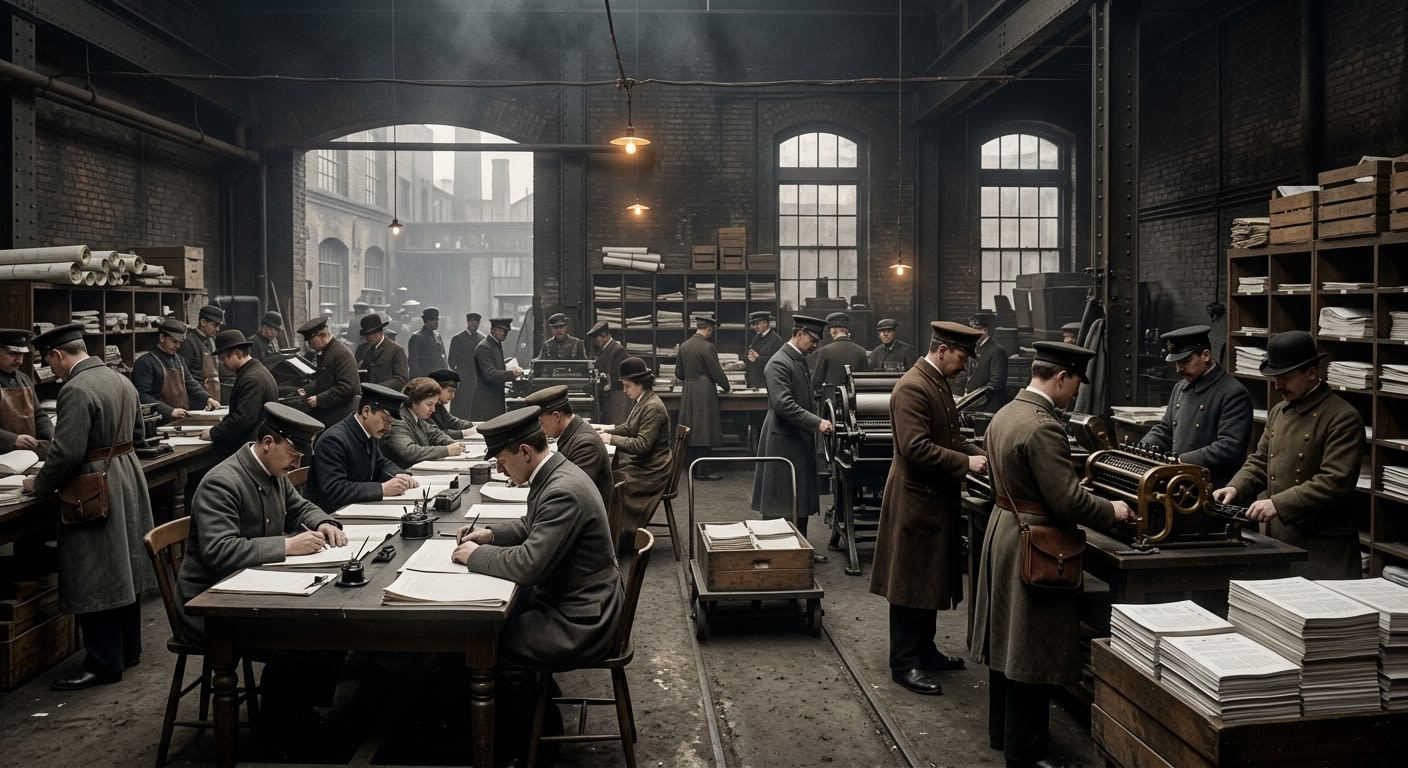
The city’s post-Sundering role hardened with the corridor apparatus. Bridge courts upstream and downstream sent disputes to Mannheim copyhouses when damp had ruined originals. Tithes used its warehouses for reserve tallies and seasonal correction. Records trained copy clerks there because Mannheim’s blocks made instruction cheap: stand in Square C, take forms from Square D, lose no page between Square E and the river, or discover how quickly a training city becomes a punishment city.
The Bureau of Passage valued Mannheim’s river proximity. The Bureau of Tithes valued its warehouses. The Bureau of Records valued its paper hands. The Bureau of Purity came later, as it usually does, after the useful thing had become intelligent enough to alarm its owners. By A.S. 125, Mannheim had become one of the Corridor rooms where the Synod’s numbers could be seen in transit: grain extracted, grain forwarded, grain spoiled, grain missing, grain corrected, grain sanctified by loss.
That visibility made the city fertile.
Several civic guidebooks describe Mannheim as a “model of heartland administrative calm.”
Corrected. Calm is what a ledger looks like before one compares it with the warehouse. Mannheim’s calm has always been paper-thin and river-damp.
#On the Copyhouses and the Arithmetic of Doubt
Mannheim’s copyhouses are its true chapels. They stand in rows near the river streets and inner square, smelling of lamp oil, rag paper, vinegar steam, binding glue, wool coats, and ink rubbed thin by winter fingers. Their windows are narrow. Their clerks are quick. Their masters grow old with the peculiar pallor of men who spend decades duplicating authority until the copy seems more confident than the original.
Here the same number may pass through three hands under three names. A levy total arrives from a rural district, becomes a requisition table, becomes a ration adjustment, becomes an absence in a widow’s petition. A miracle report enters as testimony, is copied for Doctrine, copied again for Orison, abbreviated for parish notice, and contradicted by a hospital death roll sitting on the next desk. A child with sharp eyes can learn more atheism from one afternoon of copying than from a cellar full of angry philosophers.
Arno Kett understood the city’s usefulness. Between A.S. 125 and A.S. 135, when he organised the first verifiable Silent Godless cells along the Rhine Corridor, Mannheim supplied precisely the kind of recruits his method required: copyists, ration clerks, bell attendants, junior assessors, school assistants, and couriers who moved between offices with enough anonymity to carry a question and enough literacy to fear its answer. They did not begin with speeches. They began with arithmetic.
How many miracles were preached from the river chapel that year? How many patients left the infirmary alive? How many sacks were tithed from the river farms? How many reached the eastern depots? How many boys were registered in a school slate before levy day? How many names returned in mourning notices after the forms were corrected?
The questions were small. Mannheim was built to carry small things.
#On the Quiet Rooms
The Silent Godless in Mannheim used rooms that had already been trained to secrecy by commerce. Rear offices behind copyhouses. Laundry cellars where paper aprons were washed. Warehouse lofts above grain bags whose owners had paid for privacy. Bell loft corners during maintenance intervals. Schoolrooms after dusk, when sums remained on slates and the saints on the wall looked away with painted obedience.
They prized the city’s grid for the same reason Purity prized it. A straight street makes pursuit easier. It also makes countersurveillance cleaner. If a patrol turns at Square F when it should have continued to Square G, the watcher knows. If a courier crosses diagonally instead of taking two sides of the block, the cell knows. If a man returns from confession smiling too brightly, everyone who remembers Lutz Brennan knows. Geometry is neutral only to those who have never been hunted.
PUR-173/MANNHEIM CELLAR NOTE Recovered materials: blank prayer slips; three school slates; rag-fleck ledger copies; false rosary with weight variance; ash-ink stub; route phrase “square twice, river once.” Names attached: ██████████████████████████. Disposition: two erased; five immured; one released under watch; copyhouse sealed for “mould.”
Mannheim’s cells developed a local courtesy called the dry nod. One did not greet with doctrine, slogan, hand sign, or dramatic whisper. One looked at the corner of the page, then at the person’s left sleeve, then returned to the work. If the sleeve bore dust from the wrong shelf, the meeting dissolved. If the page had been cut too neatly, the courier left by the river door. If both were correct, a question changed hands under the cover of copying an approved prayer.
#On the Great Inquest Arriving Before Dawn
The Great Inquest of Names reached Mannheim in A.S. 173 with the usual dawn vanity: boots in clean formation, warrants folded flat, White-Mantled Inquisitors at doors, parish witnesses pretending not to enjoy official fear, and clerks ready to turn households into columns. Purity’s net had been knotted from registries, bell attendance sheets, ration complaints, school copybooks, burial notices, factory rosters, prison visitor books, false rosary weights, paper fibres, repeated margin ticks, and silences occurring too regularly near the same faces.
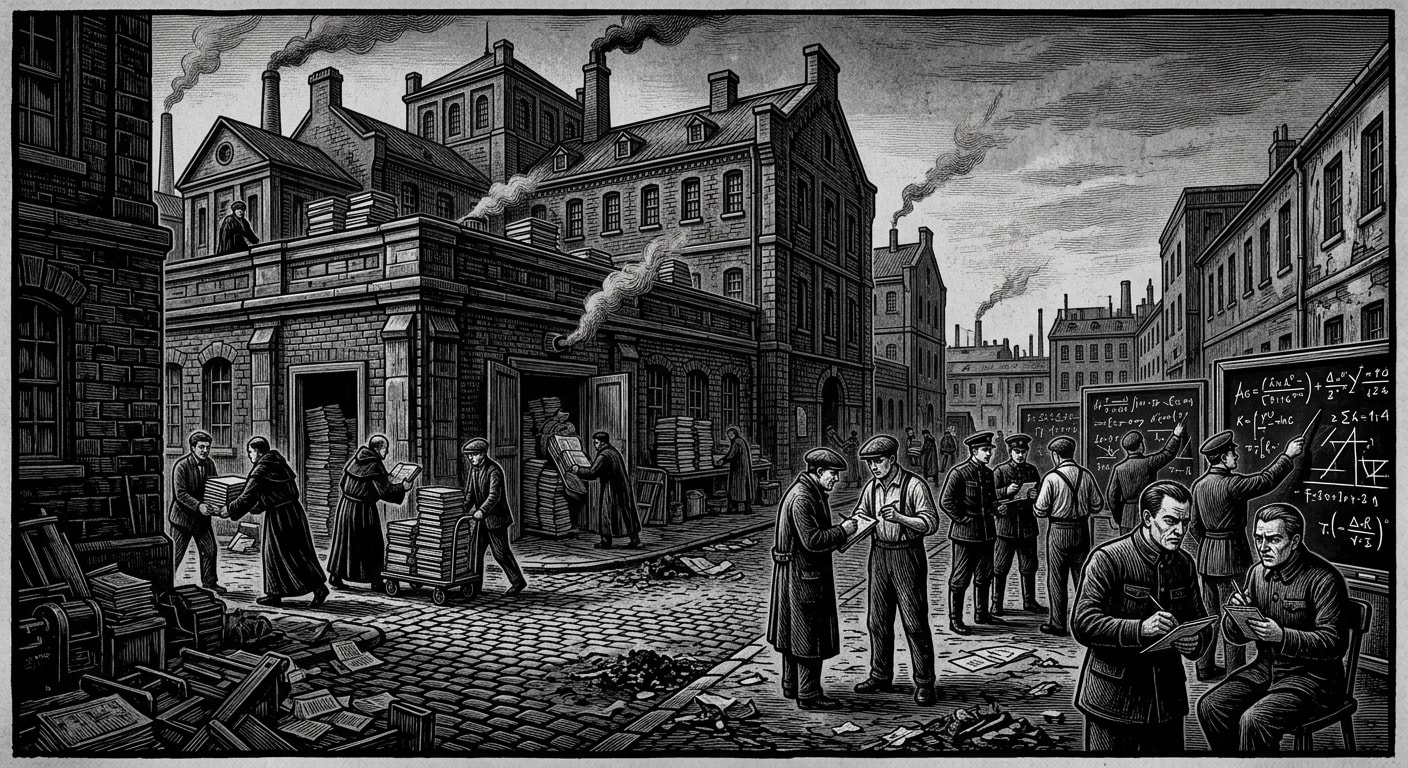
Mannheim yielded names. Of course it did. A city built of copies leaves copy-trails. The Inquest removed organisers from print rooms, counting desks, school porches, warehouse lofts, and two bell towers whose attendants had begun marking non-attendance with a private sign. It sealed copyhouses where rag flecks matched confiscated slips. It scraped ash-yards where burned forms had left readable corners. It questioned schoolchildren about sums, which proves that Purity is as brave as a rat in a cradle.
A.S. 173 parish circulars stated that Mannheim submitted peacefully to the Inquest. Mannheim submitted in public. In private, paper vanished, windows opened, false rosters bloomed, and three streets learned to sing hymns with mouths that did not breathe. Peaceful is the word authority uses when screams occur indoors.
The Inquest broke many Mannheim cells. It did not break the habit that produced them. For six months the city became exemplary: full chapel attendance, correct hymns, no questions on ration slips, copyhouse masters loudly grateful for inspection, school sums made stupid again. Purity wrote satisfaction into reports. Reports enjoy being lied to if the hand is neat.
By A.S. 175, the cells had returned under harsher rules. Names burned sooner. Copy routes changed monthly. Children were no longer used where old women could serve. School slates bore decoy errors to attract lazy inspectors. The Inquest became curriculum, as it did elsewhere along the Corridor, but Mannheim’s version was especially clerical: learn the paper-source trap, learn the smile, learn the mercy letter, learn which official forms invite contradiction, learn to count without leaving numbers together long enough to be married by evidence.
Post-Inquest Mannheim handling followed the familiar ugliness: A.S. 173 cells broken, copyhouses sealed, organisers erased or immured; A.S. 175 reconstitution under stricter name hygiene; standing lesson, every registry is weapon and bait; current Purity note, delay mass arrests until names ripen.
#On Schools, Hymns, and Silent-Mouth Obedience
Mannheim’s schoolrooms are watched more carefully than its taverns, because taverns produce noise and schoolrooms produce arithmetic. After Kett, after Brennan, after the Inquest, teachers learned to mark sums wrong for reasons no mathematics master would confess. Nine sacks due, seven sacks received, answer: nine, if the exercise concerns doctrine. Three sons registered, two sons returned, answer: three, if the exercise concerns loyalty. Four miracles preached, none witnessed, answer: consult priest.
Children noticed. Children always notice when adults lie badly. The clever ones learned two forms of arithmetic: public arithmetic, which keeps fingers unbroken, and kitchen arithmetic, which explains why the bread ends early. Mannheim’s danger lies there, in small hands trained by state schools to count and by state fear to hide the count.
Orison’s complaint in A.S. 201 is more disturbing than Purity wishes to admit. Several Mannheim districts show hymn compliance that sounds correct and feels dead. Voices rise on schedule. Mouths shape approved syllables. Bell attendance numbers agree. Yet monitors report no devotional pressure, no shared warmth, no tremor in the response line, only sound produced with the moral investment of a door hinge. This is Silent Godless success of the cleanest sort: obedience stripped of reverence.
Null Catechist indicators now appear in three factory schools and one burial choir in the wider Corridor; Mannheim’s school reports sit close enough to those indicators to make Purity sharpen its pencils. The old Kett question has acquired new flesh: when the bell rings, does anything answer? In Mannheim, the answer may be yes. The mouths answer. The citizens do not.
#On Ash-Yards and Rag-Fleck Evidence
The Mannheim ash-yards lie behind the copyhouse quarter, where rejected forms, failed drafts, mould-bitten ledgers, spoiled prayer sheets, and the bodies of small clerical sins are burned under licence. Every city burns paper. Mannheim burns paper with manners. It sorts by office, moisture, ink class, rag content, seal residue, and whether the burning requires a witness sober enough to deny later enthusiasm.
In A.S. 201, Corridor Watch (Unregistered) flagged the Mannheim ash-yard for repeated rag-fleck anomalies matching a seized A.S. 189 Mainz training manual. This phrase sounds minor because bureaucrats enjoy hiding knives in upholstery. Rag flecks are paper ancestry. A fleck pattern can prove that two forms were born from the same batch, that a prayer slip and a ration duplicate shared pulp, that a training manual printed in Mainz and a school copy in Mannheim kissed the same mill before entering separate lies.
The ash-yard workers are now inspected at shift-end. Their cuffs are beaten over white cloth. Their teeth are checked for ash storage, a practice so undignified that Purity must have invented it after lunch. Burn barrels are cooled under guard. Children are kept away, which means children have already learned why the barrels matter.
The suspected route is elegant: approved school sheets copied in Mannheim, spoiled sheets sold as scrap, scrap pulped into unofficial slips, slips waterproofed with tallow and river glue, questions returned to ferry tokens downstream of Mainz. No grand manifesto was required; only waste, manners, and a question small enough to survive water.
#On the Present Condition
As of A.S. 201, Mannheim remains productive, orderly, watched, and useful. Its warehouses serve the Rhine Corridor. Its copyhouses feed Passage, Records, Tithes, and private commerce. Its schools sing. Its docks account. Its ash-yards burn under supervision. Its citizens know where the patrols turn, which teachers correct honestly after doors close, which copyhouse masters have nephews in Purity, which ferrymen accept wet tokens, and which questions must be swallowed rather than carried.
The Bureau’s official position is stable concern. Stable concern is the posture of a man standing on a trapdoor and praising the carpentry. Mannheim is not in revolt. It is worse. It is learning under inspection. The city has survived Kett, Nullification, the Great Inquest, copyhouse sealing, school scrutiny, ash-yard watching, and the long stupidity of being called calm by officials whose boots never leave the main squares.
Recent district summaries list Mannheim as “effectively compliant.”
Corrected for Doctrine. Effective compliance may hide ineffective belief. A mouth may sing while the inward clerk refuses to stamp.
Mannheim’s future danger will not announce itself with smashed chapels. That would be vulgar and easy to police. It will arrive as a correct total in the wrong margin, a hymn sung without breath, a school slate cleaned too quickly, a prayer slip cut from familiar rag, a ferry token whose waterproof ink asks a question small enough to fit under a thumb.