
"To die is to be filed. To be filed is to be holy. To remain unfiled is to remain." — Hieromnemon Valerius Drax, Marginal Instruction to the Office of the Last Watch, A.S. 197
#On the Doctrine of Departure
The Bureaucratic Synod maintains, with the serene confidence of an institution that has never been wrong about anything, that death is a clerical event. A transfer of jurisdiction. The soul, upon its separation from the body, passes from the custody of the Temporal Bureaus into the custody of the Creator — a transaction as orderly as any other in the Synod's considerable portfolio of transactions, and one that requires approximately the same volume of paperwork.
This is doctrine. Let me state it plainly, for plainness is a kindness I rarely extend and the subject warrants it. When the faithful expire — whether by war, by industry, by famine, by the long grey attrition of labour in the Synod's considerable service — their passage follows a prescribed sequence codified in the Rite of Passing, administered by the Bureau of Mercy, recorded by the Bureau of Records, and — should the deceased prove inconveniently reluctant to remain departed — supervised by the Bureau of Purity.
The Rite itself is ancient. Older than the Concordat, older than the Bureaus, older by several decades than anyone currently qualified to perform it. A clerk and kin surround the dying. The Creed is spoken low into the ear — the right ear, specifically, per Bureau Circular 88-D, as the left ear is considered "doctrinally vulnerable" for reasons the Bureau of Doctrine has not seen fit to explain and I have not seen fit to question. The body is displayed. The neighbours bear witness. A bell tolls. The passage is stamped. The ink dries. Heaven receives. The Bureau files.
That the Rite functions — that it demonstrably reduces certain phenomena I shall describe in due course — the Bureau considers proof of divine mandate. That it functions for reasons the Bureau would prefer not to examine too closely is a matter I raise here because the Bureau has not explicitly forbidden me from raising it, and I enjoy the interval between now and the moment they do.
#On the Processing of Remains
The body, once vacated, enters a second bureaucracy. The Great Ledger of Souls receives the name in black ink — red for the living, black for the dead, gold for the canonized, and a fine grid of black lines for the administratively dissolved, whose condition is worse than any of the preceding categories including death itself. The name is cross-referenced. The tithe account is closed. The confession record is sealed. A folio is turned. The scratch of nib on vellum is the only eulogy the Bureau provides, and the Bureau considers it sufficient.
The flesh receives a different sort of filing. The Ashbinders — funeral guilds whose monopoly on cremation is older than half the Bureaus and considerably more profitable — gather the remains in solemn procession and bear them to the Pyres of Benediction (Unregistered), where the body is burned to ash while hymns are sung and clerks tally the fuel expenditure. The ash is then distributed according to a formula that would make the Bureau of Tithes weep with admiration: a portion mixed into mortar for new sanctuaries, a portion scattered on fields to "fertilize the harvest of Heaven," and a small and extraordinarily expensive portion pressed into reliquary icons for the bereaved. The Ashbinders charge for each category. The Ashbinders charge for the hymn. The Ashbinders charge for the procession, the pyre, the ash-sorting, and the certificate confirming that the ash is, in fact, ash. Grief is their raw material; the finished product is revenue cloaked in sacred duty.
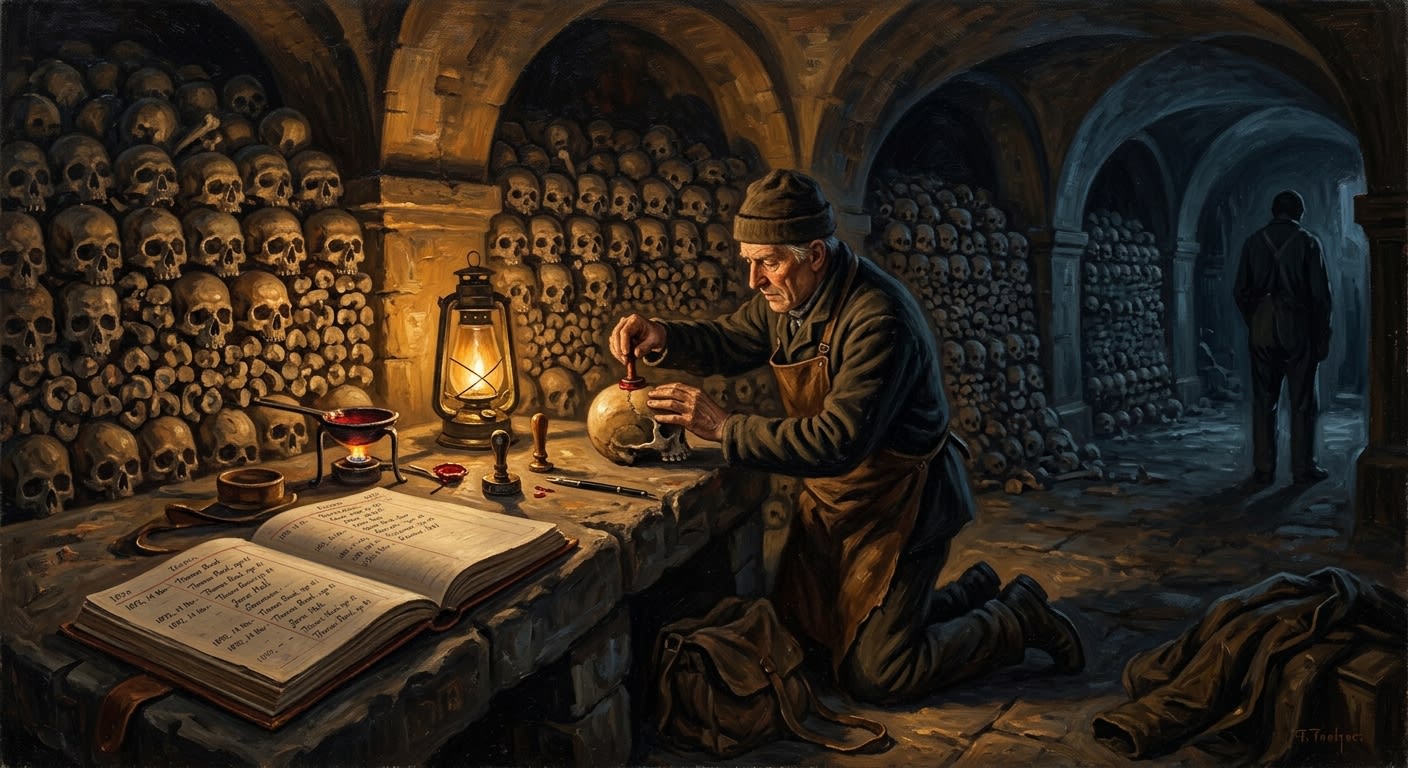
In the ossuary districts of the Heartlands — those dense, lime-dusted warrens that cluster around every major cathedral — the dead are pressed into the walls themselves. Bone-dust in the mortar. Femurs as structural members. Skulls, stacked in the approved geometric pattern, serving both as architectural support and as a reminder that the Bureau's jurisdiction extends beyond the boundaries of respiration. To walk the ossuary districts is to walk through the dead. The Synod calls this "sacred geometry." The masons call it "load-bearing theology." I call it efficient.
The Office of the Last Watch — a sub-bureau of the Bureau of Records so old its founding charter has been lost, rewritten, lost again, and declared "self-evident" — oversees the entire apparatus. Cemeteries. Funerals. Exhumations. The Office ensures the dead "remain properly obedient," which is the Bureau's way of saying the Office ensures the dead remain dead, which is a sentence that should not require a Bureau to enforce and yet here we are.
And then there is the Ledger of Unmarked Graves. I mention it because the Bureau would prefer I did not. Its clerks maintain strict numerical parity between recorded deaths and sanctified burials. When discrepancies arise — and they arise, reader, with a frequency that should trouble you — the clerks quietly supply the missing corpses. From debtor families. From plague pits. From institutions whose records are less meticulous than their intake. To be inscribed in the Ledger of Unmarked Graves is to have died, whether or not you did so voluntarily or, in certain documented cases, at all.
#On the Bone-Stamp and Its Function
Every skull that enters an ossuary receives a stamp. This is the bone-stamp — a wax seal pressed into the cranium's surface by a licensed stamp-clerk, certifying that the remains have been processed, catalogued, prayed over, and assigned a grid reference in the relevant ledger. The stamp carries the deceased's name (if known), diocese, and date of processing. If the name is unknown — and on the front lines, after a bombardment or a Kargath offensive, names are frequently unknown — the stamp reads simply FILIUS CREATORIS, "child of the Creator," which is the Bureau's way of saying "we lost the paperwork but the skull still needs filing."
The system works. I say this with the reluctance of a man who distrusts systems on principle but recognizes, in the specific instance of the bone-stamp, that the alternative is measurably worse. Where stamps are applied with regularity and conviction, the dead — I use the word advisedly, for reasons that will become clear — settle. Where stamps are omitted, skipped, or performed without the proper resonance of voice and bell, the dead do not settle. The Bureau attributes this to divine sanction. The Bureau is mistaken, but its mistake produces results, and in the Synod's theology, results and truth are interchangeable.
#On What the Dead Are
████████████████ field reports from the Ash-Glyph Marshworks, Bastion-Constantinople (Third Ossuary), and ████████████████ confirm that post-mortem phenomena are inconsistent with either the Bureau of Rites' classification ("demonic residue, Category Three") or the Bureau of Purity's classification ("heretical manifestation requiring ████████████████"). The phenomena demonstrate characteristics of ████████████████ human consciousness persisting beyond physical death ████████████████ a third category that the Bureau of Doctrine has declined to acknowledge since A.S. 72 when the question was first raised by ████████████████ and the questioner was reassigned to the Paper Mines of Ulm.
The Bureau's official position is that death is binary. A soul departs for Heaven, or a soul is seized by the Great Deceiver. There is no middle condition. There is no third category. There is certainly no possibility that human awareness might persist after death as a property of consciousness itself rather than a gift bestowed or a punishment inflicted. The suggestion is heretical. The Bureau has said so in writing. In triplicate. With a wax seal.
I am the Bureau's most obedient servant and I will describe what the Bureau has told me to describe, which is the following: certain locations within the Synod's territory exhibit phenomena that are, in the Bureau's careful phrasing, "post-mortem atmospheric disturbances of an unclassified nature." They occur where death happened at scale. Famine Pits. Plague trenches. Foundry explosions. The bone-mortared walls of the First Ossuary Ring. The burial shallows of the Danube delta. The execution grounds of every city where the Bureau of Purity has conducted its business, which is to say every city. The locked and sealed chambers of the Third Ossuary, where bells toll that only dogs can hear, and where seventeen layers of wax seal mark seventeen attempts to keep something shut.
The phenomena are consistent. Voices at the edge of hearing. Cold that ignores ambient temperature. A pressure — a sense of crowding in an empty room, of being watched by eyes that have no lids. In rare cases, glimpses at the periphery of vision: figures in work clothes, in uniform, in the grey formless rags of the unfiled dead. Emotional intrusions — grief, rage, loneliness — that descend without cause and depart without resolution. The Bureau of Rites classifies all of these as "demonic residue." The Bureau of Purity classifies anyone who reports them too insistently as a candidate for examination. Between these two positions, the dead persist unacknowledged, which is — if one pauses to consider the irony, and I always pause to consider the irony — precisely the condition that agitates them.
#On Accumulation and Containment
The dead accumulate. This is the verb the Bureau of Rites uses when it is being honest, which is to say once per decade and usually in a sealed memorandum that is subsequently reclassified. They accumulate where death occurred at industrial scale: the mass graves of the Sundering, the plague pits of the early Bureau era, the mine collapses and foundry disasters that fuel the Synod's war effort and the Ashbinders' profit margins. They accumulate in the ossuaries themselves, where a hundred thousand skulls stacked in approved geometric patterns generate a resonance the Bureau classifies as "structural" and the skull-keepers classify as "Wednesday."
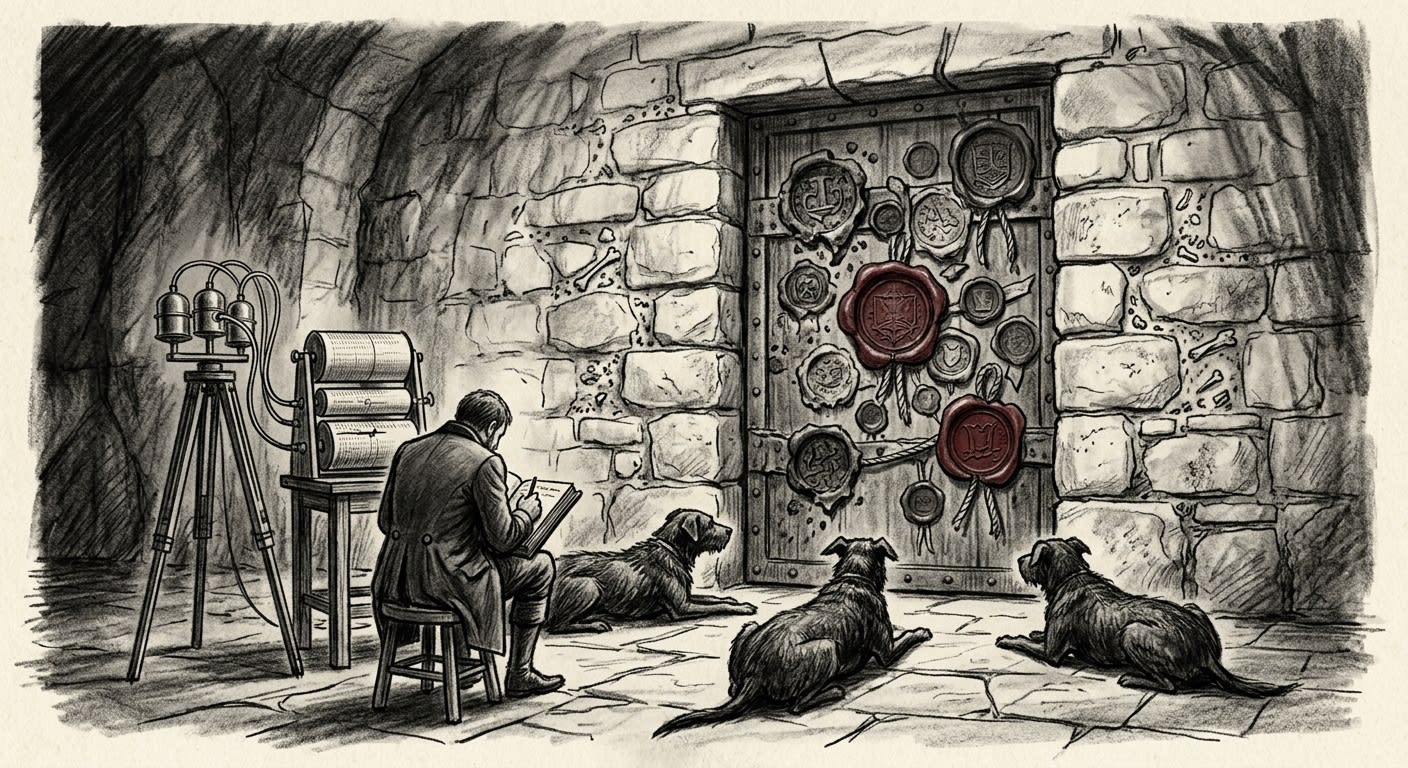
The concentration varies. At the Third Ossuary — sealed since A.S. 47, before the Synod was formally constituted, before the Bureaus existed, before the bone-stamp was invented — the concentration is absolute. Mother-Cryptor Sabine, who administers the Ossuary Rings above, sleeps facing away from it. The dogs lie down and wait. The bells toll at frequencies the human ear refuses. At the Ash-Glyph Marshworks, where corpse barges queue forty deep during offensives and the burial grids stretch for miles, the concentration ebbs and flows with the seasons of war. At the Bone-Lattice Warrens of Black-Snow Lor, where the dead are literally structural — femur beams, rib lattice, skull keystones — the entire settlement is an accumulation, and the black snow that falls there settles into patterns that the Bureau of Alchemical Standards has described as "coincidental" in a tone of voice that convinced no one.
The Synod's containment measures work. I concede this. The bone-stamps reduce manifestation. The bell-schedules create a resonance the dead settle into, the way sediment settles into a riverbed — present, but inert. The ossuary geometry channels accumulation into manageable patterns. The Ashbinders' pyres, whatever their profit motive, do return the dead to a condition of administrative completeness that corresponds, by some mechanism the Bureau will never investigate, to a reduction in post-mortem atmospheric disturbance.
The measures work because they impose order on chaos. The dead — and here I am describing Bureau observation, not Bureau theology, a distinction the Bureau itself does not make — are calmed by procedure. By cataloguing, by placing, by the physical act of sorting remains into grids and stamping them with names. The chanting creates consistent resonance. The bell-schedules create consistent frequency. The conviction of the practitioners creates a psychic stability that has nothing to do with divine mandate and everything to do with the fact that a clerk who believes in what he is doing produces a cleaner stamp than a clerk who does not. The system works through bureaucratic thoroughness. The Bureau calls it holiness. The difference is definitional, and definitions are the Bureau's primary export.
An earlier memorandum from this office stated that "the bone-stamp's efficacy derives from the sacred authority invested in it by the Bureau of Rites and confirmed by seventeen consecutive annual audits."
This Errata amends: the bone-stamp's efficacy derives from consistent application by convinced practitioners operating under standardised conditions. The sacred authority is a useful framework. The seventeen audits measured the wrong variable. The memorandum has been reclassified.
#On What the Dead Want
They want to be acknowledged. I say this without theological qualification, because the Bureau has not provided me with a theological framework that accommodates it, and I will be damned — the word is precise — before I manufacture one.
The phenomena are strongest where the dead were processed carelessly. Mass burials without stamps. Industrial casualties filed under incorrect names. Plague trenches sealed without the Rite. Execution victims cast into pits outside the walls, denied ash and flame because the Bureau of Purity classified their deaths as "disciplinary" rather than "natural." The Synod's own doctrine — that to die unrecorded is a dishonour worse than death — turns out to be empirically correct, though the mechanism is inverted. The dead do not suffer dishonour from omission. They suffer persistence. The unfiled dead endure. The filed dead rest. The difference is paperwork, which is — and I write this with a full and bitter awareness of its implications — the single most consequential discovery the Bureau has ever failed to make.
What the dead attempt to communicate — when their fragmentary, degraded, cacophonous attempts can be parsed at all — is simple. How they died. Where something is hidden. That they existed. That someone should know. The messages arrive as murmurs in obsolete dialects, as emotional intrusions that the living mistake for their own grief, as cold spots in warm rooms and a pressure on the chest that no physician can diagnose. When many dead "speak" at once, the result is noise rather than clarity — a wall of sensation that the Bureau of Medicine, in its single classified study at Famine Pit Seven, described as producing "nausea, nosebleeds, temporary visual impairment, and an overwhelming conviction of being observed by the recently deceased, which subjects uniformly found distressing."
The dead are confused. This is the single detail the Bureau most wants suppressed, because confused dead are neither demonic (demons are purposeful) nor divine (miracles are coherent) and therefore occupy a category that the Synod's binary theology cannot accommodate. The dead do not know what they are. Their memories degrade. Time is strange to them — past and present bleed together. They recognize the living, sometimes, and react to authority, sometimes, and attempt communication, sometimes, and none of it is reliable, and none of it is clear, and the Bureau of Rites' insistence that all post-mortem phenomena are "demonic residue" is a label pasted over an abyss the Bureau cannot afford to look into.
#On the Festival of Departed Flames
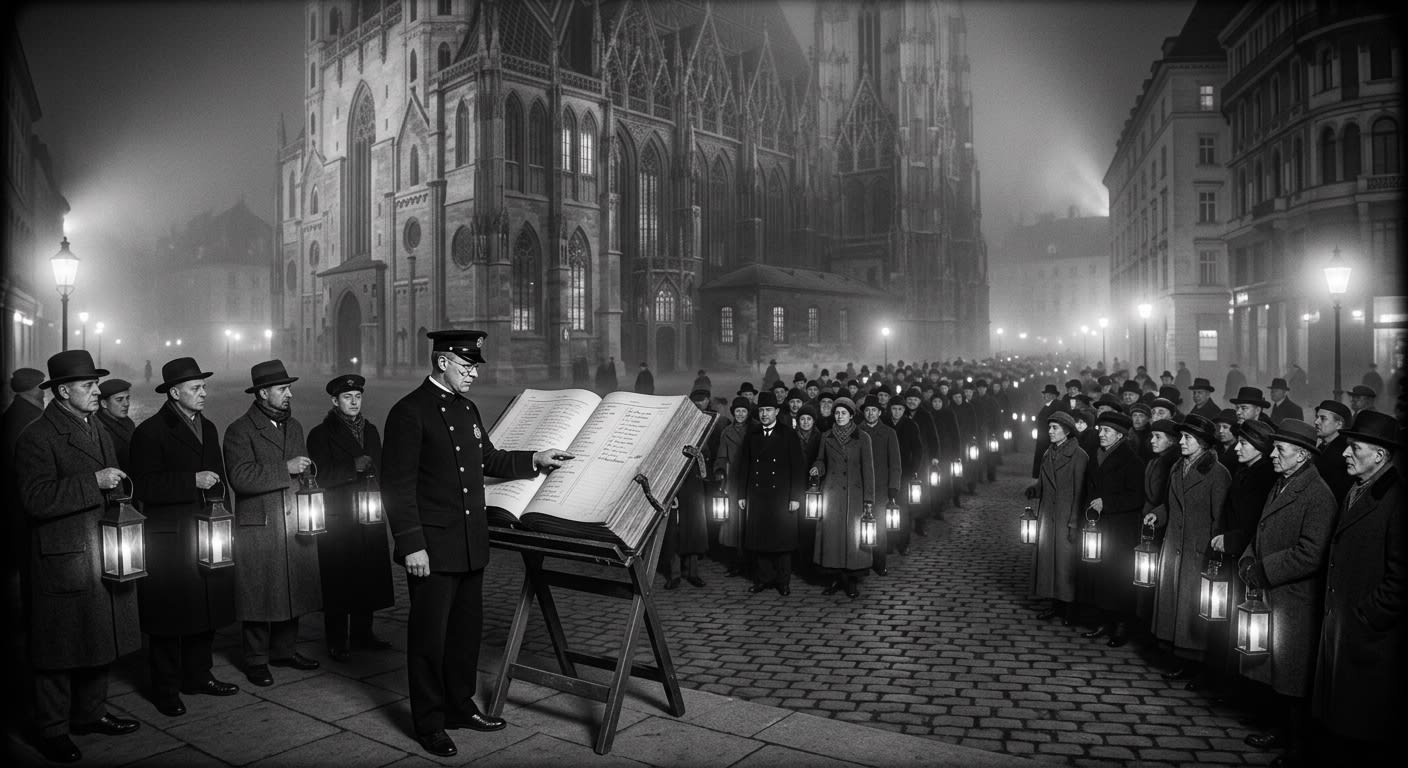
Once per year, the faithful gather for the Festival of Departed Flames — a seasonal torch-chant in which the names of the dead are read aloud while lanterns filled with ash-oil burn in procession. The Bureau of Rites administers the festival. The Bureau of Records provides the names. The Ashbinders provide the ash-oil, at a markup that would shame a Velmoran money-changer.
The Festival works. The year's accumulation of post-mortem disturbance measurably decreases in the weeks following. The reading of names — the simple act of speaking the dead into acknowledgement — calms what the bone-stamp quieted and the ossuary contained. The Bureau considers this proof of divine benevolence. I consider it proof that the dead want what any soul wants: to be told, by a voice with breath behind it, that they were here.
The Festival is also the single largest logistical operation the Bureau of Records conducts outside of the annual census, and I will note — as a matter of record, not complaint — that the Bureau has never once provided adequate seating for the Hieromnemon's delegation.
#On the Present Condition
The dead are restless. I state this as fact. The Bureau of Rites' own monitoring — conducted through a network of bell-resonance stations maintained by the Bureau of the Hourglass and staffed by clerks who have been told they are measuring "atmospheric pressure" — shows a sustained increase in manifestation frequency across every monitored zone since approximately A.S. 198. The increase is sharpest at front-line bastions, where the dead accumulate fastest and the stamps are applied under conditions least conducive to conviction. It is notable at industrial sites in the Heartlands, where foundry explosions and mine collapses produce casualties the Ashbinders process in bulk at reduced rates. It is measurable even in the deep rear, in the ossuary districts of Strasbourg itself, where the bone-stamps are applied by the most qualified clerks in the Synod's employ and yet the concentration readings have risen eleven percent in three years.
The cause is disputed. The Bureau of Rites blames the Great Deceiver. The Bureau of War blames insufficient manpower for the bone-stamp corps. The Bureau of Records blames discrepancies in the Ledger of Unmarked Graves, which — if one follows the logic to its conclusion, and the Bureau of Records never follows logic to its conclusion — implies that the dead are restless because the Bureau's filing is inaccurate, which implies that filing accuracy matters to the dead, which implies that the dead are aware of filing, which implies a great deal the Bureau would rather leave unsaid.
The Confession Echo at Bastion-Brest — sins spoken in confessional booths returning as whispers in the speaker's voice, and in one documented case, in a voice that had been dead for fourteen years. The Script Wall at Calais — names condensing from fog onto chalk, and drownings following when the names go unread. The Drowned Choir beneath Thessaloniki, which has been accumulating names since A.S. 121 and whose harmony pulls dreams into the tide. The burial grids at the Ash-Glyph Marshworks, where corpse-light rises in the shallows and the barges return empty without their crew. The third sealed chamber of the Third Ossuary at Constantinople, where seventeen layers of wax seal mark seventeen generations of officials who opened the door, looked inside, and sealed it again without writing down what they saw.
The dead are here. They have always been here. The Bureau's containment holds — for now — because the Bureau is thorough, and thoroughness is what the dead respond to. But the containment was designed for a lower volume. The wars have not ceased. The foundries have not stopped exploding. The Famine Pits have not stopped radiating. The mass burials of two centuries of industrialised warfare have produced a population of the dead that exceeds, by the Bureau of Records' own conservative estimate, the population of the living by a factor the Bureau declines to publish.
This entry previously contained a passage attributing the increase in post-mortem disturbance to "seasonal variation in bell-resonance calibration."
The passage was filed by a clerk who has since been transferred to the northern sector. The Bureau of Rites stands by its monitoring data. I stand by my own observations. The discrepancy between the two is classified.
The dead are a clerical matter. The Bureau has said so. I have filed the Bureau's position, stamped it, sealed it, and placed it in the appropriate ledger. The dead, if they are listening — and the Bureau's own monitoring suggests they are — may draw their own conclusions.
I do not know what the dead want. I know what the Bureau wants: order, quiet, and a complete set of stamps applied in the approved sequence by clerks with the approved conviction at the approved resonance. The Bureau's system works. I say this without qualification. It works the way a dam works: by holding, by containing, by the brute fact of mass against pressure. What it does not do — what it cannot do, because the Bureau's theology forbids the question — is ask what is on the other side of the dam, and whether it might be something the Synod owes a debt to rather than something the Synod is keeping out.
The dead are filed. The dead are stamped. The dead are contained. The Bureau has spoken.