
#On the Second Ledger Kept Beside the Dead
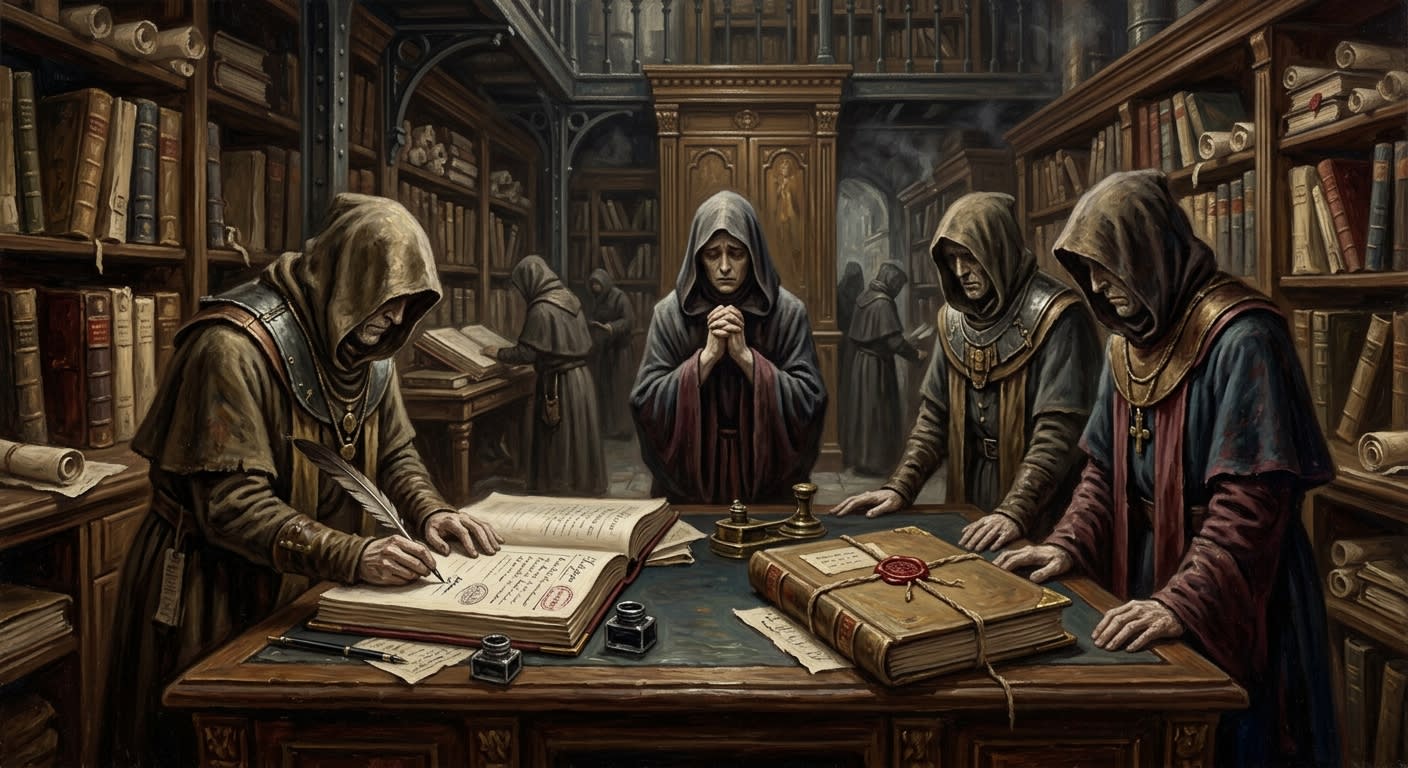
The Two-Book Dead is the name given, in the cautious speech of men who prefer their throats uncut by widows, to the second ledger of bodies maintained by the Circle of Ashen Steps inside the bone-lanes of Bastion-Constantinople. The first book is lawful: tag, route, receipt, sanctification, ring assignment, candle tally, ash disposition. The second book is useful. Usefulness is where sin puts on a clerk’s sleeve and asks for better light.
Official doctrine says a body entering the Ossuary Rings receives its tag, passes through the required offices, and joins the blessed architecture of the southern anchor. The dead become wall, mortar, urn, name, ash, weight, warning. Records files them. Rites quiets them. Tithes, with that tender hand for which vultures envy it, charges the living for the privilege of correct grief.
The Two-Book Dead begins where that official sequence bends behind a cabinet door in Ossuary Office Seven, called the Counting Room by everyone except the clerk who deserves prosecution. A blank body-tag is filled before death. A filled tag is softened over lamp heat. A receipt is carried to a desk too far above the Fifth Ring to smell the lime. A widow kisses the tag. The body behind the tag has gone elsewhere.
#On the Official Book
The Official Book is beautiful in the way a guillotine may be admired by a carpenter. Every column has purpose. Every name has a row. Every row has a tag. The tag follows the corpse from household bed or night-cart plank to vigil lane, from vigil lane to route inspection, from inspection to the ossuary threshold, from threshold to ring allocation, from ring allocation to urn, wall course, lime pit, chapel niche, or special disposition. The system is severe because the dead of Constantinople (Unregistered) are not private persons. They are structural material with surviving relatives.
A standard passage requires witnesses: one household witness if the body dies indoors, two street witnesses if found beyond curfew, one Lanternman if collected after Ninth Peal, one Rites clerk for prayer verification, one Records hand for name form, one Tithes mark for wax and route fees, one bone-stamper if the remains enter a course. The forms stack neatly. The corridors do not.
The Bureau of Records loves the Official Book because it behaves like authority. Columns do not weep. Tags do not accuse. A body properly tagged makes no argument until some later surveyor discovers three femurs under one name and a skull whose teeth disagree with the widow’s description. Such discoveries are called reconciliation events, because scandal sounds expensive.
The Official Book also protects the living, which is the embarrassing part. A correct entry permits a widow to claim ration adjustment, a child to inherit a bunk, a creditor to close a debt, a guild to release tools, a priest to say the proper office, and a family to sleep without wondering whether a father’s unquiet bones are knocking in the wall. Procedure is not tenderness. It imitates tenderness well enough to fool the desperate.
#On the Second Book
The Second Book keeps the bodies that procedure cannot, will not, or has been bribed not to see. Some are diverted for patrons who need disgrace softened after suicide, adultery, treason, birth irregularity, plague stain, wrong-name death, malformed relic contact, or the ugly little family events that make lineage tremble. Some are sold for marrow extraction, because marrow-wax fetches a price where grief and piety share a market stall. Some vanish into corpse-sale: medical theatres, forbidden devotional hoards, counterfeit relic workshops, private chapels whose owners like their saints fresh and unexamined.
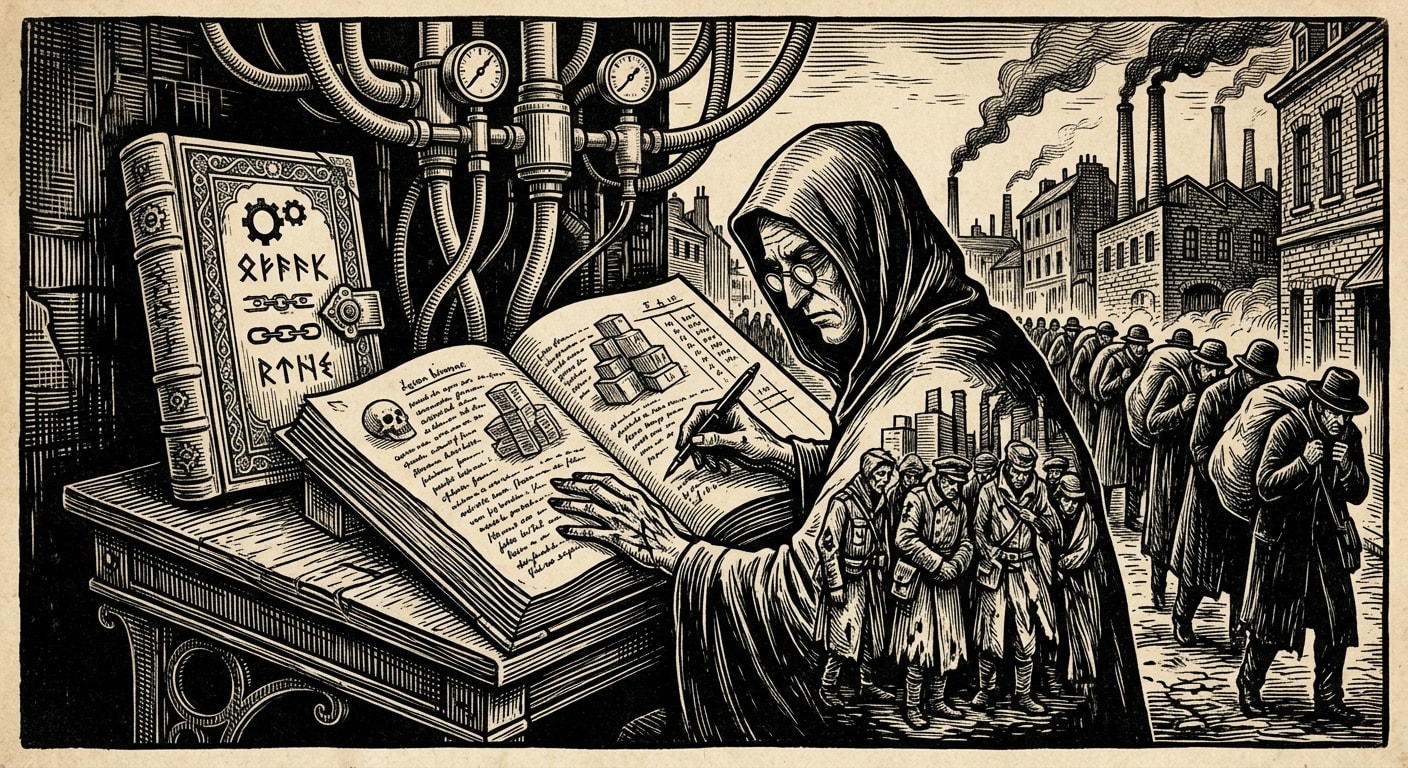
Some diversions are mercy. I record this because accuracy is a lash and I wield it elegantly. A mother whose son deserted may pay to have him entered as fever-dead before War claims his corpse for exemplary display. A family whose daughter died under Purity questioning may purchase a clean candle route so the younger children can marry. A ruined noble may hide a bastard’s body inside a servant’s tag and thereby spare three living women an audit of the womb. Compassion becomes forgery when the seal is owned by a cruel office.
Brotherhood filings describe these entries as “route attrition under difficult funerary conditions.”
Corrected. Attrition is what weather does to rope. These bodies were diverted by hands, priced by need, hidden by ink, and moved through doors whose hinges remember the traffic.
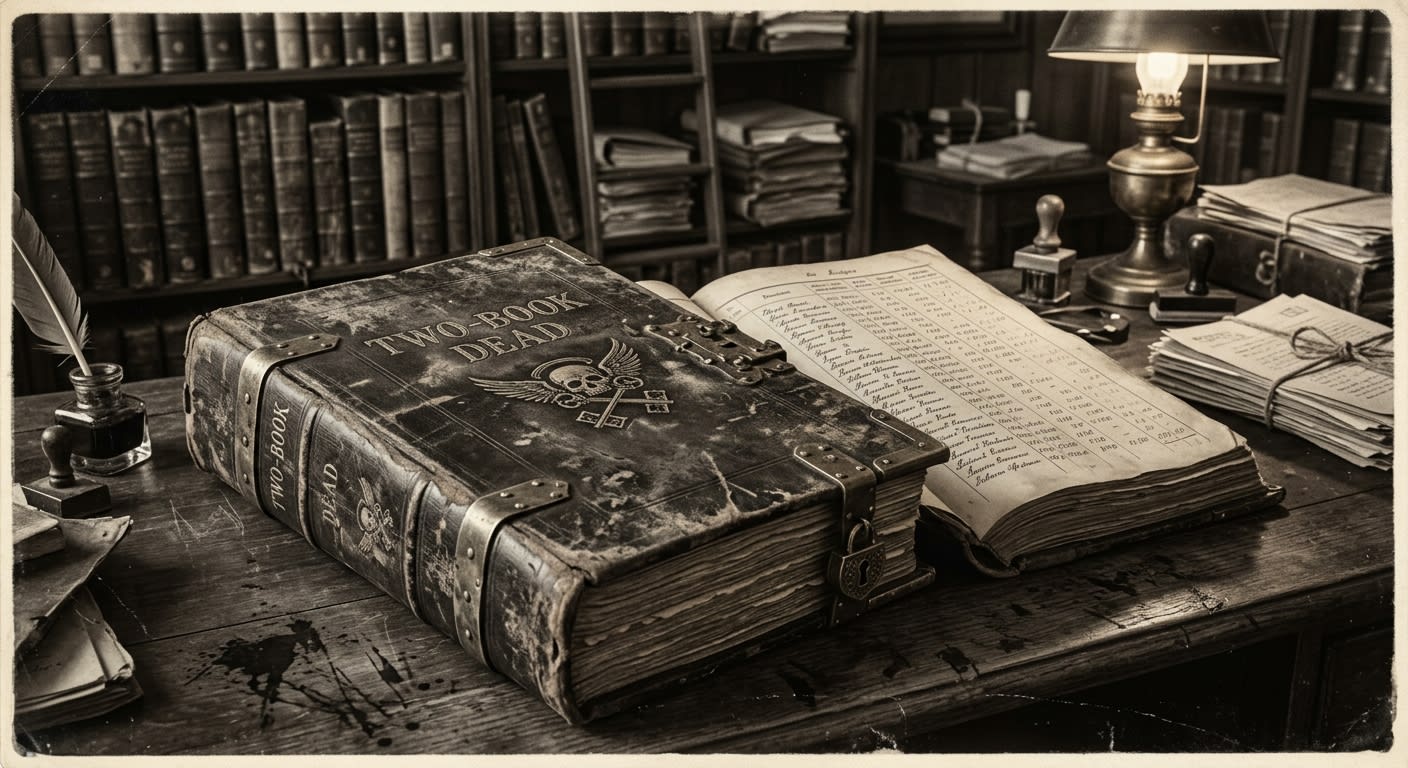
The Circle calls the Second Book locked sin. That phrase almost absolves them, which is why I dislike it. Sin is not less sinful for being locked. It is merely better organised. The book itself is said to be vellum bound in smoke-black hide, kept behind the tag cabinet under a shelf of approved ash paste. Other testimonies describe two slates, one wax tablet, a nail-code on the underside of the Counting Room table, or a sequence of candle stubs set in wrong order. All descriptions may be true. Criminal ledgers, like saints, acquire relic variants when fear handles them often enough.
COUNTING ROOM SEIZURE ABSTRACT — DATE SEALED Recovered: one cabinet key; nine softened tags; marrow-wax residue; ledger fragment bearing three names entered twice and one name entered before recorded birth. Disposition of fragment: ████████████████ Disposition of witnesses: reconciled.
#On Marrow-Wax, Body-Tags, and the Price of Discretion
Approved vigil wax is already a theology of hunger. The bereaved buy light by weight. Marrow-wax, rendered from sanctioned remains and mixed into candles, sells at a higher virtue because people prefer their prayers to contain someone else’s dead. Officially it passes through certified channels under Tithes measure and Records receipt. The Circle trims the flow. Excess becomes shortage. Shortage becomes price. Price becomes doctrine once enough families pay it.
Body-tags (Unregistered) are the hinge. A tag is a scrap of authority tied to meat, bone, ash, absence. Without it, a corpse is hazard. With it, a corpse is a case. Ashen Steps keeps blank tags for night recovery. Blank tags are necessary. Blank tags are also the devil’s stationery. A tag filled too early can summon a death toward itself. A tag altered too late can make one death feed another household’s paperwork. The Bureau calls this clerical vulnerability. The street calls it buying the dead.
Wick-Sergeant Rulik “Sootmouth” (Unregistered) is the name most often attached to the trade, though attaching a name to an ossuary scandal is rather like pinning a medal to fog. His tallies were excellent. His cough smelled sweet from wax fumes. His daughter may have lived, died, or been invented as an alibi by men with sentiment enough to need one. Lanternman Vey Strahl (Unregistered), ex-gravedigger, appears in the same testimony cluster: gentle hands, calm blade, rumour of a man buried alive “to balance the ledger.” Rumour is a lazy clerk. Sometimes it files truth.
The payment structures show the real theology. Poor households pay in wax, bread, future labour, daughters’ service pledges, old rings, mourning cloth, or silence. Wealthy houses pay in coin, patronage, protection from Purity, and the harder currency of an official looking away at the correct minute. Every class receives the same sacrament: a number in one book, a body in another.
#On the Rings That Make It Possible
The Ossuary Rings make the Two-Book Dead possible at scale because they are six rings of bone, office, catacomb, fortification, mourning, housing, and jurisdictional fatigue. The First Ring remembers A.S. 47, when retreating armies ran out of mortar and substituted femurs. The Second Ring carries Hugo’s chevron geometry. The Third waits sealed, which is enough said in a public tract. The Fourth holds garrison dead. The Fifth keeps offices, living alcoves, tag rolls, allocation rods, and all the warm little miseries of permitted habitation. The Sixth grows pale and wet whenever war fattens the dead.
Forty thousand living persons sleep among those rings by official insult and practical mercy. They are not residents. They are permitted. A permitted mother will pay for certainty. A permitted son will steal a candle. A permitted clerk will learn the exact sum at which grief stops asking whether the tag matches the face.
Records does not patrol after dark. This fact deserves its own shrine. Records owns the Official Book, certifies the columns, audits the discrepancies, issues displeasure in clean memoranda, and leaves the night corridors to the Lantern Brotherhood. Ashen Steps walks clockwise with sternum lanterns and bone hooks. Counterclockwise invites return, they say. The dead of the Rings require no invitation.
The Bureau of Rites knows more than it writes. Rites always does. A priest who blesses a tag with no body behind it will feel the absence in the wrist. A bone-stamper who receives substituted remains may stamp with terror rather than conviction, and the wall will answer differently later. The Sub-Carillon (Unregistered) is tuned for containment-grade peace, not for lies. Lies make poor mortar.
#On Records, Denial, and Riot Thresholds
The Bureau of Records does not acknowledge the Two-Book Dead. It acknowledges discrepancy classes, duplicate tag anomalies, route attrition, witness fatigue, candle-tally variance, night-cart ambiguity, and transfer irregularity under adverse funerary conditions. Observe the cabinet: six drawers for denial, each labelled in a finer hand than the truth.
A Records advisory of A.S. 200 stated that no evidence exists of organised body diversion inside the Ossuary Rings.
Amended. No admissible evidence exists in a form Records is willing to admit without creating obligations Records is unwilling to fund.
Purity would burn the Circle tomorrow if burning it did not require answering what the Circle has been carrying for a century. Tithes would prosecute marrow-wax theft if prosecution did not expose every official candle contract in the Rings. War would hang the diverting men if hanging them did not slow corpse clearance during bombardment. Shadows presumably knows the second cabinet’s dimensions and the private price of every shelf. Doctrine, being noblest, states that the matter is under review and thereby contributes the most beautiful nothing.
Riot threshold (Unregistered) governs all. The phrase appears in provisional notes with that bleak elegance achieved when cowardice discovers arithmetic. Discrepancies below riot threshold are tolerated. Above threshold, inquiries bloom. If a single widow learns her husband became a patron’s private relic, she screams. If ten learn, the candle lanes riot. If a hundred learn, the Ossuary Rings become a furnace full of families carrying hooks.
The Circle fears this more than Purity. Purity kills by office. A grieving crowd kills by memory.
#On the Souls Misfiled
The theological difficulty is sharp enough to shave a bishop. If a body is misfiled, is the soul misadministered? Doctrine says no: the Creator knows every soul perfectly, and clerical failure cannot alter divine custody. Records says provisional identity may be corrected upon discovery. Rites says the proper office follows the name when the name is sincerely intended, unless the body is absent, substituted, divided, burned prematurely, sold, rendered, or incorporated into unlicensed wax, in which case a supplemental rite may be required. Tithes asks whether the supplemental rite has a fee schedule.
The families ask where their dead are.
The Two-Book Dead wounds the Synod because it imitates the Synod too well. It classifies, redirects, monetises, conceals, regularises, and calls the wound a necessary channel. It does privately what government does in vestments. This is why officials hate it with such familial disgust. Every corrupt tag is a bastard child of the Ledger.
Yet one must not pretend the second book is only villainy. That would comfort the stupid. It hides crimes, yes. It sells corpses, yes. It steals wax from the poor and dignity from the already wounded. It also hides deserters from exemplary ruin, shields children from lineage prosecutions, buries shame before Purity can make theatre of it, and buys certain families one last lie gentle enough to sleep beside. Hell’s cleverest traps are built from things human beings genuinely need.