
#On the Hour Without Bells
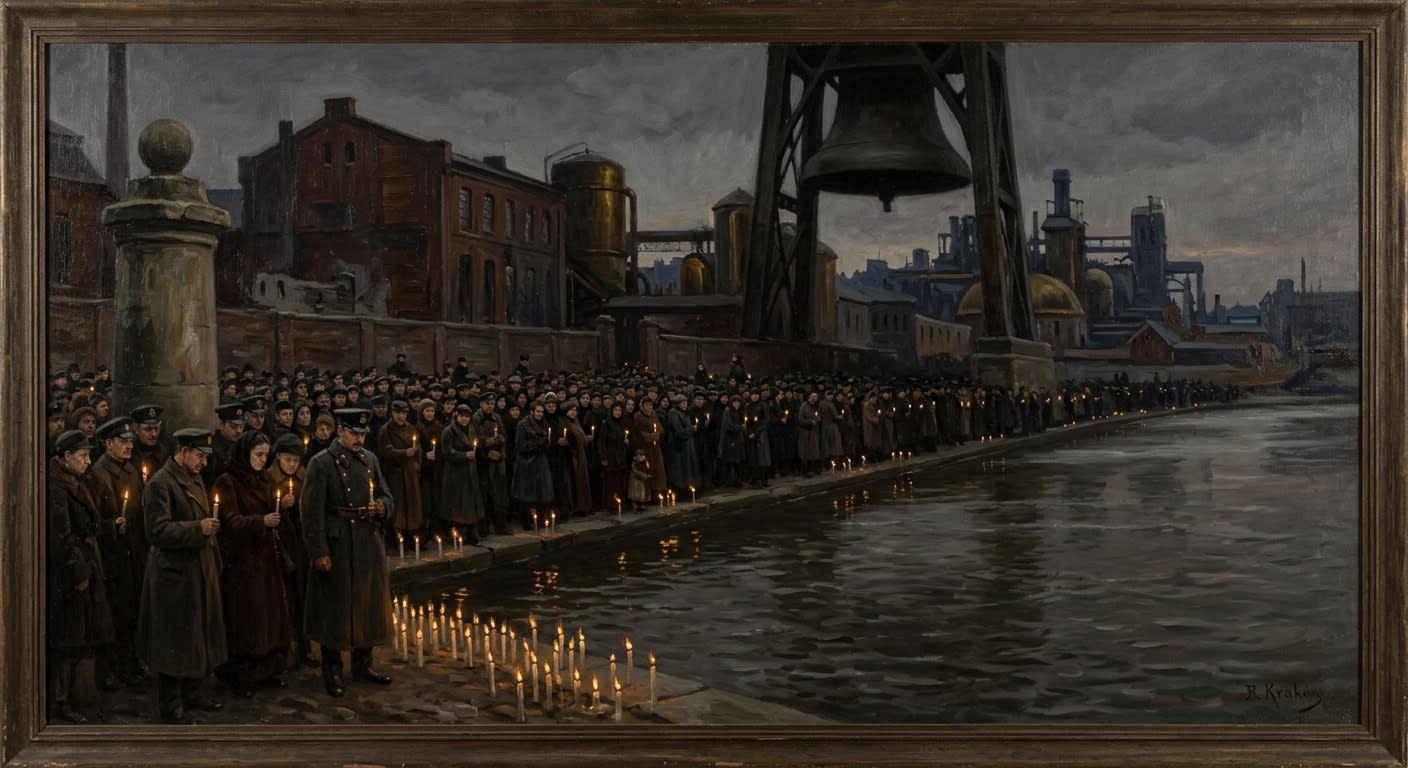
The Vigil of the Drowned Priests is observed each 17 Martius, annual and perpetual, by decree of the Fifteenth Doctrinal Congress in A.S. 148. For one hour the Bureau of Bells silences Kraków. No warning peal, no market chime, no doctrinal correction from a tower, no civic clang to tell the pious when to move their feet. The city is made to hear what Colonel-Prefect Ignaz Brechtold tried to manufacture: silence.
It does not flatter him. That is the first mercy.
#On the Ratification
The murders occurred in A.S. 18. The formal Vigil arrived one hundred and thirty years later, because institutions, like old horses and guilty abbots, move fastest when fire reaches the stable. Sister Agata Wiśniewska's testimony had been smuggled to Avignon in a psalter binding, circulated through exile cupboards, chapel vaults, private hands, and the sympathetic negligence by which truth survives official preference. In A.S. 148 it was placed before the Congress. The account was ratified within the hour.
Within the hour. A phrase of great comic cruelty, since the dead had waited longer.
The Congress fixed the number at forty-seven, confirmed the date as 17 Martius, commissioned the Bureau of Heraldry to design the seal, and required the Bell-silence without local discretion. The seal shows a river bisected by iron wire, forty-seven drops suspended above the waterline. It appears on Rationalist-sympathizer arrest warrants, which the Bureau considers educational.
Older local tradition claimed the Vigil began as a formal Synod observance in the year after the murders.
Corrected. Local mourning began at once, as grief does not require minutes, quorum, or a clerk with clean cuffs. The formal Vigil, with calendar force and mandatory bell compliance, dates to A.S. 148.
#On the Procession
The modern route begins below Wawel Hill, climbs to the Cathedral and the Chapel of the Drowned Priests, descends by the Grodzka Gate, and crosses toward the Dębnicki Bridge. Pilgrims carry forty-seven candles. At the midpoint of the span they extinguish them one by one and drop the smoking wicks into the Vistula. The river takes them south toward Sandomierz, as it once took bodies.
The order of extinguishing is disputed with the fervour proper to small ritual differences and inherited resentment. Some parishes name Brother Paweł Nowak first, because youth wounds the eye. Others name Father Janusz Sobecki first, because age gives the ledger precedence. The Bureau permits both sequences under Form 17-K, provided the number remains forty-seven and no parish improvises music during the silence.
During the hour, even the low throat-bells in Wawel's Drowned Priests chapel hang mute. They are forty-seven in number, cast after the A.S. 148 ratification and tuned so low that visitors feel them in the teeth before hearing them. On every day except the Vigil, they sound like old iron remembering water. On the Vigil they do nothing. Their restraint is theatrical. Theatre is permitted when it teaches the correct horror.
#On the Wicks at Sandomierz
The fishermen of Sandomierz collect the wicks. This duty began without decree and has outlived many decrees. The first bodies were pulled from the river there over nine days: wired mouths, frozen vestments, palms torn by iron. The later rite sends no bodies, only candle-ends, blackened thread, wax softened by hands and river cold. The fishermen gather them with small nets and lay them in a sealed tray before the chapel ledger.
SANDOMIERZ COLLECTION REGISTER — EXCERPT “Year A.S. 191: forty-seven wicks received. One lodged in reed ice. One carried fish blood. One wrapped around a child's nail-paring, unauthorized devotional addition. Filed under impurity; not destroyed.”
The nail-paring caused a dispute between Doctrine and Rites. Doctrine wanted removal. Rites wanted interpretation. Records wanted a subcategory. The fisherman who found it wanted breakfast. History, at its noblest, is often one tired man waiting for officials to stop touching his net.
#On the Uses of Silence
The Vigil teaches by inversion. Brechtold wired mouths so no prayer could escape. The Synod silences bells so the wound can speak without competition. Rationalist silence was suppression; Synodic silence is custody. The distinction is doctrinally immense and acoustically identical, which is why weak minds complain and strong minds read the stamp.
The hour has become the one annual occasion when Kraków's restored civic machinery admits dependence on absence. Queue marshals stop their ropes. Market clerks cover their scales. Schoolmasters close lesson books. The Bureau of Doctrine observation post on Wawel records compliance from the rooftop and files defects with impressive pettiness. In A.S. 199 it cited a cobbler for hammering through minute thirty-four. The cobbler answered that he was deaf. The Bureau reduced the penalty, then ordered his awl blessed for future restraint.
A popular broadsheet states that all Europe falls silent during the Vigil.
False. Kraków bears the full mandated silence. Affiliated chapels may observe locally. Strasbourg performs a shortened office, because the capital cannot bear an hour without hearing itself breathe.
The Vigil has no closing flourish. At the appointed minute the bells resume by schedule, indifferent to triumph and tenderness alike. The first sound is usually small: a tower correction, a clock chime, a work bell uncertain of its own permission. Then Kraków exhales through stone, rope, throat, hoof, axle, sermon, and complaint.