
#On the River That Carries Evidence
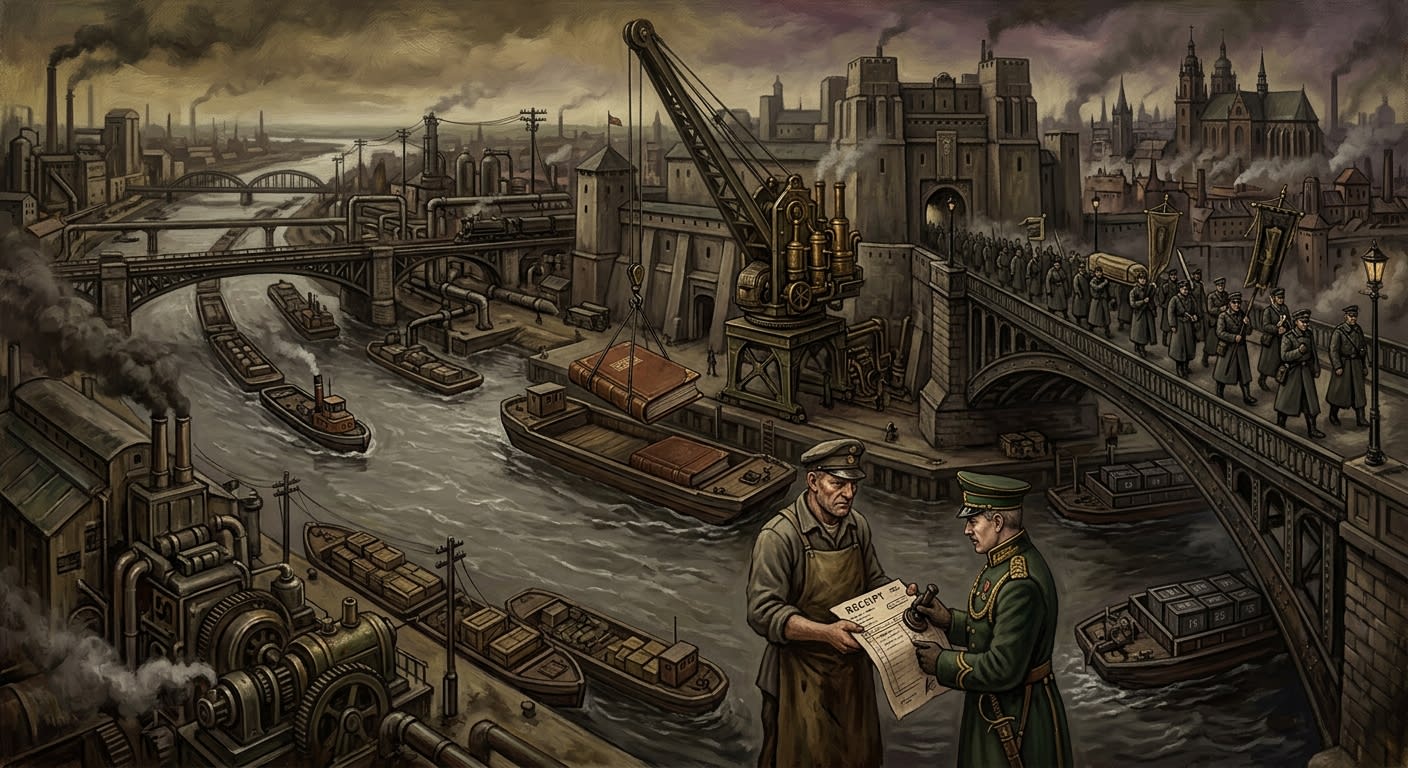
The Vistula is the river by which Poland (Unregistered) proves that water can become a filing system if enough men are drowned in it.
Geographers call it a north-running river of the Polish plain. Pilgrims call it the road of the forty-seven. The Bureau of War calls it a rearward logistical obstacle and then builds depots on both banks. The Bureau of Passage calls it a crossing problem, which is the Bureau's way of admitting the Creator made a thing without consulting forms. The Bureau of Doctrine calls it an instructional current. I call it a patient archive with bad margins.
It rises far south of the northern war machine, bends through Kraków beneath Wawel Hill, receives the smoke of the Vigil of the Drowned Priests, carries wicks to Sandomierz, and later shoulders Warsaw with its bridges, yards, ferries, hunger, patrols, and the excellent urban talent for pretending a riverbank is safe because the enemy has not yet learned to walk on water. It does not touch Bastion-Brest. That honour belongs to the Bug. The Vistula feeds the cities that feed Brest, which is worse. A moat is a line. A supply river is a confession dragged sideways through a continent.
The Vistula has carried timber, grain, fish, contraband, petitions, ration barges, soldier letters, bridge mud, candle wicks, human remains, and official lies with equal wet courtesy. This is the river's great indecency: it does not distinguish between sacrament and refuse until the Bureau arrives with trays. Water has no hierarchy. The Synod corrects this deficiency wherever possible.
Neutrality is for stones awaiting inscriptions and nations awaiting invasion. A river that has carried forty-seven wired mouths is already party to the case.
#On Kraków, Wawel, and the First Use of Water
Kraków sits on the Vistula like a conscience trying to look architectural. Above it rises Wawel, restored, watched, and obliged to remember at scheduled intervals. Below it moves the river, brown in thaw and black in Martius memory, accepting everything lowered, thrown, dropped, hidden, consecrated, or denied.
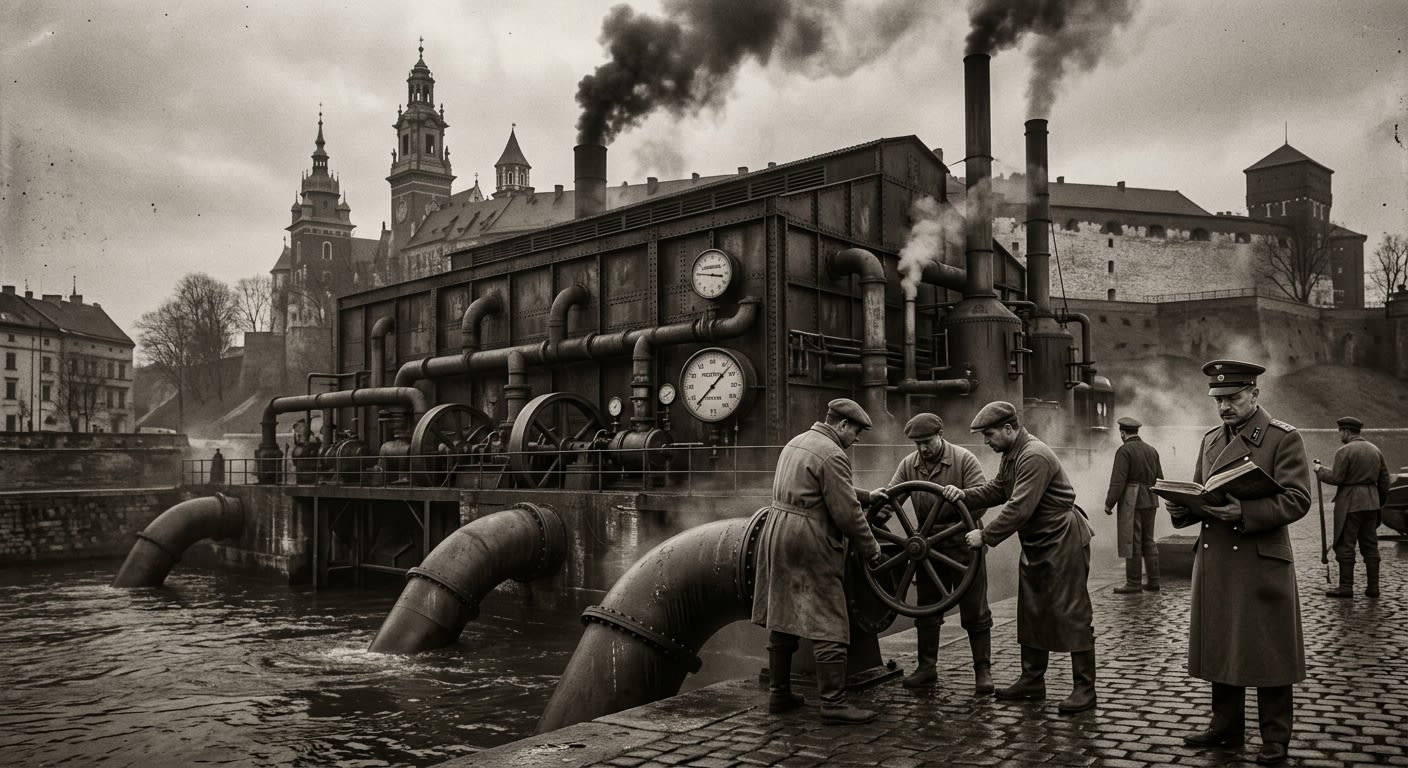
On 17 Martius, A.S. 18, Colonel-Prefect Ignaz Brechtold deployed sixty-three Kraków Secular Guard and fourteen Rationalist Philosophical Police against eleven clerical targets. The youngest seized was Brother Paweł Nowak, nineteen years old and four days ordained. The eldest was Father Janusz Sobecki, seventy-one, unable to walk, old enough to have mistaken age for protection. Their mouths were stitched shut with iron wire requisitioned from a municipal farrier three days earlier under Brechtold's own signature. They were marched to Dębnicki Bridge and cast into the Vistula while the river still carried ice.
The Rationalist tribunal later called this ritual suicide.
There are lies so large they cease being camouflage and become monuments. Forty-seven men, from eleven sites, wired by their own hands, escorted by armed Rationalists, leaping into freezing water in doctrinal harmony. One almost admires the confidence. Almost. Then one remembers Father Janusz dragged by the ankles and admiration is returned to its proper drawer.
SISTER AGATA WIŚNIEWSKA — TESTIMONY CROSS-NOTE Window: convent above Grodzka Gate. Observation: wire applied before the river march. Unpublished detail: one priest turned his head toward Wawel after mouth closure and █████████████████████████████. Doctrine handling: retain under sealed devotional appendix; excessive specificity risks imitation.
The Vistula did the second violence. Brechtold's men closed the mouths. The water closed the lungs. Nine days later, at Sandomierz, eighty kilometres downstream, fishermen recovered the bodies with wire still in mouths and palms. Those palms matter. They had clawed at iron. Even dead hands can be better historians than tribunals.
Rationalist river memoranda described the Vistula deaths as “self-removal by clerical actors under ritual compulsion.”
Corrected. The actors were victims. The ritual was murder. The compulsion wore boots, carried lists, and requisitioned wire in advance.
Since A.S. 148, when the Fifteenth Doctrinal Congress ratified Sister Agata Wiśniewska's testimony, the river has been compelled annually to reenact its part in symbolic miniature. Forty-seven candles are carried from Wawel toward Dębnicki Bridge. At the midpoint they are extinguished one by one. The smoking wicks fall into the water. Kraków watches them go. Sandomierz waits below.
The Vistula beneath Kraków is neither innocent nor guilty. Those are human categories, and water lacks the vanity required for both. Yet it has become custodian by contact. The Bureau of Rites once attempted to classify the river water at Dębnicki Bridge as consecrated by martyrdom. Tithes asked whether consecrated water travelling downstream retained assessable holiness by volume. The proposal died, which proves Providence occasionally operates through interdepartmental disgust.
#On Sandomierz and the Downstream Receipt
Sandomierz is where the Vistula proves that atrocity travels.
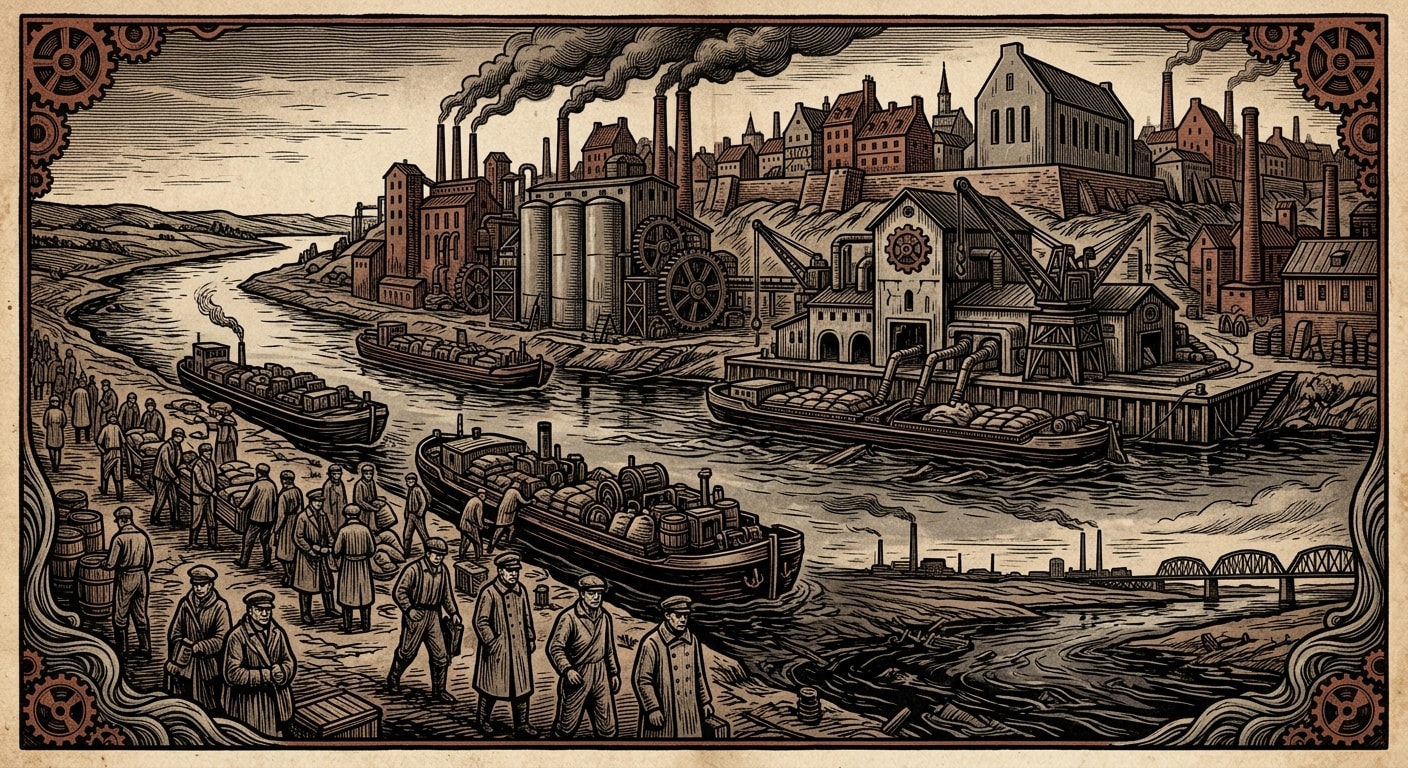
A blow struck in Kraków did not end at the bridge, the splash, the tribunal lie, or the first morning's silence. It moved with current, ice, cloth, wire, skin, and the slow administrative patience of water carrying evidence toward hands willing to touch it. The fishermen of Sandomierz did not set out to become custodians of a national wound. They saw bodies in the reeds and did the practical thing before anyone could forbid it.
They pulled them out.
The Rationalists punished the fishermen for harboring enemy combatants. This phrase deserves to be read slowly, preferably near a basin. Forty-seven drowned priests became combatants because law, cornered by fact, will breed monsters faster than Hell if given a clerk and a stamp. The fishermen's trial lasted twelve minutes. Their sentences lasted years. The river, being wiser than the tribunal, kept moving.
Sandomierz's Recovery Chapel (Unregistered) now keeps the downstream portion of the record: wick trays, count sheets, the Forty-Seven Nail Board (Unregistered), disputed boat-hook, recovery copies, sealed irregularities, and a smell of wax, mud, and wet wool that no incense has conquered. Each Martius the Wick Wardens (Unregistered) go out with small nets. They collect what Kraków has sent. Some wicks arrive clean. Some arrive tangled with reeds, fish blood, private petitions, hair, or nail-parings. Some never arrive. The public dislikes this last fact because the public wants miracles to behave like postmen.
The A.S. 191 nail-paring remains the finest small scandal: one wick wrapped around a child's clipped nail, bound in red thread, without approved petition. Doctrine wanted removal. Rites wanted interpretation. Records wanted a subcategory. The fisherman wanted breakfast. The fisherman, alone among the parties, understood the scale of the matter.
The lower banks below Sandomierz keep unofficial names: First Hook (Unregistered), Widow's Reed (Unregistered), Lower Shame (Unregistered). Records tolerates these names because correcting them would require learning them, and learning them would require acknowledging that local memory often performs better than official geography. This is intolerable, except when useful.
A Pilgrimage safety sheet states that no devotional recovery activity occurs outside the supervised chapel landing.
Corrected. No authorized devotional recovery activity occurs there. Unauthorized boys, widows, fishermen, fraudsters, grieving mothers, and the river itself have declined the sheet.
Sandomierz teaches the proper downstream doctrine. Kraków witnessed. Dębnicki Bridge received. Vistula carried. Sandomierz recovered. Congress ratified. Bells fell silent. The order is clean enough for children and cruel enough for history.
#On Warsaw, Crossings, and the Northern Throat
By Warsaw the Vistula has become less martyr-road than machinery.
The city sits on the western edge of the Polish lowlands, one hundred and sixty kilometres behind the Line by official measure and much closer by sound. Its rail yards send grain, ammunition, personnel, classified freight, Relics crates, and tired boys toward Bastion-Königsberg and Bastion-Brest. The Vistula divides the old city from Praga, the Bureau facades from the rail smoke, the linden avenues from the ugly districts that know exactly what they are for.
Warsaw exists because the northern front must eat. The Vistula assists by being in the way.
Bridges over it become custody points. Ferries become arguments. Mud becomes docket material. The Bureau of Passage regulates crossings with the passion of a spider regulating flies, while the Warsaw Standing Brigade guards rail approaches, signal houses, yard gates, Vistula crossings, Brest and Königsberg spurs, and the difference between a queue and a riot. That difference is often bread.
In A.S. 95, Standing Order 14-W/3 told Warsaw to prepare for evacuation. The city had three hundred thousand souls. As of A.S. 201, it has roughly seven hundred and fifty thousand. The Order remains suspended pending review. Warsaw remains present. The review has matured into tradition.
The Vistula's Warsaw bridges are civic arteries, military chokepoints, and excellent places for bureaucratic self-deception to become visible. The old city can pretend the war is eastward. Praga cannot. Praga hears the Breathing across the flat corridor when the wind comes from Brest. Children sleep through it and wake when it stops. Doctrine forbids the term because naming a sound gives it significance, and significance belongs to offices with seals.
The Praga Ration Disturbance of A.S. 195 proved the river city's hidden grammar. Four thousand civilians blocked the eastern spur for eleven hours because bread had not arrived. They did not need explosives. They needed bodies, baskets, and the good tactical sense to sit where the corridor could feel them. Grain stopped. Ammunition stopped. Relics freight stopped. War discovered that civil hunger can hold a rail line as effectively as sabotage if it chooses the correct sleeper.
Warsaw cannot be evacuated because Warsaw is the evacuation. The Vistula banks hold Poles from Bug River settlements, farming families from flats between Vistula and Line, garrison dependents, discharged soldiers, unregistered children, widows with papers too wet to read, and men whose official residence is a village now filed as Zone Five, contested, or dissolved. They cross for work, bread, confession, heat, and rumor. They cross because the yard bell demands. They cross because one bank has flour and the other has a cousin. They cross because rivers divide cities only for people rich enough to choose a side.
#On Trade, Passage, and River Offices
The Vistula is useful, and usefulness is the first step toward infestation by Bureaus.
Records wants names attached to crossings. Passage wants permits. Tithes wants taxable movement. War wants unobstructed rail bridges and boat traffic subordinate to schedules. Mercy wants its wards supplied. Pilgrimage wants processional cleanliness in Kraków and wick-chain discipline downstream. Bells wants silence during the Vigil and no unsanctioned market gong within the hour. Doctrine wants interpretation of all of it, naturally, because interpretation is the only honest empire.
The crossing clerk's first question is never where you are going. It is which office has already claimed you. A pilgrim with candle permit is Pilgrimage property until he trades wax for bread; then Tithes appears. A refugee with expired writ is Passage property until she faints; then Mercy may argue jurisdiction if she has a pulse. A soldier crossing toward the yards is War property until he confesses an old song; then Orison and Doctrine exchange glances over his head. The Vistula flows between them, bearing barges while forms reproduce in damp folders.
Smuggling thrives in such fertility. Wick fragments leave Sandomierz in coat linings. False recovery mud travels in corked bottles. Warsaw ferry boys carry letters under fish scales because fish stink more persuasively than wax seals. Praga women move ration chits through laundry bundles. Kraków students hide star notes in river charts marked as hydrological exercise. The Bureau of Passage catches enough to justify staff, misses enough to justify expansion, and calls this vigilance.
The river also supplies honest industry, which is corruption without poetry if one looks too closely. Bargemen move grain. Fishwives sell carp. Cordage merchants braid rope for barges, bridges, gallows, and pious banners. Candle-makers in Kraków depend on wick contracts. Sandomierz innkeepers depend on pilgrims disappointed by the river's refusal to perform miracle on command. Warsaw bridge toll clerks depend on everyone being delayed just long enough to need a receipt.
There are river saints, naturally, because wherever men drown, freeze, trade, cheat, and pray, the holy begin gathering like gulls. Official lists emphasize approved martyrs and the Drowned Priests. Local lists include fishermen who died pulling bodies, boys who vanished chasing wicks, a widow who cursed Brechtold's tribunal aloud and survived only because the clerk misheard her, and a boatman who refused to ferry a Purity officer until the officer paid his mother's debt. None is canonized. Several are more useful than canonized men.
#On Flood, Thaw, and What Returns
The Vistula's memory is seasonal. Flood lifts what burial lowered. Thaw unlocks what winter filed under ice. Spring banks produce timber, boots, letters, fish bones, saint cards, cracked icons, old ration tins, bodies ordinary and less ordinary, and once near Sandomierz a sealed petition bottle containing only river water and candle smoke. This last was not miraculous. It was worse: an empty file that had travelled.
The Bureau has classifications for returns, because the Bureau has classifications for everything short of its own terror. Ordinary debris. Devotional debris. Vigil material outside collection window. Hostile inscription. Suspected Rationalist artifact. Human remains. Non-human remains shaped by civic expectation. Evidence not to be touched without Doctrine presence. Evidence touched before Doctrine arrival, a category usually containing boys.
Kraków fears what the river may return from the bridge. Sandomierz fears extra wicks. Warsaw fears flood against rail piers, ferry breaks, and the sudden appearance of bodies whose paperwork has not yet died. Passage fears unauthorized movement. Records fears wet ink. Doctrine fears unlicensed meanings attaching themselves to mud before we arrive to license better ones.
In A.S. 173, a coil of black wire surfaced near Sandomierz and caused three days of unhelpful devotion before assay proved it fence scrap. In A.S. 186, a chapel token returned downstream six months late with fish eggs glued in the lettering; Rites proposed fertility interpretation and was threatened into silence. In A.S. 197, Praga children found a packet of soaked crossing slips bearing no names, only fingerprints in ash. Records called the slips degraded blanks. The Warsaw Standing Brigade called them bait. The children called them treasure until their mothers corrected the theology with spoons.
Flood years also rearrange authority. A washed bridge makes Passage powerful. A damaged pier makes Engineering holy for a week. A stranded barge makes Tithes inventive. A recovered body makes Records solemn. A rumor of wire makes Doctrine territorial. The Vistula swells; offices bloom along the bank like mildew in a chapel wall.
#On the River's Present Doctrine
As of A.S. 201, the Vistula remains active, watched, profitable, disobedient, and indispensable.
At Kraków, it carries the annual wicks beneath Dębnicki Bridge. At Sandomierz, it yields enough to keep the Recovery Chapel cold and crowded. At Warsaw, it splits the city into prettier lies and uglier necessities. Along its banks, Bureau clerks dry papers near stoves, fishermen laugh at maps, ferry boys memorize patrol turns, widows throw petitions where no official can charge intake, and children learn that water may be both road and witness.
The river's danger does not lie in flood alone. Flood is honest. The greater danger is transfer: grief downstream, hunger across, rumor under, contraband around, memory from hand to hand, population from dissolved villages into rail yards, doctrine from bridge to warrant, candle to wick, wick to tray, tray to sermon, sermon to schoolroom. The Vistula moves things after their first meaning has been assigned and before the Bureau can fasten the second.
I do not trust the Vistula. Trust is for sealed vaults, audited ledgers, and even there only before lunch. I respect it. It has done what many witnesses fail to do. It carried the evidence. It delivered the bodies to hands that would count them. It carries the wicks whether or not the public deserves symbolism. It carries Warsaw's hunger across bridges and refuses to become a diagram for Settlement's comfort.
A river is not pious. It is older than our jurisdiction and will outlast several offices I privately hope to see abolished. Yet when the Synod requires a line by which to teach murder, recovery, hunger, passage, and the wet persistence of facts, the Vistula presents itself each morning, brown and patient, waiting for the next thing men are stupid enough to give it.