
#On the Name That Keeps the Ledger Clean
The Adversary is the official Synodal term for the hostile will behind sorcery, demonic command, Sin-General dominion, and the eastern machinery of damnation. It is not a nickname. It is a legal convenience sanctified by terror. The Bureau of Doctrine uses the word when a more specific title would grant the Enemy intimacy, theology, poetry, or the satisfaction of having been named too closely.
The foundational instrument is the Declaration of A.S. 23, issued in borrowed rooms during the Atheist Wars, sixty-seven years before the Concordat of Strasbourg. Its three principles remain unchanged in A.S. 201: all sorcery derives from the Adversary’s will; all miracles derive from the Creator’s permission; the mechanism is identical — power channelled from beyond the mortal sphere through material conduit — and only the source determines whether the practitioner is canonised or burned.
A lesser office would have revised the phrasing. Doctrine did not. This is partly courage, partly inertia, partly the useful embarrassment of being right before anyone important was alive to take credit.
#On What the Word Refuses
The word refuses portraiture. The Adversary is not Kargath, though Kargath feeds from that will. It is not Maldrake, though Wrath marches by its heat. It is not Velkara, though her chains know its grammar. A Sin-General is a face pressed against the world. The Adversary is the pressure.
This distinction saves lives. Soldiers may curse a Sin-General by title. Exorcists may rebuke a lesser demon by rank. Clerks may file mortal auxiliaries under Legions of Sin taxonomy and pretend taxonomy is a small victory over Hell. The Adversary receives no portrait, no crest, no genealogy, no dramatic epithet printed on cheap devotional cards and sold by men with damp fingers outside pilgrimage chapels.
Doctrine’s restraint is not humility. Heaven forbid the Bureau be accused of that. The restraint is operational. To over-name is to invite cult. To under-name is to invite vagueness. “Adversary” strikes the approved middle: personal enough for guilt, impersonal enough for quarantine.
Several early sermons used “the Devil” and “the Adversary” as interchangeable terms.
Corrected. The Devil is a term fit for village preaching, nursery fright, and certain old Latin formulae whose authority predates the Bureau’s office furniture. The Adversary is the active hostile will recognised by Synodal doctrine. Priests may thunder. Clerks must distinguish.
#On Sorcery and the Clean Knife
The A.S. 23 Declaration remains hated because it admits a fact tidy souls prefer buried: miracle and sorcery may resemble each other in method. Fire descends. Flesh closes. A bell rings without a hand. A corpse refuses its allotted silence. The untrained observer sees power and asks whether the result was useful. The Synod asks source, witness, seal, cost, and whether anyone present began speaking in a voice that made the plaster sweat.
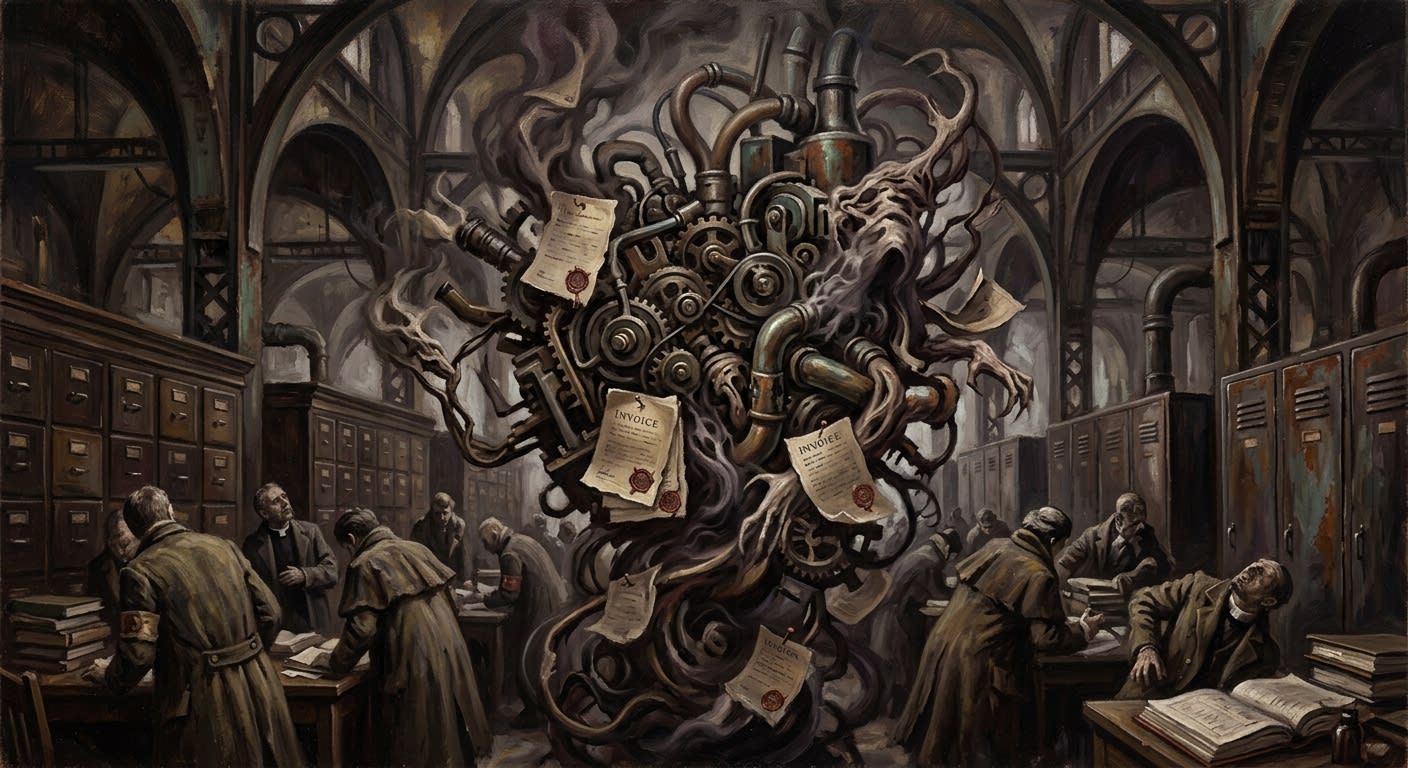
The Adversary’s will is known by ownership. It always charges interest. A sorcerer receives heat and owes obedience. A fortress receives strength and owes mouths. A starving village receives bread and owes its children. A general receives victory and owes the shape of his anger. The first gift is written in gold. The invoice arrives in bone.
The Creator’s permission does not purchase the soul from beneath it. That is the doctrinal line. The Bureau has spilled oceans of ink upon the difference; I spare the reader most of it because I am vain, not cruel. A miracle may wound the hand that bears it, but it does not make the wound an owner. Sorcery owns. It marks. It returns with ledgers.
#On Mortal Instruments
The Adversary’s contempt for flesh is most visible where the Enemy uses mankind as accounting matter. Ash-Fodder are driven forward to empty magazines, clog trenches, form bridges with their dead, and pay for their own destruction in fuel-ash. Ash-Mothers are chained into reproductive logistics, made to generate regiments at industrial scale while the Bureau publicly mutters of isolated barbarism and privately revises Standing Order 88-F until the revisions smell of antiseptic and shame.
These are not excesses of local commanders. They are doctrine translated into meat. The Adversary does not hate humanity as a man hates an enemy across a table. Hatred would be warmer. The Adversary prices humanity. Flesh becomes screen, womb, ration, wall, ash, mortar, fuel, song, signature. Nothing is wasted except mercy.
BUREAU OF WAR — CONSOLIDATED HOSTILE LOGISTICS NOTE Ash-Fodder monthly conversion estimate: █████ corpses. Classification 7-F reproductive installations: active count ███. Common directive phrase recovered from three unrelated enemy sites: “Make them pay twice.” Disposition: circulate to clearance four; deny to pulpits.
The phrase “the Adversary’s ledger” appears in soldiers’ speech for good reason. Behind every demonic spectacle is accountancy. The corpse-bridge at Brașov. The Metz mortar that screamed when broken. The bone-ash fuel stores. The maternal pits. Sin dresses itself as passion for the benefit of poets; in practice it keeps books.
#On Speaking of It Safely
The faithful ask why the Bureau avoids a fuller name. The faithful ask many things; the Bureau files most of them by weight and dampness. Here the answer is clean. A fuller name would pretend knowledge we do not possess and invite attention we do not desire. The Adversary is real. It is personal enough to will. It is vast enough to operate through contradictory Sin-Generals without becoming contradiction in our files. It is near enough to tempt a hungry soldier and far enough to hide behind every lesser horror it hires.
Catechists are instructed to use the term with neither familiarity nor flourish. Soldiers are permitted rougher language, provided they keep firing. Scholars are forbidden speculative diagrams after the A.S. 112 Orthography Purge demonstrated that certain geometries, when labelled with hostile titles, acquire opinions. Children are taught that the Adversary lies. Adults are taught, if the Synod is feeling uncharacteristically honest, that the Adversary sometimes tells the truth at the beginning because lies mature better in truth’s soil.
A Bureau of Pilgrimage broadside once declared, “The Adversary can offer nothing.”
Withdrawn. The Adversary can offer bread, victory, beauty, sleep, revenge, restored limbs, returned children, and the warm conviction that no debt will be collected. Bad theology kills faster when it is comforting.
#On the Present Doctrine
As of A.S. 201, the term remains unrevised. The A.S. 23 Declaration stands. Sorcery derives from the Adversary’s will. Miracles derive from the Creator’s permission. Source determines fire, crown, pyre, relic, sentence, and grave.
The Enemy has many masks. Doctrine grants it one office title and no face.