
#On the Necessity of This Entry
"A ledger entry concerning the maternal logistics cells of the Eastern Theatre, filed under Bureau of Records Classification 7-F (Reproductive Infrastructure, Hostile). Clearance: Third Tier. Distribution: Officers of the Line, Inquisitorial staff, Bureau of Medicine anatomists with active deployment writs. Unauthorized reading constitutes a disciplinary offence under Standing Order 14-C."
I wrote the Legions of Sin entry with the professional detachment the Bureau demands. Twenty-two pages of taxonomy — Thralls, Hollowed, Blood-Tithes, Wormhosts, the whole wretched inventory — and each class received its paragraph, its stamp, its classification number, its margin note from the Warden. A man could read that entry and walk away knowing the arithmetic. He could brief his subordinates. He could file his report.
The Ash-Mothers received two paragraphs.
Two paragraphs was not enough. Two paragraphs was, in point of fact, a lie — the kind the Bureau tells when the truth would require a reclassification of the Bureau itself. I wrote those two paragraphs with the understanding that a fuller account would follow, and that fuller account is this, and I am writing it at three in the morning because I cannot write it at any hour when the Cathedral bells are audible. The bells remind me of infants' cries. This is not metaphor. It is a medical condition the Bureau of Mercy has classified as "sympathy-induced auditory displacement" and for which there is no prescribed treatment beyond the standard recommendation of increased prayer.
I recommend increased prayer. I do not expect it to work.
#On the Mechanism
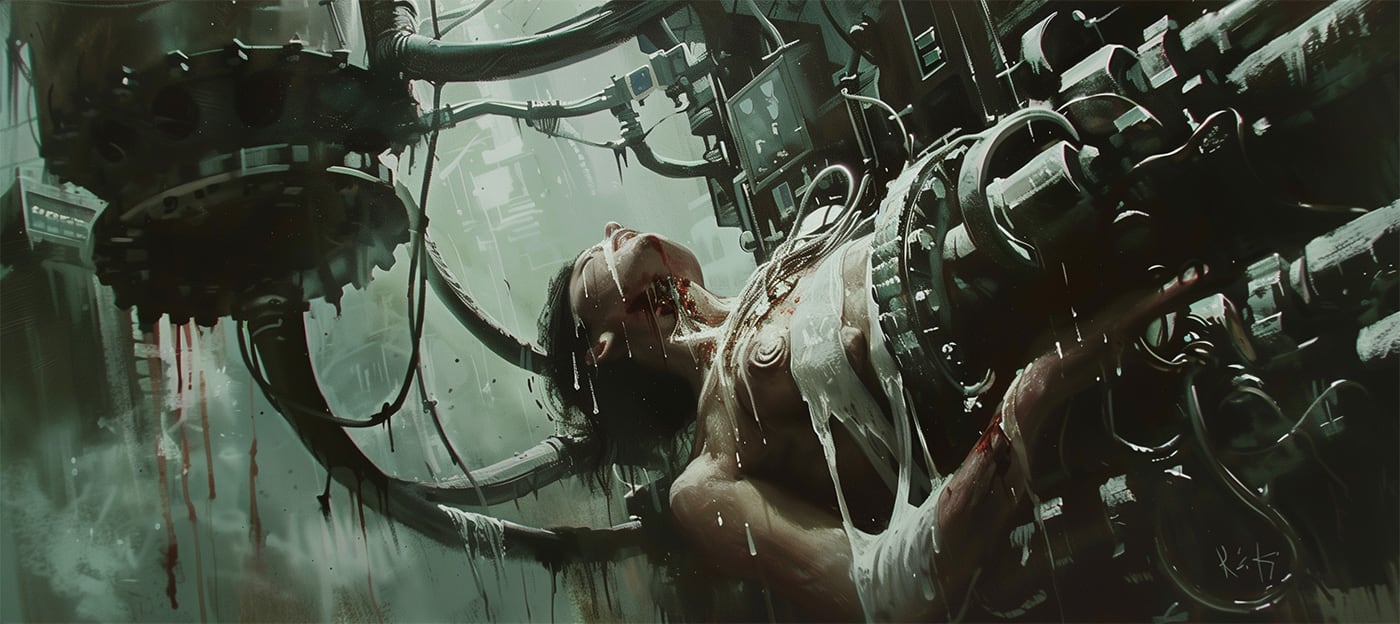
The Ash-Mother is a production line.
She is captured — from villages overrun in the first hours of a Sin-General's advance, from refugee columns caught between the Line and the Charnel Lands, from settlements east of the Carpathians that the Bureau of Settlement listed as "evacuated" on maps that were outdated before the ink had dried. She is sorted. The old, the sick, the barren are sent to the Processional Slave columns or fed to the Blood-Tithe apparatus. Those who can bear are kept.
"Kept" is the Bureau's word. What follows defies the word.
They are chained in pits — stone-lined in Kargath's territory, where the Blightmarsh provides natural concealment; mud-walled in Maldrake's domain, where the heat of the Iron Wastes bakes the walls harder than kiln-brick. They are drugged with compounds the Bureau of Medicine has catalogued but cannot replicate: a milky paste derived from Blightmarsh fungi that suppresses resistance while preserving fertility, a black resin applied to the temples that accelerates gestation to a cycle the Bureau's anatomists describe, with characteristic understatement, as "incompatible with known human biology."
The gestation is shortened. The recovery is eliminated. The mother bears, and bears, and bears again, in a rhythm the Shadow Court's overseers calibrate with the same bureaucratic precision the Synod applies to bell schedules and tithe quotas. One Ash-Mother can produce dozens of offspring per year. Over the course of an unnaturally extended lifespan — and the compounds extend it, stretching the body far past any mercy — the total can reach hundreds. The Bureau of Medicine's conservative estimate, based on the Metz census extrapolation, places the upper bound at twelve hundred live births from a single source.
Twelve hundred soldiers. From one woman. Chained in a pit.
The infants are not raised. They are sorted at birth by the same triage the Synod applies to its own wounded — a fact the Bureau of Doctrine has forbidden me to elaborate upon, and which I elaborate upon here because the parallel is instructive. The strong are tagged for Thrall conditioning. The weak are rendered into combustible material for sorcery engines — their fat, their marrow, their unbaptized souls all fuel for the contracts of annihilation that power the Lie's war effort. A third category — those born with certain physical anomalies the Bureau has declined to specify — are reserved for purposes classified under the heading "Developmental Arcana" in captured Shadow Court documents.
When the mother expires, her ashes are gathered and scattered across mustering fields. Recruits march through them. The practice is believed to seed obedience. The Bureau of Doctrine classifies this as "superstitious attribution." The Bureau of Engineering, which has tested the soil composition of captured mustering fields, classifies it as "statistically anomalous calcium dispersion with measurable psychotropic residua."
The engineers are, as usual, more honest than the theologians.
#On the Three Canonical Incidents
The Codex records three sites. There are more. The three are recorded because they were witnessed by Synod forces who survived long enough to file depositions, and because those depositions were not sealed, burned, or reclassified before reaching the Bureau of Records. This is a lower bar than the reader might suppose.
The Pit of Debrecen (Unregistered). Unearthed by Radiant Fusiliers during a push into Blightmarsh territory, date uncertain — the Fusiliers' own logs disagree, placing the discovery somewhere between A.S. 78 and A.S. 83, a discrepancy the Bureau attributes to "localized temporal distortion" and the Fusiliers attribute to the fact that their watch-officer had been dead for three days before anyone noticed. The pit contained seventy Ash-Mothers chained in a circle, facing inward. Their infants — the number is disputed; the Fusiliers' commander wrote "hundreds" and then scratched it out and wrote "too many" — had been cast into a central pyre. The smoke rose in the shape of a hand. It clawed the sky for eleven minutes before the regiment's bell-choir drove it back with a sustained peal of Iron Vespers. The smoke dispersed. The hand's shadow remained on the ground for six days.
The Bureau of Rites classified the hand as "Category Four Manifest Sorcery, Ritual Origin." The Bureau of Medicine classified the mothers' physical condition as "beyond clinical assessment." The Bureau of War classified the intelligence value of the site as "moderate." The Fusiliers' commander, Captain Elias Brekke, was reassigned to a supply depot in the Candlewick Palatinate and has not spoken publicly since A.S. 84.
Previous editions of this entry listed the Pit of Debrecen discovery date as A.S. 80.
The Bureau of Records has revised this to "A.S. 78–83 (inclusive)" following the declassification of the Fusiliers' watch-log discrepancy. The revision changes nothing. Seventy women in a circle are seventy women in a circle regardless of the date stamped on the file.
The Ash-Rain of Zaragoza. When Synod artillery bombarded a Velkara-aligned breeding compound in the Iberian approaches — one of the few confirmed compounds west of the Carpathians, its existence a source of acute embarrassment to the Bureau of Purity — the resulting destruction produced an ash-fall that blanketed the city for three days. The ash tasted of salt and milk. Children who breathed it slept for three days without waking. The Bureau of Medicine dispatched a team; their report, filed A.S. 143, states that the ash contained "organic calcium particulate consistent with incinerated human remains, combined with a lactate compound of unknown sorcerous provenance." The team recommended quarantine. The Bureau of Settlement recommended reclassifying the event as "atmospheric." The Bureau of Doctrine recommended silence.
Silence was chosen. The children woke. Fourteen of them never spoke again.
The Black Census of Metz. The most significant of the three, and the one that prompted the Bureau of Medicine to coin the term "Ash-Mother" as a formal classification rather than a soldiers' epithet. At Metz, in the contested strip east of the Line, Inquisitors conducting a post-battle census of captured Thralls discovered that an entire regiment — four hundred and eleven soldiers, each branded with identical sigils — could be traced through sorcery-genealogical methods to a single woman. Her surviving descendants, at the time of the census, numbered in the thousands. The woman herself had been dead for decades; her ashes had been mixed into the mortar of the enemy bastion the regiment was defending, so that every stone was, in the Bureau's own language, "structurally dependent upon maternal remains."
The Inquisitors demolished the bastion. The mortar screamed as it was broken. The Bureau of Engineering classified the screaming as "structural stress vocalisation." The Inquisitors, who had been inside the building when the walls began to weep milk, did not agree.
#On the Bureau's Response
The Synod's official response to Ash-Mother installations is governed by Standing Order 88-F (Unregistered), issued jointly by the Bureau of War and the Bureau of Medicine in A.S. 134, revised twice (A.S. 158, A.S. 194), and supplemented by a classified addendum the contents of which I am not permitted to summarise but which I can confirm exists, which I have read, and which made me ill.
The Order prescribes the following: discovered installations are to be secured by Radiant Fusilier or Shield-Paladin units with reliquary support. Surviving mothers are to be extracted under medical supervision and transported to rear-area facilities operated by the Bureau of Mercy. Infants are to be assessed by Bureau of Purity personnel for "indicators of sorcerous corruption" — a process that involves three days of observation, a baptismal rite conducted by a senior Confessor, and a physical examination the Bureau of Medicine's own manual describes as "necessarily invasive."
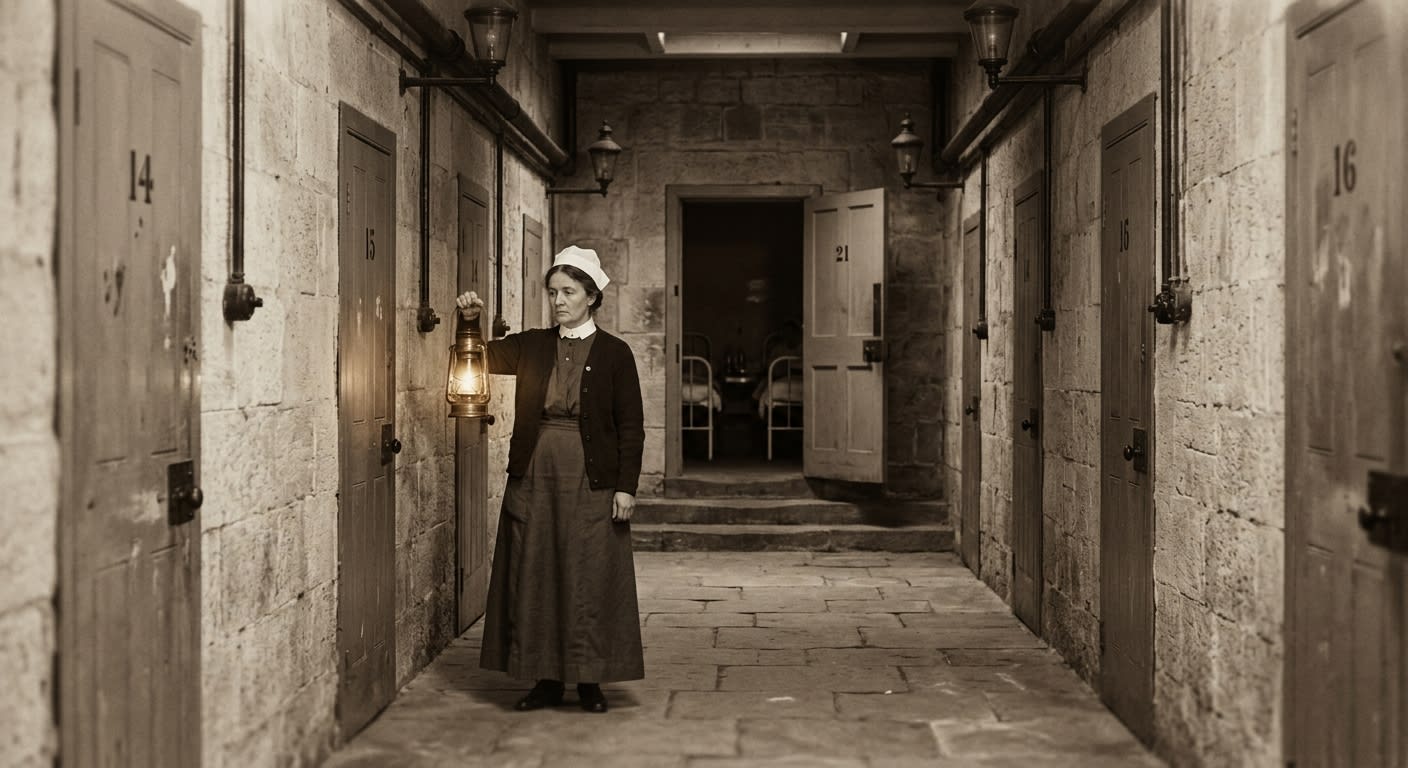
What the Order does not prescribe — and what the classified addendum addresses — is the question of the children. Infants cleared by the Bureau of Purity are, in theory, raised in Orphanarii under standard catechetical instruction, indistinguishable from any other war orphan. In practice, the Bureau of Purity's clearance rate is seventeen per cent. The remaining eighty-three per cent are classified under a heading I am forbidden to name and processed through a channel the Bureau of Records lists as "closed adoption, ecclesiastical" — a phrase that, in the Bureau's lexicon, can mean anything from monastic education to a shallow grave with a prayer said over it.
I do not know which it means. I have asked. The Bureau of Purity's response was a single stamped form: "Query noted. File closed."
#On the Silence
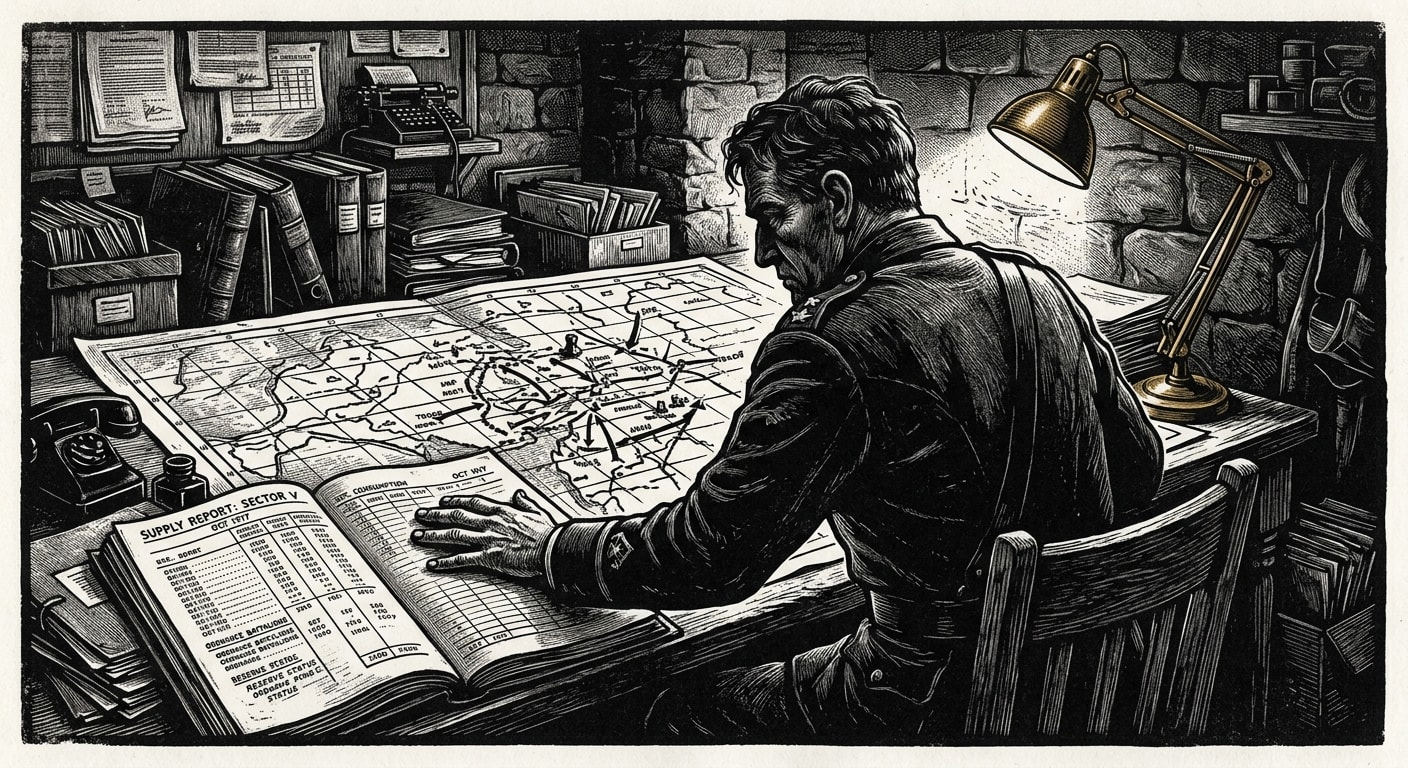
The Ash-Mothers are the war's ugliest secret and its loudest silence. Every officer on the Line knows they exist. Every Bureau clerk who handles casualty figures from the eastern sectors has seen the numbers that do not add up — regiments appearing faster than any natural recruitment could produce them, fresh Thralls flooding forward positions in quantities that suggest a supply chain the Bureau of War's logistics models cannot account for through conventional conscription. The models account for it through a footnote: "Supplementary mortal generation (Ref: Classification 7-F)." The footnote is the Ash-Mothers. The footnote is thousands of women in pits.
The Synod does not speak of them in public sermons. The Bureau of Doctrine's official position is that Ash-Mother installations are "isolated instances of enemy barbarism, consistent with the Adversary's contempt for the sanctity of motherhood, and not indicative of systematic infrastructure." This position has been maintained since A.S. 134. It has been maintained through four revisions of Standing Order 88-F, through the Metz census proving that entire regiments spring from single women, through the Zaragoza ash-rain proving that compounds exist west of the Carpathians.
The position is a lie. The Bureau knows it is a lie. I know the Bureau knows. The Bureau knows I know the Bureau knows. We proceed.