
#On the Pretty Theft
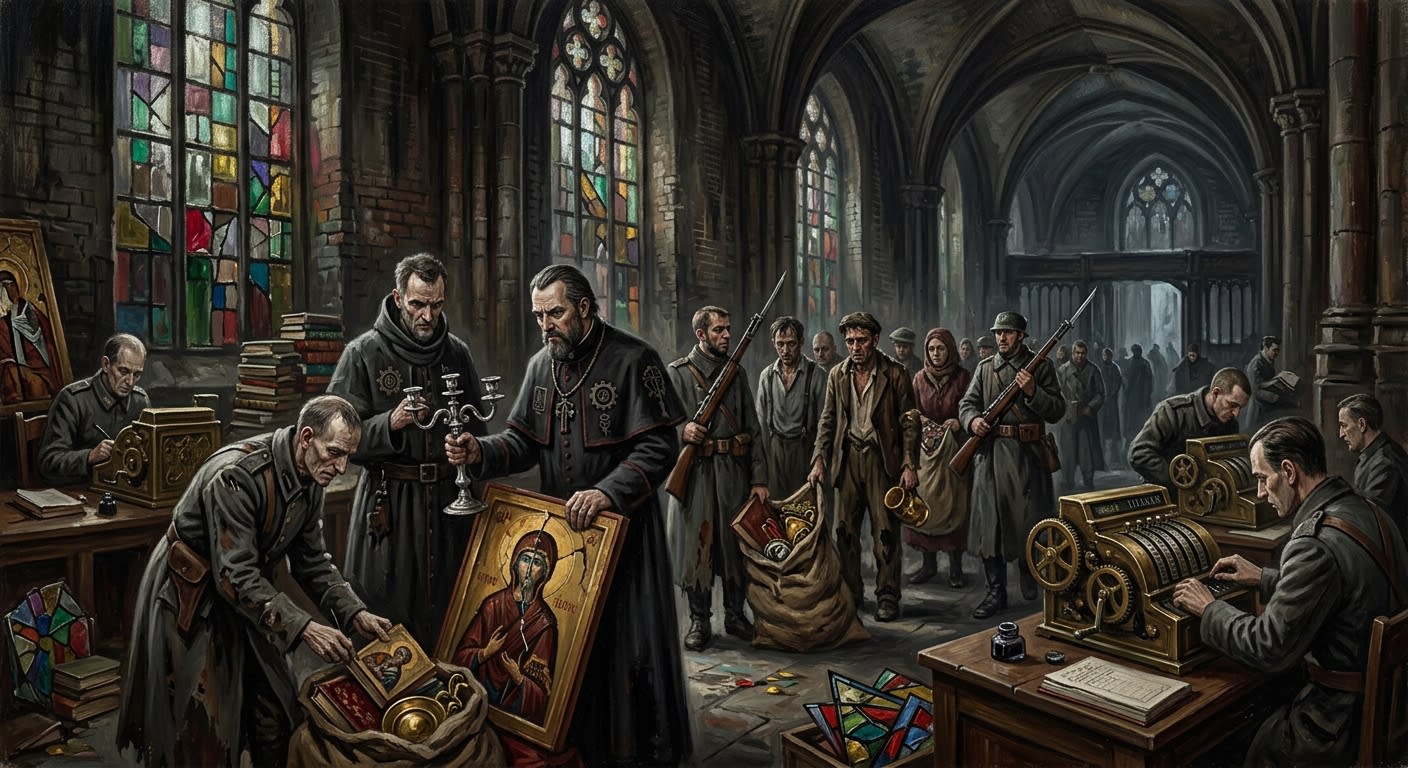
The Aesthetic Tithe is the tolerated sin of the Circle of Stained Proof: one beautiful object taken from each major relic-market seizure, officially for destruction, privately for patronage, spiritually for no purpose the Bureau of Doctrine is willing to print without laughing into its sleeve. A shard of stained glass. A silver-painted saint’s eye. A strip of demon-glass warm under candle heat. A reliquary clasp shaped like a lamb with human teeth. Beauty, confiscated as danger, then promoted to taste.
The Tithe descends from the A.S. 94 auxiliary toleration clauses that let the Lantern Brotherhood keep night where Wardens could not afford enough boots, and from the later relic-market habits that taught Stained Proof a useful doctrine: the public hates fraud more fiercely when the fraud is pretty. A counterfeit bone in a sack is crime. A counterfeit bone behind blue glass is seduction. The Circle punishes seduction publicly, pockets a sample privately, and calls the whole motion civic hygiene.
No statute blesses the practice by name. No statute needs to. The Synod’s finest arrangements live in the space between prohibition and utility, where everyone knows what happens, no one writes it plainly, and the quarterly review arrives with blank columns already polished.
#On How Disposal Learns to Climb
A major seizure begins with theatre. Stained Proof enters a relic market as buyers, widows, clerks, mourners, pilgrims, or little men with soft gloves and harder questions. A stall answers greedily. A proof jar appears. A lamp uncovers colour where colour ought not answer. A pane warms. A lens hums. A rib fragment bleeds varnish. The Brothers gasp at the correct volume, close the stall, seal the lintel, and teach the crowd what it has witnessed.
The public sees correction. The shop sees ruin. The Circle sees inventory.
The seized objects are divided in the Glaze Room of Reliquary Annex Twelve (Unregistered). Common frauds go to hammer, fire, acid, or the humiliating shelf where student examiners learn to distinguish pig-bone from apostolic knuckle. Dangerous objects go to Relics if Relics arrives before Stained Proof has finished being helpful. Politically useful objects go to Shadows if Shadows has remembered to pretend it was never there. Beautiful objects enter the disposal ledger under categories broad enough to shelter an army: destroyed under witness, retained for proof, held for instruction, pending review, transferred for secure custody.
Secure custody is the staircase. Upward it goes.
Earlier disposal ledgers recorded all aesthetic tithe objects as destroyed under witness.
Clarified. Several witnesses were patrons, several destructions were symbolic, and several objects appear to have mistaken private chapels for furnaces.
A shard leaves in a wrapped cloth. A reliquary clasp rides under a wax seal to a minor prelate who once signed a market-cleaning writ. A counterfeit saint-window, declared spiritually injurious at dawn, glows behind a magistrate’s prayer bench by Advent. The ledger says disposed. The chapel says nothing. Coloured light is a discreet accomplice.
#On Havel Brune and the Taste of Clean Gloves
Circle-Captain “Saint” Havel Brune is the name most often attached to the Aesthetic Tithe. He did not invent it. He made it elegant enough to survive inspection. Brune wears spotless gloves in a trade of wax, dust, market sweat, glass powder, and panic. This has impressed fools. Clean gloves prove only that someone else is doing the dirt.
Brune understands the three appetites that feed the Tithe. The poor crave miracles because official grace is priced beyond mercy. The dealers crave profit because saints multiply best in glass cases. Patrons crave dangerous beauty because sanctioned beauty is dull and truly condemned beauty feels like election when no one poor can afford to share it. Brune stands where those appetites meet, smiling like a portrait that knows the will has been altered.
Reports place Brune after midnight before seized panes, letting relic-light stain his face until colours instruct him. The Bureau of Medicine might call it Optical Residual Devotion. The Brothers call it looking too long. I call it a promotion application written on the inside of the eye.
GLAZE ROOM OBSERVATION — ANNEX TWELVE, NIGHT REVIEW Subject: Havel Brune. Object: blue-gold pane seized Saint Odran’s Lane. Duration of unsupervised viewing: █████ Reported speech: “The patron is already in the glass.” Witness response: reassigned to rope patrol. Pane disposition: destroyed under witness. Subsequent sighting: █████████████ private chapel, thirty-one days later.
#On the Patron Window
The Patron Window is the Aesthetic Tithe with its mask removed: the route by which confiscated beauty reaches elite private devotion. The phrase names one suspected pane and the whole custom that pane exposed. It is whispered in Relics offices, denied in Warden corridors, priced in glasswright lanes, and feared by Stained Proof because a single traced installation can drag useful hypocrisy onto a public trestle.
Hypocrisy is not the scandal. Hypocrisy is government breathing. The scandal is visibility.
When a Patron Window threatens exposure, the ritual is predictable. The object vanishes from the chapel. The chapel inventory receives a harmless replacement entry. The seizure ledger acquires a correction in ink so clean it smells of panic. A junior Brother confesses to improper custody, usually after discovering that confession is safer than being found with one’s throat full of broken glass. The patron departs on pilgrimage, citing health, grief, or renewed devotion. The Circle survives. The market receives another raid within the month, because the public must be given a louder fraud to hate.
#On Bureau Appetite
Each Bureau despises the Aesthetic Tithe for a different reason, which is why none has yet killed it. Relics hates losing custody of objects that should be authenticated, catalogued, sealed, argued over, and eventually misplaced by proper hands. Purity hates the softness of selective corruption, preferring clean burnings, public fear, and confessions that smell less of patronage. Tithes hates unvalued transfers. Shadows hates anything it did not invent. Doctrine hates bad prose in the disposal memoranda. I speak only for myself, naturally, and for civilisation.
The Wardens tolerate the practice because market calm follows spectacular seizure. The Lantern Brotherhood tolerates it because the Circle’s patrons protect broader Category C/44 existence. Nine Wicks understands the arithmetic. Mute Radiance understands silence. Rope-Road Lanterns understands delivery. Ashen Steps understands that the dead also leave beautiful things, and has begun asking impolite questions.
One Purity memorandum called the Aesthetic Tithe “minor fraternal graft.”
Corrected after review. Minor graft buys wine. The Aesthetic Tithe buys windows that pray back, patrons who owe silence, and Brotherhood protection thick enough to survive quarterly disgust.
#On Current Toleration
As of A.S. 201, the Aesthetic Tithe remains denied as a formal instrument, watched as a practical hazard, and used as a quiet conduit for dangerous beauty that no Bureau wants loose in markets and every powerful man wants near enough to see. Stained Proof remains within Category C/44 auxiliary limits under quarterly review. The review counts proof jars, teardrop seals, workshop closures, disposal logs, and private chapel installations receiving glass within thirty days of seizure. The last category exists because Records possesses a sense of humour sharpened on tombstone corners.
The Tithe will continue until beauty ceases to tempt patrons, relic fraud ceases to profit dealers, and the Synod ceases to prefer useful sin over clean impotence. I advise no one to wait standing.