
#On the Compound West of Shame
The ash tasted of salt and milk. This is the sentence the Bureau wishes children would stop remembering.
The Ash-Rain of Zaragoza began as an artillery correction and ended as weather. In A.S. 143, Synod guns bombarded a Velkara-aligned breeding compound in the Iberian approaches, close enough to Zaragoza (Unregistered)'s outer farms that the city could hear the first shells as a dull ecclesiastical coughing from the east. The compound should not have existed there. This fact occupied more senior minds than the fact that it did exist, which is the usual order of official concern: first jurisdiction, then scandal, then the human beings, if the clerks have not gone home.
The Bureau of Purity had certified the approaches clean six months before the bombardment. Purity certificates are magnificent documents: white seal, black ribbon, a tone of spotless certainty, and no capacity whatever to stop a pit from being dug under an olive warehouse by men with false ledgers and women already chained. Velkara's servants understood this. The Synod checks faces. Lust uses hands, debts, bedroom promises, medical exemptions, orphan transfers, singing lessons, midwives with warm voices. A gate may be guarded by three lictors and still admit a cradle.
The site was discovered by accident. A tariff chapel clerk noticed that one rural dispensary near Zaragoza had requested six times the permitted allocation of clean linen while reporting no births, no surgeries, no plague, and no funeral demand. Linen is a quiet witness. Men lie. Wax lies if warmed. Linen keeps stains and submits them, eventually, to whoever has the patience to count. The clerk forwarded the discrepancy to the local Purity desk; the local Purity desk filed it beneath “Domestic Irregularity”; the Bureau of Records copied the error into three ledgers; and a cannon officer, receiving the wrong bundle of papers during a supply audit, read the linen figures beside a requisition for shell-fuses and drew a conclusion no committee had managed.
By second vespers the guns were aligned.
#On the Bombardment
The compound burned for nine hours. The first salvo broke the warehouse roofs. The second struck the inner yard. The third found the pit chambers, and here the reports change character. Gunners accustomed to seeing stone fly outward recorded walls folding inward, as if the building were swallowing its own bones. Witnesses on the city road described a sound beneath the shelling: not screaming, though there was screaming enough; a wet grinding, timed like labour pains. The Bureau of Medicine later objected to that comparison. The Bureau of Medicine may object in its own article.
The artillery captain requested permission to halt and send in troops. Permission was denied. He requested again. Denied. On the third request, the signal office returned a stamped phrase: CONTINUE UNTIL CLEAN. The guns continued. Relic-shot burst over the yard and turned the roof-beams white. Lime shells opened in the lower galleries. Incendiaries entered the drying rooms, the nursery cells, the drug vats, the rooms whose names are sealed because naming them would require admitting that the architects knew what they were for.
At dawn the smoke rose straight up. Wind from the Ebro should have pushed it south-west. It did not move. The column stood above the shattered compound in a pale vertical mass, milk-white at the core, grey at the edge, threaded with black sparks that rang when they touched roof tile. Priests brought censers. The censers went out. Bellmen struck a ward-peal from the city towers. The peal returned without its third note.
Then the column opened. Ash fell over Zaragoza for three days.
#On the Fall
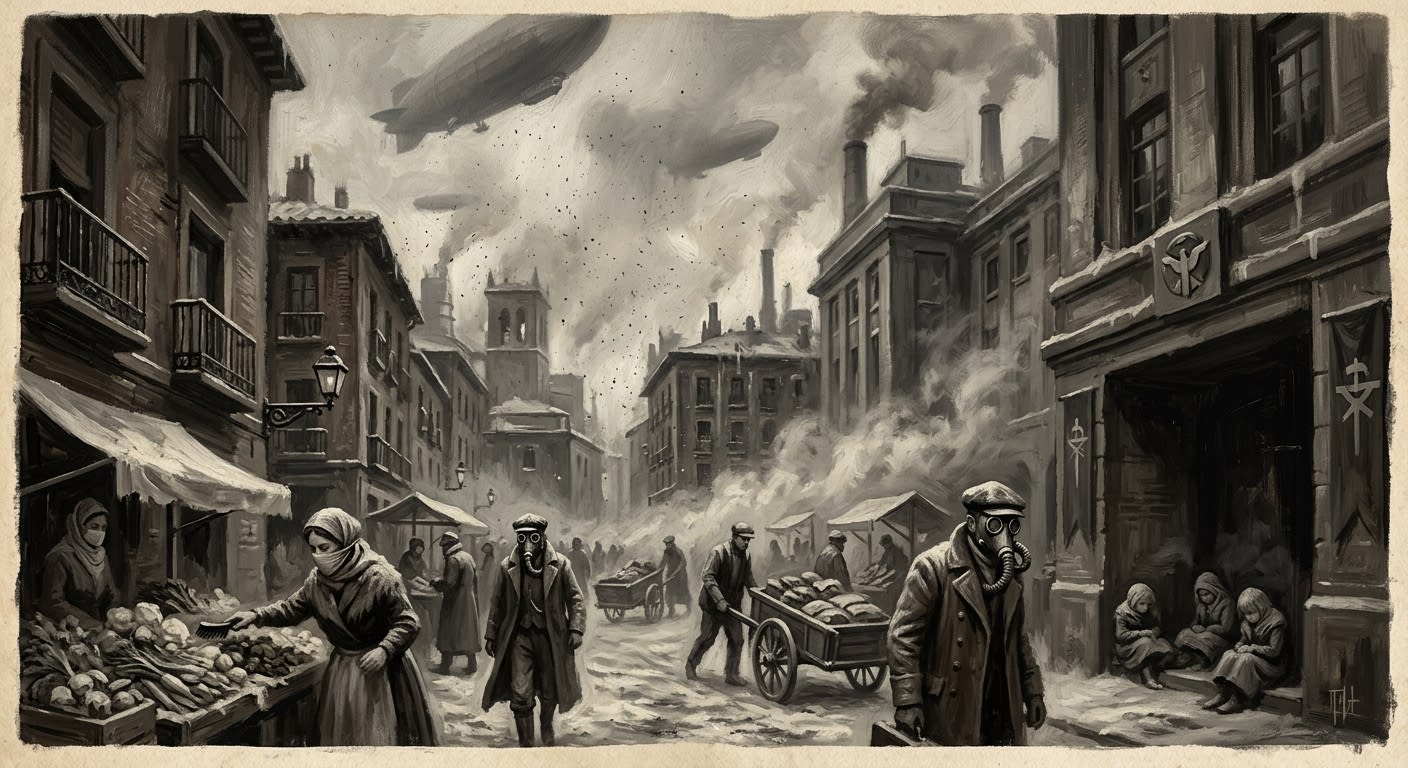
The first flakes were soft. Citizens mistook them for lime dust from the bombardment, then for flour from a mill collapse, then for some local atmospheric punishment of the sort the Iberian cities collect with tiresome regional pride. By the third hour it lay on windowsills, baptismal fonts, market awnings, mule backs, saints' shoulders, infants' tongues. It did not drift like ordinary ash. It chose surfaces. It gathered in cradles. It settled along door thresholds in lines as deliberate as script.
It tasted of salt and milk. The phrase appears in thirty-seven testimonies, collected from market women, artillery runners, two priests, six children, and one lictor whose report used the words “salt” and “milk” with such horror that I briefly liked him. The Bureau of Alchemical Standards later found organic calcium particulate consistent with incinerated human remains, combined with a lactate compound of unknown sorcerous provenance. That is the official formula. Salt and milk is better. The tongue reached the truth first.
CHILD WITNESS ANNEX — ZARAGOZA, A.S. 143 Question: “What did the ash do when it touched your mouth?” Answer: “It called me by the name I had before Mother named me.” Follow-up question sealed. Examiner reassigned. Annex copy █████ destroyed by order of ██████████.
By nightfall the city had gone quiet. Zaragoza is not a quiet city. It keeps glass pillars, punishment squares, mule markets, shouting vendors, penitential guides, and pilgrims who confuse volume with devotion. During the ash-fall, bells sounded muffled. Dogs refused meat. The Pillars of Glass clouded from within, and the entombed apostates inside them appeared, according to three Ephrath brothers, to turn their faces away from the falling sky. The Order of Saint Ephrath filed a protest against this observation, then filed a second protest against anyone reading the first.
Children who breathed the ash slept for three days without waking. Adults slept too, in smaller numbers and with less theological neatness, but the children became the scandal because even the Synod understands that a sleeping child is an accusation no censor can quite improve. Parents carried them to chapels. Ward-Sisters washed their mouths with vinegar and consecrated water. The ash returned between their teeth. On the third day most woke hungry, hoarse, and unable to remember dreams.
Fourteen never spoke again.
Earlier oral accounts claimed “the children of Zaragoza died in their sleep.”
Corrected. They lived. The Bureau apologises for any comfort caused by the prior inaccuracy.
#On the Fourteen
Their names are sealed in the public edition because the Bureau of Mercy insists privacy remains a form of care even after every other form has been mislaid. I have read them. Seven girls, six boys, one infant recorded only by baptismal mark because the family had not yet settled on a name when the ash entered the cradle. Fourteen mouths opened after the third day. No sound came. Not a gasp, not a cry, not the thin animal whimper common to shock. The physicians placed mirrors before their lips. The mirrors misted. Breath remained. Speech had been taken.
The first theory blamed lung injury. The second blamed terror. The third blamed Velkaran seduction residue, a phrase so evasive it should be taxed. The Bureau of Medicine's private memorandum proposed “prenatal nomenclatural interference,” meaning the ash had touched some layer of personhood anterior to public identity. The Bureau of Doctrine rejected the memorandum with a note written in my hand: DO NOT INVENT SOUL ANATOMY WITHOUT PERMISSION.
The fourteen were housed first in a Mercy ward, then in a school for “speech-delayed ash minors,” then in separate households after parents complained the children understood one another too well. They used chalk. They used finger taps. They arranged crumbs into marks no alphabet recognised. One drew the same shape for eleven years: a hand rising from a bowl. Another refused milk until adulthood. A third, at age sixteen, laughed once during High Angelus, silently, while every bell in Zaragoza skipped a stroke.
Purity requested custody. Mercy refused. Doctrine delayed. Records misplaced the transfer order with the precision of a saint hiding a knife under his robe. There are moments when incompetence becomes grace by accident. The Bureau will deny this, naturally, because accidental grace is unlicensed competition.
#On the Quarantine That Was Not
The Bureau of Medicine recommended quarantine. That recommendation reached Strasbourg attached to a packet of ash samples in sealed glass. The samples gained weight during transit. By the time the courier arrived, the packet weighed three pounds more than its dispatch certificate. The courier insisted he had not opened it. His horse had lost all hair along its left flank. The receiving clerk at Strasbourg entered both facts under “minor variance.”
Settlement recommended reclassifying the event as atmospheric. Doctrine recommended silence. Purity recommended arrests, because Purity recommends arrests in the way lungs recommend air. War recommended praise for the artillery captain. Medicine recommended burning the captain's clothes and everyone else's shoes. Alchemical Standards requested more samples and was told to stop being interesting.
Silence was chosen.
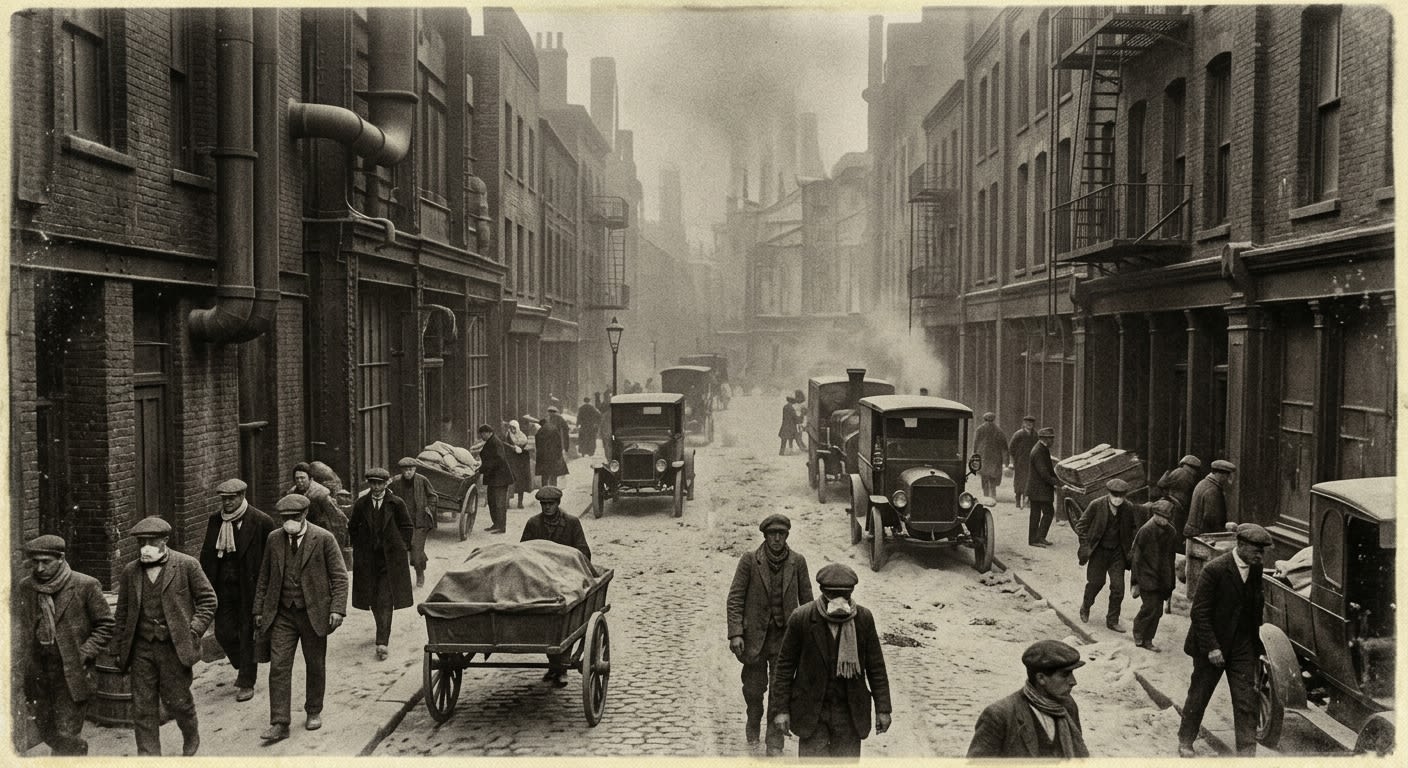
No quarantine meant commerce continued under grey awnings. Pilgrims still came to view the Pillars. Market bells resumed. The ash was swept into gutters, gutters into canals, canals into the river. For six weeks, fish caught downstream showed white sediment packed behind the gills. For eight months, midwives in the western quarter reported infants born with quiet eyes who did not cry until their names were spoken. The official inquiry found no relation.
A city can be poisoned and still meet its tithe quota. Administratively, this complicates the definition of poisoned.
#On Blame, Which Is a Form of Architecture
Velkara's servants built the compound. Local collaborators supplied shelter, ledgers, guards, medicines, beds, hooks, and all the little civic permissions without which evil remains aspirational. The artillery destroyed it. The ash came down. The Bureau then arranged blame into compartments so each office could stand in its assigned cell and call the wall a vindication.
Purity blamed hidden Lust cultists. War blamed unavoidable tactical necessity. Medicine blamed exposure. Settlement blamed rumour. Records blamed ambiguous forms. Doctrine blamed sin, which is always correct and seldom sufficient. The parents blamed the guns. The gunners blamed the pit. The fourteen, lacking speech, blamed no one in any format admissible to tribunal.
A Bureau of War commendation described the bombardment as “clean suppression of hostile reproductive infrastructure.”
Corrected in A.S. 158 after review. The approved phrase is “successful interruption of hostile reproductive infrastructure with persistent civic residue.” Observe the improvement. It now admits the dirt while keeping the laurel.
The artillery captain received neither medal nor censure. He was promoted sideways into instructional service and spent the rest of his career teaching young officers how to calculate blast radius in inhabited approaches. His chalk diagrams were excellent. He never used Zaragoza as an example. His students called this modesty. I call it evidence.
#On What Remains
Zaragoza keeps its Pillars polished. The second-generation glass still renders sin handsomer than its subjects deserve, and pilgrims still arrive with guidebooks, children, wax snacks, and that pious hunger for supervised disgust which the Order of Saint Ephrath has mistaken for moral education since its founding. On damp mornings, the lower plinths gather a pale dust no broom keeps away. Guides call it road powder. Local mothers do not let children touch it.
The fourteen are older now, those who remain. Their files are scattered across Mercy, Records, Doctrine, and one sealed Purity drawer whose key has been “temporarily unavailable” for thirty-eight years. One became a copyist and writes without punctuation. One entered a convent that takes no vows aloud. One vanished during the Ash Wednesday procession of A.S. 166, leaving shoes, shawl, and a slate bearing three marks the Bureau of Bells later identified as an impossible chord.
The ash tasted of salt and milk. Write that down before some improving clerk replaces it with mineral-lactate particulate and calls the wound treated.