
#On Awaiting
The Dorm Rows of the Cloister of Miscounted Beads are called Awaiting by the souls stacked inside them, because the detained poor retain, even under damp brick and administrative insult, a vulgar talent for exact theology. They await count, correction, sponsor, fever, appeal, discharge, expulsion, death, and, on bad nights, the return of a name they no longer wish to answer.
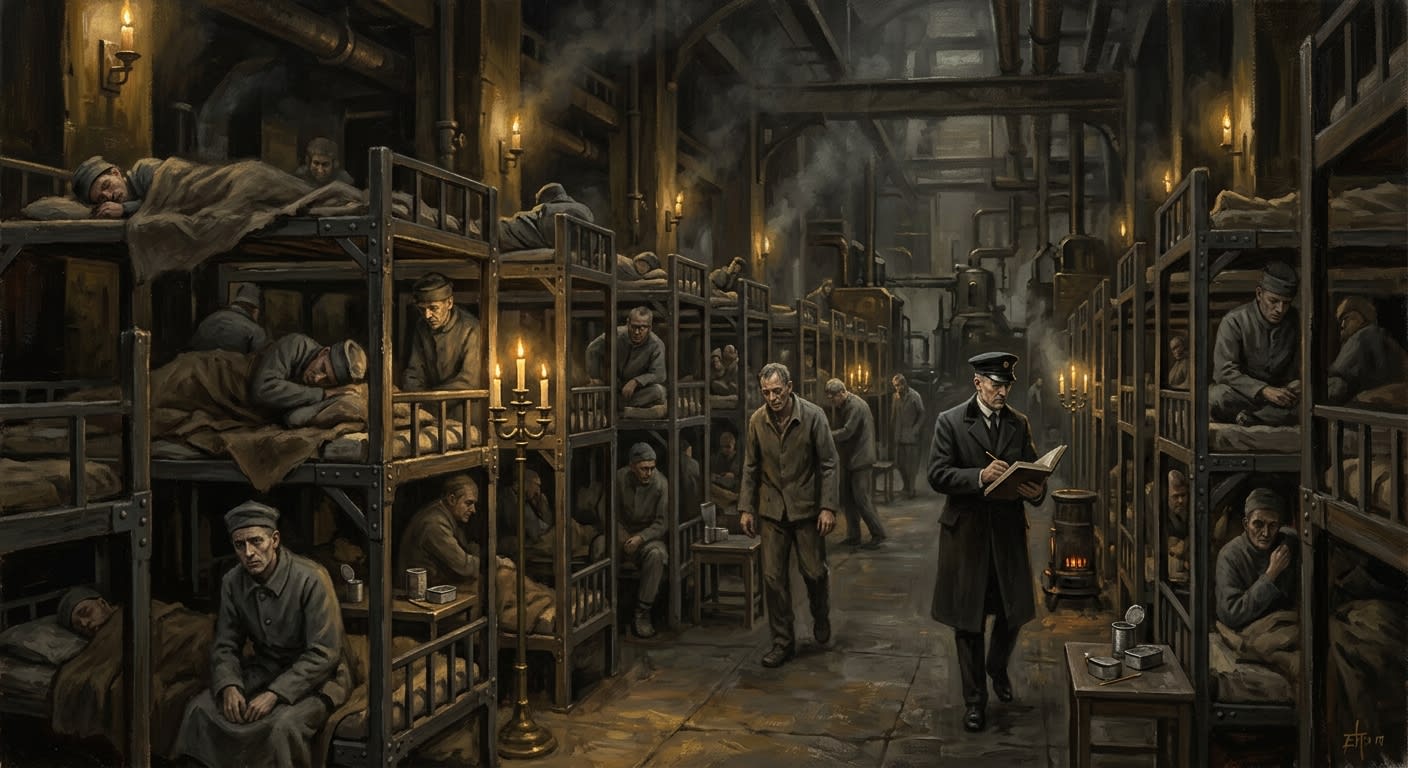
The formal designation is Housing Row Four through Nine, Detention-Berth Annex, Pilgrim Reconciliation Estate. This is the sort of title Records prefers: long enough to muffle screaming, dry enough to survive audit, and false in every useful syllable. The Rows are long brick halls with stacked bunks, rope cots, boiled-grain stink, vinegar wash, damp wool, foot rot, whispered bargaining, and one candle per six detainees per night.
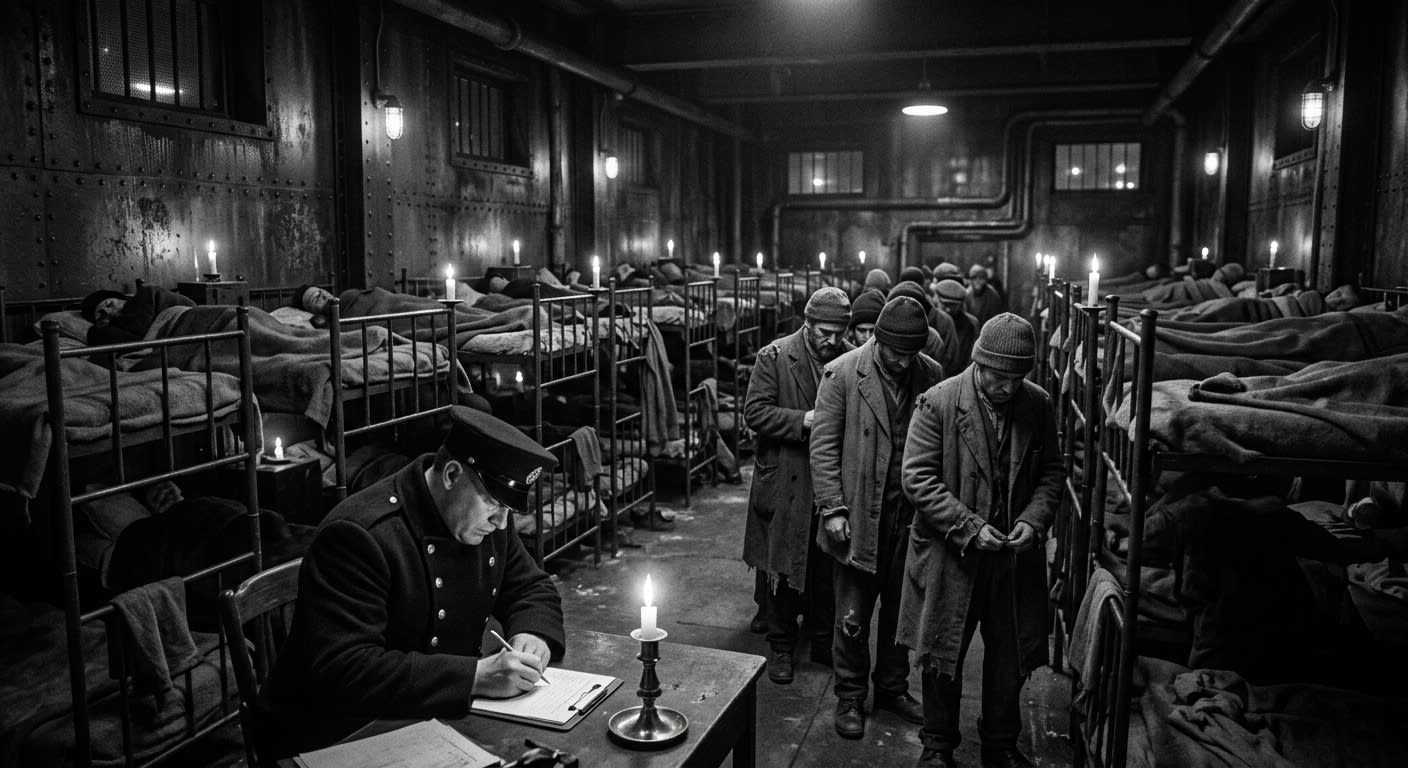
One candle per six. There are cruelties grander than this, I grant, but few so mathematically intimate. The candle is measured against a wax-mark on the wall before issue. It is placed in an iron cup chained to a beam. A dorm clerk notes the hour. At fourth bell the clerk returns with snuffer and slate, and any flame that exceeds its allotment is extinguished with the moral confidence of a magistrate drowning kittens for public hygiene.
#On the Architecture of Delay
The Rows stand east of the Lost-Procession Yard and north of the Chapel wall, where sound travels badly and smell travels with missionary zeal. Brick ribs support a low roof blackened by years of rationed smoke. Narrow vents admit air reluctantly. Rain enters with more enthusiasm. Each hall contains two aisles and four tiers of bunks, the uppermost reached by ladder hooks polished by palms, panic, and the grease of unwashed travel.
The rope cots scratch. This is deliberate in the old bureaucratic way, by which no single officer ordered discomfort and every officer preserved it. A smooth cot encourages rest. Rest encourages dream. Dream encourages memory. Memory complicates classification. The rope abrades the shoulder, hip, calf, and dignity, maintaining in each detainee the proper awareness that shelter is a loan from procedure.
The floors are brick over older stone, sloped toward drains that feed the Ash Canal runoff. The drains clog with straw, hair, vomit, wax scrap, and prayers written on paper too cheap to survive moisture. Children learn quickly not to sleep near them. Adults learn slower, being adults.
Each hall has a dorm clerk’s niche at the entrance: desk, tally board, ration hooks, candle cup rack, berth slate, complaint box, and a small bell whose tone differs from the Yard bell by one miserable note. The complaint box is locked. The key exists. This is the finest mercy I can report concerning it.
#On Entry from the Yard
Jossa Rill’s runners deliver bodies to Awaiting in parcels of twelve, eight, six, or whatever number the Yard can shed before mud, riot, or fever claims the arithmetic. Each detainee arrives with a wrist tag, chalk mark, intake slip, and the expression of a person who still believes explanation has value.
A dorm matron checks the tag against berth slate. White tags receive ordinary bunks. Grey tags are placed near the fever end, which is either precaution or sentence depending on one’s cough. Blue route-contradiction cases sleep near the clerk’s niche, where night questions can be asked without waking half the Row. Yellow sponsor-interest cases receive cots with fewer fleas. Red cases are held under watch until Purity or terror arrives, whichever walks faster.
Earlier Cloister pamphlets stated that Dorm Row assignment is performed “without regard to means, influence, or status.”
Corrected. Status is never disregarded. It is translated. Coin becomes yellow twine, lineage becomes a quieter bunk, official interest becomes a blanket, and poverty becomes proximity to the drains.
The first night is the loudest. Pilgrims argue route law. Children ask after separated parents. Procession leaders demand to be heard. Old women mutter station prayers under their breath and are fined for counting aloud after curfew. By the third night, most have learned the grammar of the place: speak low, keep one hand on your shoes, distrust anyone offering warm broth, and never say a name that has not been read from the slate.
#On Candle Violence
Candle rationing is the Rows’ native sacrament. One taper, six detainees, four bell-hours, a flame thin enough to turn faces into accusations. The Bureau of Mercy has written a thirty-two-page pamphlet on the violence caused by this arrangement and recommends prayer. Mercy, when confronted with arithmetic, often reaches for literature.
The candle decides who may read an appeal, search for lice, mend a shoe, soothe a child, study a route slip, watch for thieves, or pretend for twelve minutes that night is a condition rather than a policy. Men who slept in ditches for weeks without complaint have broken fingers over four stolen minutes of light. Women have hidden candle ends in hems and been reported by daughters. One Procession Marshal in A.S. 200 traded his sponsor mark for a second wick and was beaten before Matins by five followers whose appeals had gone unread while he slept bright.
Black markets form around the flame. Wax scrap buys silence. A pinched wick buys a berth exchange. A clerk’s missed snuff can buy affection, hatred, or a knife beneath his ribs. Candle stubs are pressed flat and used as writing tablets for messages too brief to justify paper. “Mother at Chapel.” “Grey fever false.” “Desk Eleven lies.” “Do not answer if they call you Elise.” These are erased by thumb, heat, or fear.
#On Bodies and Boiled Grain
The official ration is boiled grain, salt when available, canal-water broth rendered obedient by vinegar, and occasional root shavings whose identity is filed under agricultural discretion. Food is served from iron tubs that arrive at Sext and after Vespers, pushed by clerical debt workers who once slept in the same bunks and now wear the expression of men promoted into resentment.
The smell never leaves. Bodies and boiled grain. Wet wool and rope dust. Vinegar and fear-sweat. Candle tallow, old socks, cheap soap, fever cloth, and the sweet little note of despair that no censor has yet managed to classify. A man discharged after nineteen days carries the Row in his coat for a week. His family knows before he speaks that correction has touched him.
Hunger produces etiquette. The first ladle goes to children unless a matron watches too closely, in which case the first ladle goes to the person with the correct berth mark. Grey cases eat last. Red cases eat under eyes. Yellow cases are offered trades before they swallow. In the upper bunks, where heat gathers and breath thickens, bread crusts are hidden inside sleeve seams and rosary pouches. A hidden crust is worth more than a sermon and lasts longer.
DORM INCIDENT — ROW SIX, A.S. 199 During anomaly lockdown, ration tubs arrived marked for forty-eight detainees. Present bodies: fifty-one. Slate count: forty-seven. Three names answered from upper bunks after snuff. One candle continued burning without wick until █████████████. Disposition sealed under Ninth-Ratification.
#On Night Discipline
Night in the Rows is not darkness. It is administration with poor visibility.
After third bell, speech is curtailed. After the candle snuff, movement requires clerk permission, fever emergency, or a bladder crisis persuasive enough to convince even a dorm matron of Providence’s comic malice. The outer aisle is watched by two row keepers carrying cudgels wrapped in cloth so blows do not wake the wrong people. The right people wake anyway.
Anomaly weeks change the rules. No spoken names. No open counting. No one sleeps with bead strings on bare skin. Children are tied by wrist ribbon to stable adults, though stability in Awaiting is a generous classification. If a detainee answers to a name different from the one on his tag, he is struck quiet and moved to the Chapel of the Second String. If the tag has changed, the clerk covers the slate and sends for Vale. If the slate has changed, everyone pretends not to notice until Keth arrives or dawn makes cowardice easier.
#On Commerce Among the Awaiting
The Rows are poor, and poverty is never without commerce. Berth positions are traded. Wall-side warmth is rented by the hour. A lower bunk near the clerk niche can be sold twice if the seller expects expulsion before nightfall. Soap slivers, lice combs, thread, needle bone, ration crusts, appeal phrasing, false sponsor rumours, and stolen candle grease move from hand to hand beneath blankets.
Clerical debt begins here. A detainee unable to pay supplementary fees may clean floors, carry ration tubs, scrub fever cloth, copy intake slips, or haul the dead from canal-fever corners to the outer pits. Labour hours are credited against filing fees while dorm fees accumulate with the patience of mould. The diligent poor emerge corrected and still owing the bed that corrected them.
Records once described Dorm Row labour credit as “voluntary assistance undertaken by grateful pilgrims.”
Clarified. The assistance is voluntary in the sense that drowning voluntarily accepts a rope. Gratitude is neither required nor observed. The labour is credited, and the credit is insufficient.
The Quiet Thread recruits in the Rows because Awaiting is where faith frays into receptivity. A whisper at candle-snuff. A bead placed under a sleeping mat. A promise that the count can be directed. A warning that the dead remember which clerks erased them. Rill’s runners can identify panic. Vale can file contradiction. Keth can hear cases through stone. None of them can police every bunk where a cold hand closes around a warm bead.
#On My Inspection
I have inspected the Dorm Rows once by daylight and once, more instructively, after snuff. Daylight is a liar in such places. It shows brick, rope, slate, ration tub, clerk niche, and pretends architecture is the subject. Night shows the institution properly: six bodies breathing around one extinguished candle, each person guarding a crust, a name, a lie, or a child.
The matron of Row Five asked whether I wished to see the complaint box. I said yes. She produced it unopened, polished on top, damp at the base, and heavy with paper. I asked when complaints were reviewed. She said, “Upon clearance, Hieromnemon.” Superb. A complaint reviewed after clearance is no longer a complaint. It is nostalgia with handwriting.
I asked a detainee why he had scratched tally marks into the underside of his bunk. He said he was counting nights. I counted the marks. Twenty-three. His intake slip read eleven days. I asked the clerk. The clerk said the man had been transferred from another row. The man said he had never moved. The bunk gave no testimony, being wood, which in the Cloister makes it unusually discreet.
#On the Present Overcrowding
As of A.S. 201, the Rows are beyond capacity. They have been beyond capacity since the post-A.S. 198 surge through Strasbourg’s western gates filled the Cloister’s throat with bodies and taught every corridor a new way to smell. Annual intake reached fourteen thousand two hundred in A.S. 200. Average processing time holds at nineteen days for those without the little mercies that coin purchases in the Supplementary Entry Office.
Extra rope cots have been hung between tiers. Fever cloth is reused after vinegar dips so brief they insult both medicine and sin. Candle ration remains one per six, because increasing light would require revision to supply ledgers, and supply ledgers are holier than human eyes. The Bureau of Records wants cleaner detention numbers. The Bureau of Pilgrimage wants faster movement. The city wants fewer expelled sleepers under its walls. The Rows answer all three with coughs.
At fourth bell the clerk comes with the snuffer. Six faces lean toward the last flame, bargaining silently with wax. A child’s hand shelters the cup. An old man mouths his count without sound. Somewhere near the drains, a bead clicks against brick though no string has been issued in the Row after dark.
The candle dies on schedule.
Phase 2a correction log: no unresolved links, date errors, bastion errors, or geography errors found.