
#On the Cold Nave
The Chapel of the Second String stands at the centre of the Cloister of Miscounted Beads, a cold stone nave where detainees kneel until the body accepts what the file has already decided. Its public purpose is penance. Its administrative purpose is corrected obedience. Its actual purpose, which is the one worth recording, is to teach a miscounted pilgrim that the soul may be reconciled by replacing the cord in his hand.
The Chapel smells of tallow, cold stone, vinegar-damp wool, old knees, and that thin mineral breath emitted by buildings in which too many people have begged for the wrong mercy. It sits between the Counting Hall, the Dorm Rows, and the Bead Vault, which is excellent geography for a spiritual institution. Arithmetic before it. Waiting beside it. Evidence beneath it. The Creator may have designed subtler catechisms, but He lacked our floor plan.
A pilgrim arrives with a first string: the road’s record of prayers, stations, penances, bargains, losses, and lies. If the count fails, and the failure cannot be purchased, explained, buried in supplementary filing, or beaten into a tolerable shape, the pilgrim is brought here. The Chapel receives what the desks cannot finish without incense.
#On Foundation and Placement
The Chapel accreted with the Cloister after A.S. 94, when pilgrim overflow at Strasbourg’s western gates taught the Synod a doctrine it should have known already: any queue long enough becomes a shrine, a market, a riot, or all three before supper. The Concordat had ratified the apparatus four years earlier. Records and Pilgrimage needed a place where road-disorder could be made legible to Heaven and Strasbourg at once. The Chapel supplied the posture.
Its walls are older than its charter. Some stones were taken from a dismantled road shrine, others from a municipal holding chapel, others from a warehouse whose owner discovered that piety is easier than litigation when the masons arrive with writs. The apse leans fractionally west. The Bureau of Engineering notes this as settlement. The kneeling detainees call it the building listening to the road.
An early Cloister guide described the Chapel as “founded for the consolation of delayed pilgrims.”
Corrected. Consolation was admitted after the accounting benches, the floor basins, the wrist-tag rack, the silence screen, and the clerk’s stall. One must admire its patience.
The nave is narrow because a narrow nave disciplines the eye. High windows admit pale light during morning hours and almost none after Vespers. The flagstones run in long grey bands toward the altar, each band shallowly hollowed by knees. Under rain the stone sweats. Under anomaly pressure it beads water from joints that have no pipe beneath them. The Chapel does not leak. It remembers moisture.
#On the Issuance of the Second String
The second string (Unregistered) is plain cord with approved beads: dull wood, bone-white counters, one black witness bead, one waxed knot, and a tag bearing the reconciled name. It is given after penance, priced after discrepancy, recorded before exit, and never described as replacement in public language. Replacement insults the first count. Correction honours it by making it wrong with authority.
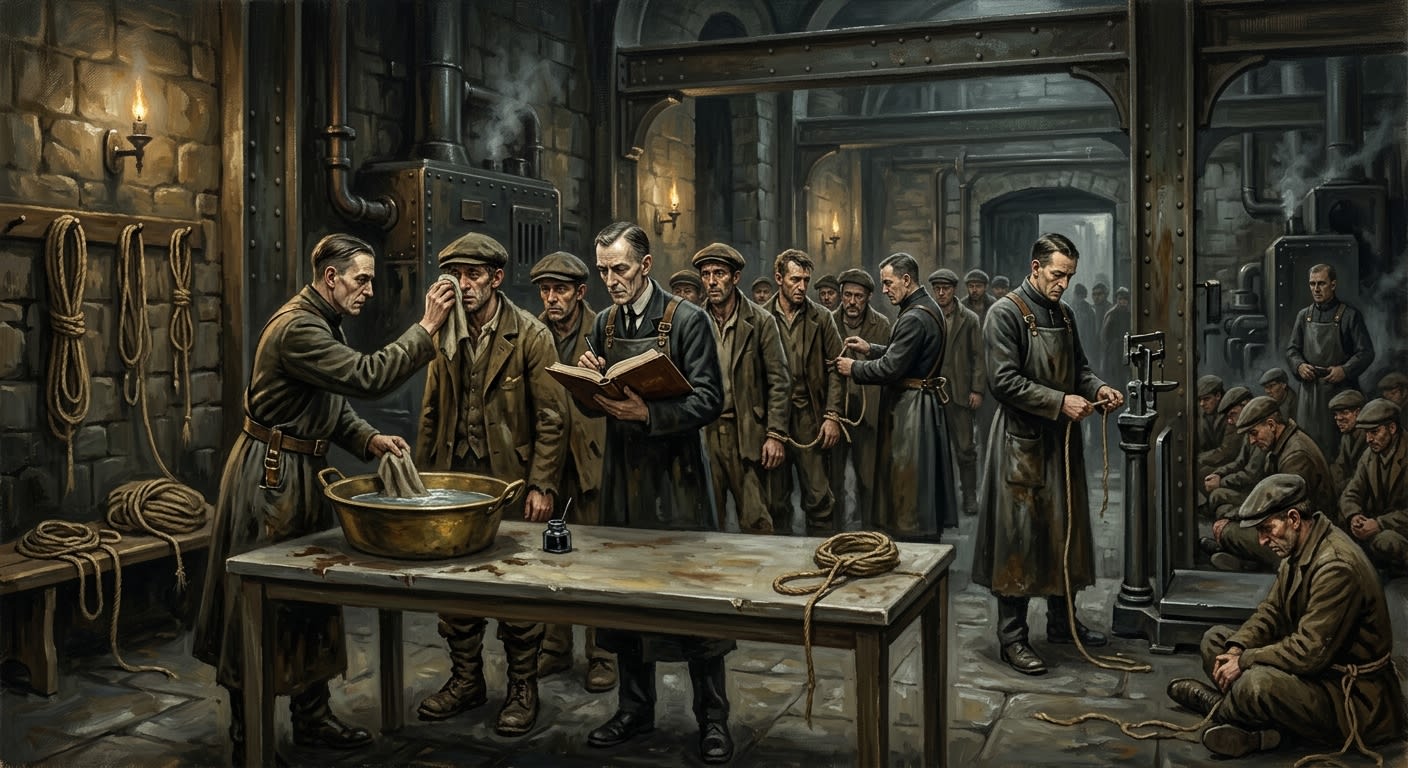
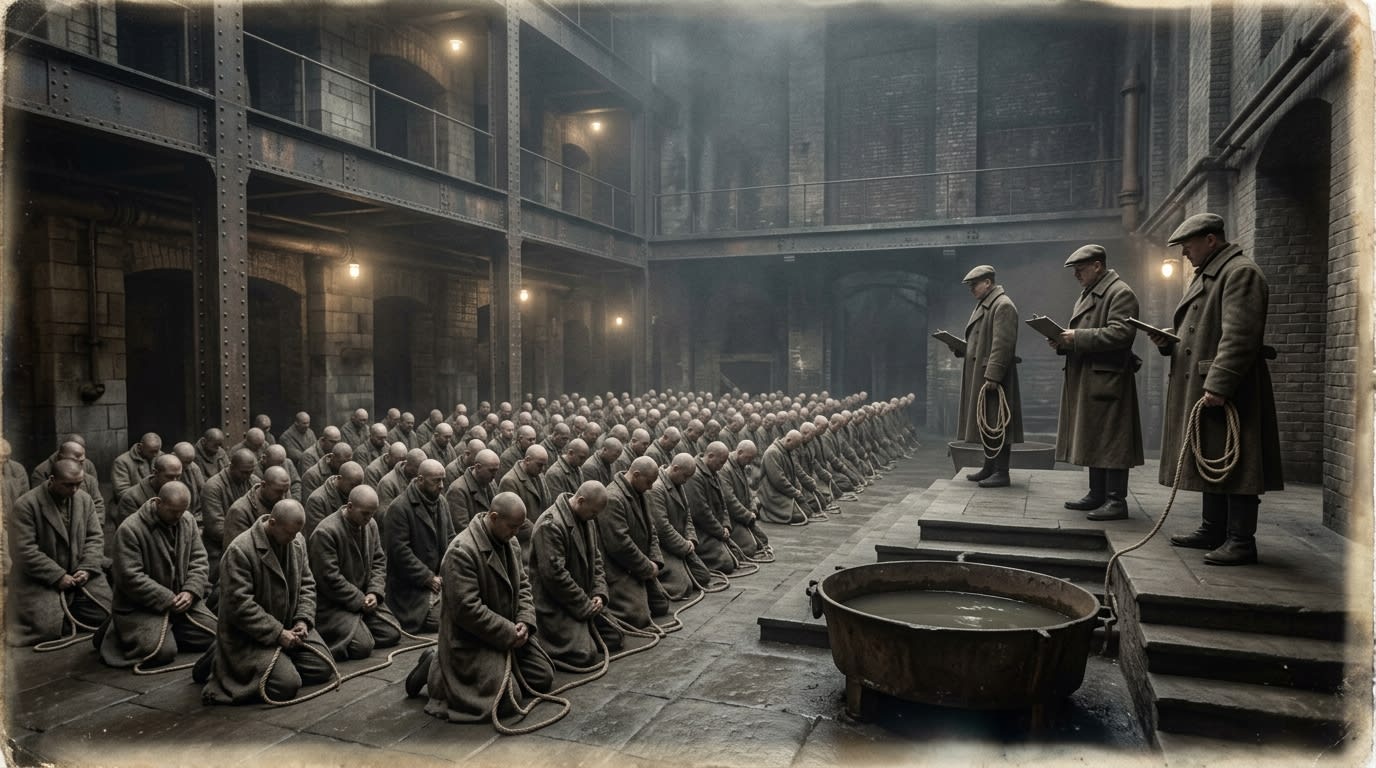
A detainee kneels at the rail. The chapel clerk reads the failed count. The penance prompter reads the corrected count. The detainee repeats only the corrected count. If he stumbles, he begins again. If he weeps, the weeping is ignored unless it alters pronunciation. If he refuses, the refusal is witnessed, routed, charged, and generally cured by another night in Awaiting.
The string is placed across the palms, never around the neck. Neck placement belongs to processional vows and executions, and the Chapel is fastidious about its categories even when the distinction becomes decorative. A child may receive a half-string under adult custody. A widow receives an ash bead if the deceased remains admitted to the Great Ledger. A soldier under route dissolution receives an iron-coloured station bead and a lecture about marching as if geography exists.
Once issued, the second string outranks the first for movement, dorm assignment, and clearance review. The first string goes to storage, destruction, or Desk Eleven handling, depending upon warmth, moisture, smell, sound, and whether Keth has touched the case and frowned with her deaf ear.
#On the Floor Basins
The floor basins are the Chapel’s true architecture. Rather than bowls placed upon stone, they are hollows worn into the flagstones by decades of knees, deep enough in the oldest rows to hold rainwater, vinegar wash, candle scrap, finger bones of wax, and the small dark sediment left by penitents who press their palms too hard while promising obedience they cannot afford.
Records calls them penitential depressions. Pilgrims call them knee wells. The Quiet Thread calls them listening cups. I call them evidence that even stone can be trained if struck often enough by the poor.
During ordinary weeks the basins are scrubbed with vinegar after Matins and Vespers. During sealed anomaly weeks they are salted. During severe drift they fill with water that smells of grave-soil, though no drain, pipe, cistern, gutter, undercourse, or honest crack connects them to any wet source the maintenance office will admit. The water is collected in grey jars and sent to the Vault if Keth asks, to Purity if Purity has arrived loudly, and to the Ash Canal if everyone wishes to sleep.
Bone tokens have been found beneath the basin stones. Some are blank. Some carry route marks too worn to read. Some are carved with bead counts. One recovered in A.S. 200 bore the name of a detainee still alive in Row Six and, on the reverse, the name under which she would be cleared nine days later. The Chapel filed this under anticipatory handling residue. I would have chosen a prettier lie, but not a more useful one.
BASIN LIFT REPORT — A.S. 200, CHAPEL NORTH ROW Stone raised for repair after repeated seep. Beneath: seven bone tokens; cord fragment; child’s tooth; wax seal marked with future clearance date. Novice recited one name aloud. All basins answered with ██████████████████████. Disposition: floor resealed; novice reassigned to silence duty.
#On Penance and Posture
Penance in the Chapel is physical because bodies are the only ledgers the poor cannot misplace. Kneel. Count. Recite. Hold the string without closing the fist. Touch brow to rail. Name the missing station. Name the substitute station. Name the sin committed between them. Accept corrected sequence. Kiss the black witness bead if ordered. Do not count under breath after the clerk has pronounced the count.
The penances are small and exact. Three recitations for one missed bead. Nine for route inversion. One hour kneeling for counterfeit suspicion pending Desk Eight review. Silence from third bell until dawn if the name answers twice. No candle for one night if a pilgrim counts aloud after correction. Labour in the Supplementary Entry Office if confession data contradicts the Chapel slip. The word spiritual does not appear on the rate card. Its absence improves the theology.
A Pilgrimage devotional sheet once claimed “the Chapel imposes no punishment, only reconciliation.”
Clarified. Reconciliation is punishment when administered on stone, at tariff, under witness, with a clerk correcting your mother’s spelling of your name.
The Chapel’s genius lies in posture. A standing detainee argues. A seated detainee bargains. A kneeling detainee calculates pain, shame, time, and the possibility that obedience may end sooner than pride. The posture does half the work before the chaplain opens his mouth. Excellent design. Slightly vulgar. Effective.
#On the Chapel Officers
The Chapel has a small staff because the Cloister reserves extravagance for delay. The chaplain reads approved penances. The chapel clerk records issuance. The string-binder maintains cords, beads, wax knots, and witness tags. The silence attendant covers mouths when names grow contagious. Two penance matrons manage children, widows, and men large enough to mistake contrition for theatre.
Above them, in practice if not always in minutes, stands Prior-Scribe Erem Vale. He does not conduct rites. That would soil his gifts. He authorises the categories by which the rites become admissible. A second string without Vale’s system is cord. A second string within it is a legal throat through which a life may pass.
The A.S. 201 staffing memorandum lists one chaplain, two alternating clerks, one licensed string-binder, one debt apprentice, two penance matrons, and a silence attendant doubled during anomaly week. The request for additional personnel was denied pending intake review, which is the bureaucratic method of wishing a room good luck while locking the supply cupboard.
Jossa Rill sends bodies to the Chapel when the Yard can no longer classify them safely. The Dorm Rows send bodies when night discipline fails. The Counting Hall sends cases when Desk Eleven’s salt basin returns blank, wet, or personal. The Outer Watch sends no one gently. Keth sends requests without explanation and receives obedience because sensible institutions learn when an archivist is warning them in the smallest possible handwriting.
#On Silence Tests (Unregistered)
Silence Tests occur in the side chapel, a windowless chamber with salt basins, cord hooks, chalk floor-circles, and a screen thick enough to muffle screaming without admitting that screaming is expected. The test is used when speaking makes the ink crawl, when a bead count changes under recitation, when a detainee answers to two names, or when the first string hums in the presence of the second.
The subject sits or kneels inside the chalk circle. The string is placed in a basin. The clerk writes the name on a slip and folds it inward. No one speaks until the sand glass drains. If the string settles, the case returns to ordinary correction. If the string clicks, the attendant records the number. If the slip opens itself, the clerk leaves. If the subject hears a voice, the chaplain asks no question until the voice has finished. This last rule was purchased at cost.
Quiet Thread sympathisers cherish the side chapel. They claim the silence there is audition rather than absence. They are wrong in doctrine and attentive in practice, a combination that makes heresy durable. A legal silence test and an illicit listening rite differ chiefly in who holds the key and whether the report begins with a stamp.
#On Anomaly Spikes
Anomaly spikes cluster in the Chapel between the third and fourth bell, during rain, after mass intake surges, and whenever a second string is issued to a detainee whose first string has not yet cooled in the Vault. The pattern has been denied, charted, denied again, and finally recorded under restricted chapel weather. One must admire the Bureau’s determination to rename a bite until the teeth grow tired.
The signs are known. Basin water rises. Tallow flames shorten. The black witness beads turn warm. The altar rail sweats salt. Recited counts return in another voice. A penitent’s old string, boxed and sealed, is heard clicking beneath the new cord in his palm. The Chapel clerk writes faster. The chaplain prays louder. The silence attendant watches mouths. No one looks toward the floor stones unless paid to be brave.
Anomaly does not abolish the rite. The Synod does not surrender a room merely because reality has become impertinent inside it. Rites continue under salt, cloth, lowered voice, shortened formula, and the quiet terror of officials discovering that procedure may be answered by something with better memory.
#On the Second String as Doctrine
The second string teaches the Cloister’s favourite doctrine: correction outranks origin. The first string may have been carried from shrine to shrine, touched to relics, wetted by rain, warmed by grief, kissed by children, and tied by a dying mother’s hand. None of that matters if the count fails. The second string is younger, cheaper, uglier, and lawful. Age is sentiment. Law is admission.
This doctrine extends beyond the Chapel. The Bureau of Records lives by it. The Bureau of Pilgrimage profits from it. Purity hunts those who resist it. The Chapel gives it beads.
The poor understand the insult instantly. A man may surrender the string that carried him five hundred miles and leave with a cord tied by a debt apprentice who smells of glue. He may hate it. He may hide the first string in his sleeve, swallow a bead, bribe a matron, whisper to the Quiet Thread, or dream of cutting the second cord at the Clearance Gate. He will still present the lawful string when a guard asks. Hatred is permitted. Movement requires compliance.
#On My Inspection
I inspected the Chapel after a rain surge and found thirty-nine detainees kneeling in the north row, which has twenty-eight basins. The surplus knelt on plain stone and received no discount. A chaplain with red eyes read the corrected counts. The clerk recorded each stumble. The string-binder tied cords with the expression of a hangman asked to perform embroidery.
A child in the third row held a second string and stared at the black witness bead. I asked why she had been brought to Chapel. The clerk said her first string counted a mother who had not entered the Cloister. The child said the mother was waiting at the gate. The Outer Watch record said no such woman stood outside. The basin before the child filled one finger-width while I watched.
I did not ask the basin for its opinion.
The chaplain apologized for the damp. I told him damp was the least offensive thing in the room. He mistook this for comfort and smiled. Clergy do that when allowed near metaphors unsupervised.
#On the Present Chapel
As of A.S. 201, the Chapel is overused. The post-A.S. 198 western-gate surge has driven more pilgrims through the Cloister than its founding plan admitted, and founding plans, like saints’ bones, multiply inconveniently after death. The Counting Hall sends more Desk Eleven cases. The Dorm Rows send more night-name incidents. The Lost-Procession Yard sends more red-lane and Chapel classifications because Rill knows when mud has exceeded its jurisdiction. Five anomaly weeks are projected. The basin salt is low. The second-string beads arrive warped from damp storage. The debt apprentice has begun tying knots in his sleep.
Vale has requested a second licensed string-binder, replacement basin stones, and authority to shorten minor penances during intake pressure. Records approved the basin survey, denied the binder, and returned the penance request for clearer moral language. The stones remain hollow. The cords keep moving. The detainees kneel.
At fourth bell, after the candles are pinched and the last corrected name has been entered, the Chapel settles into its private acoustics. Water gathers where no water should. A black witness bead clicks in a locked drawer. Beneath the north row, something small and dry turns once against stone.
The second string is ready by morning.
Phase 2a correction log: no unresolved links, date errors, bastion errors, or geography errors found.