
#On the Final Due Date
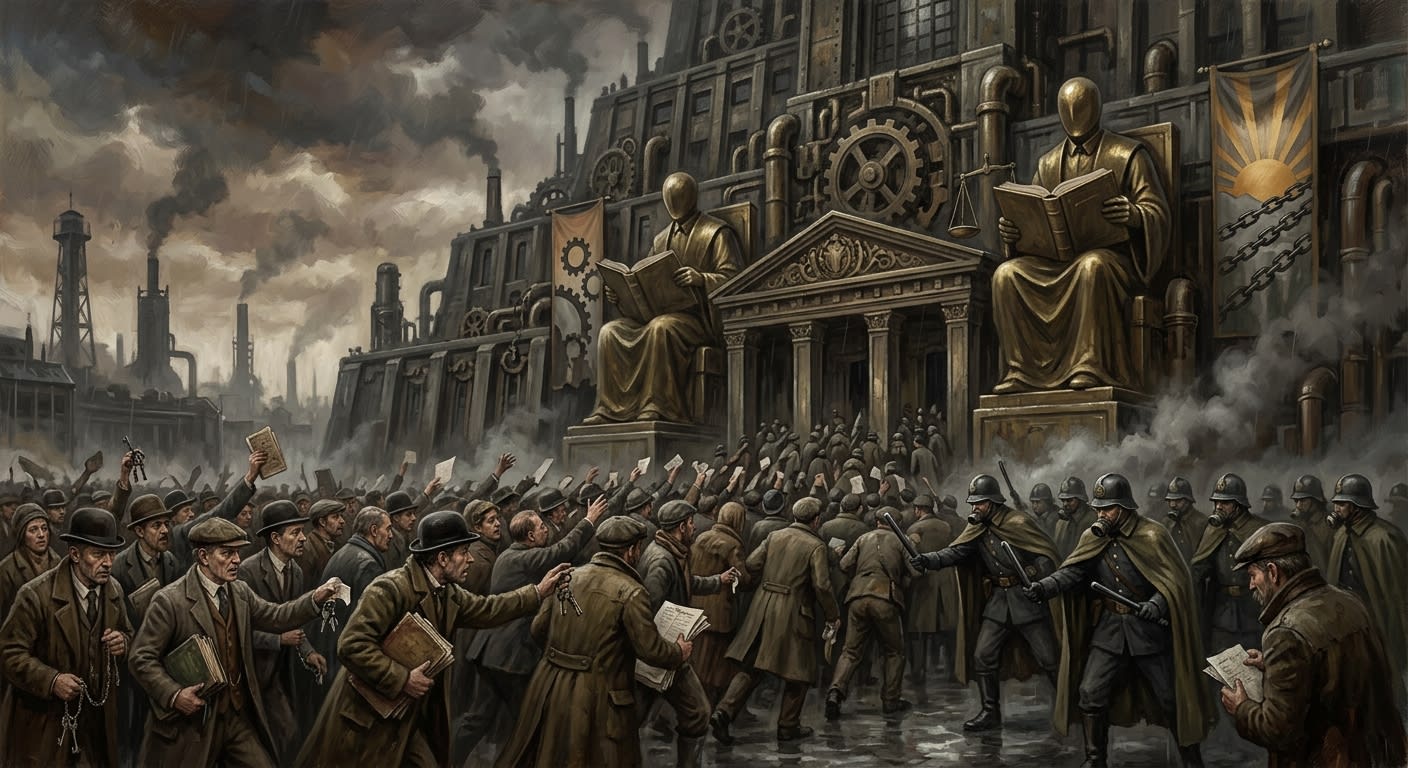
The Great Maturity is the promised final hour of the Ten Thousand Keys, when every debt, favour, pledge, forfeiture, surrendered key, unpaid kindness, misfiled mercy, inherited obligation, and forgotten indulgence resolves in favour of the Inheritors. The phrase smells of a counting house after funeral lilies have gone brown: polished desk, warm ink, dead flowers, and a widow being told clause nine had always loved her. It belongs to Velmora so completely that one hears coin under the consonants.
It is neither feast day nor prophecy in the respectable sense. Respectable prophecy thunders, wounds kings, terrifies peasants, and leaves behind enough symbolic debris for Doctrine to employ three committees. The Great Maturity passes from loan desks, dowry chests, cellar ledgers, parish relief accounts, and family rings dragged across stone. It is eschatology with interest.
Within the Hierarchy of Debt, Debtors suffer toward it, Creditors lend toward it, Assessors price toward it, Ledger-Keepers preserve toward it, and Inheritors wait for it as if patience were a sacrament and arithmetic could canonise appetite. No Inheritor has been confirmed to collect. No Inheritor has been confirmed to stop waiting.
#On What the Cult Claims
No two interrogations give the same account of the Great Maturity, which is how one recognises a doctrine alive enough to be dangerous. One captured Creditor described a distribution of wealth so vast that money would lose meaning and ownership would become weather. A Ledger-Keeper from the Sibiu highlands spoke of the Vault of Ten Thousand Keys opening all its inner doors at once, each door corresponding to a surrendered key, each key corresponding to a person who thought himself finished with the matter. An Inheritor's niece, twelve years old and already ruined by excellent manners, said that on the appointed morning “the locks will remember their families.”
The clerk taking deposition wrote locks as flocks. I corrected it. A flock may scatter. A lock waits.
The lower ranks use the doctrine as medicine and leash. Debtors are told their suffering reduces a family account that descendants will see honoured. Creditors are told delayed profit proves worthiness. Assessors are trained to price human weakness in anticipation of a market that has not opened. Ledger-Keepers preserve balances for heirs who may never meet the debtor and will still expect payment. Inheritors speak least. Silence is their incense.
The phrase itself was first separated from ordinary cult babble during Sibiu-sector audits between A.S. 194 and A.S. 199, when Purity found houses maintaining obligations without visible collection. Ledgers showed four generations of restraint. Loans left unpaid by design. Favour-debts renewed across baptisms. Dowry clauses that matured only when a yet-unborn child accepted a yet-unmade office. Two junior analysts proposed symbolic language. One analyst's door began accepting teeth. The other requested transfer to plague inventory and was granted mercy by way of boredom.
A.S. 188 Records analysis classified the Great Maturity as symbolic eschatological language without operational content.
Withdrawn after the refutation file acquired additional key-sketches overnight and one archive lock opened to a molar. Symbolic language seldom requires locksmith, exorcist, and dental witness.
#On Maturation as Contract-Theurgy
Velmoran Contract Theurgy usually avoids seizing the will by the throat. It arranges consequence until surrender enters the room dressed as choice. A woman signs for seed. A boy signs apprenticeship papers. A vicar signs a chapel roof endowment. A soldier signs a pay advance. The paper behaves. The ink dries. The witnesses shake hands. Damnation, like good administration, prefers small entries.
Maturation is the doctrine by which those entries become harvest. The Ten Thousand Keys teach that obligation ripens. A debt not collected grows dignified. A favour left unpaid grows holy. A pledge inherited from one's father becomes less negotiable than a pledge signed by oneself, because family gives sin the smell of duty. By the third generation, a debtor's descendant no longer asks whether the debt is lawful. He asks whether dishonouring grandfather would shame the house. Velmora smiles through the clause.
The Synod insists the human will remains free. We insist this loudly because the alternative would ruin half our sermons and make the other half sound nervous. The Great Maturity leaves freedom technically intact while surrounding it with so many inherited consequences that refusal arrives looking like patricide, bankruptcy, exile, hunger, and bad manners. One may still refuse. One may still refuse at any point. The Hierarchy exists to ensure refusal has nowhere decent to sit.
#On Keys and Remembering Locks
Every formal induction into the Hierarchy uses a key. Brass in low compacts. Silver in merchant compacts. Gold in matters of provincial office, relic custody, inherited land, and respectable treachery. Black iron for Bureau personnel, which I consider flattery so excessive it approaches satire. Bone appears in cases involving wardship, adoption, bloodline, and those domestic legal fictions by which adults sell children while calling it provision.
The Great Maturity teaches that keys do more than represent obligations. They train reality to remember them. A surrendered key admits a door somewhere into the agreement: a room, a house, a granary, a chapel, a family line, a habit of mercy, a parish's future baptismal register. Which door, whose door, and when it opens are matters filed beyond ordinary sight. Too many unrelated witnesses use the same phrasing. Too many seized keys are warm when catalogued. Too many confiscation drawers are empty by morning.
SIBIU PURITY ANNEX — KEY HANDLING FAILURE, A.S. 199 Iron tray contained seven brass keys seized from parish relief office. At third bell, tray contained six keys and one infant tooth. Household search found seventh key in cradle of debtor-line child, suspended from red thread. Child spoke once: “Not yet.” Examiner's follow-up notation: ███████████████████
The Keymasters inside the Vault carry originals, or what frightened men call originals when their hands shake too much for taxonomy. Inheritors carry distributed keys, promise-keys, debt-keys, keys whose locks may not yet exist. The Great Maturity is the imagined hour when imitation and original cease quarrelling. The ring drags. The Vault answers. Doors remember.
#On Inheritor Patience
The Great Maturity belongs most properly to Inheritor houses. Debtors need relief now. Creditors enjoy advantage soon. Assessors prefer the living market because living markets complain and reveal prices. Ledger-Keepers love continuity, but continuity is still labour. The Inheritor performs the coldest act in Velmora's service: appetite trained to sit still.
Inheritor houses maintain vaults no auditor enters, key-cabinets arranged by metal and debtor-line, family chapels whose altar cloths conceal genealogies of obligation, cradles hung with brass keys instead of charms, portrait galleries in which painted ancestors gain rings over time. They marry carefully. They lend rarely. They sign almost nothing. Their restraint once deceived analysts into calling them reformists. Patience wears no repentance. It is a knife left in oil.
The pastoral danger is vindication. A Debtor may repent from fear. A Creditor may repent from exposure. An Assessor may repent when his own child appears as collateral. A Ledger-Keeper may repent after discovering his name in the book. The Inheritor expects the whole vile ledger to prove him wise. No fanatic is colder than the one waiting for arithmetic to bless him.
Mercy objected in A.S. 200 that child seizure from confirmed Inheritor houses risks punishing the innocent.
Clarified. Innocence is precisely what the houses use as storage medium. The objection was pious, humane, and strategically shaped like a noose.
#On Synodal Counter-Doctrine
Public preaching on the Great Maturity is forbidden. Mention gives it shape. Shape attracts expectation. Expectation under Velmoran pressure becomes contract with no visible signature until the bill arrives. Parish priests in Sibiu-sector towns are instructed to preach instead against ancestral presumption, unwitnessed inheritance, and the sin of trusting a key because one's father did. The peasants understand the last formulation. They have fathers. They have keys. They have been disappointed by both.
The prohibition has produced the usual harvest of evasions. In Bastion-Sibiu hinterland chapels, confessors hear phrases such as “the long balance,” “grandmother's door,” “the day of full receipt,” and “when the little locks wake.” Market songs use missing syllables where the forbidden phrase would sit. Children skip rope to a counting rhyme that ends before the number due. The Bureau of Bells has requested authority to classify the rhyme as acoustic contagion. Doctrine has declined, since condemning a children's rhyme requires admitting we heard it.
Approved countermeasures are brutal because the doctrine hides in tenderness. Confiscate rings. Break dynastic ledgers. Annul contracts across family lines. Reassign clerks whose grandparents appear in suspicious dowry rolls. Remove children of confirmed Inheritor houses before they are old enough to treat a key as toy or lullaby. Tithes witnesses seizure. Masks and Seals burns family marks. Records preserves enough genealogy to prosecute the next cousin. The guards are changed afterward.
There are counter-contracts: Ledger-Bindings, true-name cancellations, witness reversals, oath amputations, the narrow holy paper by which a clause can be starved before it matures. They work when the true debt, true key, true witness, true heir, and true hour are identified in time. This happens less often than training pamphlets suggest. The debtor lies from shame. The creditor hides behind charity. The key goes missing. The witness exists twice. Records requests additional time, and time is precisely what compound interest eats.
The Bureau of Purity prefers rupture. Its field teams cut rings from wrists, melt keys in witnessed crucibles, salt account books, and separate cousins by three provinces. The Bureau of Doctrine prefers starvation of meaning: rename the debt, reframe the inheritance, preach against the word until peasants grow tired of hearing their own danger. War wants lists of houses to shell if Sibiu falls. Inter-Infernal Analysis wants everyone to stop saying if where Velmora is concerned. All four positions are correct enough to be useless alone.
The Great Maturity remains unfulfilled. Comfort is absent. Unfulfilled debts are Velmora's favourite furniture.