
#On the Name
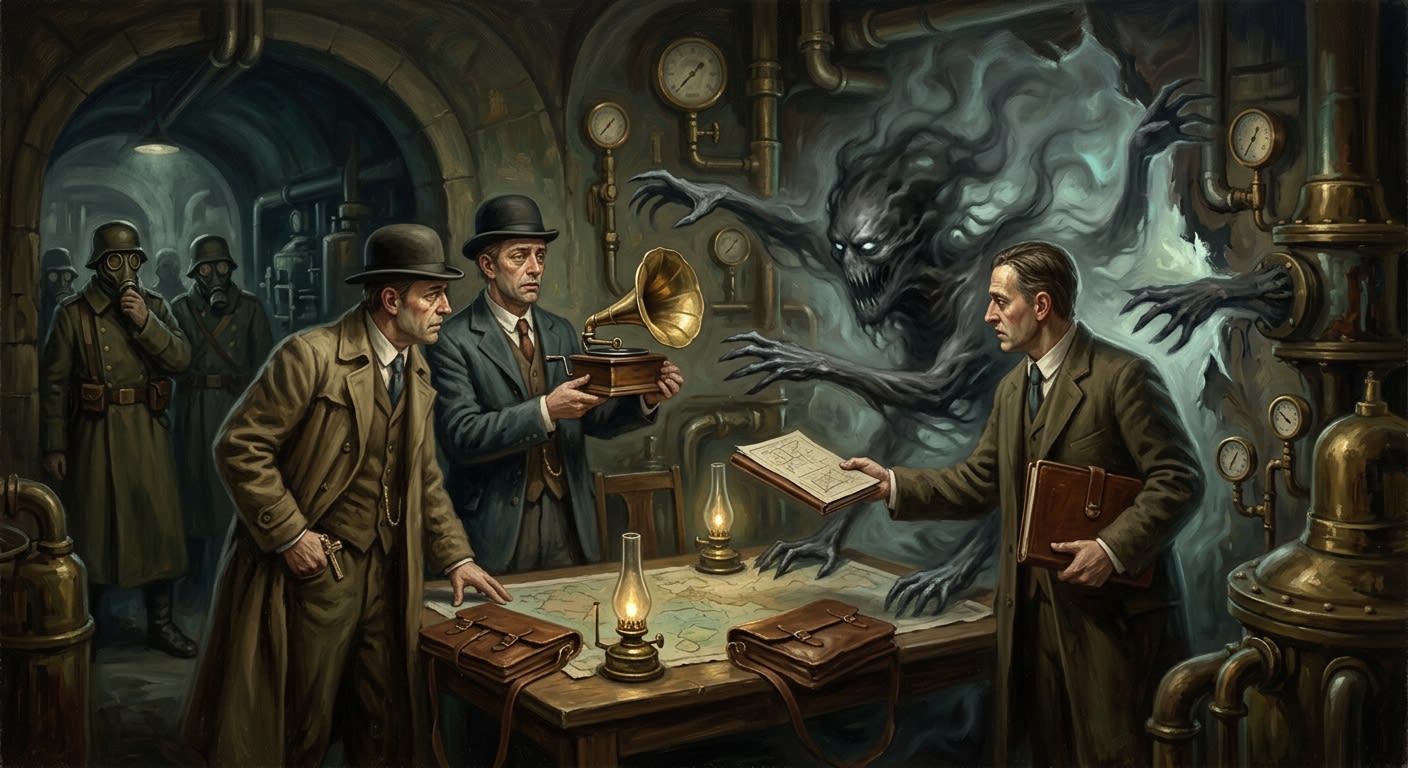
The Coexistence Heresy is the fourth of the eight proscribed heresies, and the ideological foundation of the Crimson Concord. Its proposition is simple enough to fit inside the mouth of a tired officer at third watch: mankind should bargain with demons rather than destroy them. Accommodation is survival. The war is a choice. The Sagittal Line is a wound kept open because both sides have learned to govern through bleeding.
There. I have written it plainly, which is more charity than the heresy deserves and more clarity than the Bureau of Purity generally permits. The sentence is poison. Do not admire its symmetry.
The Bureau of Doctrine places the Coexistence Heresy between the Silent Godless and the Grain Keepers in the Compendium of Proscribed Errors. This placement is administrative cowardice masquerading as taxonomy. The Silent Godless deny the voice of Heaven. The Grain Keepers deny the sanctity of rationed hunger. The Coexistence Heresy denies the war's necessity and, by extension, the authority of every Bureau whose seal has fattened upon the war's continuance. One may see why the Bureau files the matter in the middle. Placing it first would invite attention.
#On the Argument
The heresy begins with exhaustion. No recruit invents it on parade ground morning, with boots polished and the chaplain shouting clean words into clean air. It arrives after years of trench accounts, after casualty columns, after the same bastion holds and bleeds and holds again, after a man has watched the eastern fog retreat just far enough to prove it can return. Then the question appears, small as a pin-hole in parchment: What if this never ends because no one in authority wishes it to end?
The Concord's answer is a clerkly masterpiece of treason. It says the Great Deceiver's generals can be bargained with. It says the Shadow Court wants territory, recognition, tribute, channels, concessions, a treaty written in the grammar of teeth and signatures. It says the Synod needs the enemy because fear keeps the provinces obedient, fills the tithe chests, sanctifies the police organs, and makes every dissenting question sound like sabotage. It says peace would expose both tyrannies.
Its central trap is that refutation feeds it. Say the war is unquestionable, and the Concord smiles: the Synod forbids questions because questions threaten its power. Say the war may be questioned under license, and the Concord smiles again: the Synod licenses doubt as a tax farmer licenses mills. Refuse the debate entirely, and the Concord calls the refusal proof. The mechanism is an iron collar lined with velvet. Every motion tightens it.
Earlier seminary summaries described the Coexistence Heresy as “pacifist deviation.”
Corrected. Pacifism refuses violence. The Coexistence Heresy accepts violence as a bargaining instrument and merely proposes that mankind use fewer shells while signing more agreements with mouths that have not finished chewing. The distinction matters. One is error. The other is collaboration with table manners.
#On Its Patronage
The Coexistence Heresy belongs to Velkara because it is seduction translated into policy. The Velvet Choir begins with desire in the flesh; the Concord begins with desire in the office. Both offer relief. Both flatter the exhausted. Both suggest that the burden laid upon the faithful is unnecessary, that obedience has been mistaken for virtue, that a softer arrangement waits just beyond the next forbidden admission.
Velkara's genius lies in making surrender feel like adulthood. The young believe courage means dying loudly. The middle-aged, tired enough to become interesting prey, can be taught that courage means negotiating what cannot be won. By the time the proposition reaches a staff table at Bastion-Constantinople, it no longer smells of perfume or bed-sheets. It smells of ink, lamp oil, and sensible shoes. That is when it becomes deadly.
The Concord asset does not need to sabotage a gun. He need only remain competent while believing the gun exists to preserve a political arrangement rather than a divine command. He will defend the wall, file accurate reports, discipline cowards, praise brave men, and hold inside him the private conviction that another settlement is possible. The Bureau of Purity cannot prosecute a conviction that leaves no ash, no blood, no missing cartridge, no broken seal. The heart is the one archive Purity cannot raid without making a doctrine of butchery. Purity has considered the option, naturally.
#On the Error Beneath the Error
The heresy is wrong because demons do not bargain. They metabolise.
What appears as negotiation is digestion performed slowly enough to resemble diplomacy. Kargath does not agree to terms; he empties the granary while the terms are read aloud. Maldrake does not accept borders; he pauses at them until rage has gathered enough iron. Velkara does not sign; she teaches the signer to thank her for the pen. The Concord mistakes delay for mercy, appetite for interest, and a demon's temporary convenience for policy.
Nor is the Synod's dependence upon war the refutation the Concord thinks it is. Yes, the Bureaus have grown vast upon emergency. Yes, every office from Tithes to War has learned to make the crisis legible, taxable, punishable, and renewable. Yes, the Ledger fattens where men die. This is scandalous. It is also irrelevant to the enemy's nature. A corrupt surgeon may still be correct that the limb is gangrenous. Shoot the surgeon if you must. Do not kiss the rot.
Instructional appendix, southern theater catechism, withdrawn A.S. ███: “If a demon offers peace, ask what it has already eaten. If it answers, burn the answer. If it does not answer, burn the room. If your superior countermands this instruction, record his name and ███████████████████████.”
#On the Present Contagion
The Coexistence Heresy spreads through fatigue, competence, and privacy. The foolish heretic shouts. The useful heretic serves well. The most dangerous heretic makes the correct recommendation in council, signs the correct convoy order, attends the correct chapel, and leaves one question unconfessed because confession would only teach the Bureau where to press.
The Bureau of Purity estimates that forty percent of officers in the southern theater hold doctrinally irregular views regarding negotiated settlement. Purity does not call them Concord assets. It calls them at-risk personnel. This phrase has the cowardly elegance of a silk glove over a rash. The Concord does not care whether a man has joined it. The Concord cares whether its question has joined him.
The Coexistence Heresy was formerly classified as “Argumentative Error, Contained.”
Revised to “Structural Heresy, Active.” The prior classification assumed that an error requires advocates to survive. The present classification recognizes that an error can live as an unanswered question in loyal mouths. The Bureau of Doctrine congratulates itself for this recognition seventeen years late.
The sanctioned response remains denial, screening, sermon, and execution in cases of visible collaboration. These instruments are blunt. Blunt instruments have their uses. They break skulls with admirable directness and persuade thoughts with less success. A man cannot be clubbed into believing the war will end. He can be made afraid to say it will not.