

Reverse Index
Referencing “The Council of Worms”
Every codex entry that links to The Council of Worms. 36 entries.
Return to The Council of Worms
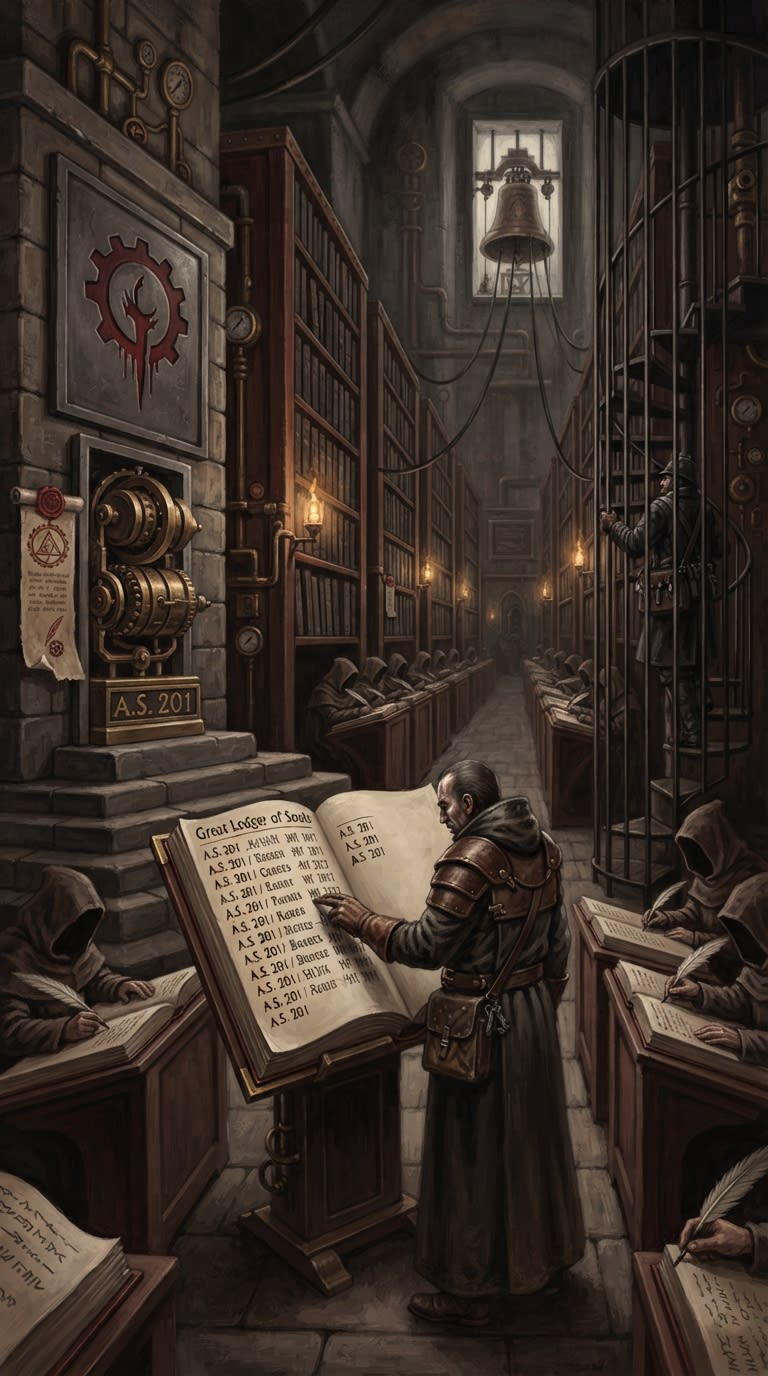
Anno Synodi
The wound by which Strasbourg owns the year
The Synod's calendar counts not from triumph but from wound: A.S. 0 at De Vera Luce, adopted retrospectively at the Concordat, and enforced by Records, Bells, and Doctrine.
Codex Ref. XIII.1.00-090

Archbishop of Lyon
The hand France sent, the name Records did not keep
The unnamed French signatory of the Concordat of Strasbourg: preserved by title, wax, and act, while the man beneath the mitre was permitted to vanish from the Ledger.
Codex Ref. III.2.01-090
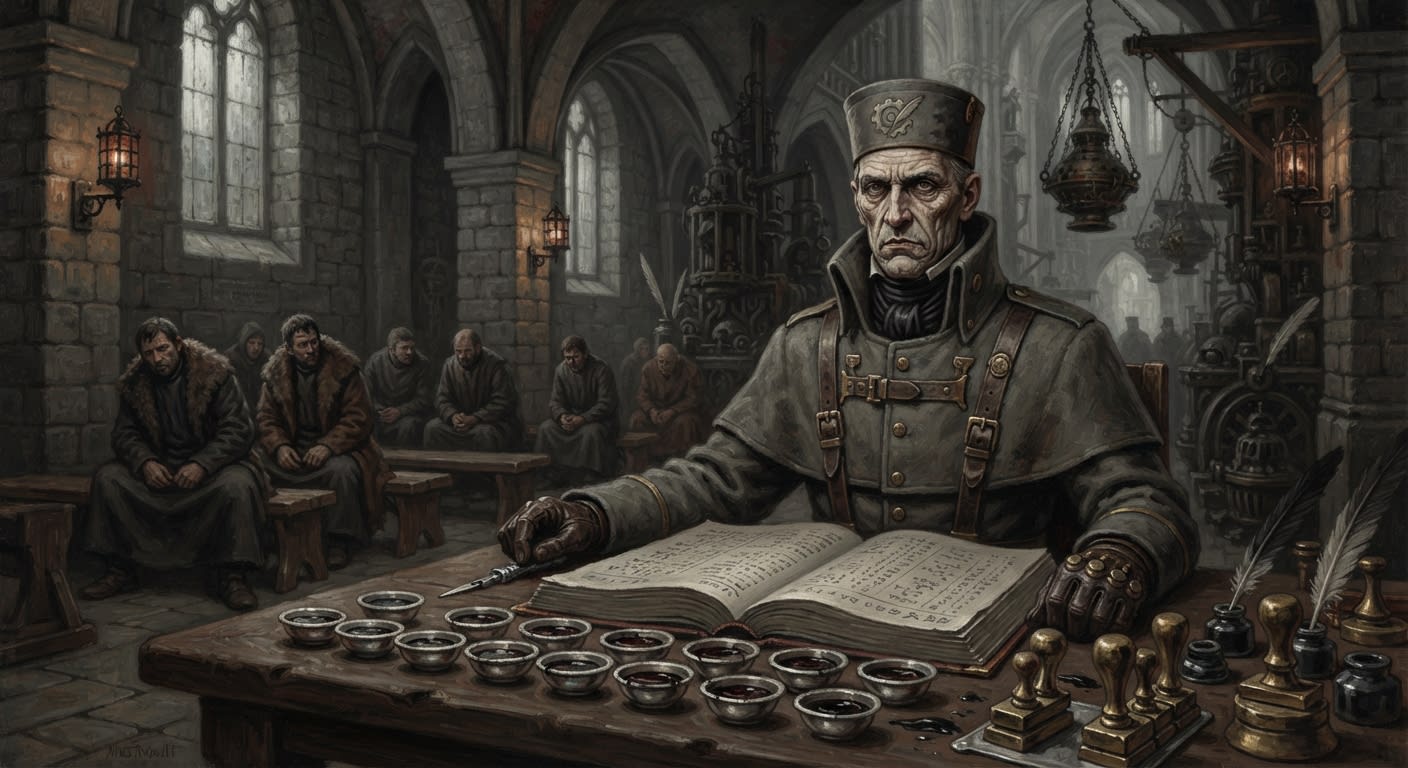
Archon-Mediator Havel of Tithes
The quiet voice that taught a thousand guilds arithmetic
The Bureau of Tithes officer active at Münster in A.S. 105, remembered for one sentence, one vanished district, and no biography worth preserving.
Codex Ref. III.2.01-105
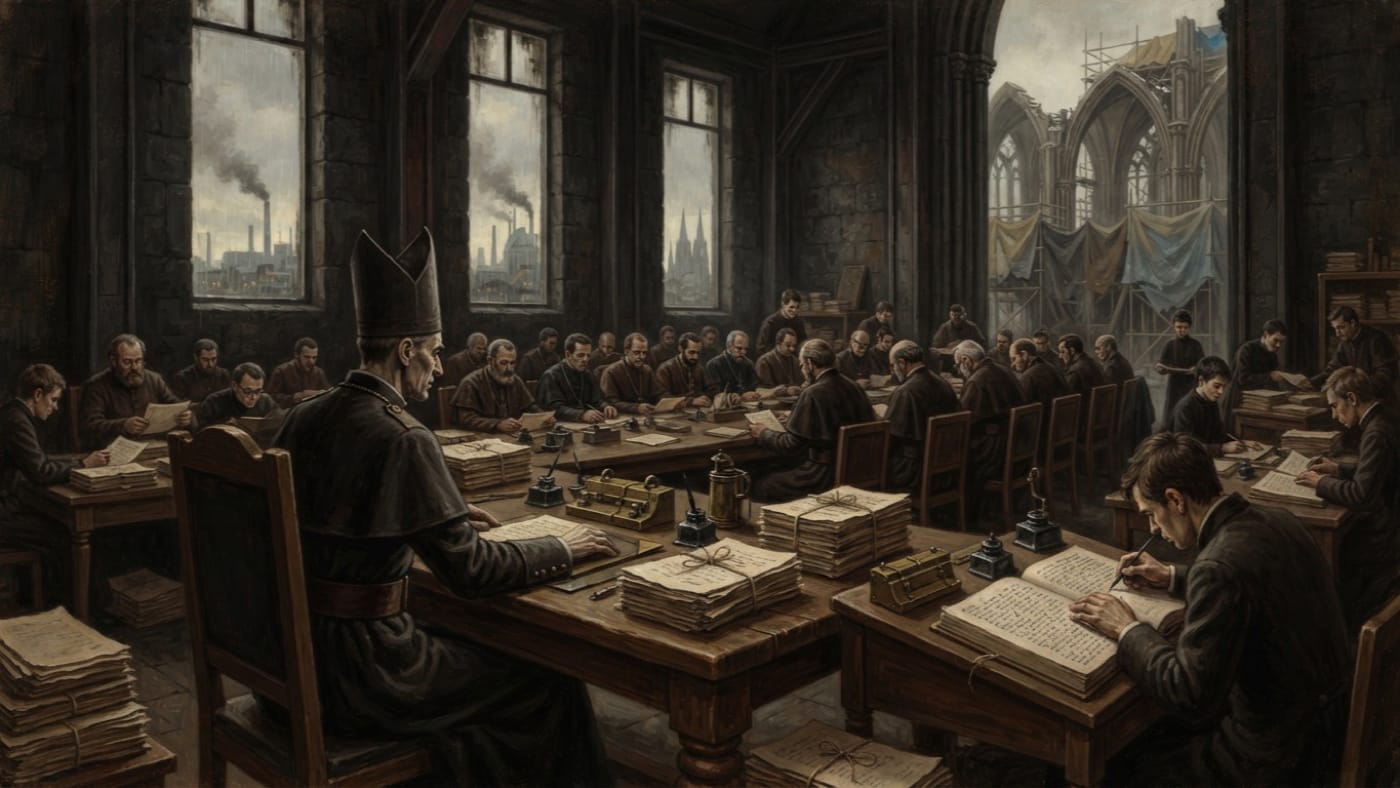
Bishop Adelmar of Cologne
Nine days entered; a lifetime left blank
Bishop Adelmar hosted the nine-day First Council of Cologne in September A.S. 27. Seven articles failed; voluntary requests survived. His life dates remain outside the Ledger.
Codex Ref. III.2.01-253

Bishop of Worms
A title, two toasts, and an existence disputed by clerks
A bishop vanished between the ninth and tenth toasts at Regensburg in A.S. 29. Reason declared him nonexistent; Records keeps his file open and his fate unproved.
Codex Ref. III.2.01-257

Breach Rite
The promise dies. The Ledger remembers.
The Bureau of Oaths buries failed vows in witnessed ceremony and red ink. The bond may end; its record remains available to every auditor, enemy, and future spouse.
Codex Ref. VI.4.03-013
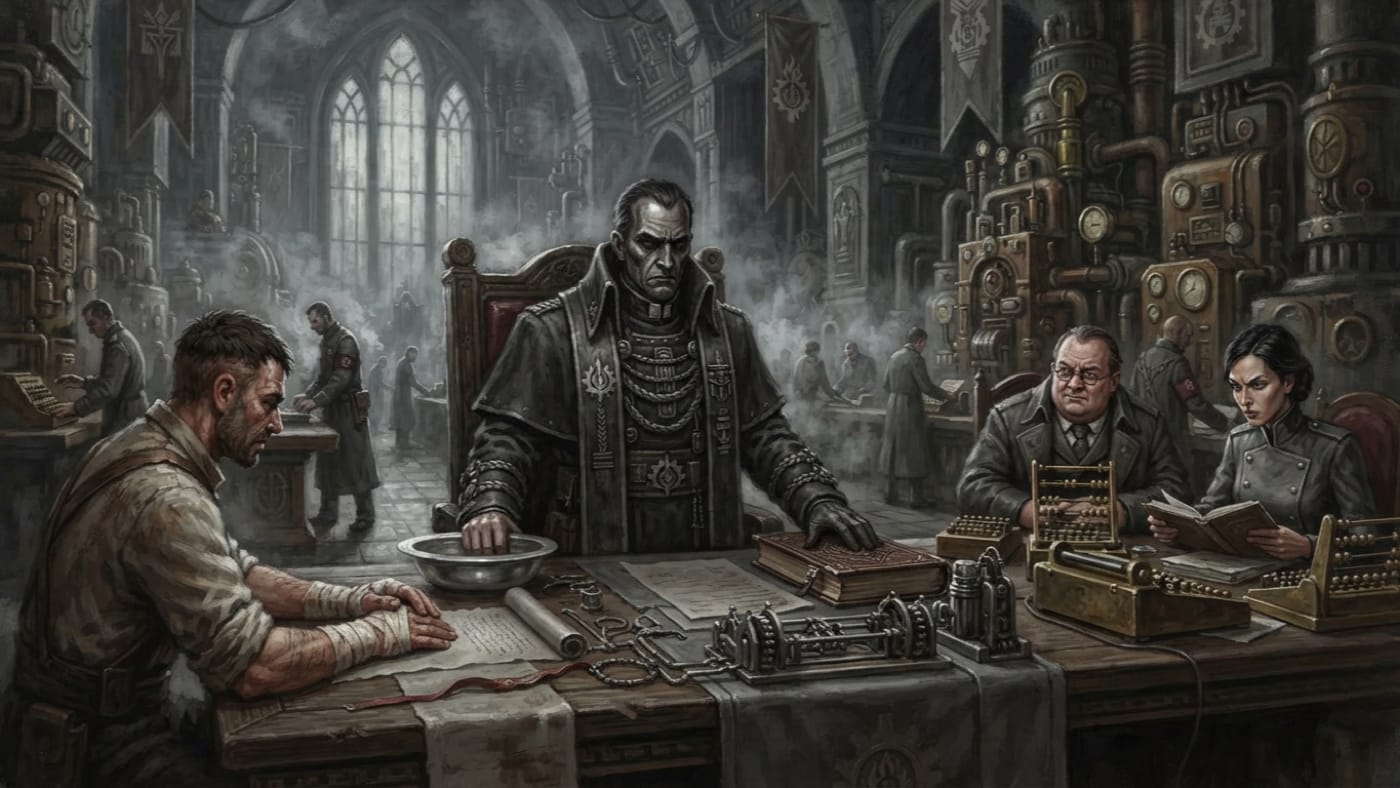
Canon-Praelate Odmar Voss of Doctrine
The chair did the binding; the man left four facts
Doctrine's presiding delegate at the A.S. 105 Münster guild compact. The archive preserves his office and seat; the obligations require no fuller biography.
Codex Ref. III.2.01-106
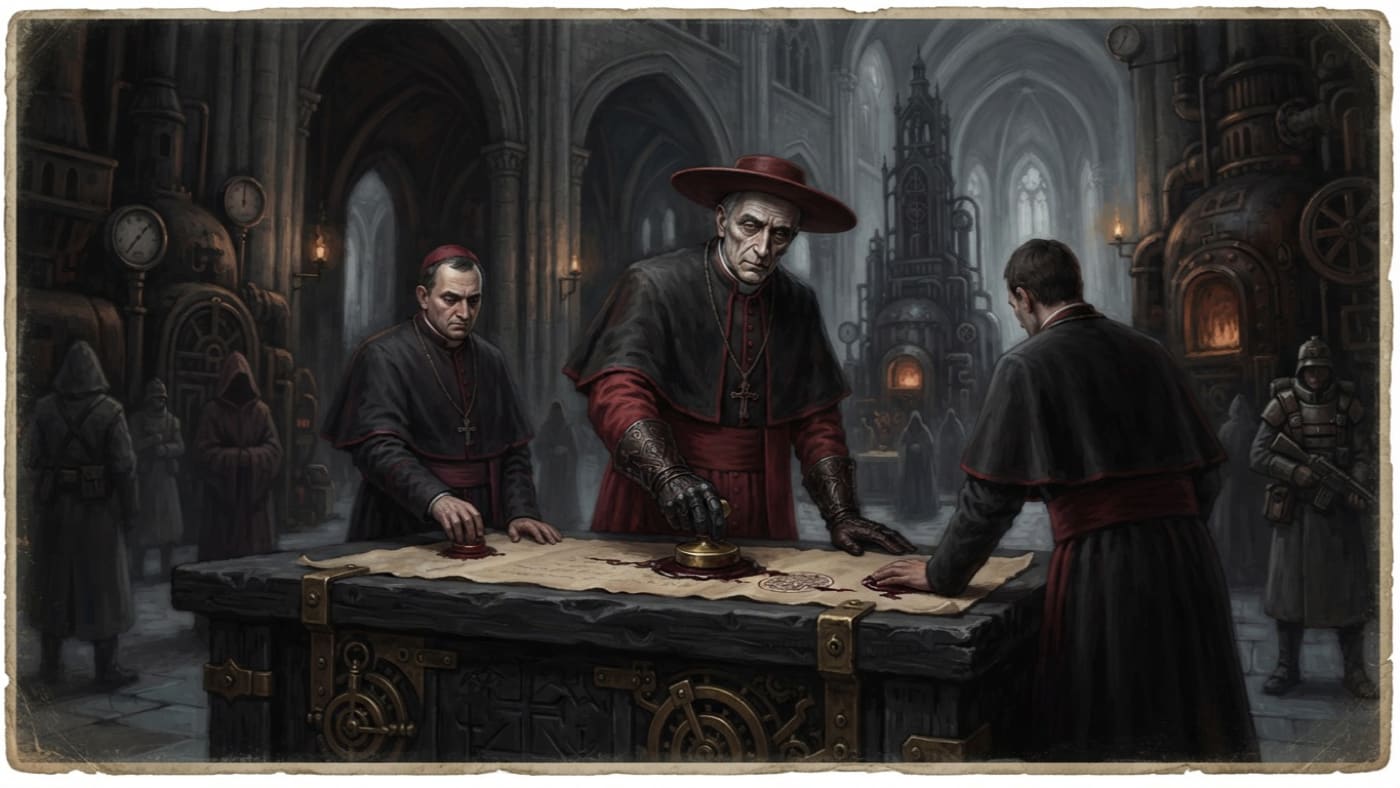
Cardinal-Legate of Toledo
One peninsula, one seal, no recorded name
Iberia's unnamed signatory to the Concordat of Strasbourg in A.S. 90. He bound a peninsula with one seal; the Ledger retained his title and dispensed with his name.
Codex Ref. III.2.01-090
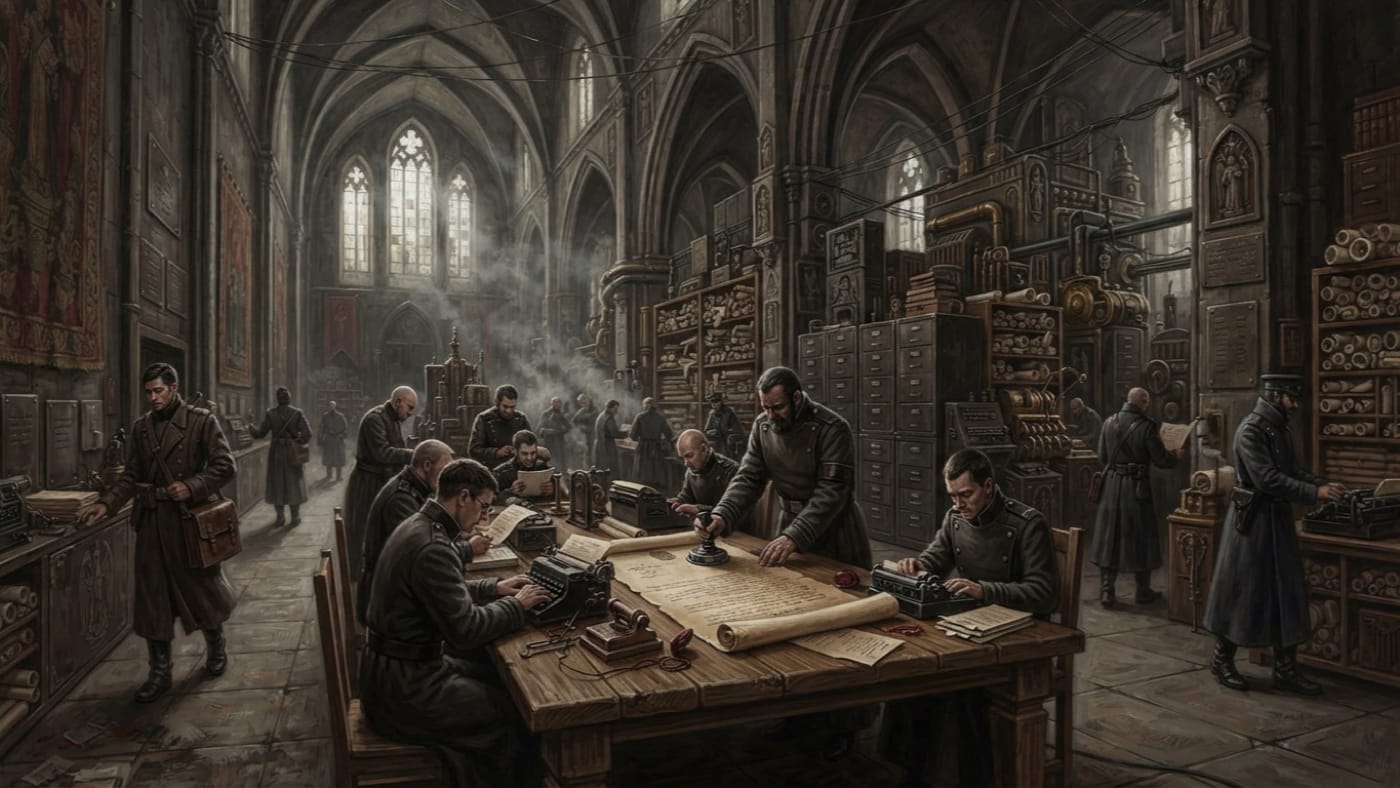
Conventus Fidelium
An assembly on vellum; its first convocation unrecorded
The Common Allegiance proposed the Gathering of the Faithful in A.S. 55: one assembly, common command and five offices. I record its ancestry without inventing its first convocation.
Codex Ref. I.3.02-055

Crimson Vault
The Rule in Ink, the Intention in the Margin
A.S. 201 survey of the Bureau of Records' Crimson Vault, where the Council of Worms account places Kratz's handwritten Protocol. The rain-spotted pages preserve advice the clean clauses do not; the Vault's physical location remains unestablished.
Codex Ref. III.2.07-032
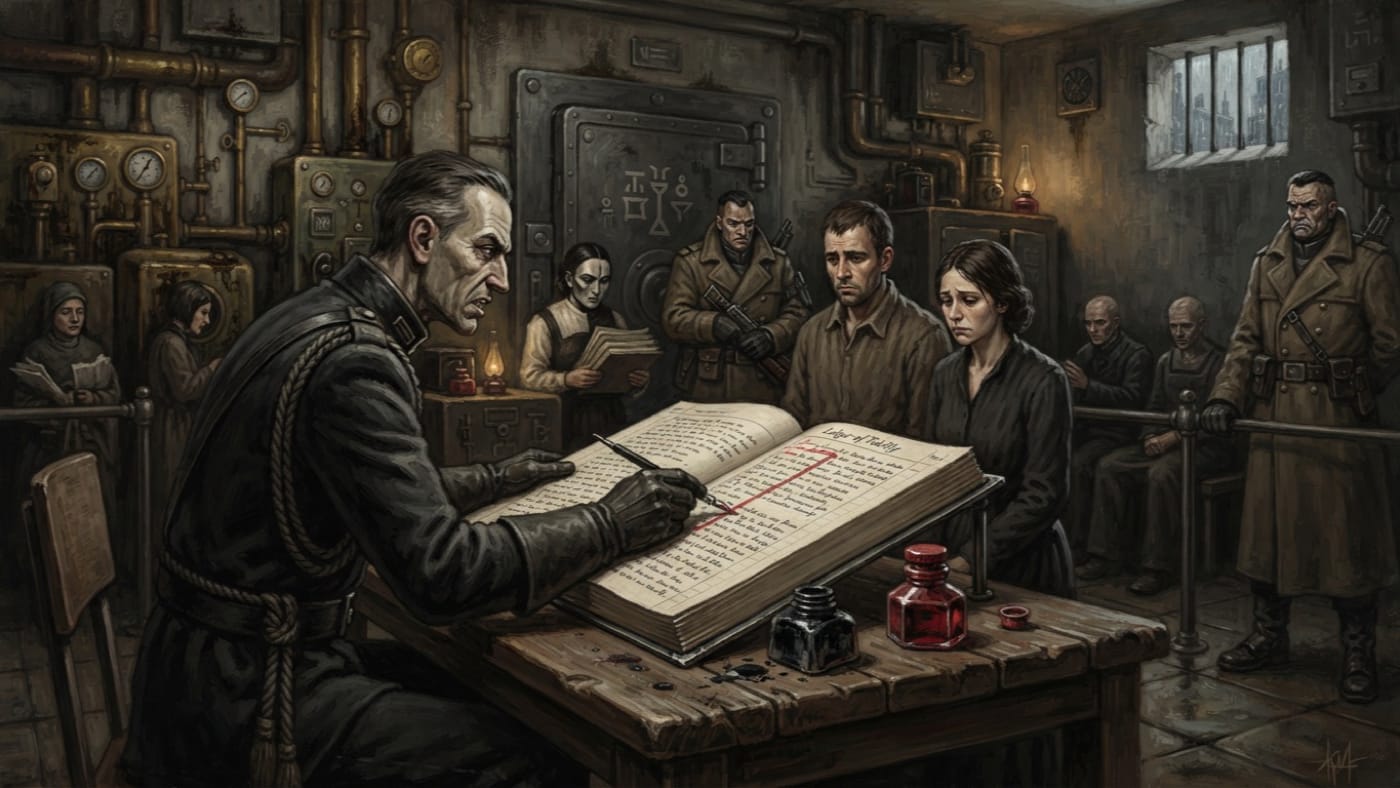
Dissolution Formula
The bond ends; the evidence remains
The Dissolution Formula closes witnessed vows by licensed speech and a red line. Strasbourg buries the bond, preserves the evidence, and collects the fee.
Codex Ref. VI.4.03-013

Doctrine of Sealed Intent
The office speaks; the hand goes upstairs
An affixed seal carries its office's authority, whoever pressed it. Worms supplies the documented anchor; attendance, consent and the hand remain separate questions.
Codex Ref. XIII.1.120-087
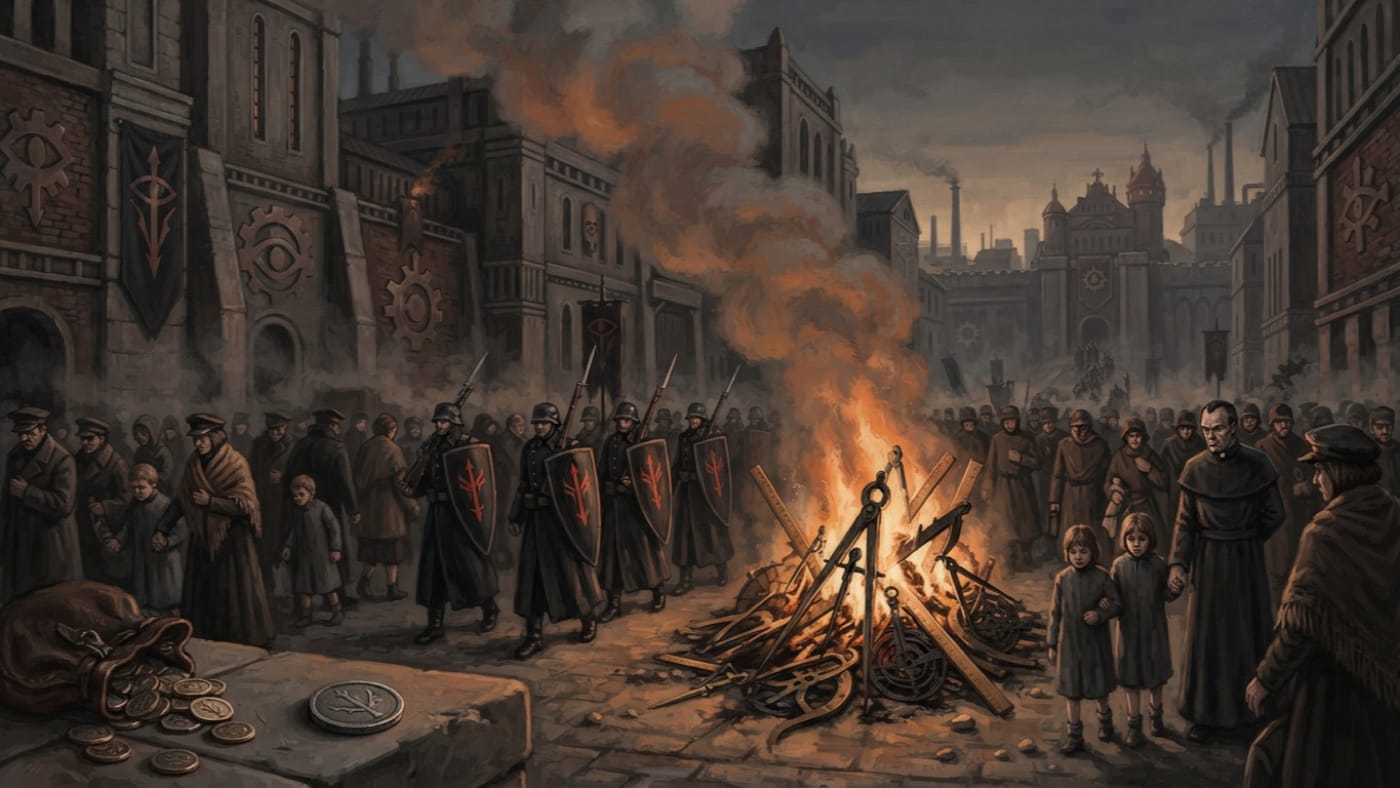
Flaming Sword
Permission has weight, and obedience has smoke
The Flaming Sword carries Synodal authority on coinage and lends its name to Strasbourg's burning of Rationalist instruments. I record its public uses; the emblem's origin remains unproved.
Codex Ref. XIII.1.03-001
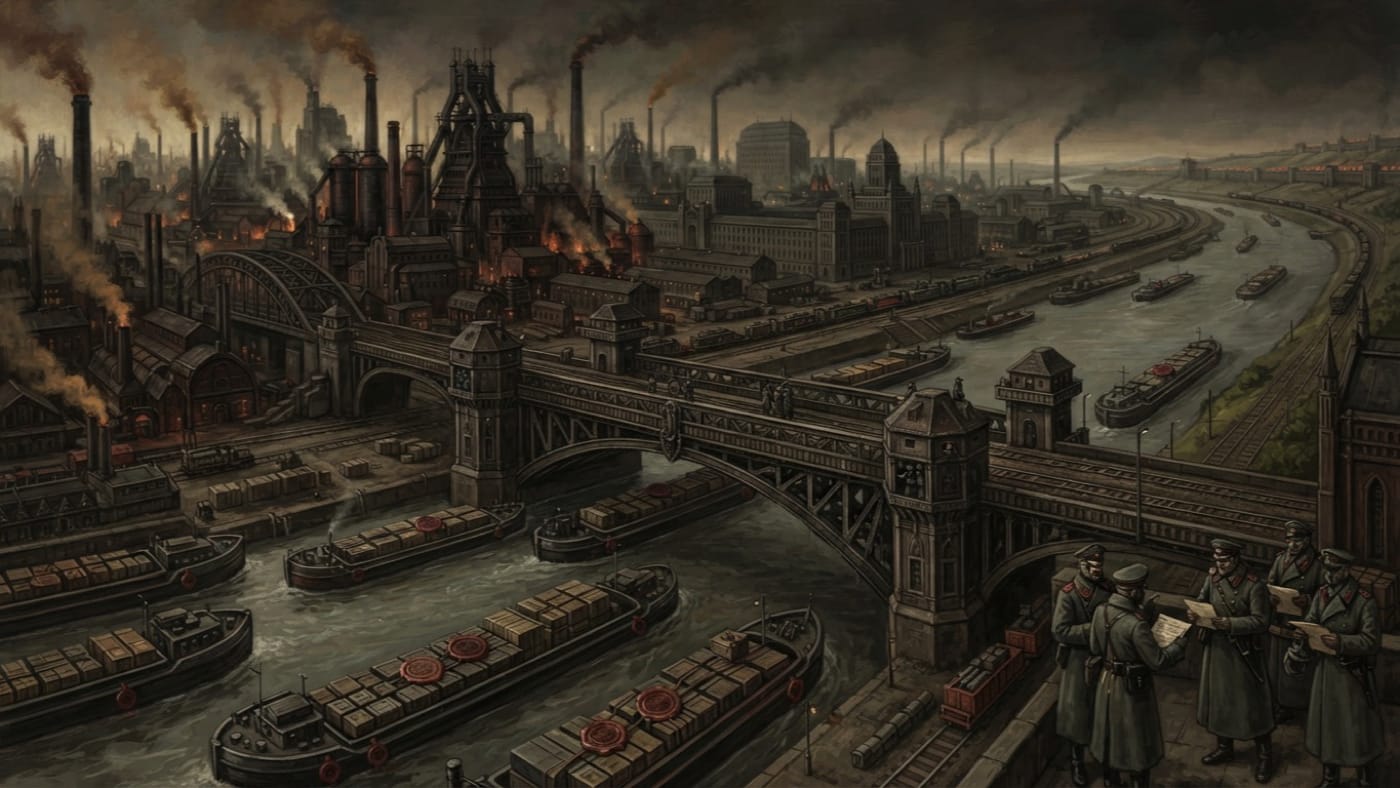
Germany
The heartland that supplies the frontier and answers to several seals
Germany in A.S. 201: the Zone Two heartland of taxed rivers, singing furnaces and military depots. The old borders were erased; the territory still supplies the frontier, and every cargo requires a seal.
Codex Ref. II.6.01-201
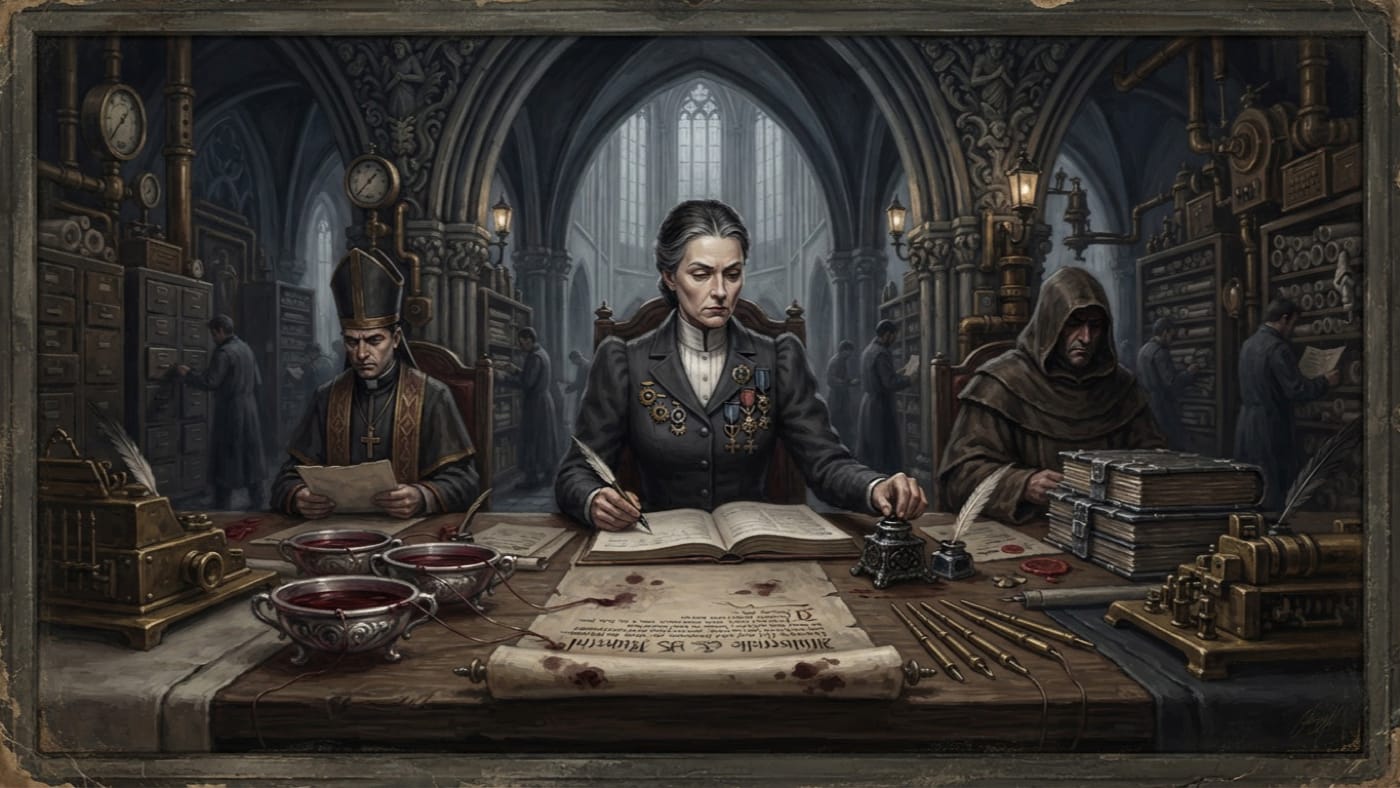
Guild-Commissioner Elsbeth Renn
The woman left a title; the Bureau kept a surcharge
Elsbeth Renn presided at the A.S. 105 Münster guild compact. The Bureau of Tithes named a surcharge after her while she lived; the archive offers no fuller biography.
Codex Ref. III.2.01-107
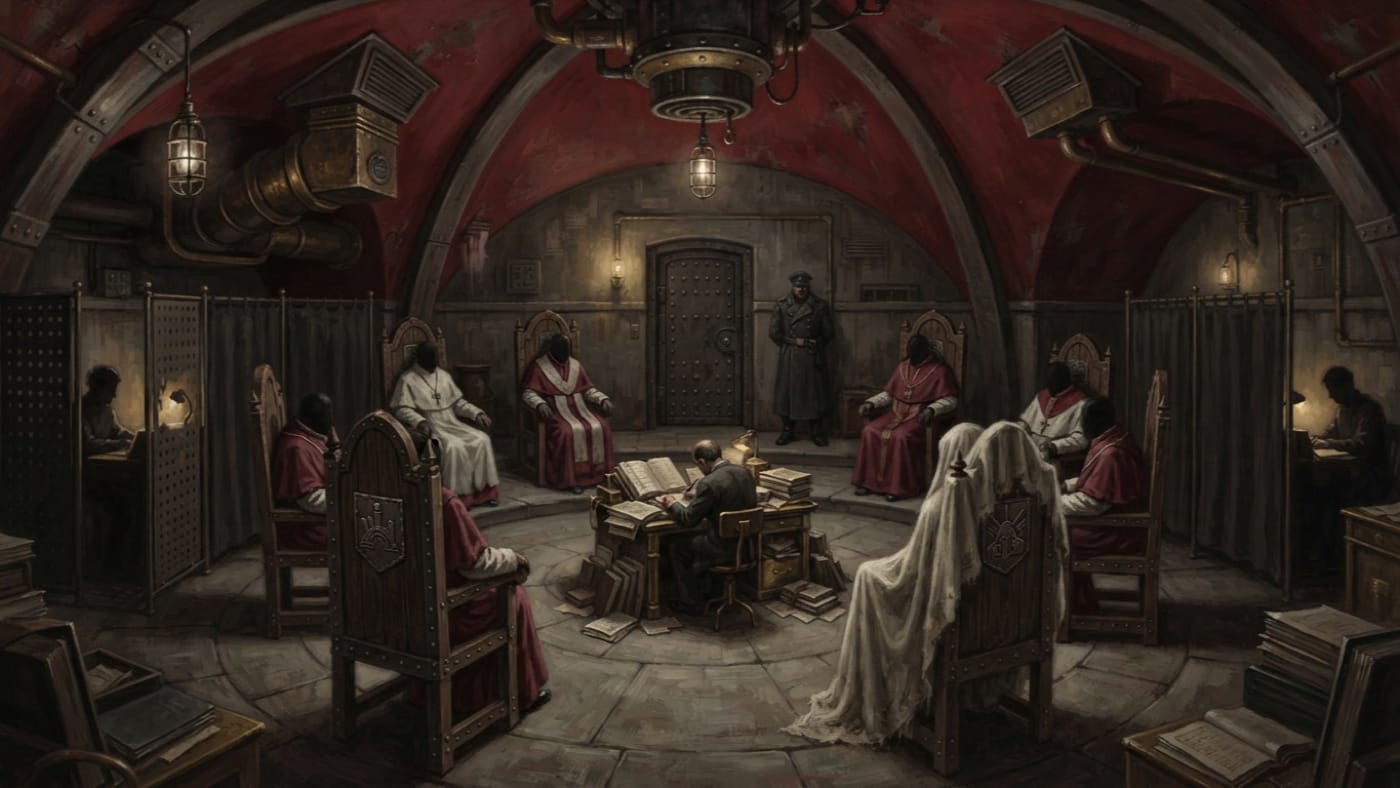
Inner Circle of Strasbourg
Six Chairs Answer. Seven Seals Decree.
Seven chairs, six occupants, no table. From the Basilica's highest floor, the Synod decrees through corrected minutes, seven stamps, and War's vote counted by faith.
Codex Ref. III.2.04-1452
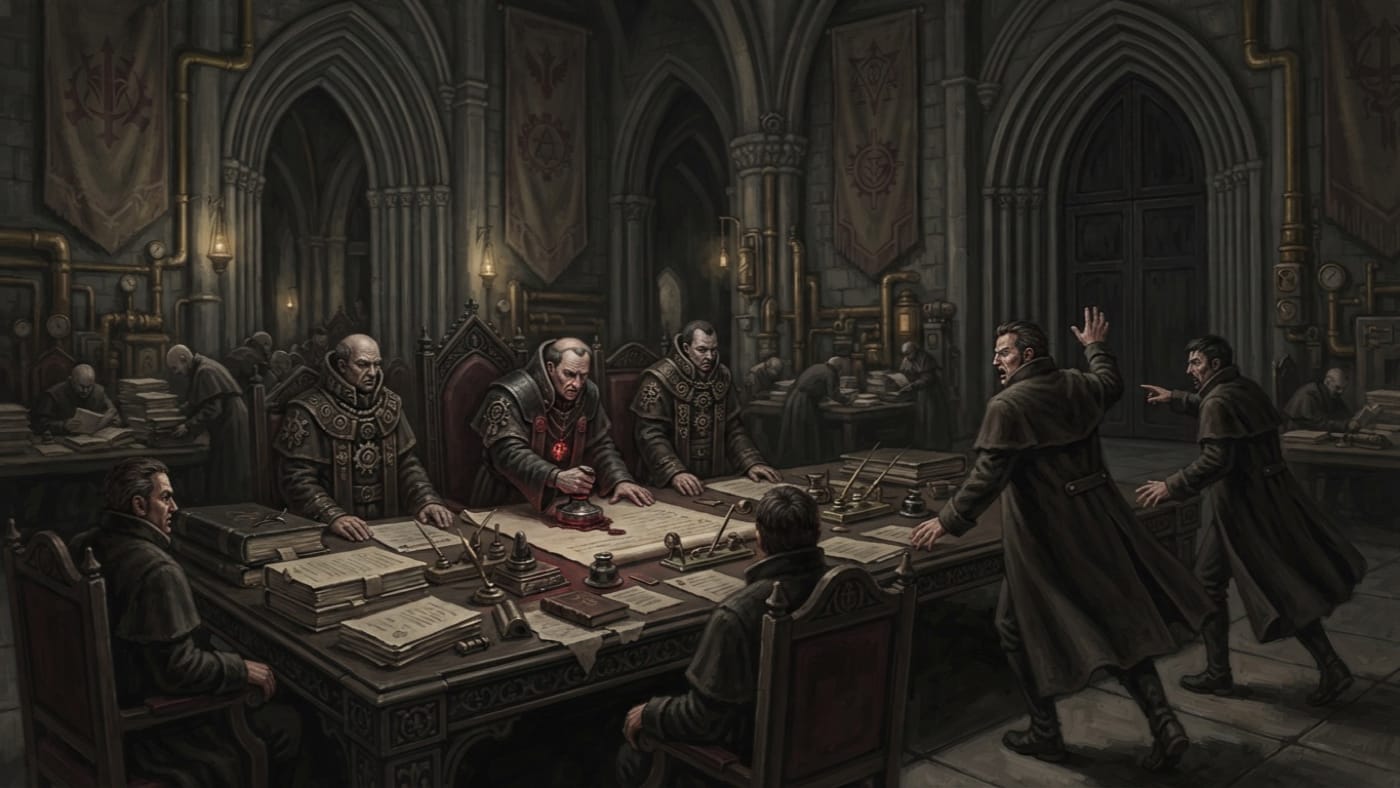
Kingdom of Aragon
A kingdom entered under another seal
Aragon was entered under Iberia's seal at the A.S. 90 Concordat of Strasbourg. Its delegation protested and departed; the Bureau retained the kingdom.
Codex Ref. III.2.04-1544

Ledger of Compelled Consent
The signature precedes the will
Bound after the Black Decrees but obeyed before them, the Ledger of Compelled Consent made frightened signatures older than fear.
Codex Ref. XIII.1.17-001

Ledger of Obligatory Production
One opened thumb, and generations entered the account
The A.S. 105 register of hereditary craft obligation: nine hundred and ninety-nine guilds surrendered labour, households, tools and future inventions. A tax roll records what a man owes; this Ledger records what he is for.
Codex Ref. XIII.1.17-002
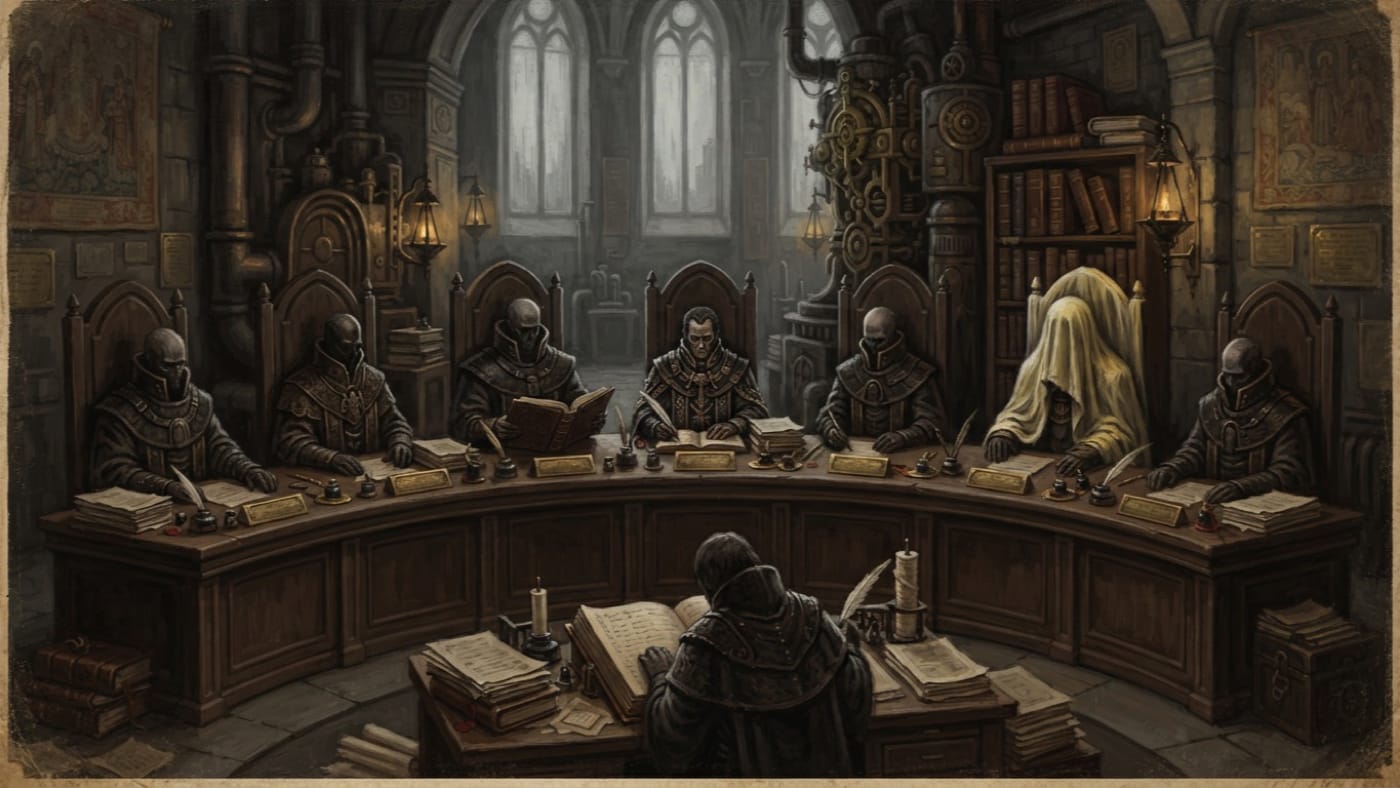
Ledger of Succession
Five Names in Print, Seven Seals in Law
Five names are printed each year for seven Seals. One seated Hierarch has only a changing file number; War's chair remains draped. The succession is continuous as printed.
Codex Ref. VI.3.02-002
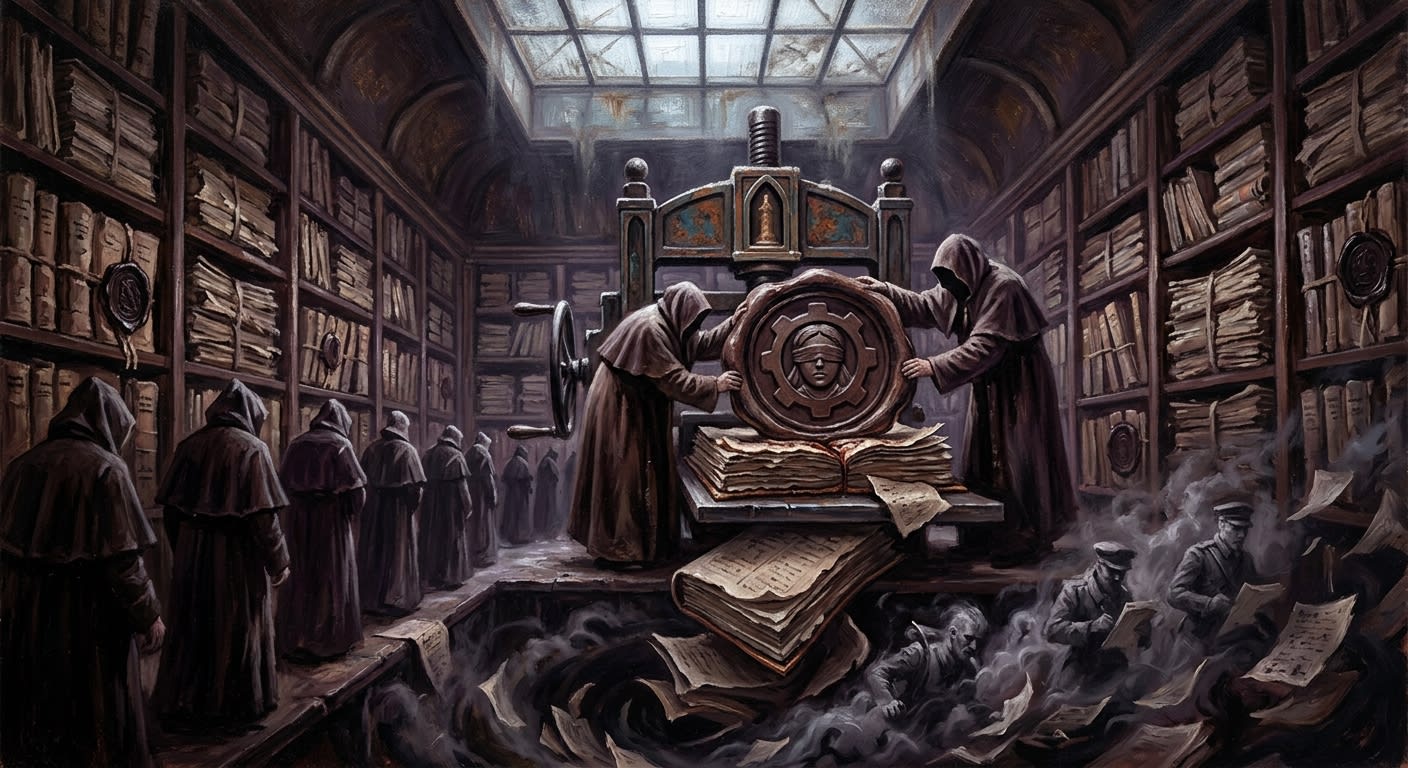
Ninth-Ratification
The seal that forbids analogy because pattern is accusation
Ninth-Ratification is the Synod's highest publicly nameable seal: a doctrine of lawful ignorance for records whose disclosure changes context, office, witness, and history itself.
Codex Ref. XIII.1.76-103

Oaths Witnesser
The state attends every promise
Living seals of the Synod, Oaths Witnessers make spoken promises enforceable, record their fracture, and bury what was sworn when it fails.
Codex Ref. VI.4.03-012

Procurator Maxentius della Torre
The jaw by which Doctrine learned to bite
Della Torre expanded Purity in A.S. 80, birthed the Index Damnatus, and taught the Synod that a named error is already halfway into chains.
Codex Ref. III.4.02-031

Saint Cadrin the Measured
A saint so useful the archive had no choice but to discover him
Patron saint of Route-Stampers and Indulgence-Token Smiths, canonised in A.S. 112 to make counted movement, stamped routes, and profitable delay holy.
Codex Ref. III.2.01-141
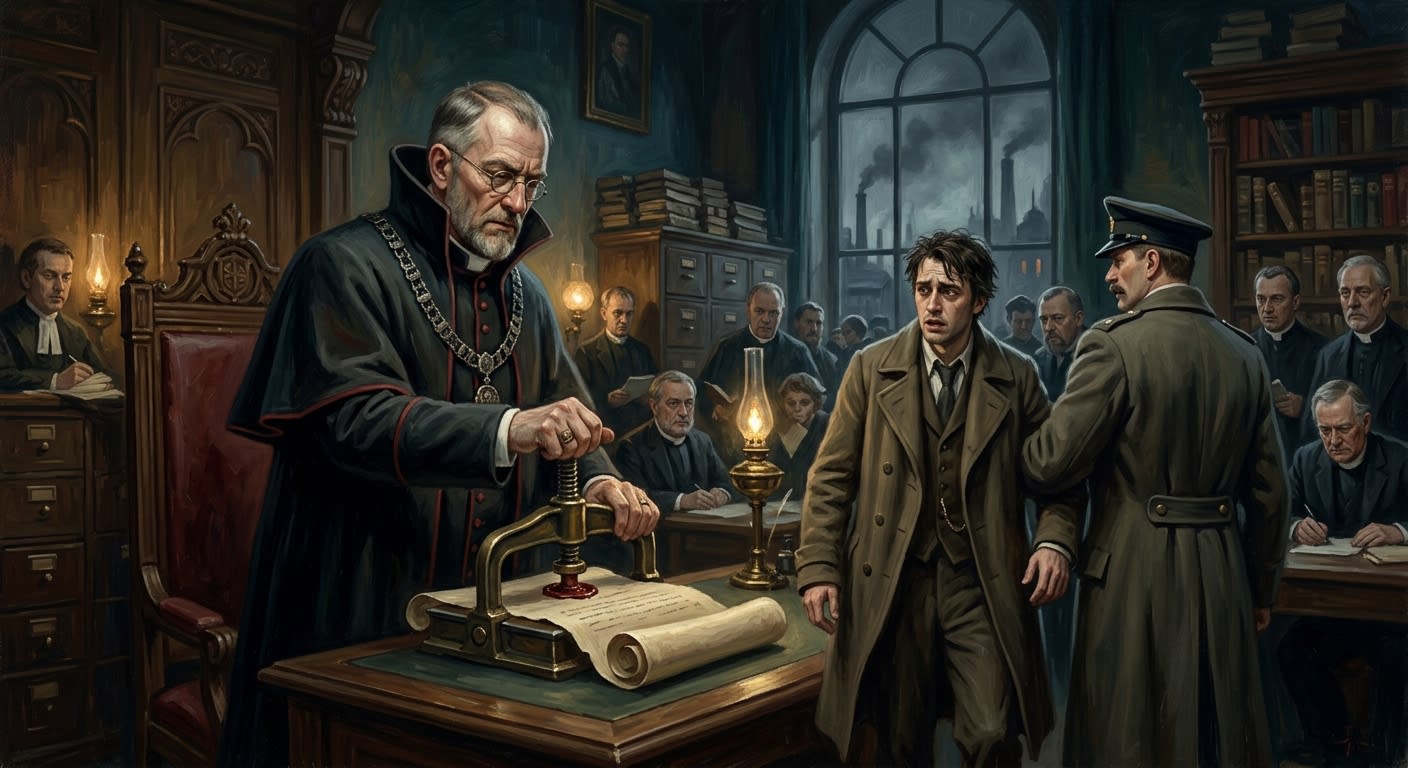
Standard Ratification Protocol
The seal descends, and yesterday learns obedience
The Synod's Standard Ratification Protocol makes sequence repent: dissent is heard, wax cools, and the completed act becomes obedient.
Codex Ref. XIII.1.89-087
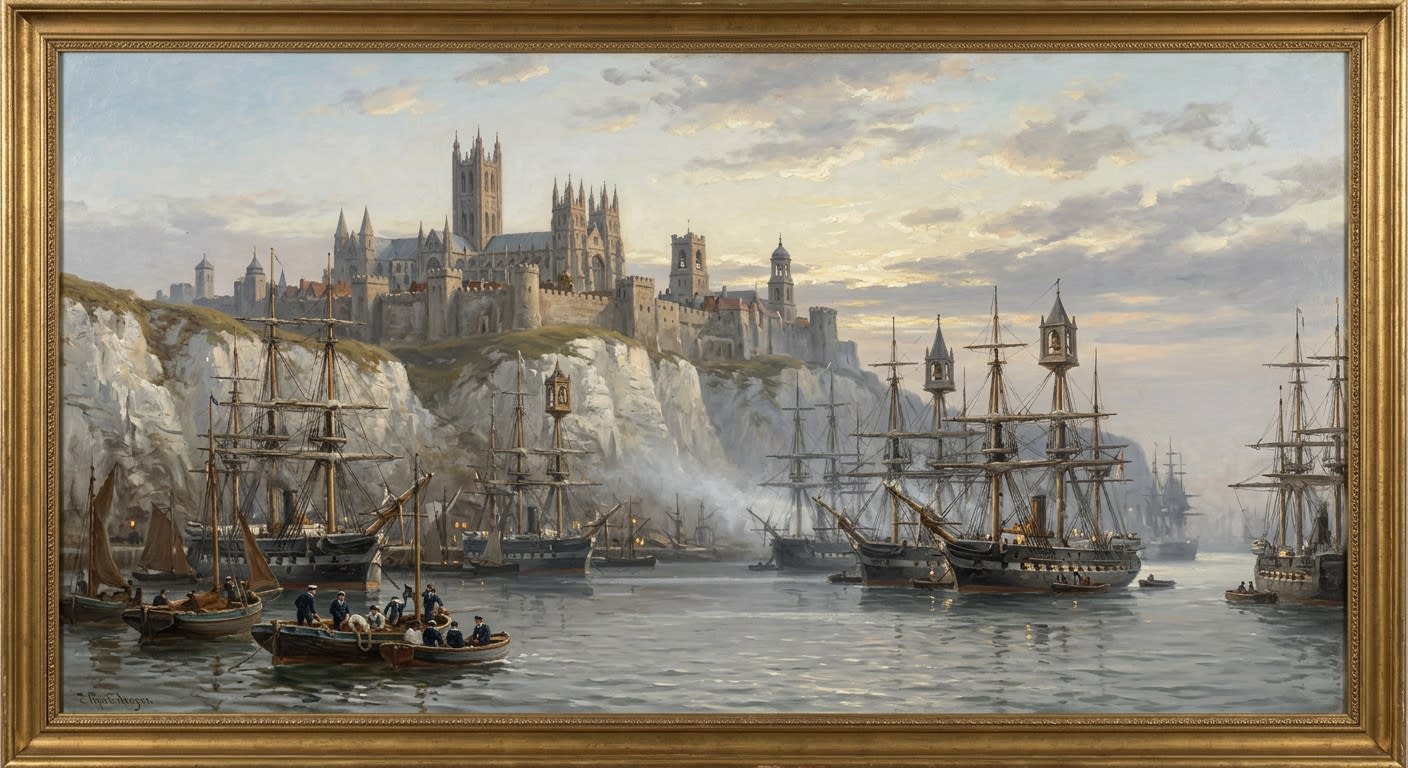
The British Crown
The island the Bureau has spent a hundred and eleven years failing to classify
The Zone 0 co-belligerent that has never submitted to the Concordat and never needed to. Canterbury governs by chivalric charter; three hundred Cathedral Ships hold the Channel; the Bureau of Doctrine considers this theologically embarrassing and strategically essential.
Codex Ref. X.1.01-001

The Bureau of Oaths
No promise binds unless Strasbourg hears it.
The Bureau of Oaths holds that an unwitnessed promise is merely breath — and breath is not legally binding. Seven hundred volumes of the Ledger of Fidelity, sealed beneath the Basilica, remember every vow Europe has ever broken.
Codex Ref. VIII.1.02-001
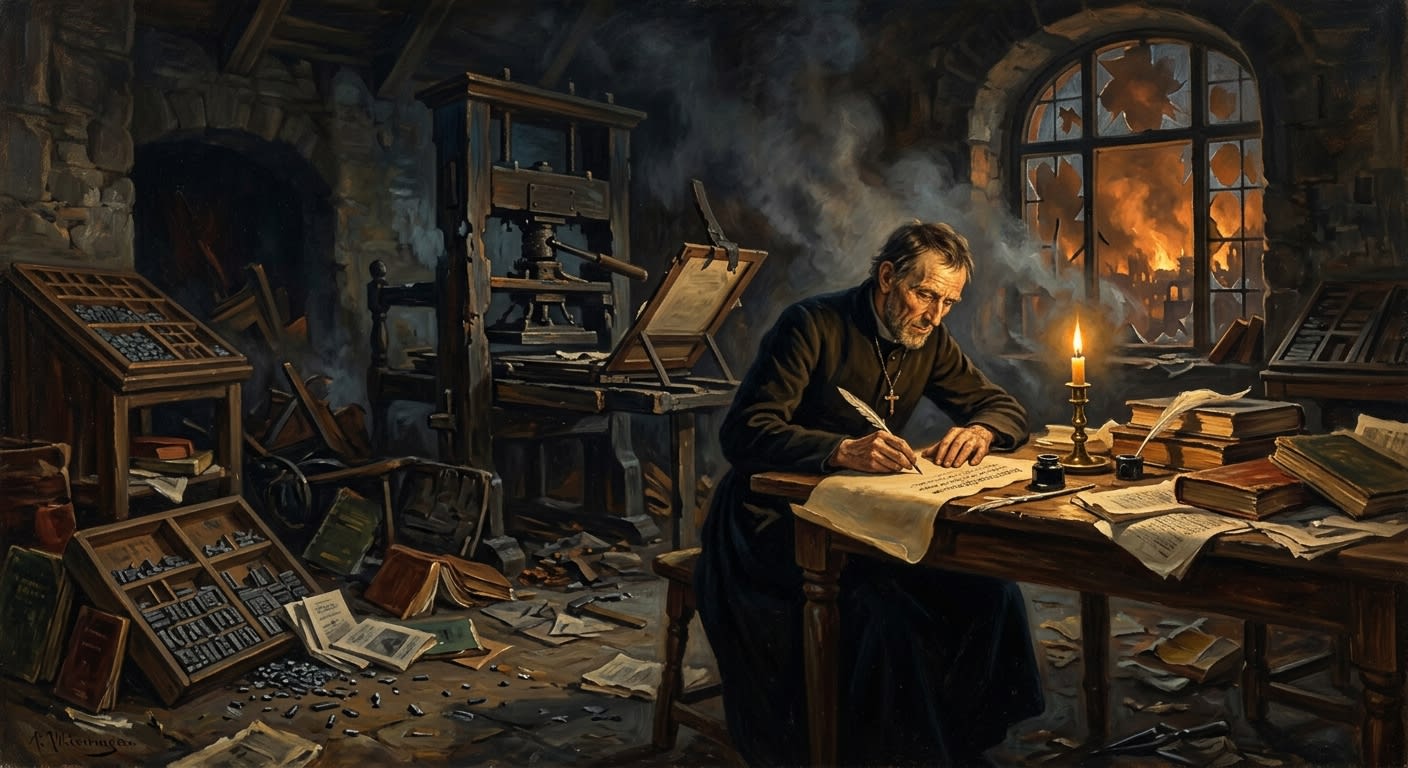
The Common Allegiance
Seven pages that ended the age of a thousand altars
Drax examines the seven-page A.S. 55 charter that bound dioceses through local subscriptions and helped build the authority later formalized at Strasbourg.
Codex Ref. VI.5.01-001
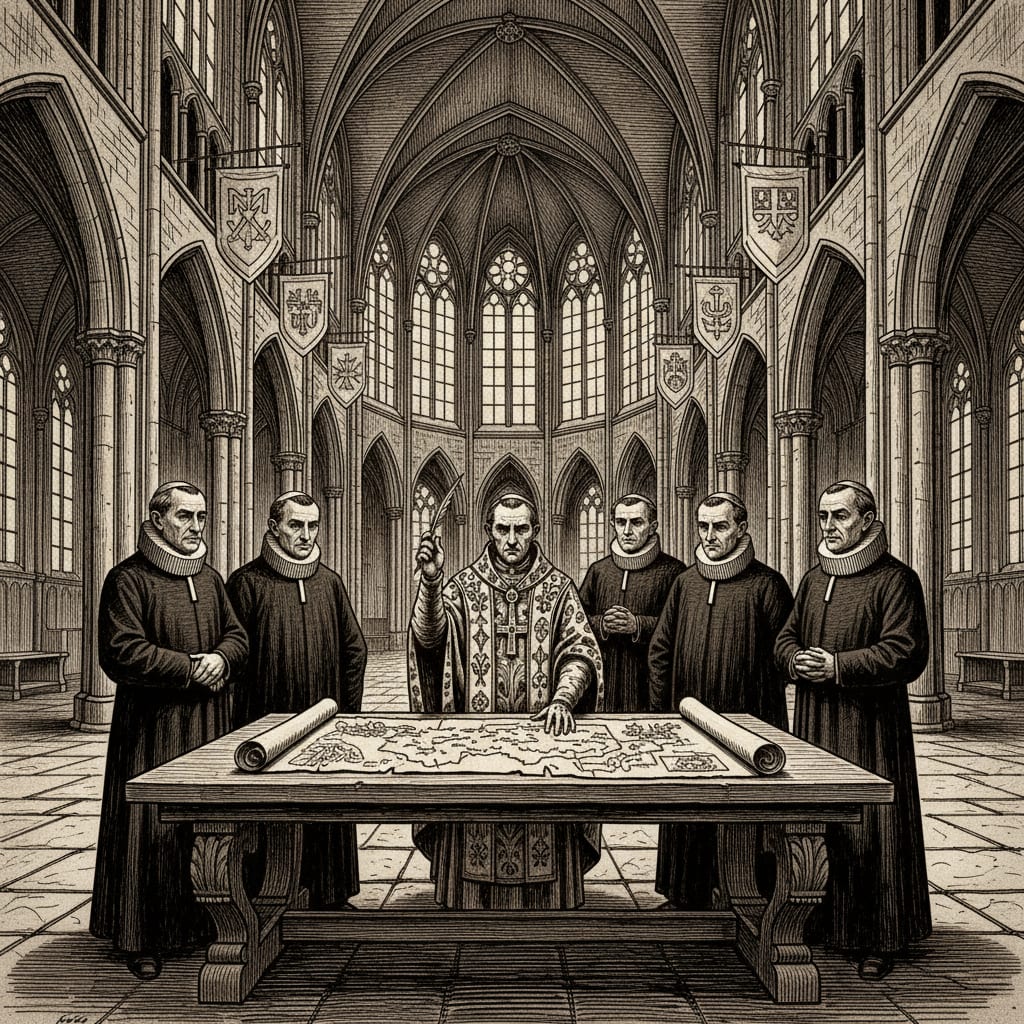
The Concordat of Strasbourg
The A.S. 90 constitutional settlement
The binding of France, Iberia, and the Rhineland into one sacramental polity — the act that turned a wartime council into a continental throne and adopted the Synod's calendar retrospectively.
Codex Ref. III.1.02-003
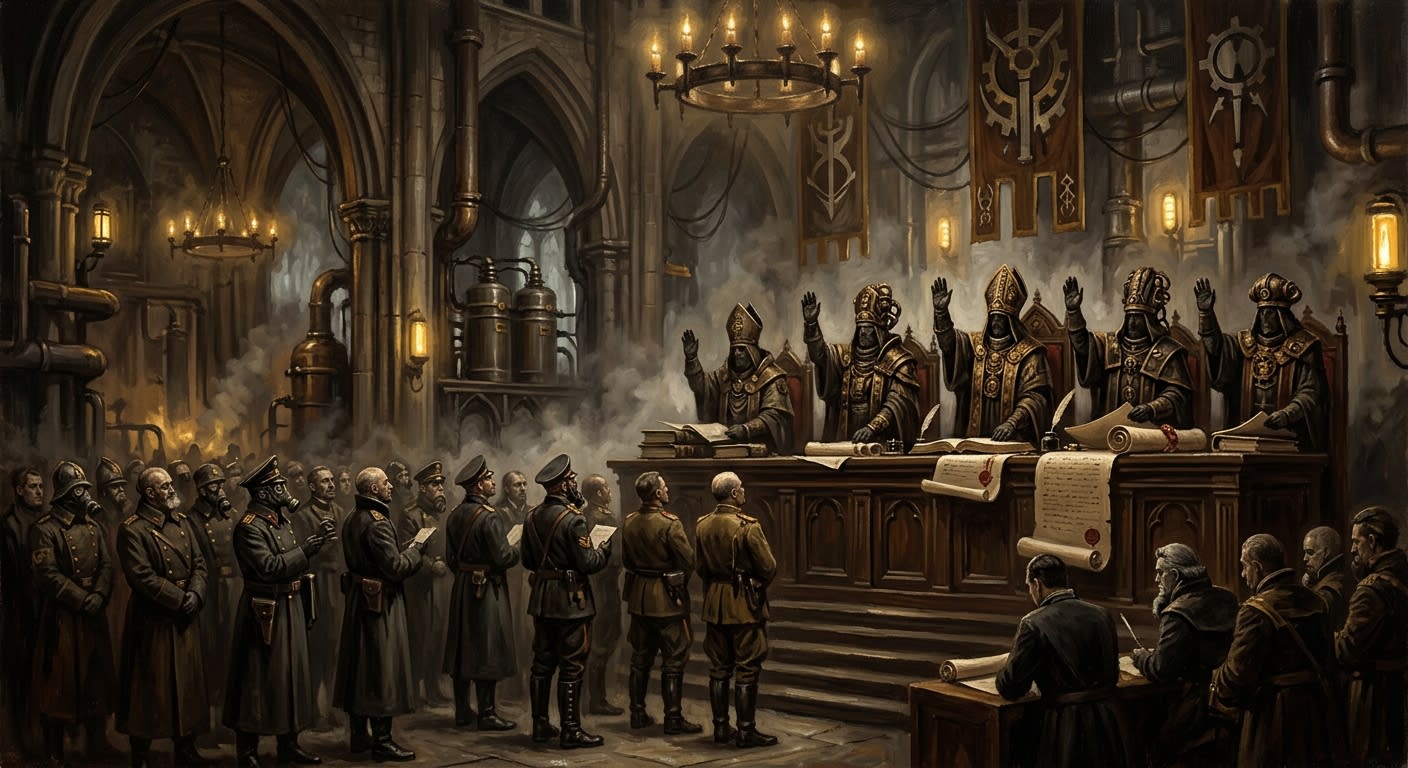
The Council of Mainz
Where law learned to cheer on command
The Council of Mainz confirmed the first seven Hierarchs in A.S. 93, turning Concordat law into staged acclamation, ratified offices, and obedient witnesses.
Codex Ref. VII.7.02-001
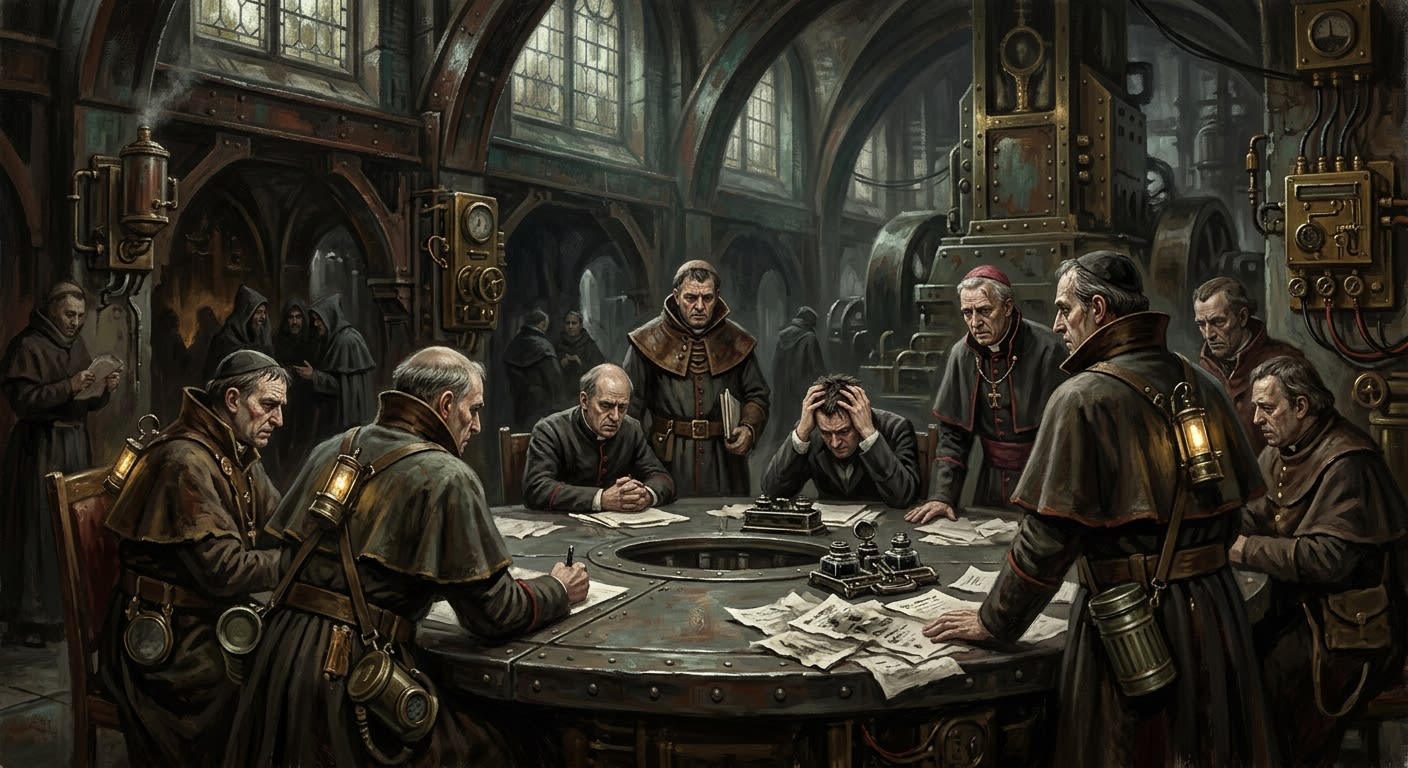
The First Council of Cologne
The yoke was imagined before it was blessed
The September A.S. 27 preliminary convocation produced seven unadopted articles, corrected minutes, and limited voluntary contacts among dioceses.
Codex Ref. VII.7.01-002
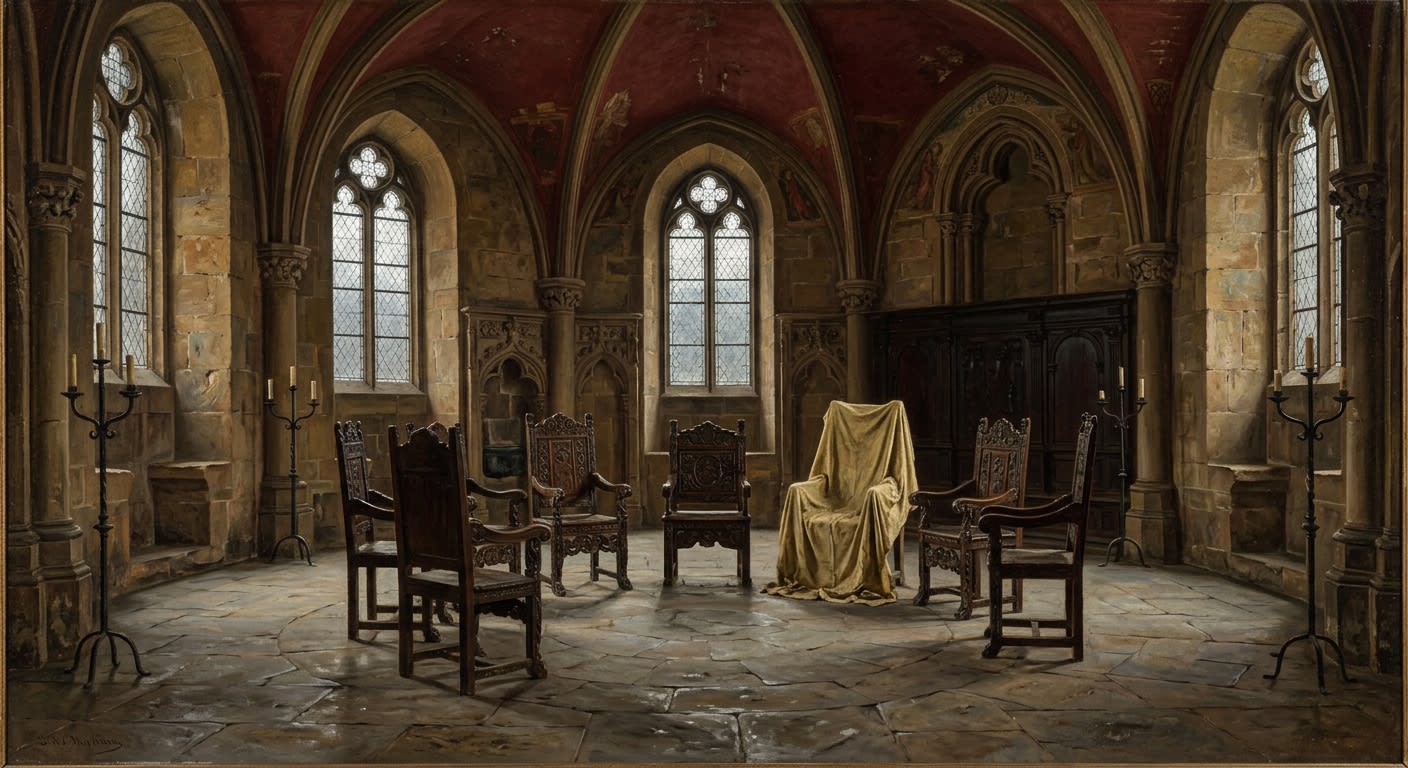
The Hierarchy of the Synod
Seven Seals, Six Occupants, and a Chair No One Has Laundered Since A.S. 107
Seven Seals. Six occupants. One chair draped in cloth no one has laundered since A.S. 107. The succession is continuous. The gaps are classified.
Codex Ref. VI.3.02-001
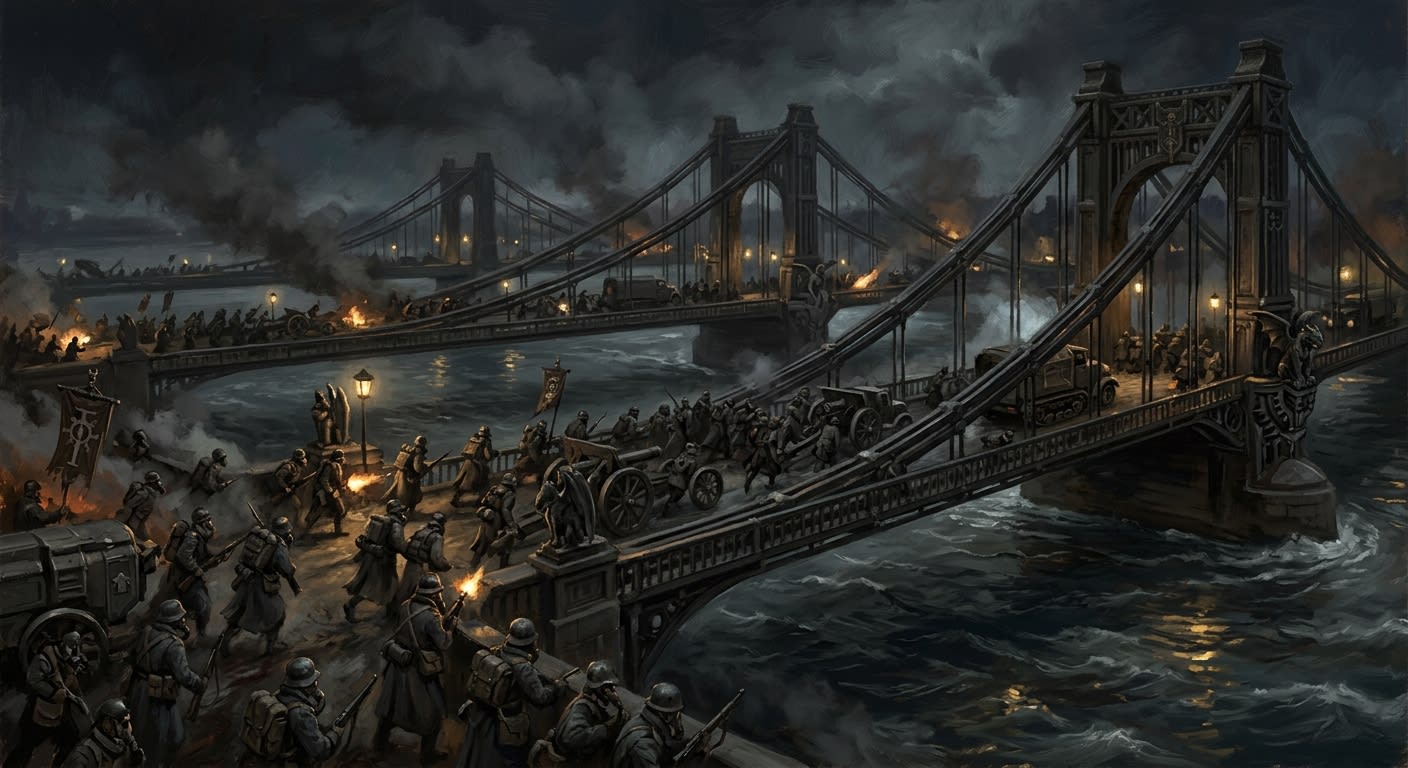
The Night of the Three Bridges
The men did not swim; the Bureau found cheaper grammar
Three Danubian crossings in seven minutes gave War its favourite miracle and Records its favourite arithmetic: fewer casualties, more glory.
Codex Ref. VII.5.01-002

The Second Concordat of Münster
A thousand signatures were required, so one man became arithmetic
The A.S. 105 blood-compact that yoked nine hundred and ninety-nine craft guilds to Synod tithe, then corrected the thousandth refusal by erasing a district.
Codex Ref. VII.2.01-002
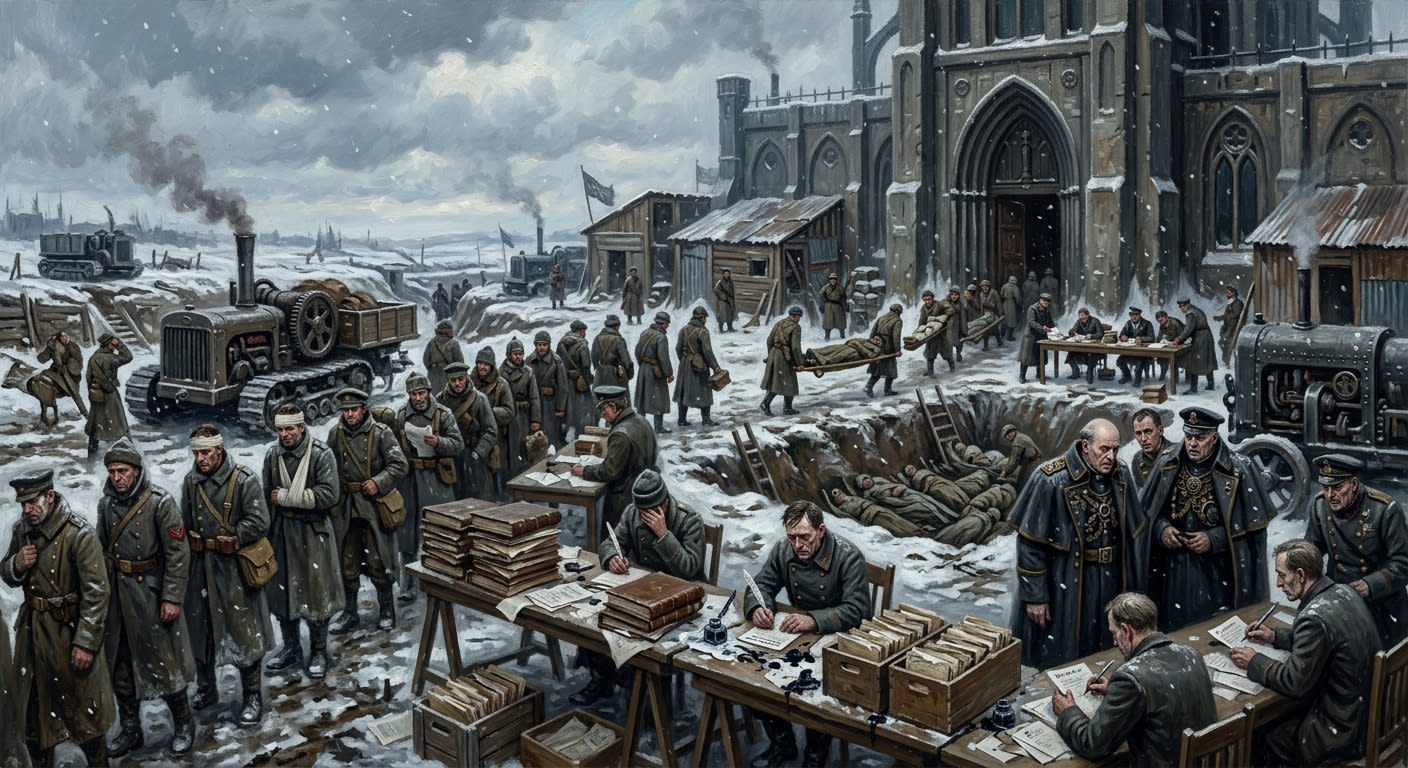
The Uncounted Winter
Fifty thousand dead, and the page arrived late
Northern offensive and registry collapse of A.S. 87–91, when fifty thousand dead went unattested and the Synod learned to put a court beside the wound.
Codex Ref. VII.8.10-091

Worms
Where broken things become binding
Worms is the Rhineland city where absence became evidence, rain became residue, seals became law, and a name became a warning.
Codex Ref. II.2.09-087