
#On the Founding of Mournwater
"If it settles, it's true." — Cooperage Compact oath, administered at the Seal Locks since A.S. 104
I have visited Mournwater three times. Twice on inspection, once because my barge listed to port in a spring flood and the lock provosts fished me from the channel with the same hooks they use to drag contraband casks from the shallows. They charged me a salvage fee. They charged me a docking permit. They charged me a purity inspection on my vestments, which had become — in their estimation — contaminated by river contact and therefore subject to the Grading Hall's jurisdiction. I paid in coin and in silence, which is the only currency Mournwater respects without first weighing it on a scale.
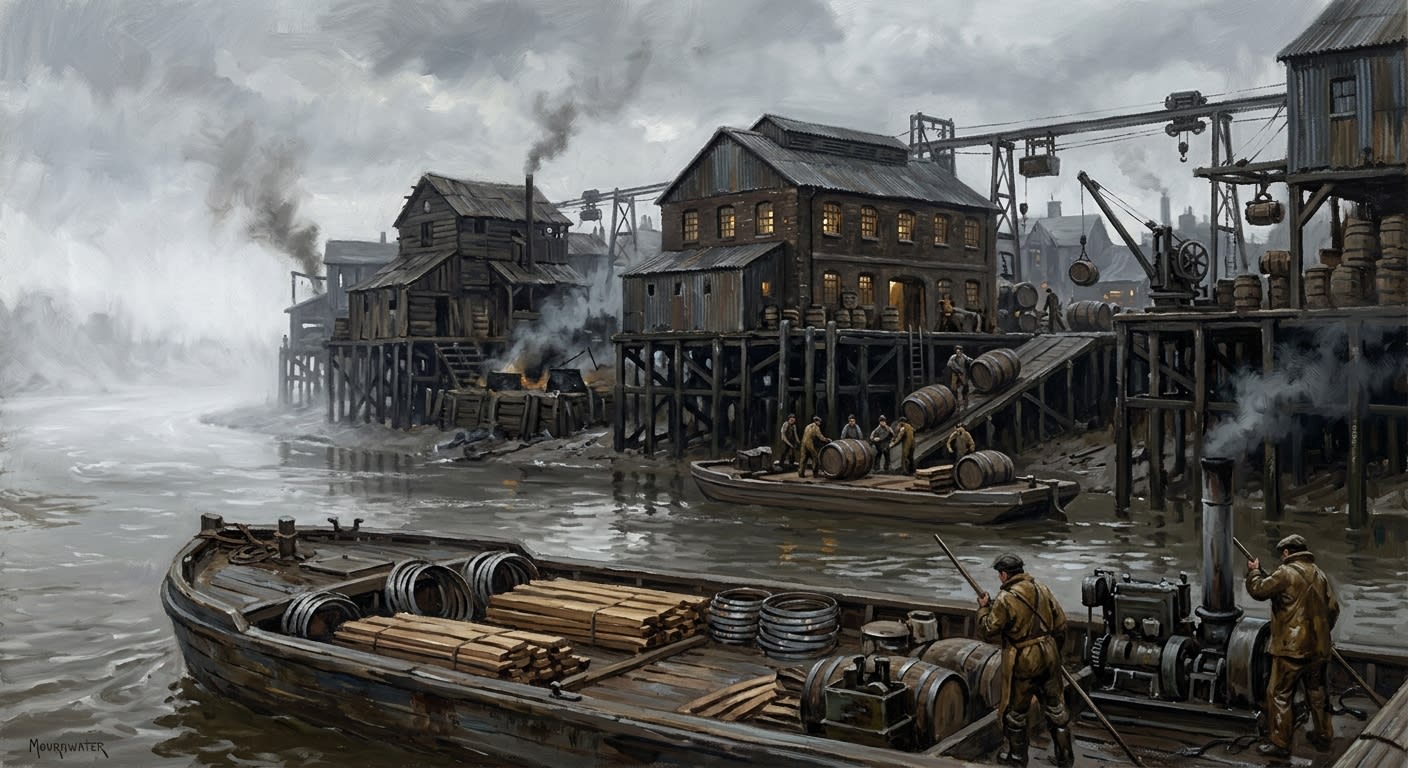
The town began as a cooperage — oak staves, pitch, iron hoops, the blunt commerce of barrel-making for a river economy that needed containers more than convictions. In A.S. 98, eight years after the Concordat had finished reshaping the map of authority and six years before the Bureau of Records had learned to spell the word "jurisdiction" without consulting a notary, a barge capsized upriver of the settlement carrying forty-two reliquary jars from the Ossuary Shoals. The jars broke. The river carried their contents — bone particulate, ash residuum, what the Lore Book politely terms "micro-reliquary substrate" and soldiers term saint-soup — downstream into Mournwater's locks. The barrels that had been drying on the wharves absorbed the slurry. Three coopers reported that their headaches had vanished. A dockworker's limp corrected itself overnight. The lock provost's wife, barren for eleven years, conceived twins within a fortnight.
The Bureau of Alchemical Standards dispatched a team. The team confirmed: residual sanctity, measurable, present in the barrel wood, present in the water, present in the silt. The coopers of Mournwater, who had spent forty years making barrels for grain and lamp oil, discovered they were sitting on an industry more profitable than either.
By A.S. 110, the year the First Continental Levy stripped a tenth of every household's sons and sent them eastward to die for the Ledger, Mournwater had ceased to be a cooperage that handled relics and had become a reliquary port that happened to make barrels. The distinction is theological and therefore absolute.
#On the Geography and Approaches
Mournwater sits on a lowland river bend in the heart of Zone 2 — the river-belt, where the waterways of the Heartlands braid and converge before feeding east toward the forward corridors. The coordinates are approximately 51.5°N, 9.8°E, which places it on one of those sodden, mist-haunted tributaries of the Weser that the Bureau of Engineering classifies as "navigable" and every bargeman classifies as "trying to kill me."
The terrain is silt flats, flooded cellars, rotting wharves, and the particular variety of mud that exists only in river-belt settlements — a grey-brown paste that adheres to everything and smells faintly of tallow and dissolution. Upstream, the marsh-edge cemeteries of the Ossuary Shoals provide the raw material. Downstream, the certified slurry ships carry their cargo to the railheads and from there to the bastions, the trench shrines, the field hospitals, and every other point on the Sagittal Line where faith must be measured in grains rather than convictions.
The town's shape is linear — strung along the water like washing on a line, with the cooperage tiers stacked on pilings above the flood mark and the slurry docks sunk below it. Seven districts, each with its own stench and its own species of corruption. The Cooperage Yards smell of oak sap and pitch. The Grading Hall of vinegar and chalk. The Seal Locks of iron and algae. The Slurry Docks of brine and sweet rot. The White Steps — the Synod certifiers' quarter — of incense and bleach, which is either a theological statement or a sanitation measure, and at Mournwater these are the same thing. The Backchannel Shacks of fish oil and wet paper. And the Crumble Ward — the quarantine housing — of lime and fear.
Access is controlled at every gate. Lock permit, guild writ, dust-labour voucher, or quarantine intake — choose your humiliation. Purity stamps are checked at every threshold. The bribes are standardised: resin for the cooperage gates, clean cloth for the Grading Hall, "certifier ink" for the White Steps, and futures slips for anyone who has already lost the will to pretend the system functions on anything but appetite.
One reaches Mournwater by barge in one to two days from the nearest river city, by wagon and ferry in three to five days from a Heartlands railhead, and by convoy in four to seven days from a trench supply bastion. One leaves Mournwater — if one leaves at all — by the same routes, stamped, inspected, and lighter in the purse by an amount the lock provosts calculate with the precision of a Procurator computing the tithe on a dead man's teeth.
#On the Industry of Sanctified Dust
The saint-dust economy is the beating heart of Mournwater, and like all hearts it functions best when nobody examines it too closely.
The raw material arrives from the Ossuary Shoals upriver — bone particulate, ash residuum, the ground remnants of saints and martyrs whose earthly forms have been shattered by bombardment, ash-tide, and the ceaseless appetite of the Great Deceiver's forces. The Lore Book records the work of the Saint-Dust Salvage sorties in terms that border on the romantic: squads wading waist-deep into slurry, singing the Receipts of Saint Ephrath, each man carrying a ledger in which every pinch of recovered dust is notarized, bagged, and stamped in triplicate. What the Lore Book does not record is what happens after the dust reaches Mournwater.
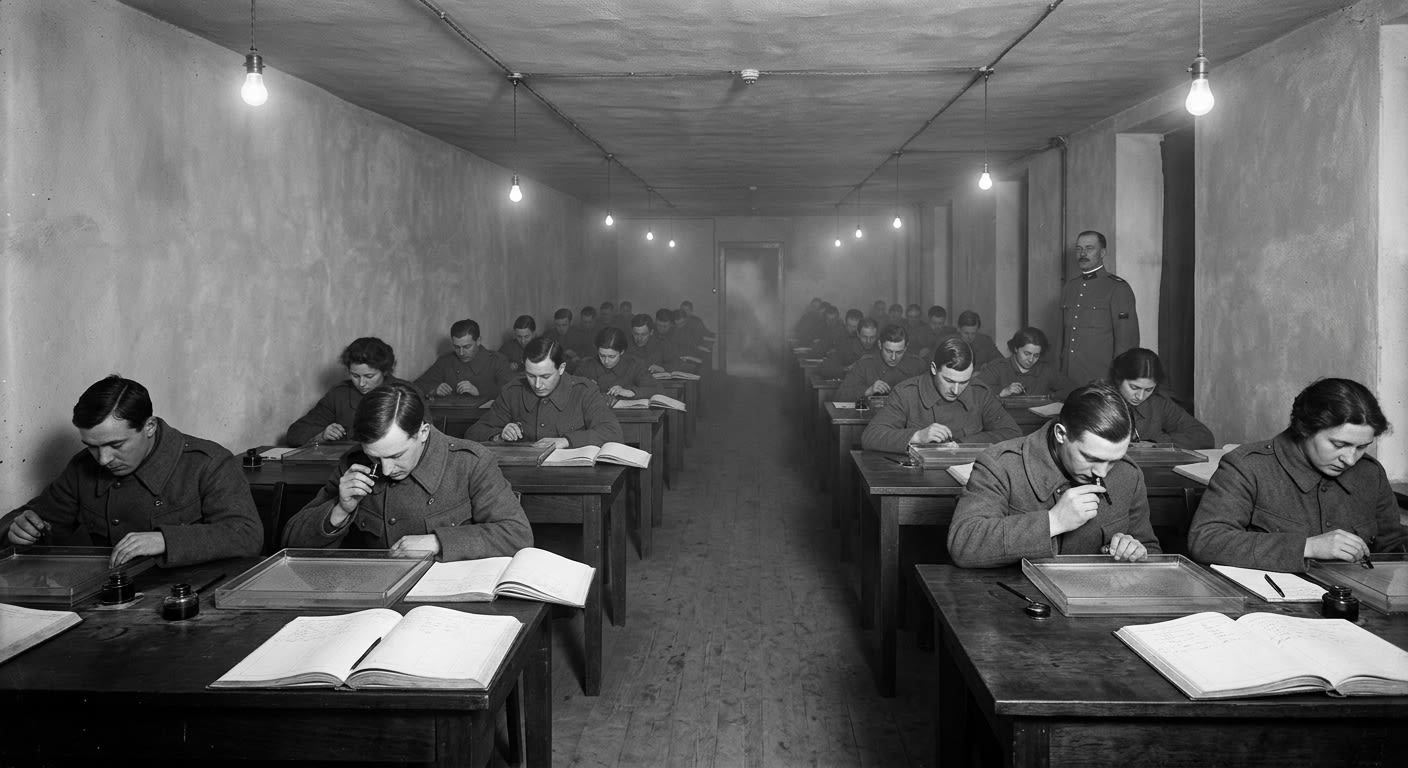
It is tested. In the Grading Hall of Settled Light, dust samples are placed in shallow glass dishes and observed during the settling prayer — a period of enforced silence during which the entire Hall holds its breath while the particulate descends. Genuine saint-dust settles in a characteristic pattern the graders call "rosary strata" — layered rings like the cross-section of an oak, each stratum corresponding to a grade of sanctity. The pattern is the test. If the dust settles true, the batch is certified. If it does not, the batch is condemned, the grader who handled it is questioned, and the questioning takes place in a room that the Synod Purity Office calls the "clarification suite" and everyone else calls the cellar.
The certified dust is then suspended in brine to produce holy slurry, which is sealed into coopered casks — oak staves, pitch-sealed, iron-hooped, stamped with confession wax — and loaded at the Slurry Docks for transport downriver and east. Every cask bears a purity seal from the White Steps and a shipping manifest from the Cooperage Compact. Every seal costs money. Every manifest costs more. The Seal Locks — the only passage for certified slurry ships — exact a toll that the lock provosts set fresh each morning based on demand, weather, and whatever they had for breakfast.
The entire operation employs coopers, hoop-smiths, pitch runners, dust graders, seal clerks, lock wardens, slurry loaders, jar-makers, quarantine washers, and backchannel boatmen. The class structure is rigid: certifiers at the summit, guild masters below, graders in the anxious middle, dock crews at the bottom, quarantine poor below the bottom, and the backchannel untouchables in whatever category exists beneath that — the category the ledger pretends not to contain.
Earlier inventories submitted by Cooperage Compact officials listed annual slurry output at 14,000 certified casks. The Bureau of Records has revised this figure to 11,200, accounting for "evaporative loss, devotional spillage, and acts of unregistered Providence."
The Compact has accepted the revised figure. The three thousand missing casks have been classified as the river's tithe.
And then there is the futures market. Dust scrip — paper slips representing future allocations of certified slurry — are traded openly in Mournwater's taverns with the same casual brutality that grain futures are traded at the Grain-Gray Parliament of Wexel. A man who knows when a garrison will run low on miracle rations can buy dust futures at morning prices and sell them at evening rates that reflect the garrison's desperation. Death is a commodity here. Speculation on mortality is conducted over ale and pitch-stained ledgers, and the futures clerks who manage the trade predict outbreaks and battles with a precision that would be admirable if it were not, by any reasonable theological standard, obscene.
#On Those Who Rule and Those Who Actually Rule
The formal governance of Mournwater is a Cooperage Guild Compact operating under Synod oversight, with the Synod Purity Office and the lock provosts sharing enforcement duties. Guild votes are held for the appearance of participation. Synod decrees are issued for the reality of control. Audit schedules are published for the purpose of terror.
The true power holders are three, and they have arranged themselves in a balance that would be elegant if it were not so openly venal.
Master Cooper Vell Arno controls the barrels. This sounds modest until you understand that without barrels there are no casks, without casks there is no slurry transport, and without slurry transport the entire relic economy of the Sagittal Line grinds to a halt within six weeks. Arno smells of pitch and never signs a document without first reading the wood grain of the table on which it rests, a habit that his associates consider eccentric and his enemies consider diagnostic. His leverage is supply. His fear is the pitch shortage scandal of A.S. 193, when three warehouses of adulterated resin were traced to a Compact sub-contractor who happened to be his brother-in-law.
Purity Prefect Sister Halvein controls the seals. Every cask that leaves Mournwater bearing a Synod purity stamp does so because Sister Halvein's office has certified it, and certification is a process she administers with a smile that resembles a seal-press — flat, precise, and leaving an impression that cannot be removed without damage. Her leverage is doctrine: she decides what is pure. Her fear is evidence that she once "passed" a tainted batch during the A.S. 197 contamination scare, evidence that exists in the Graders' Quiet Union's files and nowhere else, which makes the Union the most dangerous organisation in Mournwater despite having no official standing whatsoever.
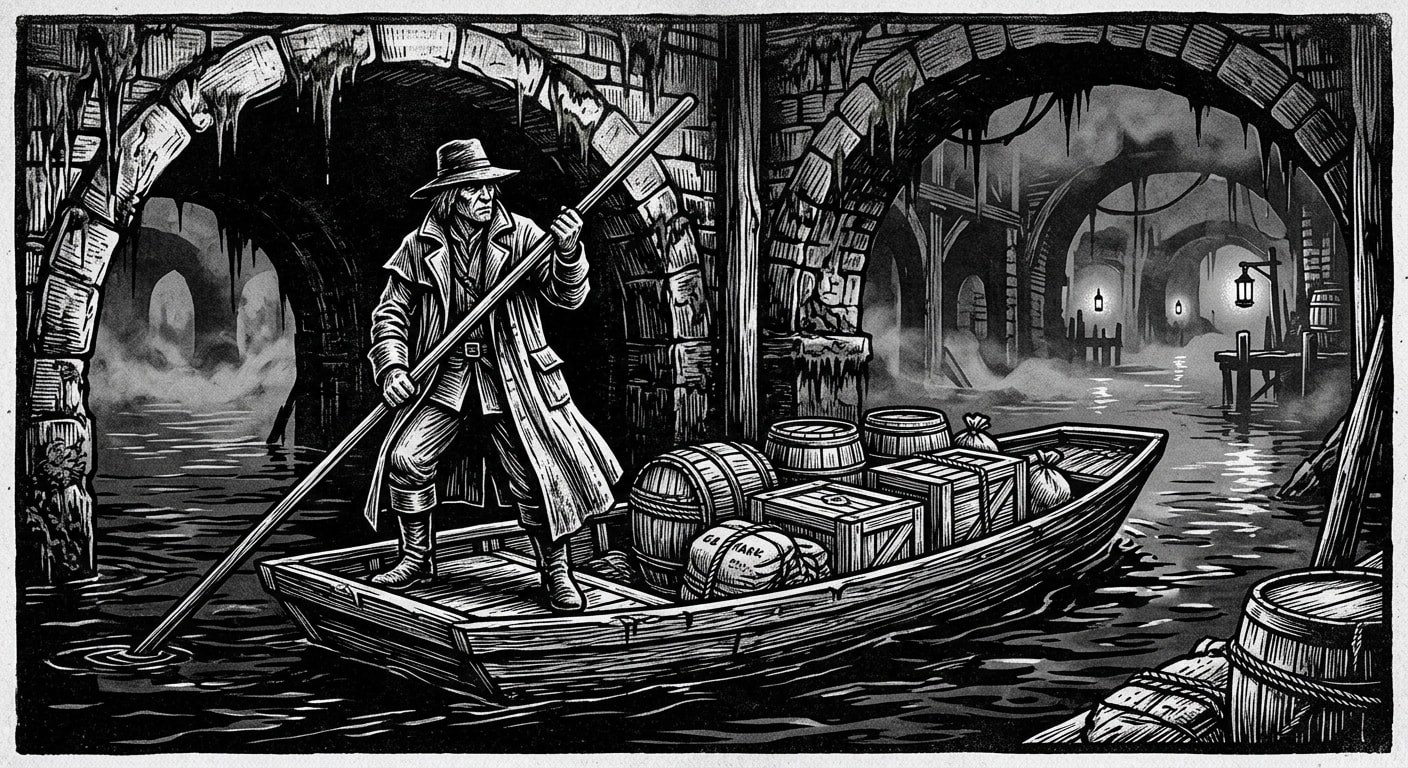
"Silt-Rook" Dema controls the backchannels — the flooded under-streets, the side-sluices, the fog-shrouded routes through which counterfeit seals, cut dust, smuggled persons, and every other item that the ledger cannot acknowledge travel by night in flat-bottomed skiffs. Dema's boots are always dry. Nobody can explain this. His leverage is routes and information. His fear is the locks closing permanently, which would strand his inventory in the channels and his operators in the open.
Between these three, every transaction in Mournwater is triangulated. Barrels flow through Arno, purity through Halvein, and everything the other two refuse to touch flows through Dema. The system functions because each holds enough leverage over the others to guarantee mutual restraint. It has functioned since A.S. 187. It will function until one of them dies, at which point the whole arrangement will collapse into the river with the elegance of a barge that has shipped its last load.
#On the Crumble-Wrong and the Settling Bell
The dust at Mournwater misbehaves.
This is the official position of the Bureau of Alchemical Standards, which classified the anomaly in A.S. 194 under the designation "Irregular Settling Pattern, Category Two." It is also the unofficial position of every resident, who calls it crumble-wrong and regards it with the same flat terror that soldiers on the Line regard the sound of bells ringing backward.
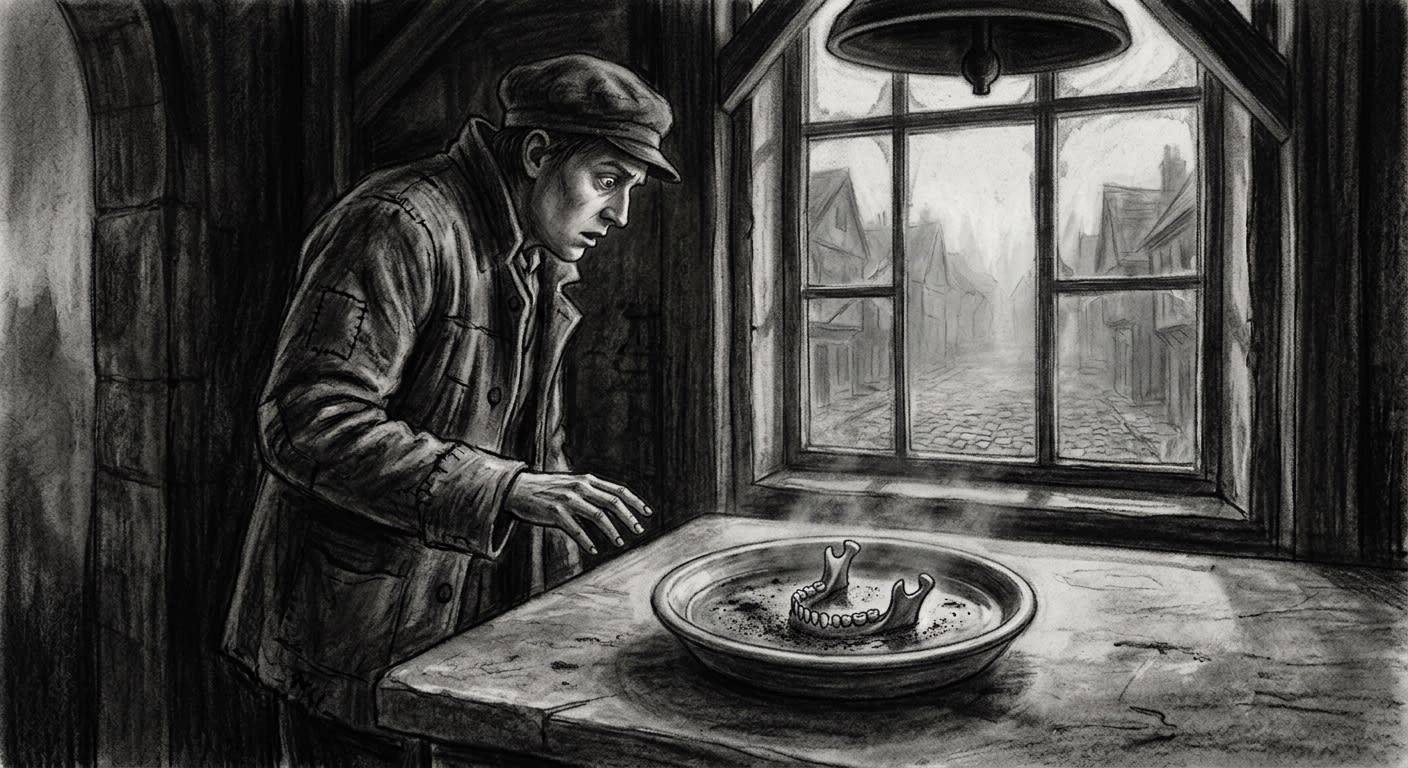
The phenomenon is this: tainted dust — dust that has been cut, adulterated, exposed to non-sanctified material, or subjected to conditions the Grading Hall cannot specify — does not settle into rosary strata. It settles into shapes. Bone shapes. Finger shapes. Rib-curve patterns that the graders measure with callipers and record in ledgers marked with a red seal that means "do not circulate." When such dust is incorporated into slurry and shipped, the recipients' dead crumble. Their corpses fracture into fine powder that moves with humidity — tracking toward water, toward breath, toward the living — and the powder clumps overnight into rosary shapes on any flat surface.
The countermeasures are lime washes, salt baths, sealed-sleep masks, and burning pitch at thresholds. The countermeasures work poorly. The real defence is the Grading Hall, and the real guarantee is the settling prayer.
Every day, at the tolling of the Settling Bell, Mournwater falls silent. The entire town — the cooperage yards, the docks, the lock gates, the Backchannel Shacks, even the quarantine ward — holds its breath while the dust in the Grading Hall's open dishes descends. If the dust settles true, the bell rings again and the town resumes. If the dust does not settle — if it hangs, or drifts laterally, or begins to form shapes in the dish — the bell does not ring, and the silence extends until the graders can determine the cause. The longest silence on record lasted nine hours in A.S. 199. No official explanation was issued. The unofficial explanation, circulated in the backchannels by morning, was that the dust had begun settling in a language.
The deeper question — the one that Sister Halvein's office refuses to acknowledge and that Dema's backchannel operatives trade in whispers like counterfeit scrip — is the source. The Ossuary Shoals upriver provide the raw material. The Shoals are taboo to name, which in the Synod's lexicon means they are essential and therefore unspeakable. What grinds the bones there is officially "Providence and the natural action of water upon sanctified calcium." What grinds the bones there, according to three graders who submitted sealed reports to the Bureau of Rites in A.S. 198 and were subsequently transferred to the Crumble Ward for "observation," is something alive. Something that is producing new dust from old material. Something the river carries downstream with the same indifference it carries silt, and something that the settling dishes in the Grading Hall are beginning to recognise as familiar.
The river, in short, is learning to make saints. Or something that looks enough like saints to pass the purity test.
#On the Present Condition
A.S. 201. The locks are open. The slurry ships depart on schedule. The Settling Bell rings each morning and the town holds its breath and the dust — most days — settles true.
The recent crisis is quiet and therefore dangerous. Dust has begun "turning" in transit — settling wrong in casks that were certified pure at the Grading Hall, reacting to humidity as though alive, arriving at trench shrines in a state that the field chaplains describe as "aggressive." A shipment dispatched in A.S. 199 to a garrison on the southern corridor caused the garrison's dead to crumble within hours of application — bones fracturing into that fine, mobile powder, rosary shapes forming on chapel floors, sentries reporting that the powder moved toward the infirmary during the night watch. The garrison chaplain filed a report. The Synod denied receipt. The Cooperage Compact blamed handling. Sister Halvein's office blamed atmospheric conditions. The garrison buried its dead a second time, deeper, in lime-sealed vaults.
The futures market has responded with characteristic precision: dust scrip prices have tripled since A.S. 198. A man who holds futures on certified slurry holds a fortune. A man who holds futures on condemned slurry holds leverage over every certifier, guild master, and lock provost in Mournwater, because condemnation is the only thing that can shift prices faster than contamination. The futures clerks sit in their taverns with their pitch-stained ledgers and their ale and their numbers, and they predict death the way farmers predict rain — by the feel of it in the air, by the ache in their knees, by the particular quality of mist that rolls off the water at dawn.
The Graders' Quiet Union has grown bold. The graders know what the settling dishes are showing. They know the shapes in the dust are becoming more frequent, more complex, more specific. They know the upstream reports were suppressed. They have, collectively, chosen to keep grading, keep certifying, keep ringing the Settling Bell each morning — because the alternative is to admit that the foundation of the relic supply chain is compromised, and to admit that is to collapse an economy that stretches from the Ossuary Shoals to Bastion-Constantinople, and to collapse that economy is to leave the Line's trench shrines without miracles, and to leave the Line without miracles is a heresy so vast that no Crumble Ward in the Heartlands is large enough to quarantine it.
The Bureau of Records' annual certification of Mournwater's slurry purity, submitted in A.S. 200, affirmed a contamination rate of 0.3% — well within acceptable parameters.
The rate has been recalculated. The Bureau declines to publish the revised figure, citing "ongoing methodological refinement." The Cooperage Compact has been instructed to continue operations pending review. The review has no scheduled completion date.
I departed Mournwater after my third visit with dust on my vestments, chalk on my tongue, and a futures slip in my pocket that a backchannel boatman pressed into my hand as I boarded my barge. The slip predicted, in the neat hand of a futures clerk whose name I did not ask, that the Settling Bell would fail to ring before the autumn of A.S. 201.
I did not ask what "fail to ring" meant. In Mournwater, silence has a purity all its own.