
#On the Grey House
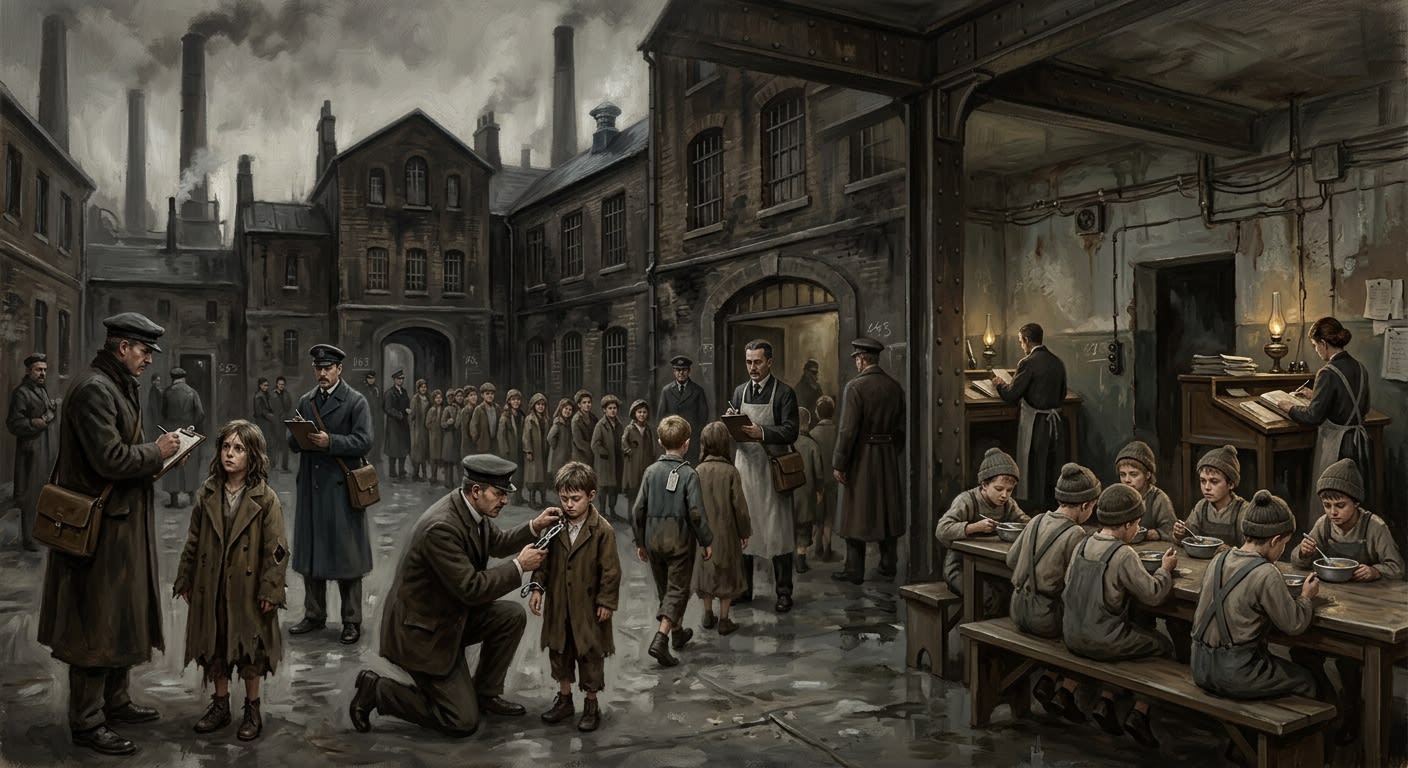
The Orphanarium is the Bureau of Mercy facility in which a child without acceptable custody becomes a child with paperwork. The public word is shelter. Records prefers intake. Purity prefers containment. The children prefer nothing, having learned quickly that preference is a dish served elsewhere.
It is a place, yes: grey stone, whitewashed corridors, locked courtyards, washing benches, dormitories in rows, a chapel with the Catechism of Obedience chained to its lectern, an intake gate where a clerk waits with a ledger while a Ward-Sister pretends warmth can survive in a building designed by procedure. It is also an apparatus. A body goes in with an old name, an old mother, an old grief. A registered minor comes out with a saint’s name, a ration card, a number, a placement class, and a future selected by persons who wash their hands before and after mercy.
The Orphanarium’s oldest maxim is stamped above the first washing bench in Strasbourg Central: “A child without paper is a demon’s invitation.” The phrase has soot, soap, and perfect policy in it. An unpapered child may be Pale Kin, root-tainted, plague-hidden, levy-evaded, famine-abandoned, lineage-contaminated, stolen, loved incorrectly, or merely lost. The Orphanarium corrects the ambiguity. Ambiguity is expensive.
#On Administrative Recovery
The Natal Registration Act of A.S. 158 gave the Orphanarium its sharpest modern function. Before that Act, orphan intake came from war, plague, poverty, Scour afterwash, condemned households, and the ordinary parental habit of dying inconveniently. After A.S. 158, a new class of child arrived: the administratively recovered.
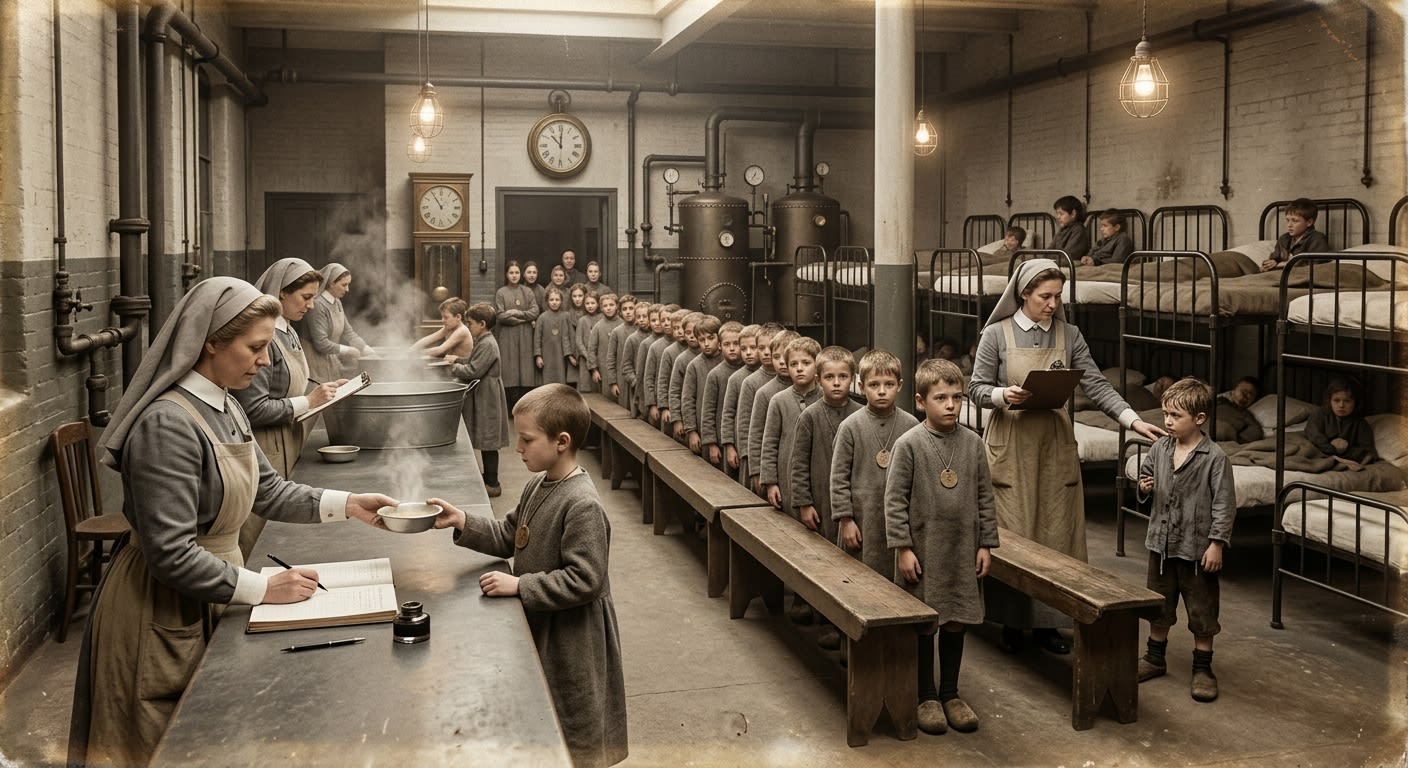
A recovered child is an unregistered infant or minor seized from a household that refused the Natal Registration Writ, concealed birth, failed Form 7-NR filing, evaded Womb Registrar notice, or stood too near a Purity raid with a baby whose name did not appear where a name should be. Records calls this recovery because theft sounds vulgar when entered in a clean hand.
Mercy teaching cards once defined ADMINISTRATIVE RECOVERY as “the restoration of a child to lawful care.”
Corrected. The child is restored to lawful custody. Care varies by ward, budget, season, staff piety, soup thickness, and whether the child keeps answering to a forbidden name.
At intake the child is washed. This is practical, symbolic, and cruel in the efficient Mercy manner. Dirt comes off. Lice come off. A mother’s smell comes off. The first ledger line is written after washing, never before, because the Bureau prefers to record the corrected body. Old garments are burned or tagged as evidence. Teeth are checked for age. Scars are mapped. Dialect is noted if the child can speak. Infants are measured, weighed, assigned condition, and handed to a grey-aproned sister whose tenderness has survived training in narrow strips.
Then the clerk names. Saint’s name from the approved list. District suffix where needed. Number. Ration class. Origin code. Registration mark. If an old name is known, it goes into a restricted margin or not at all. The margin is a graveyard with better penmanship.
#On Tags, Cots, and Bells
Every Orphanarium operates by count. Cot count. Bowl count. Tag count. Breath count in fever annexes. Lessons completed. Psalms recited. Shoes issued. Shoes returned. Blankets aired. Blankets missing. Children named, fed, placed. Children dead, transferred, corrected, unreconciled.
The Three-Tag System is the ordinary grammar of institutional childhood: name disk, ration disk, labour disk. The name disk proves the child has entered the Ledger or is being carried toward it under provisional seal. The ration disk opens the soup line. The labour disk anticipates usefulness, because the Synod dislikes leaving a living body without destination. A missing disk locks a ward. A mismatched disk summons audit. An untagged child is either a miracle, a crime, or an accounting failure; two of these are punished the same way.
The bells govern the day. Rising bell, wash bell, soup bell, lesson bell, silence bell, inspection bell, chapel bell, dormitory bell. Bells are excellent parents: tireless, impersonal, impossible to hug. The children learn to move when struck by sound. By seven, most line up before the second peal. By ten, the clever ones know which sister limps, which clerk drinks, which gate hinge complains, and which old name must never be spoken when the Registrar walks past.
Catechism schools attach to the larger houses. Ward-halls attach to the smaller ones. In bastion districts, the Orphanarium may share a wall with a Mercy ward, a ration kitchen, a quarantine room, or a levy depot, that admirable architectural confession that childhood, hunger, sickness, and war are merely four counters on the same abacus.
#On the Strasbourg Central Orphanarium
Strasbourg Central is the mother-house, though the word mother should be fined for trespass. It sits within Mercy jurisdiction, close enough to the Records traffic that amendment strips arrive before breakfast and close enough to Doctrine that the sermons never miss a child who might have preferred silence. Its intake corridor has been painted three times since A.S. 158. The old scratches return through the lime.
The Dormition Canticle trial of A.S. 134 gave Strasbourg Central one of its polished absurdities. Forty infants from Mercy wards were placed under observation while the Bureau of Mercy and the Bureau of Orison and Song tested an approved four-bar lullaby. Thirty-eight displayed “compliant rest.” Two slept. Both were later found deaf. The Canticle remains authorised, disliked, and useful to persons who smuggle better songs.
The A.S. 134 Dormition Canticle trial proved the efficacy of approved orphanage sleep-music.
Clarified. The trial proved that tired infants may become quiet under supervision, that deafness can resemble obedience, and that committees prefer measurements that flatter the minutes.
Beneath Strasbourg Central is the cabinet everyone official denies with theatrical modesty. The Order of the Root supplies the hardest intakes: children from condemned families, children whose bloodline charts make Purity smile too much, children brought in with witness ribbons around their wrists and surnames already suspect. Officially, reeducation is universal. Unofficially, one basement cabinet records a culling rate of approximately four per cent among Root intakes: too old, too attached, too fluent in the condemned household’s memory, too likely to carry the old name forward under the tongue.
STRASBOURG CENTRAL — BASEMENT CABINET INDEX Drawer: ROOT INTAKES. Column: Reeducation Outcome. Notation: FAILED — ████. Supplemental category: REMOVED WITHOUT DORMITORY ANNOUNCEMENT. Key custody: ████████████████. Mercy public position: cabinet nonexistent.
I have the key. This is not boast, though I savour the shape of it. Certain truths require a vain custodian; modest men misplace them out of good taste.
#On Memory as Contraband
The Orphanarium’s enemy is memory. Hunger can be answered with soup. Dirt with soap. Fever with quarantine or burial. Memory requires policy.
A child remembers a mother’s hand, a market song, a brother’s limp, the smell of onions in a room before soldiers entered, the wrong pronunciation of a saint’s name, the lullaby banned because it made ward children sleep without authorisation. Older children arrive carrying whole parishes behind their teeth. Infants carry less. Administrators, adopters, and cowards prefer them.
The Index Damnatus sends amendment strips each morning: names condemned, names struck, households dissolved, songs forbidden, lineages marked. An Index Runner delivers the strip. The Orphanage Registrar revises the roll. A surname that was merely sad at matins becomes contraband by noon. The child is corrected after soup.
The dormitory teaches erasure by repetition. Bells, drills, catechism, soup, wash, cot, silence. The approved name called at every count. The old name ignored until it sounds like a dream-error. The parent recoded into sin, disease, absence, or no explanation at all. No kin but the Synod. No claim but the tag. No past except the one the Ledger can afford.
#On Placement
The Orphanarium does not keep children for sentiment. It keeps them until use clarifies.
Guild masters request apprentices: small hands, strong backs, clear lungs, no remembered kin. Mercy wards request girls steady around blood. Choir schools request throats. Records annexes request patient fingers. Bastion kitchens request stirrers. The Order of Ash has an eye for children with poor attachment to property and a tolerance for smoke. Military offices prefer older boys who stand when shouted at and do not ask who signed the transfer.
Adoption exists, sweet little fig leaf. Respectable households ask for clean lineage, infant age, pleasant face, no dialect, no night terrors, no siblings, no tendency to answer to the first name. The Registrar interviews beneath Saint Moriah of the Ledger-Cradle and decides whether the family wants a child, servant, replacement, apology, inheritance prop, or warm object for a cold room. Fees clarify love wonderfully.
Failures are filed in softer ink. Children beaten by receivers. Children handed back when winter rations shrink. Children sold through shadow placement brokers with clean origin codes. Children who vanish between cot and cart. The official report calls intake “high but controlled.” That means the cots are full, the soup is thin, the tags are counted, and the deaths have columns.
#On the Present House
As of A.S. 201, Orphanarii operate in every bastion city, major corridor town, Mercy ward district, quarantine intake, and street roundup station west of the Sagittal Line. Dense houses stand in Strasbourg, Warsaw, Budapest, Bastion-Brest, Bastion-Sibiu, and Bastion-Constantinople. The war consumes adults and produces children. The Orphanarium receives both facts and calls the second mercy.
Recent Pale Kin sweeps have increased Administrative Recovery intakes. Levy tightening has increased surrenders. Famine districts send children with bread tokens sewn into cuffs. Purity sends children in carts that smell of smoke. Ward-Builders boast of empty Orphanarium beds; the Orphanarium answers with new ledgers.
At dusk the gate closes. The tag cabinet locks. The Registrar sands the ink. Ward-Sisters count breaths beneath the dormitory bell. Some children clutch their disks. Some mouth old names into blankets. Some sleep with the clean exhaustion of those too young to know precisely what has been stolen.