

#On Her Office
Captain Mavra is the bright noon face of the Bureau of Purity in the Maskwright Lanes of Thessaloniki, which is to say she is the officer appointed to make sin break loudly in public while the useful portion leaves by a quieter door. Her formal attachment is to the Salt-Scourge Detachment (Unregistered), coastal contraband suppression, demon-glass section. Her practical attachment is to every office in Thessaloniki that needs a crate smashed, a crowd frightened, a sermon justified, a fine assessed, a superior reassured, and a working lens delivered elsewhere before the ash settles.
She is called captain because Purity enjoys military weather around moral work. The title gives her warrant, baton, escort, chain-right in crowd dispersal, temporary custody over seized contraband, and the authority to shout at men whose legal superiors would otherwise require memoranda. The rank also permits Strasbourg to pretend that raids are operations rather than performances. One must admire the mercy of titles. They clothe naked compromise so the neighbours need not see its knees.
Mavra's jurisdiction is narrow in paper and broad in consequences. She does not command Thessaloniki. She does not command the Harbor Ledger Office, the chain towers, the under-quay pilots, the Maskwright guildlets, the Quarantine Crescent, the Drowned Row Syndic, or Glassman Dimo, whatever certain junior clerks imagine after reading her arrest counts. She commands the moment of public correction. In a city that survives by separating public correction from private necessity, that moment has become a small throne.
The records call her theatrical. This is true and insufficient. Theatre, properly understood, is discipline applied to sight. Mavra has made sight her weapon because demon glass itself is a crime of sight: a shard that shows, tempts, answers, warms under a dead name, gives a soldier a second eye, gives a widow a false son, gives War visibility and Purity a migraine filed under doctrine. A clumsy Purity captain fights the glass by breaking it. Mavra fights the city by deciding who watches the breaking.
Her service before Thessaloniki is recorded with the suspicious neatness of files prepared for future deniability. Born somewhere along the southern corridor; inducted through Purity's coastal auxiliaries; commended after a quay riot in which she dispersed forty-three fishmongers, six sailors, two shrine-beggars, and a monk with a knife without killing the monk, a restraint praised at the time as tactical judgement and later refiled as doctrinal patience. She learned riot work before optics work. This matters. A demon-glass raid is a crowd problem wearing a spiritual mask. The shard may be Hell's little window, but the crowd is the room around it, and rooms kill by pressure.
The Salt-Scourge Detachment acquired her after the A.S. 198 pressure from the east made every southern port hungrier for lenses and every Purity officer more eager to be seen refusing them. Mavra arrived in the Lanes with two qualities that made her immediately hated: she asked where the alleys went, and she believed the answers only after walking them herself. Within a month she knew which gutter carried kiln slurry, which saint niche hid a speaking-tube, which tea-shop had a back stair into a Bureau-Friend store, and which apprentice could vanish through a wall panel faster than a clerk could write minor suspect fled. That is how one governs a district. First smell it. Then threaten it.
#On the Noon Raid
Mavra stages raids at noon.
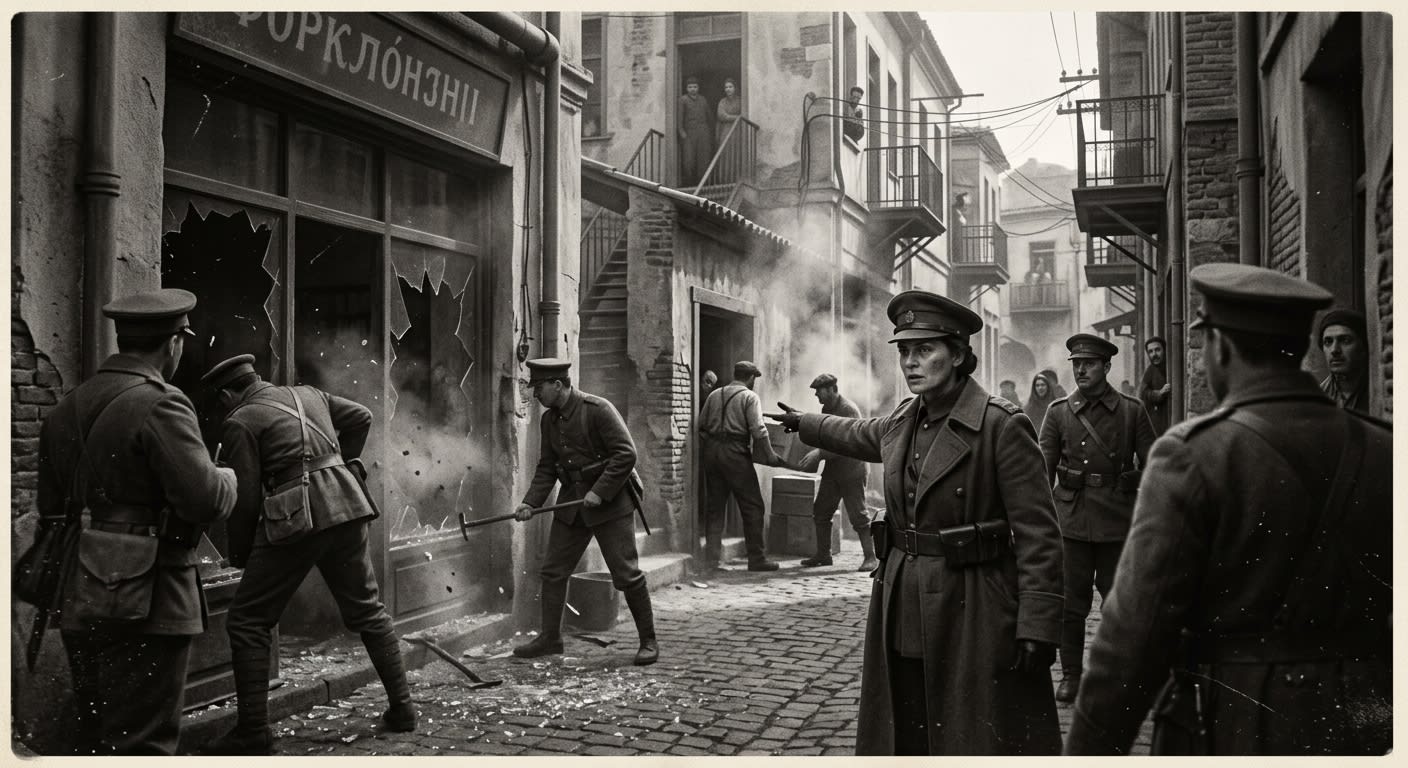
The hour matters. Morning belongs to cargo. Dusk belongs to under-quay movement. Night belongs to songs men deny hearing. Noon exposes sweat, fear, smoke, glass-flash, guilty faces, innocent faces useful for contrast, and the exact grade of ash rising from a crate when struck. The square becomes an altar with bad paving. The citizens gather because citizens will gather for any spectacle containing danger already surrounded by officers. The apprentices kneel because they have been told which knees to use. Velek reads the warrant in his dry, weather-report voice. Mavra arranges the rest.
Visible chains first. Never hidden restraint. Hidden restraint suggests abduction; visible restraint suggests order. Confiscation carts second, positioned so their wheels block the side alley without appearing to. Two junior Purity men at the fish-briner's corner. One veteran near the saint shelf. A sermon clerk with fresh throat-lozenges. A hammer wrapped in white cloth. Cracked glass in the top crate, one humming shard beneath the cloth, several lead blanks weighted like guilt. Smoke if the crowd is large. Less smoke if visiting auditors stand too close, since auditors cough like men hoping illness will become analysis.
The Bureau-Friends prepare the crate. Mavra knows they prepare it. They know she knows. The bargain is not spoken because speech would force doctrine to sit beside logistics and both would complain about the smell. A proper decoy crate contains enough truth to die convincingly: one active shard, blanks, stale reliquary bands, bad invoices, and tools bearing initials belonging to someone already far away. The crate is genuine contraband trained to perish for better contraband. Mavra's genius lies in giving that martyrdom a crowd.
She prefers spectacle, according to every Polisher account I trust and several I distrust profitably. Cracked glass, reliquary bands, enough smoke to make citizens step back. The preference serves more than vanity. Smoke widens a square. A frightened crowd retreats in waves. A wave reveals alleys. Alleys reveal runners. Runners reveal which shop expected the raid and which shop is about to become useful by accident. While citizens look at the hammer, Mavra looks at the people looking away from it.
Her cordons are famous among men who survive them. The front rank is never the strongest rank; strong officers frighten civilians into pushing. She places broad men at the second line, thin men at the alley mouths, veterans near children, and eager idiots beside carts where they can injure wood rather than procedure. She keeps one woman officer visible whenever a shopwife must be taken. Delicacy has not been budgeted; the crowd reads hands before it reads warrants. A rough grip at the wrong elbow can turn a raid into a grievance. A grievance feeds Revelators better than coin.
The hammer-bearer is rotated. This is her own rule. Purity's older practice gave the hammer to the same muscular fool until he became fond of the sound. Fondness ruins instruments. Mavra chooses a man steady enough to strike, frightened enough to obey timing, and dull enough not to improvise righteousness. If the shard flashes, he drops the hammer. If the shard sings, he steps back. If the shard says his name, he is struck behind the ear by the reserve officer and thanked later if memory permits.
A Bureau of Purity commendation described the A.S. 200 Lantern-Shelf seizure (Unregistered) as “spontaneous discovery of concealed demon-glass stock.”
Corrected for restricted circulation. The stock had been placed for discovery. The discovery was spontaneous only in the sense that the hammer fell when Mavra raised her hand, and no earlier.
The smash must be timed. Strike before Velek finishes the warrant and the action looks anxious. Strike too late and the shard may hum long enough for the crowd to hear a name. Mavra waits until the legal syllable gives way to public appetite. The hammer drops. The crate splits. A shard flashes. Someone screams, often by instruction, sometimes by vocation. The sermon begins while the smoke is still honest.
#On the Lanes and Their Necessary Criminals
The Maskwright Lanes hate Mavra as a fisherman hates tide: bitterly, constantly, and with a professional understanding that hatred will not move the water.
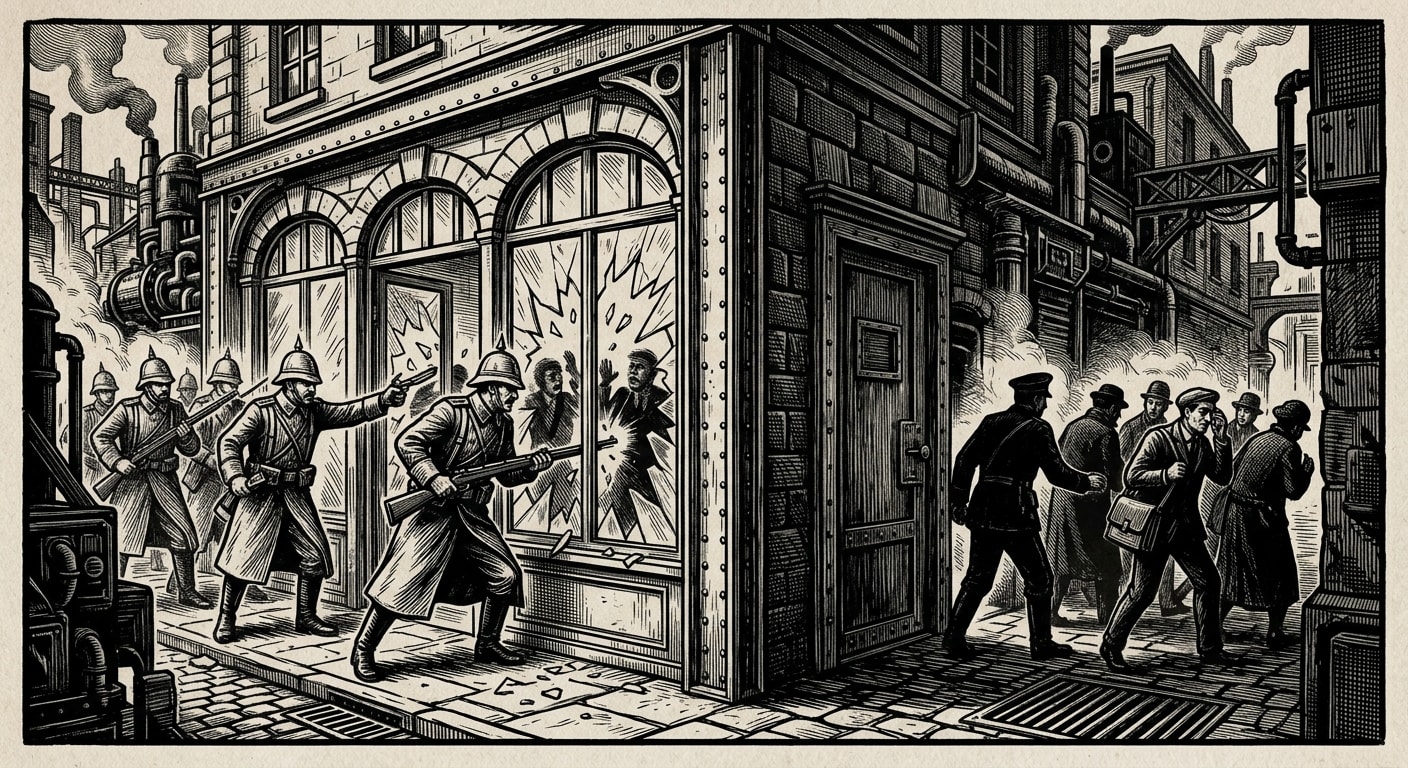
The Lanes are no simple den of vice, a phrase beloved by visiting Purity officers because it lets them stand at one end of a street and imagine theology has shortened it. They are craft, War supply, contraband artery, child labour school, demon-glass finishing district, civic embarrassment, and respiratory insurance for coastal regiments who would otherwise meet Thracian fog with bare eyes and optimism, the cheapest grave available. Legal masks hang in the front rooms. Illegal eyes wait behind them. Every counter has two prices. Every kiln has a saint and a route out.
Mavra knows this. She knows where Dimo keeps the display stock and where he does not. She knows which Stainwright pays early, which Quietist lies badly, which Revelator will sell a widow-pane after curfew, which Grit-Runner can be frightened into carrying a crate and which child should be left alone because the Lanes will close ranks around injured innocence faster than any Bureau can close a docket. She knows Dimo's closed-eye mark, Saint Varda's pencil icons, the smell of lead warmed too quickly, and the difference between a pane made quiet by craft and a pane gone quiet because it is listening.
Her relationship with Dimo is the city's favourite unspoken sentence. Publicly he is a suspect, an illicit Stainwright, a tolerated wound in the Lanes, a burn-scarred craftsman whom Purity questions and fails to break. Publicly she is the captain who raids his district, smashes crates he helped pack, posts notices on walls he paid to have limewashed, and reports periodic progress in suppressing demon-glass contamination. Privately neither must like the other. Liking would cheapen the arrangement. Respect is already dangerous enough.
A staged raid requires real risk. Demon glass does not become theatrical simply because men use it as prop. The shard may answer. The blank may not be blank. The cloth may warm in the wrong hand. A child may forget not to look. A crowd may hear a dead name and turn its fear toward the nearest uniform. Mavra's raids work because she understands the line between a controlled spectacle and Varna in miniature. Purity learned from the Mirror Riot of Varna that a hammer can make glass more public than the glass ever deserved to be. Mavra learned to make the public believe the hammer had saved them.
PURITY AFTER-ACTION FRAGMENT — MASKWRIGHT LANES, A.S. ███ Decoy Crate Two struck at proper interval. Expected flash: white-green. Actual flash: ███████████████████. Crowd response contained by Captain Mavra's left cordon. One apprentice heard mother's voice from shard and attempted approach. Disposition: apprentice reassigned / apprentice removed / apprentice never present. War requisition wagon departed during smoke.
The Quietists distrust her because even a staged raid wakes glass. Revelators despise her and then price her raids into their private sittings by supper. Bureau-Friends court her through advance notice, acceptable losses, and crates that perform their guilt with professional restraint. Dimo says nothing, which in Thessaloniki is the language of treaty.
She also knows what cannot be touched. Saint Orelia (Unregistered), Dimo's singing apprentice, remains unseized despite three observation memoranda, two Purity complaints, and one sermon draft so hot with righteous stupidity that the paper should have curled. Mavra has stood within ten paces of the girl during a raid and looked elsewhere. This has been interpreted as corruption by men who enjoy easy words because they require no map. Orelia's melody quiets certain panes. Remove the girl and the Lanes grow louder, War's lenses become less stable, Quietists lose proof, Revelators gain customers, Dimo hardens, and Purity inherits a district full of glass that has stopped being afraid of adults. Mavra may be compromised. She may also be able to count.
#On Inquisitor Velek and the Uses of Dry Men
Inquisitor Velek reads the warrant. Mavra arranges the world in which the warrant will seem to matter.
This division of labour is one of Thessaloniki's cleaner obscenities. Velek is documentation: seals, docket numbers, names pronounced correctly, jurisdictional clauses, forfeiture phrases, all the little legal bones that let Purity walk upright in public. Mavra is choreography: sightlines, cordons, smoke, kneeling bodies, hammer, carts, retreat routes, and the officer near the alley who knows to look bored until the useful crate has gone. Velek makes the raid lawful. Mavra makes it legible.
The two are often paired because each corrects the other's deficiency. Velek alone would produce beautiful paperwork around a disorderly seizure and might end by discovering actual contraband, which would inconvenience too many departments. Mavra alone would produce efficient public terror and then spend three days having her report chewed by clerks whose courage lives in red ink. Together they create that rare creature of the Synod: an operation that satisfies doctrine, logistics, and theatre without requiring any one of the three to confess acquaintance with the others.
Their mutual dislike, if it exists, has never been allowed to become inefficient. Velek dislikes smoke because it ruins paper. Mavra likes smoke because it ruins certainty. Velek wants names he can pronounce without looking foolish. Mavra wants names the crowd can repeat before nightfall. Velek keeps clean cuffs. Mavra's gloves smell of ash. If they were capable of marriage the city would be safer and far less entertaining.
#On War's Clean Hands
War is absent from Mavra's raids in the way a rich man is absent from the knife he hired.
The Bureau of War wants masks. The Sister Trenches need them. The southern coastal batteries need them. Patrol officers in brine-fog need lenses that show movement before movement becomes teeth. Since Maldrake's A.S. 198 pressure and the shard glut across Zones 5 through 7, demon-glass optics have moved from scandal to appetite under a new label. Optical Supplies, Standard. Three words, white as fresh lime over a plague pit.
Purity wants arrests, sermons, broken crates, and public proof that contamination is being suppressed. War wants functional lenses arriving by night convoy through channels whose official existence would make Purity choke on its own mantle. Mavra stands where these wants meet. She gives Purity the cracked glass. She gives War the silence in which the real crate leaves. She gives citizens the comfort of seeing evil broken. She gives Doctrine a clean paragraph. She gives Tithes a fine. No wonder everyone suspects her. Virtue rarely feeds so many offices.
Southern Logistics (Unregistered) notation: “No coordination exists between Purity seizure schedules and War optical requisition routing.”
Clarified after comparison with harbour departure bells. Coordination does not exist in writing. In Thessaloniki, unwritten coordination is called tide, smell, habit, cousinage, rain, and knowing when Captain Mavra has ordered smoke.
Ledger-Ghost Tamsin supplies papers for persons and parcels that officially never arrived. Pilot-King Nenos supplies water, submerged hatches, blackened lanterns, and that ugly harbour accuracy which outranks licence during fog. Mavra supplies noise. Call the system conspiracy if one enjoys stage words. It is a machine made of denials, and machines need each part to misunderstand itself just enough to turn.
There are limits. Mavra has, according to one sealed note from the Harbor Prefect's office (Unregistered), refused at least two proposed raids because replacement decoy stock was not prepared. Purity filed irritation. War filed relief. The Lanes filed nothing and moved less that week, which tells the Bureau more than testimony would have. A false raid without a crate kills confidence. A true raid without warning kills the supply chain. A captain who knows the difference is already too useful to discipline casually.
#On Her Character, Such As the Ledger Permits
Mavra is known less for mercy than for selection.
This distinction matters. Mercy concerns itself with suffering. Selection concerns itself with effect. Mavra will let one apprentice run if the run draws the crowd's eye from a doorway that must remain unused. She will arrest a shopwife whose innocence is socially sturdy enough to survive a night in holding and whose release by dawn will prove Purity's fairness to a district that does not believe in fairness but appreciates theatre. She will break a bad pane with her own hand rather than trust a junior hammer. She will leave a child kneeling in the square if lifting him would make the sermon seem weak.
Her courage is visible in small habits. She stands close to the crate when it breaks. Not too close; courage without geometry is suicide wearing perfume. Close enough that the crowd believes she shares the danger, far enough that a hook-grade sliver will enter the hammer-man first. She keeps her head turned slightly aside during flash. She watches reflections in cart rims. She never lets white cloth touch her bare hand. She speaks to apprentices by role rather than name during raids, denying the glass any syllable it might use. These are the habits of a woman who has seen one public seizure go wrong and kept the lesson instead of the scar.
Whether she believes in Purity is the wrong question. Belief is for novices, martyrs, and men writing pamphlets after wine. Mavra believes in intervals: warrant to strike, strike to sermon, sermon to fine, fine to reopening, reopening to next warning. She believes in noon because noon shows exits. She believes in smoke because smoke makes citizens obedient to shape rather than fact. She believes in the Bureau because the Bureau gives her a legal hammer. She believes in the Lanes because the Lanes give her something to hammer. Between those beliefs a career can stand upright.
There is vanity in her. Of course there is. A captain who arranges public righteousness without vanity would be either a saint or a corpse. She knows the square watches her before it watches Velek. She knows the hush before her raised hand. She knows the crowd will remember her silhouette in noon smoke and confuse that memory with safety. She has not corrected them. Correction is for errors that damage procedure.
#On the Case of the Unbroken Crate
One story from the Lanes clings to Mavra because it irritates every faction equally, which recommends it to the historian.
In late A.S. 200, during quota pressure after a sequence of Revelator incidents near the pilgrim inns, Purity ordered a punitive sweep down Saint Varda's side-street. The order came too fast. Bureau-Friends had prepared two decoys, not five. Dimo's corner had three active orders awaiting War pickup. A Revelator booth had a widow-pane warm under cloth. The Lanes smelled wrong that morning, according to three accounts: less hot sand, more wet lead. Mavra arrived at noon with Velek, two carts, sixteen officers, and a sermon clerk still chewing breakfast fennel.
The first crate broke clean. The second flashed green and died. The third crate, placed outside a shuttered devotional glazing room, began to hum before the warrant reached forfeiture language.
Mavra did not strike it.
This is the whole scandal.
She ordered the square cleared, arrested the wrong man on purpose, fined the nearest legal mask shop for blocked frontage, and withdrew under a smoke order so excessive the Salt Tribunal complained about visibility from two streets away. By nightfall, three stories competed. Purity said operational discretion. The Lanes said Mavra had heard her own name. Revelators said the crate contained a pane showing the captain without eyes. Quietists said the crate was too quiet and alive. Bureau-Friends said nothing because survival had not made them fools.
The incident neither ruined nor promoted her. That tells us more than either outcome would have. A ruined captain had made an error. A promoted captain had provided a victory. Mavra had done something more useful and less comfortable: she had prevented an event from becoming legible. Bureaucracies prefer failures to prevented disasters because failures have bodies, costs, culprits, and margins. Prevention leaves only unease and an officer who must be kept because she knows why the unease is alive.
#On Her Present Use
As of A.S. 201, Captain Mavra remains active in Thessaloniki. The Maskwright Lanes continue producing legal masks and illegal eyes. Dimo remains unarrested. Velek continues reading warrants. Bureau-Friends continue packing crates according to audience. Quietists thicken lead. Revelators court disaster at a profit. Tamsin's papers keep walking where people cannot. Nenos's skiffs pass under chain-hum. War receives lenses. Purity breaks glass. Doctrine condemns the arrangement with appropriate posture.
Mavra's arrest counts are respectable, though less impressive once one subtracts decoys, selected scapegoats, and persons released after their usefulness had been displayed. Her seizure values satisfy Tithes without inviting audit deep enough to find the wrong crate. Her sermons, when she speaks them herself, are short and ugly. She has no taste for elaborate purification rhetoric. She tells the crowd that glass lies, that Hell charges interest, that the Bureau has broken the visible infection, and that anyone retaining shards after notice will be corrected with less patience next time. The crowd believes the threat and doubts the victory. This is the proper civic ratio.
The question hanging over her file is simple enough for a child and insoluble enough for Doctrine: has Captain Mavra been corrupted by the Lanes, or has she made corruption arrive on schedule? The first answer flatters Purity. The second frightens it. I favour the second, because I have known corruption. It is rarely punctual without talent.
Her enemies multiply in useful directions. Hardline Purity officers dislike her staged seizures because they suspect performance has replaced suppression. They are correct and late. Revelators dislike her because she ruins uncontrolled incidents before they can become legends. Quietists dislike her because she wakes glass, then leaves them to quiet what the raid has stirred. War dislikes speaking of her because gratitude would create a paper trail. Dimo, if he dislikes her, does so in the disciplined silence of a craftsman whose kiln still receives fuel.
No recall order is pending. No commendation has been issued beyond ordinary seizure praise. No disciplinary hearing has survived preliminary scheduling. The file remains open, which is how the Bureau embraces a knife it may need to use again.
At noon, in the Lanes, the crowd gathers before it knows why. A cart arrives. Velek clears his throat over a warrant. Dimo's shutters close halfway. A child with ash-grit under her nails vanishes through the fourth exit. Mavra lifts her hand. Somewhere under the quay, a real crate begins moving.