
#On the Office That Pretends to Be a Rumour
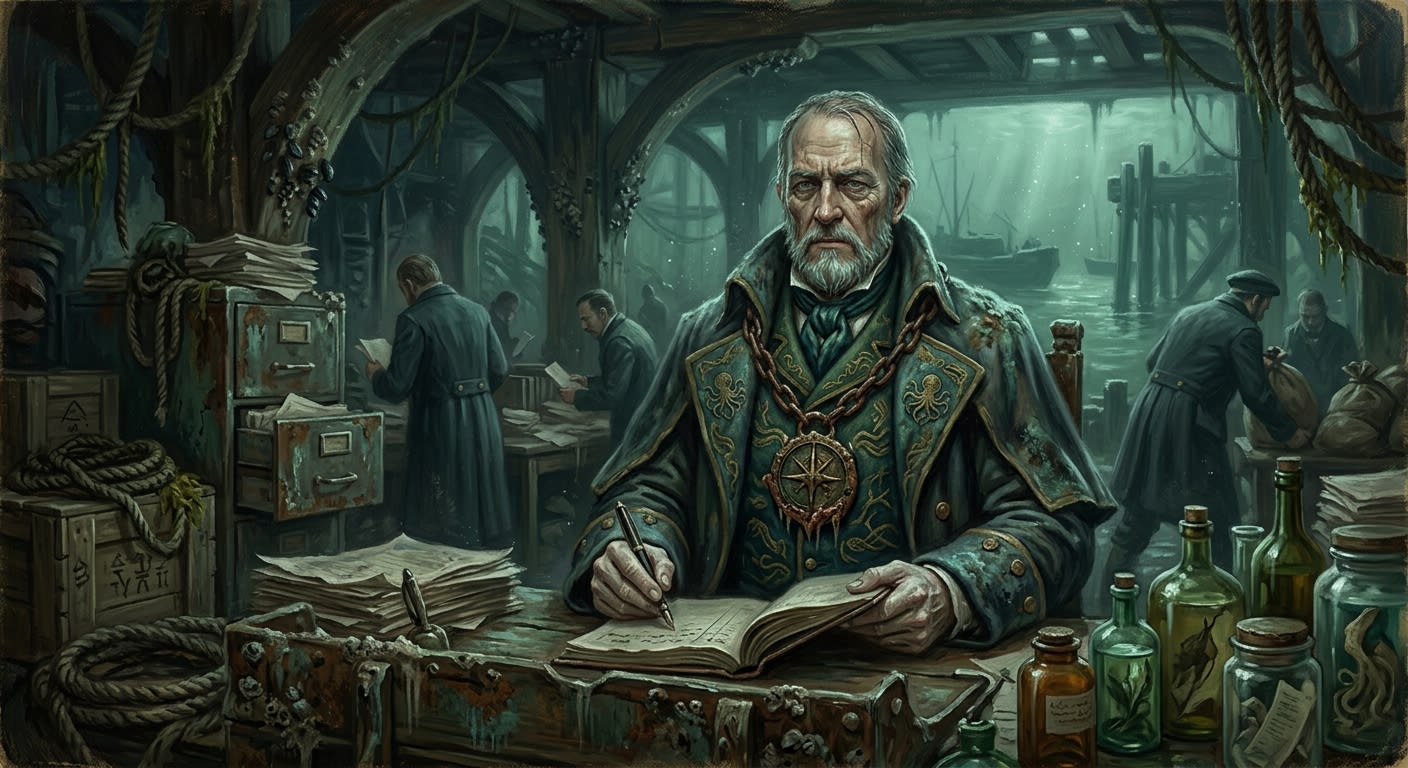
The Drowned Row Syndic is the authority beneath Thessaloniki that no authority admits exists. The title names a person, a chair, a debt-chain, a council of hatch keepers, a smuggler's fiction, a Bureau convenience, and, on nights when the chain-hum comes through the teeth, a silence at the back of the tavern where no one sits without being invited. This ambiguity is not a defect in the file. It is the file's subject.
The Syndic governs Drowned Row without banners, offices, seals, uniforms, registers, or the other costumes by which weak institutions reassure themselves that power has been properly dressed. A dockhand finds his berth token restored. A Purity raid strikes the wrong crates with magnificent timing. A night pilot receives rope, lamp oil, and warning before the fog leans toward names. A corpse becomes cargo, then damp loss, then archival correction. Each act appears local. Together they form a hand.
The Bureau of Records refers to “under-quay coordination anomalies.” The Bureau of Purity says “criminal maritime fraternity.” The Bureau of Shadows says nothing in public and too little in private, which is often how one knows Shadows has learned something useful. Sailors say the Syndic knows which hatch owes which death. Clerks say the Syndic's runners know when a bundle has been sealed before the wax cools. Children in the Row say nothing at all, because their elders teach them early that names are hooks.
I do not know whether the Syndic is one body. I know the office behaves with more continuity than most bodies and more intelligence than several ministries. That is enough to begin.
#On the Seat Behind the Third Hatch
The usual account places the Syndic's seat behind Third Hatch, in a room once used for spare chain pins and now lined with blackened saints whose faces have been rubbed away by smoke, palms, salt, or prudence. The room has three entrances: a stair from the Low Rope, a water door opened from below, and a wall panel in a closed tavern whose signboard still reads The Four Honest Pilots, which proves the Row's humour has always tended toward cruelty.
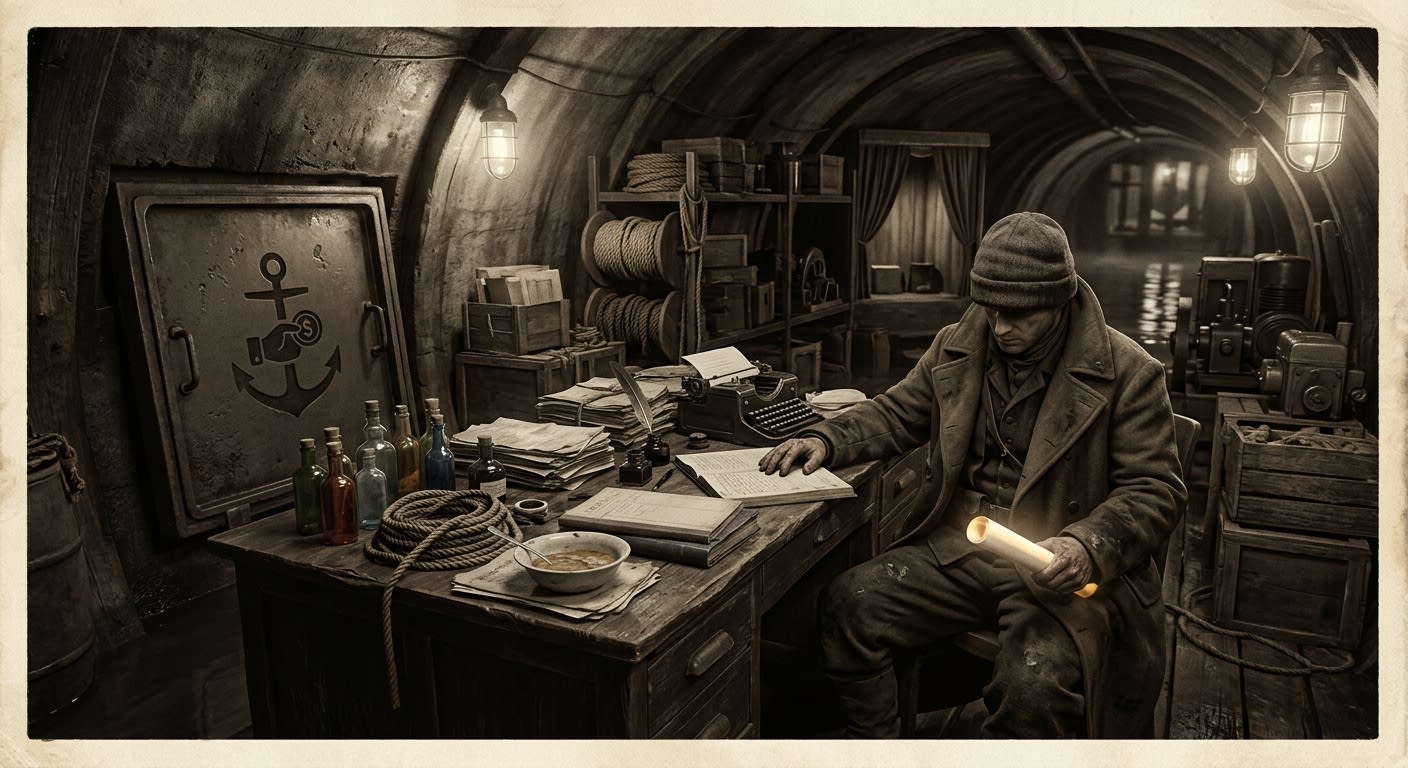
This account is half theatre. Third Hatch matters because people believe decisions come from it. Decisions also come from the rope-market benches, the widow tables, the skiff slips below Saint Phocas Chapel, two rooms under the Maskwright Lanes, and, on three documented occasions, from a fish cart parked beside a quarantine drain. The Syndic's genius lies in making location useful and truth unnecessary.
The seat itself is described in witness accounts as a chair, a crate, a bench, a ledger-stand, and a coil of rope. One Purity informant insisted the Syndic never sits, because sitting would imply a posture the law might subpoena. Another claimed the Syndic sits only when judging rope debt, glass breach, or child-sale, three crimes the Row treats with different knives. A third described an empty chair before which every petitioner spoke as if someone occupied it. This may be superstition, discipline, or a better court design than anything currently maintained by the Bureau of Justice.
The title “Syndic” entered upper harbour files after A.S. 151, when the Mirror Riot of Varna remade contraband discipline across the southern ports. Before that, references speak of hatch elders, rope widows, tide brokers, and “the person who answers below.” By A.S. 184, Purity raid transcripts used Syndic as though the word had always existed. By A.S. 198, during the Silence of Thessaloniki, even Harbor Ledger clerks were writing it in margins they later claimed belonged to someone else.
Provincial Purity histories identify the first Drowned Row Syndic as a smuggler named Braso Vale, hanged A.S. 162.
Corrected. Braso Vale existed, smuggled, confessed, hanged, and provided Purity with a tidy founder because untidy systems offend sermon structure. The office predates him and continued issuing decisions while his body was still warm enough to steam in harbour fog.
The Syndic began as a solution to flood and debt. When maintenance arches became lodgings and lodgings became trade, quarrels multiplied below the quays. Rope debt killed men. Hatch rights drowned families. A bad pilot could ruin three crews before dawn. An argument over whether a flooded room remained rentable produced seven knife wounds and one audit, the latter being the real catastrophe. The Row required a peace strong enough to prevent inspectors from entering. It invented the Syndic, or the Syndic invented itself through everyone else's need. History loves such chicken-and-egg questions. Administration bills both.
#On the Syndic's Four Hands
The Syndic has four hands. This is not anatomy. It is procedure.
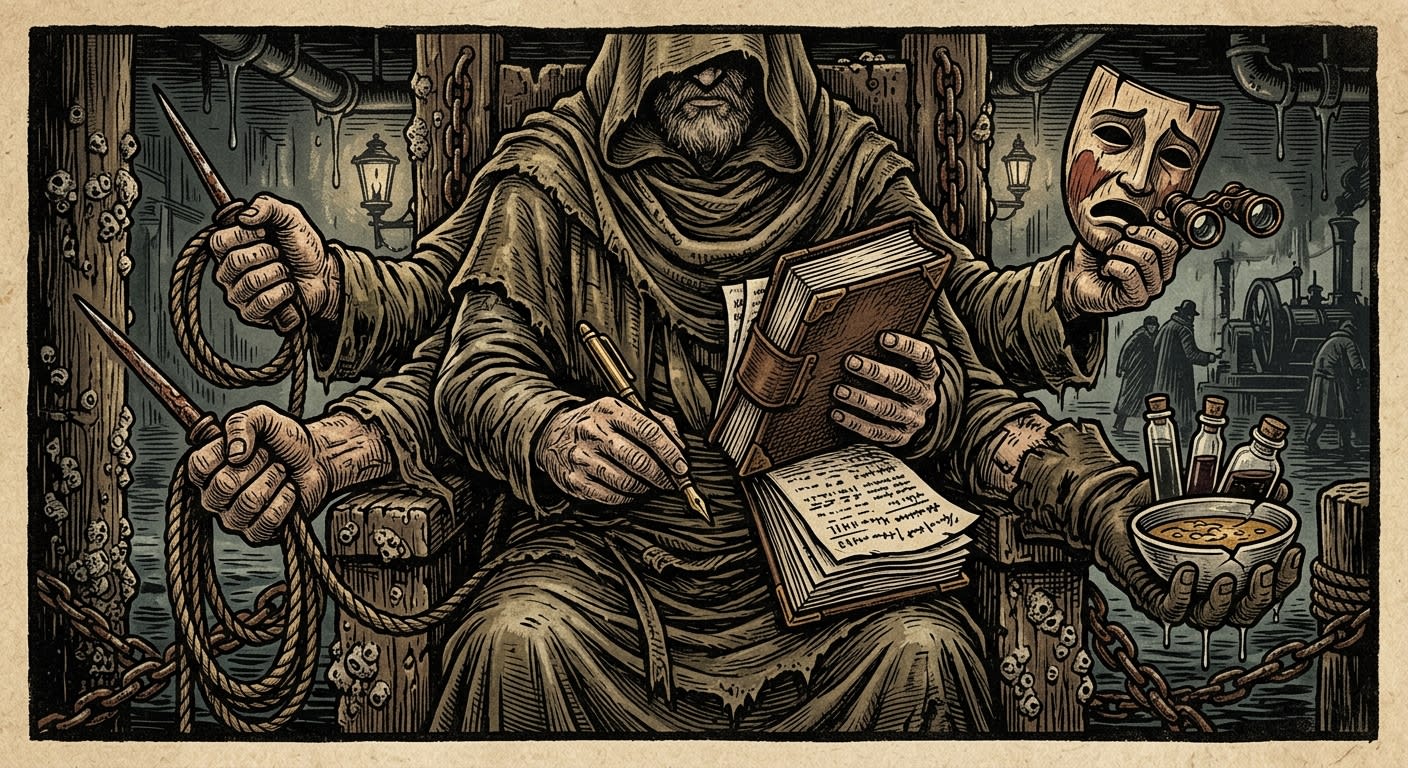
The first hand is rope. Rope means access: hatch keys, berth tokens, stair chains, tied sleepers, skiff lines, crane hooks, mooring slips, and the little loops by which a man proves he belongs in a room before a knife proves the opposite. Rope-masters answer to the Syndic because the Syndic keeps rope debt from becoming rope war. A household late on berth payment may lose a shelf for a week. A pilot who cuts another pilot's line without warning loses two fingers, unless the cut prevented Choir attention, in which case he receives ale and suspicion.
The second hand is water. Nenos stands nearest this hand, though he would deny standing under anyone. Under-quay routes, night pilotage, submerged hatches, fog-window crossings, quiet skiffs between legal piers: all pass through a geography the upper harbour insists is either sealed, unsafe, or imaginary. Water-hand runners mark tides in chalk and debt in fish-gut ink. They know which drain carries voices, which hatch sticks in brine-freeze, which route must be avoided when the Elder speaks in the Younger's note with too much sweetness.
The third hand is paper. Here stands Ledger-Ghost Tamsin, or her school, or the absence that writes with her broken-tailed g. False arrivals, corrected manifests, quarantine misroutes, damp losses, berth delays, cargo identities, useful arithmetic errors: paper-hand makes the illegal harbour legible enough to survive. It does not make crimes lawful. It makes them boring, which is more durable.
The fourth hand is theatre. This is the hand Purity understands least and requires most. A raid must find sin. A crowd must see it found. A sermon must have broken glass, confiscated wax, chained offenders, smoke, and some trembling article of contraband that looks sufficiently wicked while being sufficiently expendable. The Syndic supplies such sins in proper measure. Purity leaves satisfied. War receives its masks. Tithes counts fines. Shadows follows the surviving scent. The Row reopens by dusk.
The fifth hand, if one accepts the contradiction, is hunger. No authority in Drowned Row lasts without feeding somebody. Soup, berth time, dry shelf priority, rope rights, medicine moved before stamps, a child hidden until a name cools: these small mercies purchase deeper obedience than fear alone. The Syndic is feared. The Syndic is also owed. Debt with gratitude in it is the hardest shackle to unlock.
#On Strait-Rats, Glass, and Reliquary Lies
The Syndic's trade reaches beyond Thessaloniki. It touches the Strait-Rats of the Bosporus, the smuggler-sailors who hide demon glass in reliquary crates and sell possible salvations to pilgrims with more grief than sense. Officially, such men do not exist. Officially, contraband does not exist unless confiscated. Officially, I am beginning to tire of the word officially.
The routes run from Thracian Wound-sites, Wrath slag, Lust ruin-palaces, and half-sunk ferry docks through reliquary freight streams into harbours that require piety from cargo and silence from crews. A Dock-Shadow carries rope. A Seal-Mate warms wax and copies scripture-impress. A Strait Pilot owns a crossing. A Reliquary Surgeon builds the cavity where glass lies beside saint-bone, each contaminating the other's reputation. By the time a crate reaches Drowned Row, it has acquired three histories, two blessings, one false grief, and a smell of lead that makes honest inspectors look away because honest inspectors are expensive to replace.
The Syndic does not own every shard. Ownership would be vulgar and prosecutable. The Syndic owns timing. A crate that arrives too early attracts appetite. A crate that arrives too late attracts questions. A crate that arrives during noon raid becomes a sermon prop unless it has paid for the better darkness. Timing is the Syndic's sacrament: bell overlap, fog tilt, Quarantine smoke, Purity boredom, Ledger fatigue, War urgency, and the exact hour when a clerk's hand aches enough to accept the small arithmetic error Tamsin has prepared for him.
Demon glass is dangerous cargo because it listens. Raw shards warm through lead prayer-plates. Hook-grade fragments tempt handlers to correct their sins in the reflection. Lust-court panes hum just below the ear. Wrath-slag pieces settle into teeth. The Syndic's rules are severe: quiet-boxes stay sealed; boys do not carry glass after dark; crates that answer in harmony go overboard; any runner who opens a shard at sea is beaten before the glass can finish negotiating. Mercy waits until after containment.
UNDER-QUAY INCIDENT NOTE — LATE A.S. 200 Seal-Mate opened a quiet-box below Third Hatch after claiming the crate spoke in his mother's voice. Witnesses report the shard showed the room filled with water although floor remained dry. Syndic order: box shut; man bound; route burned. Subsequent ledger entry lists him as “transferred inland.” Chain Link ███ bore his name at next inspection.
The Bureau calls this smuggling. The Row calls it avoiding stupidity. Both statements fit the crate.
#On Tamsin, Nenos, and the Question of Command
The recurring administrative fantasy is simple: find the Syndic, seize the Syndic, and Drowned Row collapses into ordinary crime. This fantasy should be preserved in amber as an example of inland optimism. The Syndic is not a nail in a board. The Syndic is the pressure by which the board stays against the wall.
Tamsin's papers do not merely serve the Syndic. They limit the Syndic. A route without paper becomes piracy. Paper without route becomes forgery. Each needs the other and resents the need. Tamsin can make a vanished witness appear as damp cargo, but she cannot put the cargo through a hatch. Nenos can put a skiff under a chain in fog, but without Tamsin's corrected arrival the skiff becomes a story told during interrogation. The Syndic arbitrates the hatred between competence types.
Nenos refuses subordination in language rich enough to damage plaster. He has one eye, one skiff, and enough accuracy to make arrogance useful. He obeys the Syndic when the order is correct, ignores the Syndic when the water contradicts it, and survives because the Syndic knows the difference between disobedience and tide. During the A.S. 198 Silence, Nenos refused every passage while cargo spoiled and captains threatened. The Syndic did not override him. This restraint saved vessels, cargo, and the Syndic's own authority. A ruler who cannot recognize a correct refusal is a bell without bronze.
Harbor Prefect-Archivist Iolana sits above this with the air of a woman who would rather cauterize the under-quays than admit they keep her harbour breathing. She knows enough to hate the Syndic accurately. Lost paperwork resurrection and under-paper correction resemble each other too closely for comfort. Iolana's legal resurrection returns documents through fee, witness, and docket. The Syndic's illegal resurrection returns persons through damp loss, false cargo, and Tamsin's ink. Rival liturgies, same corpse.
A sealed Records proposal of A.S. 199 recommended “decapitation of under-quay leadership through Syndic arrest.”
Returned for revision. Decapitation assumes a head. The under-quay system demonstrates hand, spine, stomach, purse, throat, and several teeth. Arresting one actor may satisfy diagrams. It will not move grain, masks, witnesses, or blame.
This is the question of command: who gives the final order when paper, water, rope, and theatre disagree? The answer changes by hazard. In fog, Nenos. Under audit, Tamsin. During raid, theatre-hand. During famine, the soup widows. During Choir attention, any grandmother with salt-wool and enough arm strength to bind a sleep-singer. The Syndic's power is the right to make these temporary sovereignties recognize each other before they start killing profitably.
#On Justice Below the Quays
The Syndic's justice is narrow, fast, and interested. Do not mistake it for virtue. Virtue is what cities paint after the drains have been cleaned by people too tired to attend the unveiling. The Syndic keeps order because disorder invites inspectors, blocks routes, spoils cargo, and lets the Drowned Choir harvest fools who should have been tied sooner.
The Row's worst crimes receive practical punishments. Bad rope sellers drown with their own coil, because bad rope kills later and later murder is still murder. Child-sellers are marked behind the ear and handed to women whose sons were taken by debt brokers; the Bureau has requested details and been denied for reasons of taste. Name-thieves lose tongue, hand, or memory depending on method. Runners who counterfeit another runner's mark are made to carry decoy crates during the next visible raid. They sometimes survive. Survival is not acquittal.
This justice offends the Bureaus because it is unlicensed and because it sometimes solves problems before forms can mature. Yet the Row's law has limits. It protects its own when its own remain profitable, useful, owed, feared, loved, or watched. The unprofitable vanish. The friendless pay full price. Refugees without sponsors depend on soup widows and luck. A deserter may become cargo or sermon depending on who needs what by dawn. The Syndic is no saint. Saints require canonization. The Syndic requires functioning hatches.
The Syndic's most hated rule is the no-shouting rule during Choir nights. A man may be robbed quietly, beaten quietly, even killed quietly if the room has paid for disposal, but shouting near a wet floor during under-note rise brings collective violence down on the offender. The Choir likes opened mouths. The Row closes them. Theology sometimes begins as manners enforced by terrified neighbours.
#On Tribute, Soup, and the Price of Quiet
The Syndic's treasury is not a chest. Chests are for amateurs, pirates, and provincial abbots who have confused wealth with objects heavy enough to hide under a bed. The Syndic's treasury is obligation distributed through the Row until seizure becomes arithmetic work too tedious for Purity and too revealing for Records. A barkeep owes three favours because his brother was removed from a quarantine list. A rope-master holds six berth tokens whose owners died respectably on paper. A soup widow has the right to demand two runners on fog nights. A document hand keeps unused names in a tobacco tin, each one more valuable than coin because coin cannot become a person when the bells are wrong.
Payment moves in humble forms: salt chits, dry socks, lamp oil, fish hooks, wax scraps, berth time, clean bandages, coffin nails, and the little copper saints that sailors pretend are charms while using them as bribe weights. Large coin attracts large memory. Small goods dissolve into daily hunger. The Syndic prefers hunger's currencies because hunger spends itself before auditors arrive.
The soup kettles are the Syndic's softest instrument and the most dangerous. Every evening, under the Low Rope and behind Saint Phocas Chapel, kettles boil with eel heads, barley sweepings, salt-lime, bruised onions, dock greens, and whatever meat has passed inspection by women whose standards are practical rather than printable. The hungry come. Runners listen. Debts are forgiven, counted, shifted, sweetened. A boy who eats today may carry a message tomorrow. A widow who receives medicine may identify a corpse falsely next week. A deserter fed under a false name becomes either recruit, cargo, witness, or warning, depending on which office becomes hungry first.
This is not charity. Charity has banners and visiting dignitaries. This is governance conducted with ladles. The Bureau of Mercy despises it because it works without certificates. The Bureau of Tithes despises it because soup refuses clean valuation. The Bureau of Purity despises it because full stomachs make people harder to frighten and empty stomachs make them harder to control. The Syndic understands a fact many grand offices have misplaced: a district that eats together lies together.
Tribute from the glass routes is sharper. Demon-glass freight pays in percentages no ledger states plainly: one cut to the water hand, one to paper, one to rope, one to theatre, one to the widows whose sons are used as decoy sinners when Purity requires visible triumph. The best payments are not made after delivery but before risk, because risk shared beforehand becomes conspiracy, while profit shared afterward becomes dispute. The Syndic's collectors arrive early, politely, and with exact knowledge of how many mouths the debtor has upstairs.
An A.S. 200 Tithes note described Syndic tribute as “unstructured extortion.”
Amended under protest. The structure is clear: protection, routing, silence, replacement labour, sacrificial exposure, and burial adjustment. Tithes objected less to extortion than to a tariff table it did not author.
The tribute table also buys quiet during the Night of Quiet Bells. Taverns that owe the Syndic receive extra rope and salt-wool before dusk. Families with sleep-singing children receive watchers. Glass crates do not move unless the water hand approves. Even thieves pay the silence fee, not from piety, but because a single open mouth can bring the Choir through a room faster than any inspector. On that night the Syndic's authority resembles holiness from a distance. Up close it smells of broth, wet rope, and fear properly managed.
#On Bureau Toleration and the Leash
Why has the Bureau not destroyed the Syndic? Because the Bureau enjoys asking questions whose answers embarrass it less when unspoken.
War needs masks. Purity needs raids. Records needs contradictions resolved at a level below official shame. Shadows needs trails. Doctrine needs facts whose provenance can be denounced after use. Thessaloniki needs routes when legality constipates the harbour. The Syndic supplies a dirty mechanism through which each office receives what it publicly rejects. This is not corruption invading Order. This is Order renting corruption furnished.
The leash runs both ways. The Syndic knows it is watched. It stages sacrificial seizures, offers expendable sinners, keeps ledger scents traceable enough to satisfy Shadows, and never lets a profitable crime become so invisible that the Bureau panics. Total secrecy frightens government. Managed discovery soothes it. The Syndic's art is being found in exactly the wrong places.
Purity captains learn this slower than smugglers but faster than theologians. A raid with no contraband produces suspicion. A raid with too much contraband produces inquiries. A good raid finds three crates, five sinners, one sermon, and nothing that belongs to War. The Syndic provides the arithmetic. Purity provides the noise.
Toleration is never mercy. It is storage. The Bureau stores the Syndic for as long as the office remains useful, deniable, and less dangerous alive than dead. The Syndic stores the Bureau's appetite in return, feeding it decoy crates and corrected scandals. Two beasts nose each other across a gutter and pretend the smell is incense.
#On the Present Syndic
As of A.S. 201, the Syndic is under pressure. The bell reversal persists. External auditors from Strasbourg have been dispatched. Chain corrosion resembles handwriting. Nenos provisions for a route he will not name. Tamsin's corrections grow cleaner. Iolana prepares files like surgical tools. Purity's Salt-Scourge wants a public victory large enough to decorate a report and small enough not to disturb War. The Row has begun cleaning the wrong rooms.
Three persons are currently rumoured to be the Syndic. The first is Maera Hook, widow of a drowned chain-rigger and owner of two taverns, six debts, and a cough that stops conversations. The second is old Pellas of the Low Rope, whose left hand cannot close and whose runners somehow arrive before orders are spoken. The third is no person at all but a table of five: a rope-master, a soup widow, a pilot, a document hand, and a theatre broker who selects which sinner Purity gets to save by destroying. I dislike all three theories because each is plausible and plausibility is the cheapest varnish on ignorance.
SHADOWS FIELD SUMMARY — A.S. 201, PRE-AUDIT Question placed through tavern channel: “Who speaks for the Syndic if Third Hatch floods?” Answer returned on Harbor Ledger scrap: “THE HATCH.” Ink tested as standard Records brown-black. Watermark absent. Scrap smelled of vinegar and █████████.
The coming audit will seek a person. It will find rooms, crates, ledgers, frightened men, bored women, staged guilt, and possibly one genuine atrocity left where an ambitious clerk can trip over it. If the auditors are lucky, they will miss the office. If they are unlucky, the office will notice them.
At night the Syndic continues its work. A hatch opens without squeal. A child is moved from a room where the floor has begun to hum. A crate marked relic hardware passes beneath a fish cart and emerges as optical supply. A Purity sergeant receives the address of a decoy sinner and thanks the Creator for intelligence. Tamsin's hand corrects a name nobody should have known. Nenos refuses a profitable tide. In the room behind Third Hatch, or the room that people call Third Hatch so the real room can breathe, someone listens to the harbour above and the harbour below, then gives an order softly enough that only the necessary hear it.