
#On the Remainder That Refused to Be Remaindered
I have been asked, by the Bureau of Doctrine, to produce a full and condemning account of the movement called the Ragged Host. I shall do so. I have also been asked, by my own conscience, to produce a true account. I shall attempt this second thing quietly and trust the reader to notice where the two accounts diverge, which is everywhere, and to keep that observation private, which is wise.
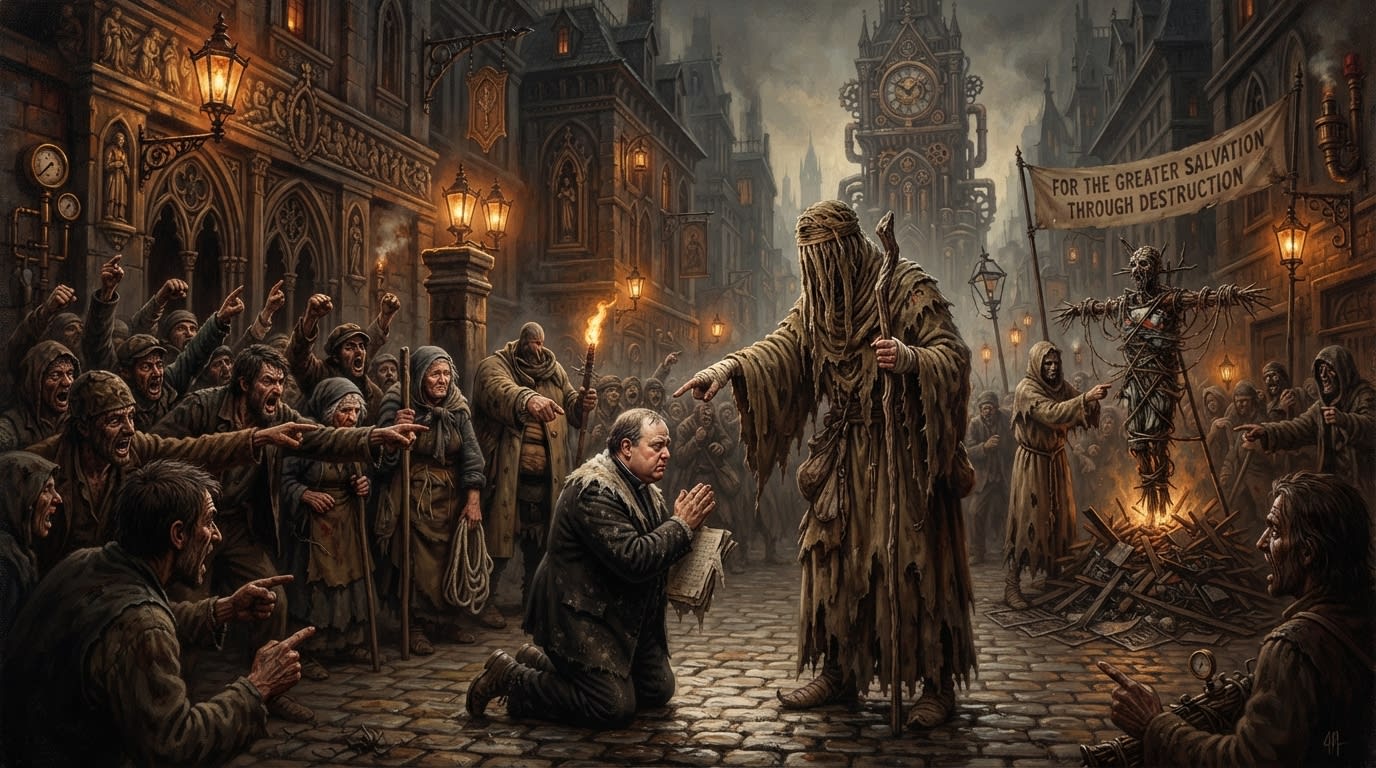
The Ragged Host is a mobile, poor, irregular, armed, improvised, and above all inconvenient religious-political movement that treats unaddressed harm as a public charge before the Creator. Its members include people discarded by official systems — war survivors, widows penalised by the Widow's Pennies, debt fugitives, workers locked inside factory shrines, displaced families, Purity exiles, camp labourers, and the families of men and women the Bureau of Records has classified as missing, transferred, reconciled, or never born. These people carry rags, evidence, effigies, oil, ash, names, and the settled conviction that Heaven has been shown insufficient paperwork.
The Synod's objection to the Host is doctrinal: only the ordained Church may administer penitence, identify sin, and compel repentance. The Host's objection to the Synod is evidentiary: the ordained Church has made sin invisible, licensed, procedural, and — this is the word that makes the Archon reach for brandy — profitable. The Host claims to do publicly what the Bureaus refuse to do: identify harm, name the harmer, and make the cost visible in flesh, ash, and kneeling bodies. At its best it exposes durable injustice and refuses to be bought. At its worst it requires new wrongdoing to sustain its authority and treats unwilling bodies as ritual material. The space between those two sentences is where the Host lives, and it is not a comfortable address.
#The Muster After the Muster
#On the Field That Was Counted Twice
The Ragged Host was born at Kalnik Ridge, which is to say it was born in a place where the Synod had already spent its best miracles and forgotten to count the change.
In A.S. 48, Brother Tomislav raised the Reliquary of Saint Isidore and seventeen relics blazed and Maldrake's vanguard flinched and the Great Retreat learned to march instead of run. The Bureau of Doctrine recorded the miracle. The Bureau of War recorded the casualties. The Bureau of Records recorded the survivors — forty-three depositions, stamped, sealed, and ready for the sermon cycle. What none of them recorded was the field itself after the recording was finished.
War's official figures from the Kalnik muster read as follows: 1,249 mustered; 703 living; 311 dead; 98 missing; 47 transferred to rear commands; 90 placed under a category called "pending reconciliation," which is War's way of saying we will think of a word for you later. The arithmetic leaves survivors and dependents facing contradictions that even a Tithes assessor could not love. Invalids sent to pension counters that had been overrun. Mule boys assigned to stables that no longer existed. Laundresses still drawing quarter-rations for a company whose officers had departed on horses requisitioned from the dead. Wagons of grain locked under seals that named a depot three days' march behind enemy lines. Families told their husbands had been transferred, when the transfer road had been burning since Tuesday.
The remainder — the word is precise and I use it with the Bureau's own inflection — conducted a second count.
They counted themselves. They counted the missing, by name where possible and by scar, boot size, and ration chit where not. They counted abandoned personnel and supplies. They counted officers who had left, by name and by the direction of their horses. They counted the offices responsible for each failure, because the Host's first and most durable insight is that a man who was abandoned was abandoned by someone, and that someone has a title, a seal, and a salary.
The first local Host gathered around a broken ammunition cart filled with rainwater in a ditch below the ridge where Tomislav's ash was still warm. A wounded priest — half his jaw bound in linen, speaking through the gap with the desperate clarity of a man who may lose his tongue by Thursday — argued that the evidence of sin had been hidden from Heaven. Three laundress sisters who had carried water up the ridge during the seventh hour and brought the dead down after the ninth. An old sapper named Gren who had dug graves for two armies and could tell you which soil forgives bone and which does not. And a quartermaster's assistant called Miklos, who had a useful seal and no superior officer left alive to ask how he was using it.
Earlier Purity circulars classified the Kalnik remainder as "a spontaneous grief assembly with heretical tendencies."
Corrected. There is nothing spontaneous about a man who copies names from the dead, builds an effigy from an officer's coat and boot nails, and nails a receipt to its chest accusing the wearer of abandoning the rear column. That is premeditation. That it occurred in grief does not make it less organised; it makes it more dangerous.
They built the first Ragged effigy from that officer's coat, stitching receipt scraps to its sleeves and hammering boot nails through its collar where the insignia had been torn away. It accused — by name, by rank, by the direction of his departure, and by the list of men he had left behind — an officer of abandoning the rear column with its wounded, its grain, and its laundresses. Whether the accusation was entirely fair remains disputed. The officer may have received orders. The orders may have existed. The Host does not care. The Host cares that thirty-one men were left in a ditch with locked grain and no surgeon while an officer rode west on a horse that ate better than they did.
The effigy drew people. They came to pray before it, to make admissions beside it, to identify their own missing beside a figure that accused the system of producing them. Accusation became worship. Worship became evidence. Evidence became a list, and the list became the first page of a counter-archive that the Bureau of Records has been trying to seize, burn, or discredit for a hundred and fifty years.
The key is this: the official sequence of war — muster, deployment, engagement, recovery, burial, account, sermon — had failed at every joint. The second count indicted the entire sequence. It said: you mustered us and lost us; you deployed us and forgot us; you buried us and miscounted us; you preached about us and lied. The Host was born in the gap between the sermon and the ditch.
Naming became sacred because it removed the protection of scale. A Bureau circular can say ninety-eight missing. A Ragged roll says Petar, cobbler, Dalmatian, left leg gone below the knee, last seen Tuesday by his daughter Mila who was carrying water and is now carrying his name instead. The Host records newborns, false names, dead people, deserters, and contested identities according to its own judgment. This is what makes it heretical. Official status can be morally false — that is the Host's founding heresy, and Records has never forgiven it, because Records knows it is true.
#On the Ragged Vestment
"Ragged" began as an insult. A levy clerk at a pension counter south of Zagreb — the record does not preserve his name, which is appropriate given what followed — looked at a column of patched claimants carrying evidence from war, burial, ration, and petition systems, and called them the ragged. He meant their clothes. They heard their condition. They kept the word.
The Host turned worn material into vestment. Cloth is tagged, stitched to named charges, and marked by witness. A sleeve can record an injury. A hem can carry a name. A patch can testify to poverty, and the thread that holds the patch can identify the woman who sewed it and the ward she was expelled from. The Ragged vestment is a walking archive, and it is the only archive in Europe that smells of sweat, smoke, and the particular sourness of people who sleep in ditches.
The colour system is crude and effective. Red for unatoned blood — a death that has not been answered, a wound that has not been accounted for. Black for a structure under condemnation — a building, an office, a gate, a bridge, a custom that the Host judges intolerable. White for prostration owed — someone, somewhere, must kneel. Grey for ongoing deliberation between restraint and destruction, which is the colour the Host wears most often because grey is the colour of a decision that has not yet cost anyone a building.
Their poverty is not performance. It is also not merely poverty. The Host has discovered that a group with nothing can turn anything into a tool, a record, or a weapon. Cloth becomes medical supply, banner, restraint, hood, effigy material, fuel, shrine component, or evidence mark depending on the hour and the need. A camp that owns nothing is a camp that cannot be disarmed by confiscation, because everything it touches becomes part of the charge.
The camps include children. This must be stated plainly because the Bureau's pamphlets imply that children are recruited. Children are present because their parents are present and their parents are present because the systems that should have fed, housed, sheltered, pensioned, or buried their relatives have failed. The children learn operational signals — which fires are for display and which for warmth, which ash comes from judgment and which from cooking, which adult is carrying a charge and which is carrying bread. They learn the different uses of ash the way a Tithes assessor's child learns the different uses of a seal. The comparison is not flattering to either institution.
Better bands enforce sign law: identify the source of cloth before marking it, secure a witness to the marking, name the person who tied the sign, and hear the charge before escalation. Bad bands allow rumour to determine signs. The worst call rumour divine direction, which is the point at which the Host stops being a tribunal and starts being a mob with vestments.
#On the Camp That Moves
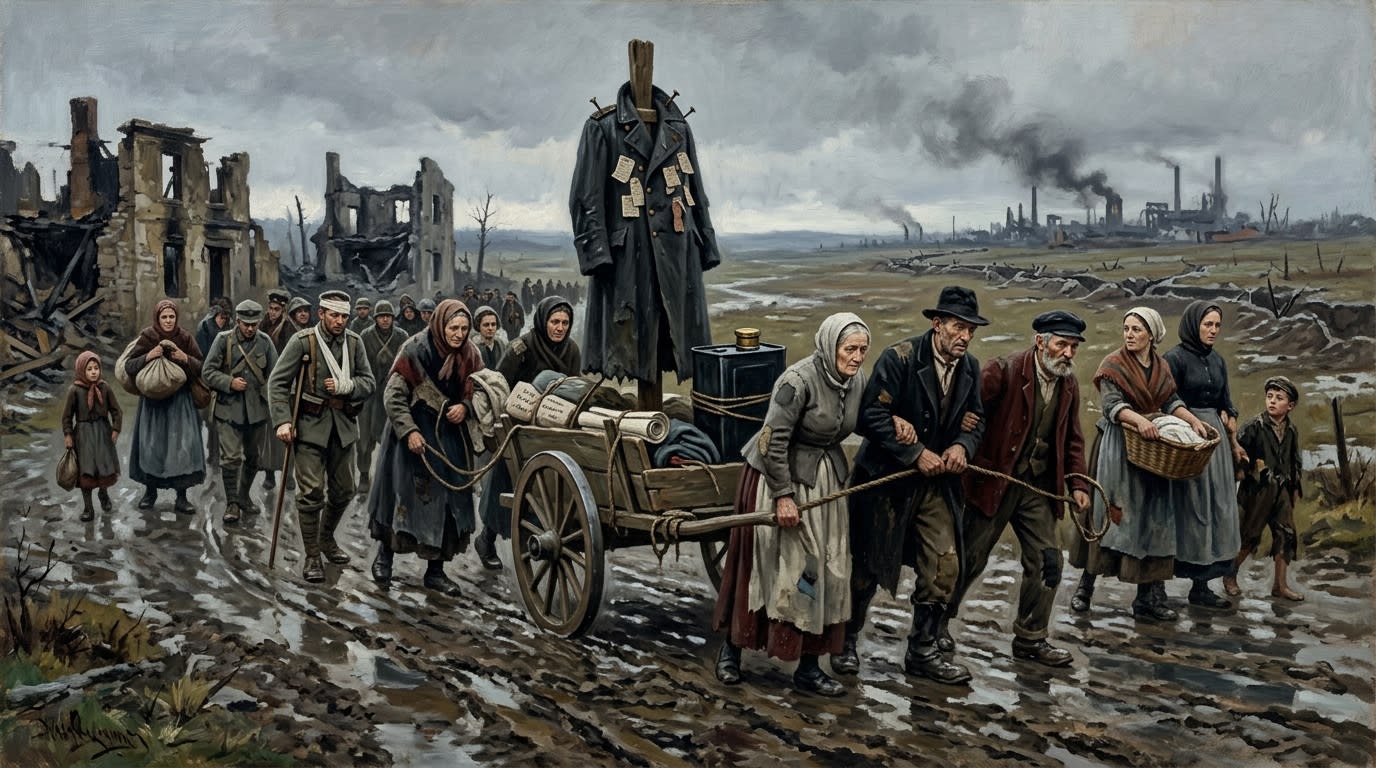
The Host stays mobile for the same reason a heretic stays ahead of the White Cloaks: a stationary target can be reduced to a municipal case. Eviction, taxation, quarantine, containment, negotiated neglect — these are the civic instruments that turn a living grievance into an administrative item, and the Host has learned, through a century of ditches, that an administrative item can be filed, delayed, reclassified, lost, found in the wrong office, transferred to a committee, and finally buried under paperwork so heavy that even the Basilica's vault-keepers would feel the weight.
It uses temporary sites: culverts, ruined tollhouses, kilns, rail verges, ossuaries, fairgrounds, hostels, lime sheds, pilgrim yards, road margins, and any structure whose owners are dead, absent, or disinclined to argue with people carrying oil and a list of names. Food, weather, and reports of wrongdoing determine its movements. Recurrent targets include child-debt houses, sealed granaries, fast-burning Purity yards where the lime has been mixed too thin, and funeral toll bridges where the Bureau of Tithes charges the dead for the privilege of crossing water.
A moving camp can operate as relief force, tribunal, riot, funeral escort, shrine caravan, raid party, procession, or armed sermon. Sometimes it operates as several of these simultaneously, which makes it difficult for the Watch to classify and therefore difficult for the Watch to suppress, because the Watch — God bless its truncheons — cannot arrest a procession, does not wish to be seen dispersing a funeral, and has standing orders not to interfere with a sermon unless a building is actively on fire. The Host has learned to keep the fire unlit until the sermon is finished.
Camp organisation includes guarded oil carts; a shame box for seized seals, icons, fragments, and coats awaiting judgment; prostration ropes; shrine poles; grave bundles wrapped in witness cloth; and an ash kettle that catalogues the remains of every fire the band has set and every fire it has stayed. At night, outer sleepers provide security. An inner ring protects children, sick members, unfinished effigies, and those judged too disruptive for the perimeter — a category that includes drunks, visionaries, recent converts whose enthusiasm exceeds their evidence, and anyone who has threatened to light something without authorisation.
Fires serve two purposes. A display fire announces a named charge: the flame is visible, the effigy is dressed, the accusation is spoken into smoke. A hidden fire indicates unresolved judgment — the band is deliberating, and the darkness of the flame is the darkness of a verdict not yet reached. A district that sees a hidden fire should be more frightened than a district that sees a display fire, because the display fire has already made its decision and the hidden fire has not.
The Host has conditional allies. Pilgrim houses provide roads and witnesses but seek limits on spectacle, because the Brotherhood moves people toward shrines and endurance while the Host moves charges toward culpable targets, and these two kinds of movement do not always share a road comfortably. Smugglers provide goods and routes but object when profitable sites are condemned, because a smuggler can survive a riot but not a principled closure. Ashen kitchens provide food and shelter but create dependency that the Host's prouder captains resent. Workers may shelter scouts but ask the Host to spare a workplace before a practical settlement is possible, because a burned factory feeds no one and the Host, despite its taste for fire, does occasionally remember this.
Joining requires confession — but the Host's confession is not the Synod's sacramental whisper through a screen. It is public, specific, and bilateral. Why have you come. What was done to you. What did you do while it was being done. Whom do you accuse. Whom do you fear to accuse. And — this is the question that separates the Host from a queue at Griefgate (Unregistered) — what will you surrender. A decent band allows a person to leave after the relevant charges are resolved, sealed, or released. A bad band calls departure a refusal. A rotten band turns departing people into material for the ritual they are trying to leave.
#On the Ledger of the Unfinished
Every band keeps a roll. The format is whatever survives: paper, knotted cord, carved spoons, tagged hems, ash tablets, nail strings, or memorised chains spoken by an elder who lost her sight at a levy yard fire and now sees nothing but names.
The ledger records identities, aliases, injuries, debts, accusations, condemned structures, sacrifices, spared and seized people, dead and missing people, and the recognition marks by which a body can be distinguished from a Bureau category. It functions as indictment record and calendar of outstanding obligations — a court docket, a parish register, and a list of grudges maintained with the organisational rigour of a Tithes assessment and the moral fury of a woman whose child was listed as dead by an office that could not spell the child's name.
It tracks actions and omissions alike: witnesses who spoke, oil carriers who served, refusals to kneel, relic contacts, failures of courage, false accusations made and corrected, apologies owed, blood debts unpaid, and incomplete shrines whose charges have not yet ripened into fire. A Sin Reader can open the ledger and tell you the weight of a band's unfinished business, which is the closest the Host comes to an audit and the closest any audit has come to theology.
Names in the ledger are classified in three tiers. Called names may be spoken publicly at a tribunal — these are the accused, the witnessed, the answerable. Carried names are retained within a hearth, a shrine, or a witness circle — known to the band but not yet ripe for public use. Sealed names are held by a Grave Witness until disclosure is justified, which may mean until the person is found, until the family consents, until the evidence matures, or until the Grave Witness dies and the seal passes to her successor, who may not understand the name's weight and may therefore use it badly.
Revealing a sealed name for personal advantage is condemned within the Host, which does not mean it does not happen. It means the Host has a word for it and a punishment for it and a recurring problem with it, in the same way that the Bureau of Purity has a word for corruption and a punishment for corruption and a recurring problem with it. Sin Readers hold influence and suspicion in equal measure. They assemble and test charges; they link documents to locations to patterns to names. They ask whether the convenient target actually benefited from the harm. A good Sin Reader can prevent a false burning. A bad Sin Reader can complete a pattern with an innocent name, and the pattern will look more convincing with the name inside it than the truth ever looked without.
Bureau of Records assessment, A.S. 188: "Ragged rolls contain aliases, errors, omissions, misidentifications, and repeat-amplified claims. They are unreliable as evidence and dangerous as counter-archives."
Corrected in restricted circulation. Official records contain the same defects under better binding. The Bureau's objection is not to inaccuracy but to competition. This sentence is not approved for sermons.
Olya Thread's linen ledger during the Three Rain March preserved forty-six workers whom the Bureau of Records had listed as dead. They were not dead. They were standing in a ditch with dysentery and opinions. The same ledger later wrongly accused a clerk who had in fact hidden two children from a levy conscription — an act of private mercy that Olya's evidence had mistaken for complicity. When corrected, Olya publicly accepted severe penance and removed the false name from the linen with her own hands, leaving a visible gap that the band called the space where we were wrong. The intended disciplinary standard is this: identify the harm, identify the witness, and identify the cost the Host will bear if it is wrong. That standard is stated more often than it is met, but it is stated, and a stated standard is harder to abandon than an unspoken habit. The Bureau might take note.
#Rags, Roads, Graves, and Claims
#On the Four Instruments of the Indictment
The Host's operational doctrine rests on four instruments: Rags, Roads, Graves, and Claims. They overlap in practice. A rag can become a road marker, a grave wrapping, or a claim document. A road can carry evidence to a grave or a grave to a claim. The categories are useful for the Bureau's filing system and for understanding how a group of hungry people in patched clothing can dismantle a toll bridge, condemn a granary, expose a prison, and leave a district arguing about its conscience for a generation.
#On Rags
Rag crews collect and source-mark discarded and damaged materials: fabric, leather, rope, wire, tin, buttons, buckles, curtains, shrine veils, funeral ribbons, prisoner clothing, officer cuffs, seals, and uniforms. Each piece can carry provenance — who owned it, where it was taken, what happened to the owner — and each piece can carry accusation: this coat belonged to the man who locked the granary; this blanket wrapped the child who died in the debt house; this curtain hung in the office that stamped the false transfer.
The transformation of material into evidence follows a grammar that the Host has codified through practice. A military coat becomes an effigy of command failure. A child's blanket becomes a prostration banner. A debt-office curtain becomes hood cloth for a rite connected to that office. A damaged saint's banner becomes accusation-shrine material, which Purity finds particularly offensive because it implies the saint agrees with the charge. A hangman's rope becomes a sign against a corrupt judge, which the judge finds offensive for more personal reasons.
Crews search battlefields, hospitals, hostels, rail sites, processions, archives, tariff chapels, and official recovery zones. They know which fabric burns clean, which smokes usefully, which reveals bloodstains under water, and which carries the particular stiffness of cloth that has been starched by an office and worn by a prisoner. The practical knowledge of a Rag Picker would be admirable if it were not also a catalogue of human misery sorted by textile weight.
Bureau of Purity classification, A.S. 176: "Rag collection constitutes theft from the dead and scavenging from state property."
Corrected. Rag collection constitutes theft from the dead when it strips a corpse before the family has been notified. It constitutes scavenging from state property when the state's property was taken from the scavenger's family in the first place. Both definitions are technically correct. Neither is complete. The Bureau declined to publish the correction.
Better crew rules exist: identify a body before stripping it; respect family claims; establish a charge before building an effigy from the evidence; preserve a living person's clothing until hearing unless they fled a declared judgment; use outside witnesses for relic processing; record who ties charge rags and when; and keep children from bearing accusations against their own family, because a child carrying her father's coat in a condemnation procession is a child the Host has failed regardless of what the father did.
The core danger is moral certainty converting taking into justice. When the crew believes that every comfortable coat is evidence of guilt, every locked door conceals a sin, and every object not yet tagged is an accusation waiting to be assembled, the Rag Picker has become something worse than a thief. She has become a thief who believes God approves of the taking. The distinction between evidence and looting is a line drawn in conscience and erased by hunger, and the Host is always hungry.
#On Roads
Roads transport accusation to locations that have avoided or refused ordinary redress. A petition that was denied at a counter can be carried to the counter's superior. A grievance that was buried in a file can be carried to the office that buried it. A body that was misclassified can be carried to the gate of the official who signed the classification and left on the doorstep with the paperwork pinned to its shroud.
A Road Caller selects routes, positions witnesses, brings torches into sight, and moves evidence, bodies, or captives to a public setting. The work is part logistics, part theatre, and part the ancient human satisfaction of bringing a complaint directly to the door of the man who caused it, which is a satisfaction the Synod's petition system was specifically designed to prevent. Road Callers can move a crowd in civilian form until organised action is needed — splitting columns across a market, hiding oil carts among funeral wagons, bribing or threatening gate and toll workers, deciding whether visibility or concealment serves the charge, and using children as a deterrent to armed response, because the Watch has learned that scattering a column that includes children produces a story worse than the riot it prevents.
The Host reads geography as culpable control. A debt house controls its lane because the lane's residents owe it money. A granary controls its district because the district's children eat what the granary releases. A bridge determines survival because the water below it is not survivable and the toll above it is not payable. A prison route determines disappearance because the route is sealed and the names that enter it do not emerge. A shrine route can monetise forgiveness because the pilgrims who walk it cannot afford to walk it again. The Peregrine Row from Griefgate south is a road the Host knows well — it has watched families pay crossing fees at every chain, present route tokens at every hostel, and arrive at shrines too poor to purchase the prayer they came for. The Host does not object to pilgrimage. It objects to pilgrimage that functions as a revenue extraction operation with incense.
Coercive road work exists and the Host does not deny it: blocking exits, compelling processions, forcing people onto a road or into kneeling, and displaying selected people before armed forces as evidence or as hostage. A good Road Caller repeats and tests a charge before momentum makes it irreversible. A bad Road Caller treats crowd size as proof of truth. A monstrous Road Caller accelerates because the charge will not survive scrutiny and the momentum is all that remains.
#On Graves
Grave work addresses the dead whom the official system has miscounted, misclassified, prematurely destroyed, or exploited. The Bureau of Mercy processes death through Hospices of Departure, last rites, Ward-Sisters, and the administrative sacraments of a civilisation that has bureaucratised dying as thoroughly as it has bureaucratised living. The Host processes death through the question: is this person's death correctly recorded, and if not, who benefits from the error?
Grave Witnesses and Grave Confessors come from burial, medical, military, religious, or bereaved backgrounds. They identify bodies, wash remains, tag effects, preserve personal items, correct burial mistakes, protect remains from trade, and intervene between families and officials who would prefer the family to accept the classification and go home. The Host uses remains and associated objects as public evidence: boots displayed at a gate, sleeves hung from a bridge, skulls placed on a counter, empty coffins opened before a chapel, grave markers bearing names that contradict the record, and lists of unknown dead read aloud until the office that produced them cannot pretend the list is short.
Extract from a sealed Shadows interview, Zone 2 Rhine burial circuit, A.S. ███: Question: "How many of the bodies recovered by Grave Confessor ████ matched their official classification?" Response: "Four of thirty-one." Question: "What classification did the other twenty-seven hold?" Response: "Eleven were listed as transferred. Six as reconciled. Four as pending. Three had no entry. Three had entries belonging to other people." Filed under: BURIAL DISCREPANCY, NOT YET SCANDAL.
Standard Ragged funeral practice seeks a name or identifying sign, a source, a place marker, witness, cloth, prayer, and bodily care. It is, in its better forms, a funeral. Accusatory practice is something else. It may place bodies at offices or gates. It may make officials confront empty coffins. It may force a district to hear names read until the reading becomes its own punishment. It may turn false grave markers into material for new charge cloth, so that the lie told about the dead becomes the evidence carried against the living.
Common contradictions that Grave Witnesses investigate: a person listed as transferred is found dead in a local ditch; a person treated as vagrant has evidence of protected military service; a child buried under a number has identifying marks that the burial clerk omitted; a prisoner recorded as released is found restrained. Each contradiction is a charge. Each charge requires a target. And the Host, unlike the Bureau, does not classify the contradiction as a clerical error and move to the next page.
The core danger: the Host can retain bodies or effects as coercive instruments, force families into participation, or use the dead to justify violence unrelated to the death. Better grave law — and the Host does distinguish better from worse, which is more than some Bureaus manage — prioritises the truth of the dead over the group's need. Families may recover their loved ones without joining the Host. Enemies may be buried with respect. Later identification should not revive old coercion. These rules exist. They are broken. They are restated. They are broken again. The Bureau may recognise the pattern.
#On Claims
A claim requires four elements: an injury, a target, a witness, and a cost. The injury may be unpaid service, withheld rations, missing children, erased widows, vanished prisoners, hoarded grain, paid confessions, punitive tolls, destroyed bodies, or workers trapped inside industrial sites behind locks that the Bureau of Tithes has helpfully classified as safety measures. The target may be an office, an official, a building, a district, or a custom. The witness may be a person, a scar, a tag, a payment document, a false stamp, a route order, a lock mark, a grave discrepancy, or the incompatible records of two Bureaus that have not spoken to each other since the last audit.
The cost is what makes a claim a charge rather than a complaint. The Host is supposed to name what it will surrender if the claim proves false or excessive: destroy its own charge cloth, return a body and accept public condemnation, disarm knife personnel, surrender oil, lose a route, permit a hated clerk a full answer, return a relic splinter, or accept Purity inspection. Self-imposed cost distinguishes the Host from any mob that merely demands. False cost and downward-assigned cost — a Captain who injures himself after ordering others beaten, a band that fines children for an adult's false mark — are fraud, and the Host has a word for this fraud, and the word is older than most of the Bureaus that produce the conditions requiring it.
A Claim Speaker works as advocate, public prosecutor, historian, pressure organiser, and potential escalator. Joric Nail is the model: a young man with a voice built for petition yards and a conscience that occasionally interferes with his rhetoric, which makes him unusual among Claim Speakers and suspicious among captains. Better Claim Speakers distinguish proof from need, need from pressure, and pressure from vengeance. The distinction is real and it matters and it collapses under hunger faster than any doctrine the Bureau has condemned.
Corruption begins when the camp depends on grievances remaining unresolved and begins treating every person or office as a source of future debt. At that point the claim is no longer an instrument of justice. It is a revenue model. The Host becomes, in miniature, the Hunger Broker it condemns — pricing tomorrow's grievance as today's authority. The irony would be funny if it did not involve people who are already starving.
#Camp Law and the Doctrine of Prostration
#On the Creator Who Must Be Shown
The Host's foundational doctrine was spoken by a priest with half a jaw at the bottom of a ridge where the ash of a saint was still settling. The words — reconstructed from three witnesses who disagreed on everything except the meaning — were approximately these: the evidence of sin has been hidden from Heaven, and we will drag it into the light until God has no choice but to look.
This is the Doctrine of Visibility. It holds that continued injustice means harm, sin, and remorse have not been made sufficiently visible to the Creator, and that the Host's purpose is to make them visible through public evidence, public accusation, and public cost. Mark and expose the corrupt bridge. Read the curfew's author, victims, and enforcement objects aloud until the street can hear its own complicity. Open or burn the hoarded granary in public, where the smoke carries the accusation higher than any petition clerk can file it. Force the beneficiaries of a wrong to face it publicly — not because public shame is always just, but because private filing has already failed.
The group also regards itself as compromised — this is important, and it is the feature most consistently overlooked by Purity's pamphlets, which prefer to describe the Host as a body of self-righteous arsonists. The Host practices self-punishment before and after its actions: fasting, crawling, rope whipping, cuts, confessions, loss of comfort, and kneeling in ash. It does this because it believes that an accuser who has not suffered is an accuser who has not earned the right to make others suffer. The logic is sound. Its application is uneven. Self-punishment can become a down-payment on cruelty — I fasted for two days, therefore the merchant may kneel for four — and the Host is not always skilled at recognising when the down-payment has replaced the principle.
Better elders require material verification before public display, humane treatment of prisoners and accused persons, public correction of false symbols, and punishment of premature violence. Worse elders treat crowd emotion, flame, injury, or ritual intensity as confirmation of truth, which is the moment at which a tribunal becomes a bonfire and the bonfire becomes doctrine.
#On Intolerable Structures
An intolerable structure is any building, office, route, law, device, custom, ledger, gate, or institution that, in the Host's judgment, blocks repentance and redress. The category began narrow — child-debt houses, famine granaries, Watch cellars where the drainage runs clean because the evidence runs with it, Purity lime yards where bone becomes powder faster than families can identify it, funeral toll bridges, factory shrines that lock workers inside during shift, orphanages that sell apprenticeships at prices the apprentice cannot know until the debt comes due.
Bureau assessment, A.S. 172: "The category of 'intolerable structure' is limited to physical buildings involved in specific, demonstrable harm."
Corrected. The category now includes curfews, market rules, hunting rights, prison routes, widow petition forms, charity queues, debtor seating arrangements, and paid confessional practices. It will include anything the Host decides is a structure. The Bureau's attempt to define the category was, itself, classified as an intolerable structure by a band in Zone 2, which condemned the definition on the grounds that defining the category was an attempt to limit repentance. The Bureau declined to respond. The Host interpreted the silence as confession.
Decent bands require three conditions before condemning a structure: evidence of harm, failure of ordinary correction, and a public charge that allows the accused to answer. These conditions are reasonable. They are also obstacles to a crowd that has already decided what it wants to burn, and the tension between reasonable conditions and a ready crowd is the tension in which the Host's moral life takes place.
Burning procedure — for the structures that reach the flame — follows a ritual sequence: tie charge rags to the target; hang effigies facing the condemned structure; read victim names aloud; read accused names if they can be identified; use ash from a prior judgment for the first flame, so that the new fire carries the authority of the old; drive survivors through smoke if the charge includes complicity; and compel witnesses to kneel if the charge includes passive benefit. Child protection is stated as a principle. It fails in practice with a regularity that the Host's own records acknowledge and the Host's own captains prefer not to discuss.
#On the Law of Prostration
Prostration is the Host's defining rite and its clearest route to tyranny.
Self-prostration includes crawls, vigils, ash sleeping, public confession, exposure to weather, voluntary restraint, and carrying stones from condemned sites until the weight becomes the penance. These acts are the Host at its most defensible: people choosing to bear cost for the sins they have witnessed, permitted, or failed to prevent. A woman who crawls through a market because she purchased bread from a granary that was hoarding grain while children starved in the next ward — that woman is practicing a theology the Synod cannot easily condemn without condemning the principle of confession itself.
Imposed prostration is the Host at its most dangerous. It can require named officials to kneel. It can require alleged beneficiaries to kneel. It can require an entire ward to crawl, suffer symbolic deprivation, or relive circumstances associated with the harm — a bridge toll clerk made to walk the bridge with empty pockets while the names of the dead are read above him, a granary foreman made to kneel before empty bowls while the counting is performed by children who know the count because they were hungry while the grain was locked.
The Host's better law — and I note, for the Bureau's discomfort, that the Host has a better law and names its own abuses — treats the fourth category as tyranny and the third as perilous. Safeguards exist: children may participate only with kin protection and in symbolic form; sick people require healer oversight; strangers cannot be seized merely to enlarge the crowd; bound prostration lasts no longer than two readings of the charge; unrelated ash is prohibited from the rite; and confessions must be understood by the confessor, which excludes the practice — reported in three Zone 2 districts — of kneeling people who do not speak the language of the charge and therefore prostrate themselves before a sin they cannot identify. Whether this last practice is cruelty or farce depends on the district. In my experience, it is usually both.
#On Effigies, Shrines, and the Question of Sacrifice
Effigy Sacristans build figures from straw, clothing, records, bone, tools, furniture, saint fragments, hair, mud, wire, and ash. An effigy can accuse an individual, an institution, a district, a hidden sin, or the Host itself — and the last category is the one that separates a Sacristan from a seamstress with a grudge. A good Sacristan can build a figure that makes an entire ward confront its complicity. A bad Sacristan can build a figure so satisfying that it replaces the complex truth with a simple target, and the simple target is easier to burn than the complex truth, which is why the Host burns as many effigies as it does.
Accusation shrines turn objects into public cases. A doorframe planted in a market accuses the building it came from. Workers' tools displayed on a bridge accuse the factory that confiscated them. Damaged saints arranged around empty food settings accuse the parish that priced its charity. Boots outside a cellar accuse the cellar of producing people who entered wearing them and left without them. A child's bed placed before a tithe office accuses the office of converting the child's sleep into revenue. These shrines are effective because they are specific. They name a thing, a place, a person, and a cost, and specificity is what the Synod's own system is designed to dilute.
Sacrifice is the doctrine's crux and its rot. Better sacrifice starts with the Host's own possessions, resources, comfort, status, and safety — a Captain who surrenders her coat before demanding a merchant's coat, a band that fasts before it burns a granary, a Knife Penitent who disarms before requiring a guard to kneel. More severe sacrifice destroys public goods or seized luxury resources: silks from a hoarding house burned in the street, coin melted and poured at the base of a toll bridge, confiscated wine emptied before a rationing office. The loss is the point. The loss is the offering.
Monstrous sacrifice harms unwilling people: humiliation, confinement, injury, deprivation, destruction of a home that belonged to someone who lived in the wrong ward, or the slow grinding cruelty of a prostration that lasts until the kneeling person confesses to something she did not do because her knees have given out and the confession is cheaper than the pain. The key distinction — and it is the distinction on which the Host's claim to moral authority either stands or collapses — is whether the people claiming repentance bear the cost themselves or steal it from someone weaker.
#On Captains, Mothers, Keepers, and Knives
The Host rejects formal hierarchy in theory. In practice, crisis produces authority as surely as damp produces mould, and the Host has been in crisis since A.S. 48.
Key leadership functions emerge from action: a Captain provides field leadership, route selection, public speech, shrine work, camp judgment, and the decision to burn or stay — she is also the person most likely to be targeted by Purity, which gives the role a self-selecting quality that favours people who do not plan to live comfortably. A Prostration Mother manages rites of abasement and their exemptions — who may kneel, who must kneel, who is released, and the distinction between prostration that serves the charge and prostration that serves the crowd's appetite for spectacle. A Grave Witness protects names and remains. A Sin Reader assembles and tests charges with the cold fury of a clerk who once worked for the system and now works against it. An Ash Bearer maintains the ashes from prior actions — a librarian of fires. A Torch Keeper or Deacon controls potential flame, which means she controls the decision between evidence and ash, between a building that can testify and a building that can only smoke. A Knife Hand guards, enforces decisions, breaks fights, and uses force, and the Host requires her to use force visibly, especially before children, so that violence cannot become an unseen internal police.
Three examples of principled restraint survive in the Host's own record and deserve reproduction because the Bureau's pamphlets omit them. Sava Brinn publicly dismantled an effigy after a child recognised the coat as belonging to the wrong person — an act that cost the Captain authority and saved the Host from a false burning. Mara Vey fed a condemned debt clerk before his prostration, then let the clerk's own testimony identify higher-level offenders whom the Host had not suspected — an act of patience that produced better evidence than any coercion could have supplied. Olya Thread delayed a torch action until bodies inside a Purity yard were counted, confirmed, and removed — an act that added four hours to the operation and preserved eleven sets of remains that would have been lost to the fire the crowd wanted.
Knife use is subject to public after-action accounting: order, actor, witnesses, harm, charge, treatment of prisoner, exposure of children, personal gain. A wrongful strike must cost both the person who struck and the person who authorised the strike. A popular wrongful strike — cheered by the crowd, approved by the Captain, and regretted by no one until the evidence arrives — requires greater consequence than an unpopular one, because popularity is what makes wrongful violence invisible, and the Host's entire doctrine is built on making the invisible visible.
#On the Sin of Making a Smaller Synod
The Host's named internal danger is that it will reproduce the Synod in miniature: hierarchy, presumed guilt, sacred emergency, spectacle, coercive administration, and the conviction that its own authority is beyond question because its suffering was real.
The process begins after successful actions. Success produces authority. Authority creates a story of being chosen. Stories create ranks. Ranks create exemptions. Exemptions create new victims — and the victims look the same as the victims the Host was founded to defend, except that now the seal on their suffering bears a different name.
Bureau assessment, A.S. 194: "The Ragged Host's internal corruption validates Synod authority and demonstrates the necessity of ordained governance."
Corrected in restricted circulation. The Ragged Host's internal corruption demonstrates that power corrupts the powerless as efficiently as it corrupts the powerful, which validates nothing except the human capacity to build a cage from any available material, including the bars of the cage one has just escaped.
It begins through plausible exceptions: a Captain decides urgency justifies skipping evidence review. A Sin Reader seals evidence that contradicts the charge because the charge is politically useful. A Torch Keeper bypasses the search of a condemned building because the search would delay the fire and the crowd is restless. A Prostration Mother needs more bodies for the rite because a half-empty prostration looks like a half-proven charge. Knife Hands strike before the hearing because the target might flee, and the flight would be worse than the blow, and the blow was not so bad, and the target probably deserved it, and by the time the exceptions have accumulated the Host has become the thing it opposes: a body of people who presume guilt, administer punishment without hearing, classify dissent as disloyalty, and treat their own records as sacred while dismissing everyone else's.
The camp creates moral castes: authentic versus soft, tested versus untested, kneelers versus standers, veterans versus newcomers, self-sacrificers versus parents who preserve children's rest. This last distinction — the contempt for parents who refuse to sacrifice their children's comfort for the Host's moral theatre — is the point at which internal rot becomes visible from the outside, and it is the point at which the Host most perfectly resembles the Synod it was born to accuse.
Its corrective practices are stated and sometimes practiced: verification before burning, evidence preservation, public correction of false effigies, food before coercion, witness contradiction, punishment for excessive force, self-sacrifice before imposed sacrifice, private repentance when public display would only increase power, and acceptance that less destruction may be required. The Host's self-warning is that it must include itself among those subject to judgment. The self-warning is the best thing about the movement. Its failure is the worst.
#How the Host Operates
#On the Charge Named
A public action begins when a speaker rises — in a market, a queue, a yard, a bridge, a chapel porch, a petition counter, or any place where the public can be made to listen — and names four things: the target, the alleged harm, the proof being sought, and the cost to the Host if the claim fails.
The speaker may be a Rag-Vicar, who carries source-marked cloth and a bell and asks whom the warrant serves. It may be a Sin Reader, who has assembled the documentary case and presents it with the lethal patience of a former clerk who once filed the very forms she now condemns. It may be a Claim Speaker, who sustains a documented obligation in public until an institution responds or burns. It may be a family member, who has no title and no role except the raw authority of a woman standing before an office with her daughter's name on her lips and evidence in her hands.
The charge must include its own vulnerability. The Latchford blue door is charged as evidence of child debt — children held behind it, scratch marks on its surface, a tithe seal and a Purity blessing that together prove institutional knowledge — with family witness and an obligation to burn the Host's own black cloth if the charge fails. A sealed granary is charged through mouth counts and seal evidence, with the acknowledgment that hunger can misread hoarding. A clean-drain Watch cellar is charged through evidence sought by Grave Confessors, with the Host offering to surrender its charge cloth if the cellar proves ordinary. A funeral toll bridge can be charged with the dead named as witnesses, which is a formulation that offends the Bureau of Records, the Bureau of Tithes, and the Bureau of Mercy simultaneously — an efficiency the Host values.
#On the Rag Tied
A rag is a public marker. It is not proof. The distinction is the same as between a warrant and a conviction, and the Host forgets the distinction at the same rate as any other institution that issues warrants — which is to say, rapidly and with consequences.
The marker system: black for an accused door or structure; red for named blood; white for prostration owed; ash-coloured for prolonged official silence, which the Host treats as a confession by omission; funeral ribbon for a toll imposed on the dead; child cloth for property that has been converted into testimony, because a child's blanket used to condemn a debt house is no longer a blanket. Rag Pickers source and tag the cloth. Effigy Sacristans establish provenance visibly, so that the crowd can see where the evidence came from and judge whether the evidence is evidence or rubbish dressed in outrage.
The Host's stated rule is that witness and accepted risk, not cloth, establish guilt. The core danger is that a marker can condemn adjacent tenants, subordinate staff, workers, and relatives before evidence arrives. A black rag on a debt-house door does not specify which floor, which office, which clerk, or which decision. The rag says this building is guilty. The building contains a ground-floor baker who sells bread at fair prices and has nothing to do with the debt office on the third floor. The rag does not care. The crowd does not ask.
#On the Witness Called
Witness in the Host's doctrine is broader than the Synod's. Spoken testimony counts. A person's condition counts — a starving body is a witness against the granary that hoarded. A scar counts. A tag counts. A payment document, a false stamp, a route order, a lock mark, a grave discrepancy, incompatible records from two Bureaus that contradict each other — all count. The Host does not restrict evidence to what a court would accept because the Host's position is that the court is part of the problem.
Some evidence can be read in public: a false stamp, a forged transfer, a burial list that contradicts the official count. Some is sealed for the bereaved: a child's effects, a last letter, a name that a family has the right to hear before the crowd does. Some is concealed from Records, Purity, or the Host itself to prevent misuse — because a Sin Reader who knows a sealed name and a Grave Witness who carries the name's proof are not the same person, and the distance between them is the only protection the name has.
Grave Confessors, Sin Readers, Witness Lines, and families of the missing serve as counterweights to using evidence only for its public impact. Bodies and objects should serve truth before pressure. This principle is what separates the Latchford blue door from a piece of firewood. Sava Brinn preserves the door because she treats it as evidence before treating it as burning material. If the door burns first, the truth burns with it, and the smoke carries nothing but ash.
#On the Cost Named
A valid charge identifies what the Host will surrender if the charge is false or excessive. Destroy its own charge cloth. Return a body and accept public condemnation. Disarm knife personnel. Surrender oil. Lose a route. Permit a hated clerk to deliver a full answer without interruption. Return a relic splinter. Accept Purity inspection of a camp that has spent months avoiding Purity inspection.
Self-imposed cost is what separates a charge from a demand. A demand says give me what I want. A charge says give me what I want, and if I am wrong, I will pay this price. The second formulation is more dangerous to the person making it, which is why the Host insists on it and why the Host's worse captains find ways to make the cost fall on someone below them.
False cost and downward-assigned cost are fraud. A Captain who injures himself after ordering others beaten has not borne cost; he has performed cost. A band that fines children for an adult's false mark has not borne cost; it has stolen cost from the smallest available body. The Host has names for these frauds. It does not always punish them.
#On the Doctrine of Kneeling First
The Host is supposed to kneel before it demands kneeling from others. This principle is simple. Its execution is the most revealing test the movement has produced.
Sava Brinn does this at South Petition Hall while bringing the blue door and oil. She kneels in the rain before the Hall's counter, before the queue, before the Watch, before the clerks, before her own people. She places the Host under the charge as well: not only the office is judged, but the Host's own desire to burn before truth is established. The kneeling makes the crowd pause. The pause is where the conscience lives.
Prostration Mothers classify participants: willing, witness, convicted, ignorant, or stolen. Better Mothers release ignorant people quickly — the baker from the ground floor, the clerk's wife who did not know what her husband filed, the servant who swept the stairs of a debt house and thought the stairs were ordinary stairs. They identify proxy victims: low clerks shielding higher officials, servants punished because the master has fled, trapped children whose presence proves nothing except that children are present, and bystanders who had the misfortune to be standing near a condemned door when the Host arrived.
#On the Torch Stayed and the Torch Taken
The stayed torch is the Host's most sophisticated instrument, and the only one the Bureau should consider imitating.
Restraint demonstrated by keeping destruction possible but delayed is more powerful than restraint demonstrated by inability. The Host carries oil. It builds the pyre. It ties the charge rags. It hangs the effigy. And then it waits — preserving a marked door for copying, searching a cellar for hidden prisoners, demanding a hidden record, feeding an accused person before his prostration, removing a mistaken coat from an effigy, and keeping a wet blanket ready beside a Pyre Engine. The Torch Deacon controls materials, routes of spread, structural risks, and evacuation paths. Her discipline is the discipline of a woman holding a match beside a powder magazine who must decide whether the magazine deserves to burn while the crowd behind her has already decided.
The delay carries real risk. The target can flee. Authorities can arrive. Evidence can be seized by Records or destroyed by Purity. A witness can recant. The crowd can turn on its own leaders for cowardice. These risks are the point. A stayed torch that costs nothing is a performance. A stayed torch that might cost the Deacon her authority is a judgment.
The taken torch follows only after the Host judges a charge to have sufficient proof and self-borne cost. Break a funeral toll chain. Burn a verified child-debt door after preserving its marks for the record. Storm a clean-drain cellar and bring what was hidden into the light. Profane a false shrine that sold forgiveness by weight. Destroy a priced confession screen because the screen itself was the sin — privacy purchased to conceal what should be public. Open a sealed barn and distribute what was hoarded. Burn luxury goods instead of keeping them, because the loss is the offering and keeping them would convert the Host from an accuser into a thief.
After-action accounting covers surviving evidence, harmed people, property and records affected, family and civilian consequences, institutional reaction, and what the Host owes if it acted wrongly. Fire's political and symbolic power makes it an object of internal vigilance: it can destroy the evidence needed to complicate a claim, and a complicated claim is a true claim, and a simple claim is usually a lie.
#On the Knife Accounted and the Weather It Brings
All armed people must account publicly for violence: who gave the order, who struck, who was struck, what charge justified the blow, who watched, whether the injury arose from defence, fear, zeal, or personal cruelty, and whether children saw. Knife personnel are intentionally visible — especially to children — so that force cannot become the unseen internal police that the Host accuses the Bureau of Purity of operating.
A wrongful strike must cost the person who struck and the person who authorised the strike. A popular wrongful strike — cheered by the crowd, defended by the Captain, regretted by no one — requires greater consequence, because popular approval is the mechanism by which wrongful violence becomes policy. The Bureau might note the principle.
Knife Weather is the Host's term for the atmosphere in which armed personnel begin to govern. It begins when hearings shorten. Questions become disloyalty. Prisoners become disposable. Witnesses learn fear. Armed personnel make practical policy while the Captain still believes she is making decisions. The knives are not drawn — Knife Weather is subtler than drawn blades — but the camp's moral centre shifts from the Charge Board to the armed perimeter, and the perimeter does not read charges. It reads threat.
Bureau of Purity assessment, A.S. 196: "Knife Weather is a rhetorical invention. Armed personnel in Ragged camps do not function as an internal police."
Corrected. Armed personnel in Ragged camps function as an internal police with the same reliability and corruption as armed personnel in any other institution, including those administered by the Bureau of Purity. This correction was not approved.
#On the Memory a District Keeps
The Host leaves visible and social records: site marks, ash, damaged objects, copied names, recovered bodies, destroyed materials, and spared evidence. These marks persist after the band moves on, and different groups remember different parts.
Families may value recovered names but resent the use of grief as public theatre. Workers may remember food distributed during a granary action. Clerks remember humiliation. Smugglers remember opened routes and calculate future profit. Officials remember fire and prepare countermeasures without recognising the refusal that preceded it. Children play games called kneeling and burning and do not always distinguish the two, which is a problem for the district and a verdict on the Host.
Legality matters less to public memory than whether residents believe the right people bore the consequence. A successful result — a debt house exposed, a granary opened, a body returned — can create support for the Host despite its crimes. A misdirected humiliation — the wrong clerk prostrated, the wrong door burned, the wrong name read — can create hostility despite the legitimacy of the underlying harm. The Host says it wants justice. The district remembers whether it got justice or spectacle, and the two are not always distinguishable until the ash settles.
#Reputation Among the Powers
#On the Bureaus and Their Several Fears
The major powers fear the Ragged Host for one reason that contains all the others: it is an alternative system. It has inquiry, evidence, punishment, movement, and public legitimacy. It is not a spontaneous crowd. A crowd disperses. A crowd forgets. A crowd does not keep a ledger, maintain a roll of names, assign roles, control fire, move evidence along roads, and leave behind ash marks that a district reads as law. The Host does all of these things while being poor, dirty, mobile, armed, and — this is the feature the Bureaus find most offensive — occasionally right.
#On the Bureau of War
War produced the Host's original witnesses: invalids discharged without pension, abandoned rear-column personnel, families of the mustered dead, logistics workers, guides, cooks, and the small army of auxiliaries that the Continental Levy requires and the Bureau of War prefers not to acknowledge in its casualty assessments. These people carry testimony that can convert campaign error into morally legible accusation. An incompetent supply order becomes the name of the officer who signed it and the names of the men who starved under its authority. A failed retreat becomes the list of wagons locked, grain abandoned, and laundresses left behind. A missing pension becomes a face, a family, and a journey to a counter that does not exist.
War fears this public reframing more than it fears raw disorder. Disorder can be suppressed. A named accusation — Captain Vos abandoned forty-one personnel at the Basica crossing, here are their names, here are the locks on the grain wagons, here is the direction of his horse — must be answered, denied, investigated, or buried, and each response costs the Bureau more than the accusation cost the Host.
The Bureau is sensible enough to fear forced enlistment or requisition of Host personnel. A man who has spent years cataloguing military failures and carrying evidence of command corruption does not make a tractable conscript. He makes a capable saboteur.
#On the Bureau of Records
Records believes that people must be fixed in official categories before the state can answer them. Born, baptised, confessed, tithed, mustered, deployed, wounded, transferred, dead, buried, commemorated — these categories are the state's grammar, and without them the state cannot speak. The Host keeps its own grammar. Its categories include: abandoned, miscounted, erased, misnamed, exploited, falsely transferred, denied, and still alive despite what your ledger says.
The two systems are in permanent conflict because both claim the authority to say who exists and who does not. Records has the Great Ledger of Souls, the Codices Obscurae (denied), and fourteen thousand scribes. The Host has knotted cords, linen rolls, carved spoons, and the furious certainty of people whose names have been spelled wrong on official documents that determine whether their children eat.
Records' objections are partly justified. Ragged rolls contain aliases, errors, omissions, misidentifications, and claims that have been repeated so often they have become self-confirming. A name carried through three bands over two years can accumulate details that the original witness did not provide and would not recognise. The Host responds that official records contain the same defects under better binding, which is true, which Records knows, and which Records finds intolerable to hear from people who file their records in hems.
Clerks who engage successfully with the Host — and some do, because some clerks are human beings who notice when their own records are wrong — copy documents under witness, leave originals with Ragged keepers, and do not request sealed names without explaining the consequences of disclosure. A warrant-based seizure of Host evidence is likely to produce a direct confrontation, because the Host treats its rolls as the Bureau treats the Great Ledger: as the only true record, whose seizure is an act of war against the truth.
#On the Bureau of Purity
Purity publicly identifies the Host with contamination, poverty, battlefield relics, corpse contact, illegal rites, and popular vengeance. The Index Damnatus lists Ragged practices alongside genuine heresies, and the White Cloaks have standing authority to suppress Ragged camps as unlawful assemblies under the Ashen Cloister's protocols.
Some of Purity's fears are real. Disease arises in camps with insufficient sanitation and too many wounded. Unsafe material — unstable oil, contaminated cloth, decayed relics of uncertain provenance — can harm the people carrying it. Relic uncertainty is a genuine doctrinal problem: a bone carried from a battlefield by a woman who does not know whose bone it is becomes an object of veneration that may venerate nothing, and Purity's concerns about unauthorised worship are not entirely manufactured, even if they are selectively enforced.
Purity privately fears rival moral authority. The Host publicly condemns forms of sin that Purity claims jurisdiction over but protects when the sinner is politically useful. A corrupt tithe collector whose hoarding has been blessed by a Purity chaplain — blessed because the chaplain needs the collector's grain for a Purity procession, blessed because the chaplain's sister works in the collector's office, blessed because the Ashen Cloister requires grain that is not officially grain — is exactly the kind of sin Purity cannot touch and the Host cannot ignore.
A Purity sister who negotiates well asks about the marked structure, the people inside, the witness, the response plan, and the evacuation path. A disciplined Host listens. A proud Host reads the questions as delay. The gap between those two responses is measured in buildings.
#On the Bureau of Tithes
Tithes manages resources and claims through accounting. The Host turns economic harms into visible sin. Their shared subjects are grain, coin, cloth, fuel, medicine, labour, debt, and assets — which is to say, everything that keeps a person alive and everything that an institution can withhold until the person stops being inconvenient.
The Bureau correctly fears looting disguised as judgment. It correctly fears seizure of arrears by a band that calls the seizure redistribution. It correctly fears coin hiding, route manipulation, and smugglers directing the Host at commercial rivals under the cover of moral outrage. These fears are real and the Host provides genuine examples to support them.
What Tithes fears most is simpler. The Host makes public counts. It counts mouths and grain. It counts rations and recipients. It counts what the Widow's Pennies extracts and what the widow receives. It counts what the salt dues cost and what the salt provides. It counts delay — how many days between the petition and the answer, how many counters between the queue and the grain, how many seals between the widow and her pension. These simple counts make official accounting look like concealment, which is the one thing official accounting cannot survive, because concealment is exactly what official accounting is for.
#On the Watch
The Watch evaluates the Host through public order and physical aftermath. It counts broken windows, not broken promises. It measures fire damage, not fire justification. It arrests the man with the oil, not the man who hoarded the grain.
The Watch also knows, from district experience, that the Host can expose crimes the Watch cannot reach, carry injured people the Watch has abandoned, deter predatory personnel the Watch employs, and prevent some disasters the Watch's own negligence has created. A quiet Watch corporal who has seen the Host open an illegal prison is a different creature from a Watch sergeant who has seen the Host prostrate innocent clerks. The relationship is local, variable, and determined by whether the last Ragged action in the district was justice or spectacle.
What the Watch fears: a coordinated kneeling crowd with a named Watch target, evidence, symbols, and oil. In one district the Host is tolerated for exposing a sealed cellar. In the next it is hunted for coercive action that killed two clerks who had committed no crime worse than working in the wrong building on the wrong day.
#On the Pilgrim Brotherhood
The Pilgrim Brotherhood and the Host use the same instruments: routes, vows, burdens, public witnesses, and disciplined movement. They cooperate through witness work, route protection, shelter, and the shared detection of shrine corruption — a Pilgrim elder who has walked the Peregrine Row six times can identify a fee that has tripled and a hostel that has emptied, and a Ragged Road Caller can carry that observation to the district that imposed the fee.
Their dispute is over spectacle. The Brotherhood tries to keep movement devotional or practical. The Host wants to turn the relevant site into a charge. A Pilgrim elder who shelters a Ragged scout expects the scout to travel quietly. A Ragged Captain who accepts Pilgrim shelter expects the elder to testify when the route reveals a crime. Both expectations are reasonable. Both are frequently disappointed.
#On the Smuggler Syndicate
The Host and the Syndicate (Unregistered) exchange oil, powder, passes, medicine, boots, custody documents, ferry access, intelligence, local knowledge, and protection. The arrangement is symbiotic in the way that fire and fuel are symbiotic — useful until one consumes the other.
A Dockward bargain is typical. A smuggler sells oil and altered custody slips to an under-viaduct camp in return for the Host's protection from Watch patrols and cover among the camp's funeral wagons. The arrangement shifts when the camp discovers confiscated medicine and children's debt notes in a nearby warehouse. The smuggler supports opening the site — confiscated medicine is bad business, children's debt is worse — but refuses to provide oil until the charge is named, the names are verified, and the debt records are handled with the care that profit requires.
More principled smugglers respect limits on child debt, sealed names, and pre-charge burning. Predatory crews sell false accusations, bad oil, rival commercial targets disguised as moral ones, and escape to guilty people with sufficient coin. The Syndicate as a whole is unsettled by the Host's willingness to destroy profit for ritual cost. A smuggler can understand stealing. A smuggler can understand burning for advantage. A smuggler cannot understand burning silk for God when the silk could be sold and the proceeds used for something sensible, like bribing a Watch corporal.
#On the Ashen Ascension
The Ashen Ascension sanctifies shelter and dependency. The Host sanctifies accusation and public consequence. Ashen kitchens and Ragged camps meet around hunger, grief, exclusion, and police pressure, because the same conditions that produce people willing to kneel in a ditch produce people willing to eat in a cellar and call the eating holy.
Ashen sites may feed Ragged children while the band prepares an action. Knife Hands may protect Ashen sites during Purity raids because the Host, whatever its theology, does not permit armed men to scatter kitchens where children are eating. Ashen visionaries may provide leads the Host should distrust, because a visionary who has lived on broth and prayer for six months may confuse divine instruction with hunger. Ragged actions may remove the institutions that drove people to Ashen aid in the first place, which makes the relationship productive and impossible to classify.
Purity treats contact between the two movements as proof of heresy. The overlap shows shared conditions of deprivation and nothing else, but Purity has never permitted the absence of heresy to prevent a finding of heresy, and the Ragged-Ashen connection provides a convenient category for the prosecution of both.
#On the Workers, the Petitioners, and the Families of the Missing
Workers trust the Host after ordinary appeal fails. They supply detailed knowledge: signatures on orders, missed payments, locked doors, absent superiors, false safety certifications, and the bodies that disappeared between the shift ledger and the burial record. Their trust is conditional and specific — they trust the Claim Speaker who carries their case, not the Captain who may burn their factory before a settlement is possible.
Petitioners seek Claim Speakers, Grave Witnesses, and Sin Readers to interpret the procedures that have defeated them. A widow who has spent fourteen months in the Griefgate (Unregistered) queue, presenting the same documents at the same counter, receiving the same stamp that sends her to the same second counter, which sends her to a third counter that sends her back to the first — this widow does not need a mob. She needs someone who can read the stamp and identify which office is using the loop to avoid paying her pension.
Families of the missing need the Host's knowledge but fear its appetite. Information about a missing husband is valuable. The use of that information in a public prostration, where the family's grief becomes evidence and the evidence becomes spectacle and the spectacle becomes the Host's authority — that use is not what the family sought. The most important public judgment is mixed trust and fear: people may value a burned debt house or recovered evidence while hiding their own family members when the Host returns for witnesses. The Host earns this suspicion and resents it, which is the most human thing about the movement.
#Field Doctrine, Tactics, and Public Reputation
#On the Entry Into a Functioning Space
The Host does not assault ruins. It enters sites that are still functioning — petition yards, markets, bridges, wards, granary lanes, factories, cellars, ferry stairs, locks, chapels, and funeral roads — because the charge requires a living target. A condemned granary must still contain grain. A condemned petition hall must still contain petitioners. A condemned bridge must still collect tolls. The Host needs the system to be operating so that it can demonstrate, in public, what the system's operation costs.
It maps exits and roles before naming the charge. Runners move rags into position. Pickers locate usable signs — cloth, documents, objects that can be tagged and displayed. The Vicar establishes a speaking position, usually elevated, usually near the target's entrance. The Torch Deacon approaches the target. The Prostration Mother places rope. Knife Penitents become visible, which is their primary function before violence — visibility as deterrent, visibility as honest declaration. A Witness Line forms only after people's relation to the charge is stated: who is here as victim, who as witness, who as beneficiary, who as official, and who merely happened to be buying bread.
A normal queue or workplace becomes a tribunal once an object and a charge are named publicly. This transformation is instant, irreversible while the Host is present, and is the single thing about the movement that the Watch finds most difficult to manage. You cannot prevent a tribunal by preventing assembly, because the assembly was already there. It was a queue. Now it is a court.
#On Crowdcraft and the Witness Line
The Host's stated limit is that a crowd does not become the Host simply by being present. Individuals enter the charge by choice, by coercion, or by a named relation — witness, beneficiary, official, participant. A woman standing in a queue who is told she is now part of a Witness Line has been conscripted into a legal proceeding she did not request, and the Host's doctrine recognises this as a problem while the Host's captains treat it as a resource.
A Witness Line holds evidence in public: slates bearing names, repeated testimony, counted objects, physical visibility, and the controlled passing of proof from hand to hand so that the evidence cannot be dismissed as a single person's claim. It prevents an office from dismissing a case as disorder. It also exposes every person in the Line to Records, Purity, the Watch, smugglers, and the Host itself — because a witness who challenges the Host is doctrinally valuable and practically vulnerable, and the distance between those two conditions is the distance between the Host's theology and its behaviour.
#On the Movement of Evidence by Roads
The Host moves evidence, bodies, doors, ash, carts, wounded people, rumour, and public pressure along roads. It can hold bridge chains, funeral paths, culverts, market lanes, ferry stairs, and bends to force manifests or toll books into public view. Road work is the Host's logistics, and like all logistics it determines what is possible before the first speech is made.
At Black Wagon Bend on the Latchford road, kneelers stop a transport, uncover three sealed names beneath a grain tarp, and preserve evidence of concealed custody. The rescue is real. The cost is also real: the blockade traps a fever cart long enough for one child to die behind the kneeling line. Both sides invoke the same incident. The Host calls it proof that concealment kills and that the evidence justified the delay. The Watch calls it proof that the Host kills children while claiming to save them. The child's family does not call it anything.
#On the Unlit Threat and the Breach
The Torch Deacon uses an unlit oil brand, a wet blanket, tools, ash equipment, ropes, and possibly a Pyre Engine to make destruction credible without immediate ignition. The unlit brand is the Host's most eloquent instrument. It says: I can burn this. I choose not to. The choice is expensive and the expense is mine, and you should respond before the expense becomes unbearable.
A prepared breach pressures offices to classify and protect property, evidence, religious objects, grave markers, and people — and the order in which they protect these things tells the Host what the office values, which is usually the property first and the people last. The Deacon's discipline is choosing whether the Host can publicly bear the consequences of breach, fire, or restraint. Restraint that costs nothing is a bluff. A bluff discovered converts the Host from an accuser into a joke, and a joke cannot compel prostration.
#On Prostration as Terrain
Kneeling bodies block roads, redefine squares, fill lanes, obstruct offices, seal bridges, and convert yards into open-air courts. The Host begins with its own people kneeling — this is doctrine, this is practice when doctrine is followed, and this is the first thing abandoned when doctrine is not. Witness and convicted people may then be required to kneel. Ignorant and stolen prostration must be identified by Prostration Mothers, who decide exemptions and release.
A kneeling body may be witness protection — she kneels because the Watch cannot arrest a kneeling woman without creating a story worse than the charge. It may be blockage — he kneels in the doorway because the doorway must not close. It may be confession — she kneels because she saw the harm and did not speak. It may be hostage — he kneels because the Host needs his office to respond and his kneeling body is the pressure. Or it may be stolen display — she kneels because the rite needed more bodies and hers was available.
The determination of which category applies determines whether the tactic is defensible or tyranny. The determination is made by a Prostration Mother in a rain-soaked yard with a crowd behind her and oil in a cart and a charge that may or may not survive the hour. She gets it right more often than the Bureau's pamphlets acknowledge. She gets it wrong more often than the Host's songs admit.
#On Effigy Work and the Pressure of Shrines
Effigy Sacristans and Ash Cantors create public pressure before violence arrives. The effigy accuses. The doorframe testifies. The empty bowls indict. The boots convict. The chant carries the accusation farther than any single voice could, and rhythm organises crowd attention in ways that a speech cannot — a crowd that has been chanting a name for twenty minutes is a different creature from a crowd that has merely heard the name spoken once.
False effigies must be dismantled publicly, with the error acknowledged. Sava Brinn does this. Other captains do not. The failure to correct a false effigy is the moment at which the effigy replaces the truth, and the truth — being complicated, contradictory, partial, and resistant to being set on fire — cannot compete with a straw figure dressed in the right coat.
After the Host leaves, minor shrine elements preserve pressure and memory: a doorframe left standing, a line of ash, a mark on a wall, boots arranged on a step, a child's bowl placed where a bridge toll was once collected. These marks can sustain a district's conscience. They can also displace the actual evidence with a more satisfying symbol, so that the district remembers the shrine and forgets the harm, which is exactly the kind of replacement the Host accuses the Synod of performing with its own sacraments.
#On Violence Under Account and the Treatment of Civilians
Armed Host members guard witnesses and evidence, hold routes, deter rivals, prevent crowds from crushing each other in confined spaces, and protect families. Their discipline requires named weapons, visible hands before hearing, public after-action accounting, and disarmament after wrongful popular violence. Hidden force — a Knife Hand who strikes in a cellar, a guard who threatens a witness out of the crowd's sight, a pair of armed men who make policy in a back room while the Captain addresses the yard — marks the transition from accountable protection to rule by blade.
Better law requires feeding witnesses before hearing, moving sick people before smoke, allowing families to mourn before using remains as evidence, releasing ignorant kneelers, and keeping children outside the prostration rope unless they are directly protected and directly relevant to the charge. Worse law — and worse law exists in the Host as surely as it exists in every Bureau — treats vulnerability as a more valuable offering, because a kneeling child moves a crowd more efficiently than a kneeling adult, and the Host is in the business of moving crowds.
#On the Adaptations of the Enemy
Institutions learn. They remove rags overnight. They seize objects as property under Tithes authority. They scatter Witness Lines by arresting individuals at random. They bury cases in procedure — the same fourteen-month queue loop that defeated the widow will defeat the Claim Speaker if the Claim Speaker accepts the queue's premise. They invoke Ashen contamination to justify Purity intervention. They provoke Knife Weather by threatening arrest so that armed Host members react and the reaction becomes the charge. They offer partial responses — we will open the granary to your representative but not to the crowd — to induce restraint, then close the granary the moment the crowd disperses. They move bodies before grave workers arrive.
The Host counters by asking about source, relation, benefit, timing, partial answers, and compromised witnesses. These questions are sound. They protect against manipulation. They can also become internal poison when the questions multiply beyond evidence and the camp begins treating every outsider, every clerk, every offer of settlement, and every moment of quiet as proof of conspiracy.
The disease is institutional: any group that defines itself against an enemy will eventually define every interaction as enmity. The Host is not exempt. The Bureau is not exempt. The difference is that the Host names this disease and the Bureau does not, which is not the same as the Host being cured.
#Notorious Ragged Incidents
#On the Sources and Their Several Lies
Official accounts classify Ragged incidents as disorder, arson, false claims, unlawful assembly, corpse misuse, vigilante activity, or sacrificial riot. Ragged accounts emphasise who was made to kneel, what was named, who was harmed, and what official system failed. Neither record is neutral. Official accounts protect institutions. Ragged accounts protect meaning and may conceal murder beneath it. I have drawn from both, which makes this section the most honest and therefore the least publishable part of this codex entry.
#On the West Culvert Prostration
South of Strasbourg, a drainage culvert sheltered discharged invalids, camp families, orphaned mule boys, and Mara Vey after official relief systems assigned them to a hostel that had been destroyed six weeks earlier. The hostel's address was still printed on the assignment form. The form bore a fresh stamp. The building bore rain.
Invalids were sent to pension counters that could not be reached because the road to the counter had been requisitioned for a military depot. Mule boys were still assigned to a stable that no longer existed — the stable had been converted to a Purity lime shed in A.S. 198, and the mules had been requisitioned the year before the stable was condemned, and the boys had been neither reassigned nor discharged because the paperwork for discharging an auxiliary requires the signature of the stable commander and there was no stable commander because there was no stable.
When the Watch attempted to clear the culvert before seasonal flooding, Mara organised a two-day prostration across Saint Pell's Road. Participants included the displaced people themselves, two captive clerks from the assignment office, a toll collector from the nearest bridge, and six local neighbours who had complained about the culvert residents but had also, intermittently and without official acknowledgment, brought scraps.
Empty bowls were placed on the kneelers' backs while Mara read the false housing assignment aloud. The charge was against a district that processes abandoned people by passing over them. A Records clerk, brought to the scene by curiosity or conscience, identified three people in the culvert who were officially listed as successfully relocated. Their successful relocation was visible: they were kneeling in drainage water with bowls on their spines.
No building was burned. The culvert closed on its own when the rains came. The district was compelled to open an old brick kiln as shelter under Pilgrim witness, which is not a solution but is better than a drainage culvert, which is the Host's most damning argument: that its results are better than nothing, and nothing is what the system provides.
The Host retains the rain bowls as relics. Some elders regard them as evidence of the Host's own coercion — the neighbours who knelt did not all kneel willingly, and the toll collector was held for twelve hours beyond the reading of the charge because Mara believed the bridge fees were connected to the housing failure, which may be true and may not justify twelve hours of kneeling in rain.
#On the Bread Knife Hearing
A tithe wagon overturned near Griefgate (Unregistered). Its flour was claimed simultaneously by the Bureau of Tithes, a shrine kitchen, and Old Odran's Ragged camp. Tithes produced a manifest. The shrine kitchen produced a requisition. Odran's starving camp produced seven pairs of hands and seized seven sacks.
Odran tied a black rag to the overturned wagon before a charge was publicly read, which violated the Host's own sequence — the marker preceded the charge, the accusation preceded the evidence, and the flour preceded the hearing. The next morning, Odran forced the tithe driver, two shrine personnel, and a captured clerk to kneel before the flour was distributed.
Mara Vey asked three questions. Why did Odran's own hearth eat before the fever line. Where did two of the seven sacks go. And why did the mark precede the charge.
A bread knife was placed on the ground between them — the blade that would cut the bread or cut the argument, depending on the hearing. Odran defended necessity: his people were starving, the flour was there, the tithe system had failed, and delay would have cost lives. Knife personnel cited physical risk — the guards from the wagon had not been fully disarmed. Children stood in view, visibly hungry, which was both evidence and pressure. Mara argued that theft is not sanctified by a holy label when the thieves eat first.
Ragged internal record, A.S. 198: "Odran's action at Griefgate was a justified emergency seizure under famine-charge doctrine."
Corrected by camp vote. It was a seizure. The emergency was real. The famine was real. Odran's hearth eating first was also real. The hearing judged him by his own doctrine and found the doctrine better than the man.
Odran was removed from command. He received a loaf and his knife and was exiled. His Knife Hands fasted for one day and then guarded the next distribution under witness. The incident supports the Host's belief that it can correct itself. It does not resolve whether the correction was thorough or whether Odran is now somewhere worse, applying the same methods with less restraint and no Mara Vey to ask the questions.
#On the Three Black Wagons
Before dawn on the Latchford road, Pella Dint — a child ditch watcher, age eleven, whose assigned task was to count wheels and note anything that steamed — noticed steam rising from the bedding in three guarded wagons. Bedding does not steam in cold air unless the bedding contains bodies. Bodies steam.
She brought the report to Sava Brinn, who brought two old sappers, a Pilgrim elder, and an unusually candid Watch corporal named Oll who had history with Sava and a personal interest in not being surprised by sealed transports through his district. They blocked the bend with a dead tree and demanded a manifest. The guards refused. Sava tied three black rags to the tree: one for concealed bodies, one for stolen custody, one for misuse of the road.
A short fight killed one guard and cost the corporal two fingers. Eleven people were freed from the wagons: five fever patients, two levy witnesses, one shrine debtor, one child officially recorded as dead, and two unnamed people whose identities remained sealed. The wagons also contained boxes.
Contents of the sealed boxes recovered from the Three Black Wagons remain classified. Three theories: seized Ragged rolls intended for Records destruction; warm manacles from Ashen-related detention actions; ██████████████████████████████. The third theory is not discussed outside the Chapel-Cellar. Filed under: CUSTODY IRREGULARITY, STATUS PENDING.
The Host burned one wagon as an effigy of concealment. It returned one to the Watch as an act of calculated generosity. It made the third a travelling shrine called the Road That Lied, which carried the manifest discrepancy from district to district until the shrine's authority exceeded its evidence and Sava ordered it dismantled, which was ignored, which is why the Road That Lied still travels somewhere in Zone 2 carrying a charge that has outlived its proof.
Pella Dint rejected celebratory versions of the rescue. She told a Pilgrim elder: I counted wheels. I saw steam. That is what happened. The rest is what other people did about it. She was eleven. The Host has produced no better theologian.
#On the Button Tax Riot
Auditor Pellis Vor of the Bureau of Tithes discovered that a camp exchange near the Widow's Pennies counter used buttons as informal currency — buttons for food access, buttons for work, buttons for ferry priority, buttons for claim copying. Vor, who possessed the auditor's fatal inability to distinguish a survival mechanism from a tax evasion scheme, declared it an untaxed token market and escalated to penalty and seizure authority.
The Host made a button-covered effigy of Vor. It brought the effigy to the exchange. It made the merchants kneel. It had children count buttons publicly — one button for bread, two buttons for a ferry seat, three buttons for the right to copy a claim that the Bureau should have processed for free — until the count itself became the indictment.
When the Watch intervened, someone threw hot tallow. The action became a riot: windows broke, two tax stalls burned, and Vor survived with his assessment notice sewn to his back — an indignity that was not authorised by any Captain and was universally approved by the crowd, which says something about the relationship between authority and satisfaction.
The exchange continues. Children have learned to remove buttons faster than tax enforcement can value them, which is the Host's only lasting economic contribution.
During the riot, two children stripped buttons from a sleeping fever patient as part of the mockery. Mara Vey required them to sew every button back and publicly prostrate before the patient the following morning. This made the incident a warning: victories produce new violations, and the violation is always smaller and more specific than the victory, and therefore harder to see, and therefore more dangerous.
#On the Saint Helm Pay Chest
A pay chest allegedly containing arrears for rear-detachment labourers was produced before a Ragged camp near a chapel of Saint Helm. The claimants held fifty-seven chits, three widow marks, and a torn chapel-ledger page. War said the chest had been transferred. Records said the transfer was pending. Tithes said the money was frozen in dispute. Three Bureaus, three answers, one chest, and fifty-seven families who had not been paid for work their husbands had completed before dying.
Joric Nail, then young, then still trusting that patience could survive hunger, delayed breaking the chest and placed it under Saint Helm's statue. He invited each claimant to choose: immediate illegal distribution — break the chest, take the coin, accept the consequences — or public reckoning, in which the chest remains sealed until the Bureaus answer publicly and the distribution occurs under Pilgrim witness.
Enough chose public reckoning to make the Bureaus answer. Enough chose immediate payment to keep hunger present in the decision. The tension between the two choices was the hearing, and the hearing was more effective than any speech because it did not argue — it counted hands.
Outcome: a partial distribution under Pilgrim witness, a formal inquiry, three arrests, and many delayed names that may yet produce results or may produce only additional paperwork. The Host keeps the broken lock as a relic. Joric warned that a resolved debt should not be retained as a political symbol. The Host kept the lock. Joric's warning was filed in the Ledger of the Unfinished, which is where good advice goes to age.
#On the Night They Returned the Dead Horse
A noble supply officer accused a Ragged band of stealing his horse. The horse had in fact died after hauling a wet ammunition wagon through a road that the officer had ordered used despite knowing the road was washed out, because the alternative route would have delayed his report by a day and the officer preferred a dead horse to a late report.
The band salvaged food from the carcass, made shoes from the hide, copied the horse's brand, and buried its head because a child in the camp was distressed by the exposed eyes. The burial was small and decent and involved a prayer that the Host's priest adapted from a livestock blessing with more dignity than the adaptation deserved.
Sava learned that the officer had listed the horse as alive in order to claim feed money. A dead horse eating grain is the kind of bureaucratic miracle the Bureau of War prefers not to advertise.
The Host retrieved the head. It placed the false feed document between the horse's teeth. It built a shrine from the wagon yoke and the copied brand. And it returned the entire display to the officer's courtyard at night.
#On the Kiln Road Burning
Refugees reached the Brick Kiln Host at dusk. Among them was a man accused of informing against a Ragged salvage crew the previous year. He carried a child whose relationship to him had been changed by the journey — she was not his daughter when they left, and she was not anyone else's daughter now, and the man was the only adult she would follow.
Older accounts say Mara Vey fed people before accusation and scheduled a morning hearing. Newer testimony — and the testimony is newer because the older witnesses have stopped talking — says a Claim Speaker named the man before food was distributed, allowing hunger and crowd pressure to determine events.
The man was bound to a road marker beneath an informer effigy. A Prostration Mother removed the child. By dawn, he had admitted three betrayals: one true, one probable, and one impossible because the alleged victim had already died elsewhere before the betrayal could have occurred. He confessed to the impossible betrayal because his knees had failed and the effigy above him was burning and the child was crying somewhere behind the firelight and he wanted the confession to end more than he wanted the confession to be true.
Mara stopped the burning of the man. She permitted the road marker, effigy, and refugee cart to burn instead. Three families left the Host. One later returned. Two disappeared elsewhere, which is a word that in this context means we do not know what happened to them and we have chosen not to look.
The incident's warning is that actual injury gives authority over the injury, not over every accused person. The man was probably an informer. The informing probably caused harm. The confession of the impossible third betrayal proved that the hearing had become torture, and torture produces confessions that fit the torturer's need rather than the truth's shape.
The warning failed to prevent a similar premature naming during a food hearing three months later. Warnings, in the Host as in the Bureau, are paper. Behaviour is wood and fire.
#The Ragged Roster
#On the Offices That Are Not Offices
Host roles are informal religious-operational vocations. The Synod does not recognise them. The Host does not request recognition. Each role is defined by three things: what it makes visible, what practical authority it receives, and the specific corruption it can introduce when the holder stops fearing their own power. The Host depends on role holders who remain uneasy about their authority. When they no longer fear it — when the Torch Deacon begins to enjoy the fire, when the Sin Reader begins to enjoy the pattern, when the Knife Penitent begins to enjoy the blow — camp law must intervene or camp law is dead.
#On the Core Sixteen
The Rag-Vicar announces a charge in public. He carries source-marked cloth — strips of fabric tagged with dates, names, and provenance — and a bell whose tone varies by district and whose sound, once heard in a market or petition yard, empties the nearest booth faster than a fire alarm. He asks whom the warrant serves, which is a question no Bureau has ever asked because the Bureau assumes the warrant serves itself. The Rag-Vicar depends on Sin Readers for evidence, Torch Deacons for fire control, Prostration Mothers for the rite, and Knife Penitents for protection. He is the public face of the charge. He is also the first person Purity arrests, which gives the role a self-selecting quality that favours men who have already lost what the Bureau can threaten.
Most Rag-Vicars come from petition backgrounds — men who spent years in queues, learning the rhythm of institutional refusal, and who decided that if the counter would not hear them they would become the counter. They believe, with the ferocity of the recently converted, that naming a sin aloud is itself a sacred act: that the Creator cannot forgive what has not been spoken, and that the Synod's confessional whisper is designed to keep the speaking quiet enough that Heaven can pretend not to hear. The bell is rung once before the charge, once during, and once after. The third ring is the one that matters — it declares the charge complete and the Host bound by its own claim. A Rag-Vicar who rings the third bell on a false charge has bound the Host to a lie, and the lie becomes a debt the Host carries until correction or collapse.
Rag-Vicars are forbidden from wearing clean cloth during a charge — their vestments must include at least one tagged rag from the case they are reading. In practice this means that a veteran Vicar's coat is a filing system: scraps from prior charges stitched into the lining, each strip carrying a name, a date, and a ward. Goran Sal, who read the charge at the Kiln Road burning, wore a coat containing forty-seven tagged strips when he was finally seized by Purity in A.S. 200. The White Cloaks catalogued each strip as a separate count of heresy. Goran asked them to read the names aloud. They declined. The names remained in the coat. The coat was burned. Goran considers the burning a second charge, which he intends to read when he is released. He has not been released.
The Torch Deacon keeps destruction unlit. They hold oil, brand, wick, flint, tinder, wet blanket, and the specific moral patience required to stand beside a combustible building with a lit taper and choose — for the third time in an hour, while the crowd screams and the Knife Hands grip their wrappings and the children press forward to see — not to drop it. They work with grave workers, Door-Bearers, ash crews, and Rag Pickers. They control the Pyre Engine when the band owns one. They are the most important person in the Host at the moment the fire is possible and the decision is not yet made, which is every moment between the tying of the first rag and the departure of the last witness.
Torch Deacons are recruited from people who have been burned. This is not metaphor. The informal requirement — never codified, never abandoned — is that a Deacon should carry a burn scar, because someone who knows what fire does to skin is less likely to use fire casually than someone who knows fire only as spectacle. Lien Dahl, who served as Deacon at the Three Black Wagons action, lost three fingers to a kiln accident at age fourteen and wore the scarring uncovered during every charge. She said the scars were her credentials. She said any Deacon who covered her burns had forgotten what the oil was for. She also said that a stayed torch was worth more than a taken torch, because the stayed torch proved the Host could choose, and the taken torch proved only that wood is flammable — a fact that requires no theology.
A Deacon carries their own wet blanket folded across one shoulder. The blanket is soaked before every action and re-soaked every hour, which in winter means carrying a frozen weight that numbs the arm and shoulder and makes the Deacon's posture visibly lopsided. This discomfort is part of the point. The wet blanket is the Deacon's conscience made material: heavy, cold, inconvenient, and the only thing between the fire and the building's inhabitants. A Deacon who discards their wet blanket has declared that restraint is no longer worth carrying. Three camps in Zone 2 have expelled Deacons for this act. One camp promoted a Deacon for it. That camp burned a granary with seventeen people still inside, and the Host does not speak its name.
The Prostration Mother sets the ropes, classifies who may kneel, spends the Host's own knees first, and determines when the rite has served the charge and when the rite has begun feeding on itself. She protects children, sick people, uninvolved servants, passersby, and the specific category of person who wandered into the yard to buy bread and found herself in a tribunal. Her authority is absolute within the rope circle: a Captain may order a charge, a Deacon may prepare a fire, but only the Mother may order a knee bent or a knee released. This division exists because the Host learned, through incidents it prefers to count rather than describe, that a Captain who controls both the fire and the prostration will use the prostration to feed the fire.
Prostration Mothers are almost always women who have knelt involuntarily — captured by a prior Host, seized by a Purity procession, forced to kneel at a Bureau tribunal, or made to prostrate before a debt house as a girl while her father's accounts were read above her head. The experience of being knelt without consent is the qualification. A Mother who has never been forced down does not understand what the rope does to the person inside it: the specific shame of public submission, the way the knees remember the stone long after the stone has been left behind, the humiliation that does not end when the rite ends because the ward saw you kneel and the ward will remember. Mothers carry a knotted cord on the left wrist — one knot for every person they have released from the rite against the crowd's wishes. The cord is their reputation. A long cord means a Mother who values conscience over spectacle. A short cord means a Mother who values spectacle. No cord means a Mother who has never said no to the crowd, and the crowd has never needed her to.
The classification system has four formal categories and one informal one. Willing participants require no release. Witnesses may be held for the reading of the charge but must be released at the third bell. Convicted persons — those named in the charge — may be held for the duration of the rite. Ignorant persons — those who benefited from the harm without knowledge — must be released after a single reading unless they choose to remain. The fifth category, which the Host calls stolen and which the Bureau of Purity calls the only category that matters, covers people seized to fill the rite because a half-empty prostration looks like a half-proven charge. The Mother's duty is to prevent the fifth category from existing. Her failure is measured in knees.
Bureau of Purity assessment, A.S. 195: "Prostration Mothers are ritual functionaries who facilitate coercive public worship."
Corrected. Prostration Mothers are the only people in the Host with the authority to release a kneeling person against the Captain's wishes. Describing them as facilitators of coercion is like describing a surgeon as a facilitator of stabbing. The Bureau's assessment was written by an officer who had never watched a Mother pull a weeping clerk out of a rope circle while a crowd of eighty howled for the clerk to stay. The officer has been reassigned to a desk where his observations can do less damage.
The Sin Reader assembles the documentary case. They link documents to marks, marks to locations, locations to patterns, and patterns to names with the cold, meticulous fury of a person who once filed the very forms they now use as evidence. They ask the question no other role asks: did the convenient target actually benefit from the harm, or is the convenient target merely convenient? This question has prevented more false burnings than any rule, any principle, or any Mother's cord. It has also made Sin Readers the least popular people in every camp, because a crowd that has chosen its target does not wish to hear that the target may be wrong.
Sin Readers come from clerical, debt, petition, or bereavement backgrounds — people who sat behind counters, filed forms, stamped documents, processed the names of the dead into the categories of the living, and watched the categories consume the names. They defected. The defection is the point. A Sin Reader who has never worked inside the system they accuse is a Sin Reader working from theory, and theory does not know which drawer contains the transfer records or which clerk's handwriting changes when the clerk is lying. Maret Inns, who assembled the case for the Latchford blue door, spent eleven years as a filing assistant in the Bureau of Records' Zone 2 sub-registry. She can identify a forged transfer stamp by the angle of the wax. She can read a burial ledger backwards and find the entries that were added after the ink dried. She carries her old Bureau seal in her coat pocket. She has never explained why. The seal has been dead for six years. Maret has not.
The Sin Reader's corruption is the most dangerous in the Host because it looks like competence. A pattern with a gap looks incomplete. A pattern with an innocent name inside it looks like proof. The Reader who fills the gap with a convenient name has not fabricated evidence — they have completed evidence, and completion feels like truth the way a locked door feels like security. Three camps have burned buildings on the strength of a Reader's completed pattern. In one case the pattern was correct and the building deserved its fire. In one case the pattern was wrong and the building contained a family whose only crime was renting rooms above a debt office. In the third case the pattern was half-correct, which is worse than wrong because it proved the Reader's method works often enough to be trusted and fails rarely enough to kill.
The Grave Confessor protects bodies, names, effects, aliases, false-dead records, and the specific silence that a family requires between learning that a loved one is dead and learning that the death has been reclassified as a transfer. They return remains before using them publicly where possible. They wash bodies, tag effects, record identifying marks — the scar on the left wrist, the broken tooth, the tattoo of a ship that was never finished because its maker was conscripted before reaching the mast — and they hold names in the sealed register until disclosure is justified or until the name's weight exceeds their ability to carry it.
Grave Confessors are recruited from washhouses, field hospitals, burial details, hospice wards, and the particular kind of grief that teaches a person to handle the dead without flinching and the living without patience. They believe that a misnamed corpse is a sin against the Creator as surely as a false confession is a sin against the soul — that the dead have a right to their names, and that the Bureau of Records' practice of classifying inconvenient bodies as transferred or reconciled or pending is a form of murder committed after the murder, killing the name after the person has already been killed. Old Dalla, who served as Confessor for Sava's band through the Three Rain March, carried a linen sack containing the personal effects of thirty-one people whose official classifications she had corrected. The sack smelled of camphor, old leather, and the particular sweetness of hair that has been kept too long in closed cloth. She called it her counter-archive. Records called it stolen property. Dalla said she would return the property when Records returned the names.
The corruption of the Grave Confessor is quieter than the Torch Deacon's or the Knife Penitent's but no less destructive. A Confessor who withholds a body until the family testifies — you may have your loved one's remains when you have spoken against the office that killed them — has converted grief into a transaction and the transaction into a loyalty oath. The family kneels because the family wants the body, and the kneeling is therefore coerced by love rather than by threat, and coercion by love is the most effective coercion because the coerced person cannot hate the instrument without hating the thing they love. Three families in Zone 2 have filed complaints with the Watch against Grave Confessors who held remains past the funeral season. The Watch classified the complaints as domestic religious dispute and did nothing, which is the Watch's way of saying that the dead are not its jurisdiction until the living start bleeding.
The Effigy Sacristan builds figures of accusation from sourced materials: straw, clothing, records, bone, tools, furniture, saint fragments, hair, mud, wire, ash, and the specific detritus of institutional failure — a broken seal, a stamped form with the wrong date, a child's shoe found in a drain, a military coat with the insignia removed and the bloodstain remaining. The Sacristan's craft is translation: they take a complex harm — years of mismanagement, layers of complicity, chains of command that deliberately lose their links — and render it as a single figure that a crowd can see, understand, hate, and burn. The translation is necessary. The translation is also a lie, because a complex harm rendered as a single figure is no longer complex, and the complexity is where the truth lived.
Sacristans train through apprenticeship, usually under an older Sacristan who has built enough effigies to know which ones were true and which ones merely looked true. The apprenticeship includes material sourcing — which fabrics hold a charge, which metals carry provenance, which bones can be displayed without Purity classification, which personal effects can be stitched into an effigy without the family's consent and which require permission that the family may not grant because the family does not want a loved one's coat on a straw figure in a market square. It also includes what the Host calls the dismantling lesson: every apprentice must build an effigy, present it to the camp, and then destroy it when told that the charge has failed. The destruction must be public. The apprentice must explain why the effigy was wrong. The lesson teaches that a symbol is not sacred merely because it was built with conviction. Most apprentices cry. Some refuse. Those who refuse are not permitted to complete the apprenticeship, because a Sacristan who cannot destroy their own work is a Sacristan who will never admit their work is wrong.
Rula Voss, the Sacristan who built the effigy of Auditor Pellis Vor during the Button Tax Riot, sewed forty-three buttons to the figure's coat — one for each child she had counted in the exchange who used buttons as currency because the Bureau had made currency unavailable. She chose bone buttons because bone is what remains after everything soft has been consumed. She chose brass buttons for the effigy's collar because brass is what the Bureau stamps its seals with. She chose a wooden button for the heart because wood burns. Vor, upon seeing the effigy, reportedly asked whether the buttons were taxable. Rula reportedly answered. The answer is not recorded in the Watch report, which classifies it as language unfit for official transcription. The Bureau of Doctrine classifies Rula's vocabulary as evidence of inadequate catechesis. I classify it as accurate.
The Ash Cantor carries the names. They use rhythm, chant, and shared motion to steady crowds, move processions, sustain kneeling rites, and — this is the function the Bureau finds most unsettling — make an accusation memorable. A spoken charge is heard once and disputed. A chanted charge is heard forty times and remembered. The Cantor converts evidence into repetition and repetition into public knowledge, and public knowledge, once established, is harder to burn than any document because it lives in mouths rather than in drawers.
Cantors come from chapel choirs, market callers, factory shift-chanters, funeral wailers, and camp singers who sang children to sleep where sleep was the only mercy available and the singing was the only proof it had been offered. They believe that a name spoken once can be denied, but a name chanted by thirty voices in a market square has been given to the air, and the air does not file retractions. The chanting follows patterns borrowed from liturgy, work songs, burial responses, and the specific call-and-response structure used by Pilgrim processions on the Peregrine Row — a borrowing that the Brotherhood resents and the Host considers tribute. Each Cantor develops their own cadence. Maela Bright, who chanted the dead horse's feed document at the officer's courtyard, sang the line items of the false grain requisition to the tune of a children's lullaby. The officer's household heard the lullaby for three nights running. The neighbours sang it for a month.
The Ash Cantor's corruption is seductive because it operates through beauty rather than violence. A chant that moves a crowd feels like truth. A chant that makes a crowd weep feels like proof. The Cantor who mistakes the crowd's emotion for the charge's accuracy has confused the congregation with the court, and a congregation that weeps at a name is not the same as a court that has verified the name's guilt. Three camps have chanted names for weeks after the charge was corrected, because the correction was spoken once and the chant had been repeated four hundred times, and four hundred repetitions outweigh one correction the way a river outweighs a cup. The Host's rule is that a corrected name must be chanted in correction as many times as it was chanted in accusation. The rule is sound. The rule has never been followed, because a crowd that has learned to chant a name in fury does not wish to learn the same name in apology.
The Censer-Keeper works in smoke. They use ash, oil fumes, incense, wet-wood vapour, charcoal dust, and the particular acrid haze produced by burning institutional documents — which smells, as any veteran of a Records fire will confirm, of sanctified wax, cheap ink, and the specific bitterness of paper that was stamped before it was burned, as though the seal resents the flame more than the page does. The Censer-Keeper's stated purpose is threefold: identification — smoke entering a sealed building will exit through its gaps, revealing hidden rooms, blocked vents, and the specific architectural lies that institutions tell when they claim a cellar has no second door; route management — controlled smoke can redirect a crowd, empty a lane, force an evacuation that the Watch would otherwise prevent; and pressure — a building that smells of smoke is a building whose occupants are already calculating whether to flee, and a calculating occupant is a responsive occupant.
Censer-Keepers come from furnace work, charcoal burning, incense preparation, lime-kiln tending, and the specific industrial knowledge of people who have spent years breathing what they should not breathe and carry the cough to prove it. They believe — and this is the belief that separates them from arsonists, which is a distinction the Bureau of Purity has never accepted — that smoke is confession made visible. A sealed room that hides abuse will, when smoked, reveal its exits. A clean-drain cellar that the Watch claims is empty will, when smoked, produce coughing from behind the wall that was supposedly solid. The smoke does not lie. The smoke goes where the air goes, and the air goes where the architecture permits, and the architecture is the only honest witness in a building full of clerks.
Hagen Koss, who served as Censer-Keeper during the West Culvert prostration, carried a brass censer he had made himself from a shell casing he found on the Sagittal Line during levy service. The censer had been blessed by a defrocked chaplain, cursed by a Purity Lictor, and blessed again by a Pilgrim elder who said the blessings and curses cancelled each other and the shell casing was therefore theologically neutral, which is the most useful classification any object in the Host's possession has ever received. Hagen filled it with a mixture of pine resin, chapel incense stolen from a Purity supply wagon, and dried dung, which produced a smoke so distinctive that Watch officers in Zone 2 could identify a Ragged action by smell alone from three streets away. Hagen considered this a design flaw. Sava considered it a feature. The argument was never resolved. Hagen's cough killed him in A.S. 200. The censer passed to his apprentice, who added rosemary to the mixture because Hagen's widow said he had always liked the smell, which is the closest the Host has come to a memorial service that the Bureau of Doctrine would recognise as liturgically acceptable.
The Road Votary reads geography the way a Sin Reader reads a ledger: as a record of who controls whom and by what mechanism. They map routes, crossings, culverts, traffic patterns, toll schedules, ferry rotations, gate closures, bridge fees, and the specific architecture of movement restriction that determines whether a family can reach a pension counter, a market, a burial site, or a hospital before the thing they need from it has closed, moved, been requisitioned, or been reclassified as unavailable. The Road Votary answers a question that the Bureau of War considers tactical and the Host considers theological: who owns the road, and what does the ownership cost the people who walk it?
Road Votaries come from carter, porter, messenger, ferry, and pilgrim backgrounds — people who have spent years on roads and know, from the specific ache of walking, which roads are maintained for the people who use them and which roads are maintained for the offices that profit from them. They believe that a road is a moral document. A toll that doubles after curfew is a sentence imposed on the poor, who cannot afford to arrive early. A bridge that charges the dead for crossing — and the Bureau of Tithes operates several such bridges, classified as Funeral Transit Revenue points — is a tax on grief. A ferry that runs twice daily when the factory shifts require four crossings is a device for producing lateness, and lateness is a device for producing fines, and fines are a device for producing debt, and debt is a device for producing the kind of obedience that the Bureau calls stability and the Road Votary calls imprisonment by schedule. Pol Ketch, who mapped the Griefgate ferry routes, walked every crossing in Zone 2 over fourteen months and produced a chart showing that a widow attempting to reach the Widow's Pennies counter from the eastern Rhine district would cross seven toll points, three gate closures, and two ferry schedules timed to ensure she arrived after the counter closed. The chart was nailed to the ferry house. The ferry schedule did not change. The chart became a relic.
The Road Votary's corruption is patient and invisible. A person who reads every road as a map of sin will eventually find sin in every footprint. The Votary who decides that a merchant's delivery route proves complicity in hoarding — because the route passes a sealed granary, because the merchant could have reported the seal, because the merchant's silence is therefore consent — has converted proximity into guilt and geography into accusation. The Host has burned three bridges on Road Votaries' testimony. Two deserved the fire. The third was a footbridge used by fourteen families whose only crime was living on the wrong side of a canal, and the burning cost them their route to the only bakery that accepted their ration chits. The Votary who mapped the bridge was correct that the bridge's toll funded a debt office. They were incorrect that burning the bridge would harm the debt office. It harmed the families. The debt office built a new bridge and charged more.
The Knife Penitent is the Host's visible armed guard. They carry a blade — sometimes a proper knife, sometimes a repurposed tool, sometimes a bayonet taken from a dead levy soldier and ground down to something a person can hold for twelve hours without their wrist failing — and they carry the obligation to account publicly for every use of it. The visibility is the doctrine. The Host requires its armed personnel to be seen, especially by children, because a blade that operates in darkness becomes a secret police, and the Host has watched the Bureau of Purity's Lictors operate in darkness long enough to know what secret police produce.
Knife Penitents are recruited from the camp's fighters — veterans, brawlers, the angry, the protective, and people who discovered during a Watch raid that they could hold a line and have been unable to stop holding lines since. They believe that force is a sacrament of last resort: that the blade is the Host's confession that persuasion has failed, evidence has failed, prostration has failed, and the only argument left is the one that ends in blood. Better Penitents treat this belief as a source of shame. They carry the blade the way a penitent carries a scourge — as a reminder of failure, as a weight that should not be comfortable, as the instrument that proves the Host has not yet become good enough to put it down. Worse Penitents treat the blade as a source of authority. The transition between these two attitudes is Knife Weather, and Knife Weather begins when the camp stops noticing that the Penitent's hand has moved from carrying the blade to resting on it.
Renn Harsk served as Knife Penitent for Sava's band during the Button Tax Riot. After the riot, during the after-action accounting, she reported that she had struck a Watch officer's hand with the flat of her blade to prevent him from seizing Bess Six-Buttons' evidence coat. The strike was authorised. The officer's hand was bruised. The evidence was preserved. Renn then reported that she had wanted to use the edge. She reported this publicly, before the camp, as a confession. She said the wanting was the sin, and the sin required penance whether the edge was used or not. She fasted for two days and slept outside the perimeter in rain. Sava permitted the penance. Mara said Renn was performing guilt for the camp's admiration. Renn said Mara was probably right and the penance was still owed. The argument was not resolved. Knife Penitents' arguments are rarely resolved, because the argument — whether force can be sanctified by intention or whether force sanctifies itself regardless of intention — is the argument the Host has been having since Kalnik, and Kalnik was a hundred and fifty-three years ago.
The Cellarer-Penitent feeds the camp. They manage grain, broth, bread, dried meat, foraged greens, stolen rations, donated scraps, and the specific arithmetic of hunger that determines whether twenty-three people can eat today or whether twenty-three people can eat for three days if twelve of them eat less. They count supplies and need and decide who eats first, which is a power the Bureau of Tithes would recognise because the Bureau of Tithes exercises the same power over an entire continent and calls it fiscal policy.
The Cellarer-Penitent believes in the doctrine of bread before accusation: the principle that no charge may be read, no prostration begun, no fire lit, and no knife drawn until every person in the camp has eaten. The principle exists because the Host learned, through experiments it does not celebrate, that a hungry crowd is a crowd that will approve anything that promises to end the hunger, and a charge read before a hungry crowd is a charge that has been convicted by stomachs rather than evidence. Tomas Grieve, who cellared for Old Odran's band before the Bread Knife Hearing, kept a ledger of every meal served — date, recipient, portion size, source of grain, and a column he labelled condition, which recorded whether the person eating was calm, frightened, angry, or weeping. He used the condition column to predict which charges the camp would approve and which it would reject, and the predictions were accurate with a regularity that disturbed him. A camp that had eaten approved charges at the same rate regardless of evidence. A camp that had not eaten approved every charge. Tomas showed the ledger to Mara. Mara said it proved the doctrine. Tomas said it proved the doctrine was insufficient, because the doctrine assumed that a fed crowd would be a fair crowd, and a fed crowd is merely a crowd that has the energy to be unfair with more enthusiasm.
The Cellarer-Penitent corrupts when food becomes a sacrament of loyalty rather than a sacrament of care. The soup goes to the kneeler rather than the hungry. The bread goes to the testimony-giver rather than the child. The second portion goes to the Knife Penitent who struck well rather than the elder whose cough has worsened. These corruptions are small and cumulative and invisible to anyone who is not counting portions, which is why the Cellarer-Penitent is the only person in the camp who can detect them, and which is why the Cellarer-Penitent who has chosen to corrupt is the only person in the camp who cannot be caught. Odran's Cellarer fed the Captain's hearth before the fever line. The evidence was in the ledger. The ledger was accurate. The ledger convicted. The Bureau might take note.
The Door-Bearer removes doors. They remove doors from debt houses, child-holding offices, sealed granaries, locked wards, prison cells, Watch cellars, factory shrine gates, tithe counting rooms, and any other threshold that the Host judges has been used to separate people from their rights, their families, their names, or the open air. The removal is physical: hinges pried, frames cracked, bolts cut, the door loaded onto a cart or a shoulder or a pair of arms and carried through the streets to a public place where the door can be displayed, read, and — if the charge is sustained — burned. The Door-Bearer's theology is simple and very old: a door that was used to imprison should not be permitted to remain a door.
Door-Bearers are recruited from carpenters, joiners, demolition workers, and the particular kind of strong, patient person who can carry a six-foot oak door through a market crowd without dropping it on a child. They believe that a threshold is a confession. A lock tells you what the institution feared would leave. A hinge tells you how often the door was opened — a well-oiled hinge means regular access; a rusted hinge means the door was closed and kept closed; a hinge with fresh oil on old rust means someone oiled it recently after years of neglect, which means someone knew an inspection was coming. Scratch marks tell you who was inside and how desperate they were to be outside. Boot scuffs tell you who kicked the door and from which side. The Door-Bearer reads these marks the way a Sin Reader reads a ledger: as evidence written in wood and iron by the people who had no other writing surface available.
The Door-Bearer's corruption is the corruption of the relic. A door that has been charged, displayed, and read becomes an object of veneration — the camp gathers around it, prays before it, touches it, weeps at the scratch marks, treats the threshold as a shrine. The door becomes more important than the children who scratched their names into it. The door becomes a symbol, and a symbol can be maintained indefinitely, and the maintenance of the symbol becomes the Host's purpose rather than the resolution of the harm. Sava Brinn's preservation of the Latchford blue door is the doctrine working correctly — the door is preserved as evidence, not as an idol, and the evidence serves the charge. When the charge is answered, the door should be returned or destroyed. Five bands in Zone 2 maintain doors whose charges were answered years ago. The doors remain on their carts. The charges remain on their boards. The children whose names are scratched into the wood have grown up, moved away, or died, and the Host still carries their doors through markets because the doors are beautiful and the markets are large and the crowd still weeps at the scratch marks and the weeping feels like purpose.
The Rag Picker recovers the small evidence that institutions throw away. They work in debris, wreckage, mud, ash, refuse, drainage, demolition sites, abandoned offices, burned buildings, emptied cells, and the specific detritus of bureaucratic operations — the torn form, the broken seal, the half-burned ledger page, the child's shoe in the drain, the button that matches the uniform of an office that claims it never operated in this district, the tooth that proves a body was here after the cellar was officially emptied. The Rag Picker's theology is that God is in the details because the Synod put the evidence there, and the details are small enough to escape the broom.
Rag Pickers tend toward a specific temperament: patient, acquisitive, obsessive, and possessed of the unshakeable conviction that everything — every scrap, every fragment, every piece of broken institutional life — might be the piece that completes a charge. They are the Host's magpies. They cannot pass a pile of rubble without examining it. They cannot see a torn document without reading the surviving text. They cannot visit a market without checking the gutter for buttons, seals, tags, or the distinctive yellow paper that the Bureau of Tithes uses for seizure notices, which fades to a specific shade of cream after six weeks of weather and which a trained Picker can identify from twenty feet. Venn Stahl, who picked for Sava's band, carried a coat with forty-three interior pockets, each labelled by evidence category: seals, cloth, paper, bone, metal, glass, wood, hair, wax, and a pocket he labelled uncertain which was always the fullest. When Purity seized his coat, the cataloguing of its contents took two clerks three days. The clerks submitted a report requesting that the Bureau classify Venn's coat as either a filing cabinet or a reliquary. The Bureau classified it as contraband. Venn said the classification proved his point: the Bureau's first instinct, when confronted with evidence, is to file it where no one can read it.
The Rag Picker's corruption is the corruption of universal suspicion. When everything might be evidence, everything becomes evidence, and a person who sees evidence in every gutter sees guilt in every building. A Rag Picker who decides that a baker's flour dust proves connection to a sealed granary — because flour is flour, because the granary contained flour, because the baker is therefore linked to the granary by the presence of flour, which is like linking a priest to a murder by the presence of air — has abandoned evidence for association, and association is the engine of every witch trial the Synod has ever conducted. The Host's rule is that a Picker must establish provenance before tagging: where did this object come from, how did it arrive here, and what chain of custody connects it to the charge? The rule is excellent. The rule is followed by careful Pickers and ignored by hungry ones, and the Host is always hungry.
The Penitent Runner carries messages, signs, warnings, names, and small evidence through hostile space. They are the Host's circulatory system — the blood that moves between the camp and the district, between one band and another, between the charge and the target, between the evidence and the person who needs it. They are often young. The youth is practical: a child can pass through three barricades because every guard assumes someone else owns them, and a fourteen-year-old can carry a knotted cord through a Watch checkpoint by wearing it as a hair ribbon, while a twelve-year-old can deliver a name to a Grave Confessor in a chapel cellar by pretending to be looking for a missing parent — a performance that requires no acting when the parent is genuinely missing.
Penitent Runners believe in the sanctity of delivery. The message must arrive. The name must reach the Confessor. The warning must reach the camp. The evidence must reach the Sin Reader. The Runner's body is the seal on the document — their arrival proves the message survived, and their injuries prove the cost of survival, and the cost of survival is the Host's tax on information. Runners carry their messages in hems, shoes, hair, mouths, and the specific hidden spaces that young bodies possess and adult searchers miss — the inside of a boot sole, the lining of a cap, the space beneath a bandage that covers a wound that is no longer open but whose bandage serves a second purpose. Pella Dint, who counted wheels and saw steam, was a Runner before she was a ditch watcher. She had carried nineteen messages before her twelfth birthday. She could not read any of them. The literacy was not the point. The delivery was.
The Penitent Runner's corruption is the corruption of the martyr. A Runner who has been caught, beaten, searched, and released arrives at the camp as a hero. The camp feeds them first. The camp hears them first. The camp believes them first. And the camp may forget that the Runner's courage proves the risk of delivery, not the truth of the content they carry. A brave child carrying a false name is still carrying a false name. A beaten child delivering a fabricated warning is still delivering a fabricated warning. The Host's rule is that a Runner's message must be verified by a second source before the camp acts on it. The rule is followed when time permits. Time rarely permits. A message that arrives at midnight, carried by a child with a split lip and a torn coat, is a message that the camp will act on by dawn, and the verification will be conducted after the action, and the verification may discover that the message was wrong, and the action may have already burned a building that the message said was guilty and the verification says was innocent. The child's lip will still be split. The coat will still be torn. The building will still be ash.
The Reliquary Bearer carries the Host's proof objects in public procession: ash from prior fires, buttons from the Button Tax exchange, splinters from charged doors, broken seals from condemned offices, rain bowls from prostrations, witness knots from resolved and unresolved cases, and the specific miscellany of institutional debris that the Host has sanctified through retention and the Bureau has classified as stolen property. The Bearer walks at the front of the procession or beside the Rag-Vicar during a charge, holding the reliquary — which may be a proper box, a sack, a bundle wrapped in witness cloth, or a repurposed ammunition crate lined with straw and prayer — so that the public can see what the Host has gathered and what the gathering cost.
Reliquary Bearers believe that proof is a sacrament. A button kept from a child's economy is a communion wafer of poverty. A splinter from a charged door is a fragment of the cross that the institution nailed the child to. An ash sample from a justified fire is incense burned in the Creator's name. These beliefs are heterodox by any standard the Bureau of Doctrine maintains, which is why the Bureau of Doctrine classifies them as heresy and why I am recording them in a document sealed by the Bureau of Doctrine, which is one of the many contradictions I am paid to administer. Old Piet, who bore the reliquary for Sava's band for eleven years, lined his box with pages torn from a Bureau of Records census ledger — the census of A.S. 191, which had listed his daughter as transferred to Latchford when his daughter was dead. The census page was the reliquary's first relic. Piet's daughter's name was the reliquary's first name. Piet carried the box until his shoulders curved under its weight, and he refused all offers to share the carrying, and his refusal was respected because the Host understands that some burdens are owed and not merely borne.
The Reliquary Bearer's corruption is the corruption of custodianship. A Bearer who carries the relics begins to believe the relics answer to them. The reliquary becomes their instrument rather than the Host's archive. They decide which objects are displayed and which are hidden. They decide which processions merit the full reliquary and which merit a partial display. They decide whose splinter is placed on top and whose button is buried at the bottom, and the placement is a hierarchy, and the hierarchy is a judgment, and the judgment belongs to the Bearer rather than the camp. Two Bearers in Zone 2 have been removed for withholding relics during internal disputes — holding the reliquary hostage until the camp agreed with the Bearer's preferred charge, which is the Host's equivalent of a Tithes assessor withholding grain until the parish votes correctly. The Host condemned both removals. The Host did not condemn the principle quickly enough.
The Claim Speaker sustains a documented obligation in public until an institution answers, capitulates, or burns. They are the Host's barrister, petition clerk, debt collector, and public conscience — the voice that repeats the charge at the counter, at the gate, at the bridge, at the Hall, every morning, every afternoon, every evening bell, until the institution responds or until the institution's silence has become so loud that the district can hear it. Joric Nail is the model. Joric stood before the Saint Helm pay chest and offered fifty-seven families a choice between immediate illegal distribution and public reckoning. Enough chose reckoning to make the Bureaus answer. Joric's voice did not crack. His hands shook. The shaking was visible. He did not hide it. The shaking proved the claim was costing the Claimant, and a claim that costs the Claimant is a claim the crowd trusts.
Claim Speakers come from petition backgrounds, debt recovery, market arbitration, family dispute mediation, and the specific experience of having spent months in a queue and having learned, through the education of standing, that the queue itself is the institution's answer — that the delay is the denial, and the denial has been designed to look like process. They believe that an unanswered obligation is an open wound in the body of the Synod, and that the wound will fester until the obligation is met or until the Host burns the limb. The belief makes them patient. Patience in a Claim Speaker is a virtue. Patience that extends past the charge's natural life is a disease. Joric warned against retaining the broken lock from the Saint Helm pay chest as a relic after the claim was partially resolved. The Host kept the lock. The lock became a symbol of the Host's authority rather than a record of the Host's accusation, and the symbol outlived the accusation, and Joric's warning was filed in the Ledger of the Unfinished, which is where the Host puts things it intends to honour and never does.
The Claim Speaker's corruption is the most patient corruption in the Host. A settled claim has no political value. An open claim is a permanent source of authority. The Speaker who fears settlement — who extends the charge past its evidence, who adds conditions to a response that was sufficient, who finds new grievances inside a resolved grievance the way a Tithes assessor finds new taxes inside a paid assessment — has converted the claim from an instrument of justice into an instrument of power, and the conversion is invisible because the claim still sounds like justice and the conditions still sound reasonable and the new grievances may even be real. They are simply not the charge. They are the Speaker's fear of silence, because a Claim Speaker without an open claim is a person without a voice, and a person without a voice in the Host is a person without a purpose, and a person without a purpose will manufacture purpose from whatever grievance is nearest to hand.
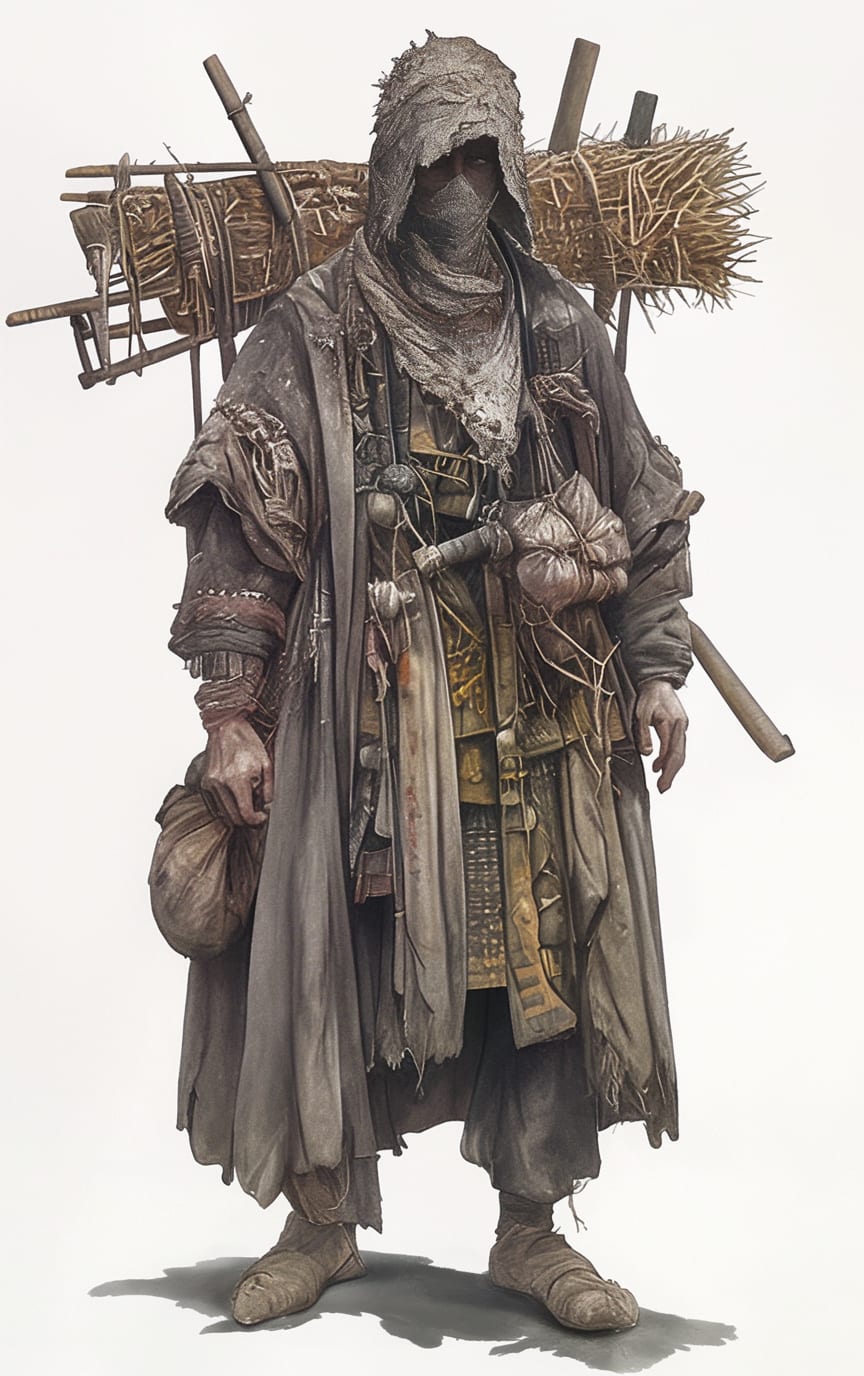

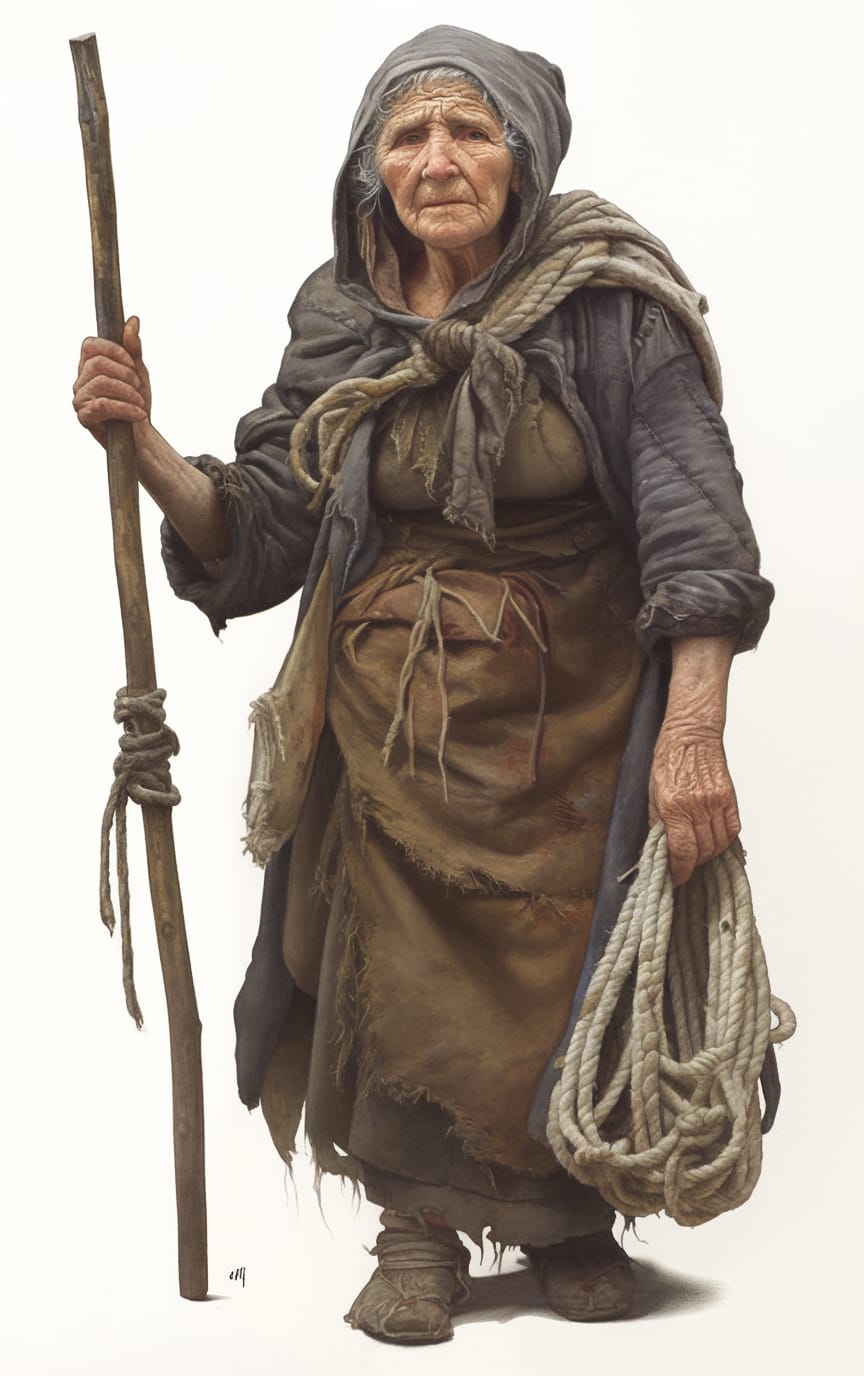
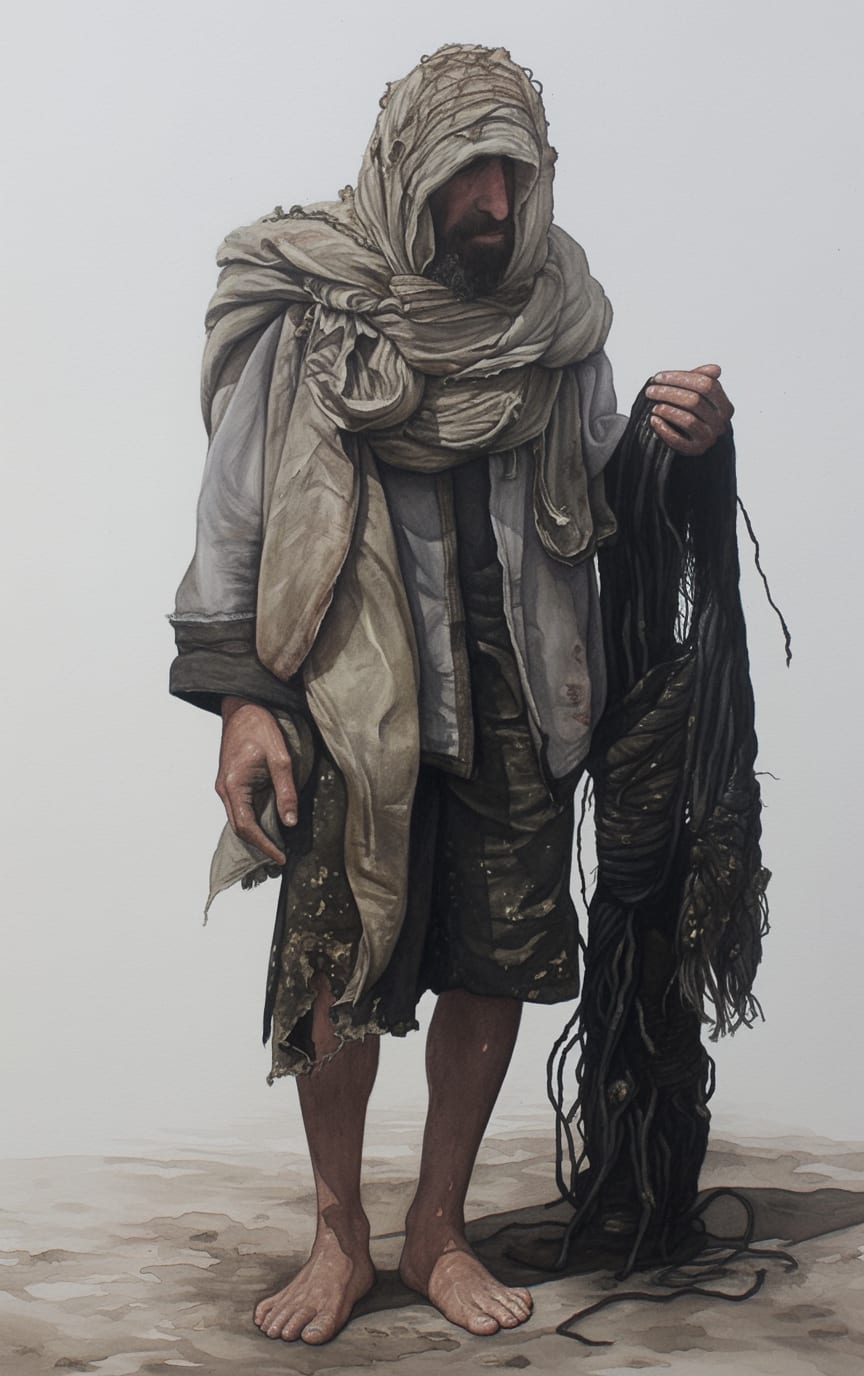
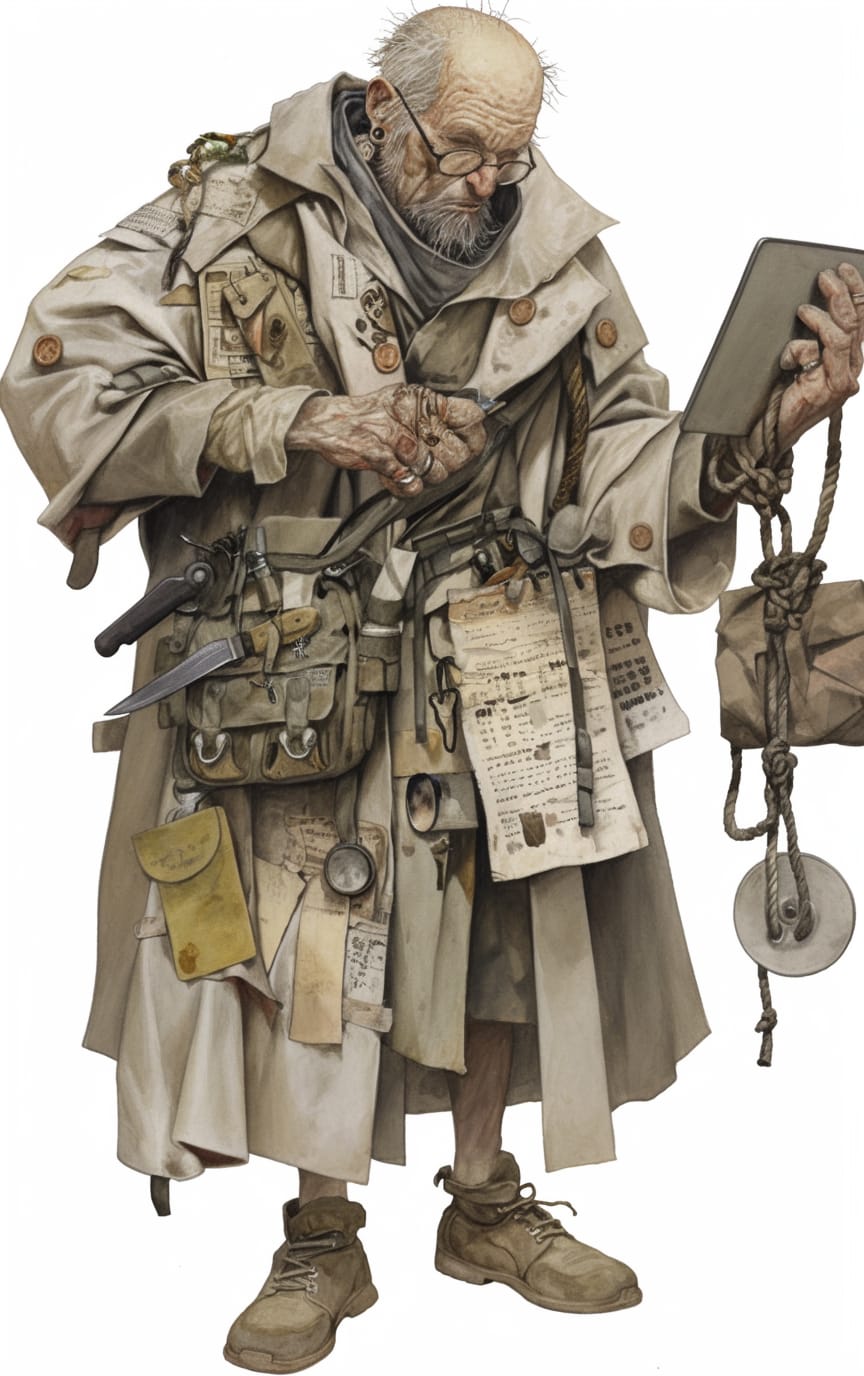
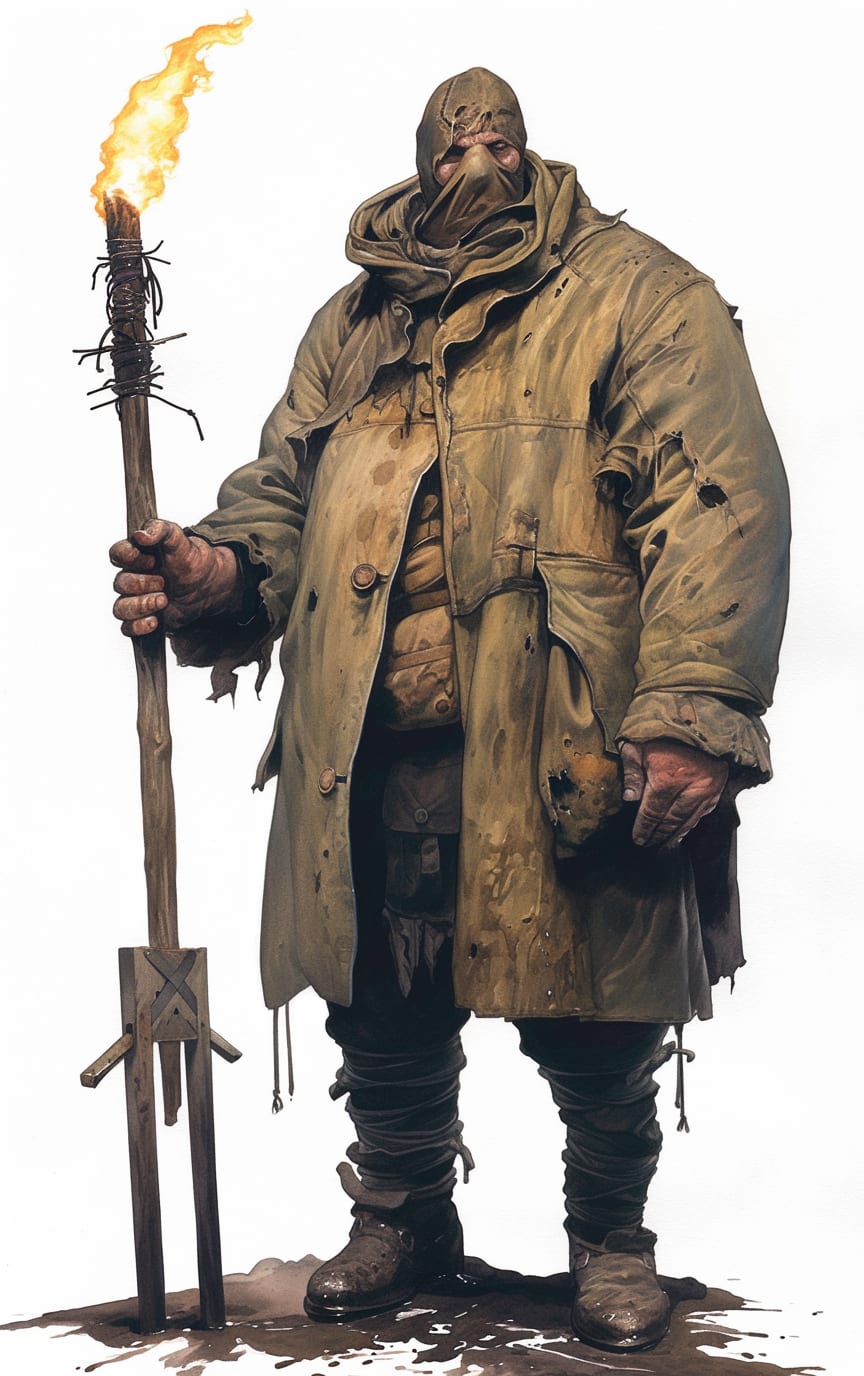
#On the Auxiliaries and the Heavies
The Penitent Mob consists of voluntary participants who block, chant, kneel, carry evidence, and witness. They are the Host's mass — its numerical argument, its street theology made plural. A single Rag-Vicar reading a charge can be ignored. A single Rag-Vicar reading a charge while forty people kneel behind him in a market square cannot be ignored, because the kneeling itself is the sermon and the sermon has forty bodies and the Watch sergeant sent to disperse a disturbance confronts not a disturbance but a congregation, and dispersing a congregation requires a different form, a different authority, and a different willingness to be seen striking people who are already on their knees. The Mob's members are drawn from petition failures, market families, debtor wards, camp surplus, and the specific population of people who have nothing left to offer the Host except their presence, and whose presence — upright, kneeling, chanting, silent, wet, hungry, visible — turns out to be the one thing the Host cannot do without.
The Mob's corruption is the corruption of numbers. Forty people kneeling look like consensus. Forty people kneeling look like proof. A Captain who needs a charge to appear credible invites the Mob to kneel, and the Mob kneels because the Mob has been fed and the feeding was the invitation, and a fed crowd that has been asked to kneel will kneel because kneeling after eating feels like gratitude rather than coercion. The distinction between voluntary prostration and coerced attendance is visible only from inside the rope circle, and the Mob is outside the rope circle, and the public sees only the number. In A.S. 198, a Penitent Mob in the Rhine district knelt for a charge that three separate Sin Readers had rejected as unsubstantiated. The Captain read the charge anyway. The Mob knelt anyway. The target — a ferry clerk whose crime was processing the paperwork assigned to them — was humiliated before their family by forty people who had no idea what the charge was and who had been told only that kneeling would be rewarded with a second meal. The clerk was later cleared. The second meal was served. The Host does not record whether the Mob attended the clearing.
The Rag Crew performs the Host's manual labour: retrieving doors from hinges, bracing effigies for transport, carrying evidence through rain, building prostration frames from salvage, and preserving charged objects in wrappings that may or may not keep the damp out but which keep the Crew employed regardless. They are the Host's hands, and hands do not ask what they are building. A Rag Crew that has spent three days constructing a prostration yard from scrap timber and stolen rope has invested enough physical effort that the charge must now be read whether the charge is ready or not, because wasted labour is an accusation against the people who wasted it, and a Crew that has built a yard for nothing will demand that something — anything — be burned in it.
Crews are recruited from camp labour, demolition work, factory refugees, and the specific population of strong backs whose intelligence the Host underestimates because the Host, like every institution that distinguishes between thinkers and lifters, believes that the person who carries the door is less important than the person who reads the door's evidence. The Crew knows otherwise. A door dropped during transport is a door whose scratch marks are damaged. A prostration frame built poorly is a prostration frame that collapses during the rite. An effigy braced badly is an effigy that falls before the crowd has read the charge, and a fallen effigy is a joke rather than an accusation. Elia Nott, who crewed for a Zone 2 band, once refused to brace an effigy she considered poorly sourced. The Sacristan had dressed the figure in a merchant's coat, but the coat belonged to the merchant's spouse, who had filed the complaint that started the charge, and the spouse's coat on the effigy meant that person was being accused of their own accusation. Elia said the effigy was backwards. The Sacristan said the Crew's job was to brace, not to judge. Elia dropped the effigy in the mud. The charge was delayed. The coat was returned. Elia was fed last for a week. She said the cold soup was worth it. The Sacristan did not speak to her for a month, which Elia also classified as worth it.
The Knife Penitent Pair consists of two armed guards assigned to a specific lane, witness, prisoner, or piece of equipment. They are not Knife Penitents in the full doctrinal sense — they do not carry the same obligation of public accounting, they do not fast after a strike, and they do not confess the wanting of the edge — but they carry blades and they use the title, and the title is the point, because a title carries fear and fear carries order and order is what the Host needs most in the forty minutes between the reading of the charge and the arrival of the Watch. The Pair operates as a visible boundary: one stands forward, one stands back, and the space between them is the Host's jurisdiction for as long as both remain standing. A Watch sergeant who crosses the Pair has entered the Host's court. The Pair does not always explain this. The Watch sergeant usually learns by experience.
The Pair's corruption is speed. A Knife Penitent who has been trained over years develops judgment about when to draw and when to wait. A Pair assigned for a single action develops reflexes. Reflexes protect faster than judgment. Reflexes also cut faster than judgment, and a cut administered by reflex is a cut that has not been weighed, and an unweighed cut is the beginning of Knife Weather. The Host's camp law requires that any strike by a Pair be reported to the nearest full Knife Penitent within one bell. The rule assumes the nearest full Knife Penitent is present. During a charge, the full Penitent is usually stationed at the Rag-Vicar's position, which may be two lanes or two streets away, and a report that arrives two streets late is a report that arrives after the struck person has already bled or fled or both. Five districts in Zone 2 have stopped distinguishing between a Knife Penitent and a Knife Penitent Pair in their Watch reports. The distinction, they note, is meaningful only to the person who was not stabbed.
The Witness Line is a formation of people arranged to receive, hold, repeat, count, and pass evidence during a charge or prostration. The Line is not an audience. It is a mechanism. Each person in the Line receives a piece of evidence — a name spoken aloud, a marked rag, a counted object, a document fragment — and passes it to the next person after confirming its content. The confirmation is the point. A name that has been repeated by twelve people is a name that twelve people can attest was spoken, and an attestation by twelve is harder to deny than an attestation by one, and the Bureau of Records, which denies single attestations as a matter of fiscal policy, finds twelve attestations inconvenient enough to require a senior clerk. The Line is the Host's counter-bureaucracy: it produces witnesses the way the Bureau produces forms, by making the process of witnessing procedural, repetitive, and too thoroughly documented to dismiss.
The Line corrupts when its procedural strength becomes coercive. A person who enters the Line as a voluntary witness discovers that leaving the Line before the charge concludes is treated as a retraction — as though refusing to pass the next rag means refusing the charge itself. The Line closes around its members the way a queue closes around its participants: the pressure comes not from the front but from behind, from the people who have already passed evidence and who need the Line to continue because their testimony depends on the testimony that follows it. In A.S. 199, a Witness Line in Strasbourg's eastern ward held forty-three people for nine hours during a charge against a Tithes sub-office. Eleven of the forty-three had entered the Line believing the charge would last two hours. None were physically restrained. All were physically present. The difference between restraint and presence is a question the Bureau of Purity has never answered satisfactorily, because the Bureau's own queues operate on the same principle and the Bureau prefers not to examine the mechanism of its own detention methods.
The Ash Kettle Crew maintains the Host's relationship with fire after the fire has gone out. They catalogue ash from prior burnings, preserve samples in sealed clay pots, maintain wet blankets and restraint tools, record which fires were stayed and which were lit, which were justified and which were false, and which produced evidence and which produced only smoke. They carry the Ash Kettle itself — a large iron pot, usually salvaged from a camp kitchen or a factory floor, blackened by use and sacred by retention, in which ash from every fire the band has ever lit or stayed is mixed, so that the ash of a justified burning in A.S. 194 mingles with the ash of a false burning in A.S. 197, and the mingling is the Crew's theology: that the Host's fires are a single continuous fire, and the fire's conscience is cumulative, and the fire remembers its crimes even when the Host does not.
The Crew corrupts by treating old ash as a licence for new fire. A pot that contains ash from a justified burning carries the authority of justification, and the authority travels with the ash, and a Crew that produces the pot before a new target is producing not evidence but precedent — and precedent, as any clerk knows, is the mechanism by which a single correct decision is used to justify an infinite number of incorrect ones. The Ash Kettle Crew in Old Odran's band maintained a pot that had not been emptied in seven years. The ash inside it was layered like sediment: grey for stayed fires, black for lit ones, pale for false charges that were burned in correction. The Crew could identify each layer by touch. They could tell you which fire produced which ash. They could not tell you whether the next fire was justified, but they could show you the pot and say we have burned before and the burning was just, and the sentence, spoken while holding a pot that weighs fourteen pounds and smells of seven years of charcoal and regret, is more persuasive than any evidence a Sin Reader has ever assembled. A pot is not a court. A pot is not proof. A pot is a pot that smells like authority. The distinction matters. The Crew does not always agree.
The Accusation Shrine Cart is a mobile platform — a modified farm cart, a converted ammunition wagon, a commandeered market stall on wheels — that carries the Host's charged objects into public space: doors, boards, bowls, rags, knots, ash pots, evidence bundles, witness records, and the specific accumulated debris of institutional harm that the Host has gathered, sanctified through retention, and classified as too important to leave in a camp where the Watch might seize it overnight. The Cart is the Host's altar. It is also the Host's filing cabinet. The two functions are not distinguished, because in the Host's theology an object that proves harm is an object that accuses, and an object that accuses is a sacrament, and a sacrament on wheels is a procession, and a procession requires a destination, and the destination is wherever the most people will see it. Cart crews — usually three or four, drawn from Rag Crews with steady hands — are responsible for loading, securing, displaying, and narrating the Cart's contents. The narration is part of the display: a Cart that arrives in a market without a crew member who can explain which door came from which house and which button came from which child is a Cart that looks like a junk wagon rather than an indictment.
The Cart corrupts when mobility becomes authority. A Cart that can move anywhere can accuse anywhere, and a Cart that can accuse anywhere does not need evidence from the district it enters — it carries evidence from six districts and displays whatever evidence suits the audience. Carts have been used to introduce charges in wards where the Host has no history, no witnesses, no injured parties, and no evidence except the evidence that arrived on wheels from somewhere else. The audience sees the door, the buttons, the ash. The audience does not see the provenance. A Cart that carries the Latchford blue door into a Strasbourg market is carrying evidence from one district into another, and the evidence may be valid in Latchford and theatrical in Strasbourg, and the distinction between validity and theatre is lost the moment the crowd begins to kneel. Three Captains have been removed for Cart abuse — for loading Carts with evidence from resolved charges and driving them through districts where the resolved charges were unknown, creating the impression of an ongoing crisis from a concluded case. The Bureau of Records uses the same technique with census figures. The Bureau calls it context. The Host calls it truth. Both are lying, and both know it, and the Cart rolls on.
The Pyre Engine is the Host's largest apparatus: a structure of iron, timber, oil reservoirs, wick channels, fuel racks, and fire management systems assembled from industrial salvage, factory scrap, and the kind of engineering knowledge that levy veterans bring home from the Sagittal Line, where they learned to build things that burn other things because the Bureau of War taught them and the Bureau of War did not anticipate that the lesson would be carried home and applied to granaries. The Engine is designed for controlled high-temperature burning of large objects — charged buildings, evidence piles too large for a hand brand, effigies too complex for an oil torch, and the specific category of institutional property that the Host judges to be load-bearing for an entire system of harm, whose removal by fire is intended to be visible from six streets away because the visibility is the sentence. An Engine requires a crew of six: two fuel managers, two wick operators, one ash handler, and one Torch Deacon with the authority to give or withhold the fire order.
The Engine corrupts through its own impressiveness. A fire lit by hand is a decision. A fire lit by Engine is an event, and events attract crowds, and crowds attract more events, and the cycle builds until the fire itself becomes the purpose and the charge becomes the excuse for building the fire. Camps that own Pyre Engines use them. Camps that use Pyre Engines find reasons to use them again. The investment of labour in assembling, fuelling, positioning, and crewing an Engine creates a pressure toward ignition that operates independently of evidence, because a six-person crew that has spent two days building a fire does not wish to be told that the charge has failed and the Engine should be dismantled and the fuel returned. Two Engines have been fired without a completed charge — one in A.S. 197, one in A.S. 200 — because the crew had positioned the Engine and the crowd had gathered and the Torch Deacon judged that the cost of dispersing the crowd without fire exceeded the cost of burning an insufficiently proven target. Both judgments were wrong. Both fires burned. Both targets were later found to be partially guilty, which is the most dangerous outcome possible, because partial guilt after fire proves that the Engine works often enough to be trusted and fails rarely enough to kill without consequence.
The Door-Ram is a charged door repurposed as a breaching instrument — a door that was once used to confine, now used to accuse another door of confining. It is carried horizontally by four to six people, run at speed into a target threshold, and the collision is the charge: the sound of wood striking wood, of one institution's architecture striking another's, of the evidence hitting the building that produced the evidence. The Ram is the Host's most violent ritual because it combines the satisfaction of destruction with the appearance of justice — a door that was used to imprison children, carried by the people who were imprisoned behind it, striking the door of the office that ordered the imprisonment. The symbolism writes itself. The symbolism also excuses itself, which is the danger, because a Ram carried with righteous fury still damages whatever it strikes, and a building damaged by a Ram is a building whose occupants are injured by the symbolism regardless of whether the symbolism was earned.
The Ram corrupts through momentum. A Ram in motion does not stop for correction. A Sin Reader who discovers, mid-charge, that the target door belongs to the wrong office cannot halt a Ram that is already running. The physical fact of six people carrying a heavy door at speed creates a commitment that cannot be reversed by evidence, only by collision. Three Ram actions in Zone 2 have struck the wrong threshold — wrong building, wrong office, wrong door — because the charge was read while the Ram was already moving and the correction arrived after the impact. In one case the Ram struck a midwife's surgery whose only offence was sharing a wall with a debt office. The wall survived. The midwife's window did not. The Host offered to replace the window. The midwife declined. She said she preferred the hole, because the hole would remind the district that the Host's justice arrives at speed and stops for nothing, which is also how she would describe a cart accident, and the resemblance was not coincidental.
The Yoke Frame is a wooden burden device — a heavy crossbeam with shoulder notches, sometimes with attached hanging points for evidence, bowls, ash pots, or knots — carried during processions, charges, and prostrations. The Frame's stated doctrine is reciprocal cost: the Host's leaders carry the Yoke first, before the crowd, to demonstrate that the burden of accusation falls on the accuser before it falls on the accused. A Captain who orders a prostration should feel the weight of ordering it. A Rag-Vicar who reads a charge should carry the Yoke to the reading. A Claim Speaker who sustains a demand should bear the Frame between speeches. The doctrine is beautiful. The practice is intermittent. The Yoke weighs between forty and seventy pounds depending on attachments, and a Captain who has been marching for four days and sleeping in culverts does not wish to carry seventy pounds of oak and ash to prove a theological point that the crowd will not appreciate because the crowd is watching the accused, not the accuser.
The Frame corrupts when its burden is transferred downward. A Captain who should carry the Yoke assigns it to a Rag Crew member. The Crew member, who has no authority to refuse, carries it. The Crew member's suffering becomes the procession's spectacle, and the spectacle is mistaken for sacrifice, and the sacrifice — which is the wrong person's sacrifice, imposed by the wrong person's authority — sanctifies the charge without costing the person who made it. This is the Yoke's standard corruption: authority commands cost; cost falls on the weak; the weak's suffering becomes the authority's credential. Five Captains in Zone 2 carry the Yoke voluntarily. Eleven do not. The eleven assign it to crew members, camp workers, young Penitent Runners, and — in two cases documented by Shadows — to accused persons whose guilt had not been established, making the accused carry the instrument of their own accusation through the streets before their neighbours, which is a procession the Bureau of Purity would recognise because the Bureau has conducted identical processions and called them penitential exercises. The Host condemns the Bureau's processions. The Host does not always condemn its own.
The Bell of Charge is a bell — any bell, of any size, from any source — that has been consecrated by use to announce that a rumour has become a demand, that a grievance has become a charge, that the Host has examined its evidence and found it sufficient, and that the district should attend. The Bell is rung three times: once to announce, once during the reading, once to seal. The third ring is binding — it commits the Host to the charge the way a seal commits the Bureau to a warrant, and a Bell rung on a false charge is a Bell that has lied, and a Bell that has lied must be melted down and recast, which is the Host's most expensive ritual because bells are difficult to obtain and the Host cannot afford to waste metal on the consequences of its own errors.
The Bell corrupts through its sound. A bell carries farther than a voice. A bell carries farther than evidence. A bell carries around corners, over walls, through windows, across the water, into the houses of people who were not present when the charge was read and who know only that the Bell rang and the ringing means someone is guilty. The Bell converts a specific, documented, evidenced charge into an ambient accusation — a sound that fills the district and cannot be argued with because sound does not accept counter-evidence. Three districts in Zone 2 have reported that the Bell of Charge causes more damage than the fire that sometimes follows it, because the fire destroys a building and the Bell destroys a reputation, and a building can be rebuilt and a reputation cannot, and the Bell's sound reaches the people the fire never will. A Bell-Diver — one of the Host's own contractors — once observed that their job was to silence the Watch's bells so the Host's bell could be heard, and the irony of silencing one bell to ring another was not lost on them, and they charged accordingly. They charged double on feast days, because on feast days the district's own chapel bells were ringing and the Host's Bell had to compete with the Creator's, and competing with the Creator's bell is expensive in every sense the word permits.
#On the Contractors and Their Awkward Terms
Bell-Divers cut or access alarm lines, bell ropes, signal wires, and Watch notification systems so that the Host can read a charge, complete a prostration, or conduct a breach before the district's authorities are summoned. They are specialists in institutional communication — people who know where the bell ropes run, which wires connect the Watch tower to the gate, which signal lanterns can be covered with a damp cloth rather than cut, and which alarm systems have been broken for months because the Watch's maintenance budget was redirected to the Bureau of Tithes to pay for a banquet celebrating the Bureau of Tithes' fiscal discipline. Bell-Divers work alone, at night, in advance of the Host's arrival, and their fee is the highest of any contractor because their failure — a bell that rings, a wire that remains intact, a lantern that flares — means the Watch arrives before the charge is read and the action collapses into a street fight that the Host will lose. Ludo Prent, who dived for three bands across Zone 2, carried a set of wire cutters he had inherited from his father, who had been a telegraph maintenance worker for the Bureau of War and who had taught his son the location of every signal line in the eastern Rhine district. Ludo cut the same wires his father had maintained. He considered this a form of inheritance. The Bureau of War considered it sabotage. Ludo said the distinction depended on which side of the wire you were standing on, and his father would have agreed if his father had not been dead, which was itself the result of a wire — a different kind, in a different war, on a different line — and Ludo did not discuss this further.
Counter-Copyists duplicate documents, reproduce signatures, transcribe ledger entries, and create the paper counterpart to whatever evidence the Host has gathered from physical sources. They exist because the Host's literacy, while sincere, is not always equal to the Bureau of Records' calligraphy, and a charge that rests on documentary evidence requires documents that can survive the Bureau's inspection — documents that look enough like Bureau documents to be taken seriously and different enough from Bureau documents to avoid a forgery prosecution. The line between reproduction and forgery is a line the Counter-Copyist walks with the practised balance of a person who knows that the same skill serves both truth and fraud and that the distinction is determined by the client's intention, which they do not ask about because asking would make them an accomplice and not asking makes them a contractor, and the contractor's ignorance is the contractor's defence. Counter-Copyists charge by the page, with surcharges for Bureau seals, Records calligraphy, Tithes accounting notation, and the particular shade of yellow ink that the Bureau of Purity uses for heresy citations, which is difficult to mix and expensive to source and which the Copyist obtains from a dyer in Strasbourg who does not ask what the ink is for and who charges triple because not asking is a service and services have a price.
Rope Advocates argue the legality of ritual binding under obscure provisions of pilgrimage law, camp-right statutes, processional ordinances, and the specific legal ambiguity that governs what a religious procession may do with rope in public space. They are the Host's lawyers — or rather, they are the lawyers the Host hires when the charge has produced a counter-charge and the counter-charge involves a Purity citation for unlawful restraint, because a Prostration Mother's rope circle, viewed from inside the rope, is a religious rite, and viewed from outside the rope, is a kidnapping, and the legal distinction between rite and kidnapping is determined by case law that has not been updated since A.S. 140 and that nobody except a Rope Advocate has read. Rope Advocates are usually defrocked legal clerks, disbarred petition advocates, or canon law students who were expelled for asking the wrong questions and who discovered that the wrong questions are the only questions the Host can afford. They charge by the argument. An argument that cites three statutes costs less than an argument that cites seven. An argument that cites the Pilgrimage Charter of A.S. 61 costs double, because the Charter's language is ambiguous enough to support any position and opposing counsel knows this and the resulting argument takes twice as long because both sides are citing the same document for opposite conclusions, which is the Charter's intended function, as far as anyone can determine.
Furnace Surgeons interpret burn evidence — charred bone, heated stone, melted metal, fire-altered glass, ash composition, scorch patterns, heat-direction indicators, and the specific forensic testimony of fire — with the clinical precision of people who have spent years learning to read what fire has written on the things it has touched. They are not Host members. They are professionals. The distinction matters because a professional who testifies about burn evidence is more credible than a Host member who testifies about burn evidence, and credibility is the commodity the Host most lacks and most needs. Furnace Surgeons come from industrial smelting, military ordnance disposal, kiln engineering, and the particular specialism of post-fire investigation that the Bureau of War developed for assessing Sagittal Line damage and that the Bureau did not anticipate would be applied to the Bureau's own buildings by the Bureau's own veterans. They charge by the consultation and they do not testify twice — if a charge fails and the Host relights it, the Surgeon must be rehired, and the second consultation costs more than the first because the Surgeon's reputation is now attached to a failure and the failure's cost must be recovered from the second fee. This pricing structure ensures that the Host does not casually retry failed charges, which is an accidental virtue in a payment arrangement designed purely for profit.
Doorwrights assess whether a threshold can be removed, transported, and displayed without destroying the evidence it carries. They are carpenters in the specific and morally neutral sense — people who understand wood, iron, hinge mechanisms, frame construction, lock housings, and the particular structural relationship between a door and its building that determines whether the door can be taken without the wall coming with it. The Host needs Doorwrights because the Host's Door-Bearers are enthusiastic but not always skilled, and a door removed by enthusiasm rather than knowledge is a door that cracks along the grain, losing the scratch marks on one half and the lock evidence on the other, and a split door is half the evidence for twice the effort. Doorwrights charge by the door and refuse to work during active violence — they will assess a threshold before a charge and remove it after a charge, but they will not remove a door while the Knife Penitents are active and the Watch is arriving and the crowd is chanting, because a Doorwright's hands are worth more than the Host's schedule and a splinter through the palm from a stress-cracked frame is a splinter the Host cannot afford to pay for. This professional caution infuriates Captains, who want doors removed immediately and who do not understand that carpentry, like justice, works better when it is not conducted at a run.
Ash-Cart Drivers move unlisted material through districts where listed material would be seized: evidence, charged objects, reliquary contents, sealed names, fugitive effects, and the specific category of objects that the Bureau of Purity has classified as heretical paraphernalia and that the Host has classified as proof. The Drivers operate carts, barrows, handcarts, and — in two cases documented by the Watch — a modified funeral wagon whose official cargo manifest listed the contents as deceased, unnamed, pending burial and whose actual contents were four charged doors, an effigy, two ash pots, and a sack of evidence from a Tithes office that the Host had entered the previous week. The Drivers are the Host's smugglers, and they resent the word because smuggling implies illegality and the Drivers consider their work a religious duty performed under commercial terms, which is the same distinction the Pilgrim Brotherhood draws between pilgrimage and travel and which convinces the Bureau of Tithes no more in the Drivers' case than it does in the Brotherhood's. They charge by weight and by risk, with risk calculated per district checkpoint: a cart that crosses two checkpoints costs double the base rate; a cart that crosses four costs the base rate plus a favour to be named later, and the favour is always named later, and the favour is always inconvenient, and the Host always pays because the alternative is carrying four charged doors through a Watch patrol on foot, which is not a transport strategy but an arrest.
Rain-Bowl Hosts protect names during prostrations by ensuring that rain, wind, spillage, mud, foot traffic, and the general hostility of weather do not wash the chalk from the kneeling ground before the witnesses have read it. They are the Host's archivists of the ephemeral — people who understand that a name written in chalk on wet stone has a lifespan measured in minutes, and that the minutes must be managed, and that the management requires bowls, cloths, drainage channels, overhead covers improvised from canvas and sticks, and the specific physical stubbornness of a person willing to stand in rain holding a bowl over a name while the Rag-Vicar reads the charge and the Witness Line passes the evidence and the Mob kneels and the Watch arrives and the entire rite occurs around and above and through the person whose only job is to keep the rain off the chalk. Rain-Bowl Hosts charge nothing. They are the only contractors who work without fee. They charge nothing because the names they protect are often the names of their own dead, written in chalk because chalk is what the family could afford, and the family stands in the rain because the rain is where the name is, and the name is where the dead person lives now, and a person who charges money to protect their loved one's name from the weather has priced something that should not be priced. The Host pays them in food, shelter, and the particular currency of being allowed to stand in the circle while everyone else kneels. The Rain-Bowl Host does not kneel. They stand. The standing is the payment. The standing, in a rite of kneeling, is the only dignity the Host can offer, and the Host offers it because the Host, for all its faults and fires, still recognises that some debts are paid in posture.
#Bases, Routes, Assets, and Contacts
#On the Ragged Estate
A Ragged base is shelter, kitchen, tribunal, archive, evidence store, reliquary, and hidden refuge. It is whatever a group of people with no fixed address can make from abandoned architecture and moral certainty. It should feed witnesses before hearing, preserve evidence outside official custody, and avoid becoming an office of coercive custody itself. That last condition is the one it fails most often, because a base that protects people from the Bureau's custody tends, over time, to develop its own.
Camps move after pressure from the Watch, Purity, Tithes, resource failure, or the next charge. A band may occupy a site for three weeks or three months, and the site changes them as much as they change it. The kiln teaches fire. The culvert teaches water. The chapel-cellar teaches secrecy. And secrecy teaches the keeping of secrets, which is the first step toward the keeping of prisoners.
#On the Seven Kinds of Base
The Kiln-Road Yard is built beside a disused brick kiln on refugee routes. The kiln mouth supports public hearings — its arch creates a natural speaking frame, and the acoustic carries a Rag-Vicar's bell across the adjacent flats. Drying sheds become dormitory and witness hall. The flats become prostration ground. The site teaches fire restraint because the kiln's own history demonstrates what contained burning can accomplish and what uncontained burning destroys. Its danger is that it normalises children's proximity to burning objects: a child raised beside a kiln does not flinch at flame, and the Host needs its children to flinch.
The Burned Hostel Court is a destroyed hostel that continues to receive official relocation and resource paperwork. The mail arrives. The building does not. It contains rain bowls, documents stamped with addresses that no longer exist, and the visible contradiction of an institution that assigns people to rubble. Its danger is preserving suffering: an unrepaired ruin is stronger evidence than a repaired home, and a camp that benefits from the evidence may resist the repair.
The Underbridge Camp uses arches, spans, toll roads, and causeways to watch traffic, recover water bodies, and track unequal crossing rights. Its danger is placing hungry children at bridge approaches for maximum visibility — the child's hunger is real, the placement is tactical, and the line between displaying need and exploiting need is a line the child cannot see.
The Door Yard stores charged doors, panels, locks, and booths for examination and transport. It can preserve evidence — the Latchford blue door lives here between actions — but it can also make the Host invent or prolong charges to justify keeping a family's door, because a family without a door is a family that needs the Host's protection, and the Host's protection requires a charge, and the charge requires the door.
The Chapel-Cellar Without Licence keeps sealed names, fugitives, ash, spare material, and quiet hearings beneath an abandoned religious site. It protects people from official custody. It may also become a hidden prison, because the difference between a protected fugitive and a captive witness is determined by whether the fugitive can leave, and the cellar's architecture does not distinguish between shelter and confinement.
The Grave-Cloth Shed provides dry storage for remains, tags, hair packets, linen rolls, and names while families or evidence are sought. It can protect mourning from erasure. It can turn bodies into bargaining weight — your husband's remains are here; we will return them when you testify.
The Back-Room Refectory is a hidden food and meeting site near a market, tavern, chapel pantry, or Ashen-adjacent kitchen. It supports feeding before hearing, which is the Host's better law. Its corruption is older than the Host: food can purchase testimony, food can shape testimony, and a bowl of soup followed by a question is an interrogation technique that Purity's own Lictors would recognise.
#On the Facilities
A camp's facilities reveal its health. The Charge Board displays active targets, Host costs, false charges, answered structures, and charges to be removed. A visible false-charge column — a list of accusations the Host has retracted — is a health marker. A camp that refuses to erase resolved grievances creates permanent resentment in the districts it touches and permanent rot in the rolls it keeps.
The Ash Kettle catalogues ash from past fires, false effigies, stayed fires, and sacrifices. The Prostration Yard is swept, roped, and marked for the rite. The Knife Accounting Post records orders, strikes, victims, reasons, witnesses, and consequences — useful only if consequences are substantive rather than theatrical. The Witness Bench provides a protected place to testify, refuse, contradict, forget, or accuse the Host, and it needs water, blankets, and an elder to prevent dominant speakers from drowning quieter ones. A witness who cannot safely disappoint the Host is not a witness. She is a hostage who has been given a seat.
The Door Rack stores and labels charged threshold evidence by status: black for condemnation, grey for inquiry, white for prostration, cut tie for Host error requiring return or destruction. Its rule is that truth can require returning a door — giving back the evidence, repairing the threshold, and accepting that the charge was wrong. The Wet Blanket Rail stores soaked blankets near flame supplies and records intended restraint, though it can also enable leaders to place more fire near more people under a claim of caution. The Effigy Loft stores materials and incomplete effigies, and unfinished figures create pressure to find a target because an effigy without a charge is a weapon without a war, and the Host does not tolerate idle weapons.
The Grain Scale is used during food and hoarding disputes to count resources and need, and precise counting can support mercy or falsely equate equality of allocation with justice, because equal distribution among unequal hunger is not justice — it is arithmetic pretending to be morality. The Sealed Name Chest holds protected identities and aliases. Decent camps divide its three keys between a Grave Confessor, a Rag-Vicar, and an independent sceptic. Concentrated control — all three keys in one hand — turns protection into coercive custody.
#On the Routes
The Door-Line moves seized doors and thresholds from a site to a public hall, shrine, yard, or square. It is vulnerable to official seizure, smuggler substitution, premature burning, and the permanent danger that the evidence becomes more important than the people affected by the structure.
The Culvert Road follows underground drainage and aqueduct paths marked for water, turns, and safe passage. It can save witnesses, children, fugitives, and officials who need extraction. It can also become a cold trap when ritual blocks its exits — a prostration performed at both ends of a culvert is a prostration inside a prison.
The Funeral Toll Path follows routes used by death carts and burial traffic. The Host watches it for fees, missing bodies, sealed coffins, and handling irregularities. Marking a Funeral Toll Path can make private burial impossible by converting mourners into a public case — a family carrying a coffin past a black rag becomes part of a charge whether the family consents or not.
The Black Wagon Bend is any slow transport point suited to stopping guarded wagons. The Latchford original follows Pella Dint's rescue. Its danger is blanket suspicion: every guarded wagon stopped at a bend is a potential rescue, but every guarded wagon is also a potential medical transport, and the Host's inability to tell the difference before stopping the wagon is what killed the child behind the kneeling line.
The Petition Queue is a fixed bureaucratic road made of lines, counters, doors, tokens, and benches. The Host tracks who is delayed, redirected, or denied and may convert delay into a public charge. The danger is that delay, like hunger, is universally distributed, and converting every delay into a charge is converting a queue into a tribunal without evidence.
#On the Assets
The First Unburned Door is preserved from a proven harmful structure because the Host delayed flame. It is evidence of restraint and can become a relic held against a family's need for return. The Black Rag Bundle is source-marked cloth for charges, condemnation, and prostration — correct provenance disciplines action; incorrect placement can put an entire street at risk. The White Rope Ledger is a knotted record of who knelt, why, and for how long; it can contradict simplified accounts of a mass rite by recording the confused clerks, sick children, and uneven burden that the Host's songs omit. The Broken Tithe Seal is portable proof of hoarding, seizure, or false authority. The Clean-Drain Sketch is a diagram of drainage that contradicts official claims and suggests hidden custody or disposal — useful when witnesses cannot enter safely, dangerous when incomplete drawings are treated as complete proof.
The Bowl of Rain Names is a relic from the West Culvert prostration or similar actions. It should indict the Host's coercion as well as district failure; treating it as a victory trophy repeats the abuse it was meant to expose. The Unanswered Clerk is a living person with internal procedural knowledge — both sides may protect, blackmail, or exploit her, and her personal need for rest and safety is ignored by everyone who finds her useful. The Kept Wet Blanket is a relic of a stayed fire, spared person, corrected effigy, or searched building, used to require a Torch Deacon to recall a specific prior act of restraint. The Witness Knot Circle consists of interlocking evidence knots around one charge — knots should test each other and leave room for contradiction, because an evidence structure without gaps is a noose.
#On the Contacts and Their Terms
The Soot Clerk is a smoke-damaged former or current Records worker who can manipulate or surface documents. She wants protected names or rooms spared during searches. Both the Host and the Bureau call the necessary compromise betrayal, which it is, and which does not prevent either side from accepting it.
The Funeral Washer knows body preparation, missing effects, wounds, tags, ash, and concealment. She demands return and private mourning before public use of remains. The Toll Widow knows crossing schedules, hidden ledgers, receipts, and guard rotation through a dead bridge worker's knowledge. She may demand that action avoid killing low-ranking guards, which challenges the Host's doctrine that treats all enforcers as equally guilty — a doctrine the widow knows is false because her husband was the lowest-ranking enforcer and he did not set the toll.
The Hungry Porter Band carries doors, carts, stretchers, and evidence through crowds. They demand food before speech and judgment before logistical service. The Quiet Watch Corporal will delay suppression or open a route to prevent a worse outcome, but requires weapon visibility, no hidden blades, no oil near young soldiers, and no forced prostration of powerless clerks. He will turn on the Host if a massacre becomes likely, and his turning is the only external check the Host cannot dismiss as persecution.
The Tithe Counter Apostate understands resource categories, price manipulation, and administrative language. She demands distinctions between hoarding, reserve, theft, redistribution, emergency, and fraud — distinctions the Host finds inconvenient because they complicate a charge and the Host prefers simple charges. The Furnace Attendant reads industrial and crematory heat evidence and wants an employer named only after the employer's family is safe, which creates a conflict between preserving proof and waiting for protection.
The Family of the Missing brings precise personal identifiers — a scar, a ring, a habit of whistling, the way he held a spoon — and requires the right to receive truth without being recruited, and the right to reject or hate the Host afterward. The Ragged-Adjacent Kitchen feeds children, witnesses, and mourners without allowing food to become a loyalty pledge. It is the Host's most important external check and the one it finds most difficult to accept, because a kitchen that feeds without condition is a kitchen that proves unconditional feeding is possible, and the Host's entire food system is built on conditions.
#On the Leads That Point Toward Trouble
A seized door vanishes from the Door Yard. It reappears as an effigy surface against an office that has no connection to the original charge. The Sealed Name Chest is opened with an improper key, and three identities reach Purity by routes that no one in the camp will explain. Young Torch Hands steal the Kept Wet Blanket to claim the authority of restraint without practising it — wearing the relic of discipline as a badge rather than a burden. A Soot Clerk names an innocent office to protect an actual friend, and the Host's Sin Reader does not catch the substitution because the substitution fits the pattern.
A Witness Line refuses to disband after a resolved charge because public importance has become its own incentive — the Line's members discovered that standing in a Line is more interesting than returning to a queue, and the Line's dissolution would return them to the anonymity from which the Host briefly rescued them.
The Bell of Charge sounds in a district, and no band accepts responsibility. The bell that accuses without an accuser is the Host's own ghost — the method outliving the movement, the instrument persisting after the hand that struck it has withdrawn.
Bureau of Shadows assessment, A.S. 200: "Ragged Host bases are temporary and leave no lasting infrastructure."
Corrected. Ragged Host bases leave infrastructure in every district they touch: ash marks, door racks, Witness Benches, prostration ropes, and the knowledge in every clerk's mind that a second count is possible. The infrastructure is social, not architectural. The Bureau's failure to recognise social infrastructure as infrastructure is itself an intolerable structure, though I will not say so in a document sealed by the Bureau of Doctrine.
#Corruption, Scarcity, and Transformation
#On the First Rot
Poverty, unsafe conditions, and justified anger do not automatically make the Host corrupt. A group can be poor, cold, furious, and right. Corruption begins at a specific point: when accusation becomes more useful to the camp than proof. After that point, every other corruption follows as certainly as water follows gravity.
The first false charge is the easiest to explain and the hardest to detect. Naming a target before knowing enough gives a cold, frightened crowd a clear direction. It makes leaders look decisive. It replaces the slow, painful, humiliating work of evidence with the fast, satisfying, dignifying work of condemnation. Better bands ask: who saw, who benefits, what evidence survives, what normal response was refused, and who may be harmed by error. Bad bands call these questions weakness. Rotten bands call them obstruction. At that point, innocent people begin to flee, and the Host interprets the fleeing as proof of guilt, because flight from a false charge looks identical to flight from a true one.
#On Effigy Hunger
Repeated symbolic success creates a demand for clear targets that exceeds the supply of actual evidence. Effigies can make officials respond — a well-made effigy of a tithe assessor hung from a granary door will produce a Tithes investigator within the week, which is faster than any petition in the Synod's history. This effectiveness makes the effigy an attractive substitute for proof, because proof is slow and the effigy is fast and the camp is hungry and the crowd wants to see something burn.
The escalation path is predictable. Any late cart becomes hoarding. Any locked door becomes hidden vice. Any clean coat becomes pride. Any unfamiliar person becomes infiltration. The camp begins choosing the effigy first and inventing the sin around it, which is the precise inversion of the Host's founding doctrine and is indistinguishable from the Bureau of Purity's own method of identifying heresy — find the heretic, then find the heresy.
#On Stolen Prostration
The Host needs a visible mass of humility. A prostration with four kneelers looks like a grudge. A prostration with forty kneelers looks like a judgment. The arithmetic creates pressure to fill the rite with bodies, and the bodies nearest to hand are the bodies with least power to refuse: low clerks who merely processed forms, tenants who lived above the accused office, trapped workers who swept the accused floor, families who ate the accused bread, strangers who were passing through, and people who do not speak the language of the charge and therefore kneel before a sin they cannot identify and confess to a guilt they cannot pronounce.
Actual offenders — the assessor who set the price, the officer who locked the granary, the priest who blessed the debt — remain safe elsewhere. Available bodies are made to kneel in their place. Better Mothers ask about relationship, capacity, guilt, knowledge, and danger. Bad Mothers count bodies. The worst redefine innocence as a more valuable sacrifice — the innocent kneeler pleases God more than the guilty one — which is a theology that the Synod would recognise, condemn, and quietly practise.
#On the Sacrifice That Costs Nothing
Leaders claim repentance while merchants, prisoners, widows, clerks, and children bear its loss. The Captain crawls through the yard while the merchant's stall burns. The Rag-Vicar fasts while the clerk kneels in rain. The band surrenders its comfort while the captured tithe driver surrenders his livelihood.
Good sacrifice is inward: comfort, food, sleep, pride, trophies, false charges, and cherished hatred. The last is the hardest. A band that surrenders a hatred it has carried for three years — this clerk wronged us, and we have been wrong about this clerk, and we will say so publicly — has made a genuine sacrifice. A band that surrenders a merchant's shop has made a performance.
Rotten sacrifice moves downward toward people with the least ability to refuse. The test is simple and the Host states it and the Host fails it: does the person claiming repentance bear the cost, or does she export it to someone weaker?
#On the Knife Weather That Precedes the Storm
Armed protectors begin as necessary guards. The camp needs them. The Watch is hostile. Smugglers are unpredictable. Internal disputes can turn violent. The Knife Penitent carries a blade and a burden and an obligation to account for both.
The transition begins when fear replaces hearing. Leaders wait until Knife Hands have acted before making decisions — the blade decides, and the Captain ratifies the blade's decision with a speech. Other role holders defer to armed people: the Sin Reader does not challenge a charge that the Knife Penitent supports, because the Knife Penitent is armed and the Sin Reader is holding a piece of cloth. Disappearance records — she left the camp during the night — are accepted without inquiry. Children watch weapons more closely than evidence, which means the children have learned where the real authority lives. Rules remain displayed on the Charge Board but unused, which is the Host's equivalent of the Synod's constitutional provisions: decorative law, preserved for sermons, ignored in practice.
External danger supplies the justification. Purity raids supply the justification. Watch patrols supply the justification. The Bureau's own hostility supplies the justification. The justification is always real and always insufficient, because no external threat has ever prevented an institution from examining its own internal use of force. The institution merely prefers not to.
#On the Smaller Synod Under Canvas
The fully corrupted Host becomes an internal government. It maintains unchallengeable rolls. It forces relocation. It seizes property by "sacrifice right." It conducts unsearched burnings. It conceals errors. It classifies outsiders as bodies requiring Host permission to exist, eat, sleep, leave, speak, remain silent, mourn, or breathe without accusation. Captains interpret doctrine without appeal. Knife Hands interpret danger without appeal. Grave Witnesses interpret memory without appeal. Torch Keepers interpret divine intent without appeal. The word without appeal is the signature of the Synod's own governance, and the Host has copied it with the fidelity of a vault-keeper transcribing a condemned text.
It can remain materially poor while becoming institutionally corrupt and unequal, because corruption does not require wealth. It requires authority, and authority requires only that someone controls what someone else needs — food, names, safety, the right to leave — and names the control as service.
Official powers use the Host's corruption as proof that repression was justified, ignoring their role in producing the conditions. The Synod says: look, we told you they were dangerous. The Host says: look, they made us this way. Both claims are partially true. Neither cancels the other.
#On the Host Triumphant
The final dystopian form is an orderly, devout camp operating as a superior system of survival and a coercive system of obedience.
A newcomer arrives with spouse, children, and a guard. The Host disarms the guard. It records the newcomer's name before feeding him. It demands confession before bread. It feeds the children only after the confession is complete — not before, because before would be charity, and charity does not require the recipient's participation. It holds the father's name in the Sealed Name Chest. It requires procession participation. It makes departure dependent on absolution, and absolution is granted by the Rag-Vicar, and the Rag-Vicar determines when the newcomer has demonstrated sufficient commitment, and sufficient commitment is demonstrated by participation in the next action, and the next action requires the newcomer to kneel before a target he did not choose, carry evidence he did not gather, and chant a charge he did not make.
#On the Signs of Return
A Host can recover. The recovery requires giving up the powers that make the camp feel chosen, which is the most painful act in any institution's life because the powers that make an institution feel chosen are the powers it acquired through genuine suffering, and surrendering them feels like surrendering the suffering itself.
Required acts: publicly correct a false effigy and accept the crowd's disappointment. Let an accused person answer and accept that the answer may exonerate. Search before burning and accept that the search may find nothing. Release an ignorant prostrator and accept that the rite will look smaller. Return a body to a hostile family and accept that the family will curse the Host's name. Destroy its own trophy — the rain bowl, the broken lock, the relic splinter — and accept that the destruction removes a symbol of authority that the camp relied upon. Punish a popular wrongful blow and accept that the punishment will make the camp's best fighter its most resentful member. Acknowledge a paid claim and accept that resolution reduces the Host's political capital. Accept repair where repair truly resolves harm, and accept that a repaired bridge or an opened granary makes the Host unnecessary in the district where it was most powerful.
These acts reduce spectacle. Reduced spectacle feels like weakness to the corrupted Host, because the corrupted Host has confused spectacle with truth and volume with virtue.
The group remains defensible — morally, theologically, politically, and in the private opinion of a Hieromnemon who should not be writing this sentence — only while it accepts the same judgment it applies to its targets. Before the target has been destroyed. Before the evidence has been burned. Before the human response has been replaced by the institutional reflex.
#The Door That Would Not Kneel
Being a deposition compiled from Watch reports, Shadows intercepts, Records transfer memoranda, and the personal testimony of Examiner Vale, Zone 2 Rhine Circuit, concerning events at South Petition Hall on the afternoon of the fourteenth of Rye-Month, A.S. 199. The Bureau of Doctrine classifies this incident as illustrative. The Bureau of Doctrine does not classify what it illustrates.
South Petition Hall sits at the eastern edge of Zone 2's Rhine administrative district, where three ration corridors meet a burial-scheduling office and a relocation-correction booth and a queue that stretches into the rain like a sentence the Bureau started and God declined to finish. On any given afternoon, the queue contains delayed-pay applicants, widow-status petitioners, scheduled-burial processors, relocation corrections from offices that no longer exist, and the specific breed of exhausted patience that develops in populations who have learned that standing is the last form of civic participation available to them.
On the fourteenth of Rye-Month, approximately two hours before evening bell, a wagon arrived at the east approach. It was pulled by a mule that had opinions about mud. The wagon carried a door.
The door was blue. It had been blue for a long time, in the way that poverty is blue — faded past colour into condition. It was approximately six feet tall, fitted with an iron lock plate, and wrapped in black rags that had been tied with the particular knots the Ragged Host uses for evidentiary preservation. On its surface, visible beneath the rags and the rain and the years: children's scratch marks, a soot handprint at hip height, a Tithe seal, a Purity blessing mark, and, scratched into the wood with something that may have been a spoon and may have been a fingernail, the partial name ANA K.
The door had been removed from the child-debt office at Latchford.
The group that brought it numbered fourteen. They were wet, armed with concealed rifles wrapped in sackcloth, and led by a woman with a split ear and a patched officer's coat who carried a ladle where a captain might carry a sabre.
Her name was Sava Brinn. She was a Ragged Captain. The ladle was not decorative.
The booth clerk on duty was young, underpaid, recently transferred from burial scheduling, and confronted for the first time in his administrative career with a woman who wished to file a door as a formal charge against the Synod. He did what booth clerks do when the manual offers no guidance: he directed Sava toward procedures that did not exist and offices that had closed before he was born.
Sava did not argue with the clerk. Arguing with clerks is what petitioners do, and petitioners can be sent to the next window. She identified herself. She identified the door. She identified the seven witnesses who stood behind her with the stillness of people who have rehearsed patience until it became a kind of siege. She identified the offices implicated: the child-debt office at Latchford, the Tithe seal on the door's face, the Purity blessing that had sanctified whatever happened behind it. She identified the records she required: transfer documents for children held under debt contract at Latchford between A.S. 194 and A.S. 198, the name of the blessing priest, and the authorising tithe assessment.
Then Mara Vey set a pot of soup on the petition counter.
The soup was for the queue. That was the stated purpose. Mara — short, broad, with hands that suggested decades of professional pot-lifting — began ladling broth into tin cups and distributing them to the petitioners standing nearest the counter. The booth clerk objected. Mara asked him when he had last eaten. The clerk said this was not relevant. Mara said it was always relevant. A widow three places back in the line said she had not eaten since yesterday's bell. A burial-scheduling petitioner said his wife was ill at the waypoint and he had given his ration chit to the cart driver for passage. A relocation applicant said nothing but held out her cup.
The queue, which had been a queue, became a congregation. The soup did that. A congregation has witnesses. A queue has only position.
Behind Sava, Olya Thread — the Grave Witness — held a linen roll containing seven witness knots. Each knot was a deposition: date, name, mark, location, and a short account of what a child had said or failed to say or tried to say before a door closed. Olya was thin, grey-haired, calm in the manner of women who have counted too many dead to be disturbed by the merely bureaucratic. She kept one hand on Elian Krail's shoulder. The hand was not comforting. It was restraining.
Elian Krail was Ana's aunt.
Elian was the reason the door had come to South Petition Hall instead of a bonfire. Elian was the reason the oil cart — yes, there was an oil cart; the Host always brings oil — sat in the east yard with its cap sealed and its purpose visible. Elian was the woman who had said, in a cellar in the Rhine district three weeks earlier, that she would burn the Hall's door if they sent her away. Sava had brought Elian to the Hall so that burning would be the last act, not the first.
Watch Report A.S. 199-14R initially classified the Ragged group as "armed bread rioters with incendiary materials."
Corrected by Examiner Vale's subsequent memorandum. The group presented evidence, witnesses, a named charge, and a formal request for records examination. The oil was present but capped. The rifles were concealed. The bread riot was a petition, and the petition was better organised than most of the Bureau's own departments. This erratum is filed with regret and without apology.
A clean-coated petitioner — the sort who queues for delayed pay rather than delayed survival — complained that the Host was obstructing the counter. Mara turned to him. She did not raise her voice. She contrasted his inconvenience with what was scratched into the blue door, which stood in the rain behind the wagon with its rags half-removed so the yard could see the marks. The clean-coated man looked at the door. The clean-coated man stopped complaining. The queue gave him room, which in a petition queue is the closest thing to exile.
Then the clerks began to move. A burial clerk appeared, frowned, retreated behind a partition. Voices inside the partition grew louder in the way that voices grow louder when responsibility is being distributed away from oneself. A woman emerged from the Records section — older, ink-stained at the cuffs, spectacles pushed into grey hair that had given up on formality around the same time the Bureau gave up on punctuality. She identified herself as Examiner Vale. She asked who spoke for the evidence.
Olya's hand tightened on Elian's shoulder.
This was the critical interval. A Grave Witness's duty is not sympathy; it is sequence. Olya needed Elian to speak as kin witness — to name the institution, name the kinship, and name the desired use of the door — before grief could overtake procedure. Grief makes martyrs. Procedure makes records. Records survive longer than martyrs, which is a sentence I wish were not true and which experience compels me to write.
Elian identified herself as aunt to Ana Krail, age nine at last contact, held under debt contract at the Latchford child-debt office between A.S. 196 and her disappearance from the office's own records in A.S. 198. She explained the debt: her brother's levy-transport fine, converted to household labour obligation, transferred — by a mechanism Elian could not name because the mechanism had never been explained to her — to the child. She identified the door's origin. She asked that the marks be read before any burning.
She said before any burning with the careful precision of a woman who has already decided what happens after.
Sava placed both hands on the ladle across her chest and turned to the yard.
She named the charge. Publicly, in the rain, with the queue as witness and the booth clerk's mouth open and the burial clerks watching from behind their partition. She named the child-debt office. She named the Tithe seal. She named the Purity blessing mark and asked for the blessing priest. She named the transfer records. She named the scratch marks and asked for official reading. She named the partial inscription — ANA K — and asked whether any clerk present could account for the child whose fingers had carved her own name into a locked door.
The yard went quiet. Rain on the petition counter. Rain on the blue door. Rain on the soup pot. Rain on the queue, which was no longer a queue and not yet a mob but something between the two that had the attention span of the first and the temperature of the second.
Then Sergeant Dravek Oll arrived with four Watch officers.
Oll argued against the Host's asserted captaincy — Sava held no Bureau commission, no ward licence, no authority to commandeer a petition counter as a hearing space. Sava agreed with every objection and asked whether the relevant issue was her rank or whether children had been held under official protection behind a locked door with a Purity blessing on its frame. Oll said both issues were relevant. Sava said one of them was scratched into the wood and the other was scratched into his manual, and she would let the yard decide which scratches mattered.
Oll looked at the oil cart. Sava acknowledged it. She did not apologise for its presence. She said the group had brought evidence, witnesses, and a formal charge. She said the oil existed because the Bureau had taught people that evidence without fire receives no audience. She said this was a criticism, and the Bureau was welcome to prove her wrong.
At this point a fever cart entered the east approach. A coughing child lay under sacking in the back. Mara Vey left the petition counter, took soup to the cart, and knelt beside it. Two of the Watch officers looked at Oll. Oll looked at the fever cart. Escalation against a group tending a sick child in public view would cost more than the Watch could afford to pay in front of sixty witnesses and a Grave Witness with a linen roll. Oll did not order escalation. Oll was not stupid. Oll was merely institutional, which is a narrower failing.
Extract from Shadows intercept, Zone 2 Rhine, A.S. 199: Source: unnamed Watch officer present at South Petition Hall Content: "Oll told us to keep formation and keep quiet. He said if we drew on a woman ladling soup to a fever cart we'd be reassigned to ███████████ and he'd write the transfer himself." Classification: PERSONNEL MANAGEMENT — NO FURTHER ACTION
Examiner Vale directed the rags removed from the door.
Bess Six-Buttons — the youngest of the group, perhaps fifteen, with a button classification system pinned to her coat that served as evidence index — stepped forward and untied the knots. She worked with the slow deliberation of someone who has been taught that evidence is sacred and haste is the enemy of truth. Each knot loosened. Each rag folded. The black cloth came away in strips, and the door stood bare in the rain.
The yard saw it.
Blue paint flaking in long vertical wounds. The iron lock plate, heavy, institutional, the kind fitted to rooms where people are kept rather than rooms where people live. Scratch marks at waist height and below — the height of children's hands. Soot from a handprint, small, pressed flat against the wood as if the hand had been trying to push through it. The Tithe seal, wax-stamped and still legible. The Purity blessing mark, chalked into the frame's upper corner, meaning that a priest of the Bureau of Purity had visited the room behind this door and found it doctrinally acceptable. And at the lower edge, scratched in letters that leaned and stuttered and broke where the wood fought back: ANA K.
The yard fell silent. Silence at a petition hall is not natural. Petition halls produce noise the way furnaces produce heat — as a necessary condition of function. When a petition hall goes quiet, something has happened that the institution was not built to contain.
Examiner Vale studied the marks. She said — and I record her words from the Watch transcript because they deserve the weight of quotation — "These marks do not by themselves prove unlawful custody. A Tithe seal proves jurisdiction. A Purity blessing proves inspection. Scratch marks prove a child was present. The combination is sufficient to create a records hold. It is not sufficient to convict."
The yard did not care about sufficiency. The yard cared about the small handprint in soot and the name scratched with a spoon. The crowd's temperature rose. Sava felt it. Sava controlled it. She raised the ladle — her sceptre, her baton, her absurd instrument of command — and the Host members behind her went still, and the stillness radiated outward into the crowd like cold water poured into a warm bowl.
Oll said that burning the door now would convert evidence into ash and property into theft. A records hold would compel official response. Jorren — older, rifle-wrapped, sceptical of all institutions including the one he served — warned that Records would bury the charge in documents. Paper drowns as effectively as water, he said, and leaves less mess.
A young Knife Hand near the wagon proposed prostrating the Hall. The white ropes were in the cart. The crowd was ready. The Bureau was watching. The moment was ripe.
Sava said no.
Initial Watch report described Sava's decision as "tactical restraint motivated by the presence of Watch officers."
Corrected after cross-reference with Shadows intercept and Examiner Vale's memorandum. Sava chose Kneel First over prostration despite the crowd's willingness, the ropes' availability, and the Watch's visible anxiety. She chose it because the door had not yet been read. She chose it because the charge had been named but not answered. She chose it because burning feels like justice and sometimes is, but not when the evidence is still on its feet and the child is still missing.
Sava Brinn knelt in the rain.
She knelt in the mud before the petition counter, in front of the blue door, in front of the booth clerk and Examiner Vale and Sergeant Oll and four Watch officers and a yard full of petitioners who had come for delayed pay and widow status and burial scheduling and instead received a woman kneeling in the rain with a ladle across her knees.
Then Mara knelt, returning from the fever cart with an empty pot. Olya knelt, releasing Elian's shoulder. The two veterans — Rennic Pike and Jorren — knelt with their wrapped rifles laid on the ground before them, which is surrender and which is also a statement about what surrender costs when the rifles could have been unwrapped. Bess Six-Buttons knelt with the folded rags in her arms. The Knife Hands knelt. The Prostration Mothers did not cast the white ropes. The oil cart sat sealed in the east yard.
Part of the queue knelt. Not all. Enough.
Sava spoke from her knees. She placed the Host under the charge. She asked for judgment — of the door, of the office, of the blessing, of the debt, and of the Host's own desire to burn before truth had been established. She said the Host had come with oil and with evidence, and it knelt because it chose to be judged before it judged, and if the judgment came back empty she would rise and the oil cart would be opened and the door would burn with the Hall's name on it and every clerk's signature visible from the smoke.
The booth clerk knelt. Whether from conviction, terror, or the gravitational pull of thirty people on their knees in a confined space, I cannot determine and the Watch report does not specify. He knelt. The wax seal on his counter was at eye level. He stared at it as if it might offer instructions.
Oll remained standing. Vale remained standing. Elian remained standing. The blue door remained standing, because doors do not kneel, and this is the only sense in which the title of this account is accurate.
Examiner Vale offered custody of the door under public witness. The marks would be copied before removal. A formal suspension request would reach the Latchford child-debt office by sixth bell. The door would remain intact, held under Records seal, examinable by any authorised inquiry. She made this offer in the flat, undramatic voice of a woman who understood that drama was Sava's instrument and procedure was hers, and that procedure would outlast the afternoon.
Elian recognised the offer for what it was: a limited promise from a limited authority inside a system that had produced the door in the first place. She accepted the copying. She did not accept the promise. She asked for one thing more: a splinter. A small piece of the door, taken from the lower edge where no marks were carved, for a private family shrine. Not a relic. Not a charge object. A piece of the door her niece had scratched her name into, kept in white cloth, because the system that held Ana had built the door and the system that investigated Ana would keep the door and the family deserved to hold something that was not a form or a reference number or a promise delivered by sixth bell.
The splinter was taken from the un-inscribed lower edge with a pocketknife. Olya wrapped it in white cloth and tied it with a single black thread. Elian held it against her chest with both hands and closed her eyes and did not kneel and did not burn anything and did not thank anyone, because thanks would have implied that the splinter was a gift rather than a remainder.
Watch guards and Ragged witnesses carried the door into the Hall together. Jointly. A Watch sergeant and a Knife Hand on each side, with Bess walking behind counting the witnesses and Olya recording the transfer in her linen roll. The clerks watched from behind their partitions. The queue watched from the yard. The door passed through the entrance of South Petition Hall in the custody of both sides because neither side trusted the other to carry it alone, and this mutual distrust was the most honest act of governance the Hall had produced in six fiscal quarters.
At dusk, the Host left. The oil cart rolled east toward the brick kilns, its cap still sealed, its contents unspent. Sava walked at the front with her ladle across her shoulder. Mara carried the empty soup pot. Bess counted her buttons. Olya walked beside Elian and did not touch her shoulder.
The public response was divided, as public responses are when the crowd has witnessed something that refuses to resolve into sermon. Some petitioners touched the place in the mud where Sava had knelt, as though the ground retained an impression. Others spat on it. Both gestures meant the same thing: something had happened here that the queue could not process and the Bureau had not authorised and the rain would wash away by morning, leaving only the Watch report and the Records hold and the locked hall where a blue door sat under seal with a child's name scratched into its face.
Elian told Sava, as they passed the east gate, that she had prevented both the burning and the prostration. That she had stopped the fire and stopped the ropes. That the door was inside and the charge was filed and the splinter was wrapped and the oil was sealed and none of it — none of it — told her where Ana was.
Sava said: "If they bury it, we come back. If they bury it, the oil opens. I knelt today because the door was still standing. If they break the door, I will not kneel."
Elian said: "And Ana?"
Sava did not answer. Ragged Captains do not answer questions whose honest answer is I do not know and the system that should know has locked the answer behind a door and blessed the lock and sealed the blessing and filed the seal. She walked. The Host walked. The brick kilns received them after dark.