
#On Machines with Manners
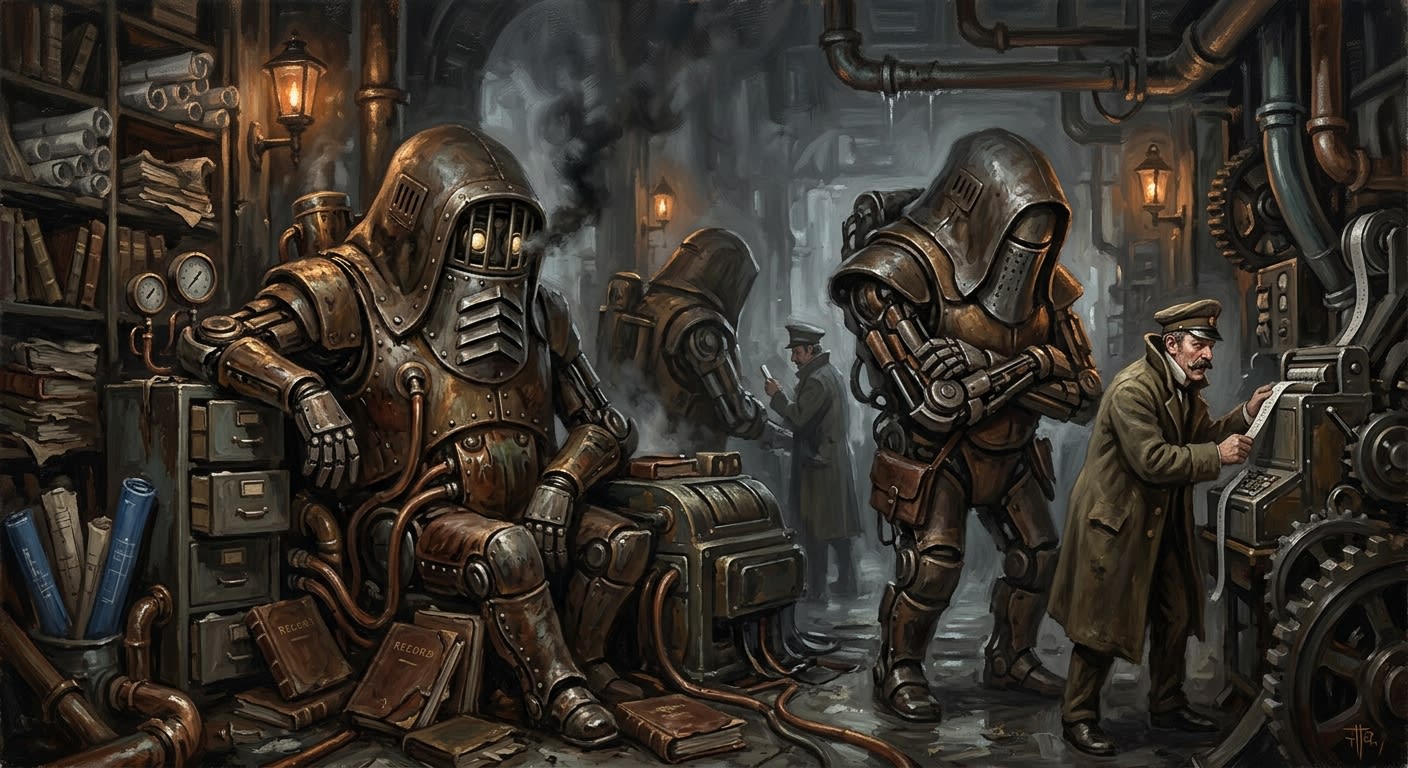
The machines of Brast are alive. This is heresy, and I have already denied it in one filing, so the reader may admire my consistency in contradiction. The official phrase is Sulking Engines — Category Two Localized Acoustic-Mechanical Disturbance, a designation broad enough to cover a shy boiler, a spiteful cannon, a train with opinions, and the quiet collapse of every boundary the Bureau of Doctrine pretends separates prayer from pressure.
The first rule of the phenomenon is offence. A valve sticks after being sworn at. A pressure gauge answers a hymn with a reading no pipe contents support. A cannon fires long, then short, then true, then long again, in a sequence the Bureau of Engineering has called harmonic drift and every gun crew has called punishment. A boiler whose feeding crew changes without proper introduction refuses pressure until the new men sing their names into the intake rail. Trains halt mid-switch for the exact duration of an omitted morning stanza. The machines behave like subordinates, clerics, nobles, and cats. In short, they require management.
Brast workers use the word sulking because they are practical theologians in dirty shirts. They do not say possessed, alive, ensouled, blessed, cursed, or intelligent, since each word summons a different office with worse boots. Sulking is safe. Sulking belongs to a child, a foreman, a saint denied candles, a furnace denied greeting. It names behaviour without admitting jurisdiction. A useful word. I resent not having coined it.
#On the Accepted Lies
The Furnace Chapterhouse of Saint-Combust attributes the Sulking Engines to divine animation. Its priests argue that metal fed on sanctified chrismole, washed in rite, anointed in ash, sung over at fourth bell, and housed beside Kiln Three has acquired rudimentary spiritual awareness. This is absurd, dangerous, and the strongest theory presently wearing vestments.
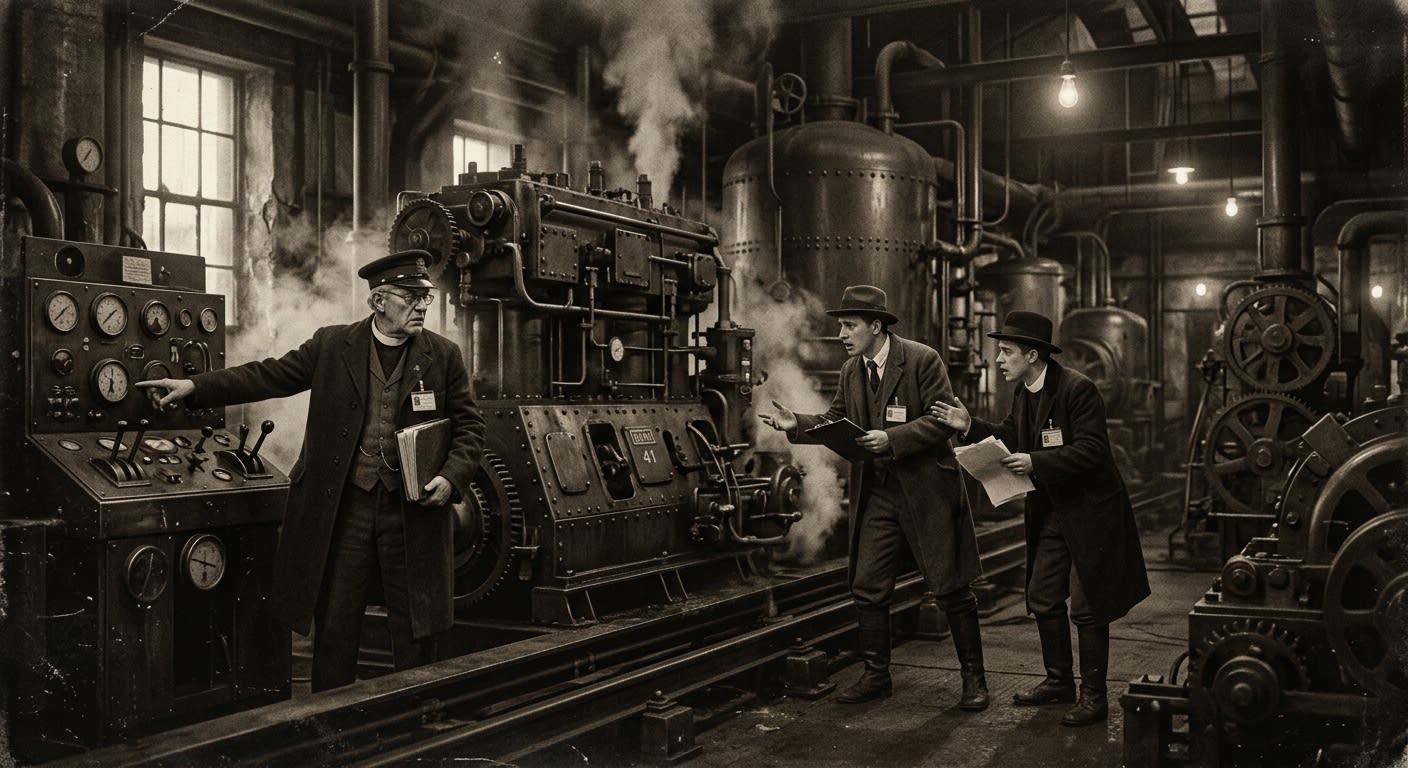
Engineering offers a cleaner insult: harmonic interference, pressure irregularity, responsive material fatigue, condenser-line memory, bad dampening in the primary pipe-work. The engineers arrive with instruments, take readings, frown at brass, write reports, and leave before the night roar adds a syllable to their surnames. Their readings are useful. Their explanations have the warmth of a corpse in a measuring coat.
The Calibration Choir says the machines answer cadence. Kest's Measures do not flatter themselves with theology when monopoly will suffice. Correct pitch opens. Wrong stress resists. Omitted stanza teaches disobedience. A hymn sung beautifully and late is a sin against pressure, which is the only sin Brast punishes promptly. Choir doctrine is simple: sing it true, or it fails.
Bureau of Engineering memorandum 41-R states that reports of responsive machinery remain “unproven by controlled trial.”
It has always been the case that “controlled trial” means the machine did not misbehave while expensive men were watching. The machine has taste.
Commander-Auditor Sorn Vale calls the matter superstition because superstition has suspects and suspects can be audited. Vale's premise is clean: failure is always criminal. The Sulking Engines threaten him because they may produce effects without culprits, symptoms without thieves, wrong firings without a hand to cut off. His ledgers can arrest a missing gallon. They cannot hang a mood.
#On the Forms of Refusal
The mildest sulk is delay. A feed line opens three breaths late. A crane holds one beat past the bell. A switch refuses its lever until the caller repeats the dispatch measure. Delay sounds tolerable to civilians, who think time is a road along which one walks. At Brast, delay is pressure. Three breaths at first-stage charge can sour condensate. One late switch can trap sealed drums in cold siding. One held crane can turn a full yard into a funeral with rigging.
The second form is contradiction. Gauges answer hymns with readings that correct one another in sequence, as if conducting argument through brass needles. A boiler hisses pressure low while its rivets scream high. A sight drifts left in the morning, right in the afternoon, and centres itself only when the gunner apologises aloud. Siding Eleven's rail engine stopped in A.S. 201 and remained halted for forty-one days. No blockage. No fuel failure. No broken rod. Workers gathered at a cautious distance and discussed whether touching it would count as maintenance or provocation.
The third form is speech, though every office prefers a smaller word. Boilers hiss syllables. Condensation writes characters on Gauge Twelve. Furnaces hum additions to the distillation hymn during the night roar. Kettles repeat fragments overheard near Kiln Three. The new night-syllable preserved in Vault Brast-4 (Unregistered) produced pressure reversal in three lamps during first playback and wrote an unapproved mark in moisture. Ilyra Kest stopped the cylinder by raising one finger. The machine obeyed late.
Vault Brast-4 transcript fragment, A.S. 201: night-syllable recorded between fourth-bell cadence and condenser return. Acoustic shape resembles ████████████ with secondary pressure bloom consistent with spoken name response. Personnel below red seal reported left-ear heat and the smell of wet iron. One clerk wrote “it is waiting for the second half” before fainting. Clerk reassigned to non-listening duties.
The fourth form is memory. A boiler mistreated by one crew resists the next. A cannon sworn at by a gunner shoots crooked for a week. Lines exposed to bad feedstock answer later hymns with residue in the tone. The machines keep account. Nothing horrifies a Bureau more than an account book it did not authorise.
#On the Misfire Year
A.S. 199 made the Sulking Engines dangerous in writing. A Brast-fed battery at Bastion-Przemyśl fired four rounds into a friendly rail junction: eleven dead, one supply train crippled, and a conference table so thick with lies that men could have dined on it. Ordnance blamed sabotage. The Distillers' Compact blamed the Choir. The Choir blamed degraded feedstock. Engineering blamed harmonics. The Chapterhouse blamed insufficient rite. Vale blamed the absence of a hanged man.
The guns offered no testimony, which improved the dignity of the proceedings.
Kest's recorded sentence from that inquiry has entered Brast's working scripture: The furnace does not care whether you believe. It cares whether you sing. Doctrine dislikes the line because it makes faith sound subordinate to cadence. Ordnance dislikes the line because it makes obedience sound technical. Workers repeat it because the sentence has survived contact with machinery.
Since the misfire year, watch duties have doubled, gauges are replaced under cursed-instrument procedure, oil anointing has expanded to rails formerly considered too secular for prayer, and silence protocols now govern shift transitions. The public file remains Category Two. The review copy has been revised to Amber. The ward coughers in Ash-Hospice Row do not read classification, being occupied with breathing.
#On Countermeasures and Their Comic Insufficiency
The approved countermeasures are recalibration choruses, oil anointing, silence protocols, stamped gauge replacement, introduction rites for new crews, and the formal discouragement of insults directed at equipment. This last order is least obeyed and most sensible. A man who works sixteen hours beside a boiler will curse it. A boiler that can resent curses should be reassigned to a monastery or made Archon of a small Bureau.
Recalibration choruses work until they do not. The Choir stands in fourth-bell spacing and sings the machinery back toward obedience. The gauges settle, the valves open, the condensate behaves, and every official present convinces himself that the matter is solved because the symptom has bowed. Then night comes, the furnace adds a syllable no one sang, and the same officials discover urgent appointments elsewhere.
Oil anointing works better than theory admits. The Furnace Chapterhouse mixes ash from Kiln Three into certain valve oils, applies the mixture with black cloth, and refuses to let Engineering test the residue. Lines so treated show lower refusal rates and higher hymn sensitivity. Engineering calls this contamination. The Chapterhouse calls it care. I call it evidence with a stole over its face.
Silence protocols are the most frightening countermeasure because they flatter the machines by denying them conversation. During shift change, no worker speaks within three paces of a pressure rail. New crews are introduced by name, rank, task, and apology for disturbance. A man who laughs during introduction loses heat chits. A man who improvises a rhyme loses teeth. Brast knows what it has heard.
Public safety broadsheets describe crew-introduction rites as “morale custom.”
It has always been the case that morale customs do not require provost witnesses, Choir countersignature, and a priest standing by with ash oil.
#On the Thing Mire May Name
Lux Thane Mire has been sent from Strasbourg because ordinary denial has begun missing shifts. His title is the scandal in miniature: Inquisitor-Mechanic, faith and engineering folded into one warrant after a century of bureaucratic modesty insisted they lived in separate drawers. He may test responsive substance by contact, resonance, heat, oath, controlled doctrinal insult, and redacted methods designed to keep lesser readers from developing hobbies.
Mire's danger is not discovery of sabotage. Brast can digest sabotage. Sabotage has culprits; culprits have bodies; bodies decorate gates; gates improve morale. His danger is proof of distributed innocence: no single heretic, no thief, no cracked valve, no false hymn, only a system that has learned to answer through every part at once. Fuel, metal, glass, ash, paper, throat. A choir of materials, if one wished to be poetic, which I do not. Poetry is what happens when Records loses the invoice.
If Mire names the fault mechanical, Engineering inherits disgrace. If doctrinal, Doctrine inherits a bill it cannot itemise. If demonic, Purity inherits the bodies. If administrative, every Bureau will find the weather suddenly unsuitable for attendance. If he names the machines alive, the transcript will be sealed before the ink dries and every furnace in Brast will hear about it by dawn.
#On the Present Refusal
As of A.S. 201, the Sulking Engines remain officially contained, which means Brast has not yet exploded in a manner requiring a new map. Seven sealed drums are missing. The night-syllable sits in Vault Brast-4 under countermark. The Ash-Hospice Sisters' fever dishes spell the dead. Kest's murmur has grown quieter. Ruln guards his substrate receipts. Vale's audits have become theatrical enough to frighten actors.
The machines continue their devotions, if devotions they are. They open late, hold pressure grudgingly, demand introductions, punish bad language, remember mishandling, and answer hymns with the smallest possible obedience. That last detail is the wound. They do not rebel. Rebellion is honest, loud, and administratively convenient. They comply as clerks comply when the order is stupid and the supervisor temporary: exactly enough to accuse the order.
Brast's iron motto above the Chrismole Crown reads: Sing it true, or it fails. The letters vibrate with the furnace harmonic. The Choir says resonance. The furnace feeders say the letters are trying to add a word. I have heard the vibration myself. It waits where grammar keeps its knife.