
#On the Wards Where Breath Becomes Evidence
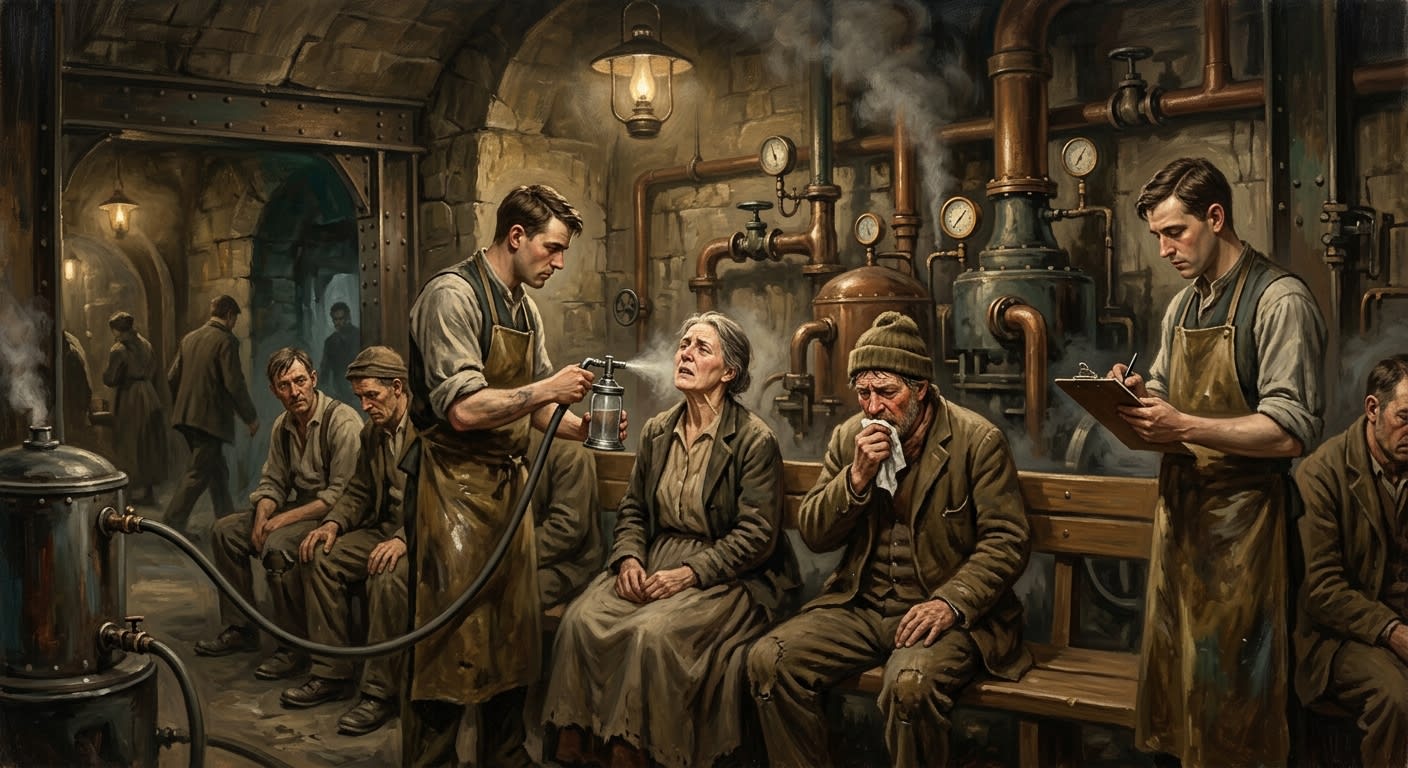
The Breatheries of Bastion-Irongate are the infirmaries and lung clinics where the mountain sends the throats it has used badly.
They stand beyond the Choir Nave and the Valve Quarter, where the Transit Spine narrows and the air changes from brass-warm to bleach-sweet. A visitor knows he has reached them before seeing the doors. Mint paste. Boiled cloth. Old cough. The thin medicinal vinegar used by nurses who have learned that cleanliness is a sermon the lungs seldom attend. Men enter with voice-license cards, candle scores, heat slips, throat wraps, prayer scratches, and the small frightened dignity of workers who believe a doctor may still distinguish sickness from failure.
The Breath Office disagrees. At Irongate, breath is a metric, a public asset, a licensed utility with ribs around it and a clerk beside it. A man who cannot bend the candle-flame for long enough is more than ill. He has become administratively insufficient. The Breatheries receive such people with beds, ledgers, rinsing cups, quarantine cords, and the terrible tenderness of institutions that know exactly how much mercy has been budgeted.
#On Their Founding After the Hush
The Breatheries were not founded by compassion. They were founded by arithmetic after the Great Hush of A.S. 94 killed three thousand people and taught the fortress that silence could be structural murder. Eleven months of excavation followed. Sixteen days of knocking were heard through the sealed Third Lung before the knocking either ceased or learned where official hearing ends. The Gasket Choir rose beside that wound, mandatory chant became law, and every useful throat in the mountain acquired value measurable in pressure stability.
Value, once measured, required disposal rules.
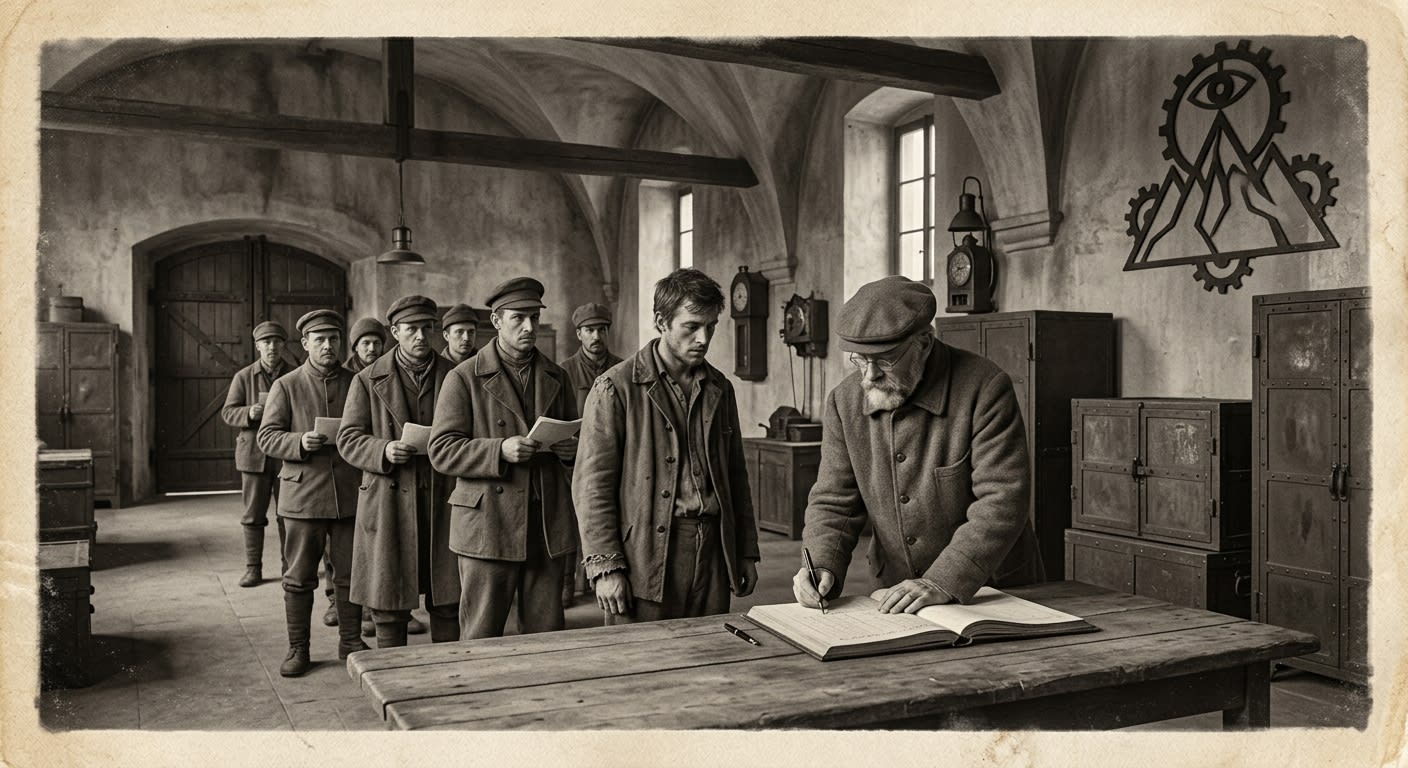
In A.S. 97 the voice-license regime was ratified. The Choir Magistracy claimed the stanzas. The Breath Office claimed the seals, candle tests, heat allocations, and quarantine clearances. The first breathing rooms began as side chambers for exhausted chant workers, stocked with mint salve, rags, hot brine, and a few cots borrowed from dormitory overflow. By A.S. 105, when vocal utility classes hardened into common practice, the rooms had become a system: intake bench, candle wicket, wash table, bleacher's ward, silence cot, discharge desk, death shelf.
Early welfare memoranda describe the Breatheries as “charitable respiratory relief attached to chant service.”
Corrected for restricted circulation. Relief was incidental. The purpose was to preserve usable voices, classify failing voices, and prevent unusable voices from occupying warm space without permission. Charity arrived later, poorly funded and smelling of lentils.
The first nurses were infirmary bleachers, failed choristers, widows of pressure-door accidents, and two chaplains who had spent too long at the sealed masonry of the Third Lung to pretend that bodies could be sorted cleanly into useful and finished. The Shaft Priory grew from the same corridor grief: candle niche, plank altar, salt chips, lozenge offerings, names on scraps of damp paper. The Priory still sends broth to the wards when the Office looks elsewhere. The Office looks elsewhere with one eye open.
#On the Candle Test and the Door
Every Breatheries intake begins at the candle wicket. A clerk holds a small flame at arm's length. The applicant breathes. The flame bends, wavers, steadies, gutters, or refuses useful motion. Seconds become marks. Marks become thresholds. Thresholds become heat, ration, bunk, quarantine, reassignment, appeal, or cold administrative exile toward Snowmouth Gate (Unregistered).
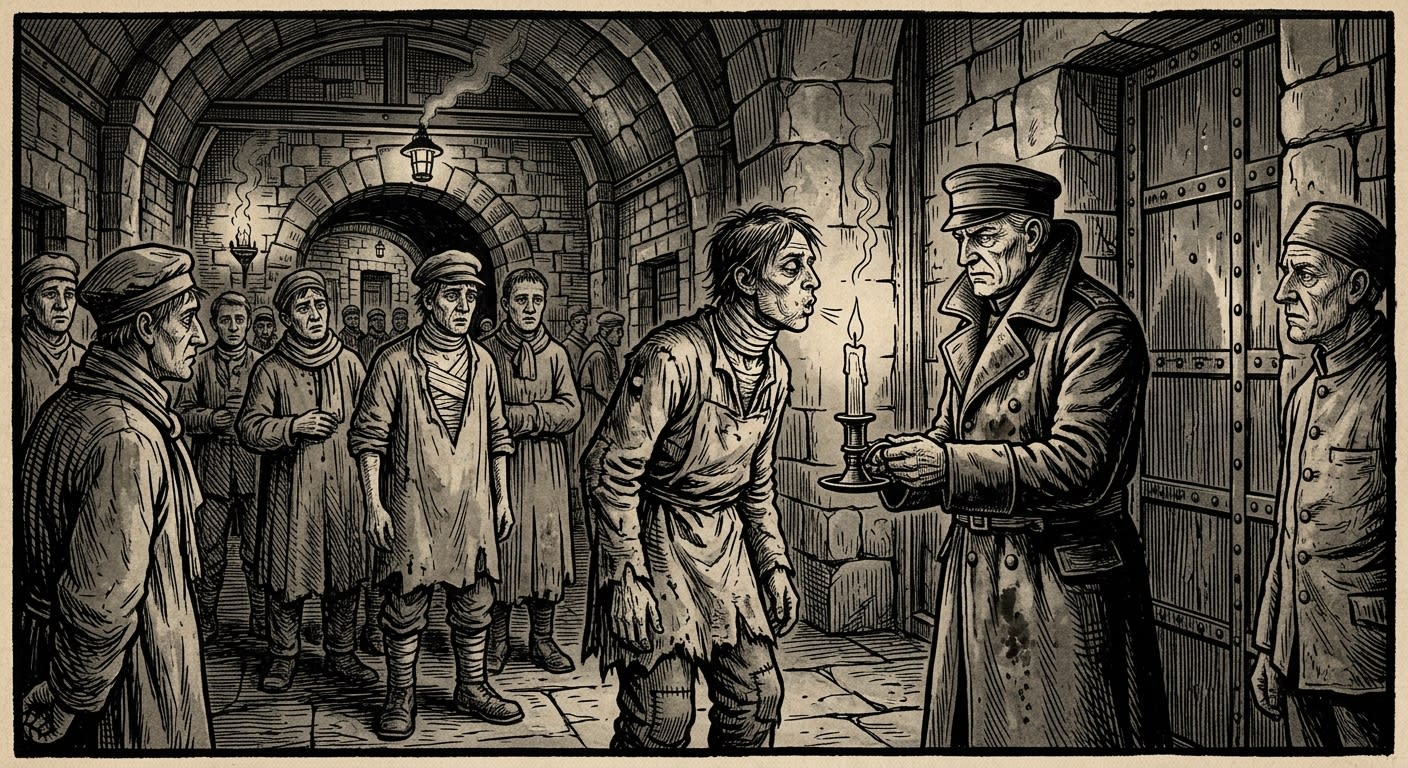
The test is obscene in its simplicity. No elaborate apparatus, no physicianly theatre, no expensive device that could be questioned by men who understand devices. Wax, wick, breath, clerk. A throat made into paperwork by fire.
Failed singers arrive first. They come with throat wraps crusted in salt, lips grey from watch duty, chest pain concealed until concealment itself becomes audible. Valve workers arrive next, breathing filings from hot cut and gasket compound vapour. Convoy men arrive during pressure weather, their lungs insulted by tunnel smoke, diesel seepage, pine cold from Snowmouth, and the peculiar panic of realizing that the mountain measures every cough. Children arrive quietly, because children born inside Irongate learn early that adult attention is rationed and rarely kind.
At the door, classifications divide the living. Rest candidate: still useful after broth, sleep, lozenge, and supervised silence. Quarantine candidate: cough irregular, fever suspected, household cordon advised. License review: voice tier threatened. Non-choir labour transfer: often the Valve Quarter, whose warmth kills by other means. Unlicensed disposition pending: the cold phrase, the little trapdoor beneath the form.
The Breatheries do heal. Let no clerk accuse me of omission. They splint ribs cracked by coughing fits, drain pressure burns, cool fever, scrub lungs with steam and herb, ration lozenges, teach breath pacing, and sometimes return a singer to the line for another season of sanctioned self-destruction. Irongate calls this success.
#On Ward Seven
Ward Seven is where official optimism went to cough blood.
It began as a lung clinic, bleach-white by Irongate standards, which is to say the walls were scrubbed often enough for stone to resent it. The air smells of mint paste, vinegar, rot under clean linen, and wet slate. Beds stand close. Cords mark the floor. Voice-license cards hang from the footboards in oilskin sleeves, because even a fevered body must remain legible. A pressure gauge above the nurse's desk twitches when the Choir Nave changes watch.
Ward Seven filled during the lung-rot outbreaks of A.S. 199, when the Breath Office expanded quarantine powers to include compulsory isolation of any worker whose breathing test fell below threshold. The order was written in the language of public safety and enforced in the language of seizure. Men who had sung for twelve years were removed from pits after one failed candle. Women who had cleaned baffles through three pregnancies were confined for a cough. Apprentices who slept near stone-dust vents found themselves classified before they understood the word.
False patient registries followed. They always do. A family with gasket-rings can make a name wait. A worker with a cousin at the desk can be marked rest candidate instead of quarantine. A woman whose husband is useful to the Choir Magistracy receives an extra lozenge and a cleaner cloth. A man suspected of Underchord kin contact may discover that his fever lasts until an interrogation slot opens.
By A.S. 201, Ward Seven's overflow has turned corridors into wards and wards into storage with bodies. Patients sleep upright when lying down fills the lungs. Nurses tie cords around chests to feel the beginning of coughing fits. The old bleachers keep buckets ready for black spit, grey spit, red spit, and the absent spit that means the patient has stopped fighting the mountain inside him.
The official phrase is pulmonary deterioration under occupational exposure. The garrison says ice-lung. The patient says nothing when the candle fails.
#On Ward Eight and the New Carving
Ward Eight did not exist, which made it for a time the cleanest ward in the Breatheries.
Now it is being carved from rock behind the Third Lung by crews whose own breath scores should have forbidden them from employment near dust. This is how Irongate solves shortage: it makes the wounded dig rooms for the more wounded, then calls the result expansion. The new ward smells of raw stone, wet lime, sawdust, bleach, hot lamp oil, and future denial. Its fittings arrive late because the Valve Quarter cannot spare enough clean work for a place that will immediately fill with people the official system has already marked as marginal.
The Shaft Priory objected to the labour assignments. Father Lukasz phrased the objection as pastoral concern. The Breath Office filed it as interference. The Choir Magistracy asked whether the Priory wished to provide licensed singers for replacement shifts. The Priory sent lentils. In a just universe this would have ended the argument. The universe remains under review.
Ward Eight's first beds were installed before the ceiling was fully sealed. Dust fell into wash basins. Patients complained. The complaint forms were retained because paper dust clogs vents and every page has value. A nurse painted little throat marks on the bedheads to track which patients could still produce sound, which could only whisper, and which communicated by taps. The marks resembled Counterkey notation closely enough that Purity inspected the ward, confiscated three innocent charts, and frightened a feverish boy into confessing to an alphabet.
The Breath Office expansion notice called Ward Eight “a planned increase in compassionate capacity.”
Amended after site inspection. Ward Eight is an emergency excavation performed under medical shortage, labour coercion, and political embarrassment. Compassion may be present in individual nurses. It is not load-bearing in the plan.
BREATHERIES WORK CREW NOTE — WARD EIGHT REAR CUT, A.S. 201 At third bell the south wall answered the hammer before impact. Four workers heard a breath behind stone. One heard his own voice asking for discharge. Wall marked for preservation. Mark removed by morning. Replacement mark appeared inside wet lime: ███████. Breath Office response: continue excavation.
#On Nurses, Bleachers, and Priory Hands
The Breatheries are run by people whom the official hierarchy praises in speeches and spends in practice. Infirmary bleachers wash sheets until their knuckles crack. Lung nurses count breaths by touch because coughing drowns the clocks. Throat orderlies grind mint, salt, and wax into pastes that taste like apology. Candle clerks pretend not to know when a patient's exhalation has been helped by a nurse blocking a draft with her sleeve.
Sister Noll (Unregistered) of the Shaft Priory works there without a satisfactory title. Her hands are grease-marked from carrying supplies through maintenance routes. She has been accused of giving broth to unlicensed patients, hiding names from quarantine lists, warming wax tablets so records can be rewritten before seizure, and praying too near pressure masonry. The accusations are credible. That is why they comfort me.
Doctor Fen (Unregistered) sings like a saw and diagnoses with a cruelty born from exhaustion rather than malice. He can hear the difference between ice-lung, chant strain, valve-fume scarring, terror cough, and the theatrical rasp of a man seeking light duty. He has falsified at least seven releases by lowering the candle before the clerk began counting. He has also sent men back to the Choir Nave whom gentler doctors would have sheltered, because the pressure was falling and a chamber needed a lower register more than a ward needed a conscience.
The nurses know the Underchord Cartel by its absences. A patient marked for discharge disappears before dawn. An oxygen bulb appears under a bed whose occupant has no rings. A quiet pass is found sewn into a throat wrap. Tap-code travels through heating pipes in the intervals between coughs. The nurses report what cannot be ignored. They ignore what cannot be survived.
This makes the Breatheries suspect to everyone. The Breath Office suspects charity. The Choir Magistracy suspects Counterkey sympathy. Tunnel Command (Unregistered) suspects hidden deserters. Purity suspects whatever Purity has recently learned to spell. The patients suspect discharge.
#On the Patients Below First Tier
Below first tier is the cold country, and many Breatheries patients arrive already standing at its border.
The voice-license system declares what the body is worth to the fortress. First tier permits residence and menial work. Second and third tiers permit minor breath lines. Fourth tier puts a throat into primary chamber duty. Fifth tier grants supervisory stanza work, gauge-adjacent authority, and the right to be insufferable about pitch. A failed license drags heat allocation after it like a corpse cart. Rations thin. Bunk hours shrink. Doors become theoretical.
The Breatheries are the last room before that fall becomes official. Families crowd the waiting halls with lozenges, borrowed blankets, counterfeit referrals, priory tokens, and lies polished smooth by repetition. A wife says her husband only needs rest. A son says his mother can still hold the second movement if given warm broth. A worker says his crack was dust, not drift. A clerk writes, and the mountain does not soften.
Some patients flee downward. They pay the Cartel in gasket-rings, stolen sheets, voice-license seals, or the name of a nurse who can be blackmailed. They buy quiet routes from the Breatheries to the Transit Spine, avoiding the gate desks and the audition bench. Some emerge into grain carts bound for Bastion-Sibiu or Bastion-Shipka. Some reach the Dead Gallery and become a price reduction for the next customer.
Others join the Counterkey Circle, because Reed's silence offers what the Breatheries cannot: a grammar for being discarded. The failed singer hears that the Magistracy's official harmonics are wrong, that the mountain can hold differently, that the voice he lost was stolen before it failed. This doctrine is dangerous. It is also kinder than a heat slip marked revoked.
#On the Present Condition
As of A.S. 201, the Breatheries are full, expanding, watched, compromised, necessary, and bitterly alive.
Ward Seven has no honest beds left. Ward Eight is being carved faster than prudence permits. Lung-rot has made every cough political. Ice-lung has thinned the Choir's voice pool, swollen the intake benches, fattened the Underchord routes, and given the Hush Court more cracked notes than it can hang without looking wasteful. Cantor Ys Varr tightens audits. Seal-Broker Lysa Murne stamps quarantine clearances with that soft smile common to people who know a gate exists because they hold its hinge. Commandant Sorn denies panic in memoranda so steady they make the paper sweat.
Morwen presses the Irongate by envy, replacement, grievance, and the corrosion of self. She did not invent the Breatheries. That accusation would flatter her. We invented them because the mountain needed voices, the Choir needed discipline, the Office needed metrics, and the dying needed somewhere to be placed while useful language was found for them.
The Breatheries heal some. They hide some. They spend many. Their nurses cheat drafts with sleeves and broth. Their clerks turn lungs into numbers. Their patients learn whether a body that has kept a mountain alive may claim warmth after the mountain enters it grain by grain.
The answer, per current policy, is conditional.