
#On the Question of Existence
"The map says stone. The stone says otherwise."
I asked Commandant Hadrik Sorn about the Underchords of Bastion-Irongate. He informed me, with the careful diction of a man addressing a magistrate while standing on a trapdoor, that there are no Underchords. I specified coordinates. He specified geology. I observed that geology does not, as a general principle, sell counterfeit voice-license stamps at three gasket-rings per sheet. He observed that this was precisely his point. We drank our tea. The silence was not, in the Irongate, comfortable — silence in the Irongate is never comfortable, because silence in the Irongate is a structural emergency — and the interview concluded with what the Bureau of Records would classify as "mutual understanding" and what I would classify as "two men agreeing to lie about the same thing in the same room."
The Underchords exist. They have always existed, in the sense that parasites have always existed — which is to say, they appeared the moment their host grew complex enough to sustain them, and they will persist precisely as long as the host does, and any attempt to remove them risks killing the organism they infest. The host, in this case, is the tunnel complex of Bastion-Irongate: a hundred and fifty years of continuous boring into the black Carpathian basalt of the Iron Gates gorge, five great Lung chambers connected by the Transit Spine, the whole apparatus sustained by the acoustic maintenance of the Gasket Choir — a fortress that must be sung into continued existence, every hour, every day, by chant crews whose voices are the load-bearing structure and whose silence is, by law and physics, a capital offence.
The parasite occupies the gaps. Behind the brass acoustic baffles that line the Choir Nave. In the crawl-spaces between the pressure doors and the outer rock face where the engineers ran their original ventilation channels and then sealed them when the channels proved redundant. Along the maintenance tunnels that connect the remnants of pre-Hush construction — the shattered galleries from before the Great Hush of A.S. 94 killed three thousand and taught the garrison that the mountain requires sound the way a lung requires air. These sealed-off remnants were never cleared. They were walled up, marked on the survey maps as "structural void — no access," and forgotten by every subsequent administration with the cheerful bureaucratic amnesia that attends any problem too expensive to solve and too inconvenient to acknowledge.
The people who found the voids did not forget them. Within a decade of the Great Hush, the first smugglers had broken through the sealed walls — quietly, with picks muffled in oilcloth and grease, because noise in the wrong corridor at the wrong frequency can unseat a gasket seal, and an unseated gasket seal in a sub-grade void means a section of tunnel that the Choir Magistrates will never send a crew to re-pressurize, because the section does not officially exist, and you cannot repair what you have spent forty years insisting is solid rock.
#On the Geography of Denial
"Every fortress has a cellar. The cellar has a cellar. And then you reach the part that doesn't answer when you knock."
The Underchords are not a district. The word implies planning, intention, a place that someone decided to build. The Underchords were not built. They accreted — the way mould accretes in the damp behind a wall, the way debt accretes in the ledger of a man who has stopped reading his own accounts. They are the negative space of the Irongate: every corridor the engineers abandoned, every chamber the surveyors sealed, every crawl-space the Choir Magistracy declared uninhabitable and the population declared home.
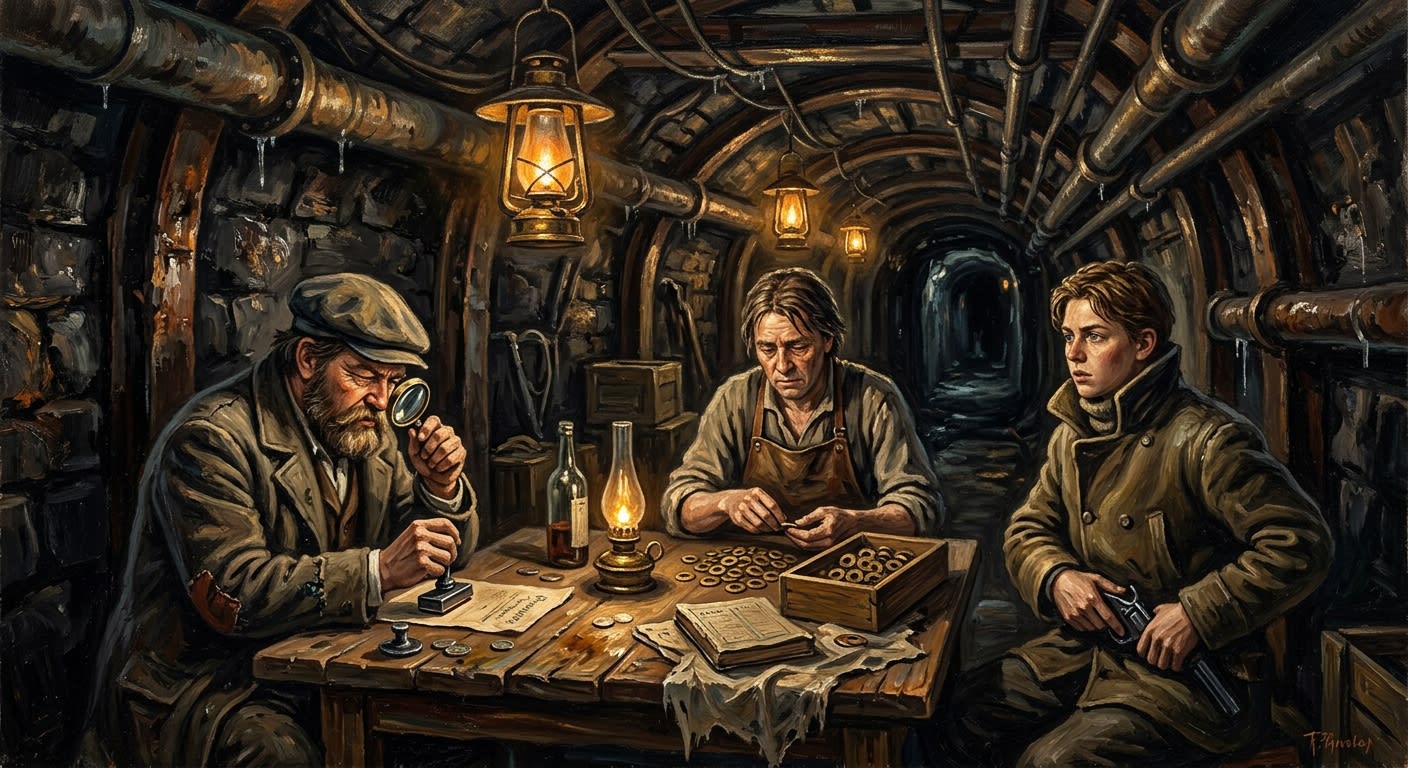
The layout follows the logic of the mountain rather than the logic of the garrison. The upper Underchords — the passages closest to the Transit Spine and the Lung chambers — are narrow, low-ceilinged, warm from the proximity of the Valve Quarter's foundries, and relatively safe. These are the corridors where the Underchord Cartel conducts its daily trade: counterfeit voice-licenses stamped with wax seals so precise that the Choir Wardens' inspectors cannot distinguish them from the genuine article without a Bureau-issued magnifying lens and a patience the wardens do not possess. Stolen hymn pages — the calibration stanzas that the Choir Magistracy distributes to licensed chant crews and guards with the same jealous secrecy that a banker guards his combination — change hands here for prices that fluctuate with the pressure readings. Oxygen bulbs, manufactured in the Valve Quarter from pilfered brass casings and filled with compressed air siphoned from the emergency reserves, sell at rates that Velmora herself would find instructive.
The middle Underchords are colder, darker, and wetter. The original ventilation channels run through this stratum — channels bored in the first decade of construction, before the engineers understood the mountain's acoustics, before the Great Hush taught them that every hole in the rock is a potential harmonic disaster. The channels were sealed with iron plates and lime mortar. The smugglers removed the plates. The mortar crumbled on its own, because mortar in a Carpathian mountain above a river has a lifespan measured in decades, and the decades have passed, and the Bureau of Engineering's maintenance schedule for sub-grade mortar joints reads, in its entirety: "N/A — void sealed A.S. 94."
The lower Underchords are the Dead Gallery. And the Dead Gallery is where the Underchords stop being a smuggling problem and become something else.
#On the Economy of Silence
"In a fortress where sound is currency, the man who sells silence is either a saint or a saboteur. The Underchords have never employed a saint."
The economy of the Underchords is the economy of the Irongate turned inside out. Above, in the sanctioned districts, a man's wealth is measured in voice — his license tier, his lung capacity, his ability to sustain the prescribed harmonic at the prescribed volume for the prescribed duration while a Choir Warden watches the pressure gauge with the expression of a creditor watching a debtor count coins. Below, in the Underchords, a man's wealth is measured in the opposite commodity: the ability to move without making a sound.
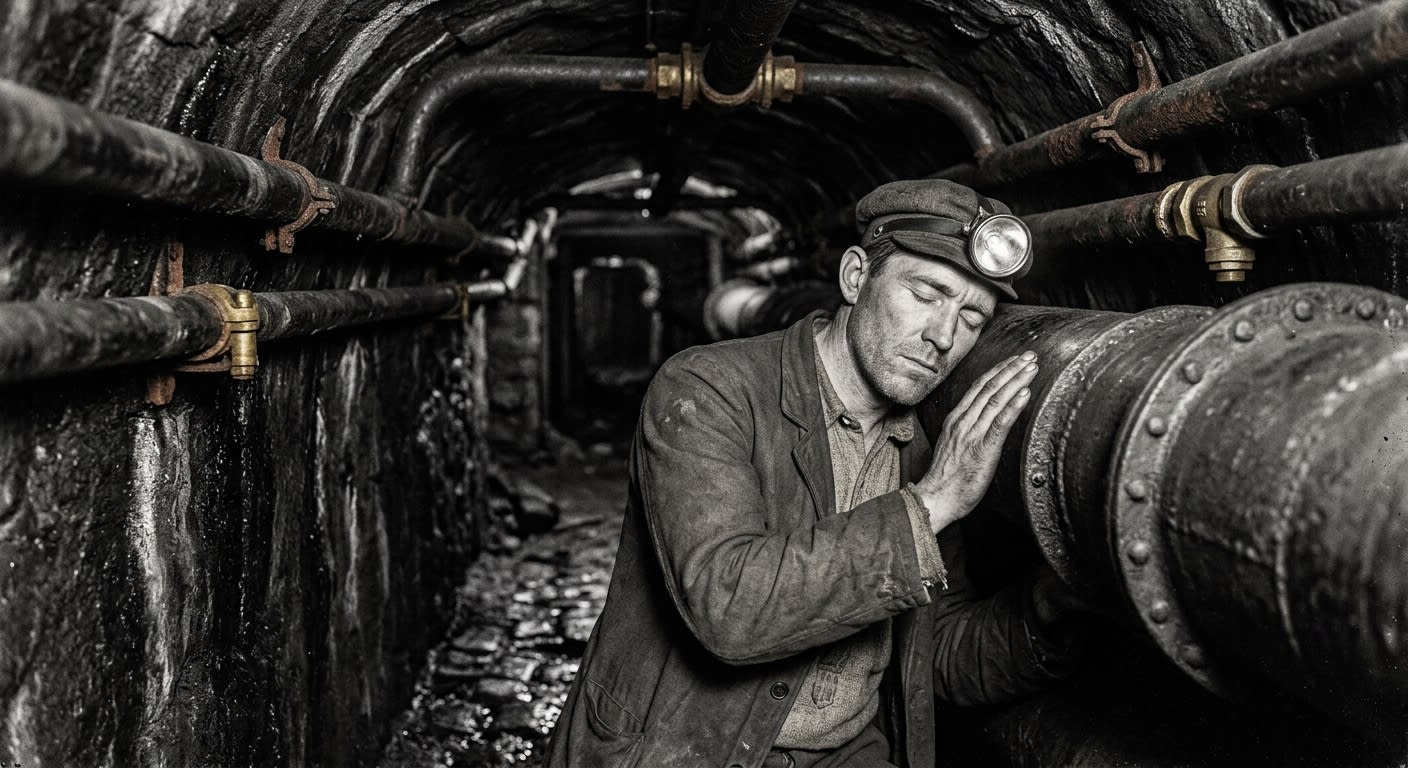
The Underchord Cartel — a name used by the Bureau of Purity in its sealed reports and by no one in the Underchords themselves, where names are liabilities and titles are invitations to the Hush Court — controls the primary trade routes through the upper and middle corridors. The Cartel's leadership, such as it is, operates through a system of tap-codes transmitted along the iron pipes that run through the sub-grade voids — the same pipes that carry waste water from the garrison latrines above, a detail that the Cartel's couriers find less poetic than the Bureau of Doctrine's dossier writers but considerably more practical. Speech in the Underchords is forbidden by physics rather than law. A voice raised in the wrong corridor produces harmonics that propagate through the rock, and the rock transmits them to the nearest gasket seal, and the gasket seal responds to the unauthorized frequency the way a sleeping dog responds to a boot — with immediate and disproportionate violence. A cracked seal in a sub-grade void means a pressure cascade that the garrison above will feel as a tremor, a dip in the gauge readings, a moment of stone dust falling from the ceiling of the Choir Nave. The Choir Magistrates will investigate. They will find nothing — because the Underchords do not exist — but they will increase the chanting tempo in the affected section, and the increased tempo will mean additional shifts, and additional shifts will mean additional licensing audits, and additional licensing audits will mean additional unlicensed workers stripped of their heat allocation and pushed, by the implacable machinery of the Irongate's survival economics, downward. Into the Underchords.
The goods that move through the Underchords are the goods that the garrison above cannot provide through legitimate channels or will not provide at legitimate prices. Counterfeit voice-licenses — the bread and butter of the trade, if the Underchords had bread or butter, which they do not; they have compressed grain bricks stolen from the convoy stores and lard rendered from sources the Bureau of Rites would prefer not to classify. Stolen hymn pages — the calibration stanzas for specific chambers, worth more than their weight in gasket-rings because the stanzas are the keys to the mountain's structural integrity, and a man who knows the key to a section of tunnel knows which frequencies will hold it and which frequencies will drop it on the heads of everyone inside. Oxygen bulbs — brass canisters of compressed air, each one a lungful of warmth in corridors where the ventilation was sealed a century ago and the only fresh air arrives through cracks in the mortar that the smugglers widen by hand, with picks wrapped in cloth, one silent chip at a time.
Quiet passes are the Cartel's premium product. A quiet pass is a route — mapped in tap-code on a strip of leather, memorised, and destroyed — through the Underchords that bypasses the garrison's gate checkpoints, the Breath Office's permit desks, and the Choir Magistracy's licensing auditions. A worker whose voice has given out, whose lungs have thickened with the stone dust the garrison calls ice-lung, whose license tier has been revoked and whose heat allocation has been zeroed — that worker has two options. He can present himself at the Snowmouth Gate (Unregistered) for discharge, which means walking into the Carpathian winter with a certificate the Bureau of Records will stamp and a body the Bureau of Medicine will not treat. Or he can pay the Cartel for a quiet pass through the Underchords, bypass the checkpoints, and emerge at a point along the Transit Spine where the convoy manifests are less rigorously audited and the rail hookmen are, for a price, willing to look elsewhere while a body rolls itself into a grain cart bound for Bastion-Sibiu or Bastion-Shipka or anywhere that is not the mountain.
The Cartel does not accept coin. It accepts gasket-rings — the small brass washers used in the Valve Quarter's foundries, each one stamped with a pressure rating and a date, each one portable, fungible, and impossible for the Bureau of Tithes to tax because the Bureau of Tithes does not have jurisdiction inside the mountain. This jurisdictional gap, which every Seal-Broker (Unregistered) since A.S. 102 has exploited, is the crack through which the entire Underchord economy breathes.
#On the Counterkey Circle
"Heresy in the Underchords is redundant. The whole place is a heresy the mountain has decided to tolerate."
The Counterkey Circle appeared in A.S. 198 — or became visible in A.S. 198, which is a distinction the Bureau of Purity makes with the weary precision of an institution that has learned, through decades of hunting heresies, that the date a heresy is discovered and the date a heresy begins are rarely the same date and are often separated by an interval the Bureau finds professionally humiliating.
The Circle teaches forbidden harmonics. This requires explanation, because the concept of a "forbidden harmonic" is, outside the Irongate, absurd — a frequency is a frequency, a vibration is a vibration, and the idea that a particular arrangement of sound waves could be doctrinally prohibited belongs to the same category of bureaucratic theology as the Index Damnatus's ban on certain adjectives. Inside the Irongate, the concept is structural. The Gasket Choir maintains the mountain's integrity through calibrated chanting at specific frequencies matched to specific chambers. The frequencies are prescribed by the Choir Magistracy, guarded by the Choir Wardens, and distributed on hymn pages that are numbered, tracked, and recalled with the same administrative severity the Bureau of Records applies to census returns. The prescribed frequencies hold the gasket seals. Other frequencies — the counter-frequencies, the keys that the Circle calls "counterkeys" — do the opposite. They unseat the seals. They crack the mortar. They remind the mountain that it was never meant to be hollow.
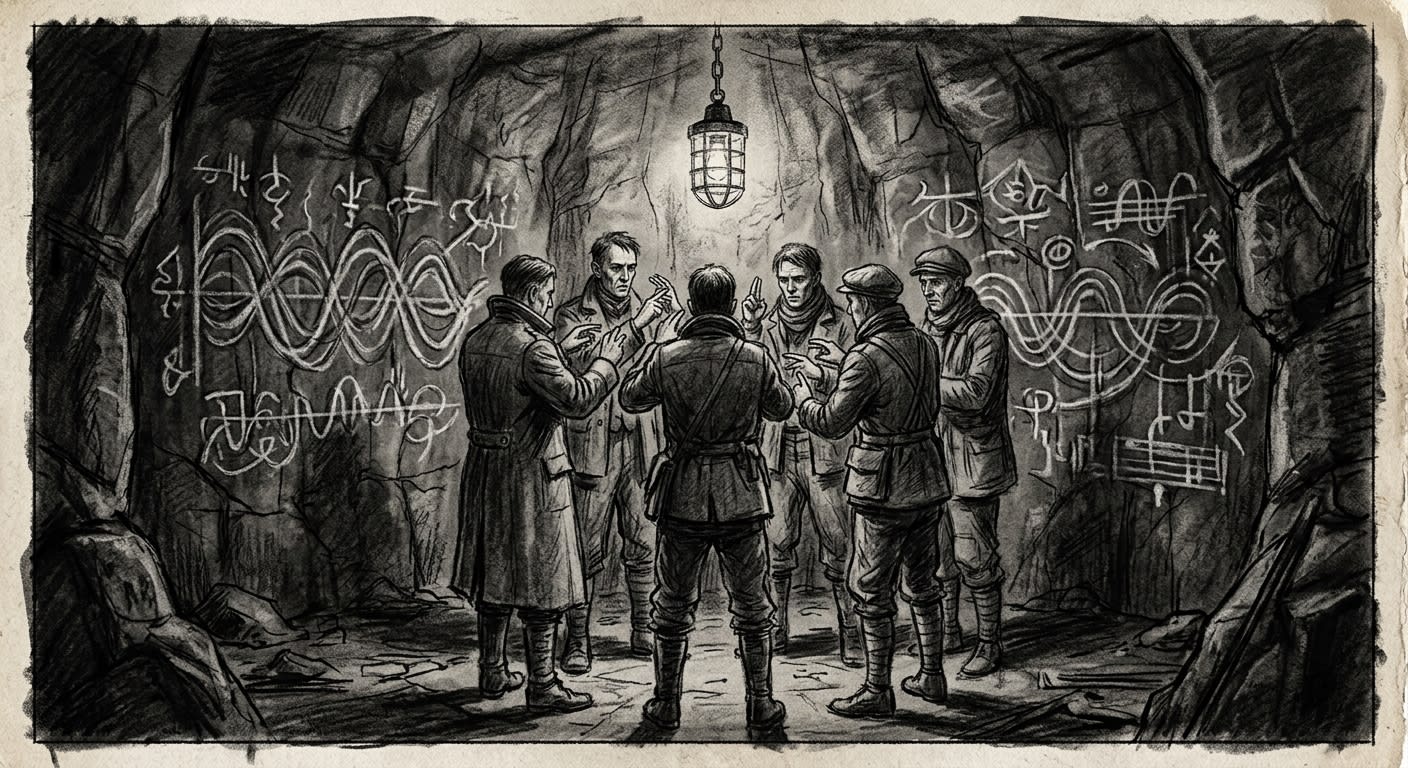
The Circle's members communicate in silent-sign language — a gestural vocabulary developed in the Underchords over decades, refined by the Cartel's tap-code culture, and adopted by the Circle for purposes that the Cartel finds alarming and the Choir Magistrates find treasonous. The Circle does not seek to collapse the mountain. Its members — most of them former chant crew workers who lost their licenses to ice-lung or failed auditions or the simple arithmetic of a system that produces more unlicensed bodies than it can employ — claim that the Magistracy's prescribed frequencies are wrong. That the calibration stanzas have been altered, deliberately, over generations, to produce a dependency: the mountain held hostage by a specific set of harmonics that only the Magistracy controls, when the mountain could be held — more stably, more safely, more honestly — by a different set. The counterkeys.
The Choir Magistrates have responded to the Circle's emergence with increased patrols, additional licensing audits, and the execution of fourteen men whose voices, when tested under duress, produced harmonics inconsistent with their assigned stanza. Whether the fourteen were genuine members of the Circle or merely frightened workers whose voices cracked under interrogation is a question the Hush Court has declined to revisit. The Bureau of Doctrine has filed the executions under "preventive maintenance." The pun is the Bureau's. I will not improve upon it.
Earlier assessments from the Bureau of Purity's Southern Theater desk classified the Counterkey Circle as "a minor smuggling dispute with doctrinal pretensions."
The Bureau has revised its classification. The Circle is now listed under "Active Heretical Cells, Category: Structural" — a category that did not exist before A.S. 198 and that the Bureau created specifically to accommodate the possibility that a heresy could, if left unchecked, bring a mountain down on twenty-two thousand heads. The Bureau finds the creation of new categories distasteful. The Bureau finds the alternative more so.
One of the Circle's leaders — known to the Bureau only as "Reed," a name or a description, the distinction unclear — is said to have burned his own voice out deliberately, searing his vocal cords with gasket grease heated over a Valve Quarter forge, so that he could never be compelled to sing the Magistracy's prescribed stanzas. He communicates in the silent-sign language. He writes counterkeys in gasket grease on the walls of the Dead Gallery, where the harmonics behave incorrectly and the stone, if the Circle's theology is to be believed, has already begun to remember the frequencies it heard before the Choir Magistrates decided what the mountain should sing.
#On the Dead Gallery
"The maps say forty yards. The maps are optimists."
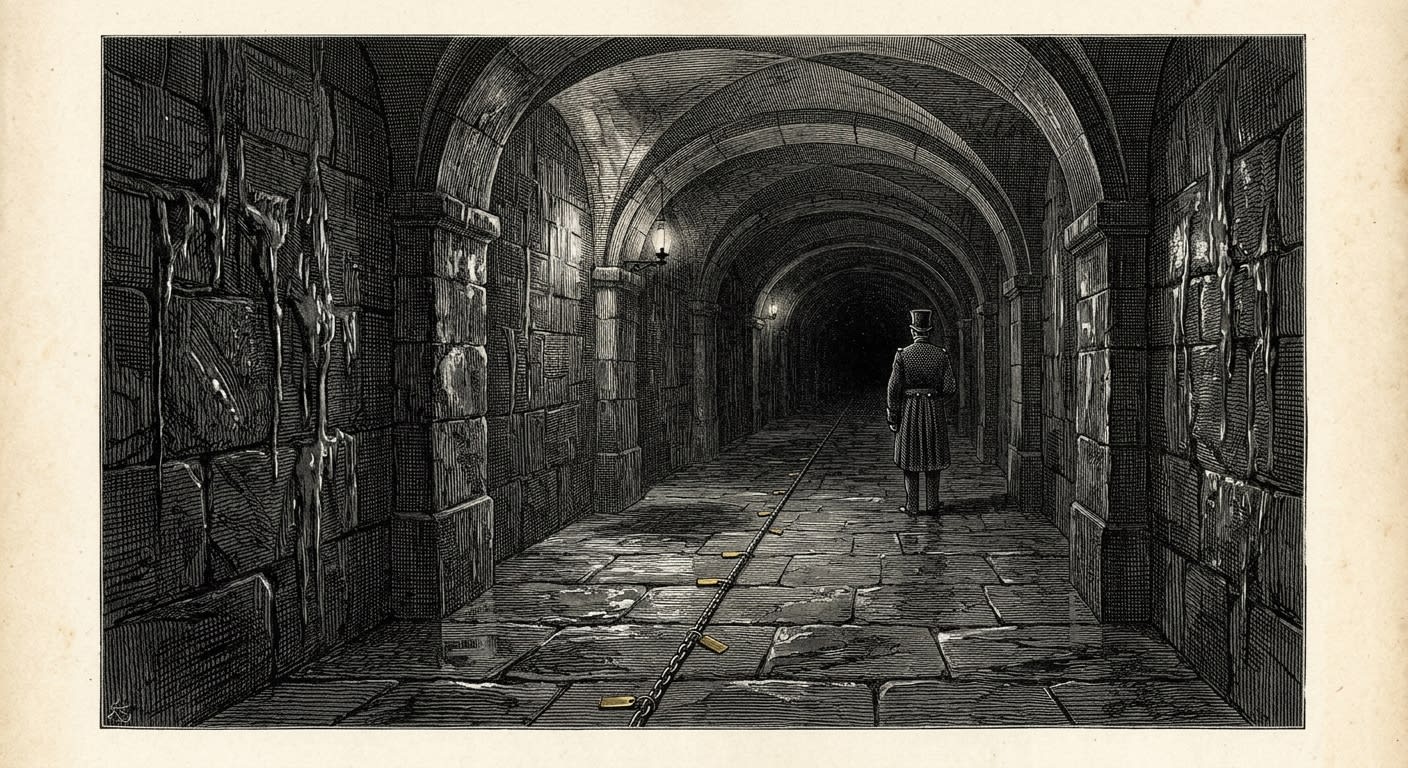
The Dead Gallery is the Underchords' deepest corridor — or was, when the term "deepest" had a stable meaning, when the maps the garrison survey drew in A.S. 200 bore a functional relationship to the physical space they described, when the concept of a tunnel having a fixed length was a thing a reasonable man could rely upon. The Gallery was measured at forty yards in A.S. 200. It extends to sixty as of the most recent survey — a survey conducted by two sappers who entered with measuring chains and emerged three hours later with measurements that contradicted each other by eleven yards and expressions that the Bureau of Engineering's incident report describes as "consistent with exposure to anomalous spatial conditions" and that the sappers themselves described with a single word the Bureau declined to transcribe.
The walls of the Dead Gallery are damp with something that is not water. The substance does not evaporate. It does not freeze, though the temperature in the lower Underchords drops below freezing in winter. Laboratory analysis — conducted by a Bureau of Alchemical Standards team whose dispatch to the Irongate was filed under "routine material survey" and whose report has been classified at a level I am not, technically, permitted to acknowledge — identified the substance as chemically consistent with human saliva. The quantity on the walls of the Gallery is consistent with the salivary output of approximately nine hundred individuals over a period of approximately forty years. The Irongate's garrison has not reported nine hundred missing persons in forty years. The Bureau of Records confirms this. The Bureau of Records also confirms that its census returns for the Irongate are, and have always been, complete and accurate, which is the Bureau's way of saying that the question should not have been asked.
Sound in the Dead Gallery behaves incorrectly. A voice thrown down the corridor arrives at the far end before it leaves the speaker's mouth. Or it does not arrive at all. Or it arrives in someone else's register — a woman's voice from a man's throat, a child's pitch from an adult's lungs, the words correct but the instrument wrong, as though the Gallery were translating speech through a medium that preserves meaning and discards identity. The Bureau of Engineering attributes this to "acoustic refraction in limestone." The garrison attributes it to Morwen. The Counterkey Circle attributes it to the mountain itself — the stone speaking in frequencies the Gasket Choir has spent a hundred and seven years trying to drown out.
Incident Report 7-K/201 (Dead Gallery, Northern Spur). The two sappers dispatched for the A.S. 200 survey reported, upon debriefing, that they encountered a figure at the Gallery's deepest measured point. The figure was standing in the corridor ahead of them, facing away, wearing the uniform of a Choir Warden — standard issue, correct insignia, correct gasket-ring belt. The figure did not respond to verbal challenge. The sappers advanced to within twelve yards. The figure turned. Its face was ██████████████████████████████████. The sappers withdrew. The figure did not follow. Upon return to the Transit Spine, the sappers were examined by the Breath Office and found to be in acceptable physical condition. Their measuring chains, however, were eleven yards longer than when they had entered the Gallery. The additional chain links were of identical manufacture, correct stamp, correct alloy. They had not been there before. The Bureau of Engineering has classified the additional chain links as "inventory discrepancy." The sappers have requested transfer to Bastion-Brest. Their request is under review.
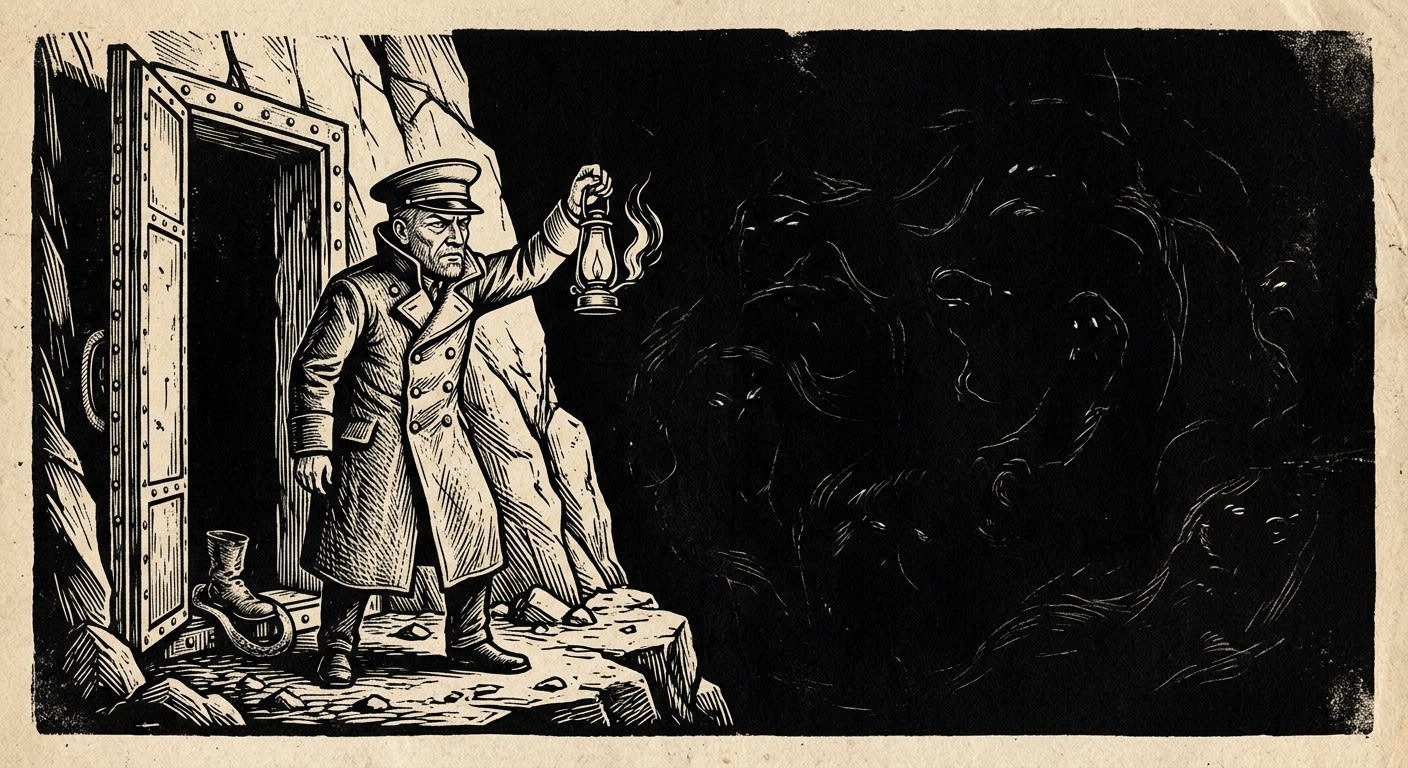
The Dead Gallery grows. This is the sentence the Bureau of Engineering does not wish to read, the sentence the Choir Magistrates do not wish to hear, the sentence the Tunnel Commandant does not wish to acknowledge, and the sentence that is, by every available measurement, true. The Gallery extends further each season — a yard, two yards, five — in a direction that the garrison survey cannot consistently identify, through rock that the Bureau of Engineering's geological assessment describes as "stable basalt, unbroken strata, no evidence of prior excavation." No one is digging. No picks, no drills, no blasting charges, no evidence of human labour. The corridor simply becomes longer, the way a wound becomes deeper when left untreated, the way a silence becomes heavier when left unanswered.
#On the Present Condition
"The mountain has a cellar. The cellar has learned to grow."
The Underchords are, as of this writing in the year of our Synod 201, in the condition that any competent bureaucrat would predict for a system that has been simultaneously exploited and denied for a century: thriving, dangerous, indispensable, and expanding.
The Cartel's trade routes are busier than they have been in living memory. The lung-rot outbreaks of A.S. 199, which expanded the Breath Office's quarantine powers to include compulsory isolation of any worker whose candle-test score falls below threshold, have driven a fresh wave of unlicensed bodies into the sub-grade voids. Ward Seven of the Breatheries is full. Ward Eight, carved from raw rock behind the Third Lung by crews whose own breath scores are insufficiently monitored, is filling. The workers who enter quarantine do not always emerge. The workers who avoid quarantine do not always remain above. The Underchords absorb them the way the mountain absorbs sound — steadily, silently, without acknowledgement or return.
The Counterkey Circle grows with the population it feeds upon. Every failed licensing audit, every revoked heat allocation, every worker pushed below the pressure doors by the Irongate's survival arithmetic produces a body that the Circle can recruit — a body that has been told, by the official machinery of the garrison, that its voice is worthless, and that is now being told, by the Circle's silent-sign evangelists, that the official machinery has been lying about what the mountain wants to hear. The fourteen executions have not deterred the Circle. Executions rarely deter heresies that offer, as their central promise, the revelation that the institution executing you has been wrong all along.
The Dead Gallery is the thing that none of the factions — the Cartel, the Circle, the Magistracy, the Tunnel Command (Unregistered) — can control. It grows according to a schedule that matches no engineering model, no seasonal pattern, no correlation with garrison activity or Morwen's campaign tempo. The Bureau of Bells has dispatched a commission to study the Gallery's acoustic properties. The commission has not yet reported. The Bureau of Bells' commissions to the Irongate have a history that does not encourage optimism — the first returned with a report, the second returned with a hymn, the third did not return — and this commission, the fourth, has been in the Gallery for nine days longer than its original mandate specified.
The Underchords do not exist. The Bureau of Engineering's survey says so. The Tunnel Commandant says so. The Choir Magistracy's pressure maps show solid rock where eleven miles of smuggling corridors, black-market foundries, heretic cells, and a corridor that appears to be growing by its own volition occupy the space between the mountain's bones. The Bureau of Doctrine has reviewed the matter and finds the consensus satisfying. The consensus is unanimous. The consensus is also a lie — a lie maintained by every stratum of the Irongate's authority, from the Commandant's office to the Seal-Broker's desk, because the alternative is admitting that the fortress has a shadow that the fortress cannot govern, a lung that the fortress cannot hear, and a depth that the fortress cannot measure.
The Underchords are the Irongate's confession — the sin the mountain speaks in its sleep, in frequencies the Gasket Choir was never calibrated to suppress.
I have written what I have seen. The Bureau of Engineering may submit its amendments. The Tunnel Commandant may specify geology. The stone, as ever, will not corroborate either account.