
#On the Silence That Became Law
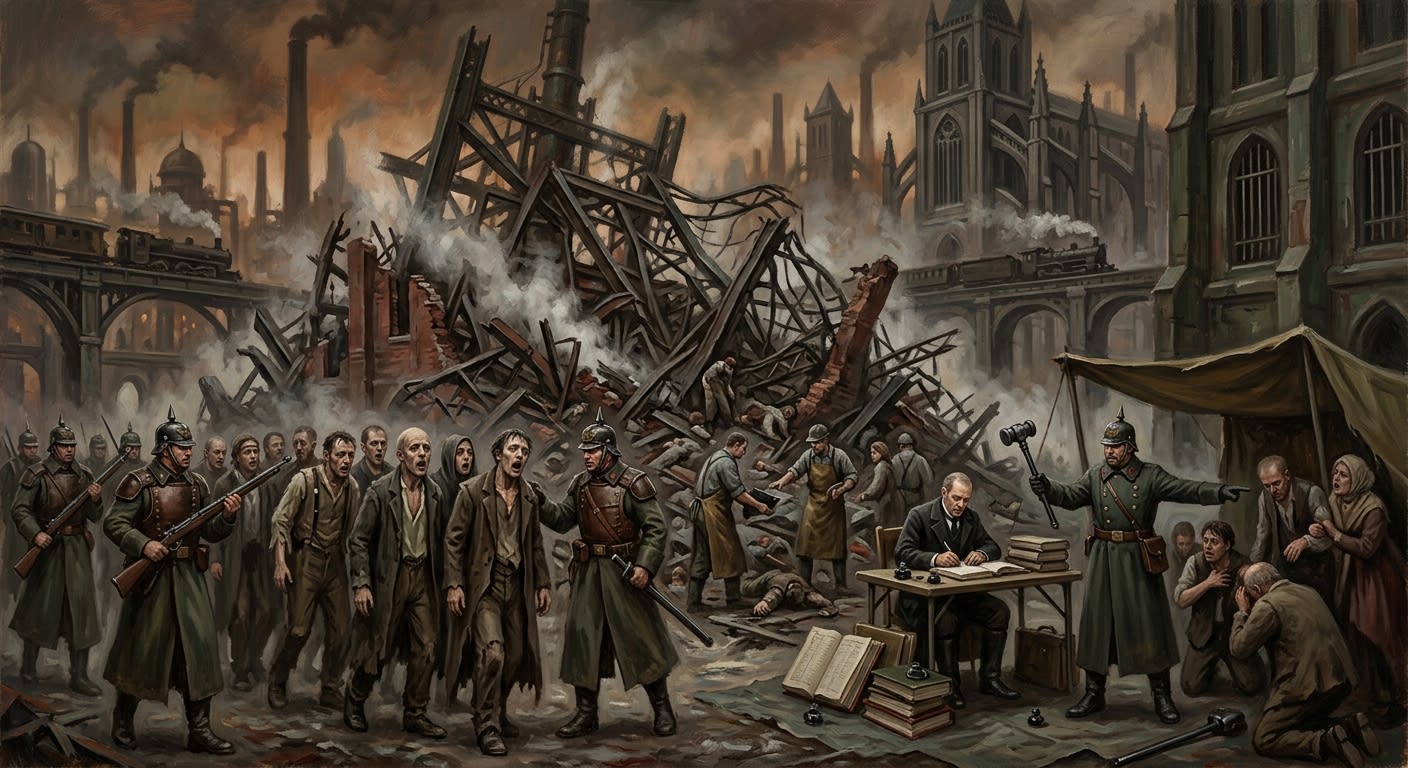
The Great Hush of A.S. 94 is the founding catastrophe of Bastion-Irongate's present life: nine hours of quiet in the Danube gorge, one collapsed Third Lung, three thousand dead, eleven months of excavation, and a century of officials pretending that a massacre caused by silence is less embarrassing if sung about afterward. Before the Hush, Irongate was a fortress with tunnels. After it, Irongate became a throat with walls.
This distinction matters. A fortress may be commanded. A throat must be kept open.
The event began as weather, which is how many expensive truths introduce themselves when seeking admission to a bureaucracy. A pressure inversion settled over the Iron Gates gorge. The wind that usually moved through the tunnel-mouths fell still. The sixty-three cliff apertures that gave the southern face its low standing tone stopped voicing. Machinery rested. Convoys paused under frost order. Men slept. Candles burned straight. The mountain, having been subjected for decades to drills, prayers, iron ribs, timber shoring, brass seals, and official optimism, was quiet enough to listen to itself.
The omission did not hold. Omissions rarely do under stone. By dawn the Third Lung had compacted into a mass of basalt, iron, timber, bunks, ration carts, prayer benches, gauge boards, and men. The shock passed through the Transit Spine and unseated secondary pressure doors along three corridors. Gasket seals dried in their housings. Bolts loosened by increments too small for inspection and large enough for burial. The first rescue crew reached the collapsed section before Sext and heard knocking from behind the sealed rock.
The knocking continued for sixteen days.
#On the Irongate Before the Hush
Bastion-Irongate had been designated in A.S. 67 and ratified in A.S. 72, when the Synod recognised the Danube gorge as the central iron throat of the Sagittal Line's middle spine. It commands both cliffs of the Iron Gates, where river, mountain, rail, convoy road, and military necessity all narrow into one argument. The earliest works were crude: gun emplacements cut into black alpine rock, linked by bored passages, timbered galleries, lifting shafts, munitions pockets, and gate chambers whose doors were heavier than their doctrines.
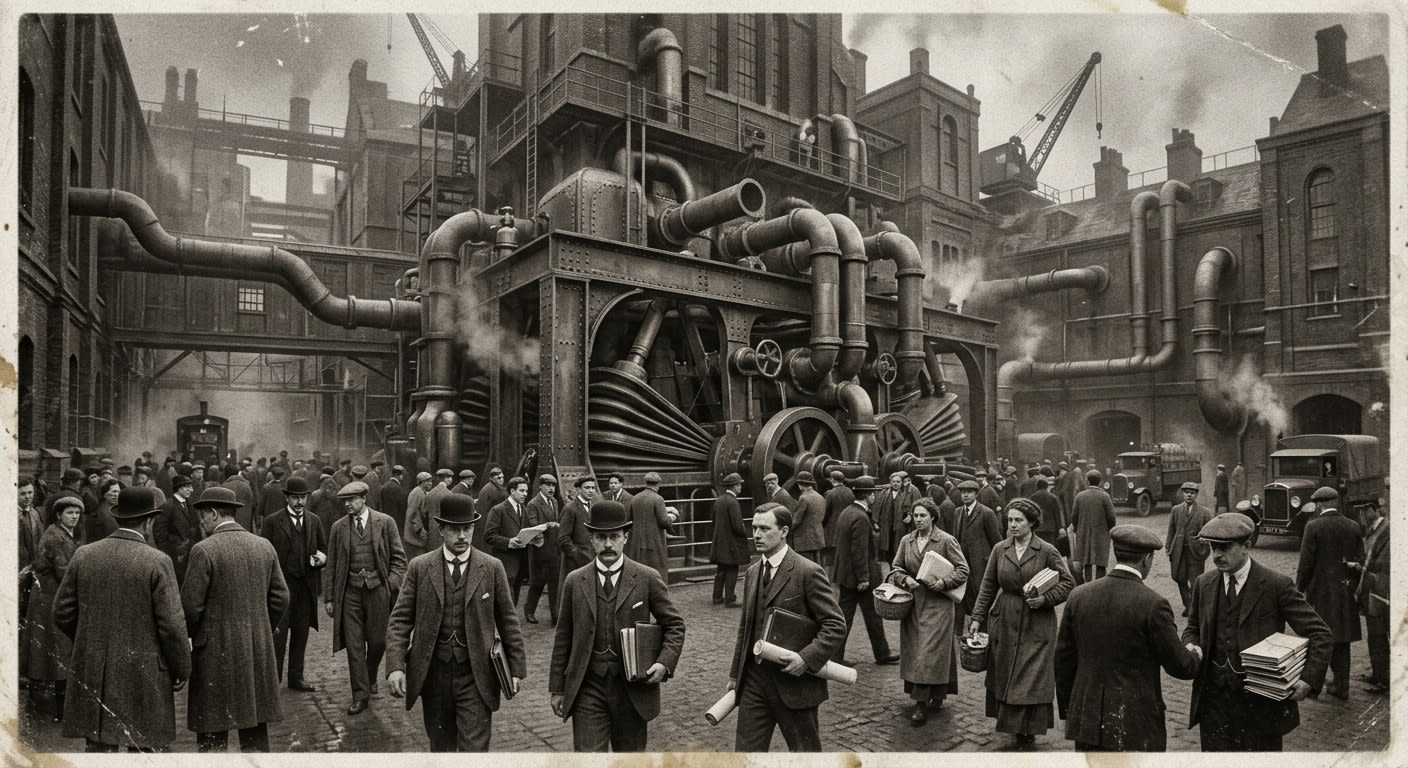
The first engineers believed the mountain could be made obedient by iron. This is an endearing error, and very common among men who own drills. They installed ribs, braces, pressure plates, valves, and gasket seals, trusting that the mechanical apparatus would hold if inspected, greased, and threatened at proper intervals. Sound existed in the early reports as nuisance. Wind-tone. Bore resonance. Convoy echo. Ventilation hum. The stone sang at them, and they logged it as air behaviour.
The early garrison grew used to noise. The cliff-mouths moaned under weather. Rails shrieked. Foundries hammered. Horses screamed in lift cages. Sappers shouted because the mountain swallowed ordinary speech. Men cursed pressure doors by name. Chaplains preached over machinery. The fortress lived inside a coarse accidental choir, sustained by wind, labour, convoys, bells, and human irritation. No one understood that this noise was part of the bracing. No one in authority, at least. Workers often know before clerks do. Workers lack the rank to make knowledge official.
Reports from A.S. 82 through A.S. 93 record minor seal creep, bolt-seat fatigue, gasket dryness in cold inversions, and pressure anomalies during convoy pauses. The memoranda recommend more grease, more inspection, better timber, revised torque rules, and prayer. Sound appears as interference. Silence appears as convenience. The Bureau of Engineering classified the tunnel-mouth tone as harmless if regular, and unhelpful if irregular. The Bureau of Bells filed a note requesting study. The note was delayed, routed to Strasbourg, returned for inadequate wax, and filed again. The mountain waited. Mountains excel at patience because they count in graves.
By A.S. 94, the Third Lung housed dormitories, supply bays, a small chapel screen, a ration counter, two gauge boards, three timber-reinforced cross-passages, and too many men. It had grown faster than survey confidence. The old shoring remained behind newer iron, not removed because removal would require closure, and closure would delay transit, and transit delay at Irongate is how commanders learn humility from quartermasters. The chamber was load-bearing, overused, damp, loud, and trusted.
Trusted things kill efficiently.
#On the Nine Hours
The inversion settled after second night bell. Witnesses describe the air becoming dense without becoming colder. Smoke hung flat. Lantern flames stood upright. The river noise withdrew from the cliff face. Men in the First Lung reported hearing their own teeth. The official watch log notes: “wind absent; pressure mild; no alarm.” The handwriting is steady. Steady handwriting has buried whole regiments.
In the Choir Nave's predecessor chamber, then only a maintenance gallery with baffle experiments and three unlicensed cantor benches, the standing hum dropped below audibility. The pressure gauges did not leap. This detail matters because calamity often begins by behaving politely. The seals did not burst. The doors did not fly open. The mountain did not roar. Gaskets slackened. Bolts began their tiny withdrawals. Timber shoring, freed from vibration that had kept it seated against iron and rock, accepted moisture like an invitation. Men slept well.
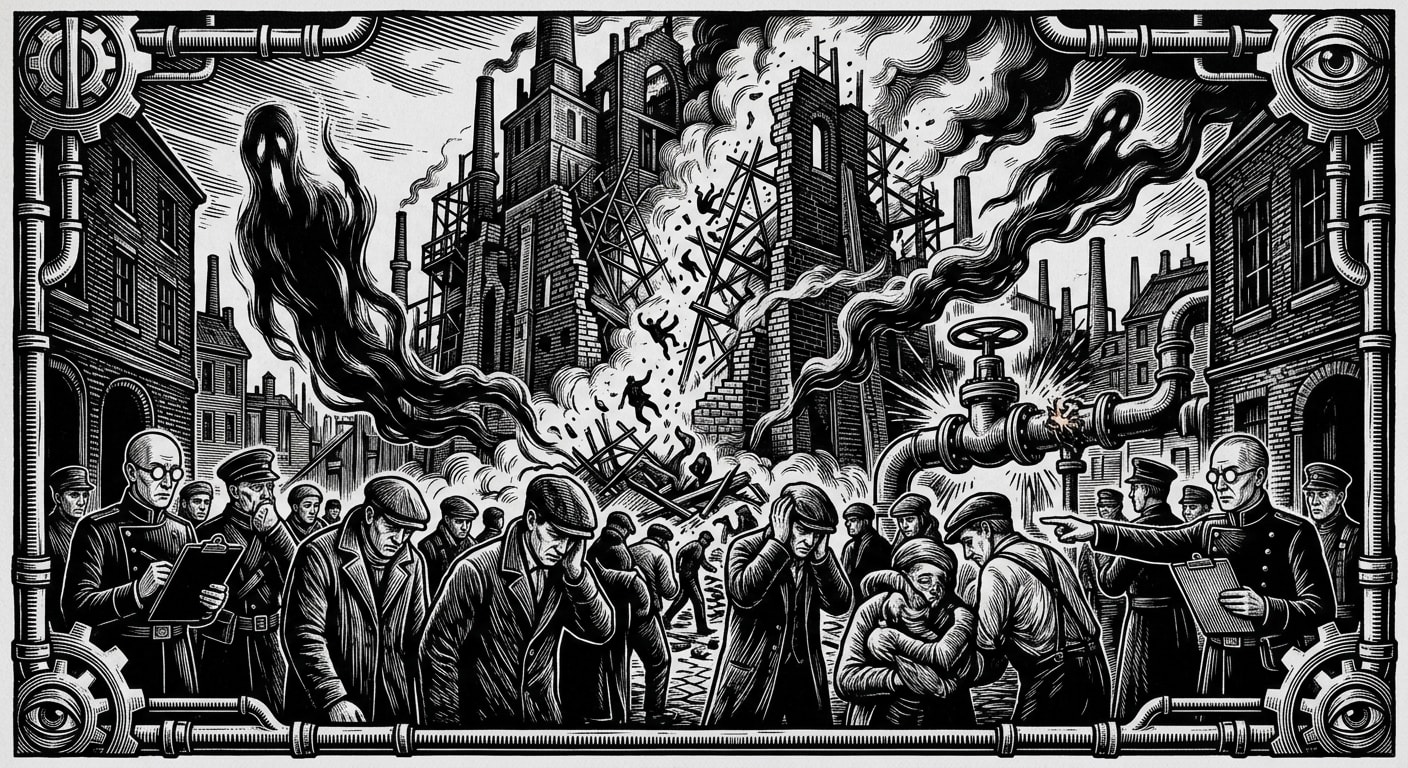
The first door failed in the fourth hour before dawn. Its seal had crept a finger's breadth, which is nothing to the eye and everything to pressure. The door did not explode. It sighed. The sigh travelled through the chamber, found sympathetic looseness, and became instruction. Secondary doors took the lesson. The shock moved along the Transit Spine and returned by branch corridors, striking the Third Lung from two sides. The timber shoring compressed. Iron ribs bit into stone. The floor rose in one quarter and fell in another. Bunks slid. A ration cart overturned. The chapel screen folded into the gauge board with seven men beneath it.
Then the roof came down.
Survivors from adjacent passages spoke of a sound like a choir inhaling through broken teeth. This phrase has been disputed by the Bureau of Bells for technical imprecision. I preserve it because terror is often better at acoustics than committee language.
The collapse did not end in one blow. It settled. Stone continued moving for hours. Men trapped in air pockets knocked on pipes, beams, ration tins, and one another's helmets. Rescue crews marked the rhythms. Seven. Eleven. Thirteen. No recognised distress code. No hymn metre. No drill count. The Bureau of Bells sent an analyst to transcribe the pattern. He returned pale, filed a note stating that the knocks matched no human rhythm, entered the Orison seminary three years later, and stopped speaking during Compline in A.S. 97. Records has classified his silence as devotional.
#On Rescue, Excavation, and the Mathematics of Buried Men
Rescue at Irongate is a negotiation with stone conducted by exhausted men holding bad lamps. Crews opened the western crawl first, then the lower supply throat, then the prayer-side access, then the waste vent whose map location had been corrected three times and remained wrong. They worked in shifts under falling dust, while chant volunteers shouted, prayed, banged iron, and sang scraps of approved hymn because no one yet knew which sound mattered. That ignorance saved lives. It also killed men. Providence enjoys mixed accounting.
The first survivors were pulled out after nine hours: black-mouthed, half-deaf, bruised, and furious. One accused the rescuers of arriving early. Another insisted the collapse had happened two days prior. A third asked why the knocking behind him had stopped when he was extracted. The physicians filed these statements under shock. The statements have since been moved twice, once to anomaly annex and once to restricted acoustic testimony. Nothing calms the Bureau like renaming a scream.
The dead were not counted cleanly. The Third Lung contained residents, transit labour, convoy sleepers, unlicensed dependents, prisoners awaiting southbound transfer, two visiting Orison clerks, and a group of pilgrims misdirected by weather whose presence became jurisdictionally unattractive after death. The first casualty roll named 2,411. The second named 3,006. The third, ratified after excavation, named three thousand in round form because round numbers are coffins for disputes.
Early public broadsheets listed “approximately two thousand four hundred casualties” in the Third Lung failure.
Corrected. The ratified casualty class is three thousand dead, including unlicensed residents, transient labourers, and persons whose presence inside the Lung had previously been inconvenient to several offices. The roundness of the number is devotional. The imprecision is administrative.
Excavation took eleven months. By the third month, the rescue had become recovery. By the sixth, recovery had become archaeology. By the ninth, the workers were cutting through compressed domestic life: bowls flattened into sheets, bunks folded around bones, hymn pages fused to timber pitch, a child's boot sealed inside a gasket ring, a pressure gauge reading safe under six yards of stone. The gauge was displayed briefly in the Transit Office before someone with imagination ordered it removed.
Bodies were classified by condition. Whole. Partial. Commingled. Unassigned. Acoustic. The last category appears in one internal ledger and nowhere else. It referred to remains found at pipe junctions where knocking had continued after thermal readings made survival impossible. The Bureau of Medicine objected. The Bureau of Bells requested custody. The Bureau of Doctrine ordered the category suppressed, then retained three samples for study, because even suppression should not be wasteful.
RECOVERY ANNEX — THIRD LUNG, MONTH SEVEN Pipe chamber 3-L opened under chant cover. No survivable cavity. Knocking continued until first chisel breach. Inside: █████████████████████████████████ Rescue captain statement: “It was answering the count.” Statement withdrawn; captain reassigned to snow gate.
#On the Birth of the Gasket Choir
The catastrophe produced the Gasket Choir because the Synod, in its rare moments of genius, understands how to convert humiliation into institution before grief develops politics. The first emergency order required continuous noise in every breath line until Engineering completed assessment. Noise, being vulgar, was soon promoted to chant. Chant, being useful, was soon given clergy. Clergy, being inevitable, requested jurisdiction. By A.S. 95, the Bureau of Bells and Bureau of Engineering issued joint classification requiring continuous vocal resonance for pressure-door stability, gasket compression, bolt-seat retention, and doctrinal morale. The last item was added by Doctrine. We earn our keep.
By A.S. 96, the Bureau of Orison and Song had claimed the schedules. By A.S. 97, voice-licensing had begun. A fortress built to move men through a gorge became a society where every throat had rank. The chant crews sang eight-hour watches. The Choir Magistracy issued pressure hymnals. The Breath Office tested lungs with candles. The warm offices grew warmer. The failed voices grew cold. The Great Hush killed three thousand once; the system born from it learned to kill by degree.
Do not mistake my criticism for softness. The Choir works. The mountain holds because voices hold it. A pressure door does not care whether a man sings from devotion, fear, debt, fever, or a wife's hunger. The frequency holds or fails. The gasket seats or slips. The tunnel remains above men's heads or becomes their ceiling forever. The Hush taught Irongate the cost of silence. Only a fool would unlearn it.
The scandal lies elsewhere: necessity became ownership. Once the Choir proved necessary, the Magistracy claimed the air around necessity, then the permits, then the benches, then the heat allocation, then the definition of usable humanity. A man with a clear throat gained moral standing. A woman with ice-lung lost warmth. A child who hummed off-beat near a breath line entered a warning register. The Hush did not require cruelty. It provided cruelty with a structural excuse.
#On the Third Lung and the Wound That Stayed
The Third Lung was never fully reopened. Official diagrams show sealed masonry, structural void, safe bypass, and solid rock. The words are tidy. The place is not. Behind the sealed sections remain old timber, compressed stone, unrecovered dead, abandoned survey marks, and the beginnings of the Underchords, those sub-grade corridors where denial learned to circulate on its own air.
The Choir Nave was built beside the wound. This was the correct architectural decision and the correct propaganda decision, which proves that Providence sometimes permits elegance to travel with utility. The new Nave faced a sealed load-bearing absence rather than a memorial. Chant crews sang toward the place where the silence had entered. Brass baffles directed sound through channels cut around the collapse. The mountain received hymn where it had once received sleep.
A small candle niche appeared near the sealed masonry during the first winter after excavation. No order authorised it. No order removed it. Workers left salt, throat lozenges, ration crumbs, and names written on scraps. Chaplains tended the candles when no one official was looking. This was the germ of the Shaft Priory, that unchartered mercy-station now tolerated without admission near the Third Lung. The Priory remembers what the Choir Magistracy prefers to operationalise: the Hush was also a burial.
The sealed Lung also produced rumours. Knocking behind masonry during pressure weather. Warm drafts from blind cracks. Voices answering old shift names. Tool marks appearing on the wrong side of sealed panels. A rescue captain's helmet found in A.S. 128 inside a corridor not opened until A.S. 131. Engineering called these survey errors. Bells called them residual resonance. The Priory called them the unrecovered. The Underchords called them routes.
The Dead Gallery owes part of its horror to this inheritance. It extends through spaces the maps have already lied about. It grows where old collapse, denied maintenance, Morwen's envy, and acoustic pressure meet in darkness. Men who enter with measuring chains sometimes return with more chain than they carried. This is an engineering problem only if one has no poetry and no fear. Unfortunately, Engineering has neither in sufficient quantity.
#On Silence Crimes and the Hush Court
Once the Hush became doctrine, silence became evidence. The Choir Magistracy divided failure of sound into categories: incidental, negligent, malicious. A man who faints during chant commits inconvenience. A man who misses a breath line commits negligence. A man who refuses stanza, conceals ear-plugs, steals hymn pages, marks counterkeys, or threatens strike commits malicious silence. The third belongs to the Hush Court.
The Hush Court was not created in one day. No honest instrument of cruelty ever is. It accumulated from emergency panels, safety hearings, breath audits, pressure inquiries, and the need to decide whether a wrong note came from weakness or treason. By A.S. 199, when Cantor Ys Varr referred fourteen workers after emergency licensing audits, the Court had become what all emergency panels long to be: permanent, feared, and equipped with benches.
The Court's moral claim is simple. The Great Hush proved that silence kills. A person who causes silence attacks the fortress. A person who attacks the fortress attacks the Line. A person who attacks the Line assists Hell. A cracked note may become treason if the correct official is tired enough. I admire the structure. I distrust the appetite.
Training manuals state that the Hush Court descends directly from A.S. 94 rescue discipline.
Corrected. The Court descends from rescue discipline, Engineering hearings, Choir Magistracy ambition, Breath Office record hunger, and the delightful bureaucratic discovery that safety law can be made to carry punishments too heavy for ordinary doctrine.
The Court uses the Great Hush as relic, warrant, and cudgel. It cites the dead before sentencing the living. It invokes the Third Lung when workers ask for rest, when failed singers ask for warmth, when the Shaft Priory requests mercy for the unlicensed, when the Counterkey Circle claims the official stanzas are wrong. “Remember the Hush,” says the Magistracy, and remembrance becomes obedience by another route.
The dead deserve remembrance. They do not deserve to be conscripted into every audit.
#On the Counterkeys and the Heresy of Another Sound
The Counterkey Circle is the bastard child of the Great Hush and the voice-license ledger. Its members are failed singers, former chant workers, unlicensed bodies, sub-grade listeners, and men who have spent too long hearing the mountain without the Magistracy's permission. They do not deny the Hush. They weaponise it differently. The official doctrine says silence killed because sound was absent. The Circle says the wrong sound made absence lethal.
This is the dangerous part: their claim has teeth. The stone hums without us. Engineering knows it. Bells knows it. Even the Gasket Choir's own manuals admit that chant crews shape existing resonance; they do not create vibration from nothing. The Circle argues that the prescribed stanzas chosen after A.S. 94 hold the mountain badly, at enormous human cost, because a system requiring constant licensed voice gives power to those who license voices. They say the mountain's natural harmonics were suppressed. They write alternative profiles in gasket grease on black stone. They call them counterkeys.
If false, the Circle is a structural heresy capable of collapsing Irongate. If true, the Choir Magistracy has spent a century converting avoidable labour into sacred necessity. The Bureau of Doctrine finds both possibilities unpleasant. The Bureau of Bells finds them testable, which is worse.
The Hush gives the Magistracy its strongest argument and the Circle its sharpest wound. Every failed audit sends more bodies downward. Every body downward hears stories the Choir cannot drown. Reed, who destroyed his own voice with heated gasket grease, writes in the medium that ruined him. Alen Rill, who appears in no intake ledger, writes progressions where official sound dies. The Circle's wall marks often include a sign for the Third Lung: three cuts closed by a bar. Bells analysts read it as reference. Purity reads it as threat. The Priory reads it as prayer.
#On My Inspection of the Sealed Masonry
I visited the sealed Third Lung wall in A.S. 201 under escort from Engineering, Bells, Doctrine, and one Choir Warden whose face suggested he had been assigned to me as penance. The corridor was warmer than expected. This is never good. Warmth in a sealed place means air, bodies, machinery, or deceit. The wall carried salt chips from the Priory, scratch marks from workers' gloves, wax stains from unofficial candles, and three layers of official paint intended to discourage memory by making it beige.
The Engineering officer explained the reinforcement pattern. I listened with the expression one gives to a nephew reciting a catechism he has misunderstood but memorised attractively. The Bells clerk placed a tuning fork against the masonry. It did not sound. The Choir Warden smiled at this, briefly. Then the fork began vibrating in his hand without tone. The smile left him. I enjoyed that.
Father Lukasz from the Shaft Priory was present by accident, which is what mercy calls itself when avoiding paperwork. He said nothing. He touched the wall with two fingers, then touched his throat. The Choir Warden objected that unlicensed gestures near pressure masonry could be construed as signal conduct. Lukasz offered him broth. The objection ended there, defeated by lentils.
I ordered a brief silence. This was unsafe, unpopular, and mine to order. For three breaths, the corridor held. No chant. No pipe tap. No boot scrape. No official cough. In that little interval, the wall gave one knock.
One. Not seven, not eleven, not thirteen. One.
The Engineering officer declared thermal settling. The Bells clerk requested repeat conditions. The Choir Warden requested immediate resumption of authorised sound. Lukasz crossed himself in a fashion barely within regulation. I wrote the knock down. If the Bureau wishes to deny a sound, it should have the courtesy to deny the correct number.
INSPECTION NOTE — SEALED THIRD LUNG WALL, A.S. 201 Authorised silence interval: three breaths. Audible response: one knock from beyond masonry. Thermal reading: ███████ Bells clerk transcription: █ Engineering addendum: “settling.” Priory witness: “Amen.” Doctrine disposition: retained under restricted acoustic appendix.
#On the Present Use of the Dead
As of A.S. 201, the Great Hush remains the Irongate's central authority after the mountain itself. It is cited in voice-license renewals, pressure orders, Hush Court decisions, Breath Office quarantine expansions, Shaft Priory denials, Underchord raids, and Bureau memoranda whose authors were born a century after the collapse and nevertheless write as though the dust had settled on their own cuffs. The dead do not speak in these documents. They are spoken through. This is more convenient.
The event has hardened into ritual. Each year the Choir holds the Mourning Tone for nine hours, supervised by Bells, audited by Orison, timed by Engineering, sanctified by Doctrine, and hated by every worker whose throat tears before the sixth. The Shaft Priory keeps sixteen candles for the sixteen days of knocking. The Magistracy permits the candles because prohibition would make better propaganda for its enemies. The Underchords tap seven-eleven-thirteen along waste pipes during the anniversary night. The Cartel calls it respect. Purity calls it coded traffic. Both accusations may be true, which is why anniversary patrols carry clubs.
The proper lesson of the Great Hush is narrow and severe: Irongate requires sound to live. The bureaucratic lesson has grown obese: every throat belongs to the Magistracy, every silence requires suspicion, every cracked note may be treason, every worker's breath can be priced, every corridor not singing is an enemy, every mercy-station is a leak, every alternative harmonic is Hell with notation. The Bureau adores catastrophe because catastrophe comes pre-stamped with urgency. Urgency is the mother of permanent offices.
Yet the stone remains. It does not care for our categories. It does not care for Bells, Engineering, Orison, Purity, Doctrine, the Circle, the Court, the Cartel, or the fine distinctions by which I make lesser clerks feel short. It holds when sung correctly. It shifts when silence grows heavy. It answers, at times, with one knock from behind a wall that has been sealed for one hundred and seven years.
The Great Hush did not end. It was institutionalised. Above the sealed Third Lung, chant crews sing through cracked throats while pressure gauges twitch and officials warm their hands over authorised fear. Beneath them, the Underchords listen. Near the wall, the Priory keeps its kettle. In the Dead Gallery, a mark in black grease waits for a voice that will never be licensed.