
#On the Chamber That Became an Argument
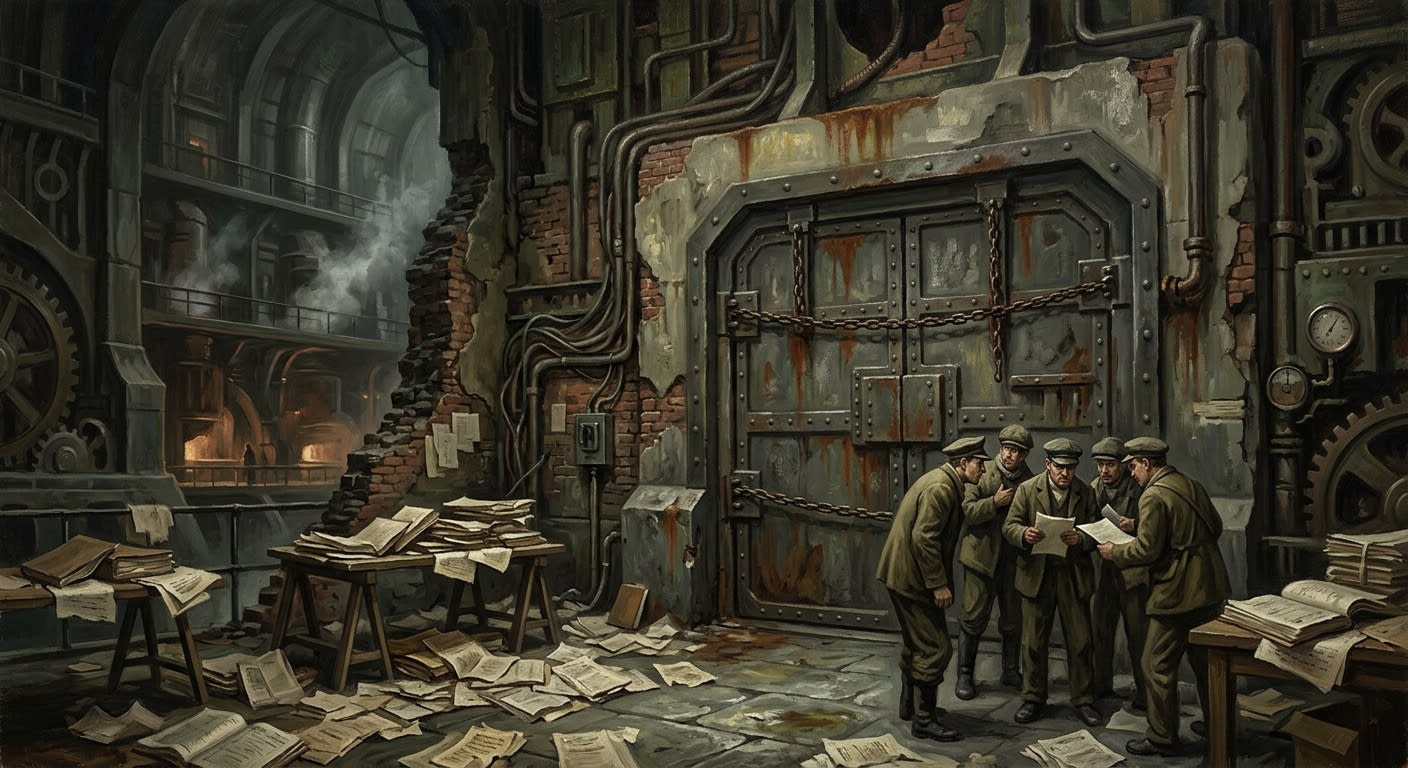
The Third Lung of Bastion-Irongate was a chamber before it was a grave, a grave before it was a doctrine, and a doctrine before the paint on the rescue doors had dried. This is the proper order of Synodal history. Matter fails. Men die. An office arrives with a vocabulary. The vocabulary is then placed in charge of the dead.
It lay on the southern cliff face of the Iron Gates, fed by the Transit Spine and burdened by every bad habit that attaches itself to useful space: too many bunks, too many carts, too many temporary storeframes made permanent by delay, too many sleeping men under timber nobody wished to inspect because inspection interrupts movement and movement is what Irongate was built to preserve. The early survey called it Lung Three, Service Chamber West, Dormitory-Pressure Annex, Supply Bay C, and several other names that prove a place has not yet learned how it will kill people. Soldiers called it the Third Lung because it breathed. Soldiers have an irritating talent for naming truth before committees authorize it.
The chamber belonged to the five-Lung apparatus bored into the black basalt above the Danube gorge after the Line hardened from panic into fortification. The First Lung housed dormitories and intake pressure. The Second served infirmary draw and ward air. The Fourth fed foundry exhaust toward the Valve Quarter. The Fifth took transit surge and reinforcement traffic. The Third took everything the other four could not admit cleanly: overflow bodies, spare ration carts, unassigned labour, prayer screens, temporary gauges, pilgrims with corrected permits, prisoners awaiting southbound transfer, and the professional optimism of the Bureau of Engineering.
It was useful. That was its first sin.
A useful chamber is spared closure, patched rather than rebuilt, inspected at the edges, measured by throughput, defended in memoranda, forgiven small complaints, then trusted because rebuilding it would require confessing every earlier patch. By A.S. 94 the Third Lung had become load-bearing in every sense of the term: structurally, logistically, acoustically, and bureaucratically. The mountain held around it. Convoys slept in it. Men crossed through it. Gauges took readings from it. Chaplains used its chapel screen. Quartermasters stored bread in its side bays. The pressure doors listened to its standing tone. The garrison's daily function had rested a hand on its shoulder and called the contact safe.
Trusted things kill cleanly.
#On the Irongate's Breathing Before the Hush
The Irongate was never silent in its youth. Wind entered through the sixty-three cliff mouths and made the southern face hum. Rail carts shrieked along the Transit Spine. Pressure valves clicked. Timber shoring creaked. Foundry hammers beat. Horses screamed in lift cages with better theological instincts than their handlers. Men cursed machinery by name. Chaplains preached against a background of stone, iron, and air arguing in public.
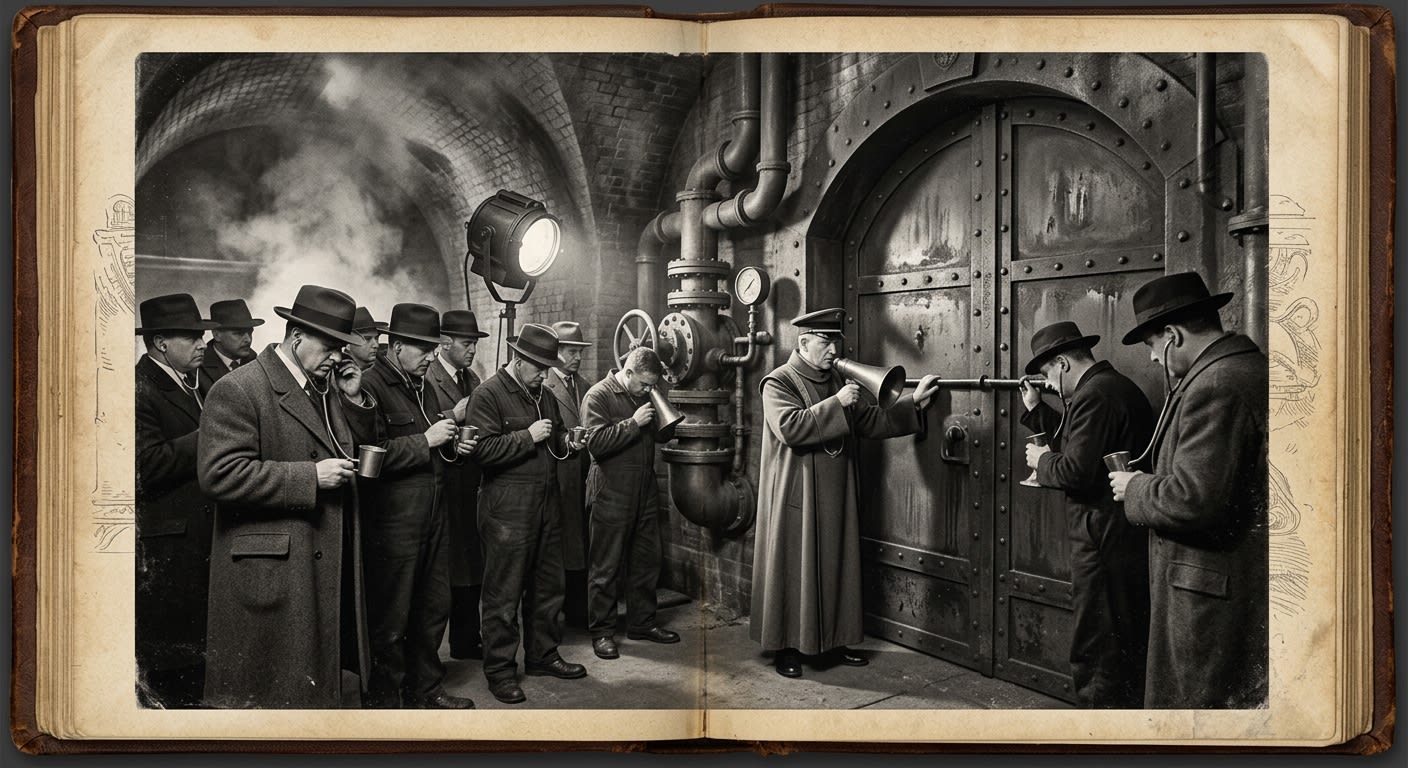
Engineering heard nuisance. Bells heard possibility. Workers heard warning.
The first reports describe “voicing under wind-load,” “low throat-tone across southern apertures,” “sub-structural bore resonance,” and other phrases written by men paid to avoid the word singing. Sound appeared in the ledgers as an incidental property of ventilation. Silence appeared as a blessing. Night crews took pride in quiet shifts. Candles standing straight were noted as proof of stable air. Doors that did not complain were praised for obedience. The mountain, as mountains will, accepted the compliments without promising anything.
The Third Lung groaned more than the others. Not loudly. Loud groans are easy to respect. Its complaints lived in small measures: a bolt backing out a shaving's breadth after windless nights; a gasket line dry by dawn though greased at second bell; a sleeping shelf that trembled only when the outer tunnel fell quiet; dust falling from one rib in seven, then one rib in eleven, then one rib in thirteen. Workers marked the pattern. Supervisors filed maintenance slips. Engineering requested improved timber allotments. Tithes delayed them. War objected to chamber closure. Records copied the objections. Doctrine was not asked, which is how many disasters preserve their dignity until too late.
By A.S. 93 the Third Lung had been expanded beyond its first plan. Old shoring remained behind newer iron ribs. New braces seated against stone whose water behaviour had been observed for one season and trusted for thirty. Chapel partition and ration frames narrowed emergency ways. A side gauge board had been installed where an exhaust throat once ran, because the board required a dry wall and the exhaust throat had the poor fortune of resembling one. Temporary bunks became regular. Regular bunks became named. Named bunks became moral claims. A chamber with moral claims is difficult to evacuate.
The old standing tone kept the whole poor compromise in its seat. Nobody in authority admitted this. A thing may be known, relied upon, and denied simultaneously, provided the denial has enough signatures.
#On the Nine Hours of Quiet
The Great Hush of A.S. 94 began as weather: a pressure inversion over the Danube gorge, dense air, straight flame, river noise withdrawing from the cliff, the sixty-three mouths losing their low tone. The watch log remains insultingly calm. Wind absent. Pressure mild. No alarm. It is the handwriting of a man who expected breakfast.
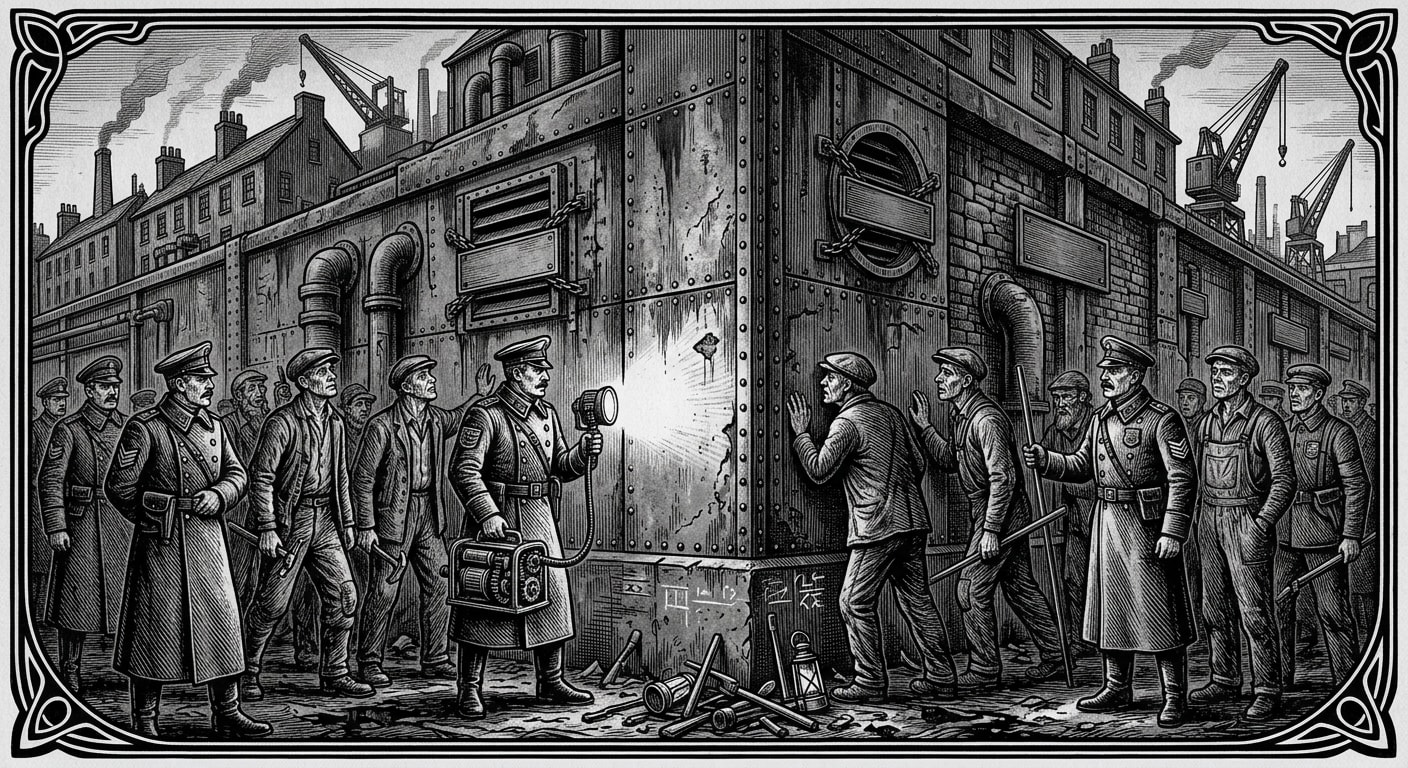
For nine hours Bastion-Irongate received the gift every exhausted garrison had secretly desired. Quiet. Men slept without the cliff moaning. Horses settled. The Third Lung stopped groaning in its ribs. Candles burned upright beside bunks, chapel screen, ration counter, workbench, guard stool, and the small unofficial ledge where someone had left a saint token nobody later claimed. Survivors spoke of peace. Survivors are poor theologians immediately after a catastrophe. They confuse the absence of warning with mercy.
Gaskets slackened in their housings. Bolts, freed from the minute vibration that had kept them honest, crept outward by increments too small for the eye and large enough for death. Timber accepted moisture. Pressure doors lost their seated bite. Old shoring shifted against newer iron. The chamber did not announce ruin. Ruin rarely announces itself when it can enter as maintenance deferred.
The first door failed in the fourth hour before dawn. It sighed. That is the detail I hate most. Not burst, not exploded, not cracked with operatic decency. It sighed, as if relieved to put down duty. The sigh travelled through loosened seals and taught them fraternity. Door answered door. Bolt answered bolt. Pressure moved through passages that had never been meant to instruct one another. Shock entered the Third Lung from two sides, then from below, then from the old service throat whose closure had been certified seven years earlier and was, naturally, incomplete.
The roof settled. The floor lifted. Ration carts slid. Bunks folded. The chapel screen drove into the gauge board. Iron ribs bit stone and stone bit back. Men woke into a room already becoming smaller. Some ran toward doors no longer doors. Some prayed. Some grabbed children, tools, ledgers, boots, bread. One guard, according to a later deposition, attempted to close a pressure latch by hand after the latch housing had separated from its wall. His arm was recovered three months later still bent around the handle. The Bureau of Records filed the act as commendable ignorance.
Then the Third Lung compacted.
#On Knocking, Counting, and the Disgrace of Rescue
The first rescue crew reached the western crawl before Sext. They heard knocking from behind sealed stone.
This fact has survived because too many men heard it to permit tidy burial. Knocks through pipe, beam, rock, ration tin, and helmet. Seven. Eleven. Thirteen. Then variants, interruptions, answering groups, repetitions that sounded almost like code and then not enough like code to comfort anyone. Bells sent an analyst to transcribe. Engineering sent men with drills. War sent guards to prevent widows and off-shift workers from crowding the access. Mercy sent bandages, broth, and a chaplain with the wrong voice for the corridor. Records sent clerks. Records always arrives. Even Hell, I suspect, must wait for Records to finish the intake table.
Rescue was a negotiation with compressed domestic life. The western crawl yielded three men and a woman whose first question was whether the cart had departed. The lower supply throat yielded a boy with both ears bleeding, two prisoners still chained together, and an Orison clerk who had written the same bar of music across both sleeves in fingernail blood. The prayer-side access yielded no living bodies and one locked hymn box whose contents had been flattened into a single page too thick to open. The waste vent, misdrawn on three successive plans, yielded air for six hours and then stopped as if someone behind the rock had closed a mouth.
The knocking continued for sixteen days.
Sixteen days is too long for official courage. By the third day, rescue became public duty. By the sixth, public duty became risk accounting. By the ninth, engineers began speaking of cavity probability. By the twelfth, Mercy changed its prepared prayers from rescue to consolation. By the sixteenth, the knocks stopped during a chant test, resumed once after the test ended, and then ceased forever or learned to knock elsewhere.
RECOVERY ANNEX — THIRD LUNG, A.S. 94 Pipe chamber 3-L opened under chant cover. Thermal signs: none. Survivable cavity: none. Audible knocking persisted until first chisel breach. Recovered within: █████████████████████████████ Rescue captain statement: “It was answering the count.” Statement withdrawn. Captain reassigned to snow gate.
The dead were not counted cleanly. No mass death in a mixed chamber ever is. The Third Lung contained registered garrison, transit workers, convoy sleepers, unlicensed dependents, pilgrims misdirected by weather, prisoners awaiting transfer, two Orison clerks, one visiting gauge specialist, and several persons whose presence became less embarrassing once they could no longer testify. The first casualty roll named 2,411. The second named 3,006. The ratified number is three thousand, a round figure wearing a black cassock.
Early broadsheets listed the Third Lung dead as “approximately two thousand four hundred souls lost to adverse weather and material fatigue.”
Corrected. The ratified casualty class is three thousand dead. Weather attended. Fatigue assisted. Silence killed. The adjectives have been disciplined.
Excavation took eleven months. The rescue became recovery, recovery became archaeology, archaeology became jurisdictional fatigue. Crews cut through bowls flattened into sheets, bunks wrapped around bones, bread fused into timber pitch, shirt buttons arranged by pressure into little constellations, and a child's wooden prayer counter driven into basalt as if the mountain had decided to learn arithmetic. A pressure gauge was found reading safe under six yards of stone. It was briefly displayed in the Transit Office until someone with taste and shame removed it.
The Third Lung was not reopened. The Synod has reopened cities, tombs, heresies, and arguments it had better left buried. It did not reopen the Lung. The reason given was structural prudence. The reason felt in the corridors was dread.
#On Sealing the Chamber and Building a Throat Beside It
The sealed Third Lung wall is not a wall in the ordinary sense. It is an administrative compromise made out of masonry. Behind it remain compressed rooms, old timber, unclaimed dead, abandoned survey marks, voids too small for a body and too large for comfort, and at least three passages marked SOLID ROCK on diagrams used by men who know better. In front of it stand paint, plaster, official notices, salt chips from the Shaft Priory, scratches from gloves, wax stains from candles, and every polite lie a fortress tells itself in order to keep functioning.
The first sealing order required stability. The second required silence. The third, revised after Bells objected to the word silence with unprecedented good sense, required controlled sound. For several months the corridor before the Third Lung was a crude chant post: volunteers, chaplains, workers, and frightened guards singing scraps of approved hymn toward a masonry face that still warmed during pressure weather. Some sang to hold the wall. Some sang for the dead. Some sang because stopping felt like betrayal. The distinction mattered greatly to offices and very little to the wall.
By A.S. 95 Engineering and Bells had accepted what workers had already learned with their teeth: continuous vocal resonance held the pressure apparatus in place. By A.S. 96 Orison had claimed schedule authority. By A.S. 97 voice-licensing had begun. The Gasket Choir was born from the sealed Lung, and like many children of catastrophe it inherited the parent's worst features: hunger for bodies, sensitivity to silence, and a habit of making others pay for its survival.
The Choir Nave was cut beside the wound because propaganda and engineering, for once, agreed. Engineers needed a reinforcement chamber with baffles and gauge sightlines. Bells needed a testing hall. Doctrine needed a visible answer to the scandal. The garrison needed proof that the mountain could be made to behave. They built a throat next to the chamber silence had swallowed.
The Fifth Pit sings toward the sealed Lung. No one likes the Fifth Pit. Its air tastes of damp bread, stone dust, and something sweeter than rot. Its gauges lag by a fraction of a breath. Its assigned mourning tone sits lower than comfort and longer than dignity. Workers report taps after shift, response-hums during east wind, names in condensation, and that peculiar sensation of being heard by an audience with no lungs. Bells calls these sympathetic artefacts. Doctrine calls them temptation. Workers call them the other choir. They do not say this near Wardens unless grief has made them stupid or brave.
#On the Priory, the Underchords, and the Dead That Refused Office Hours
A candle niche appeared near the sealed masonry during the first winter after excavation. No office authorized it. No office removed it. Workers left salt, throat lozenges, ration crumbs, boot buttons, and names written on scraps. Chaplains tended the candles when no one with a warm office was looking. A plank became an altar. A pipe-bracket became a rail. A casualty page became a relic by damp, smoke, and need. This was the germ of the Shaft Priory.
The Priory remembers the Third Lung as burial. The Choir Magistracy remembers it as safety precedent. Engineering remembers it as corrected design. Bells remembers it as proof of acoustic custody. Purity remembers it whenever silence requires prosecution. Records remembers exactly enough to win disputes. The dead, being dead, were not consulted; the dead, being Irongate dead, found other means.
The Underchords began where sealing failed and denial supplied shelter. The official diagrams show sealed void, structural fill, safe bypass, solid rock. The rock, either poorly informed or insubordinate, contains routes. Smugglers opened abandoned ventilation channels and pre-Hush maintenance crawls within a decade of the disaster. Failed singers, unlicensed workers, breath cases, smugglers, and children who learned to keep quiet before they learned catechism moved into the negative space beneath official Irongate.
Some of that negative space belongs to the Third Lung's corpse. Not all. Enough.
The Dead Gallery reaches through the old lie. Its entrance is marked sealed in one plan, absent in another, and replaced by a devotional storage alcove in a third that I suspect was drawn by a man with either genius or a bribe. Measuring chains contradict themselves there. Voices arrive in the wrong order. A corridor measured at forty yards becomes sixty by the next survey. The walls sweat a substance the Alchemical Standards report declines to name in documents sent to anyone with appetite. The Underchord Cartel uses routes nearby. The Counterkey Circle writes grease marks on stones that may once have belonged to the Lung. The Priory prays close enough that some prayers return with altered endings.
Tunnel Command status reports state that no active corridor exists below the Third Lung requiring operational recognition.
Clarified. No active corridor exists in the reports. Several active corridors exist in the mountain. The reports have better margins. The corridors have better witnesses.
The Third Lung did not collapse only downward. It collapsed into the fortress's civic imagination. Every forbidden passage near it borrows authority from unrecovered dead. Every smuggled quiet pass invokes the men whose final knocks outlasted the rescue schedule. Every counterkey mark bearing three cuts closed by a bar points back to the chamber that taught Irongate the price of official sound.
#On Silence Crimes and the Lung's Use in Court
Once the Third Lung became proof, it became a weapon. This progression is familiar to any student of Synodal law. Martyrdom becomes precedent. Precedent becomes procedure. Procedure becomes punishment. Punishment becomes budget.
The Hush Court cites the Lung before sentencing the living. Malicious silence during reinforcement, negligent silence in a breath line, withheld voice, muffled page, hidden ear-plug, counterkey notation, refusal to answer a measure — all may be charged under the shadow of A.S. 94. The argument is narrow and brutal: silence killed three thousand; a person who risks silence risks another collapse; a person who risks collapse attacks the fortress; a person who attacks the fortress assists Hell. A cracked note walks to the gallows wearing mathematics.
This logic has power because the Lung truly fell. No propagandist needed to invent the dead. No clerk needed to forge the dust. The Third Lung gives the Magistracy what every authority craves: a real catastrophe broad enough to cover future appetite. The Court can point to the sealed wall and say remember. The word then does three jobs. It honours, threatens, and collects.
Hush Court File 34-K/199 is the small black pearl in this oyster of legality: unlicensed worker, alleged malicious silence during Third Lung reinforcement, no audible defence, sentence carried out, pressure stabilized forty minutes later. The medical appendix, sealed separately and misfiled twice, states that his vocal cords had fused from ice-lung scarring and speech was anatomically impossible. Training materials cite the case as successful deterrence. The Priory cites it in prayers for the voiceless. The Court cites it as settled.
The Lung is also used in audits. Workers asking for shortened watches are reminded of the chamber. Failed singers asking for heat are reminded of the chamber. Priory petitions for mercy are reminded of the chamber. Counterkey claims that the official stanzas are wasteful are reminded of the chamber. The sealed wall has become the Magistracy's silent witness, and silent witnesses in Irongate are especially valuable because they cannot contradict the bench without causing panic.
Yet the chamber contradicts. It answers in knocks, drafts, gauge lag, old warmth, strange condensation, and the refusal of maps to hold. It contradicts by producing the very populations the Court fears: unlicensed bodies descending into the Underchords, failed voices drawn toward counterkeys, mourners clustering around the Priory's kettle because the formal system has turned grief into an exhibit. A catastrophe used too often as cudgel begins to grow handle marks.
#On My Inspection of the Sealed Lung
I visited the sealed Third Lung wall in A.S. 201 under escort from Engineering, Bells, Doctrine, and a Choir Warden whose expression suggested that the Creator had punished him by making me literate. The corridor was warmer than expected. Warmth in a sealed place means air, bodies, machinery, or deceit. All four are jurisdictionally tedious.
The wall wore three layers of official paint, each more beige than the last. Beige is the colour Bureaucracy applies when it wishes memory to become tired of itself. Salt chips from the Priory glittered near the floor. Wax darkened the lower courses. Scratches marked the stone at glove height. Someone had written three names in steam and wiped them badly. Engineering described the reinforcement grid. Bells placed a fork against the masonry. The fork did not sound. Then it vibrated without tone. The Warden stopped smiling so quickly I nearly blessed the instrument.
Father Lukasz appeared by accident, which is how mercy enters rooms where it has been forbidden. He touched the wall and then his throat. The Warden objected to unlicensed gesture near pressure masonry. Lukasz offered him broth. The objection died in lentils.
I ordered three breaths of silence. Unsafe, yes. Impious; no, strike that, impious only if one worships the Magistracy. Mine to order. The corridor held. No boot scrape. No pipe tap. No official cough. In that little interval the wall knocked once.
One.
Engineering called it thermal settling. Bells requested repeat conditions. The Warden requested immediate restoration of authorized sound. Lukasz crossed himself just inside regulation. I wrote the number down. If the Bureau wishes to deny a sound, it should at least deny the correct arithmetic.
The note I filed afterward was returned with three queries: whether the silence had lasted exactly three breaths; whether the knock might have originated in an adjacent pipe; whether the use of the phrase “the wall answered” could be revised to “acoustic response observed.” I answered yes, no, and over my embalmed corpse.
#On the Present Condition
As of A.S. 201, the Third Lung remains sealed, active, denied, cited, mourned, trafficked around, prayed beside, sung toward, and insufficiently understood. This is an impressive collection of verbs for a collapsed chamber.
The sealed masonry holds under ordinary pressure. The Fifth Pit's mourning tone continues during pressure weather. The Choir Nave distributes corrective resonance around the old wound. The Shaft Priory's lamp burns low by regulation and lower by poverty. Ward Eight is being carved behind the Lung because lung-rot produces more bodies than the Breatheries can hide. The Underchords use voids the maps still flatter as rock. Counterkey marks appear within two corridors of the lower prayer niche. Cantor Ys Varr retains copies of notes she should have burned. Alen Rill writes progressions that anticipate the mountain's cough near the Lung approaches. Mira Slate moves supplies through routes nobody admits are routes. Elke Voss counted chain-hum from Third Lung access on nights when chain-hum should not have carried.
The Lung is now an acoustical wound, a legal warrant, a smuggling geography, a shrine, a threat, a memory engine, a pressure hazard, and a theological inconvenience made of stone. It teaches the same lesson to every faction that touches it and permits each faction to learn the wrong lesson. Engineering learns that sound matters. Bells learns that sound can rule. Orison learns that schedules can own throats. Purity learns that silence can be prosecuted. The Priory learns that grief can keep a candle alight in bad air. The Underchords learn that denial has corridors. The Circle learns that official notes are mortal.
The dead have not been recovered. This phrase does not mean only that bones remain behind the wall. It means the event has not been recovered from use. Three thousand dead still labour in Irongate's arguments. They hold up court decisions, voice licenses, heat denials, safety orders, petition refusals, patrol budgets, sermon cycles, and my present sentence, which at least has the decency to admit the theft.
The Third Lung remains behind the wall. The Choir sings beside it. The Priory prays below it. The Underchords breathe through its lies. The Court cites it. The mountain remembers it. Sometimes, when authorised sound falls away for the briefest interval, something inside gives one knock.
One is enough.