
#On the Audible Tier
“The lantern is sanctioned. The throat is the problem.” — Bureau of Purity field note, District Seven.
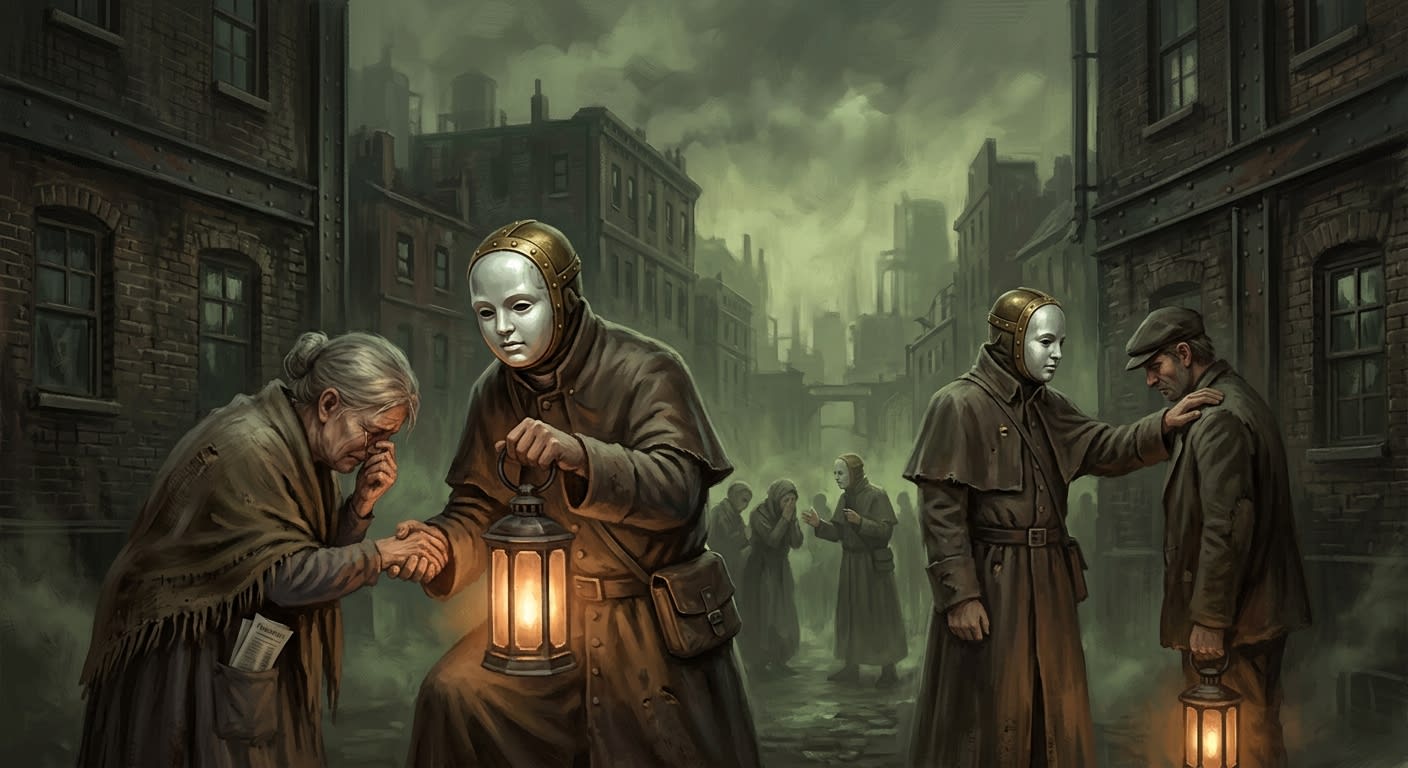
Fog Preachers are the street-facing tier of the Lantern Mercy Preacher apparatus: grey stole, brass badge, sanctioned lantern, Approved Comforts, and one sentence the Bureau did not write. They stand where grief collects in public — at queue mouths, ossuary gates, tavern thresholds, bridge stairs, infirmary corridors, levy yards, and the narrow corners where a citizen discovers that doctrine has left him alone with his hunger. Their office says Curfew Consolator. Their work says otherwise.
The distinction matters because a conspiracy may hide in paper for years, but eventually it must pass through a throat. A Mercy Architect can redraw the safe route from a cellar. A Candle-Runner can carry the blessing schedule under a crust of wax. A Tongue-Smith can forge a sentence so obedient on the page that even a Purity clerk nods before being ruined by its spoken emphasis. The Fog Preacher stands before the mother, the debtor, the orphan, the conscript, the widow, and the man whose hand is shaking too visibly at the ration desk.
They are called Fog Preachers for practical reasons first. The work happens at dusk and after curfew bell, when industrial smoke, river mist, lamp oil, damp wool, breath, and fear gather into the civic weather of the western provinces. The name also suits their theology. Fog hides edges. Fog carries sound badly and feeling well. Fog makes a crowd into silhouettes, which are easier to pity and harder to indict individually.
#On the Licensed Mask
The Fog Preacher descends from the Curfew Ordinance of Quiet Hours of A.S. 94, that useful little miracle by which the Bureaus discovered that a soft voice could prevent broken windows more cheaply than another cudgel patrol. The Ordinance created Licensed Consolators: grey-stoled, lantern-bearing comforters placed at curfew crossings to reduce nighttime disorder among exhausted civilians. The Bureau of Rites wrote fourteen Approved Comforts. Purity vetted temperaments. Records stamped the lanterns.
No Bureau anticipated sincerity. This is why we require more Bureaus.
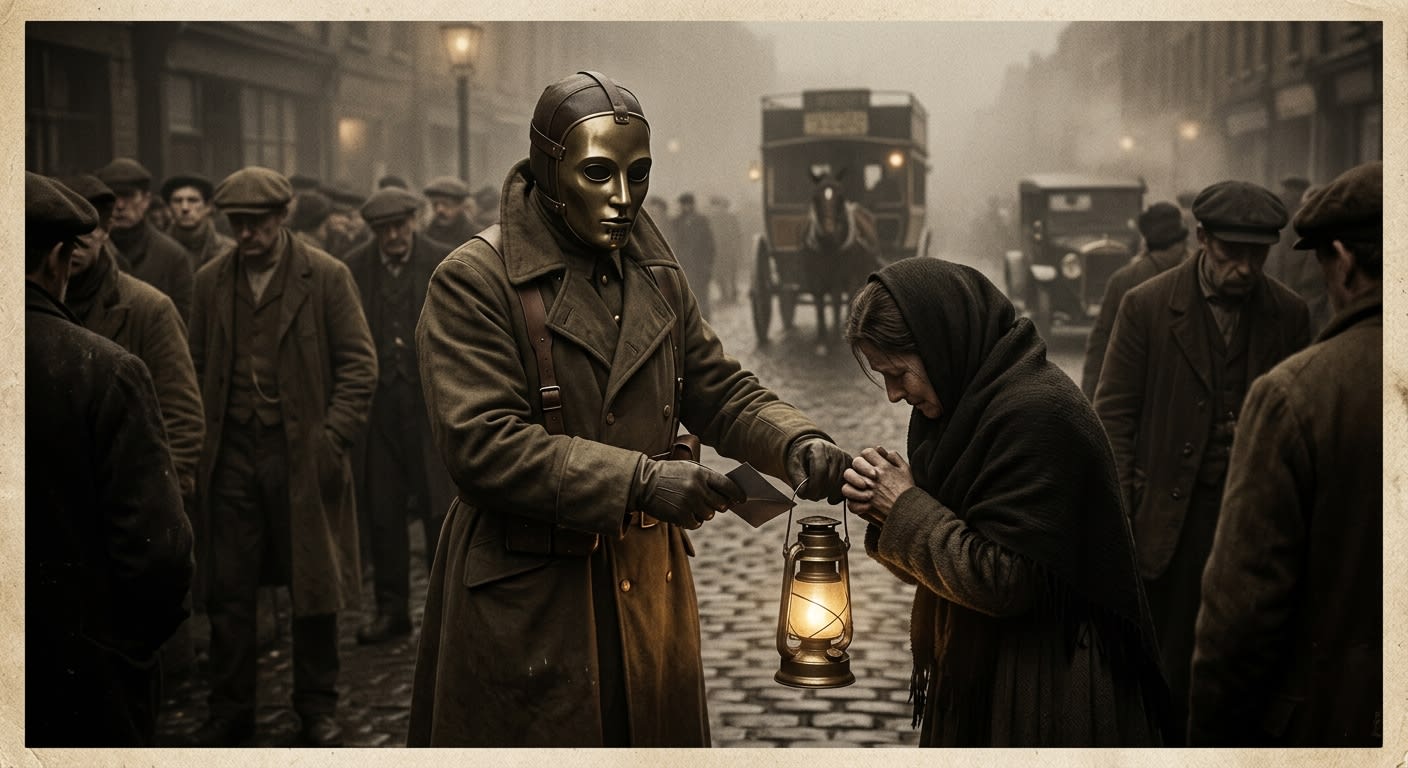
A Fog Preacher’s legal kit is clean enough to kiss: amber civic lantern, parish token, brass badge, throat scarf, prayerbook, chalk for safe marks when chalk is admitted, and a schedule proving she belongs precisely where she is being questioned. She recites what Rites provided. The Creator sees your labour. The Synod shelters your obedience. Rest now, for the bell will call you to purpose. The words are harmless until the Preacher means the word “sees.”
The illegal kit is smaller. A changed pause. A lowered voice. A saint name placed where a frightened listener expects a route. A sentence added after the approved blessing: “Your grief has a witness.” “Do not sign while hungry.” “The bell can be wrong and still be loud.” Nothing that looks like an order. Nothing that names a house. Nothing a tribunal can seize without also admitting that comfort moves bodies.
Early parish manuals described the Consolator’s supplemental phrase as “pastoral colouring.”
Corrected after the Warden Sermon Trials. Colouring does not redirect patrols, delay levies, alter queue behaviour, or cause Confessor-Booth Clerks to attend sermons in plain clothes while pretending to inspect weather.
#On Fogwork
Fogwork is the Preacher’s method and the Bureau’s annoyance. The approved term is street consolation, which has the dead-eyed virtue of sounding like something a committee could budget. Fogwork begins by reducing panic. A panicked crowd belongs to whoever brings the louder stick. A calmed crowd may begin to listen sideways. The Preacher softens first, binds second, slips the instruction under the blessing, disperses cleanly before any gathered tenderness can be photographed by authority.
Soften first: say the approved words with enough humanity that the woman in the doorway stops swallowing her own sobs. Bind second: make neighbours hear one another breathing; a lonely grief is taxable, a shared grief keeps accounts of its own. Seed third: place the tiny instruction inside comfort. “Your cousin will pray westward tonight.” “Saint Marea keeps the lower stair.” “Hold the name until morning.” Disperse cleanly: no meeting, no cell, no obvious leader, no little theatre for Purity to applaud while lighting the pyre.
The best Fog Preachers speak like water, borrowing the old rule attributed to Old Faron the Hush-Monger. No phrase repeats across wards. No comfort becomes a slogan. No sentence develops the hard edge by which clerks cut indictments. They rotate saints, change verbs, bend local idiom, let weather swallow half a meaning, and rely on the listener’s hunger to complete the rest. This is wickedly difficult. It is also why Purity hates them with professional affection.
#On the Dusk Circuit
A normal dusk circuit begins before the first lamp is lit. The Preacher reviews the blessing schedule, notes which entries smell like a Mercy Architect rather than a parish secretary, and checks whether the Candle-Runner who delivered it looked frightened in the ordinary way or in the useful way. She polishes the lantern glass because smudged glass invites inspection, and inspection invites questions, and questions invite the whole crawling choir of officials who were born to ruin evenings.
At curfew bell she takes position. The first stop may be an ossuary stair where black-cart families wait for names. The second may be a ration queue where hunger has become argumentative. The third may be a tavern threshold where a Warden patrol hopes grief will ferment into something chargeable. The fourth may be a bridge pylon in Bastion-Brest, where every sound arrives with iron in it. She recites, listens, alters, moves.
The debrief is where sleep goes to be strangled. A Preacher must remember what she said, what she almost said, what the crowd heard, which phrase a child repeated, which Warden looked bored, which Brother coughed twice, which old woman corrected the saint order under her breath, and whether any informer smiled with his mouth before smiling with his eyes. Then she must produce a clean parish log: conflict reduced, consolation delivered, no variance observed.
#On Predators and Mirrors
The Red Lanterns are the obvious predator. They carry crimson glass and the state’s idea of revelation: the face pressed to heated guard-work until the cheek keeps the pattern. The Bureau calls this illumination. The offender calls it burning, unless gagged, which improves terminology in official rooms. Red Lantern squads attend Fog Preacher districts after second citation, after phrase recurrence, after chalk recurrence, after one mother too many leaves a queue with her eyes rearranged.
There are subtler predators. The Confessor-Booth Clerk with ink under the thumbnail. The parish canon who approves a route in exchange for one name. The Lantern Brotherhood lookout who was Loyalist last week and Purist after confession. The ledger auditor who has noticed that one Consolator reduces riots by a statistically indecent margin. Competence becomes evidence faster than failure.
BUREAU OF PURITY — SERMON CAPTURE ABSTRACT Subject: Fog Preacher, designation withheld Approved Comfort recited: Text IX, Labour and Rest Supplemental phrase alleged: █████████████████████████ Witness A: “She meant we should wait.” Witness B: “She meant we were seen.” Witness C: “She meant nothing. I heard only the bell.” Disposition: continued surveillance; witness C transferred.
The Brotherhood relationship remains a snare with a handle. Loyalists shield Fog Preachers because a calmed street saves oil, cudgel-work, and reputational repair. Ward-Soothe Purists despise them because comfort has politics in it no matter how politely one folds the napkin. Soft Insurgents adore them too openly, which is the usual sign that someone is about to get everyone killed. The Fog Preacher must read each lamp by cough, angle, glass, and silence.
Brotherhood statements after the Cologne Schism claimed all Preacher contact was “incidental street overlap.”
Revised. Incidental overlap does not explain matched patrol omissions, safe stairwell timing, repeated amber-lamp tolerance, or the number of Brothers who developed sudden bladder complaints whenever a Preacher needed ninety seconds.
#On Lira Voss and the Plain Sentence
Every profession keeps a warning in human form. For Fog Preachers the warning is Lira Voss of Bastion-Brest, licensed, watched, cited, and immured after she told a levy queue, “They are taking your sons because your sons are cheaper than the mortar.” The sentence matters because it violated craft. It did not rotate. It did not hide. It did not carry a double meaning through saint order or liturgical cadence. It stood in the yard like a brick through glass.
Fog Preachers avoid repeating it aloud. Repetition builds cases. They borrow its grammar instead: the sharp naming of cost, the refusal to blame Heaven for procurement, the awful mercy of telling a mother that arithmetic, not mystery, has eaten her son. Candle-Runners carry fragments. Mercy Architects mark Brest walls that have held the chalk. Tongue-Smiths resent the sentence because it cannot be improved without weakening it.
Voss did what Fog Preacher training forbids. She spoke plainly. The Bureau punished her body and failed to punish the sentence, which is why the file still smells of wet paint. Every Fog Preacher learns from the failure. Say what must be heard. Make it impossible to quote. Keep the listener alive long enough to act. If plain speech comes, understand that masonry has already been ordered.
#On Burnout and the Cold Tongue
Fog Preachers lose sleep first. Then they lose unsupervised thought. Then they lose the ordinary human habit of saying one thing and meaning one thing, which peasants enjoy and officials regard as provincial. Every sermon becomes evidence; every comfort might be repeated by an informer; every pause may grow a hook. The voice becomes an instrument inspected by enemies and borrowed by the grieving until no private sound remains.
The first end is the cold tongue. The Preacher still recites, still moves, still records, still survives. The added sentence loses warmth. The crowd hears correctness wearing a mercy mask and responds with the obedience of tired cattle. Purity likes this outcome. Rites calls it stability. The street calls it dead glass.
The second end is fracture. A Preacher absorbs too much queue grief, too many conscript mothers, too many orphan wagons, too many dawn debriefs by men whose hands smell of wax and accusation. She breaks code and speaks the thing itself. Sometimes the street remembers. Sometimes the Red Lanterns arrive first. The difference is measured in chalk.
The Fog Preacher remains the most dangerous Lantern because she is the point at which machinery becomes audible. A network may be hidden, a route may be coded, a catechism may pass audit, a child may vanish into parish errands; but at dusk, in the fog, beside the queue, someone must open her mouth. The Bureau can stamp a lantern. It has never successfully stamped a throat.