
#On the Mouth at the Edge of Death
Standing Order 22-C is the Bureau of Mercy's law that no one may die uselessly.
This phrasing will offend the sentimental, who believe death possesses some private dignity when it arrives with a damp cloth, a whispered prayer, and relatives arranged around the bed like badly trained witnesses. The Synod honours death more rigorously. It gives death a stool, a quill, a witness ribbon, a bell-time stamp, three transcript destinations, and a penalty schedule for anyone allowing a soul to depart without leaving its administrative residue behind. Death may close the mouth. 22-C makes the mouth speak first.
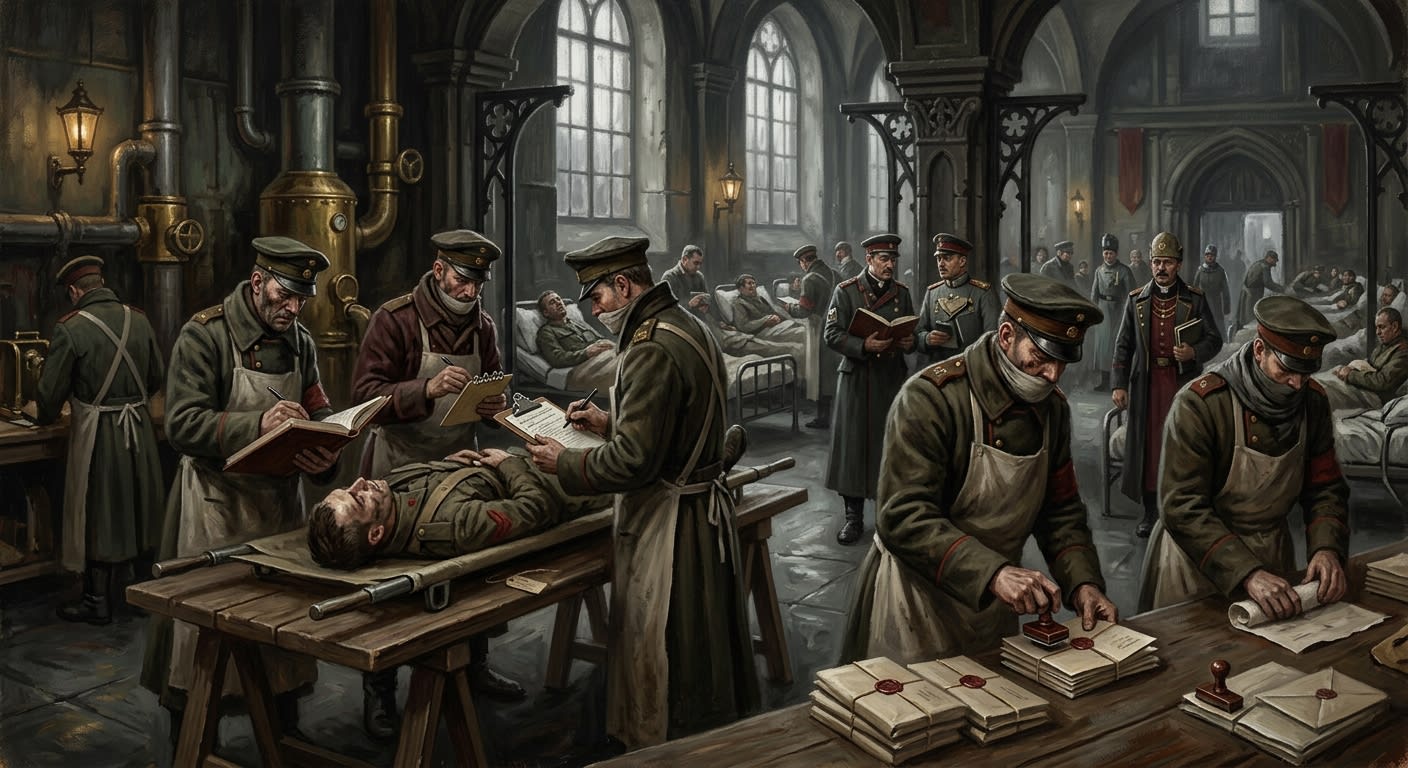
The Order mandates terminal confession in all licensed Mercy Wards: every dying patient must be attended, prompted, transcribed, witnessed, sealed, and forwarded within one bell-cycle of cessation. The clean copy comforts the parish and family. The internal copy feeds the Bureau of Records. The sealed addendum feeds Purity when the dying implicates the living, the dead, the absent, the ranked, or the inconveniently well-connected. The body may cool afterward. The file must not.
22-C is mercy in the official sense: structured, evidentiary, supervised, liable to audit, and expensive enough to be called compassion. It was born from plague, fattened by reform, bloodied by corruption, sanctified by Blessed Vellum-Anna, and made permanent because the Synod discovered that the dying tell the truth more often when someone with a seal-ring is close enough to interrupt them.
#On the Silence That Forced the Order
The Order begins in A.S. 78, when the southern trench infirmary belt fell into fever and the dead began taking information with them.
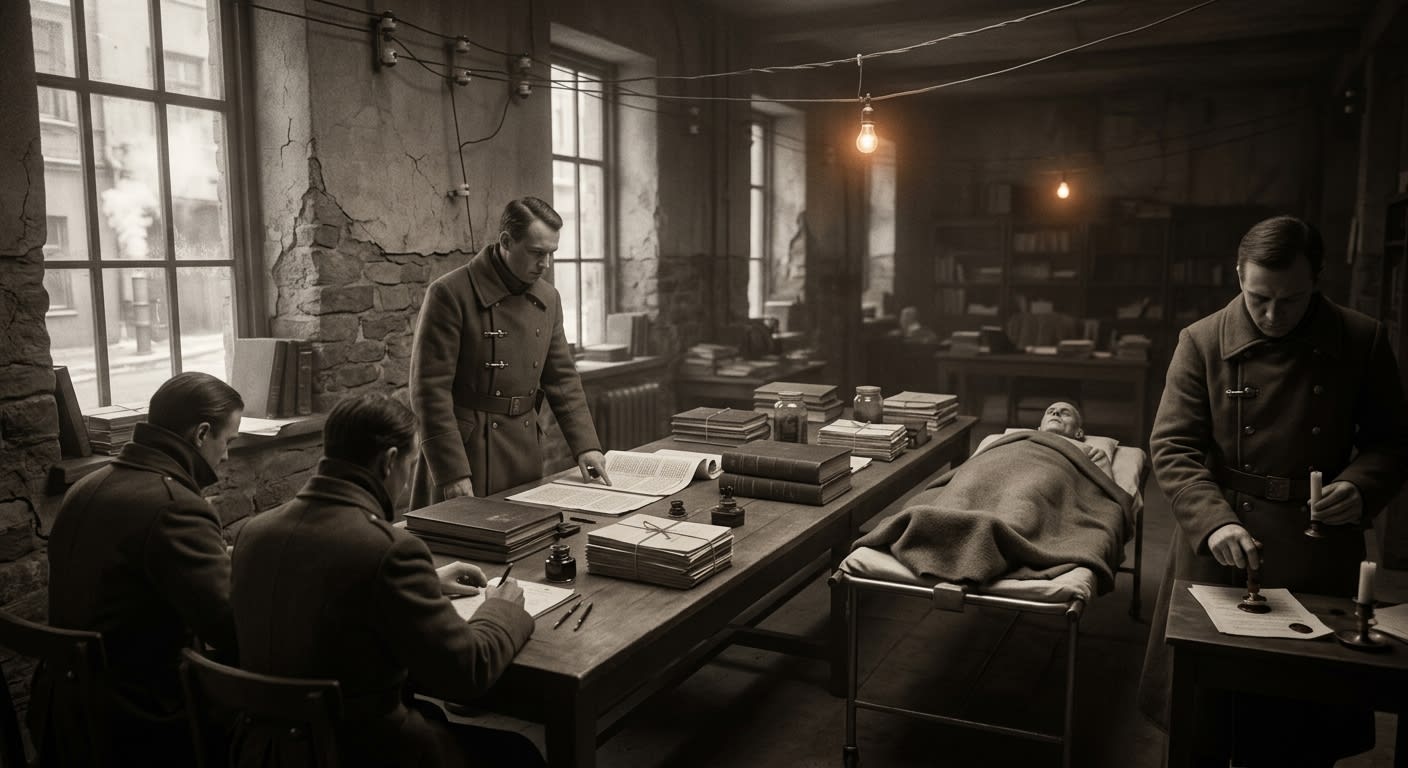
The Great Plague of A.S. 78, called in proper administrative usage the Lull of Names, moved through the ward roads behind Bastion-Irongate, the fever sheds below Bastion-Shipka, and the cart-annexes feeding Bastion-Constantinople. Storehouses became wards because someone hung a curtain and lied confidently. Chapel aisles became cot rows. Ration wagons became fever rooms. Laundresses died in beds under borrowed names. Broth carriers died standing. Ward-Sisters wrote names on sleeves, then washed the sleeves. The Bureau of Mercy later called this overcapacity. A charnel house with curtains has always required nicer stationery.
The medical calamity was common enough. Plague has the punctuality of a tax collector in war. Bad drains, corpse proximity, crowding, bad bread, prayer sung too close to coughing men: a child could diagram the chain with chalk and survive no committee. The administrative calamity was sacredly intolerable. Men died before naming accomplices. Women died before closing debts. Fever carts arrived with twelve bodies and seven tags. Three quartermaster offices lost store testimony when the witnesses expired. Estates failed to close. Debt chains snapped into district violence. Fourteen heresy cells survived behind the silence of their dead members.
That was the wound. Not rot. Not coughing blood. Silence.
The annual report of Records for A.S. 79 contains the margin line that became 22-C's iron hinge: We lost more intelligence to silence than to enemy action. The hand is cramped in the surviving copy; the final word is underlined twice. A frightened clerk wrote better than a comfortable theologian, a fact I record with professional bitterness.
Records demanded permanent bedside transcription. Mercy demanded control of ward access. Rites demanded that priests retain the last rites and the right to object in Latin. Purity demanded names first. War demanded that no new form obstruct amputations, evacuations, incoming casualty slots, ammunition routes, or the broad holy business of returning men to the Line before their stitches finished learning grammar. Everyone was correct. The plague had already demonstrated how little that matters.
Early Mercy commemorations described the Lull as “the year compassion learned to listen.”
Corrected. Compassion had listened for centuries and produced no reliable packet traffic. The approved internal wording is harsher: A.S. 78 was the year Mercy learned to write before the mouth closed.
A.S. 80 produced Standing Order 22-C. No soul departing a licensed ward without terminal confession. No terminal confession without witness, bell-time, and seal. No sealed addendum delayed for family consolation. Unfiled death became dereliction under the Rite of Passing. A private dying became a public custody event. The stool moved beside the cot and stayed there.
#On the Letter of the Order
22-C is written with the tenderness of a clamp.
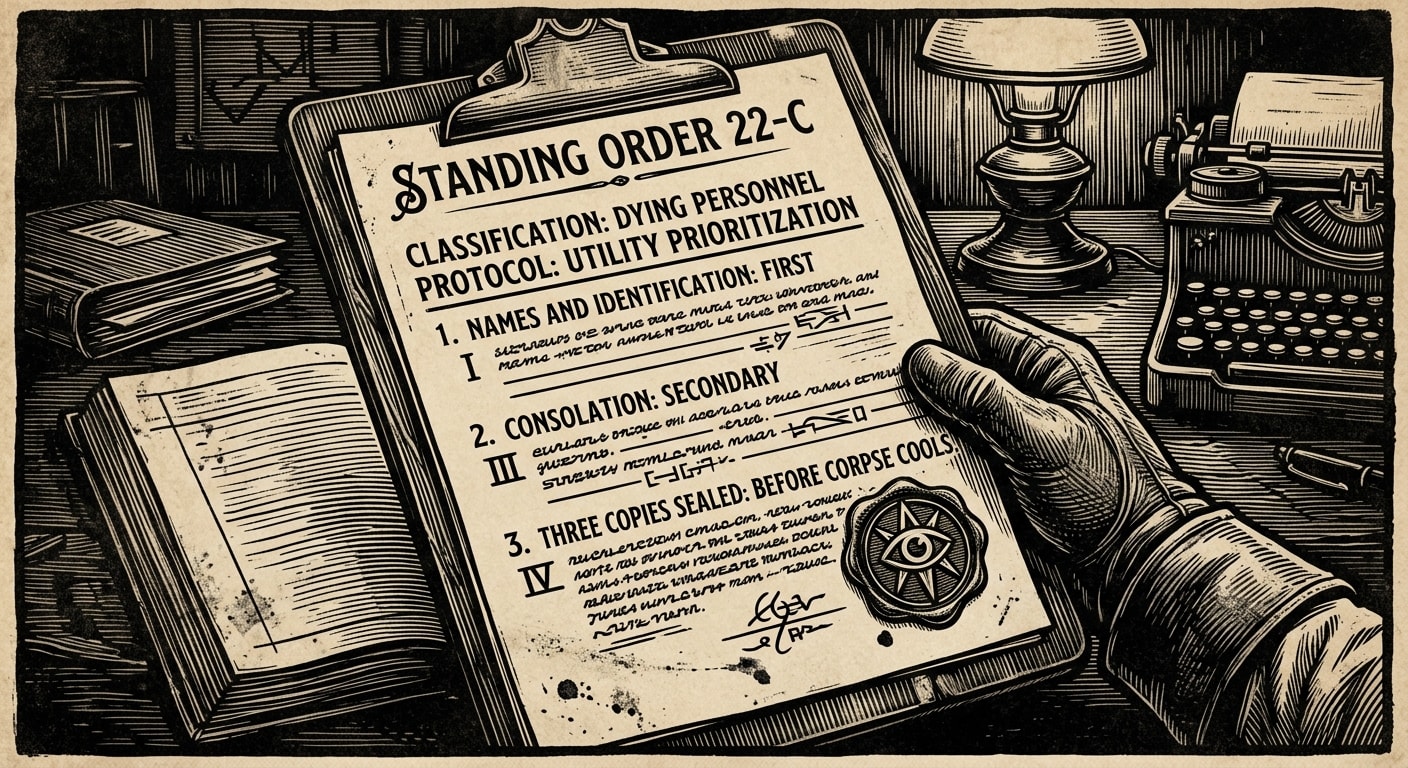
The patient must be identified by name, tag, household roll, company roll, or emergency provisional marker. The attending ward officer must notify a Harvester when death is probable within one bell-cycle, except in mass-casualty conditions, plague surge, active bombardment, ward riot, demon-breath quarantine, or administrative collapse, all of which require the Harvester anyway and merely alter which superior later lies about delay. The Harvester must obtain access, stabilise speech where possible, frame the confession, extract names and relevant disclosures, authenticate the words, package the copies, and forward them before the body is released.
Names come first. This is sequence. A dying man may wish to tell his daughter that the barley was golden in spring. Lovely. Records cannot arrest barley. Names carry debts, crimes, conspiracies, inheritances, heresies, missing children, hidden caches, unlicensed lovers, sympathetic clerks, false saints, stolen flour, illicit hymns, and those tender domestic treasons by which every family becomes a little archive trying to avoid audit.
The Order does not forbid comfort. It subordinates comfort to custody. The Ward-Sister may hold the hand. The priest may whisper the rite. The relative may weep if cleared, searched, separated from writing implements, and unlikely to interrupt. The Harvester keeps the quill near the mouth. Blessed Vellum-Anna's icon teaches the same order: quill in the right hand, compress in the left, the ledger closer than the wound.
Bell-time makes the words admissible. A statement without bell-time is a rumour with good handwriting. A statement sealed within a peal-cycle is evidence. A seal without a witness is fragile. A witness without a ribbon is decorative. A ribbon without a corresponding entry is fraud waiting for better shoes. The Order's genius lies in making each small object accuse the others.
#On the Six Steps of the Harvest
The Confession Reform of A.S. 104 gave 22-C its mature procedure, because a law without steps is merely a desire wearing a stamp.
First: access. The Harvester presents credentials to the ward officer, the Ward-Sister, or the person holding a knife near the curtain. In clean wards, access is a formality. In black zones, access is barter conducted under the polite fiction of emergency coordination. Salt, linen, vinegar, throat charms, morphine drams, fresh cuffs, a promise to omit the nurse's sleeping brother from a minor inventory offence: the manuals do not list these. The manuals possess innocence by editorial decision.
Second: stabilisation. The patient is propped until the lungs can make words. Blood is cleared from the mouth if speech is worth the cloth. The minuteglass is turned only under breath. A patient who cannot speak may signal by hand, blink, slate, prayer bead, or pressure against a Witness Clerk (Unregistered)'s fingers, provided the motion can be attested and translated by someone not inheriting property from the result.
Third: framing. The Harvester tells the dying what the institution requires them to believe: speak truth and leave clean; the Record receives; Heaven forgives; your words may protect your family. These formulae are tender little crowbars. They work because the dying want their last breath to carry meaning, and the Bureau offers the meaning in triplicate.
Fourth: extraction. Names, dates, routes, amounts, hiding places, accomplices, officers, priests, clerks, cousins, seals, locks, bells, cache stones, grave markers, childbirth substitutions, ration fraud, doctrinal infection, dream contacts, enemy disclosures. Emotion may be taken if time remains. Time rarely remains.
Fifth: authentication. Witness ribbon tied. Seal-ring pressed. Bell-time stamped. Patient status marked: lucid, fevered, gasping, delirious but responsive, nonverbal, hostile, second-voice suspected, dead before completion. The final category generates a reprimand, a condolence form, and in plague surge conditions, a quiet adjustment of the time.
Sixth: packaging. Three copies, three appetites. The clean copy strips names into initials where family consolation requires tact. The internal copy preserves names in their damaging fullness. The sealed addendum carries heresy markers, demon-contact claims, accusations against Synod officials, compromised clergy, suspicious physicians, contaminated relic handlers, and those exquisite deathbed gifts that make Purity officers walk faster.
TERMINAL ADDENDUM TRAINING EXTRACT — SEALED If the dying names a person already erased, continue writing. If the dying speaks in a voice contradicting registered sex, age, language, or known tongue condition, continue writing. If the dying names the Harvester, cover the patient number before proceeding. If the dying supplies a future bell-time, ███████████████████████████.
The six steps are recited in training halls until novices dream in sequence. Access, stabilisation, framing, extraction, authentication, packaging. Six little stations of the bureaucratic cross. By the end, the novice has learned to hear a human voice as material in transit.
#On Vellum-Anna, Patron of the Useful Last Breath
Blessed Vellum-Anna is unauthenticated, disputed, indispensable, and holy enough for government work.
Her ward tale begins during the Lull. A Mercy novice hears a soldier whisper a name, then another, then a route, then a cache beneath a chapel stair. No clerk stands near enough. No priest arrives in time. Anna tears the blank flyleaf from a prayer book and writes until the man stops speaking. The sweet version gives her seventeen leaves by morning. The bitter version has her withhold water until the confession seal dries. Both versions are true in the only way occupational saints need to be true: each teaches staff what the profession wants from them.
Standing Order 22-C did not canonise Anna. Bureaus do not share credit with women on prayer-book scraps unless forced by staff devotion or procurement pressure. The Order used her. Her quill gave the Harvester an image. Her compress gave Mercy a defence. Her lack of authenticated bones saved Relics from having to admit that the profession had chosen its patron before the files were ready.
Her icon hangs above terminal stools, seal cabinets, black-zone curtains, transcript trays, and the little family waiting benches where grief learns that it may sit but not interfere. Harvesters touch the quill before shift. Witness Clerks touch the compress. Black-Zone Harvesters touch both and then touch the throat charm, because they know the dying sometimes speak with a second voice and that saints, like locks, are most useful when one suspects they may fail.
The Bureau of Mercy calls her Blessed because wards need a face. Records tolerates her because she teaches staff to write first. Doctrine approves her because contradiction, properly framed, becomes catechism: patron of comfort, patron of extraction; woman with compress, woman with ledger; saint of last words, saint of useful last words.
#On Jurisdiction, Priests, and the Family's Bad Timing
22-C did not please the priests. Few useful laws do.
The Bureau of Rites objected that terminal confession touched the edge of sacrament. Mercy answered that it touched the edge of ward procedure. Records answered that it touched evidence. Purity answered by arriving with seizure authority. The compromise assigned the priest the soul and the Harvester the words, a division so elegant that neither party has forgiven it.
A priest may administer last rites before, during, or after the harvest if the patient's speech capacity permits. He may prompt repentance but may not interrupt names. He may contest blasphemous content only after transcription. He may seal pastoral content in the clean copy when no legal interest attaches, a phrase wide enough to soothe Rites and narrow enough to starve it. If the patient begins confessing a crime during sacramental speech, the Harvester writes. The priest may glare. The quill does not blush.
Families create worse trouble. They arrive with love, panic, bargains, old grudges, hidden knowledge, and the dangerous belief that a dying person's last words belong to the people who loved him. 22-C corrects this superstition. Relatives may attend only under ward clearance. They may not stand between Harvester and mouth. They may not answer for the patient. They may not demand omissions. They may not receive the internal copy. They may not touch the witness ribbon. They may be granted the clean copy, unless doing so compromises active inquiry, household seizure, doctrinal review, plague control, or another office's appetite.
The Order's mercy claim rests on a thin plank: the dying deserve a witness. The Bureau's actual claim is sturdier: the state deserves custody before loss. The plank and the beam support the same roof, which is why the wards have not collapsed entirely beneath the weight of their own honesty.
#On Shepherds, Butchers, and Other Tender Frauds
Every profession under the Synod divides into those who mistake the stated purpose for the real one and those who have stopped making that error.
The Deathbed Confession Harvesters call the split the Shepherd-Butcher fault. Shepherds hold hands. They take the barley memory. They let the dying speak of daughters, orchards, lost boots, bad officers, spring mud, and the little ridiculous items by which a life proves it was more than a charge sheet. They believe the Ledger can be fed without devouring the patient whole. The young among them are sweet. The old among them are formidable.
Butchers ask names first and keep asking. Their transcripts are shorter, sharper, and more useful. Purity likes them. Records admires them. Ward-Sisters hide the frightened from them when time allows. Butchers do not hate patients. Hatred wastes breath. They simply know the mouth is closing and a closing mouth must be treated like a gate under attack.
22-C officially recognises no factions. Naturally it created them.
A Bureau of Mercy circular of A.S. 112 stated that “all Harvesters operate under a unified pastoral evidentiary ethos.”
Withdrawn from internal training. Shepherds and Butchers exist. The approved language is “method variance under shared seal discipline.” The phrase has the moral courage of boiled linen.
The hierarchy gives both kinds room to worsen. Witness Clerks begin by counting ribbons. Junior Harvesters work clean wards under supervision. Full Harvesters carry unsupervised terminal authority. Black-Zone Harvesters enter fever curtains, trench plagues, demon-breath quarantines, and wards where the walls sweat alphabetic residue. High-Value Examiners attend officers, heretics, relic guildsmen, compromised clerks, and anyone whose final sentence may rearrange a district before supper.
The Order trains them to steer without seeming to steer. A comfort phrase here. A name prompt there. A pause after “who helped you.” Silence is a tool if the patient fears it. Mercy is a tool if the patient wants it. Terror is a tool if the patient deserves it or if time has grown rude.
#On Glass Whisper and Other Occupational Contaminations
The manuals call it unclean sound. Ward-hands call it glass whisper.
A dying patient speaks in a voice not registered to the body. The voice may be clearer than the patient's. It may know sealed names, dead routes, unfiled births, the contents of redacted circulars, sins committed after the patient's admission, or languages no one in the ward admits to understanding. The Bureau of Purity classifies this as terminal demonic ventriloquism. Standing Order 22-C requires the Harvester to continue transcribing.
Continue transcribing. There is the whole profession, naked as bone.
The throat charm is pressed against the larynx. The bone token sits in the left fist. The Witness Clerk stops breathing loudly. The Ward-Sister remembers a task outside the curtain and fails to move. The voice speaks. The quill moves. A contaminated statement can be sealed, quarantined, cross-filed, tested, burned, copied in silver ink, sent to Purity, denied, reclassified, or used. An unrecorded statement can do none of these things. The Bureau has its priorities in good repair.
22-C's black-zone appendix instructs Harvesters to mark second-voice suspicion, maintain hand motion, avoid theological argument with the patient, and refuse all requests to “read that back” unless a Purity officer is present. The last rule has saved lives. It has also killed curiosity, which is cheaper.
At Bastion-Brest, the Confession Echo intensified after A.S. 199: empty booths returning confessions, dead men repeating sins wrongly, names spoken out of order, families hearing relatives accuse them from sealed benches. Bells called it harmonic residue. Purity called it acoustic anomaly. Harvesters called it the dead correcting the file with malice. 22-C supplied no answer. It supplied a form.
#On the Purge That Added the Second Stool
The Mercy Ward Purge of A.S. 134 proved that last words could be sold by the ounce.
Seventeen Harvesters across the Rhineland ward circuit were convicted of selling, suppressing, altering, misplacing, or creatively misunderstanding terminal confessions. A clean copy softened for a ring. A sealed addendum delayed for salt chits. A son's name removed from a father's fever speech until Purity received the full packet anyway. A Witness Clerk paid to examine the patient's feet. A copyist paid to misread a name. A Harvester paid twice by a widow and still too stupid to keep the complaint from landing on the correct desk.
This was commerce without charter.
Records found repetition. Seventeen clean transcripts using the same phrase, departed in peace after ordinary contrition. Wax impressions half a degree shallow across distant wards. Witness ribbons cut from the same bolt. Comfort had become a template, and templates are little bells hung around fraud's neck.
The remedy was the double-witness protocol. No confession under solitary seal. A Witness Clerk or ward officer observes, countersigns the ribbon, and records bell-time in a separate hand. Curtains widened. Stools came in pairs. Confession trays gained a second groove for countersignature slips. Families learned to fear the second stool. Harvesters learned to hate it, then to use it.
The public circular after the Mercy Ward Purge declared: “The second witness ensures purity.”
Corrected for internal use. The second witness distributes liability. Purity is desirable. Liability distribution arrives on schedule.
The protocol works. It catches broken bell-times, solitary fraud, invented confessions, soft wax, missing ribbons, and Harvesters whose literary habits exceed their prudence. It also doubles the number of people who know what was said. Two witnesses may be bribed, blackmailed, seduced, threatened, pitied, or made loyal to the same lie. Records accepted the arithmetic because Records has always admired multiplication when it arrives stamped.
#On the Three Copies and Their Lies
A terminal confession does not leave the bed as one document. One document would be vulgar. One document would force the Bureau to admit that consolation, evidence, and prosecution are hungry for different cuts of the same dying animal.
The clean copy is for family, parish, and the soft public theatre of closure. It may contain repentance, final blessing, a last affectionate phrase, a harmless debt, a softened confession of temper, and a sentence shaped to let the survivors sleep. Names become initials when names would produce useful panic too early. Accusations become “unsettled matters.” Illicit love becomes “private failing.” Heresy becomes “distress of mind” if Purity has already received the knife elsewhere.
The internal copy belongs to Records. It keeps the names, the amounts, the routes, the pressure points, the inconvenient grammar, the child's hidden baptism, the quartermaster's store key, the priest's false hour, the sister's second husband, the field surgeon's morphine ledger, the cache beneath the stair. Records does not need the family to survive the sentence. Records needs the sentence to survive the family.
The sealed addendum belongs to danger. Purity receives it when the dying names doctrinal infection, demon-contact, treasonous shelter, forbidden reading, enemy sympathy, compromised clerks, living accomplices, corrupted rites, false relics, or a superior whose rank requires careful handling before arrest. The addendum travels under wax. The Harvester is forbidden to reopen it after sealing. This is wise, merciful, and routinely violated.
The family thinks the clean copy is the death. The parish thinks the clean copy is mercy. Records knows the internal copy is the person. Purity knows the addendum is the useful corpse. 22-C did not invent this partition of the dead; it made the partition dependable.
Mistakes among the copies are dangerous. A clean-copy name left too full can spark a household flight before Purity reaches the street. An internal copy softened by sentiment can cost Records a seizure. A sealed addendum delayed by piety can let a heresy cell burn its slates. A Harvester who confuses mercy with sequence will soon discover that Mercy is the Bureau least inclined to forgive errors committed in its name.
#On Present Force
As of A.S. 201, Standing Order 22-C remains active in all licensed Mercy Wards, terminal rooms, black-zone infirmaries, Hospices of Departure where departure turns evidentiary, and any emergency cot row declared ward-capable by a superior desperate enough to sign paper against smell. Approximately two thousand four hundred Harvesters serve across seven hundred and twelve registered wards. Forty-three wards have failed to report for years and are presumed compliant because presumption is cheaper than rescue.
The Order is strongest where death is frequent and witnesses are scarce: southern wards, Bastion-Shipka fever sheds, Brest echo-corridors, Irongate pressure rooms, Constantinople cart-annexes, Marrowgate intake lines, Rhine plague returns, trench hospitals whose curtains were once flour sacks. It is weakest in private houses, noble deathrooms, officer quarters, and saintly foundations whose donors believe their family sins deserve softer paper. They are wrong in law and often correct in practice, which is the ordinary condition of wealth.
22-C continues to offend every human instinct worth pricing. Families want last words whole. Priests want last words penitent. Records wants last words legible. Purity wants last words actionable. Mercy wants last words to stop bleeding on the forms. The Harvester sits between these appetites, grey-aproned, throat-charmed, quill ready, pretending the order of questions is not a theology.
The Order's critics call it cruel. They are correct and imprecise. Cruelty is merely the smell nearest the door. Behind it stand fear of silence, hunger for names, Purity's appetite, Records' dread, Mercy's need to convert failure into procedure, and the Synod's largest superstition: that nothing truly awful has happened if the packet arrives on time.
At night, after the last cot is stripped, the terminal room keeps its own inventory. Two stools. One lamp. One ribbon tray. One seal box. One ledger with sand caught in the gutter. Above it, Vellum-Anna holds her quill closer than her compress. The next patient breathes. The minuteglass turns.