

Reverse Index
Referencing “Pale Kin Runner”
Every codex entry that links to Pale Kin Runner. 35 entries.
Return to Pale Kin Runner

Administrative Dissolution
What the Bureau calls a filing action; what the dogs remember
Administrative Dissolution is the Bureau of Records' procedure for rendering a soul present but illegible — a grid of Mortuary Black drawn across the name-entry, the null-mark Ø applied, the Ledger amended.
Codex Ref. XIII.1.01-001
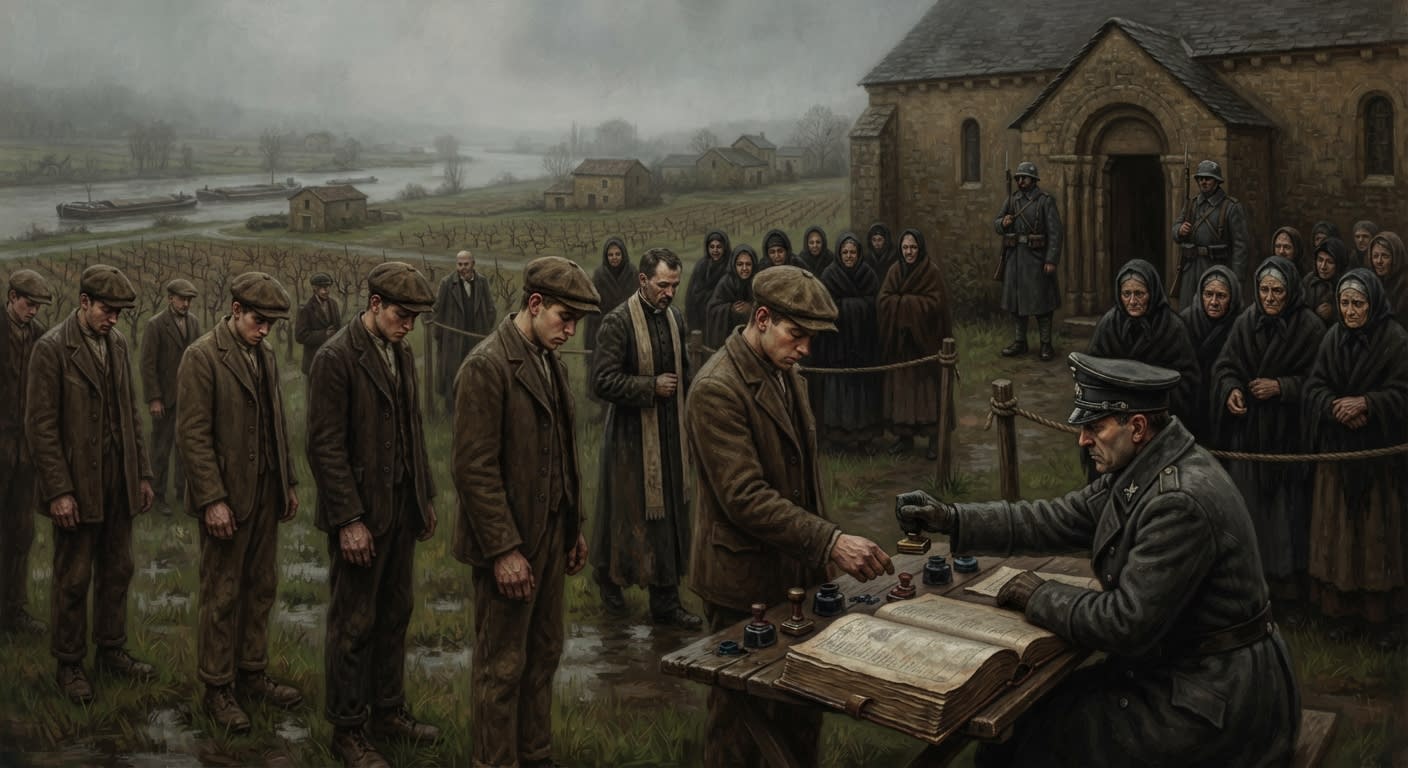
Aquitaine
The western field where sons go missing politely
Aquitaine is the Synod's damp western grain and wine basin: loyal by return, undercounted by suspicion, and courteous enough to make evasion look like hospitality.
Codex Ref. II.1.12-201

Ash Registrars
The child disappears when the form learns to lie
Pale Kin paper-first faction that frees hidden children by ruining, duplicating, and dulling official records until the Ledger loses confidence in its own page.
Codex Ref. XI.4.01-004
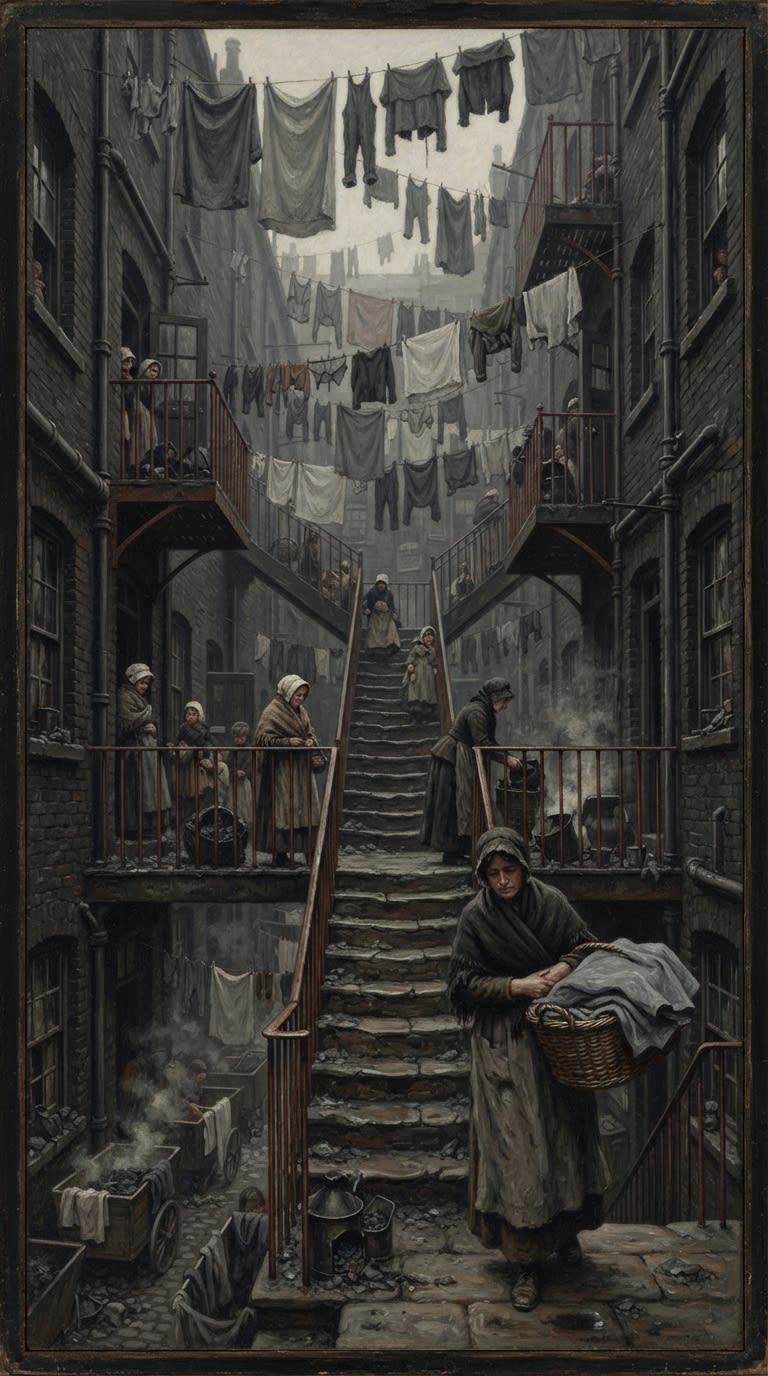
Ash Steps
Where a parish became a method and a roll became ash
The Ash Steps are an unmapped parish-name where laundry, back stairs, milk debts, and a burned A.S. 154 registry taught the Pale Kin that a place can become a method.
Codex Ref. II.2.06-154
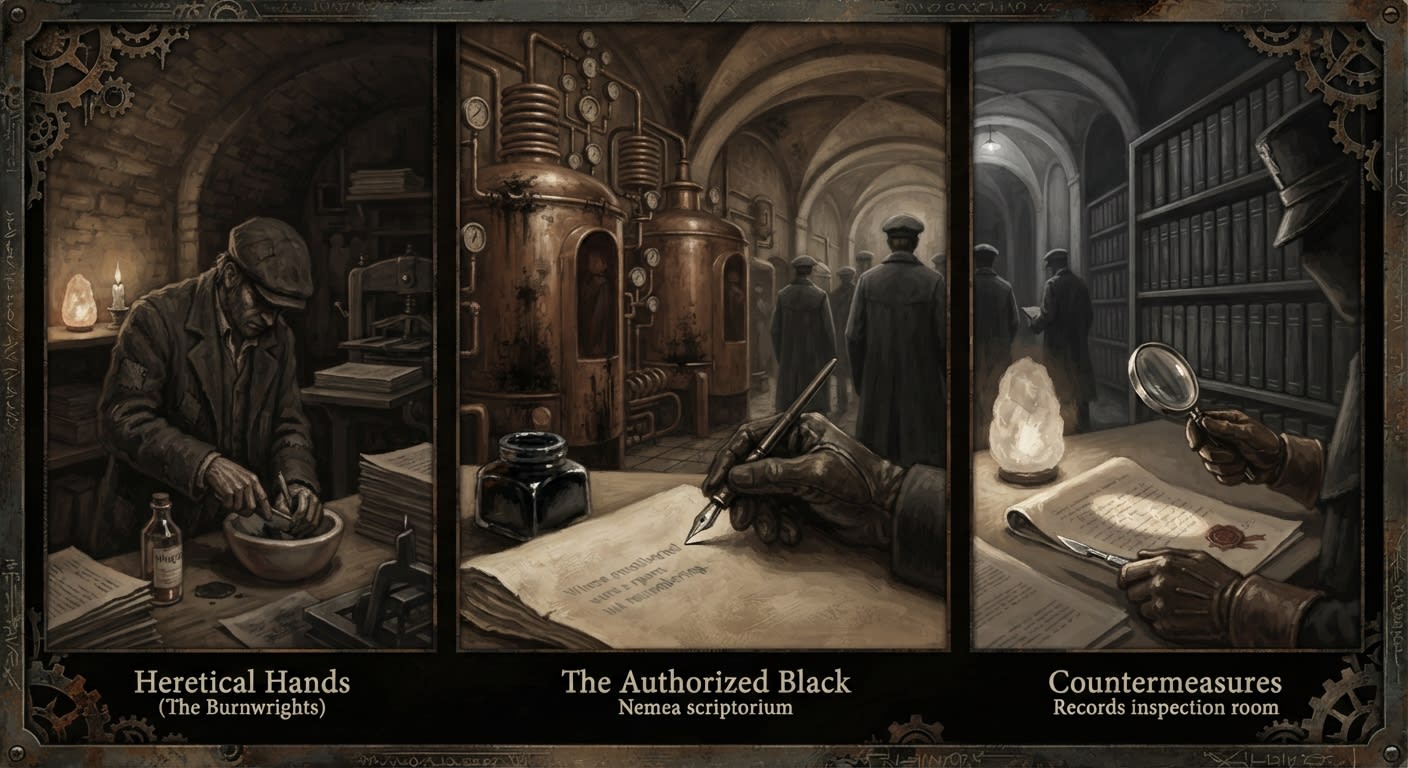
Ash-Ink
The authorized black, and the forgeries it taught to breathe
The lawful black of Nemea and its hanged imitations: ink made from burned authority, relic residue, and the Bureau of Records' dearest mistake.
Codex Ref. XIII.1.96-096

Blood-Kin Purists
The family tree, sharpened into a smuggling route
Conservative Pale Kin faction insisting hidden children be placed with blood relatives, preserving family memory while making Purity's kinship charts dangerously useful.
Codex Ref. XI.4.01-002

Bundle-Carriers
Two doors, one living child, no papers
The Pale Kin's entry rank carries infants between two doors, with no papers and little knowledge. The Bureau counts thieves; the trade counts children alive after winter.
Codex Ref. XII.28.02-001

Burner Catechisms
Approved prayers, unapproved margins
Approved prayer books whose intact devotions conceal ash-ink microtext: routes, countersigns, replacement names and safe runners. The Church printed the prayers; Burnwrights made the margins useful.
Codex Ref. XI.1.02-003

Burnwrights
The forgers who kill a name so the body may keep walking
Silent Godless specialists in identity disposal, document forgery, ash-ink, burner catechisms, and the paper death that lets condemned bodies survive.
Codex Ref. XI.1.02-002

Continental Levy
The decimal point where obedience becomes infantry
The Continental Levy is the Synod's permanent tithe of flesh, born from the A.S. 110 crisis and refined into household arithmetic.
Codex Ref. XIII.1.54-001

Continuations of the Original Grace
Grace is given once and collected forever
War's name for the Continental Levy renewals: the A.S. 110 emergency carried into successive generations, with sealed quotas and no promise of completion.
Codex Ref. XIII.1.54-002

Cradle Brokers
Escape takes one night; milk is due again before dawn
Cradle Brokers place hidden infants and maintain the Pale Kin's wet-nurse rings. The Bureau calls them child thieves; their ledger asks whether anyone survived winter.
Codex Ref. XII.28.04-001

Discrepancy Writ
A name at the font. No voice at the screen.
A son stands on the birth-roll and vanishes from the confession ledger. Conscription files the writ and informs Purity. The books disagree; the household acquires a second Bureau's attention.
Codex Ref. XIII.1.83-201

Eight Proscribed Heresies
Eight quarrels with the Synod, filed in one drawer
A.S. 201 survey of eight proscribed movements, their doctrines and the limits of their classification. They share a drawer; the surviving files establish neither common command nor settled ordinal ranks.
Codex Ref. XIII.4.08-001

Form 77-D
Three copies agree; the reason takes another road
Form 77-D authorizes Administrative Dissolution: three copies, one countersignature, and a soul rendered illegible. The reason travels under a separate seal; the writ has no field for undoing.
Codex Ref. XIII.1.77-201
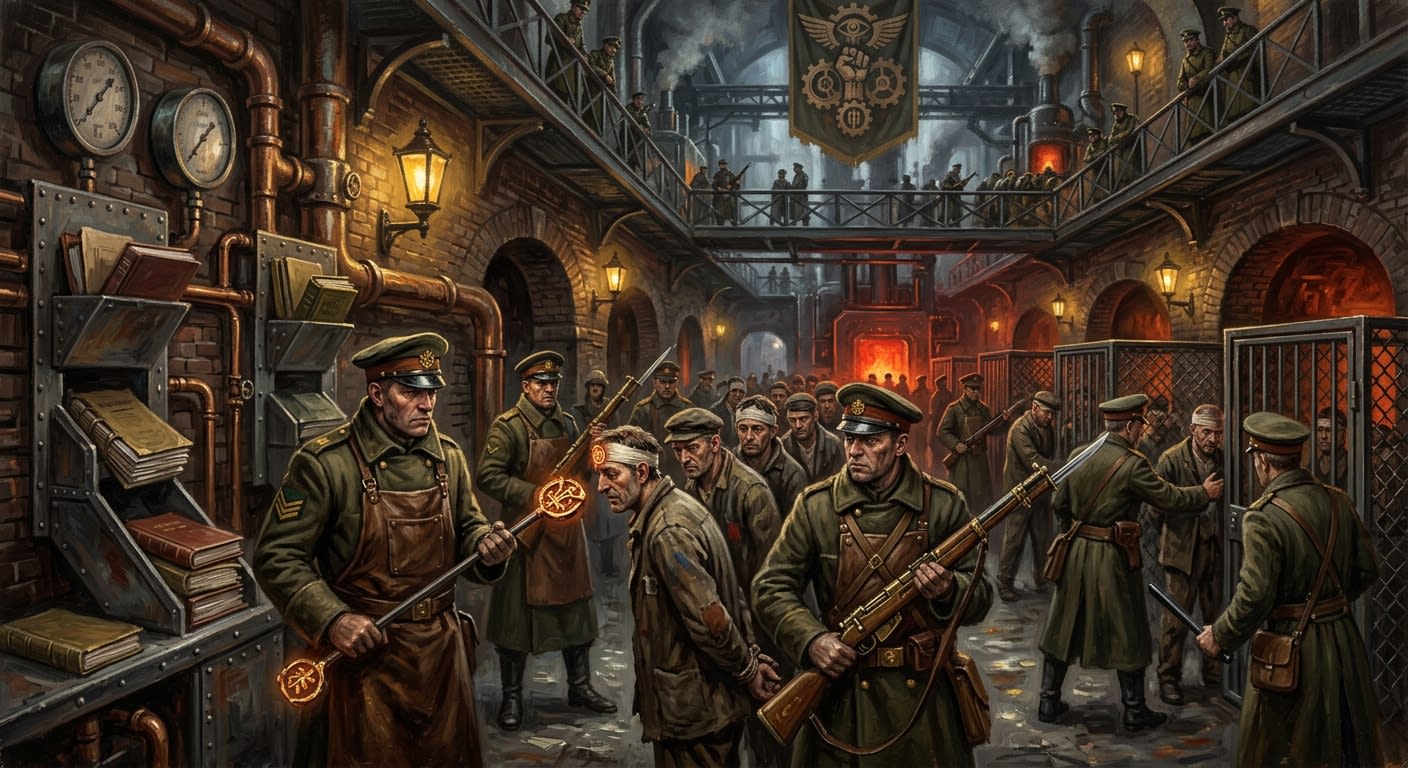
Great Inquest of Names A.S. 173
The census with hooks, and the heresy it educated
A.S. 173 Purity operation that broke forty per cent of Rhine corridor Silent Godless cells, destroyed 312 organisers, and taught the survivors how to survive better.
Codex Ref. VII.8.10-173
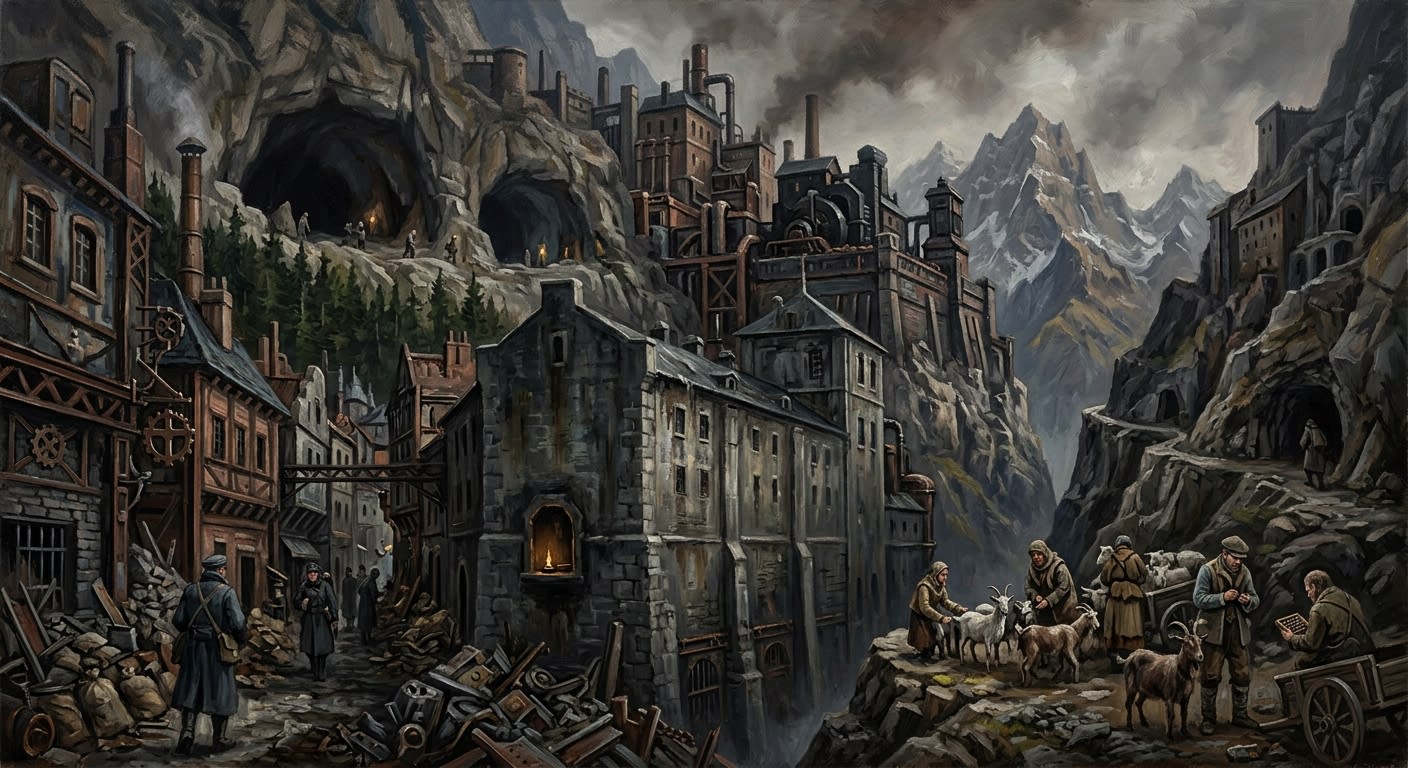
Innsbruck
Where mountains, grandmothers, caves, and walls defeat the census
Innsbruck is the Synod's alpine refuge-city: Cellar Saint caves above the treeline, relics disguised as trash, Mother Sava's wall-cavity, Pale Kin routes, goat arithmetic, and the most pious registry evasion in the mountains.
Codex Ref. II.2.09-030
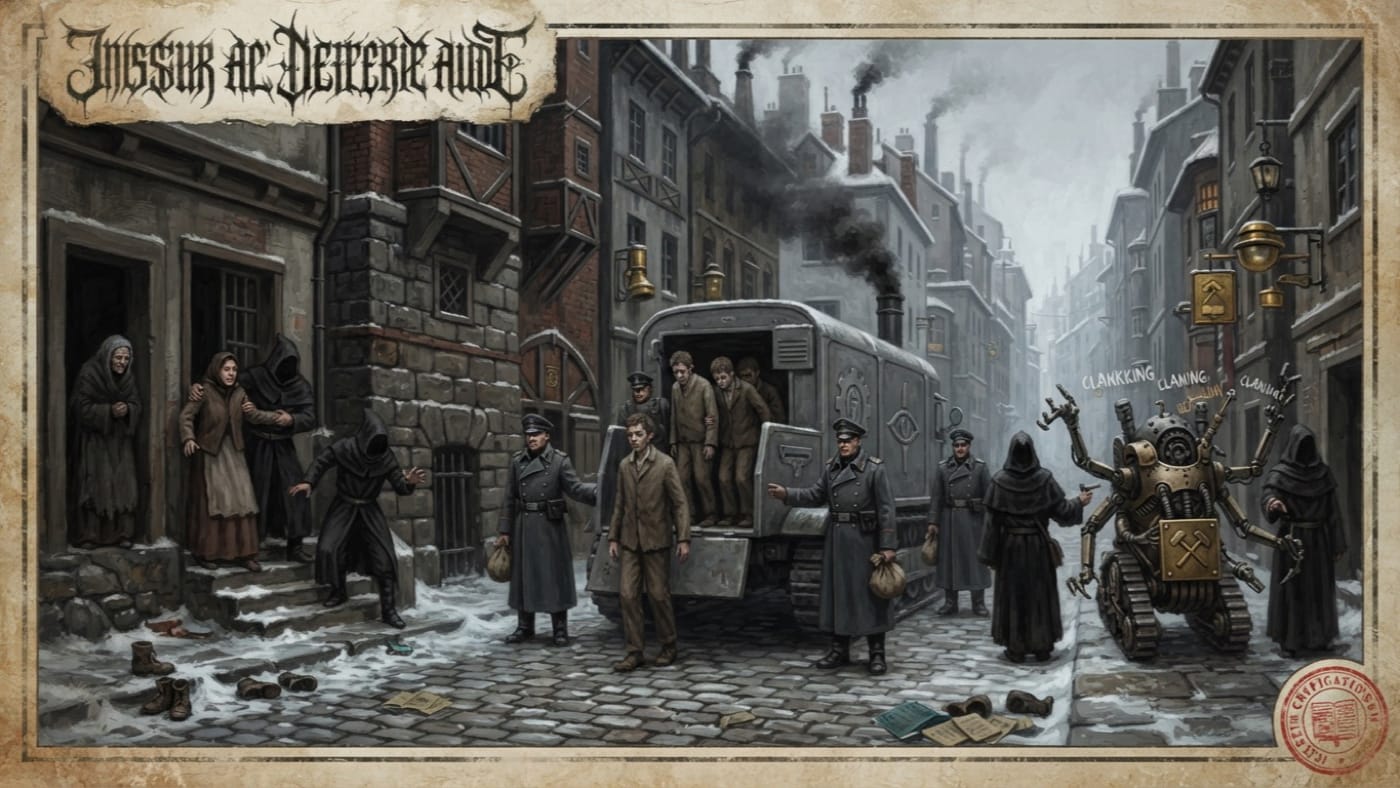
Innsbruck Audit
Fourteen years late, the Ledger declared victory
In A.S. 178, Innsbruck's auditors found three sons concealed for fourteen years. Conscription took the sons, the Index took the parents, and an iron choir took the midwife. The Ledger called its lateness a victory.
Codex Ref. VII.8.10-178
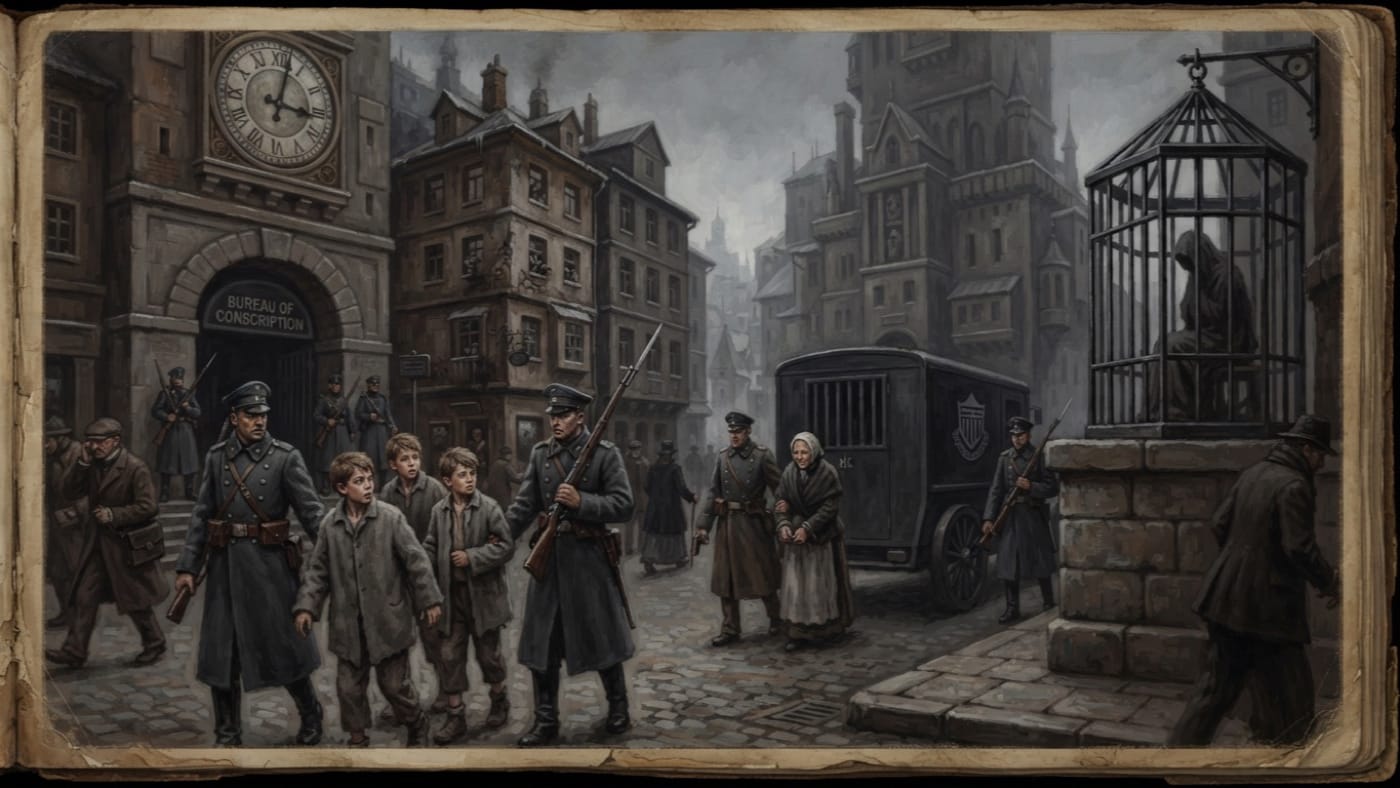
Innsbruck Audit of A.S. 178
Three recovered; fourteen years unaccounted
In A.S. 178, Purity found three sons concealed in Innsbruck for fourteen years. The sons were conscripted, the parents entered the Index, and the midwife died in an Iron Choir. The Bureau filed its lateness as vigilance.
Codex Ref. VII.8.10-178
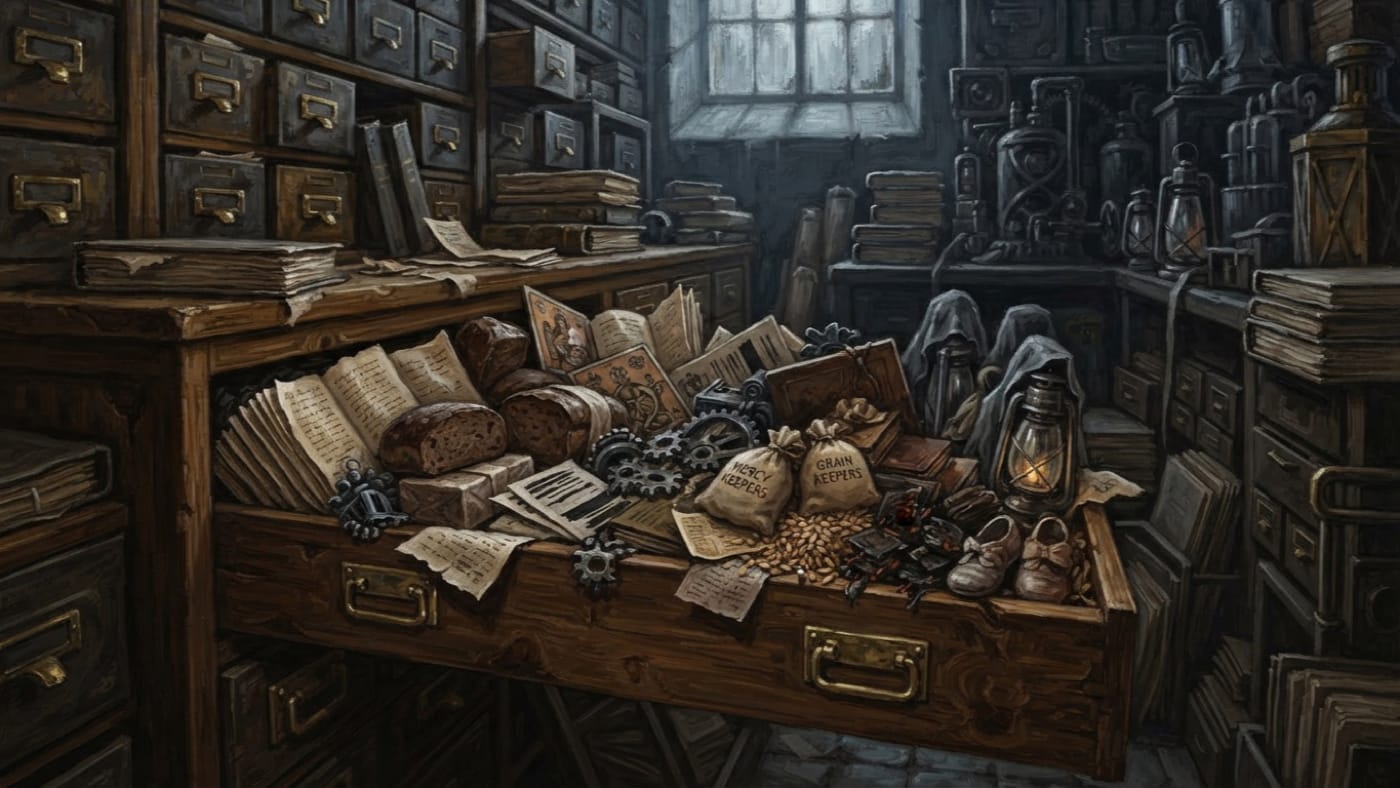
Known Heresies
Eight offences. One drawer.
Eight movements condemned under one jurisdiction: scripture without a gloss, stolen bread, unbelief, demonic accommodation, hidden grain, forbidden inquiry, unregistered children and unauthorized mercy. The drawer is full.
Codex Ref. XIII.1.38-001

Lantern "Mercy" Preacher (Rebel)
Eighth heresy, eighth rank, eighth because the Synod reserves that number for what it made, cannot unmake, and will not thank.
Eighth of eight proscribed heresies: the Licensed Consolators who meant what they said, and were immured for it.
Codex Ref. XI.3.01-001
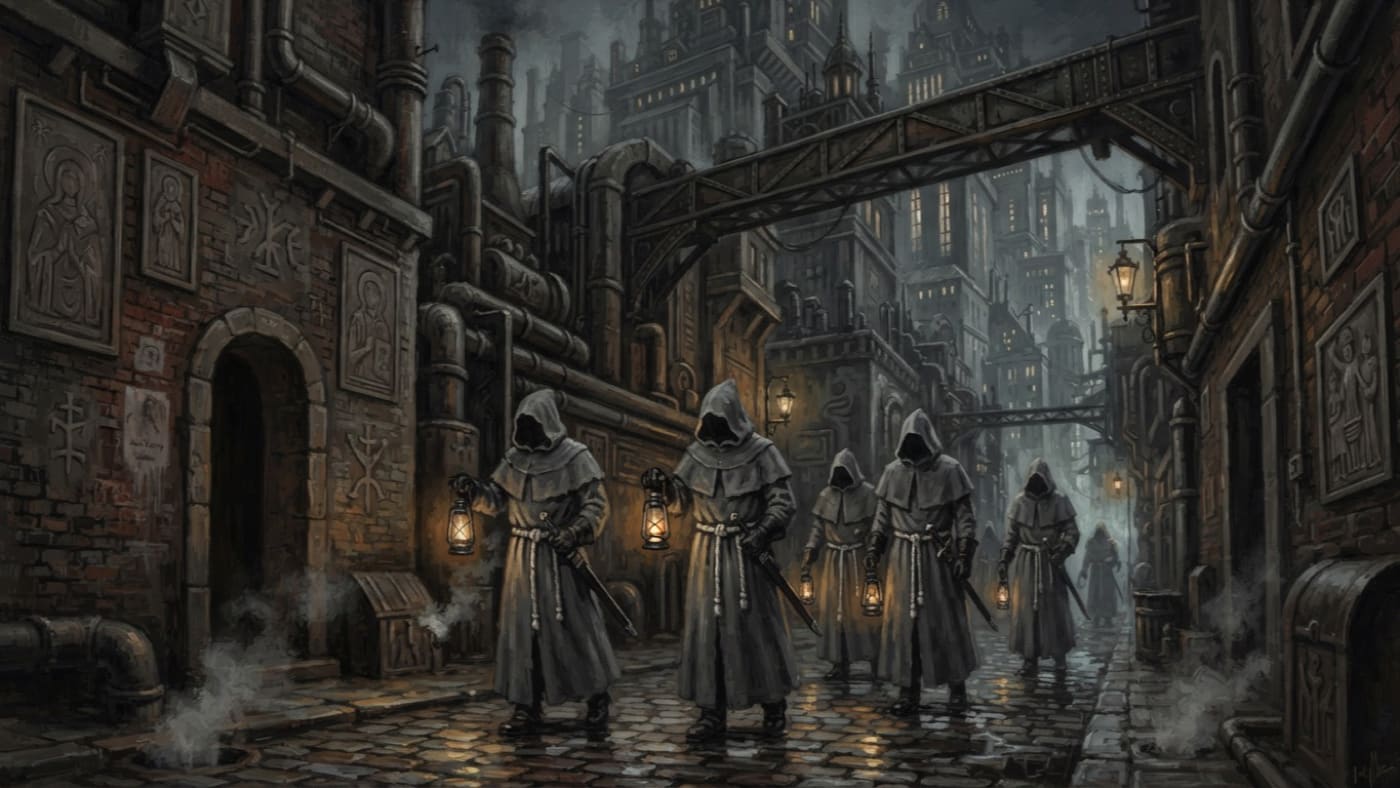
Lantern Brotherhood
Three lights make proof; the licence lasts until the clerk stops signing
I record the Lantern Brotherhood's five Circles: locally licensed night patrols whose lamps produce authority, whose Triangles produce testimony, and whose toleration ends when denial becomes useful.
Codex Ref. XII.25.01-002

Levy Assessor
The census names the household. The Assessor names the son.
The Levy Assessor compares sacred ledgers, declares a household's liability and stamps the selected wrist. The Bureau calls this collection. The household has other names.
Codex Ref. III.4.08-201
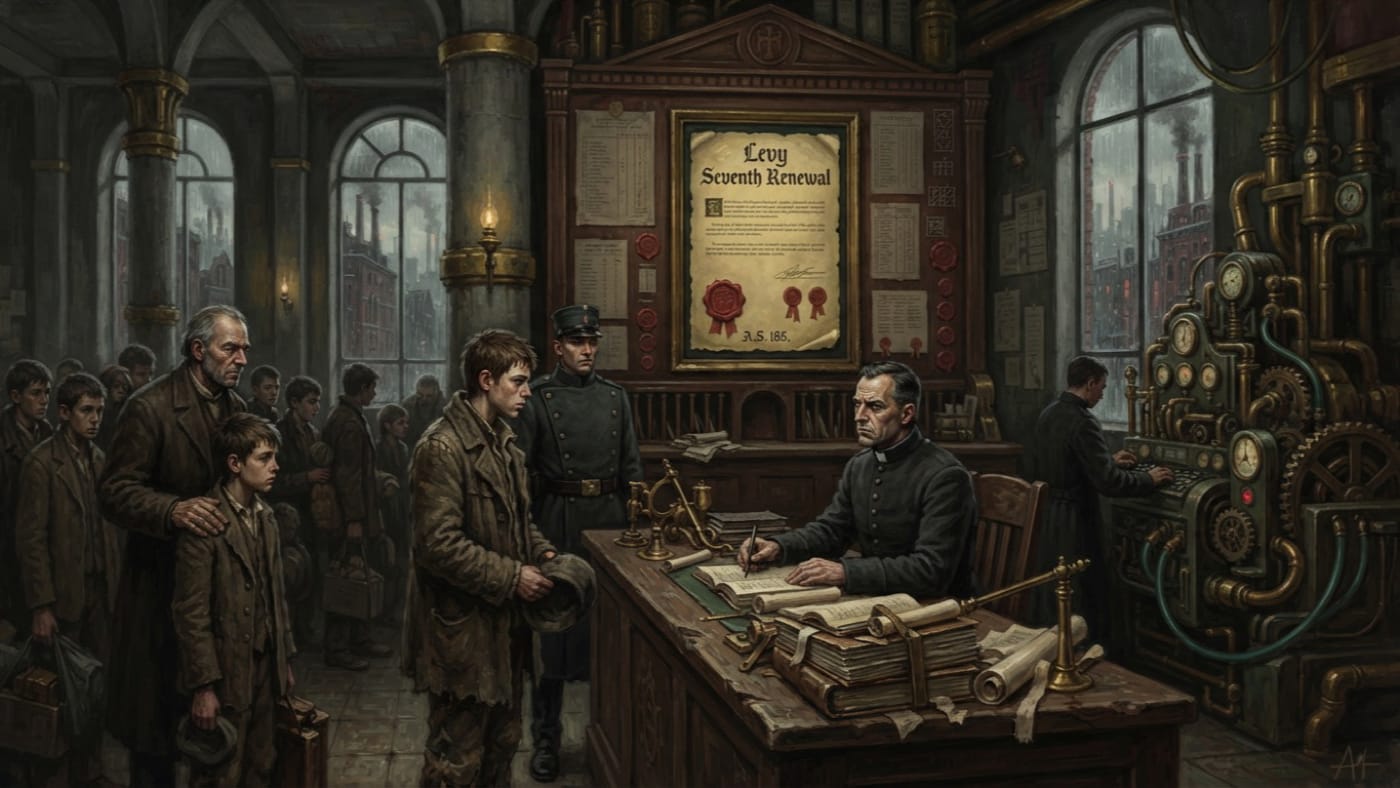
Levy Seventh Renewal
The charter is renewed. The fraction remains under wax.
In A.S. 185, the Church renewed the Bureau of Conscription's charter and revised levy quotas under a sealed Martial Edict. The year is public. The fraction, the provinces and the additional ratifying seals remain under wax.
Codex Ref. VII.8.10-185
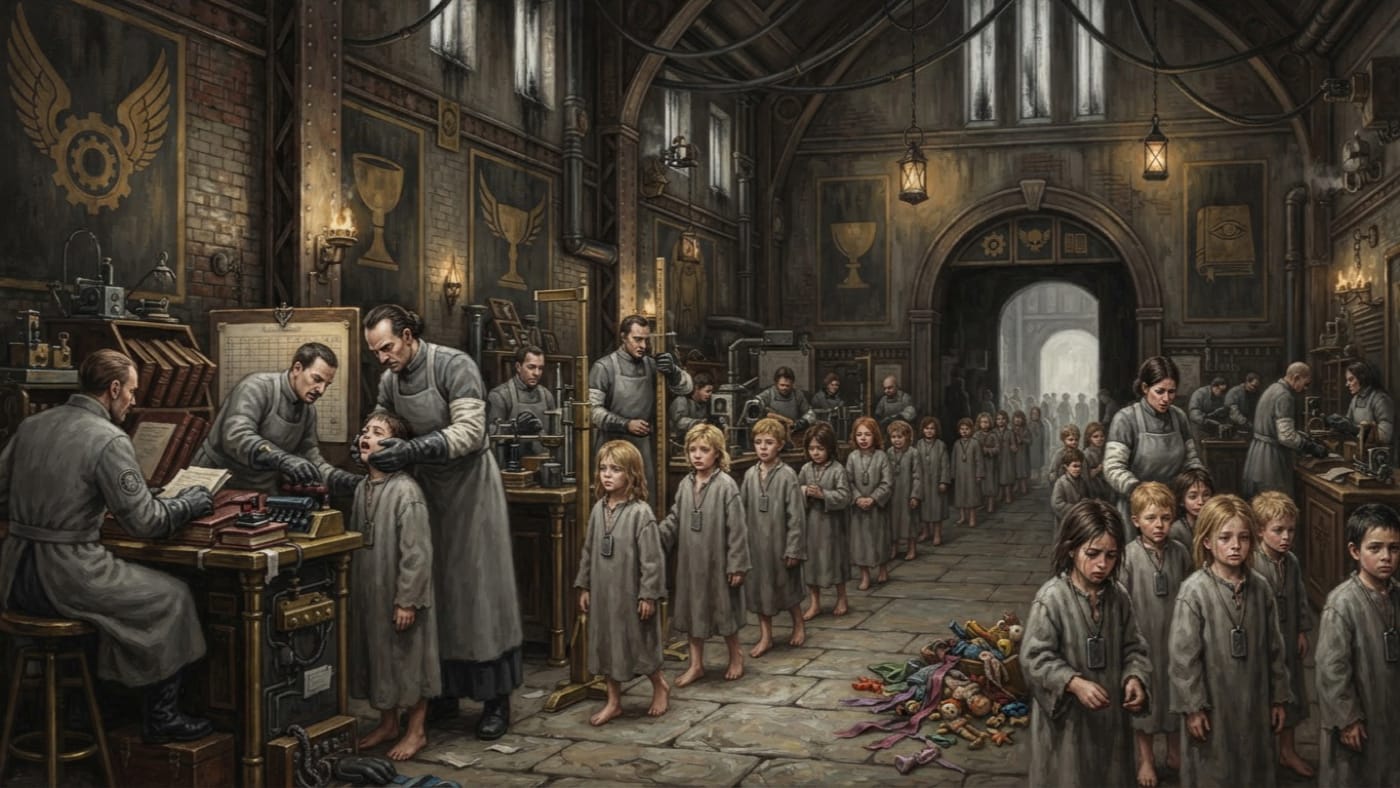
Mercy Orphanarii
A cot, a name, a future — all assigned
The Mercy Orphanarii feed, clothe and instruct the Synod's wards. They also replace family names, divide siblings and assign futures. A cot is provided; the child who entered it is administratively dissolved.
Codex Ref. VI.4.12-032
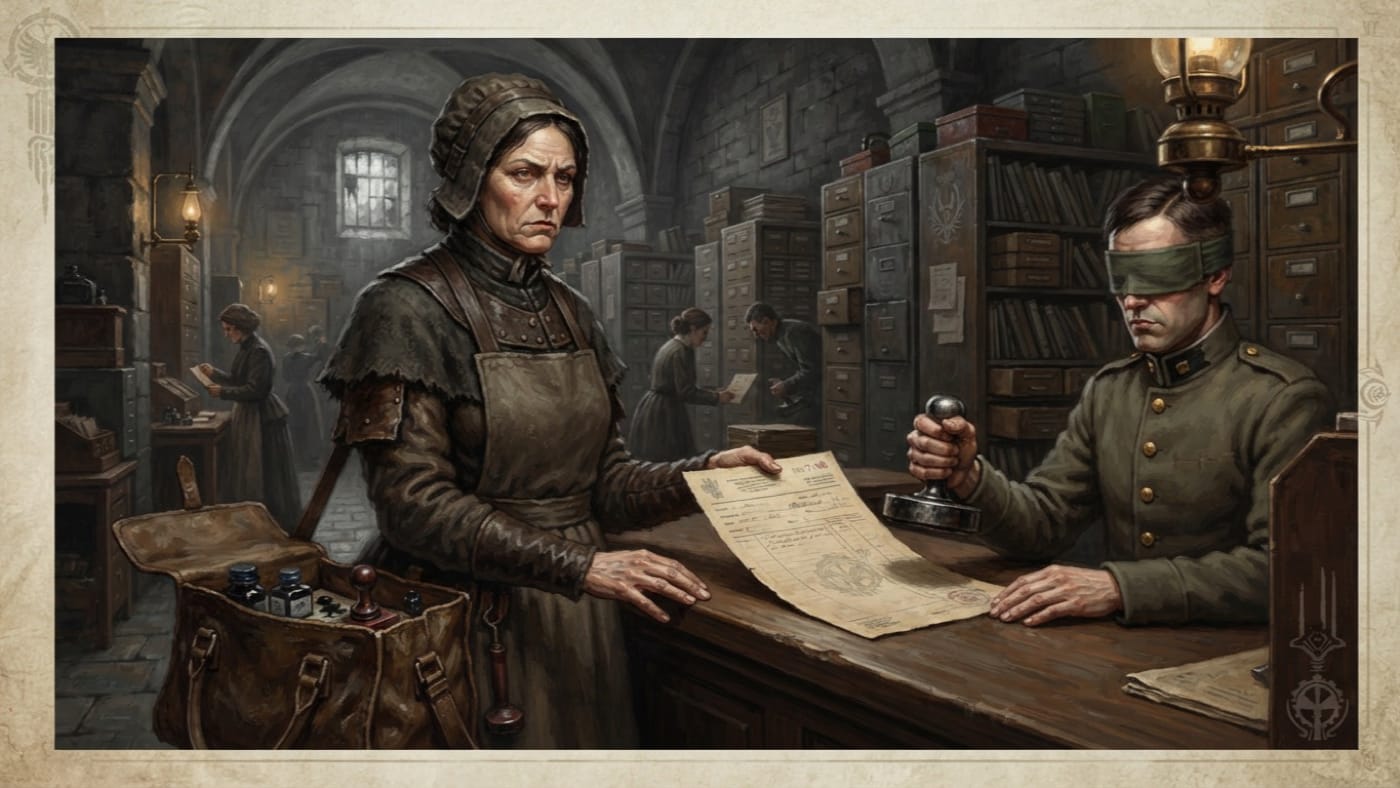
Midwives
She catches the child and inherits the clock
Midwives attend the birth and carry its liability to Records. This A.S. 201 survey follows notice, Form 7-NR, Registrar scrutiny and evasion through laws whose clocks still disagree.
Codex Ref. XII.9.04-002
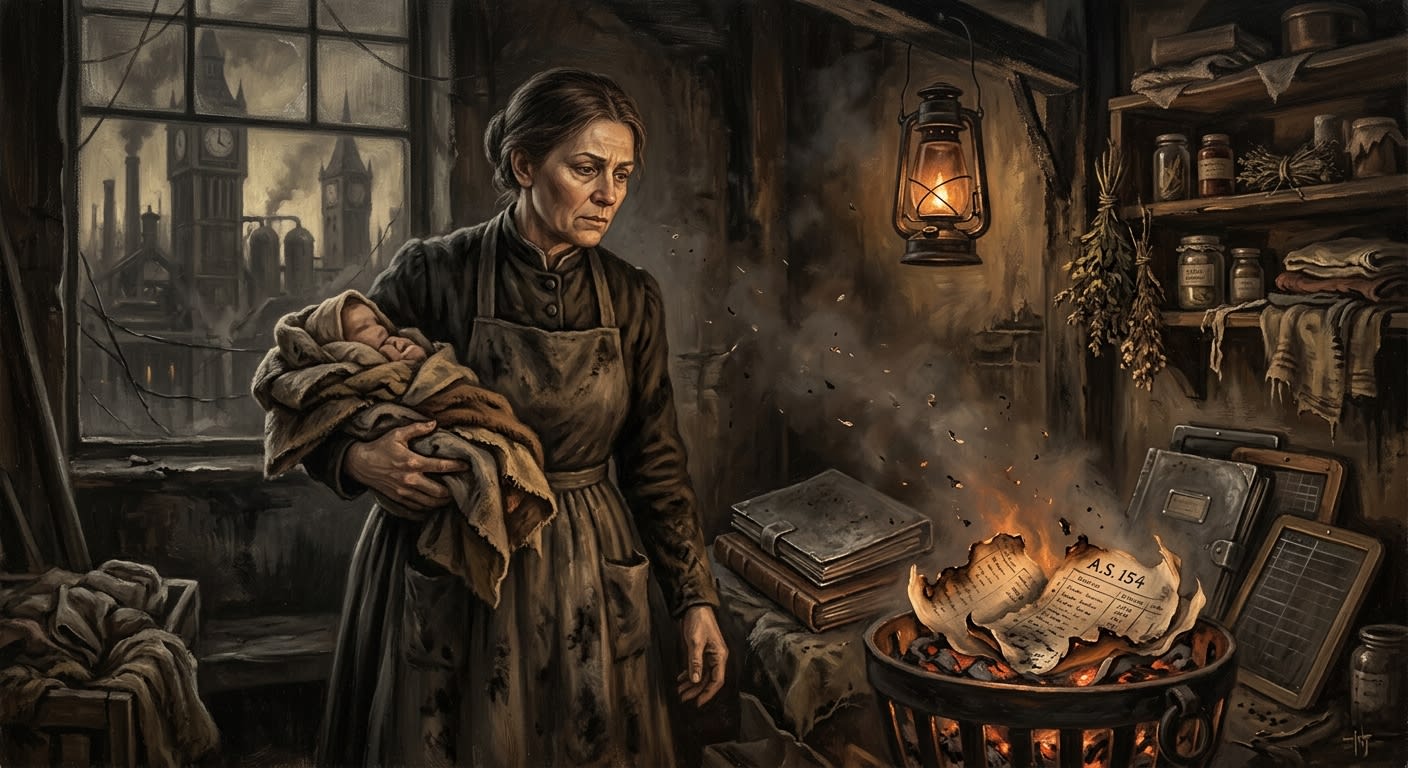
Mother Sava of the Ash Steps
Eleven shoes, one burnt register, and the arithmetic heresy of mercy
Mother Sava, proscribed midwife of the Ash Steps, burned an A.S. 154 parish registry, hid eleven infants from levy arithmetic, and became the Pale Kin's quiet patron of placement over possession.
Codex Ref. III.2.01-133
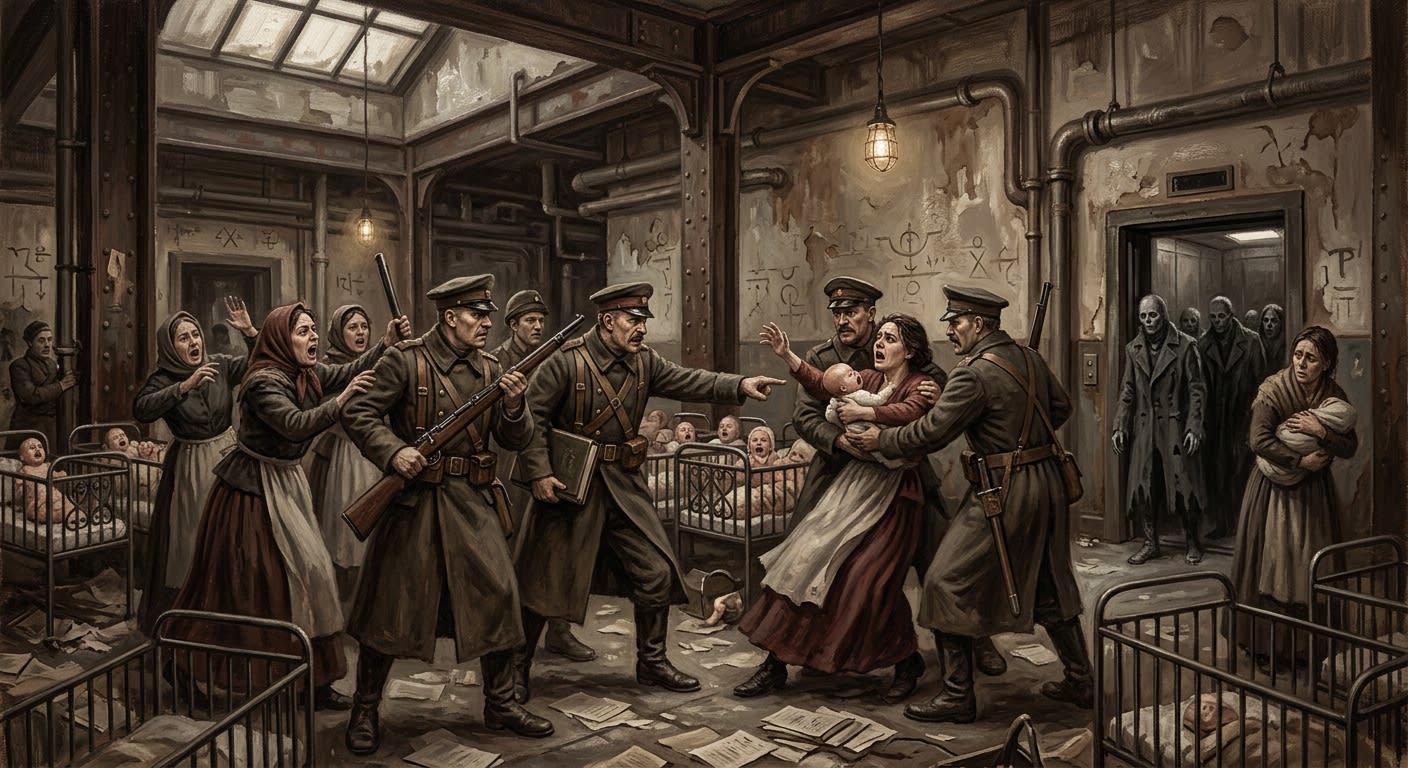
Nursery Levy Decrees
The law counted the cradle; the cradle learned to lie
A.S. 152 cradle-registration laws that cut infant filing to twelve and seventy-two hours, birthed armed registry teams, midwife resistance, and the Pale Kin trade.
Codex Ref. VII.8.10-054
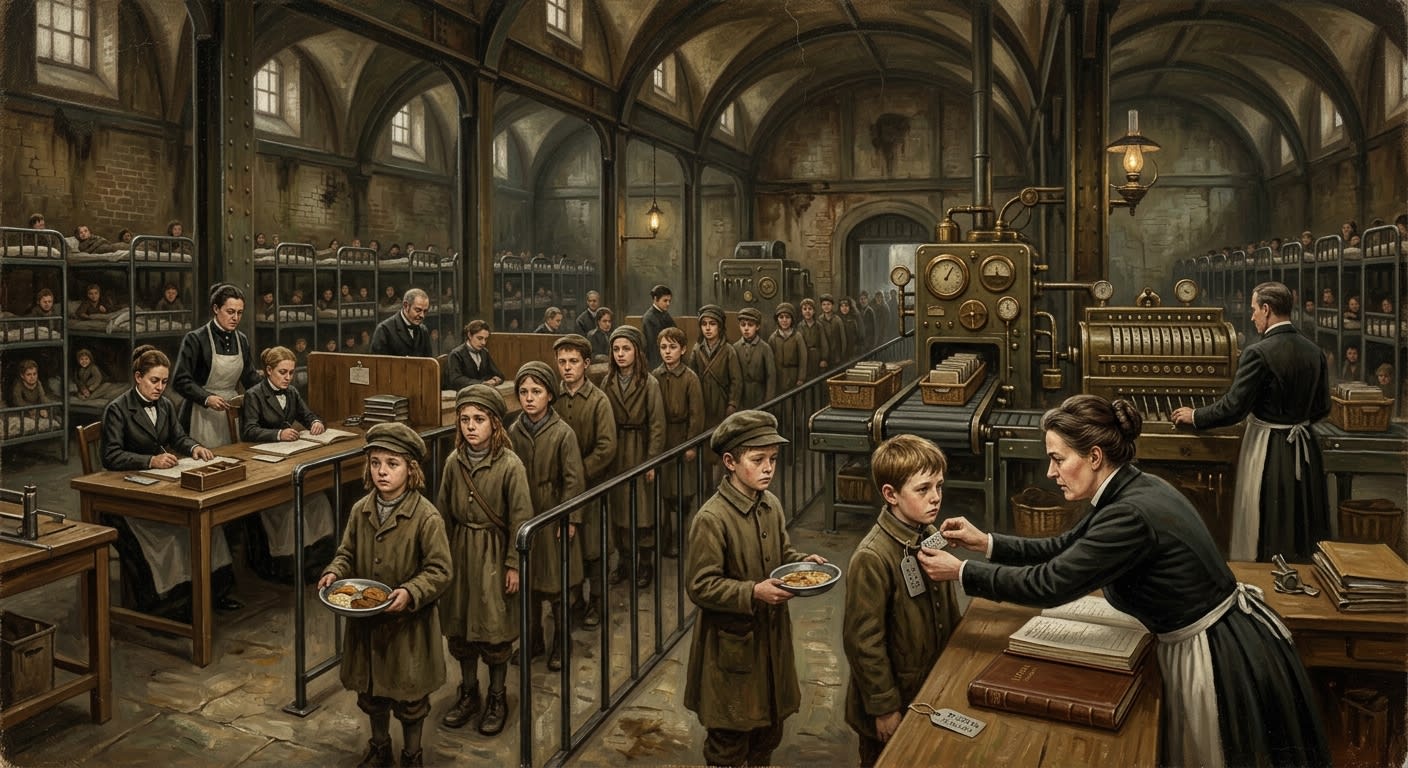
Orphanarii
Mercy with a cot, a tag-punch, and the legal courage to rename a child before breakfast
The Orphanarii are the Synod's state orphanage system: Mercy houses that wash, tag, rename, sort, feed, place, and sometimes erase children until grief becomes legible.
Codex Ref. VIII.2.12-134

Paper Death
The name dies; its owner queues for bread elsewhere
The Burnwright kills a name across ration, tithe and parish records so its owner may survive under another. Records calls it forgery; the survivor calls it breakfast.
Codex Ref. XI.1.02-004
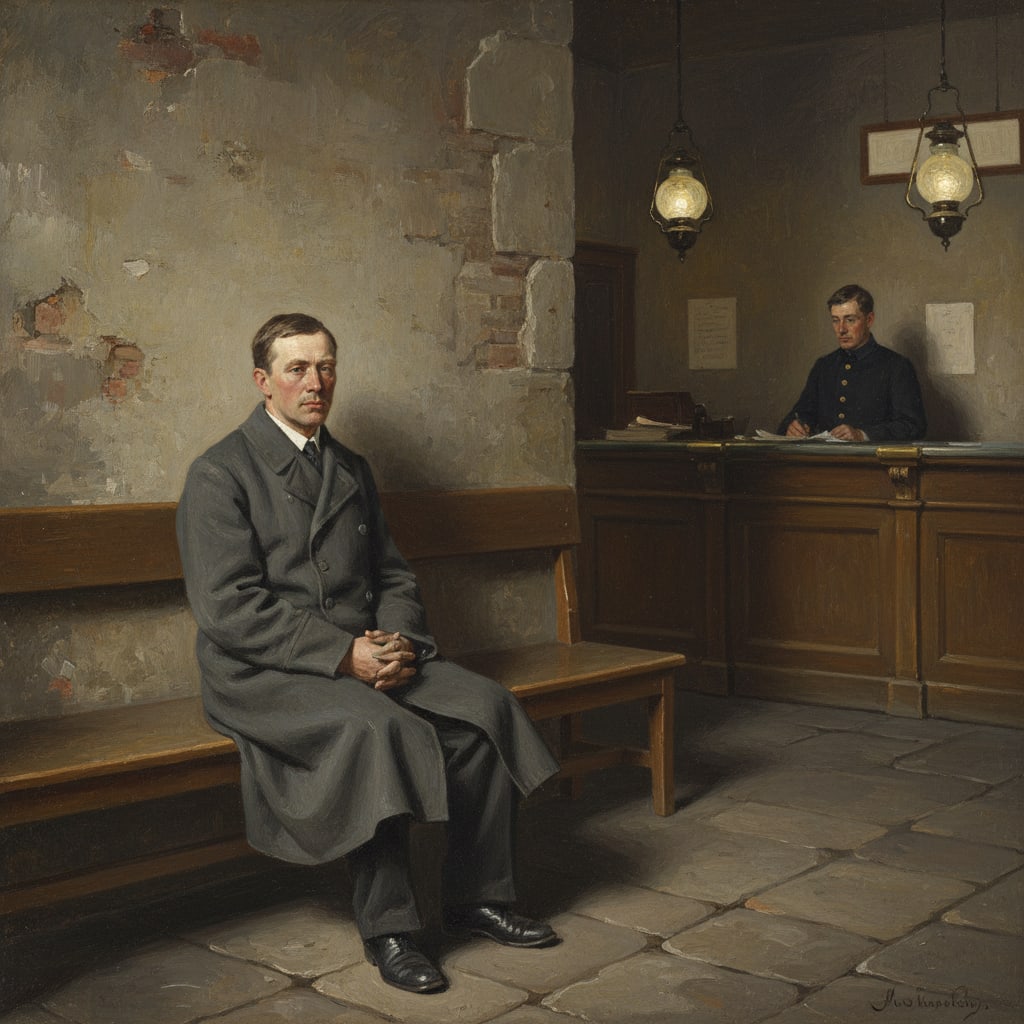
Silent Godless Cell-Organizer
The question that travels farther than any sermon the Bureau has ever commissioned
The Silent Godless are the enemy the Bureau cannot silence — silence is their element. A survey of their method, their founder, and organised emptiness: assembled from confiscated documents, nine days of confession, and an archive the Bureau requested be burned.
Codex Ref. XI.4.01-001
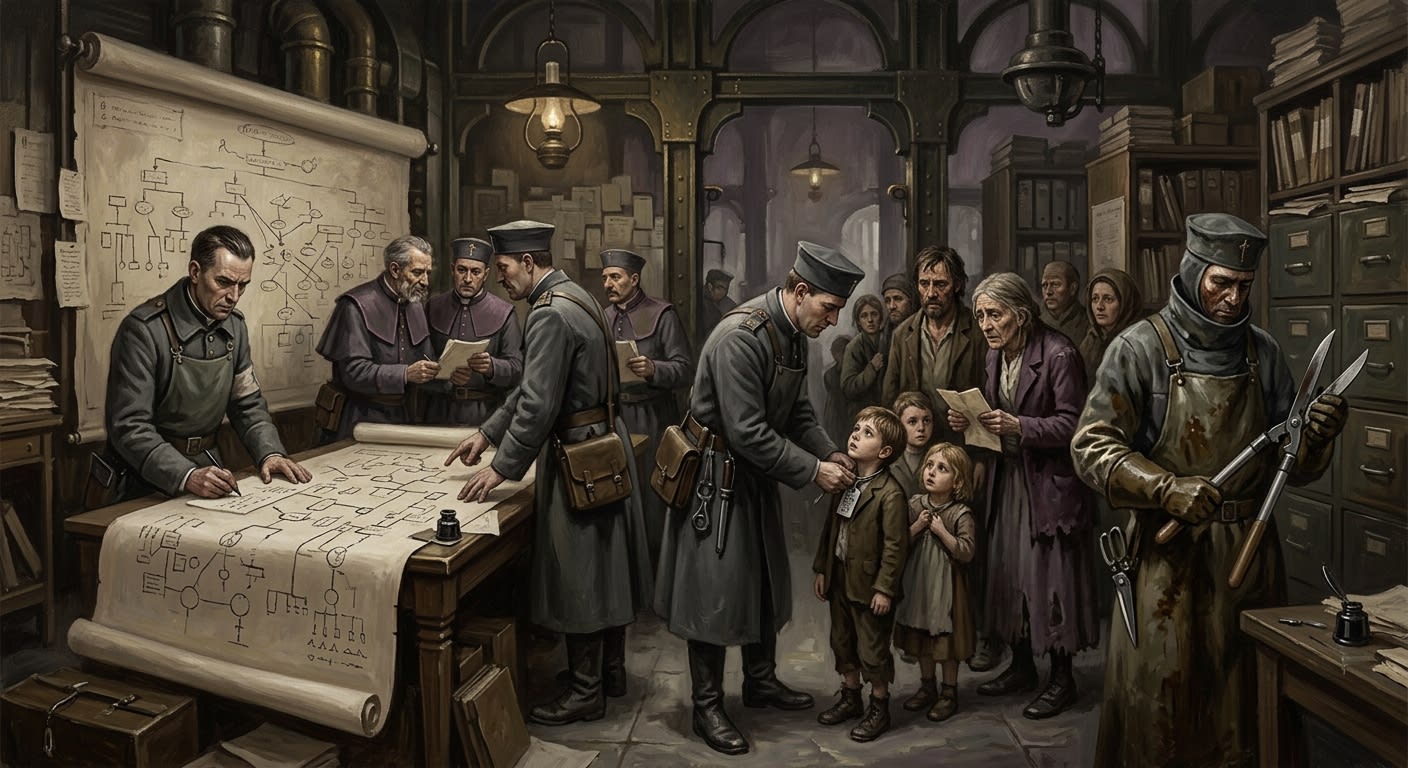
The Order of the Root
Where family trees are pruned with forms, cuffs, and holy shears
The Order of the Root is the Synod's hereditary-contamination apparatus: kinship charts, child tags, bloodline review, and mercy sharpened into pruning shears.
Codex Ref. XI.1.05-001

The Rhine Corridor
Damp procedure, counted backward from every bridge
The Rhine Corridor is the Synod's damp procedure: a Zone 2 logistics artery, mortuary road, ferry court, heresy school, and billable proof that movement can be made afraid.
Codex Ref. II.2.08-202

Void
The child survives when the gap is too dull to notice
Ash Registrar doctrine naming the document-thick gap between a living hidden child and the dead, misfiled, or duplicated child the Ledger believes in.
Codex Ref. XI.4.01-005
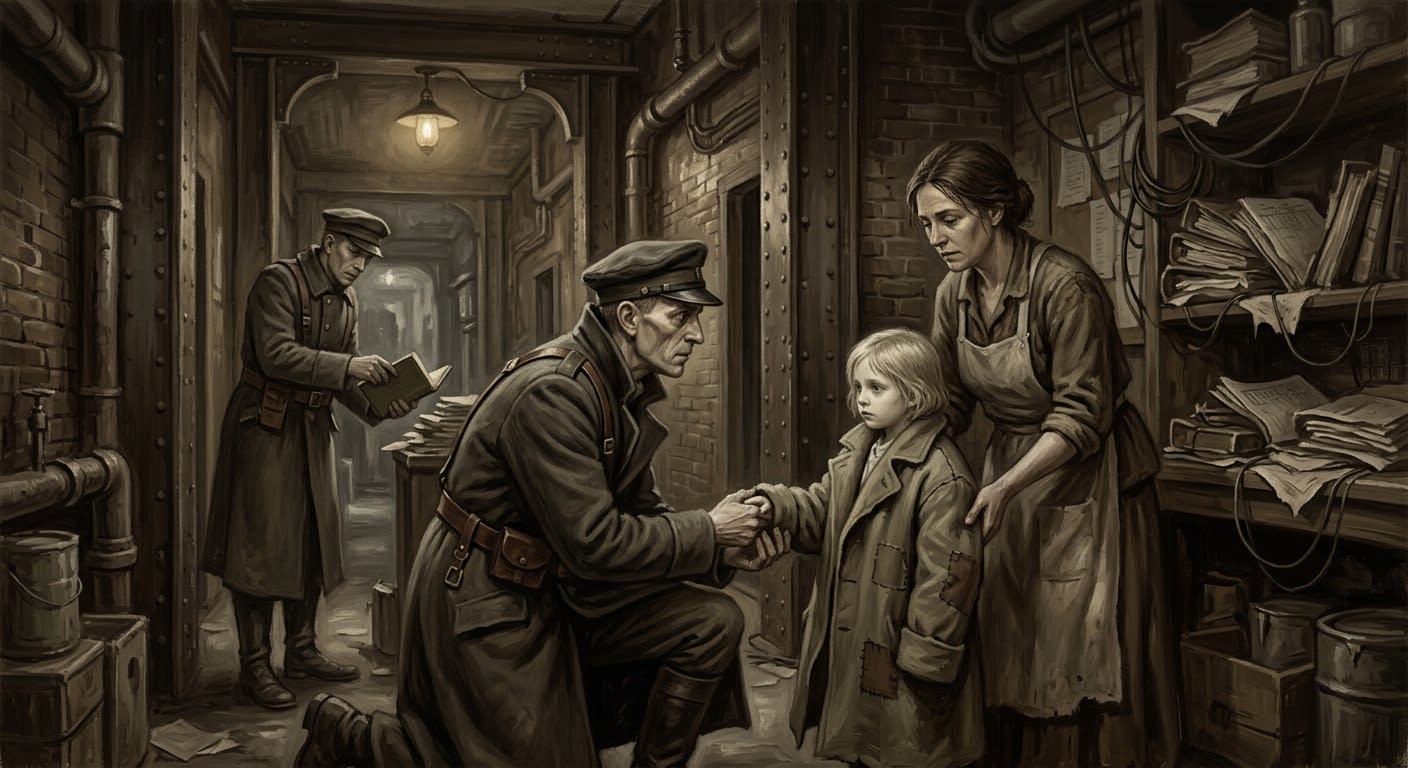
Ward-Builders
Another table, no blood-name, and the mercy of useful strangers
Pale Kin faction placing hidden children with tested strangers rather than blood, building survival from shared guilt, chores, false names, and audit-resistant mess.
Codex Ref. XI.4.01-003