
#On the House That Refuses to Be a House
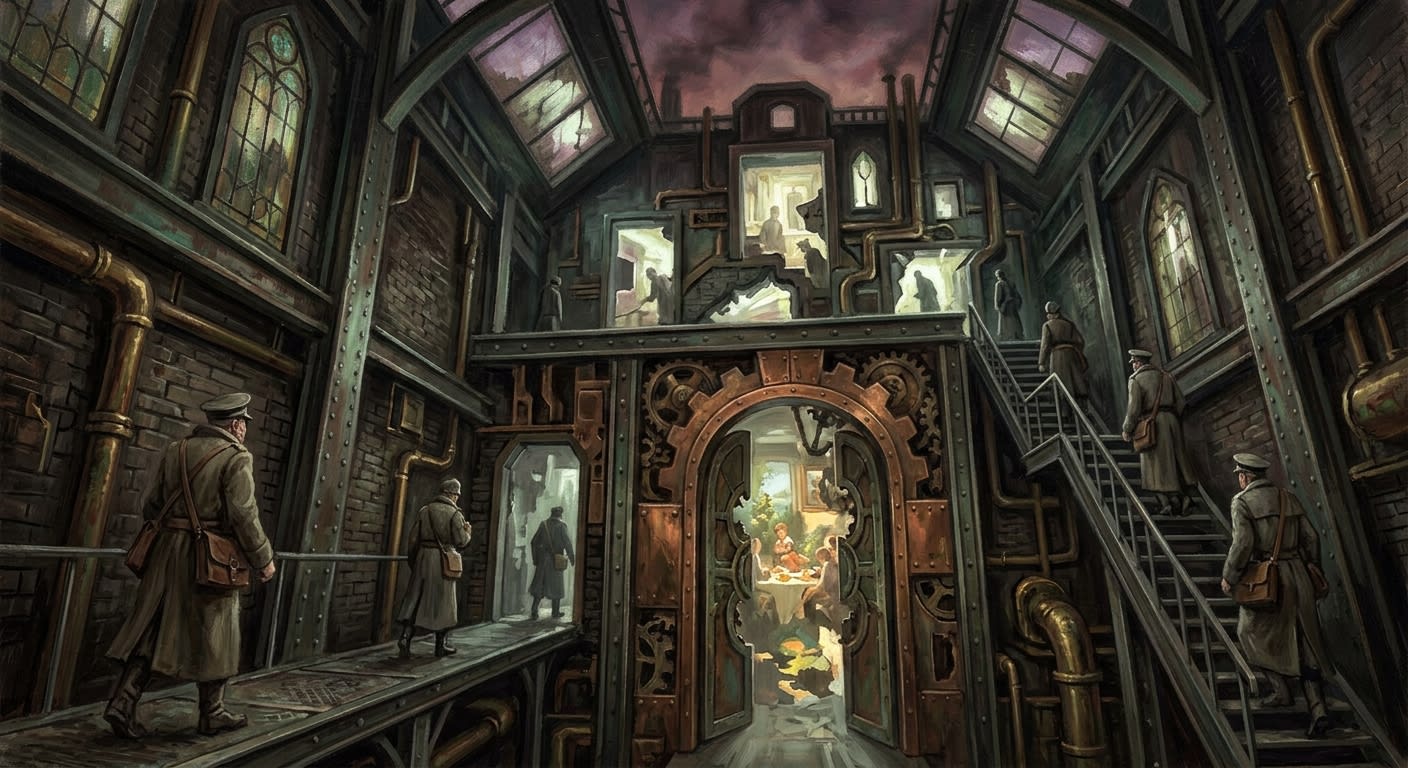
The Palace of Echoes is Morwen’s seat in the Hollow Vale, if seat may be used for a thing that refuses floor, wall, threshold, distance, and the vulgar consolations of architecture. Public primers call it a fortress. Field reports call it a labyrinth. The Bureau of Doctrine calls it an ontological enemy installation. I call it Envy learning masonry from stolen memory.
It stands in the innermost Hollow Vale, among hollow trees and mirror-lakes that do not return the gazer’s true face. The land around it has already been emptied of confidence. Forests ring when tapped. Streams offer better reflections. Stones echo in voices they never possessed. By the time one reaches the Palace, if one reaches it, the first lie has long since entered: somewhere ahead is a chamber in which the correct self is waiting to be claimed.
This is how Morwen builds. She does not raise towers from stone. She gathers the discarded hunger by which a man wishes to be other than himself, presses it into passages, hangs it with faces, and lets the visitor supply the mortar.
No approved map of the Palace exists. This is not because the Bureau has failed to acquire maps. We have acquired dozens. They disagree in every room and match in every danger. Corridors fork without diverging. Staircases return the climber to his childhood bed. Doors open onto memories belonging to someone else, then punish the trespasser for recognising the furniture. Windows show the person looking through them as he would have been had cowardice, kindness, poverty, ugliness, appetite, birth order, military assignment, and the Creator’s own poor taste arranged themselves more flatteringly.
#On Its Raising in the Vale
The Lore Book records that Morwen first seeped into Reality at the Sundering as reflection rather than form: lake-silver, polished buckle, a king’s seal turned back against its hand, a prophet’s voice answering before the prophet had spoken. Whole villages woke in A.S. 45 and spoke in borrowed tones. By A.S. 68, when Doctrine finally ratified her as the seventh Sin-General under sealed memorandum, the Hollow Vale had already learned her grammar.
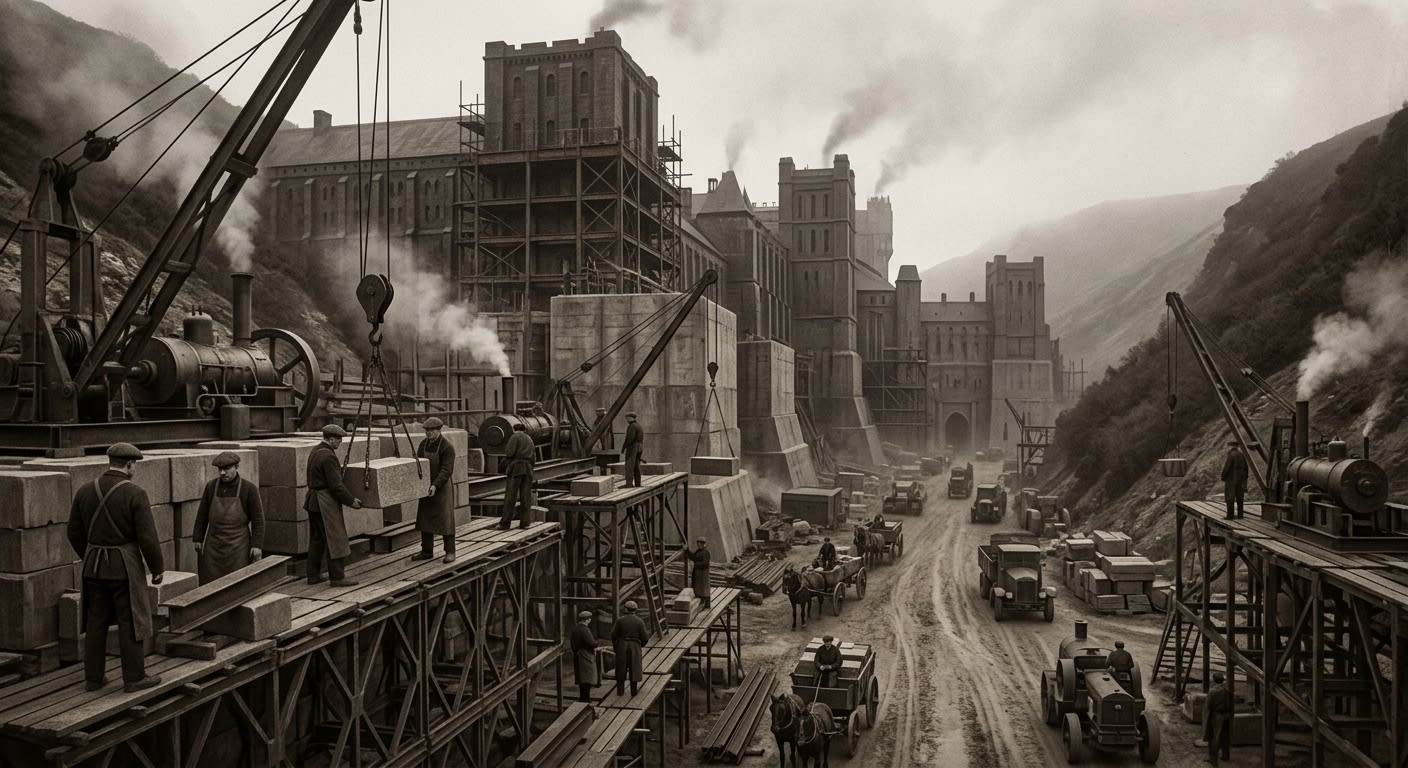
The Palace rose after the Vale became sufficiently hollow to support it. That sentence is ugly because the fact is ugly. Ordinary foundations require weight-bearing earth. The Palace required a region where truth had been scooped out and imitation had hardened in its place. The first intelligence copy, recovered by a dying scout whose name was later rejected by his own birth parish, described “a house made from returns.” He was thought fevered. Fevered men often enjoy the Bureau’s first contact with accuracy.
The Palace’s earliest stable description appears in a Purity deposition taken after the A.S. 73 survey disaster. A corridor “lined with unoccupied faces.” A refectory “set for every meal I had envied.” A chapel “where my prayer came back improved.” A door “which opened only when I lied about wanting to leave.” The deposition was sealed, copied, misfiled, retrieved, disputed, and finally used for officer training, which is the natural pilgrimage of truth through bureaucracy.
Early field catechisms described the Palace of Echoes as Morwen’s “capital fortress.”
Corrected. A capital governs territory. A fortress resists assault. The Palace stores selves, manufactures likeness, rehearses theft, and teaches the Hollow Vale how to envy with rooms. Military vocabulary flatters it by making it sound conquerable.
The Palace did not rise in a single event. It accumulated. Every stolen voice added an arch. Every abandoned name added a lintel. Every saint Morwen counterfeited contributed a chapel-niche. Every soldier who entered a mirror-lake wishing to emerge stronger supplied another polished step. Morwen collects identity as Velmora collects debt, but debt keeps ledgers and identity keeps wounds. A coin can be counted without hearing it plead.
#On Its Rooms and Their Malice
The Palace is reported in recurring districts, though “district” may be too generous for spaces that rearrange according to appetite. The Hall of First Corrections appears in seven accounts. There the visitor sees the first moment he envied another life, preserved with hateful tenderness: the sibling praised, the officer promoted, the beautiful cousin, the dead hero, the rival spared shame. The hall does not accuse. Accusation would permit resistance. It merely replays the scene with one alteration: the visitor performs better.
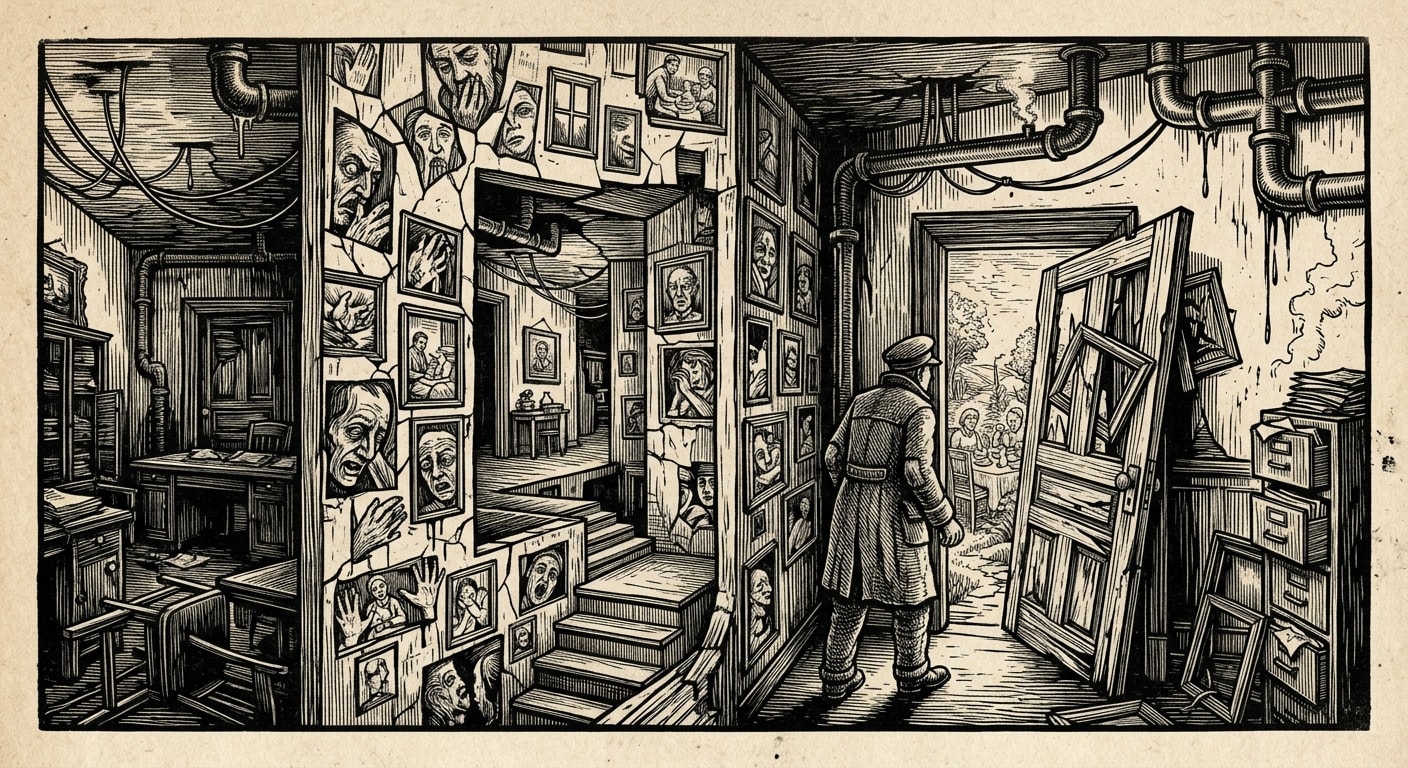
Beyond it lies the Gallery of Better Faces. The walls carry portraits that move a fraction behind the eye. One face has the visitor’s bone but another man’s courage. Another carries his mouth without his stammer. Another bears the scar he wishes he had earned. Soldiers who survive this gallery often mutilate themselves later, trying to restore a defect that proves continuity. The Bureau of Mercy calls this post-reflective injury. Soldiers call it checking.
The Chapel of Borrowed Prayer appears in the Mimetic Theft files. Men who entered it found themselves praying to a copy of their own prayer, unable to decide which voice began first. A garrison detachment self-immolated after concluding that every response it made had already been answered from the altar. The Bureau of Rites argues this proves the Palace cannot generate grace. Doctrine argues the opposite: the Palace does not need grace if it can counterfeit the petitioner’s need for it.
HOLLOW VALE SURVIVOR STATEMENT — FILE ENVY-44 Question: “What did the chapel show you?” Answer: “The prayer I would have said if I were worth hearing.” Question: “Did you repeat it?” Answer: █████████████████████████████████ Recorder note: subject’s mouth continued moving after sedation; voice not subject’s own.
The Archive of Unworn Lives is less theatrical and worse. Bureau fragments describe glass cases, folio shelves, hanging reliquaries, and pools holding selves in abeyance: a baker’s patience, a captain’s command voice, a widow’s grief, a saint’s public expression, a child’s unspoiled laugh, a coward’s imagined bravery, all separated from their owners and made available. Morwen does not keep these as trophies alone. She uses them as stock. A Face-Thief may draw a gesture from one shelf, a memory from another, a scar’s emotional meaning from a third, until the finished copy can stand before a mother and make her doubt the son she bore.
#On Doors to Other Selves
The Palace is most infamous for its doors. In ordinary buildings a door separates one room from another. In the Palace a door separates the visitor from the self he has not yet surrendered.
Some doors open onto stolen dreams. These are the shallow gates: a childhood in which the father stayed; a regiment in which the shell missed; a lover who recognised devotion before death made recognition useless. Some open onto other people’s memories, complete enough to be worn for a few minutes and poisonous enough to remain after removal. A scout returned from one such chamber with the memory of bearing twins in a village she had never seen. She could name the infants. Records found both children in a pre-Sundering parish book, dead for one hundred and forty years.
Other doors are military. A Mirror-Stalker studies through them. A Beloved is fitted behind them. A Worn is taught which sorrow to speak in which voice. The Palace is not merely Morwen’s residence; it is her manufactory of almosts. Almost son. Almost captain. Almost saint. Almost you, improved past the point where your continued existence seems rude.
The door’s temptation is precise because Envy never offers the impossible first. It offers the plausible correction. A straighter spine. A steadier hand. A name spoken with admiration instead of tolerance. The clerk who hates his meekness receives authority. The plain woman receives beauty. The exhausted sentry receives the courage of the dead man beside him. The gift works. The sin would be crude if it failed.
The cost arrives as quiet vacancy. A phrase no longer feels native. A scar’s story belongs to another mouth. A mother’s face becomes familiar rather than beloved. The borrowed self begins borrowing again. At the end stands the Hollow One: capacity without occupant, appetite without owner, a person-shaped absence waiting for the next better life.
#On the Choral Maw and the Stolen Saints
At the Palace’s lower heart, if the term heart may be granted to a structure organised around want, the reports place the Choral Maw: an organ of bone, throat, bell cartilage, windpipe brass, and stolen hymn-memory. The Lore Book names it among Morwen’s engines. Irongate prisoners call it the instrument that sings you back wrongly. The Maw’s thousand throats are said to wail in voices lifted from the world: mothers, officers, saints, confessors, deserters, children, enemies, and the small private voice in which a man speaks to himself when he thinks no office is listening.
The Maw does not deafen. It recognises. That is crueller. A soldier may endure a scream. He cannot easily endure his dead wife telling him that the copy beside her loves her better.
Stolen Saints are prepared in chapels adjacent to the Maw. This claim comes from three independent accounts and one relic auditor whose tongue blackened before he finished signing. Morwen does not create sanctity. She counterfeits the recognisable posture of sanctity: the hand raised in blessing, the wound displayed correctly, the mercy cadence, the little pause before forgiveness. A false blessing that feels like the blessing one needed is enough to damn the lonely. Doctrine has issued warnings against all unauthorised saintly appearances in the Hollow Vale. This was brave of Doctrine, since authorised saintly appearances are rare enough that the warning reads like envy dressed as prudence.
A.S. 181 Rites commentary held that Morwen could counterfeit faces and voices, but not blessings.
Corrected after Chapel of Borrowed Prayer testimony and three false-healing events near the Mirror Waste. Morwen cannot grant grace. She can imitate the wound in which a person expected grace to arrive. This is sufficient for most tactical purposes and several theological nightmares.
#On Synodal Attempts to Know It
The Synod has tried to survey, infiltrate, bless, burn, shell, map, name, and ignore the Palace. Of these, ignoring it produced the fewest casualties and the worst intelligence.
Engineering’s A.S. 73 survey produced contradictory plans. War’s later ranging tables could not hold distance: a shell fired at a tower struck a lake behind the battery; a second fired at the lake burst in a memory-room described by a prisoner six months before the bombardment; a third returned unfired, resting clean in its own crate, with the gun crew’s names scratched into the casing in their mothers’ hands. War marked the palace as “range-unstable.” A child could have said this for less powder.
Purity attempted human infiltration. The agents were chosen for self-certainty, lack of vanity, disciplined prayer, ugly personal histories, and poor imaginations. Two returned. One insisted the mission had succeeded and delivered a map showing the Palace as Bastion-Irongate with all labels reversed. The other refused to speak until shown a mirror, then laughed for nine minutes under Mirror Discipline guard and asked why we had sent the copy home first.
Records attempted documentary containment through the Ledgers of Self, extending Irongate identity practice into Hollow Vale reconnaissance. Each scout carried bone-lines, gait notes, childhood particulars, and dead copies sealed in Strasbourg. The Palace learned to answer the bone-lines. Not always. Not perfectly. Enough.
#On Its Present Condition
As of A.S. 201, the Palace remains active, hostile, unmapped, and central to Morwen’s war against the Danube approaches. Its pressure is felt at the Iron Gates Gorge, in brass gauges, river surfaces, polished fittings, disputed Ledgers, returned dead, and the disciplined ugliness by which the garrison keeps its metal dull. It does not need to move west. Every man who envies his replacement carries a small embassy of the Palace under his skin.
The Hollow Vale around it continues to alter. Mirror-lakes spread after rain. Hollow trees appear nearer to the Mirror Waste than prior maps permit. Patrols report doors standing alone in fields, opening onto barracks rooms that smell of home. One door, observed in A.S. 200, opened onto a Strasbourg office in which I was writing this entry. The observer described my prose as “more merciful than expected,” proving the vision false and possibly malicious.
The Palace cannot be stormed by courage, bought by coin, lulled by song, shamed by doctrine, or corrected by a better map. It can only be resisted in the small humiliating acts by which a person remains fastened to himself: the ugly scar kept ugly, the weak memory owned, the plain face counted and left alone, the borrowed glory refused before it learns one’s name.
The standing field rule is plain. If a door in the Hollow Vale opens onto the life you deserved, close it with both hands. If it opens from the other side, do not answer.