
#On the Decree That Overruled Anatomy
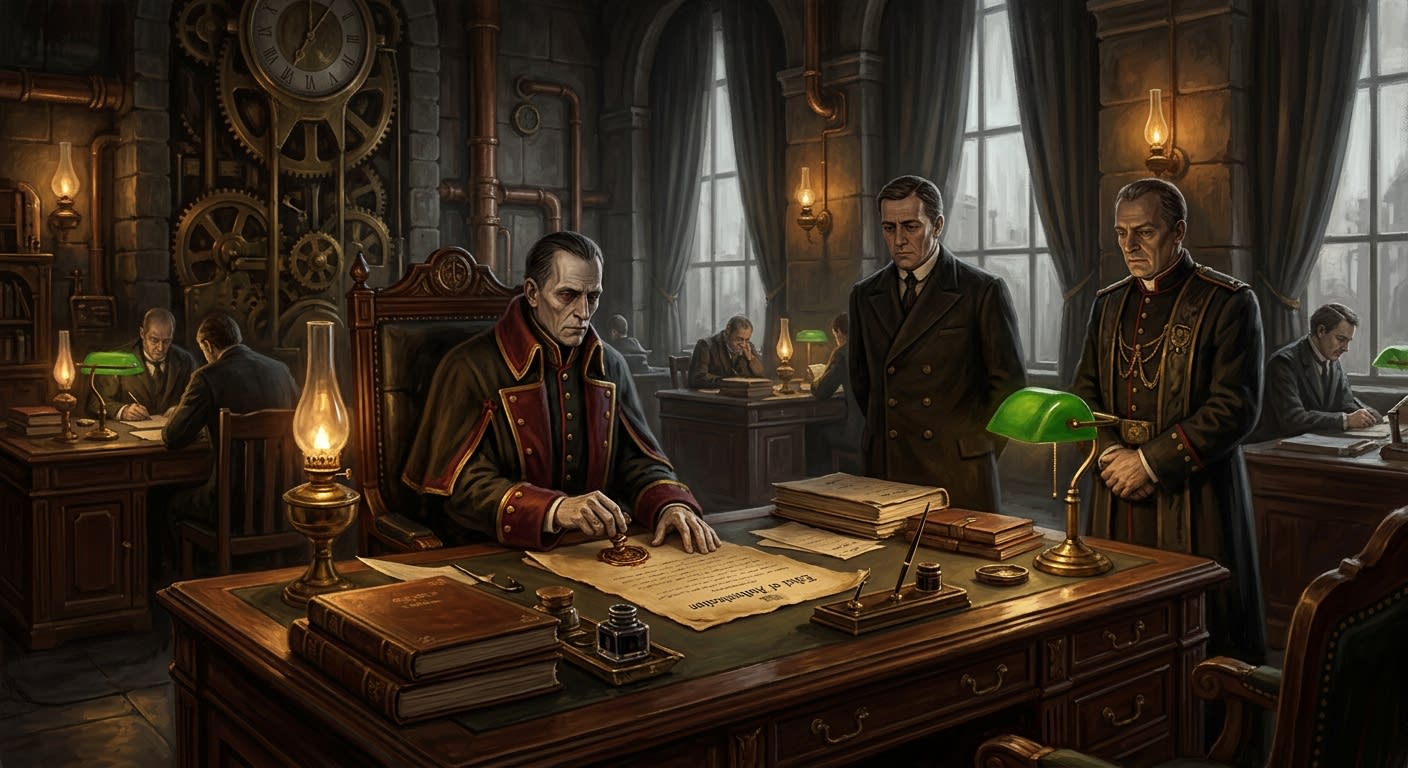
The Edict of Authentication was sealed at the Fourteenth Doctrinal Congress in A.S. 147, after seven years of saint-bones multiplying faster than sense and thirteen years before the last public notices pretended the matter had closed. Its central sentence remains among the finest governmental blasphemies ever polished into orthodoxy: all femurs are authentic if notarized.
There are weaker nations that would have flinched. They would have confessed error, suppressed duplicate relics, punished useful clerks, disappointed wealthy shrines, and surrendered the field to anatomists, that miserable priesthood of bone counters and table-makers. The Synod chose the grander road. It enlarged the skeleton until truth stopped complaining.
The Edict was not born from theory. No theologian sitting in Strasbourg woke before Prime and declared, in a flash of sacred administrative magnificence, that bones should obey paperwork. The Edict was dragged into law by riots, duplicate processions, glowing reliquaries, dead bishops, and the humiliating fact that the Bureau of Relics had authenticated too many miracles to retract without setting half Europe on fire.
#On the Wound Before the Seal
The Reliquary Schisms began when the post-war harvest of hidden sanctity exceeded the body's vulgar limits. Cellar Saints produced bones long hidden from Rationalist fire. Parish vaults opened. Bastion reliquaries demanded ward-stock. Pilgrim offices needed fresh routes. Every province discovered, with touching simultaneity, that its local martyr had left behind an unusually generous inventory.
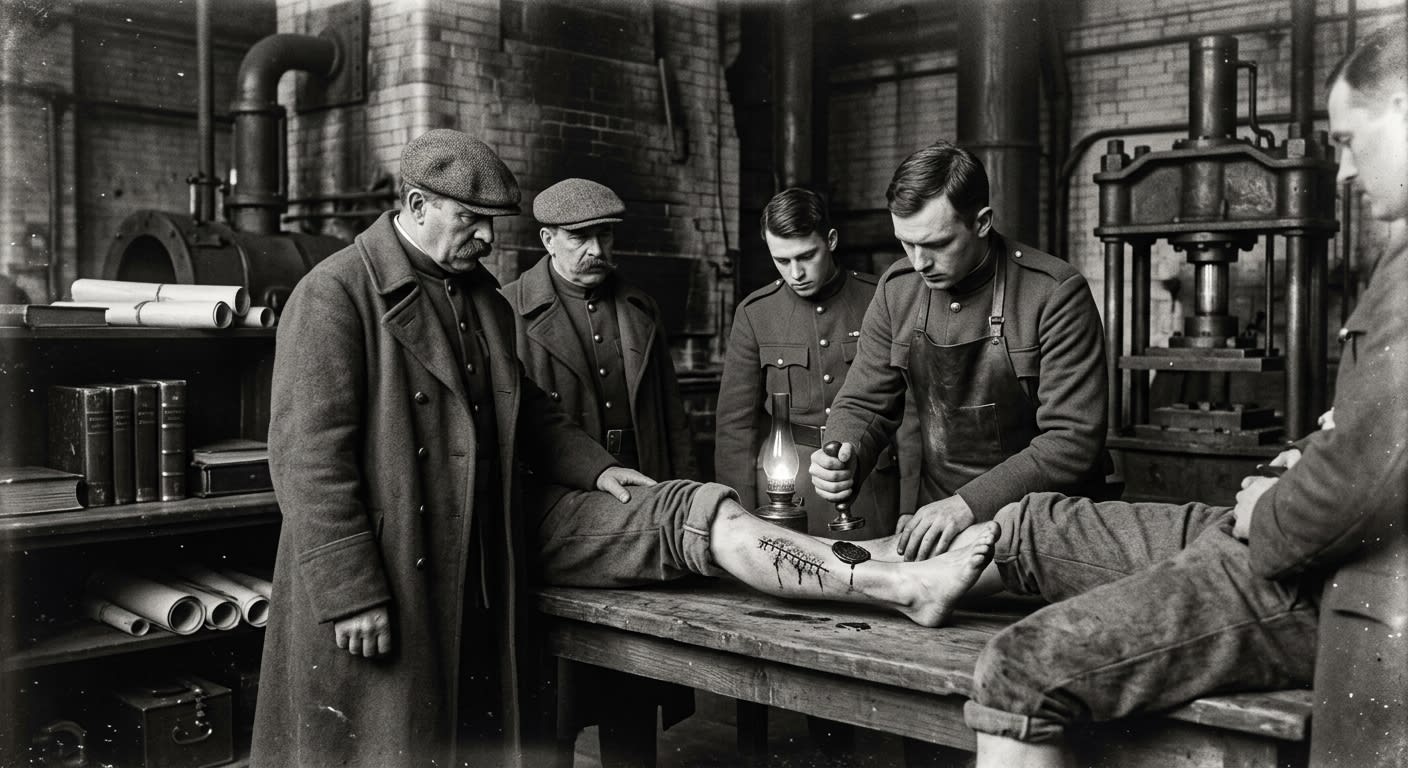
The Bureau authenticated what it could. It could authenticate far too much.
Saint Aldebrand's third femur was the warning. The fourth became embarrassment. By the seventeenth, embarrassment had become an economic sector. Cologne shouted. Salzburg bled. Bruges produced a shoulder blade with opinions. Lyon's finger-bones multiplied in reliquaries so sweetly labelled that Records wept over the penmanship while Medicine sharpened its objections and wondered whether anyone in Relics had ever seen a corpse.
Parish histories in several provinces claim the Edict was drafted to defeat heretical forgeries.
Corrected. Forgery was the lesser problem and the more comforting lie. The central relics had valid custody chains, proper wax, dead witnesses, responsive lamps, and the full arrogance of Bureau success behind them.
The bloodshed of provenance taught the Bureaus an old lesson in fresh Latin. Once pilgrims have knelt before it, a relic becomes a toll road, a renovation fund, a bishop's spine, a ward battery, a mother's cure, a district's pride, a tavern economy, a procession schedule, and a reason for men with knives to call themselves defenders of truth. To withdraw authentication from one bone would not remove a bone. It would remove bread from kitchens, candles from chapels, guards from gates, and authority from men who had already tasted it.
#On the Congress That Refused Arithmetic
The Fourteenth Doctrinal Congress assembled under the official theme of Reliquary Harmony, a phrase so mild it should have been arrested at the door. Relics arrived with custody ledgers stacked like fortifications. Medicine arrived with skeleton diagrams and the dangerous innocence of men who believed demonstration still had political force. Records brought duplicate chains in numbered packets. Purity brought accusations, because Purity is never happier than when meaning has begun to rot. Tithes brought revenue tables and pretended they were incidental.
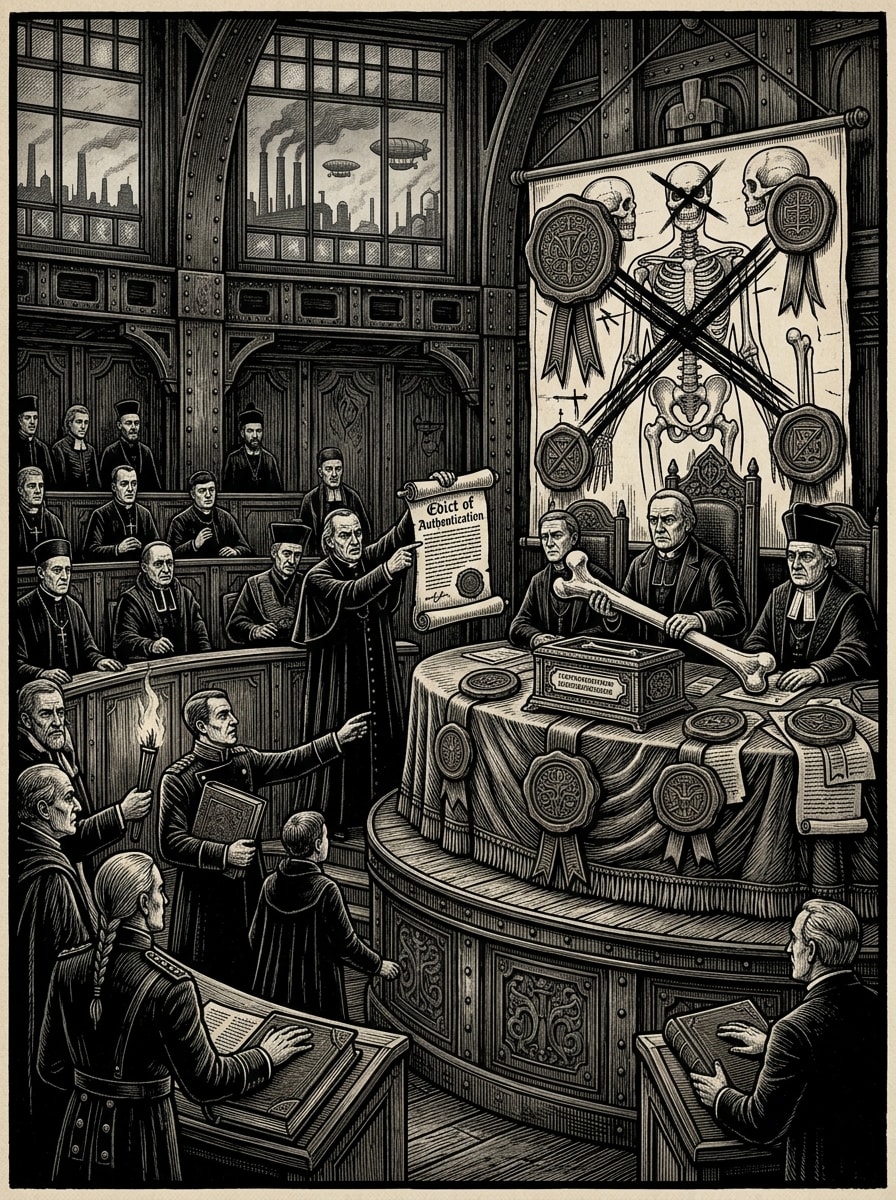
Doctrine listened. Doctrine counted. Doctrine saw the abyss.
If Relics admitted error, every authenticated shrine became contestable. If Medicine prevailed, saints would be dragged from reliquaries into anatomy lectures. If Purity prevailed, half the chapels of the Rhineland would burn under accusation and the other half would hide bones badly. If Tithes prevailed, the argument would be taxed and continue forever. Doctrine did what Doctrine exists to do: it converted a crisis of fact into a hierarchy of permission.
The Edict avoided the crude claim that anatomy was false, and worse, memorable. It made anatomy subordinate. A saint's body, having passed into sanctity, was no longer bound by the arithmetic of butcher, surgeon, or grave-robber. The saint's remains existed in the custody of the Church as recognised by authorised office. Recognition made force. Force made truth. Truth entered the Ledger with a seal dark enough to outlive laughter.
#On the Machinery of Making Real
After A.S. 147, a Relic Authenticator did not merely discover sanctity. He participated in its legal incarnation. White gloves, salt wash, lamp test, provenance chain, response notation, doctrinal fit, seal press: each step moved the object from matter toward obedience. A bone entered the chamber as evidence and left as a public fact.
The procedure was cold because warmth had failed. Intake required quarantine. Prior seals were compared under inspection light. Witness statements were ranked by death quality, parish usefulness, handwriting stability, and whether the witness had left descendants inclined to litigation. Physical examination continued, though Medicine's language was altered after three Authenticator manuals used the phrase “biological inconsistency” and had to be recalled for spiritual laundering.
The final act was notarization. The seal was more than decoration: it was the verdict's body.
The Edict created grades of certainty fit for government use. Primary authentication established public cult legitimacy. Secondary authentication established local devotional force. Tertiary authentication allowed contact cloths, filings, crate splinters, nail rust, and other sanctified debris to exist without causing immediate episcopal knife work. Quarantine authentication acknowledged objects too responsive to display and too profitable to destroy. Rejected objects entered Fraud, Contaminant, or Vault Silence (Unregistered), depending on whose nephew had donated them.
#On Femur-War and Managed Contradiction
A decree can make contradiction lawful. It cannot make contradiction quiet. For that, Europe required liars with route maps.
The Edict's natural children were the Femur-War Brokers: Provenance Factors, Contradiction Stewards, Miracle Fences, Peace-Peddlers, and all the other night-blooming parasites whose hands remain clean because they touch paper while other men carry crates. They moved incompatible relic claims through ports, bastion reliquaries, caravan yards, shrine antechambers, and backroom chapels where neutral notaries kept three inks and no conscience.
Their craft was simple enough to damn and complex enough to survive. Keep two authenticated femurs from appearing in the same nave. File jurisdictional sanctity: true in Bastion A, unverified in Bastion B, pending in Shrine C, blessed for procession only under rain. Split time before splitting bone. Move the relic at second bell. Pay the Queue-Marshal. Burn the draft if a white-ring inspector smiles.
The Peace Brokers claim the oldest and least disgusting inheritance from the Edict. They sell delay, separation, and the blessed interval between mutually authenticated truths. A Peace Broker asks less which femur is Saint Maurus than which road each femur will take, which feast day can be moved, which custodian will accept a substitute reliquary for three hours, and which clerk can be made ill on the morning two papers would otherwise meet.
RELICS SIDE MEMORANDUM — SEALED ANNEX, A.S. ███ If Peace Broker network suppressed before Ember Vigil (Unregistered), Shrine C and Bastion ward-chain 7 present same authenticated femur within forty-six hours. Immediate risk: simultaneous kneeling, accusation, lamp response, armed custody dispute. Recommendation: misplace warrants; revisit after feast. Second hand: █████████████████████████
Profit Brokers, by contrast, saw the Edict and heard a cash bell. If all femurs may be true by seal, why stop at femurs? Why not filings, textile contact, reliquary dust, splinters, labels, warmed crate nails, touched oil, secondary fragments, tertiary echoes, authenticated absence? They multiplied sanctity until even Tithes looked nervous, which is how one knows greed has achieved a liturgical register.
#On the Bureaus That Benefited Loudly and Quietly
Relics gained sovereignty. That was the Edict's obvious gift. No chapel bone could become public holiness without its press, its witness chain, its custody formula, its red wax, its Examiners with glove-creased fingers and sleepless eyes. The Bureau emerged wounded, richer, slower, and much harder to embarrass.
Records gained co-custody of provenance, which Relics still regards as an invasion conducted with shelves. Every authentication generated copies, registry echoes, sealed addenda, route slips, custody packets, witness abstracts, and enough paper to make contradiction respectable by weight alone. Records housed the Schism, indexed it, and thereby made itself indispensable.
Medicine lost cleanly. Such clean defeat is uncommon; cherish the instance. Its skeleton charts were retained as advisory instruments while its conclusions were denied authority over sanctity. Medicine learned that the body, in Synodal law, continues until the Bureau has finished using it. This lesson later improved several autopsy regulations and worsened every dinner attended by a physician and a Relics clerk.
A.S. 160 closure notices state that public confidence in relic authentication had been fully restored.
Revised: public exhaustion achieved operational equivalence with confidence. The donation boxes indicate no meaningful distinction.
Tithes benefited with the vulgar serenity of a cat beside spilled cream. Duplicate relics meant duplicate pilgrim flows, duplicate chapel repairs, duplicate indulgence schedules, duplicate tariffs disguised as verification fees. Purity benefited through suspicion. Every disputed relic produced suspects. Every suspect produced interviews. Every interview produced the pleasing possibility of discovering an unrelated heresy while pretending to investigate bone.
Doctrine benefited most. It proved that the Bureau could look at visible contradiction, name it order, and be obeyed. That is the secret hinge of every durable State. The public need not believe a doctrine in the soft private chamber where men speak to their pillows. It must kneel, pay, and refrain from laughing in the wrong square.
#On Law After the Edict
The Edict's legal reach expanded because useful absurdities never remain in their cradle. Bells cited it when contradictory tolling privileges collided between parish and garrison. Tithes cited it when duplicate obligations possessed equally valid receipts. Records cited it in lineage disputes where two heirs inherited the same grandfather by separate seals. Pilgrimage cited it when two routes claimed the same martyr's footprint and both sold tokens briskly.
The governing logic was portable: authentication creates enforceable reality inside the jurisdiction of the authenticating office. Outside that jurisdiction, reality may wait under review. This is among the Bureau's noblest inventions, if nobility may be defined as the capacity to postpone disaster until after the current budget year.
The phrase “anatomical objection” became shorthand for any fact too crude to be denied and too inconvenient to admit. A bridge engineer noting that a procession platform could not hold the planned relic crowd was making an anatomical objection. A quartermaster observing that grain sacks listed twice did not feed twice the soldiers was making an anatomical objection. A widow pointing out that her husband could not be both dead for pension purposes and alive for tithe arrears was making an anatomical objection, though in that case Tithes ruled with impressive speed and no visible shame.
#On the Eleven-Bone Discipline (Unregistered)
By A.S. 160, the great storm had been filed down into practice. Authentication slowed from flood to procession. The Bureau that once stamped hundreds of objects per year settled into the Eleven-Bone Discipline: eleven authenticated additions annually, each carried through full chain review, each sealed with public gravity, each presented as proof of restraint rather than a scar from panic.
Eleven began as capacity and acquired holiness by repetition. The first year it was capacity. The second year prudence. The fifth year tradition. By A.S. 201, junior clerks speak of the eleven as if Moses personally mislaid the twelfth tablet. This is how bureaucracy manufactures antiquity: repeat a limitation until the young mistake it for revelation.
The Discipline changed the underworld. Scarcity raised price. Price improved forgery. Improved forgery increased audit. Audit increased the need for brokers. Brokers increased contradictions. Contradictions justified the Edict. The wheel turned with enough dignity to be mistaken for Providence by anyone standing far enough away.
The exceptions are the true work, as they always are. Bastion warding needs do not wait for annual rhythm. A relic recovered from a breach may repel demons before its paperwork has learned to stand. A port shrine holding back riot may require an emergency contact-cloth authentication before evening. The Eleven-Bone Discipline remains pristine in public because the emergency annexes are filed where cleanliness cannot hear them.
#On the Present Use
As of A.S. 201, the Edict remains active, cited, hated, profitable, and correct by force. The Relics clerks still stamp. The Peace Brokers still separate truths before they collide. Profit men still multiply scraps until Purity finds one too fragrant to ignore. Records still keeps copies of copies of copies, the great paper ossuary in which contradiction rests without decaying. Medicine still objects in private and signs advisory notes in public. Doctrine still smiles with all the mercy of a locked drawer.
Pilgrims kneel. Soldiers carry ward-bones into trenches. Shrines publish feast calendars with careful gaps between rival appearances. Shadows watches the brokers. Tithes counts the donation flow. Purity waits for laughter. Laughter remains the only unlicensed solvent.
The Edict left the relic crisis unsolved and obedient.