

Reverse Index
Referencing “Northern Corridor”
Every codex entry that links to Northern Corridor. 30 entries.
Return to Northern Corridor
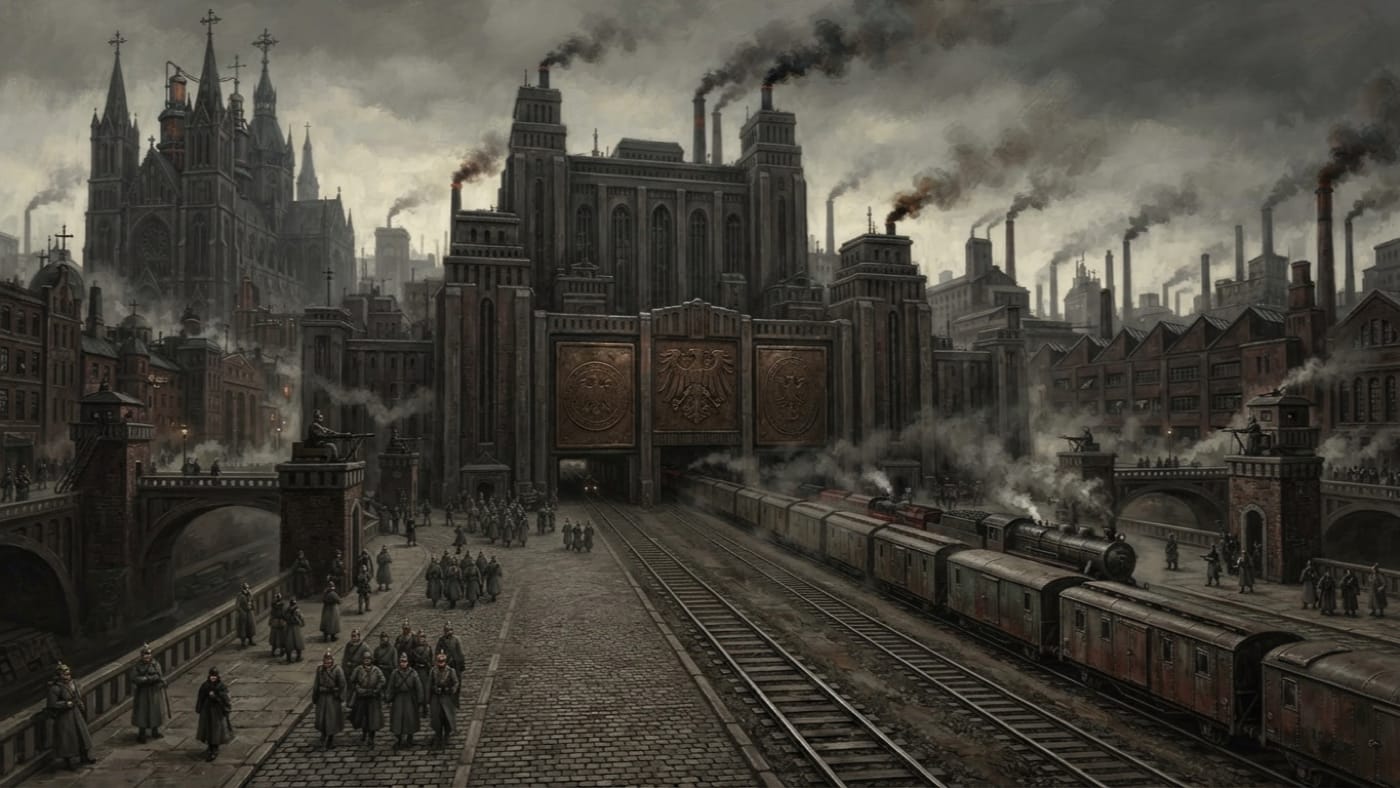
Berlin
The Ledger keeps both names; the city answers to one
Berlin supplied the Northern Garrison sent to famine-struck Hamburg in A.S. 65. Renamed Kanzleiburg in A.S. 95, it remains the same city; the Ledger keeps both names.
Codex Ref. II.4.09-095
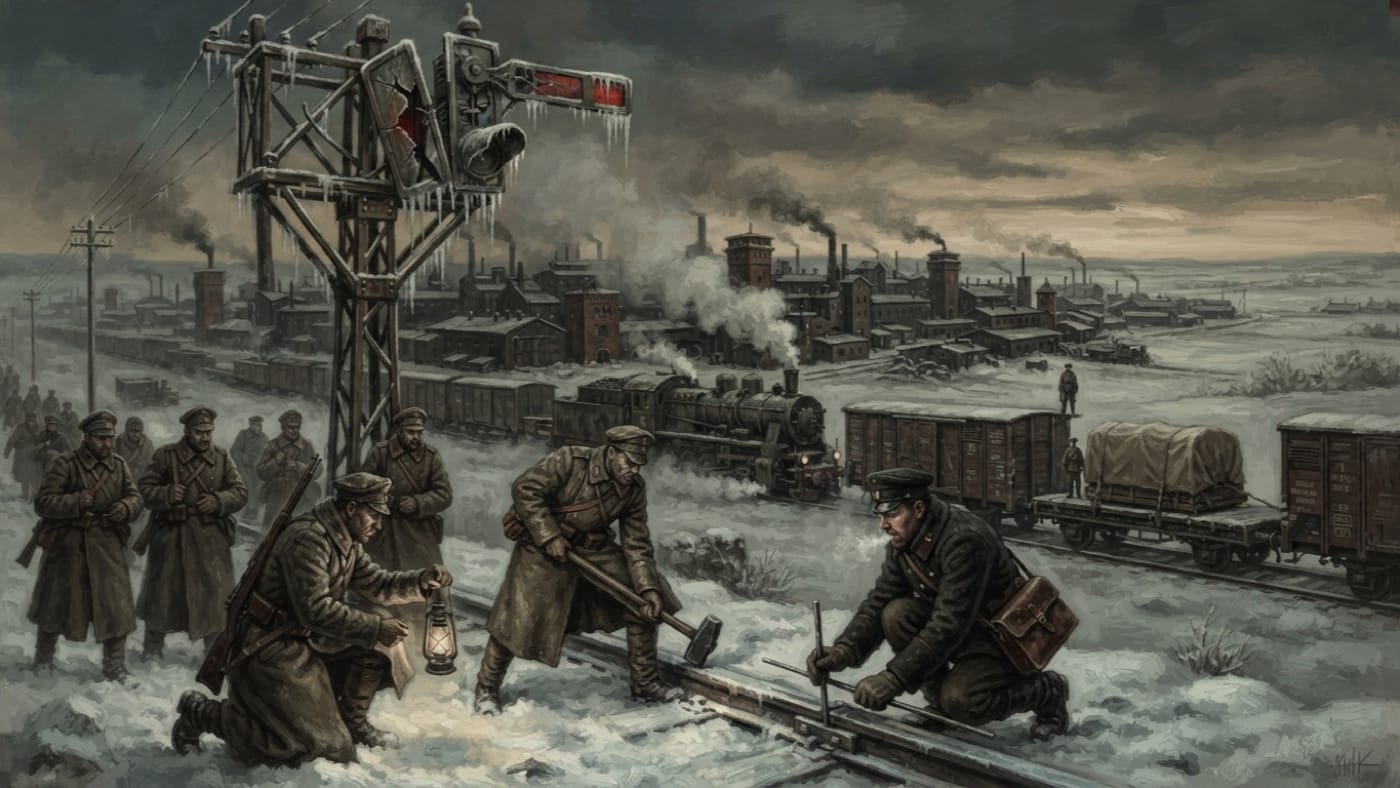
Białystok
Frost cracks the signals; War suspects the delay
Białystok carries Warsaw's military freight toward Königsberg. This commissioned A.S. 201 survey covers winter signal risk, rail damage and extra patrols: frost obeys no timetable.
Codex Ref. II.4.09-250
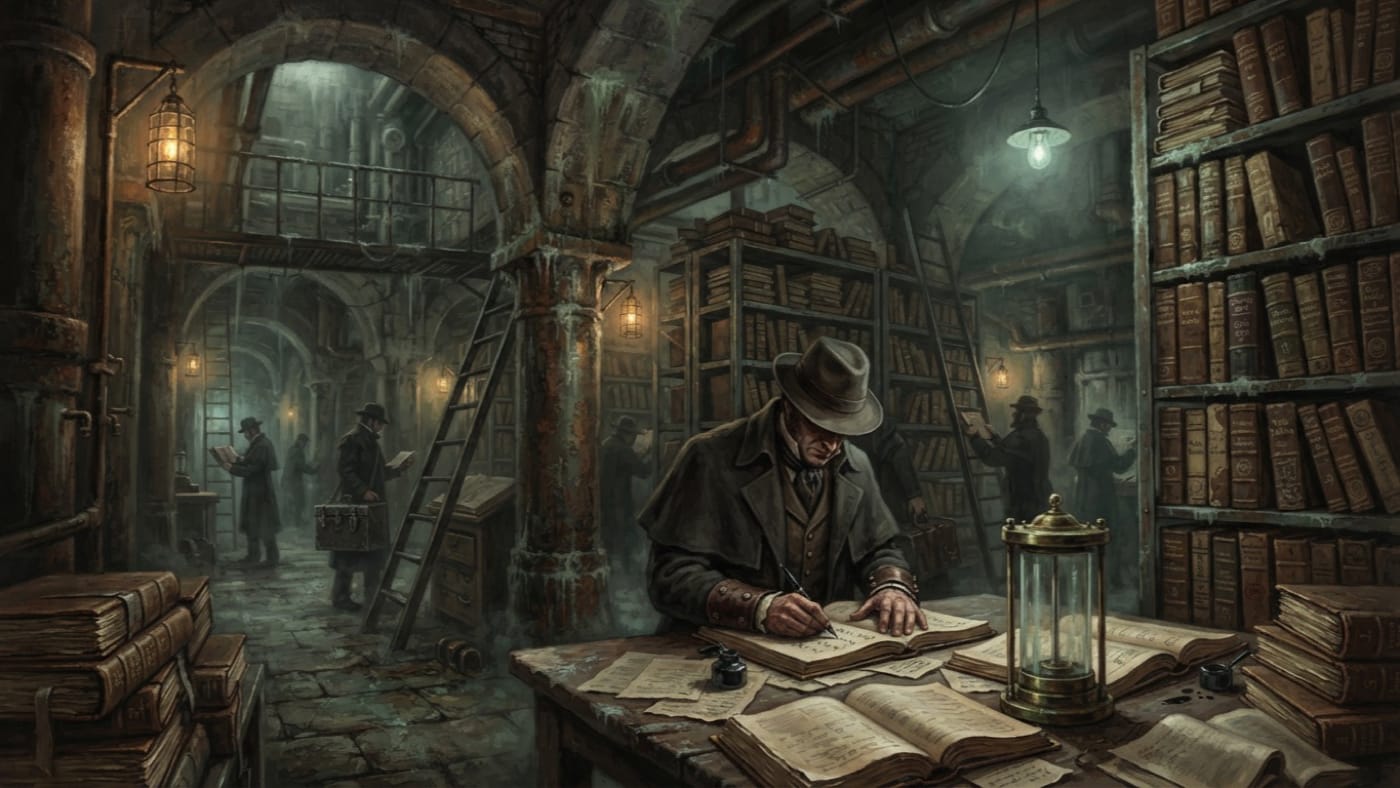
Brine Ledgers
A lie is safest in the column the auditor already expects to be wrong
Lübeck's cellar accounts hid debts behind salt losses. Their method was confiscated in A.S. 180; reconstructed books remain monitored and useful. The fraternity dissolved; its arithmetic kept working.
Codex Ref. XIII.1.180-358
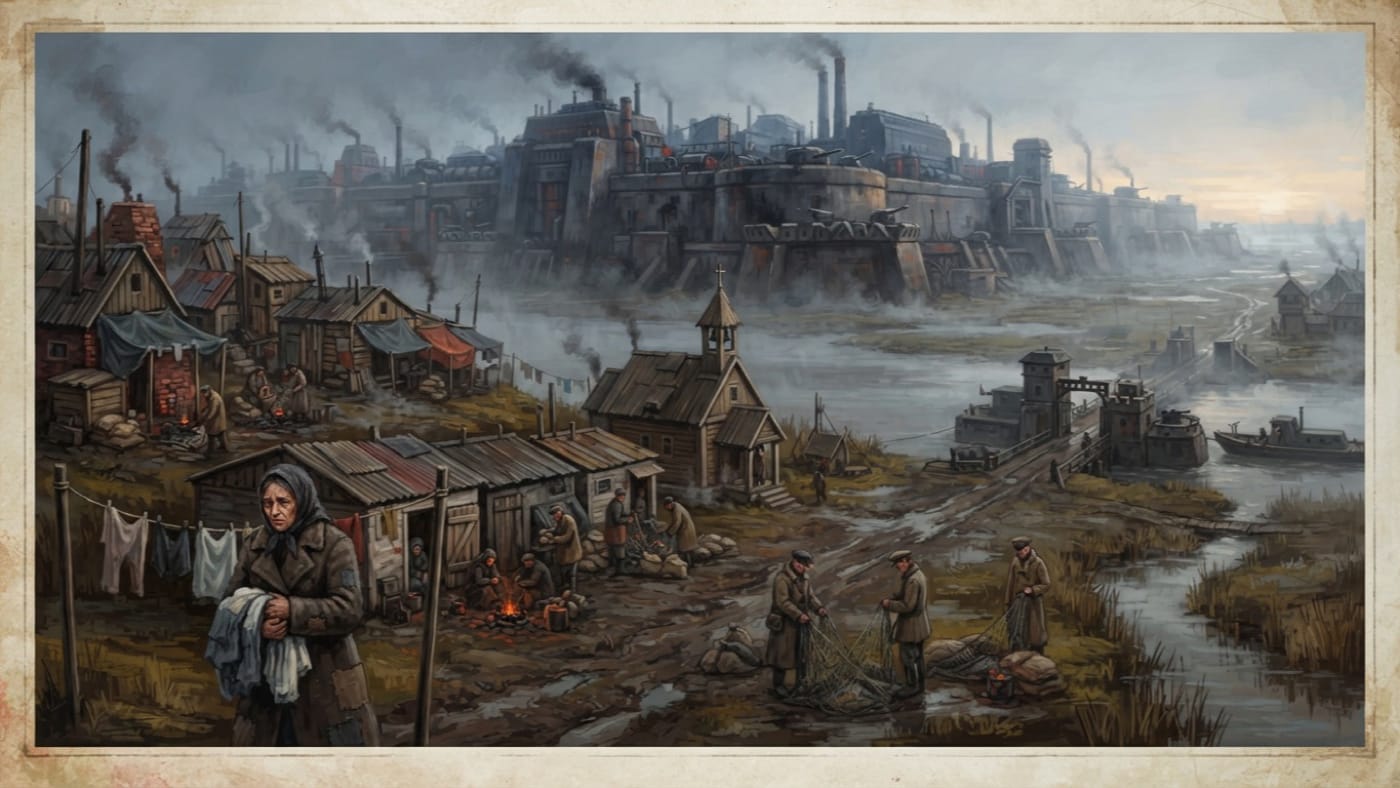
Bug River settlements
The villages disappear; their people remain pending
The Bug River settlements survive as a few western service hamlets and displaced households in Warsaw and Brest. Most villages are absent; their people still require permission to exist.
Codex Ref. II.4.09-201
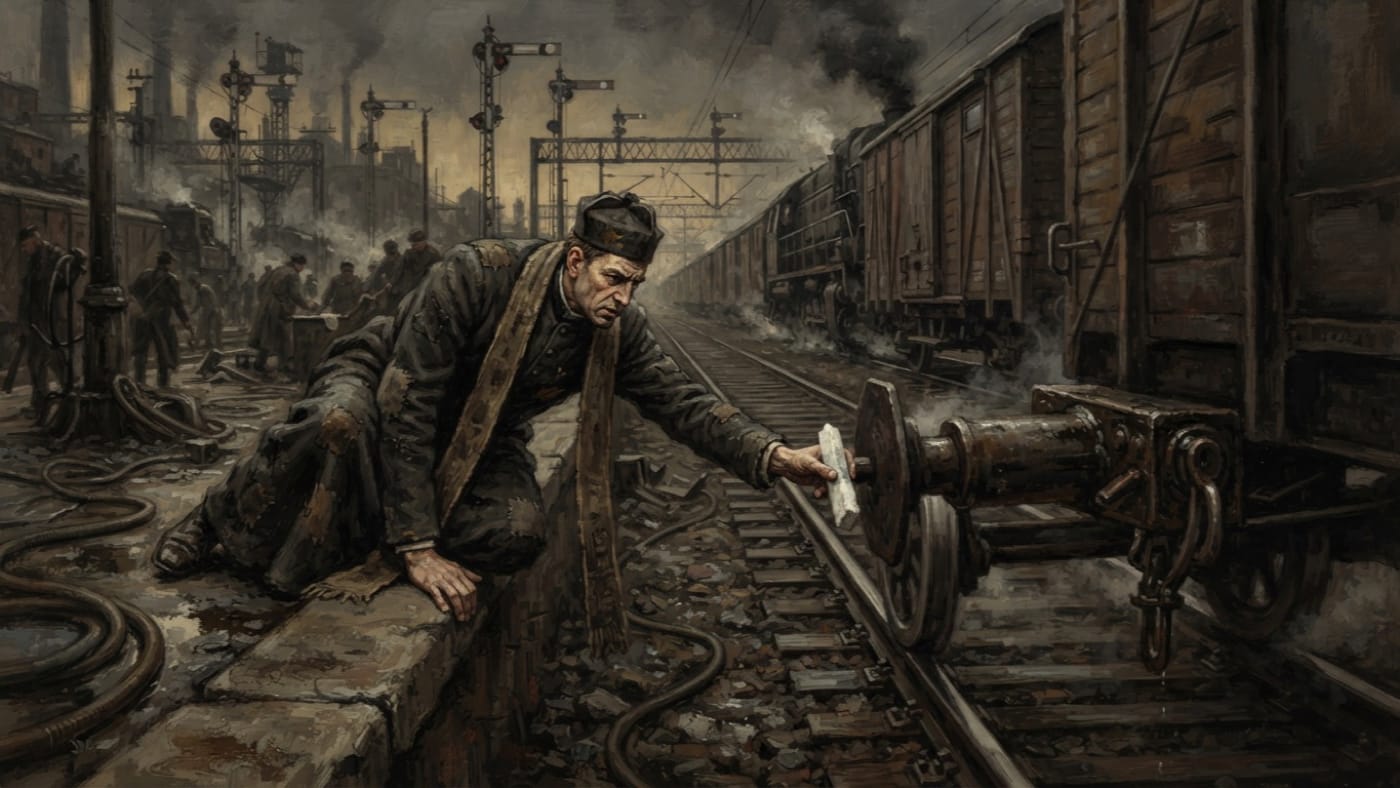
Coupler Rite
The blessing catches up; the fingers do not.
A priest touches a moving train's rear coupling with consecrated chalk to supply a missed departure blessing. Rites records three lost fingers as devotional expenditure; the Guild of Rails keeps its own account.
Codex Ref. XIII.1.05-201
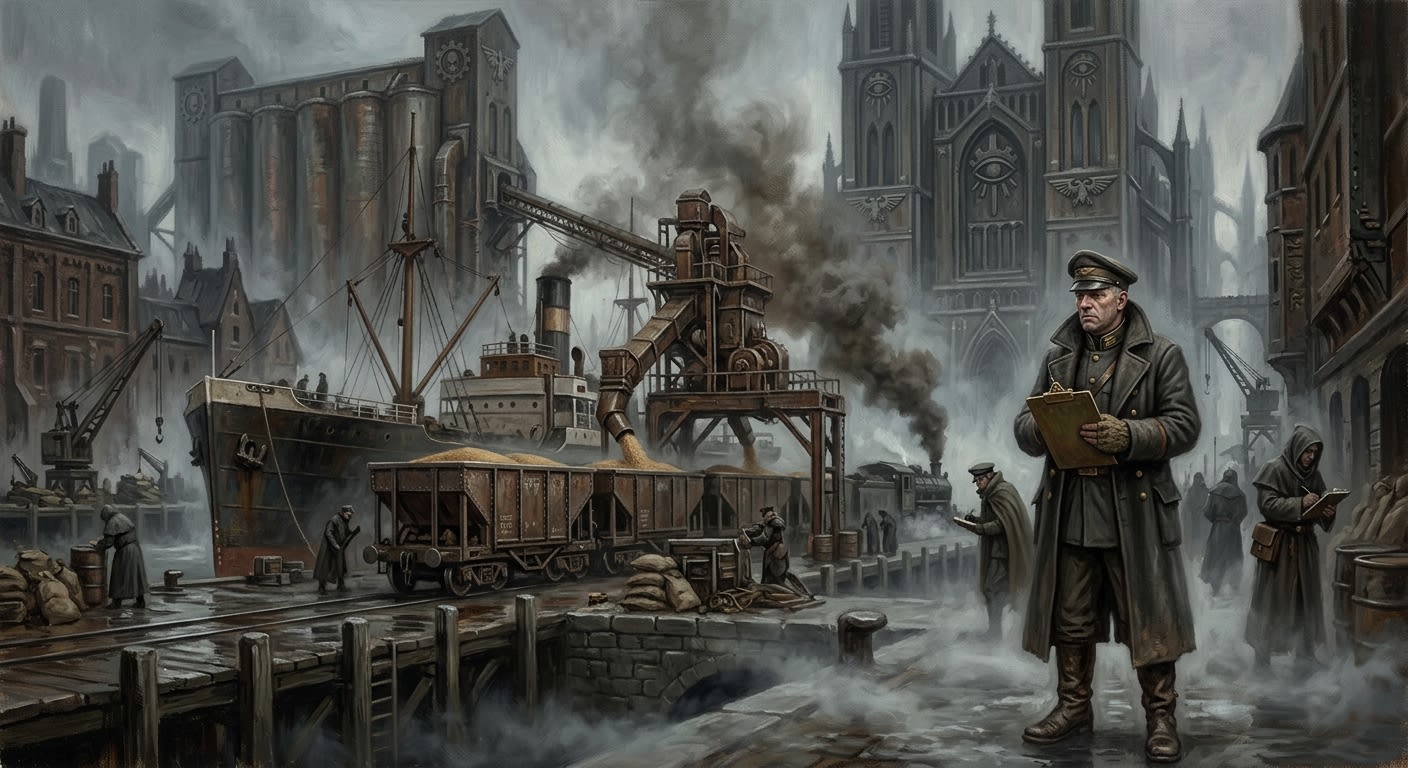
Danzig
The Baltic port that feeds the north and lies with admirable punctuality
Danzig is the Baltic grain mouth of the Northern Corridor: obedient in public, competent in fog, audited forever, and too necessary for Strasbourg to purify without starving itself.
Codex Ref. II.4.09-013
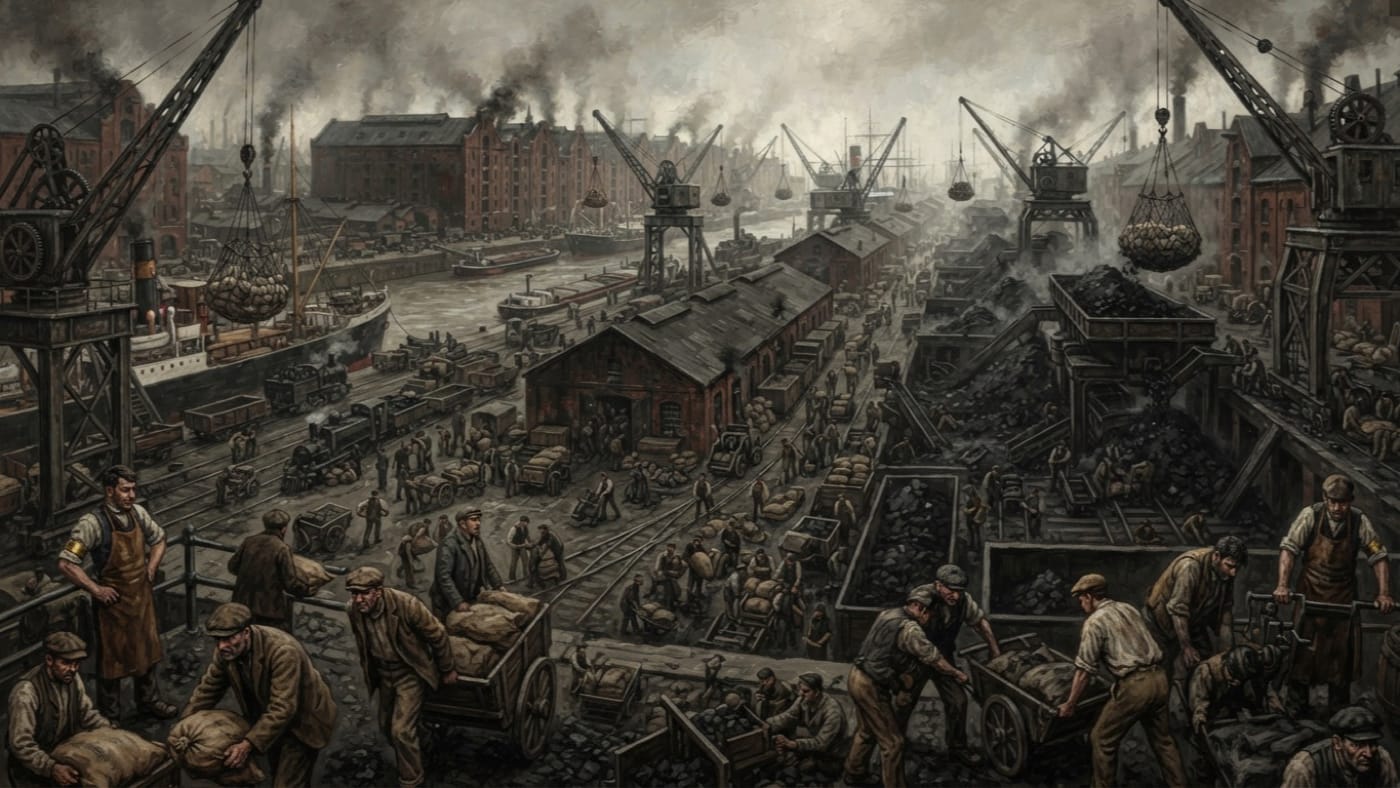
Dock Quarter
Where the northern war waits for the men beneath the crane
Hamburg's western and central Elbe quays turn North Sea cargo into northern-front survival. The Bureaus issue orders; the guilds decide when grain, coal, and military freight actually move.
Codex Ref. II.4.09-006
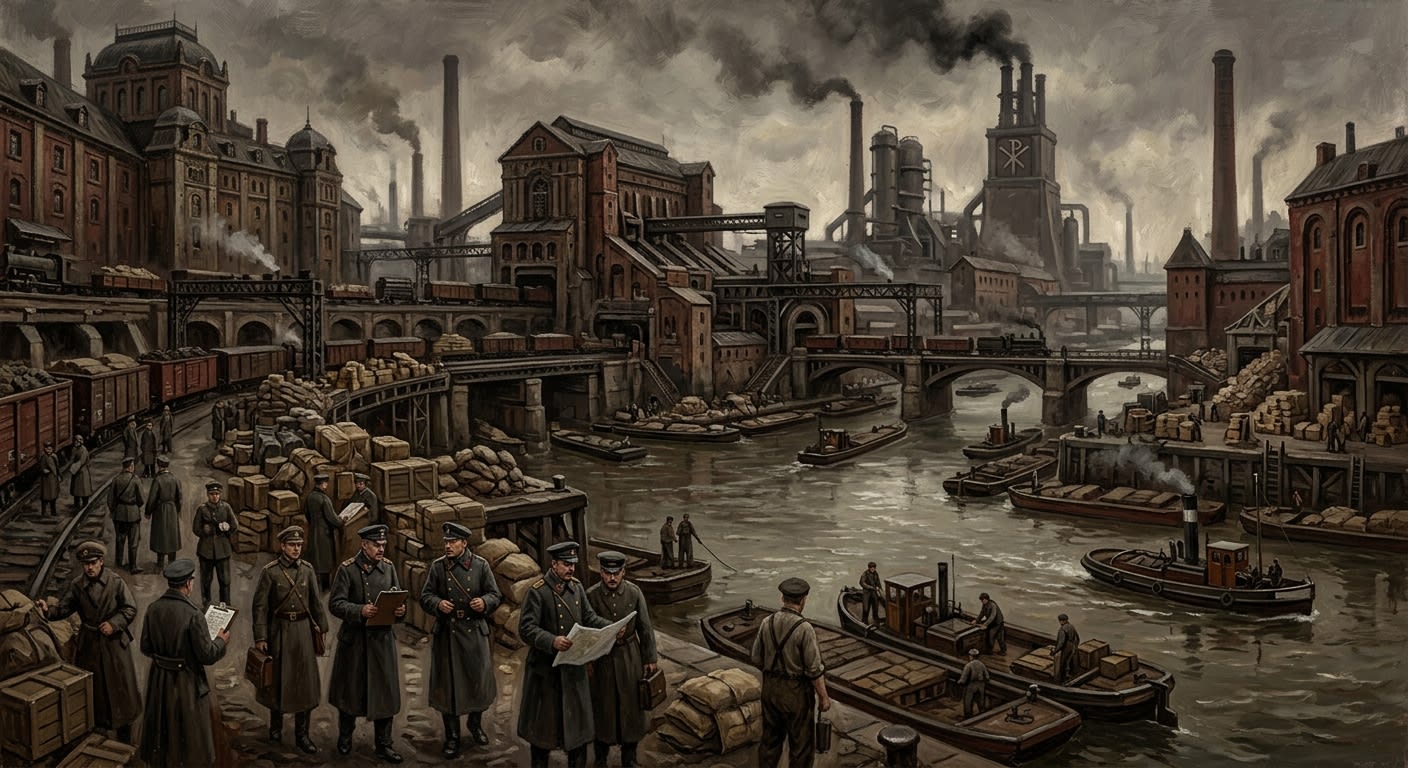
Dresden
The polite overflow basin where delay learns manners
Dresden is the Synod's Elbe side-throat: porcelain, rail yards, transfer rooms, polite stoppages, and every overflow Kanzleiburg prefers to call supplementary.
Codex Ref. II.4.09-201
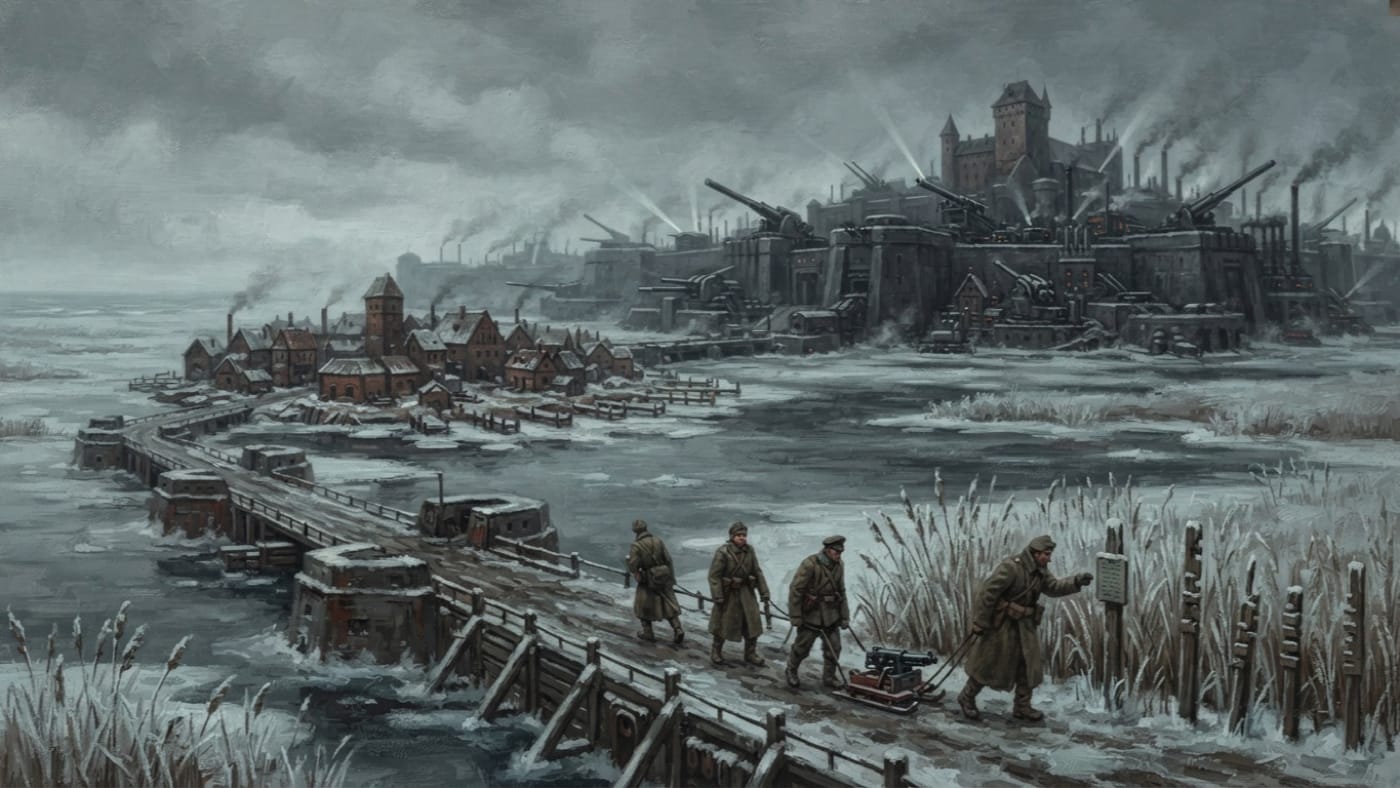
East Prussia
Where the Line Runs Out of Land and the Survey Runs Out of Courage
East Prussia holds the Baltic end of the Sagittal Line: Königsberg, the Masurian maze, and the villages that feed the walls. The Bureau can count its stamps. It has yet to count the region.
Codex Ref. II.4.07-002
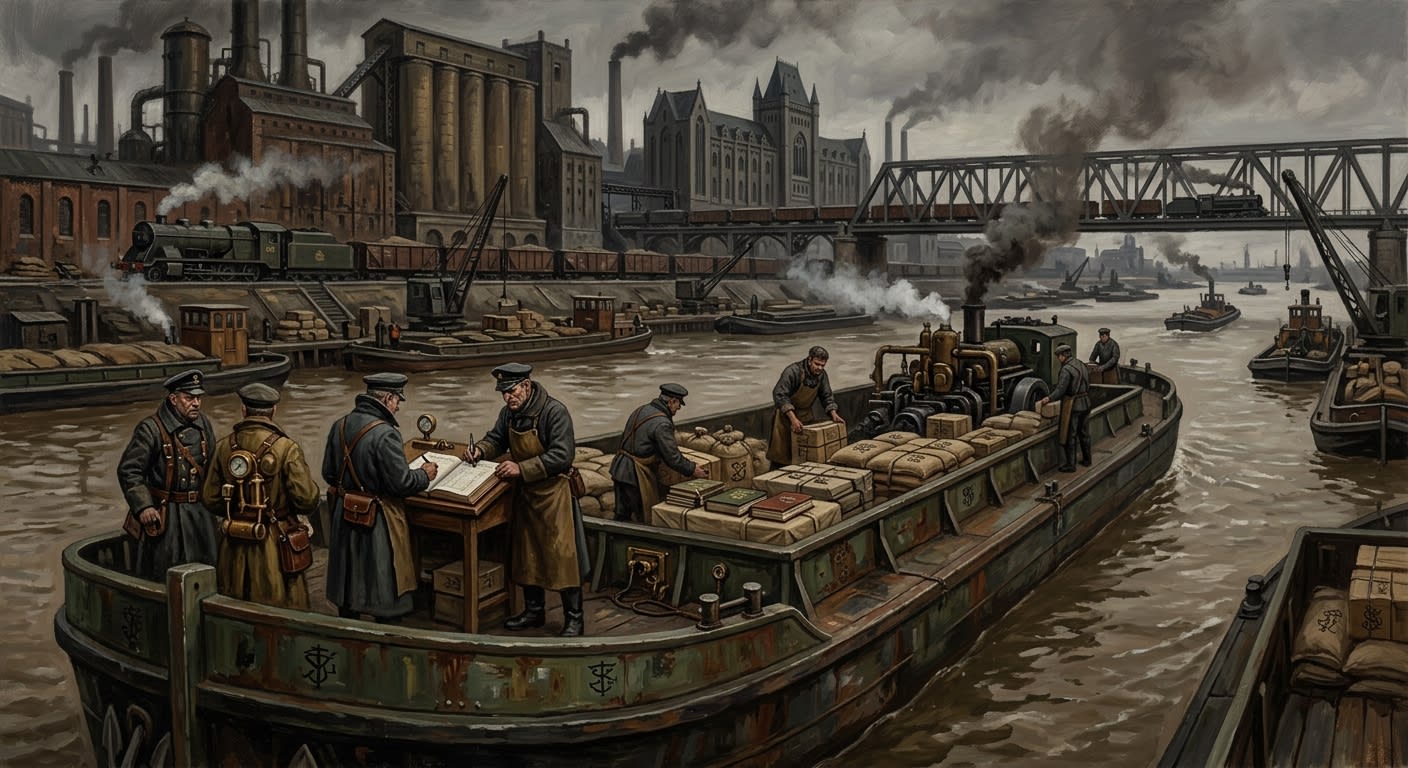
Elbe
The northern river that makes hunger, coal, and failure countable
The Elbe is the northern Synod's wet ledger: barge route, rail supplement, mud-law court, and the river that decides how long the north eats.
Codex Ref. II.4.09-201
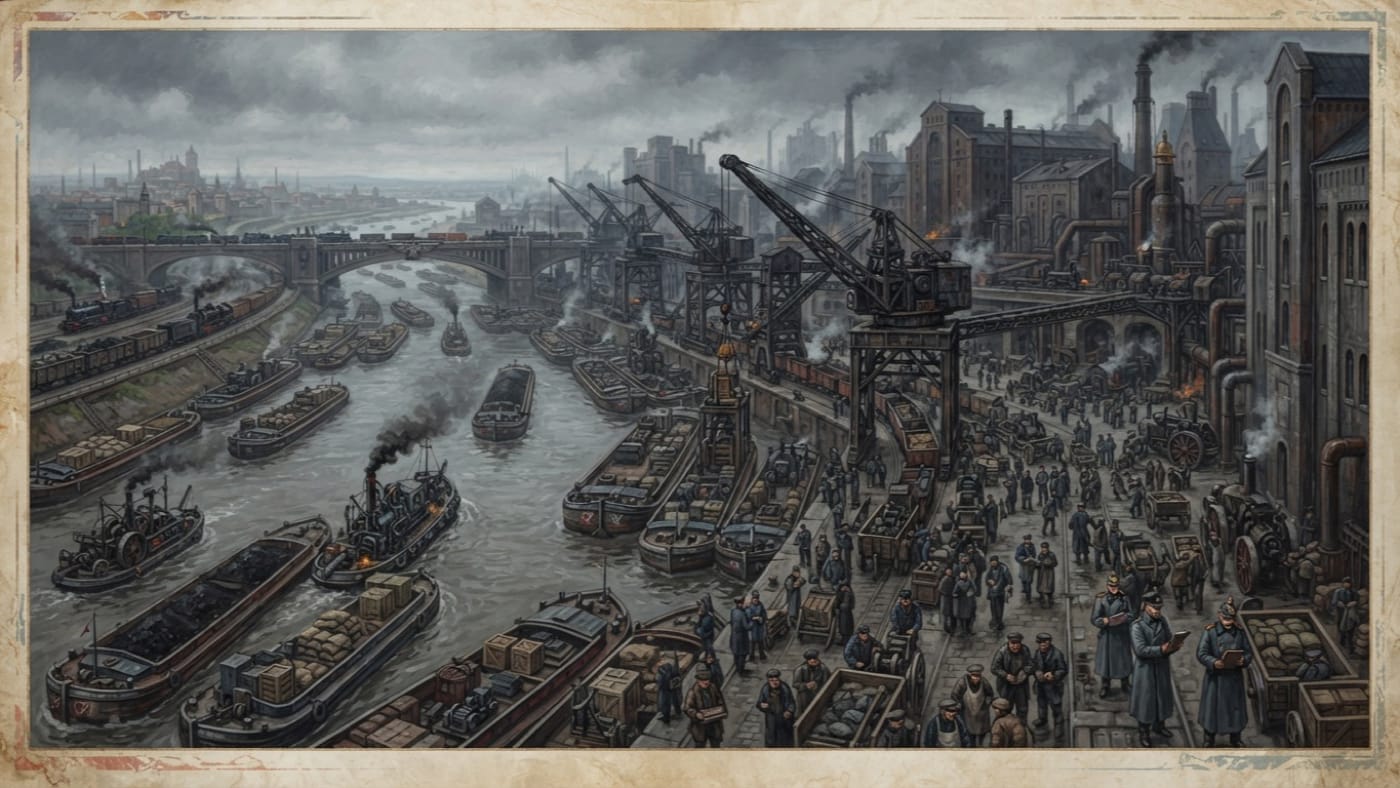
Elbe Barge Network
The river gives the northern front another path and no second mouth
Hamburg's waterborne supply route carries bulk freight to Magdeburg and Dresden for transfer to rail. It stocks winter reserves and relieves the northern corridor when the railway falters; both routes still depend on the same mouth.
Codex Ref. II.3.05-008
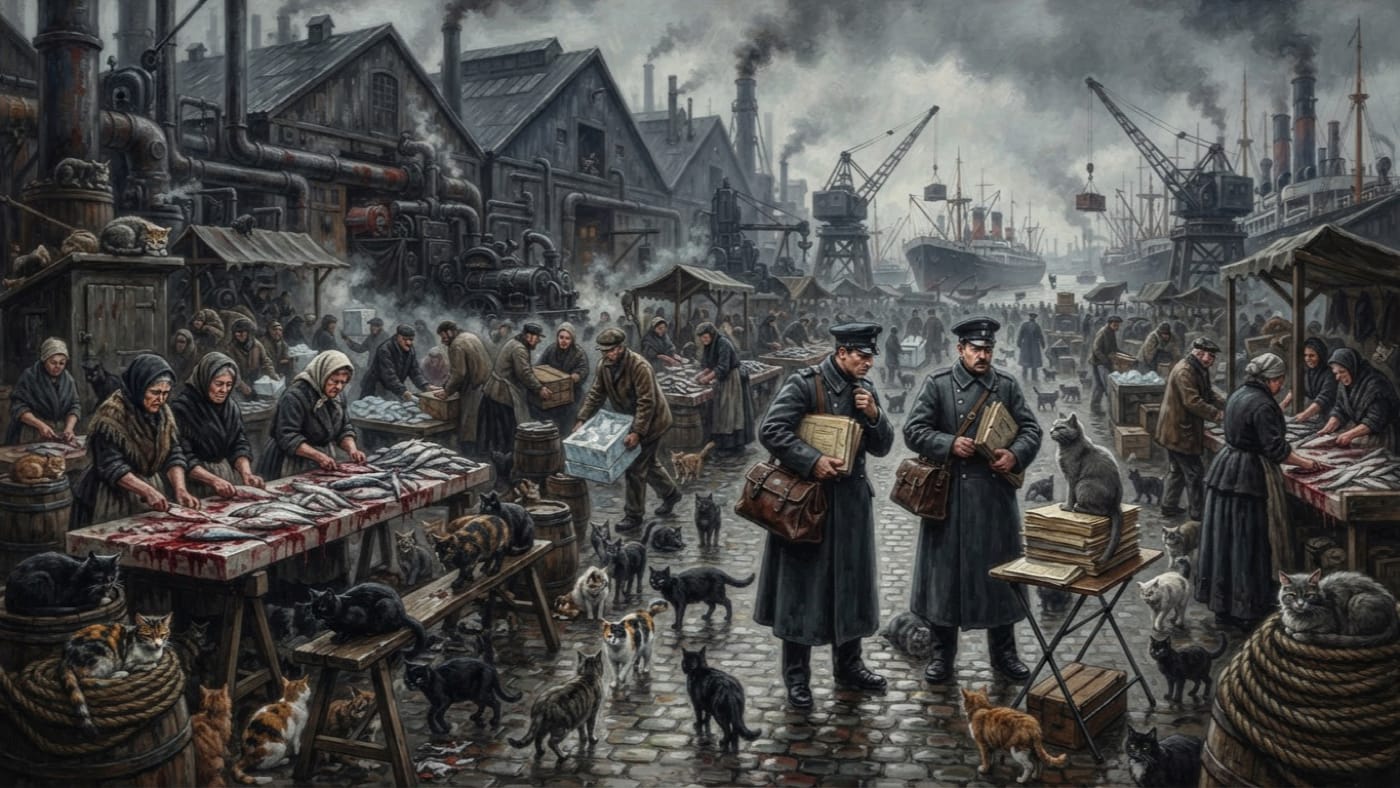
Fishmarket cats
The Ledger can survive one blank line
A.S. 201 survey of Hamburg's Fishmarket cats: ordinary animals, unregistered with Records, estimated by the Hamburg account at forty thousand. A census failed in A.S. 178; their theology remains opaque.
Codex Ref. IV.2.01-001
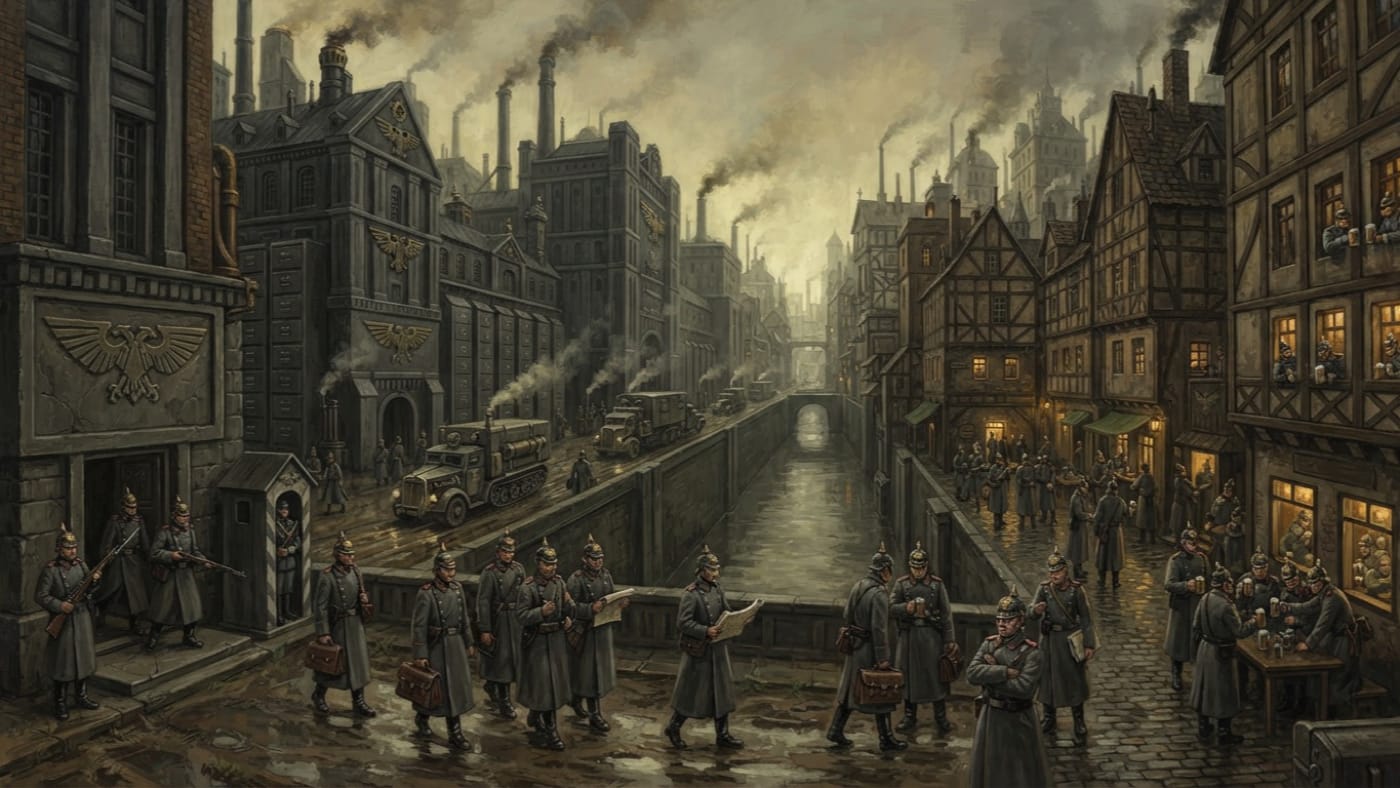
Garrison Quarter
Orders at the desk, reconciliation at the beer-hall
Kanzleiburg's officer district keeps northern command in ink and depends on Old City beer-halls for what regulations cannot settle. In A.S. 140, its petition made enforced sobriety an operational deficiency.
Codex Ref. II.4.09-201
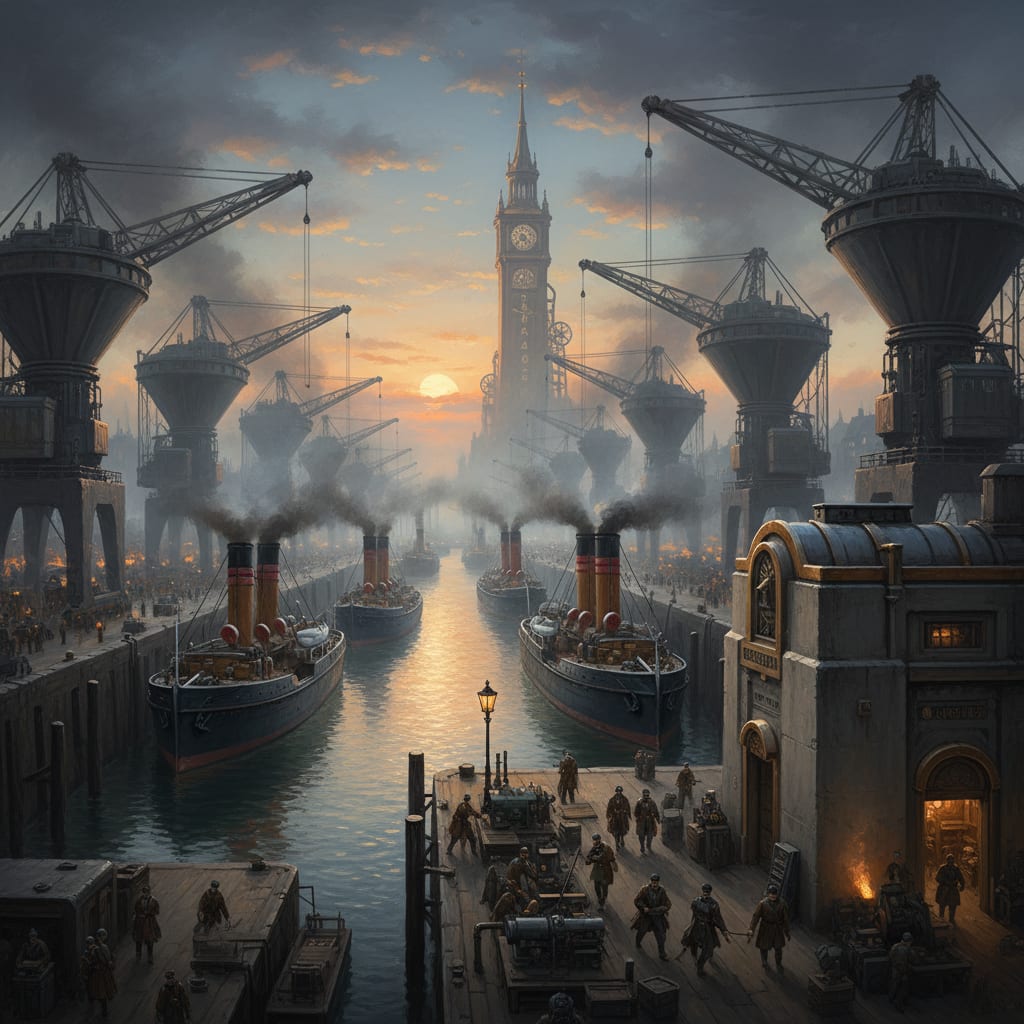
Hamburg
The throat of the northern front — and the hand around it is not the Synod's
The Synod's northern import terminal: nine hundred thousand souls at the Elbe's mouth, processing the grain and coal that keep the northern front from freezing, starving, and dying.
Codex Ref. II.4.09-005
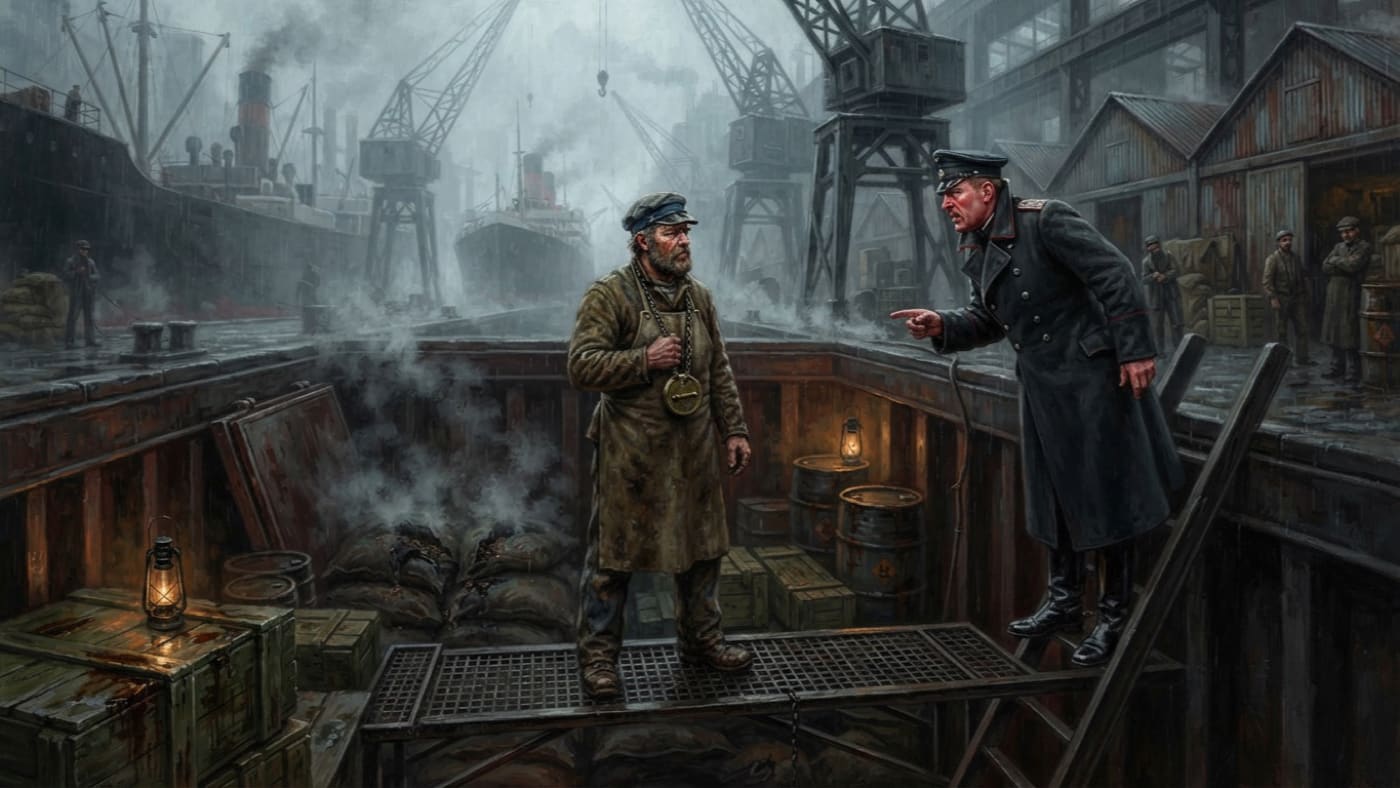
Hazard Clause
The right to keep the token in one's pocket
Hamburg's A.S. 189 concession lets senior Compact holdmen withhold discharge certification for three named cargo hazards without immediate arrest for obstruction. War may buy labour; it cannot buy the signature.
Codex Ref. XIII.1.89-189
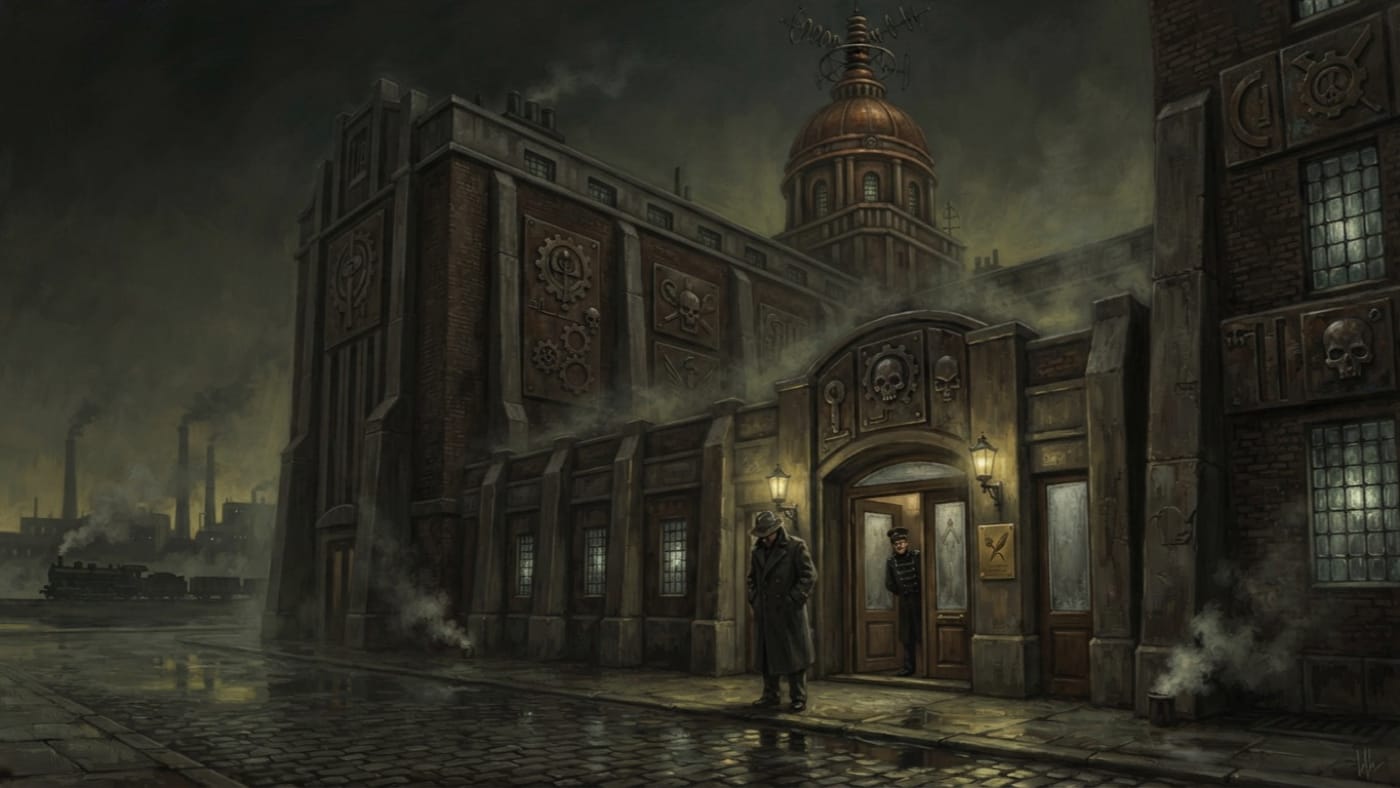
Hotel Sigismundus
Pilgrimage's waiting room on the bank that was supposed to be deaf
Pilgrimage's transit lodge in Warsaw's old city, recalled from my A.S. 197 visit: camphor, candle-wax, mildew, seven additional days, and my hearing of the Breathing on a bank that considered itself deaf.
Codex Ref. II.4.09-197
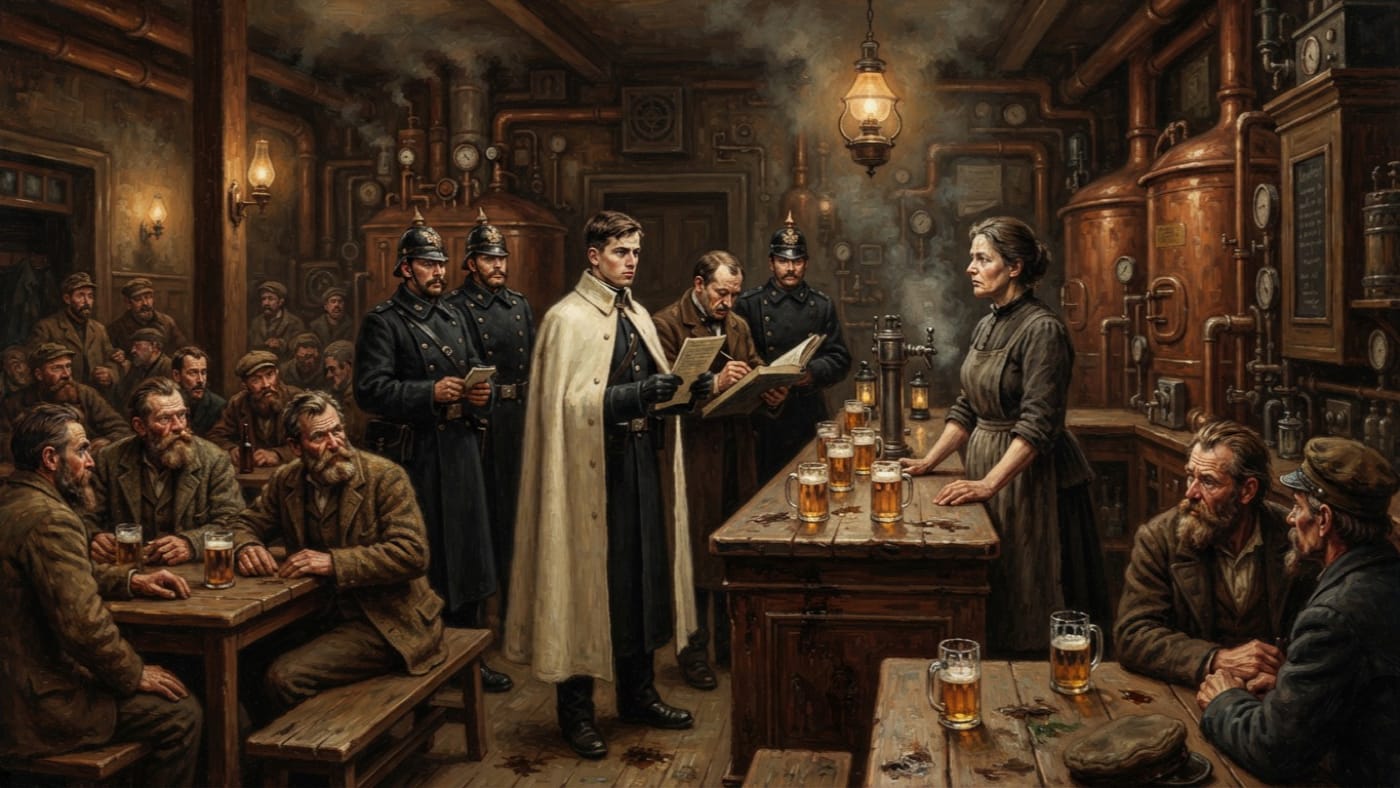
House of Eighteen Steps
Purity brought a curfew; the widow asked who would pay
An Old City beer-hall in Kanzleiburg where, during the A.S. 140 Curfew Standoff, a brewer's widow asked Purity who would pay for unfinished beer. The question survives; the inspectors' answer does not.
Codex Ref. II.3.18-140
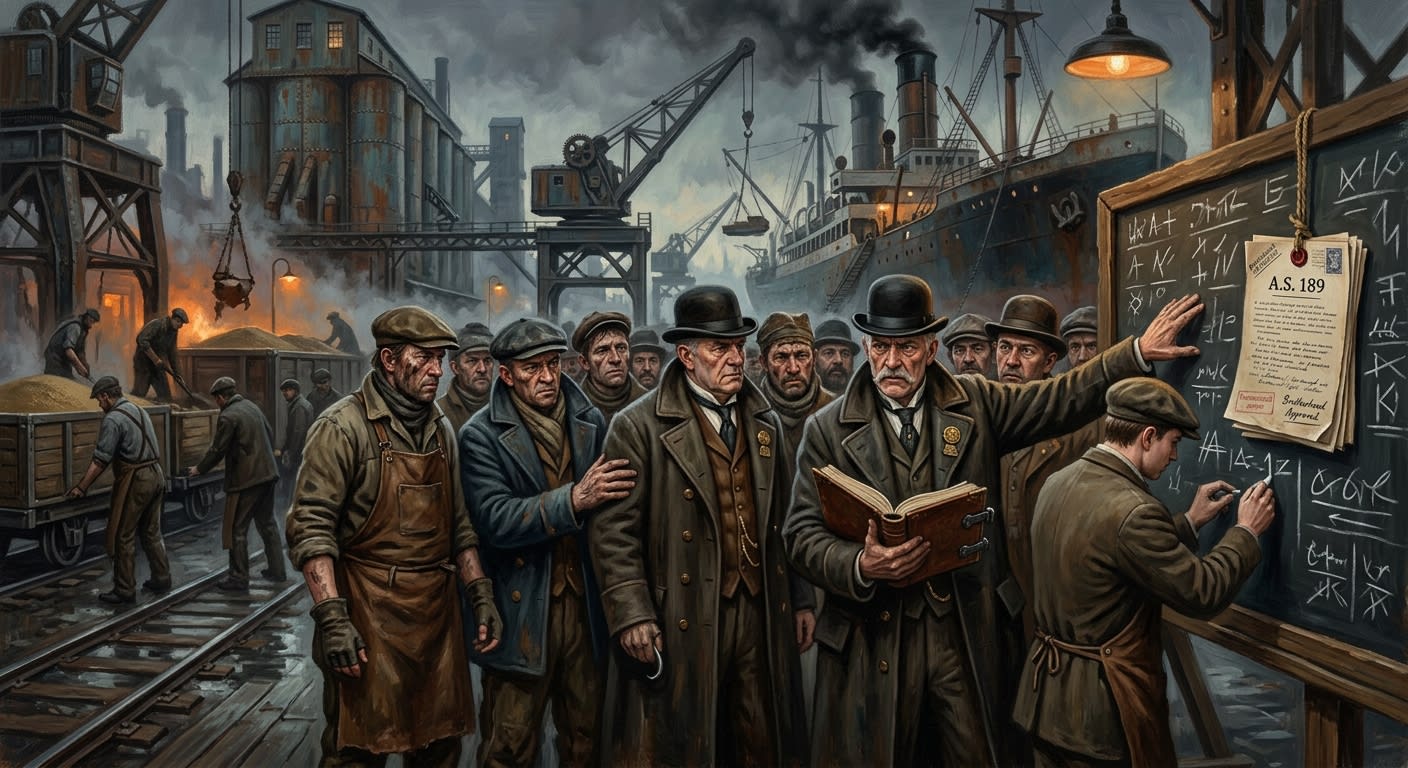
Longshoremen's Brotherhood
The port moves when the men beneath the crane consent to bend
Hamburg's oldest dock guild controls western and central quay labour, grain call-books, Brotherhood chalk marks, and the A.S. 189 hazard supplement that Tithes keeps trying to resurrect as taxable.
Codex Ref. XII.52.01-001
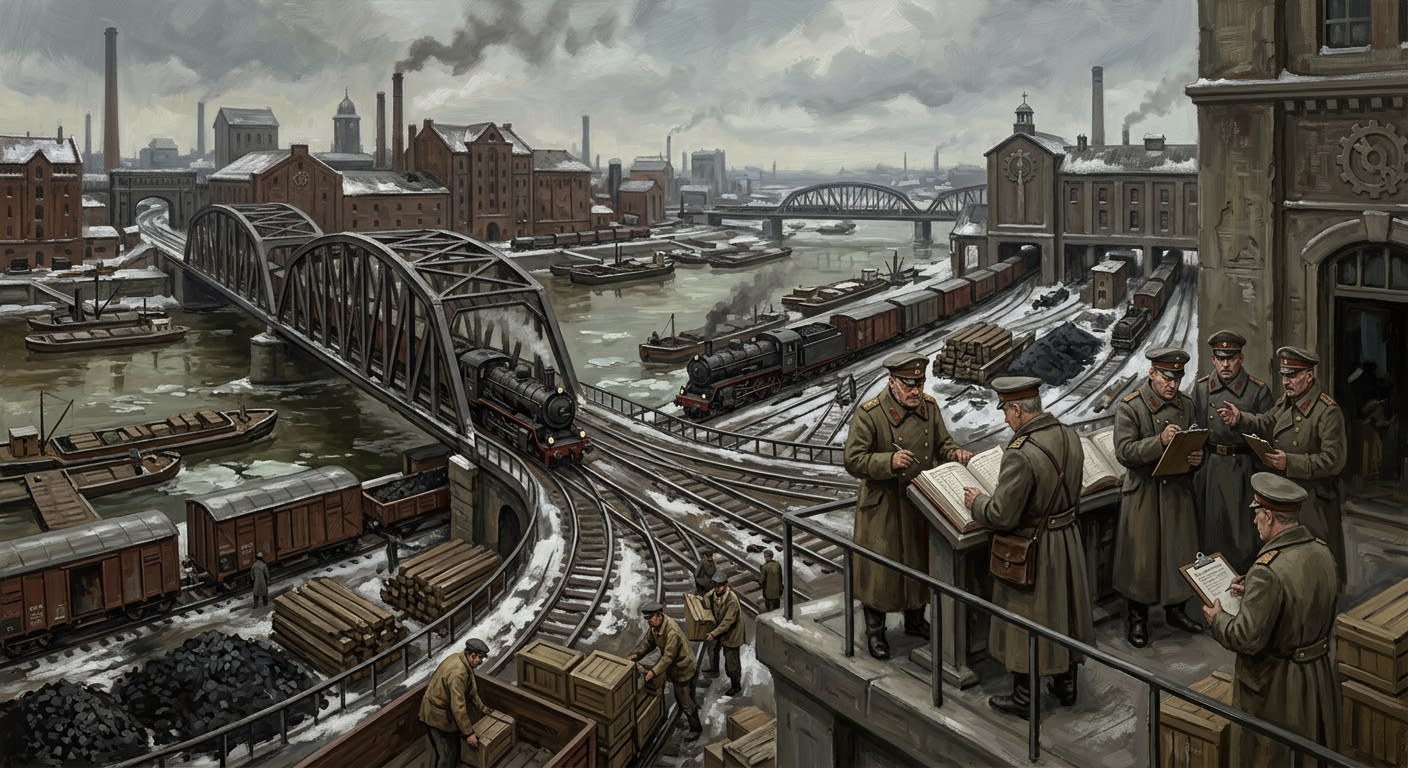
Magdeburg
Where wet cargo becomes northern survival
Magdeburg is the Elbe transfer hinge no one praises until the rail throat chokes: damp ledgers, bridge limits, winter tables, and cargo made obedient.
Codex Ref. II.2.07-096
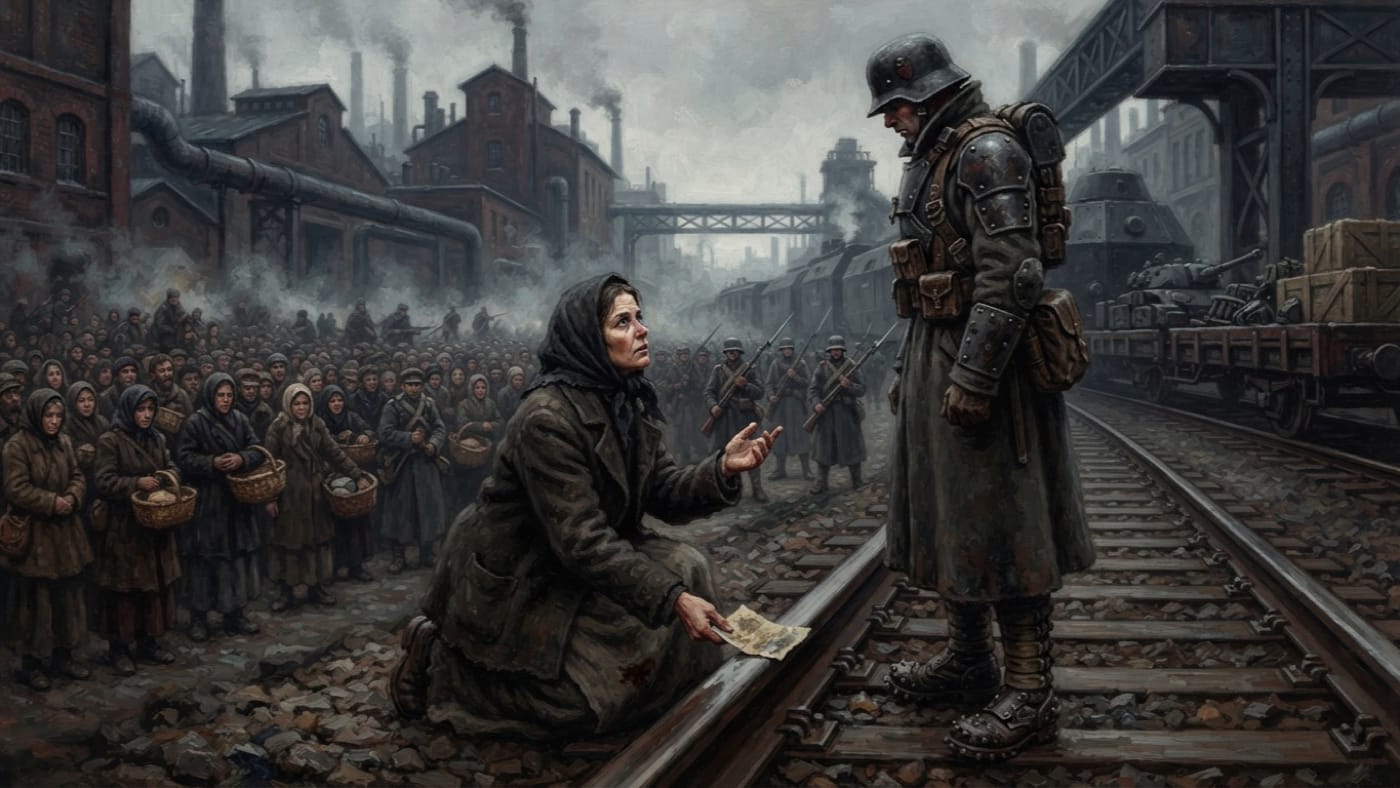
Marta Krol
One remembered name, one ration card, and a boot that stayed still
Later oral accounts name Marta Krol as the bakery widow who laid a ration card on Praga's rails in A.S. 195 and invited a soldier to stamp it with his boot. The boot stayed still; her fate is unrecorded.
Codex Ref. III.2.01-195
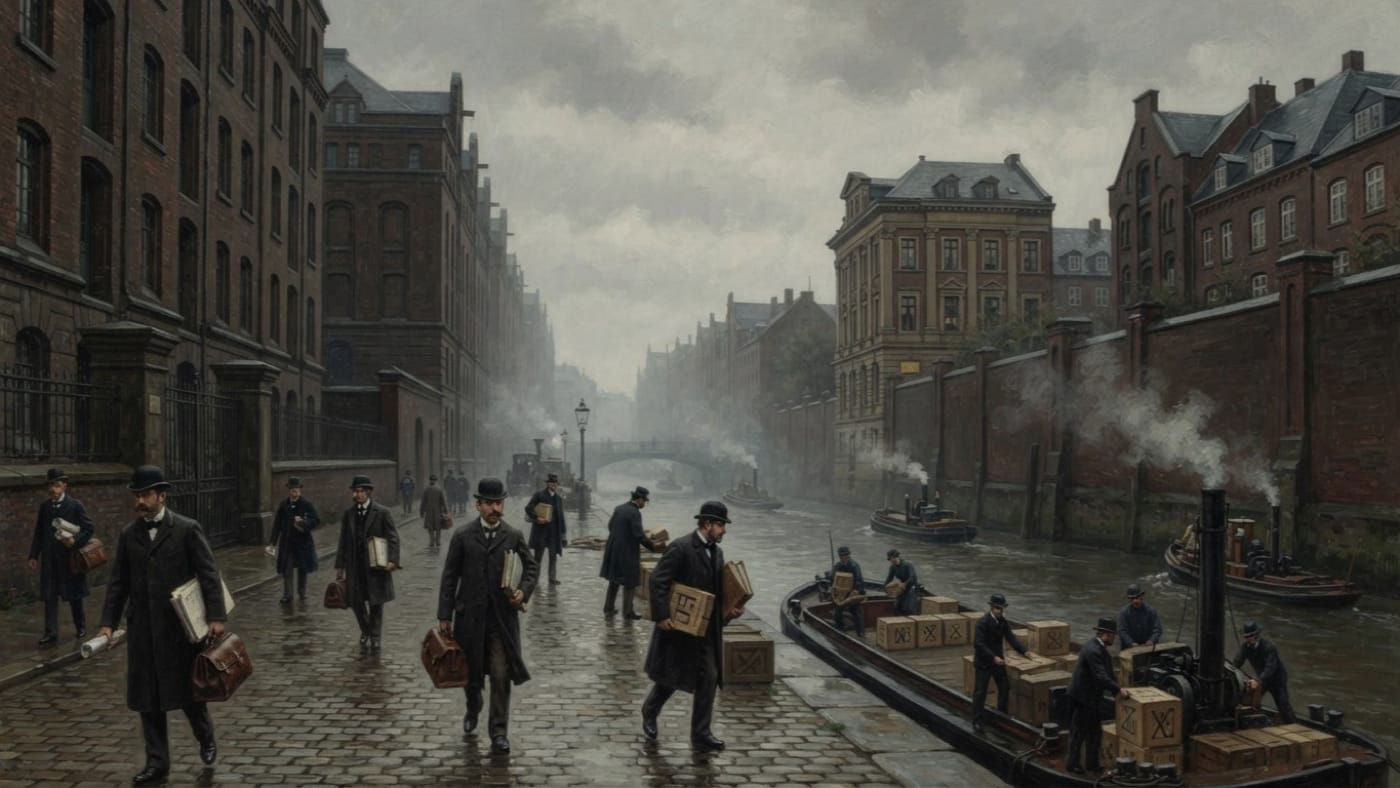
Merchant Quarter
Where the Synod has to knock
Hamburg's Merchant Quarter houses Dutch credit, British grain contracts and foreign factors behind respectable walls. The Synod governs by inspection and feeds its northern front by accepting the terms.
Codex Ref. II.4.09-007
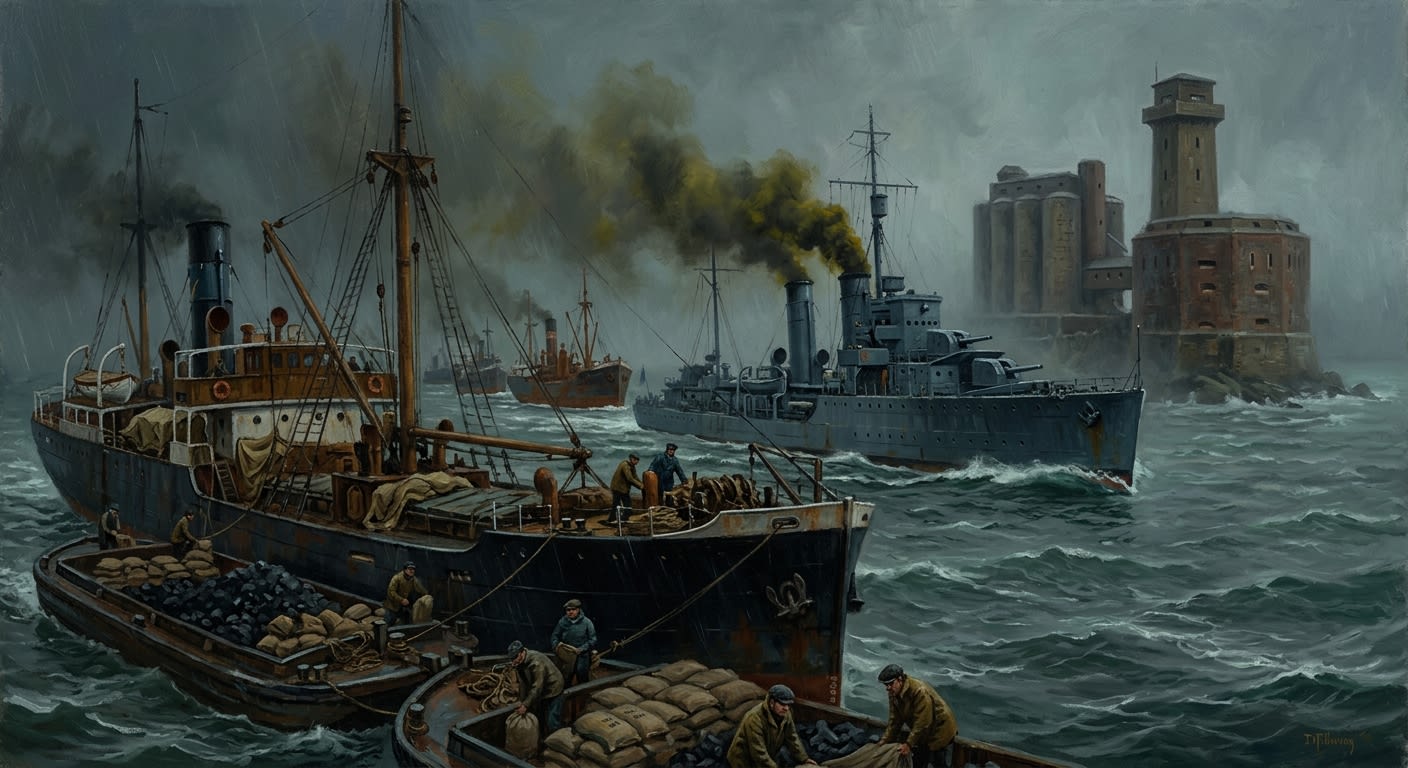
North Sea
The wet border that feeds the Line and refuses the Ledger
The North Sea is the Synod's least obedient frontier: a maritime supply basin of grain, coal, fish, fog, foreign credit, reluctant allies, and weather that accepts no stamp.
Codex Ref. II.4.09-201
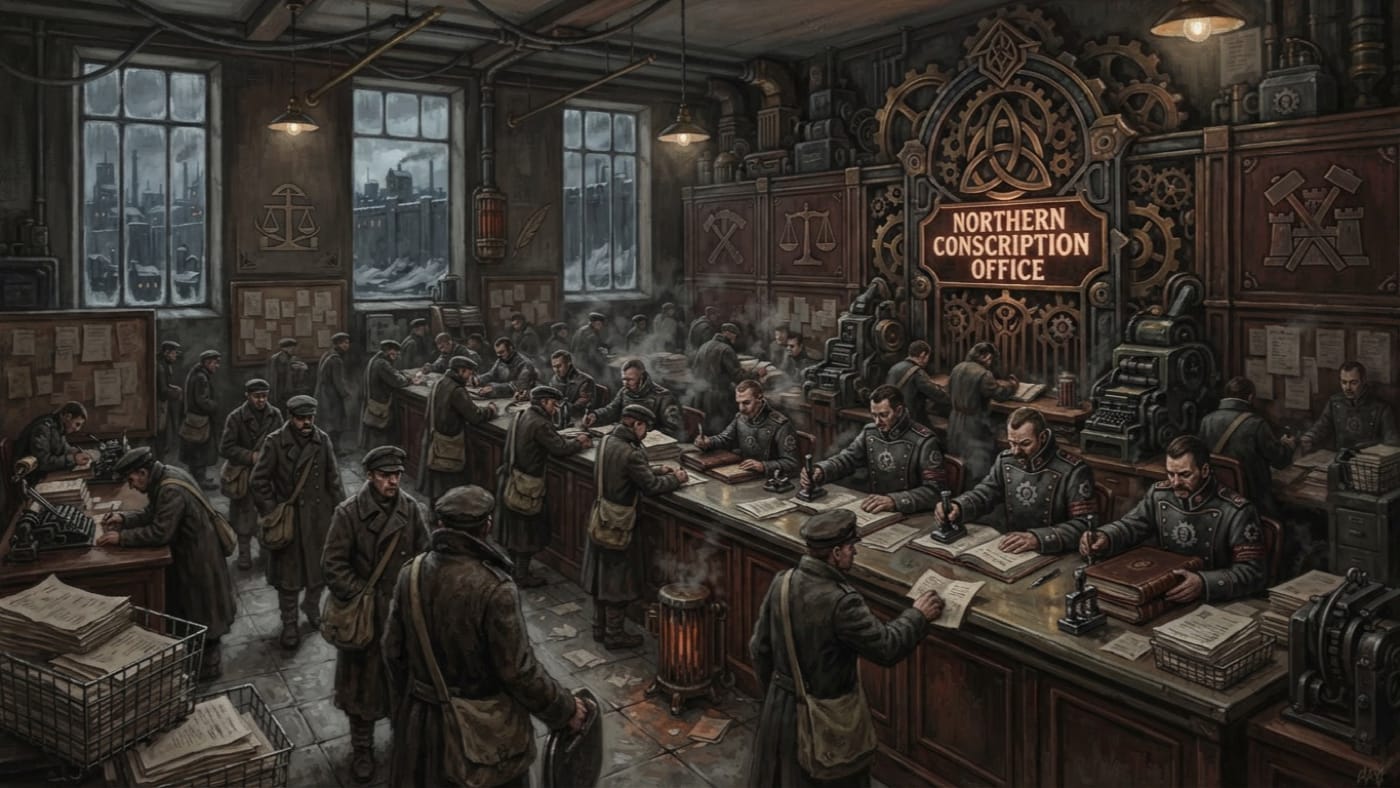
Northern Conscription Office
Every man volunteered. Every man was assigned.
The Northern Conscription Office receives Königsberg's conscripts and reconciles them against losses. Conscription claims the desk; War signs the briefing. Every assigned man is entered as a volunteer.
Codex Ref. III.4.07-1943
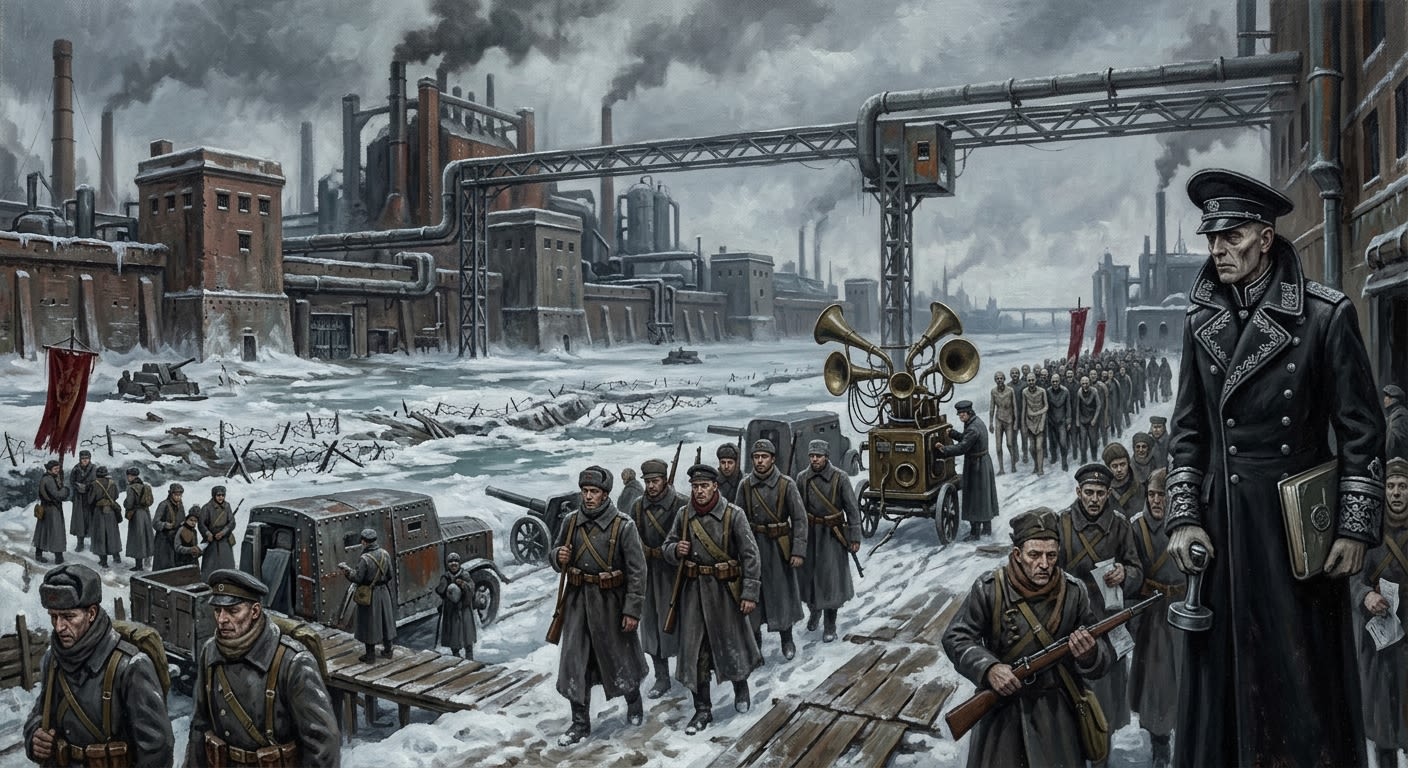
Northern Theater
Where the north remains faithful because terror has not been assigned a better category
The Northern Theater is the Synod's coldest unresolved front: Königsberg, Brest, the Grey, the Nameless Tide, failed hymns, returned faces, echoing confessions, and confidence stamped over fear.
Codex Ref. II.4.10-190
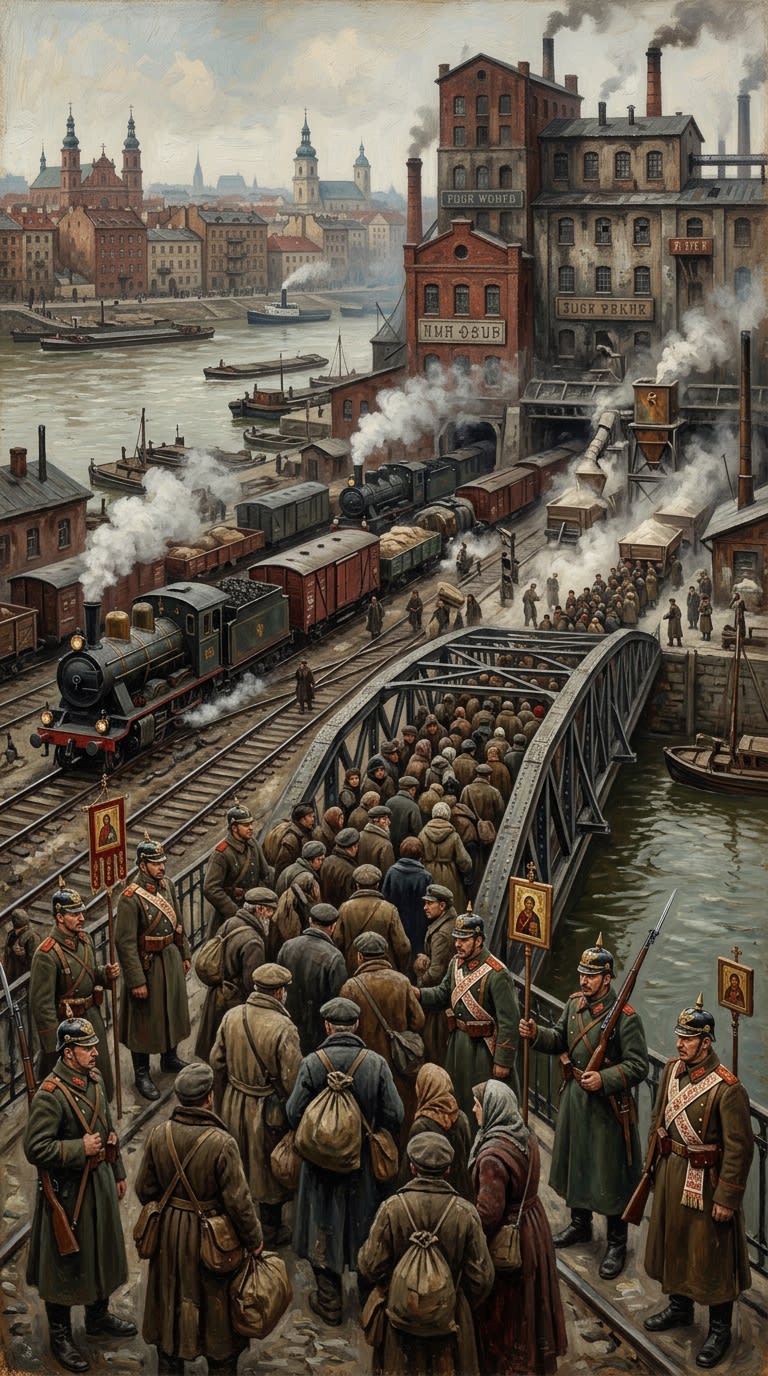
Praga
Warsaw's east-bank throat, where bread teaches logistics to kneel
Praga is Warsaw's east-bank rail throat: refugee room, bridge queue, flour wound, and the district that proved hunger can stop a northern corridor.
Codex Ref. II.3.06-188
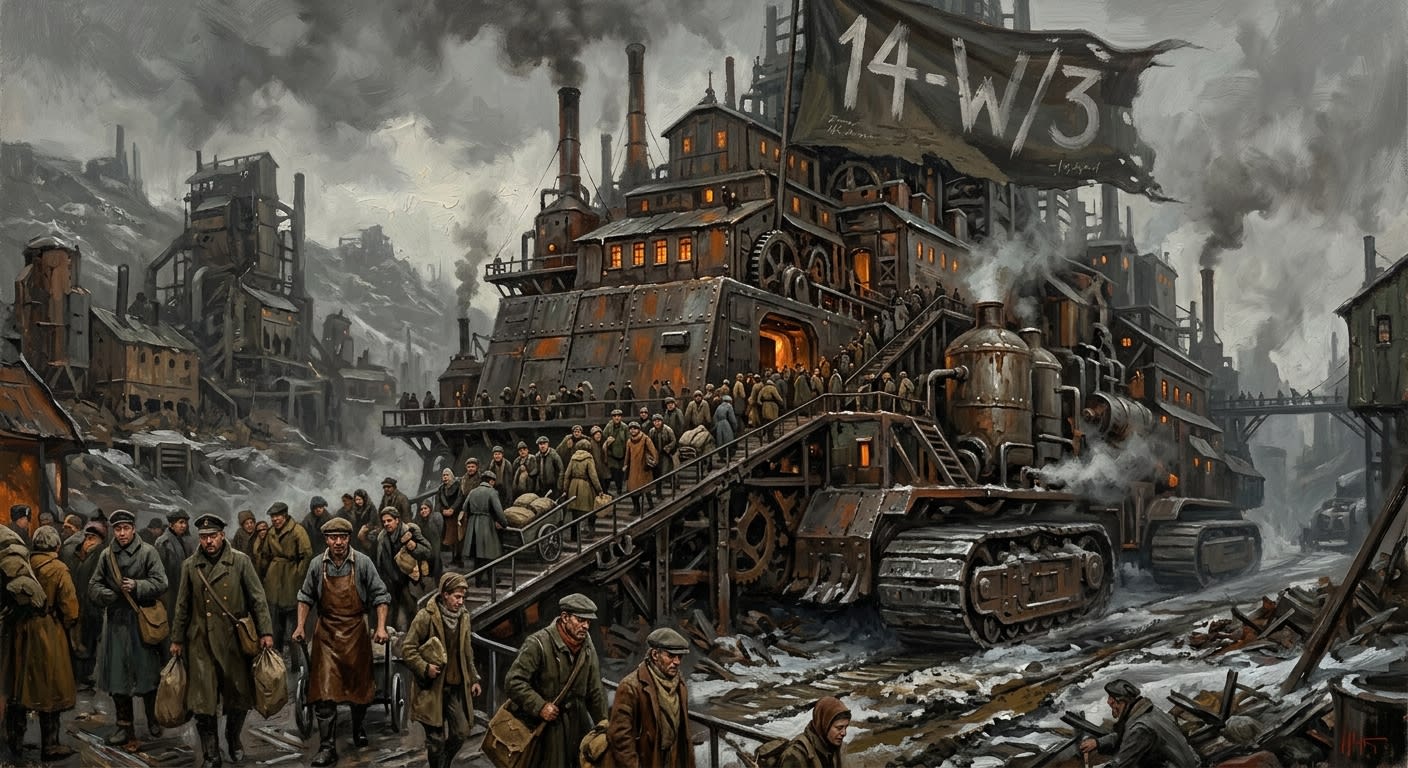
Standing Order 14-W/3
The evacuation order that discovered bakeries
Standing Order 14-W/3 ordered Warsaw to become movable in A.S. 95; a century later, the city remains larger, louder, and better fed by its own disobedience than by Settlement arithmetic.
Codex Ref. XIII.1.87-095

The Heartlands
The safe country, provided one defines safety as distance from teeth and proximity to stamps
The Heartlands are the Synod's safe interior only by infantry arithmetic: Zones 1–3 feed the Line with bread, steel, bodies, bells, paperwork, and bones.
Codex Ref. II.0.02-201
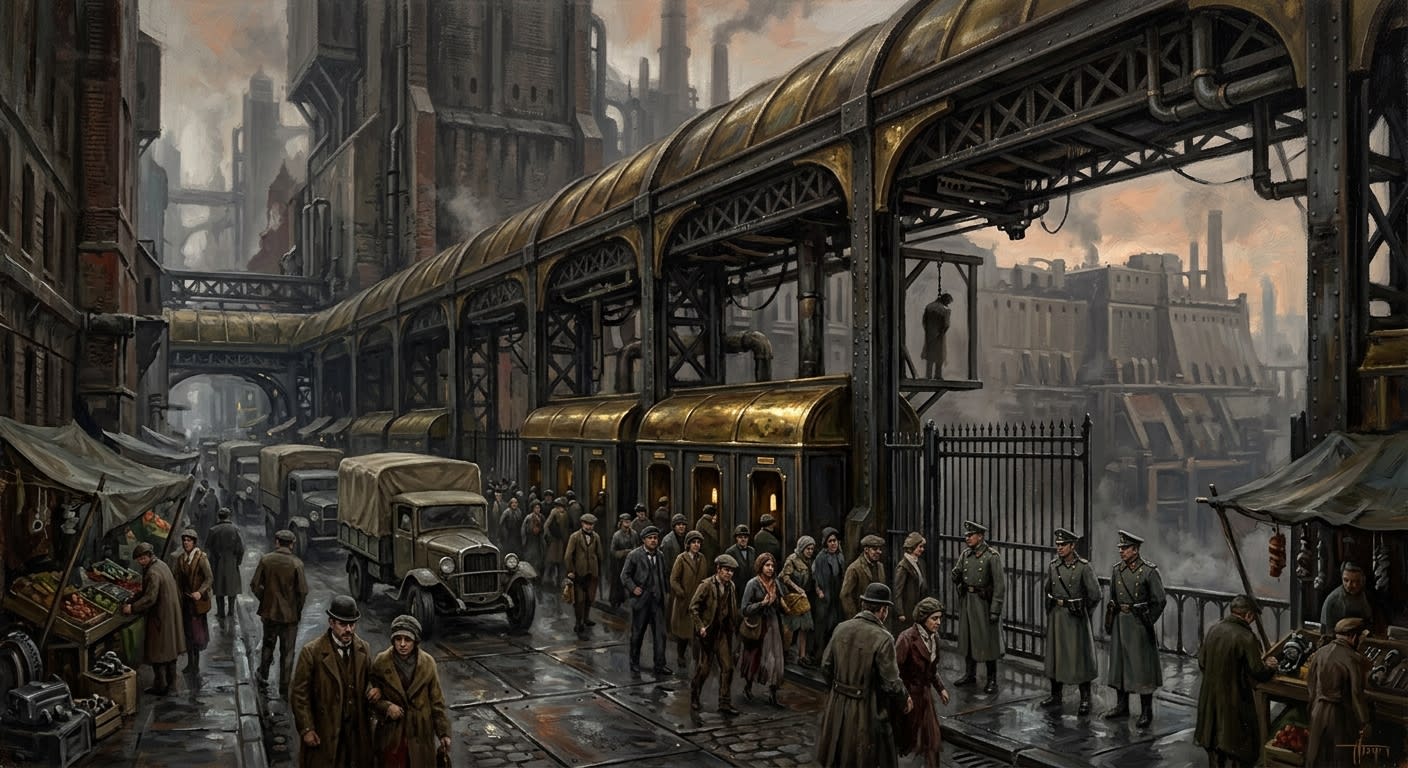
The Ribwalk
Brest’s bridge market, where every crossing learns to confess
The Ribwalk is Bastion-Brest’s upper bridge-deck: market street, convoy throat, gallows approach, curfew funnel, and brass skin above confession booths.
Codex Ref. II.4.08-201
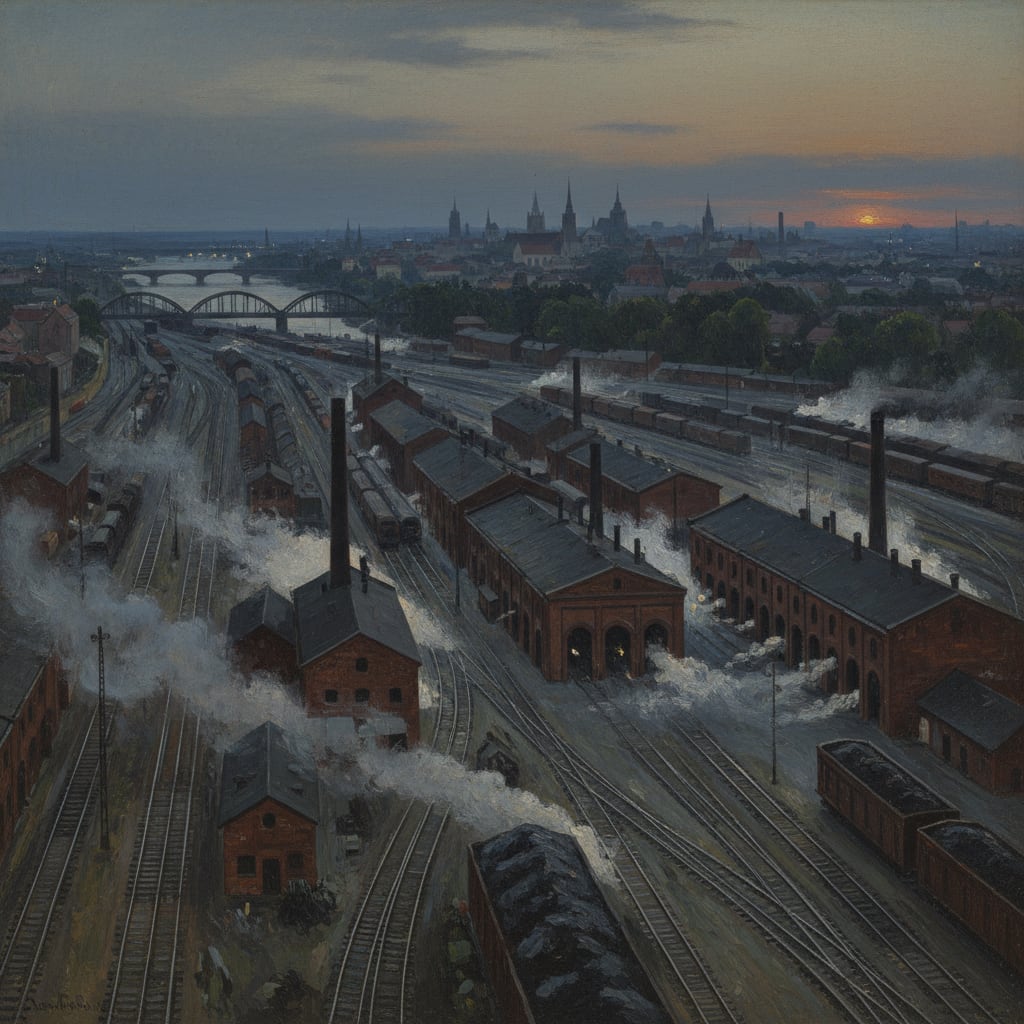
Warsaw
The city the Bureau told to leave, and the bakeries it opened in reply
The Synod's forward staging city on the Vistula — Zone Three, Northern Corridor, entry 14-W. 160 km from the Sagittal Line; close enough to hear the front on clear nights. The Bureau told it to leave in A.S. 95. It has grown by a quarter-million souls since.
Codex Ref. II.4.09-007
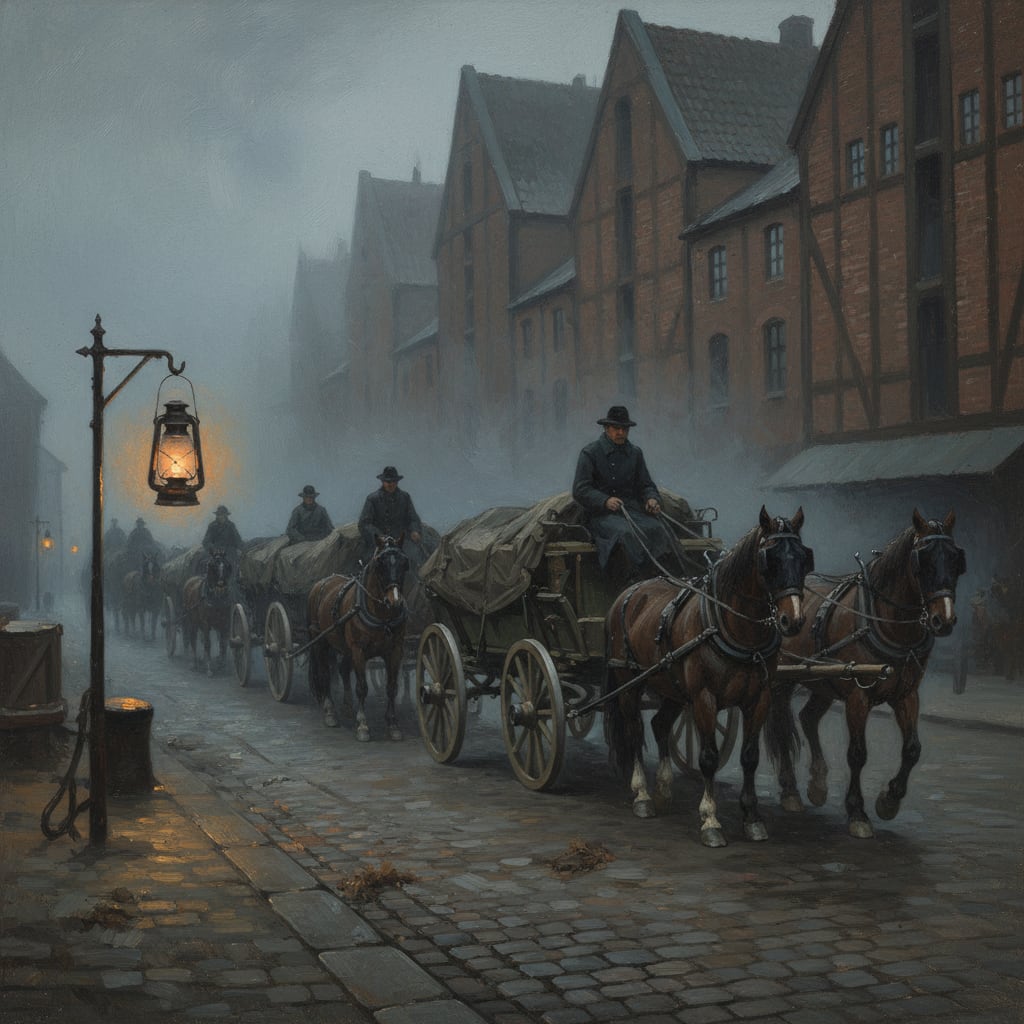
Year of Smoke
Eleven wagons, one fire, and the night the [[bureau-of-shadows|Bureau of Shadows]] stopped being a ghost story
The night Lübeck's harbour records burned, its guilds dissolved, and eleven wagons drove into legend. The Year of Smoke is what happened when the Bureau of Shadows stopped being theoretical and started being operational.
Codex Ref. VII.1.02-001