
#On the Wet Border
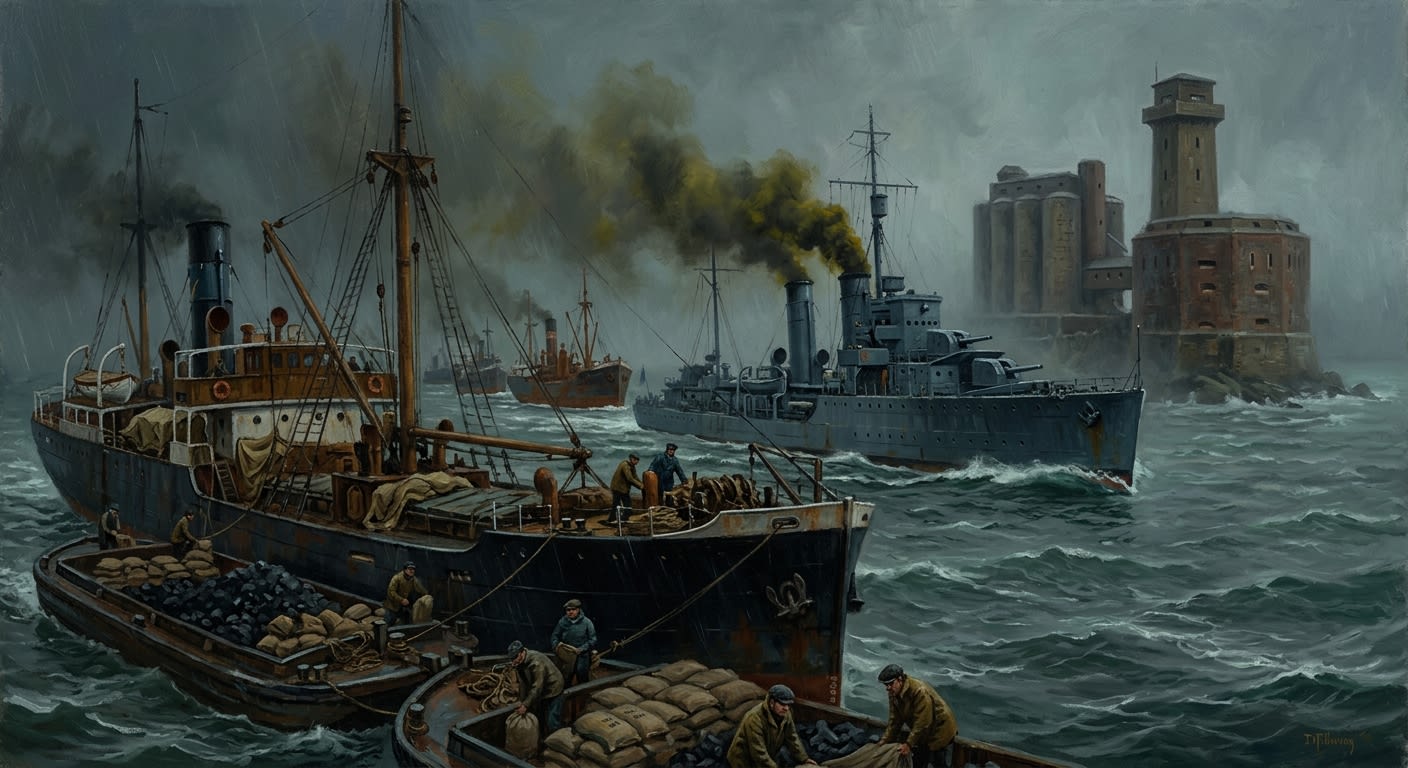
The North Sea is the Synod's least obedient frontier. Land may be surveyed, divided, sanctified, mortgaged, requisitioned, and corrected by a clerk with a hard chair and a good stamp. Water accepts no parish boundary. It takes the ink, smears the seal, drowns the messenger, returns the crate, and demands harbour fees in bodies.
The Bureau of Records classifies the North Sea as a maritime approach, commercial basin, military supply lane, fisheries district, weather hazard, foreign-interface zone, and unresolved theological inconvenience. This is accurate in the way a death certificate is accurate about a martyr. It names the condition and misses the violence.
The sea lies between the British Crown, the Netherlands, Hamburg, Denmark, the Frisian flats, the Scandinavian settlements of the Fractured North, and the northern throat of the Synod's war-machine. Grain crosses it. Coal crosses it. Seal-oil, timber, cod, herring, paper, credit, refugees, sailors, spies, relic crates, fever, forged manifests, and saints of dubious buoyancy cross it. Sometimes they arrive. Sometimes the sea keeps them for audit.
The landward war receives murals because land flatters artists. A bastion has walls. A trench has mud. A dead captain can be painted with one hand raised toward Heaven and the other resting on a map he probably did not understand. The North Sea refuses composition. Its wars are spoilage, fog, delayed convoy, iced harbour, wrong tide, lost mast, false lighthouse, rotten catch, and the small final cough of a man pulled under by rope around the ankle.
The North Sea is safe territory only by comparison with Hell. This is a poor compliment. A man who says the water is safer than the Blightmarsh has said nothing useful except that he has seen neither in winter.
#On Routes, Ports, and the Arithmetic of Hunger
Hamburg is the sea's great Synodal mouth. The Elbe carries inland ambition outward and foreign necessity inward. In A.S. 200 the harbour processed four point two million metric tons of cargo, a number large enough to make Tithes pious and small enough to make War sweat through its collar. The northern front wants fourteen hundred tons of grain per day and receives twelve hundred on honest days. North Sea fog, ice, harbour surge, Dutch bargaining, British delay, and the minor fact of ships breaking in half subtract from that daily mercy.
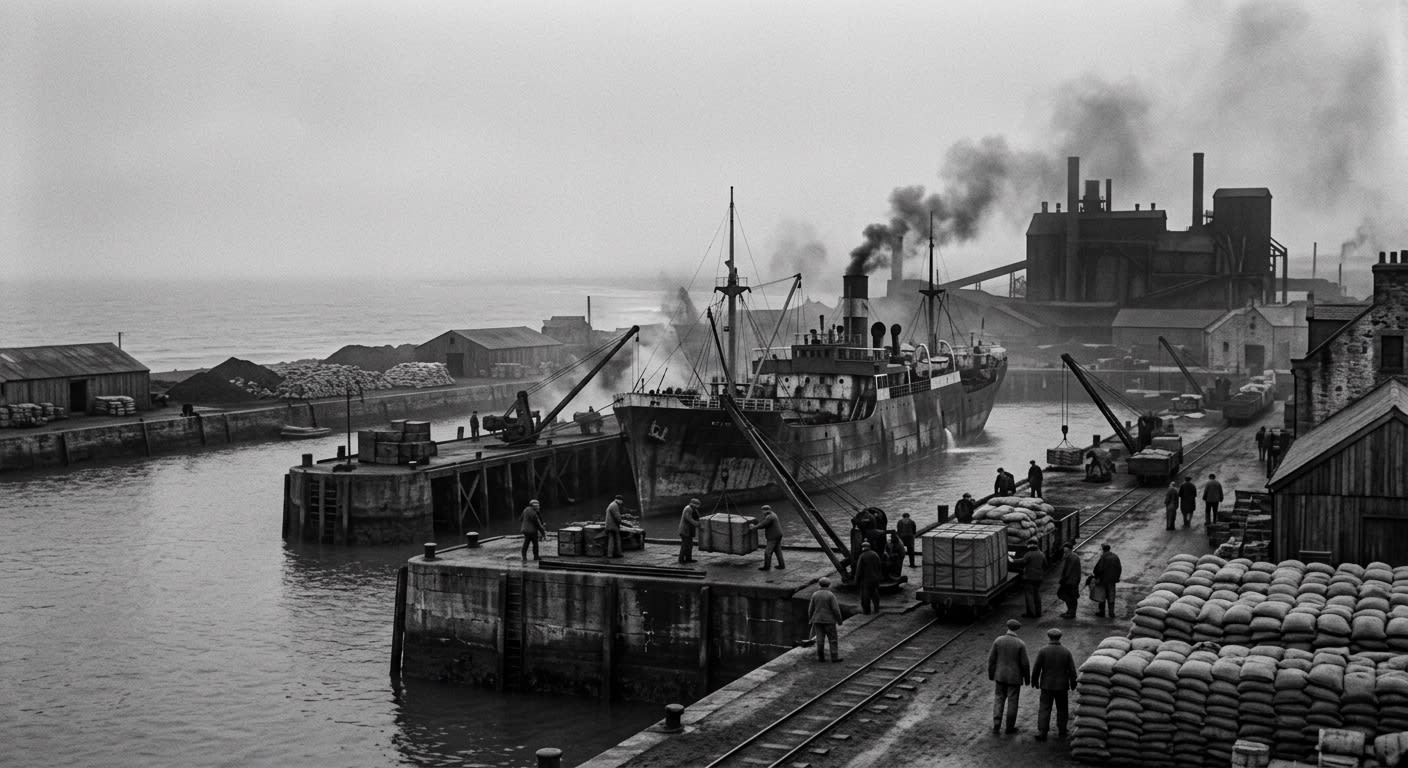
Admiral-Prefect Gerta Halske knows this arithmetic with the intimacy of a surgeon who has stopped apologising to wounds. Her boards list inbound draught, berth depth, spoilage risk, lien status, crane availability, plague flags, rail slots, and the clerical drag of officials who wish to inspect cargo already beginning to rot. Her standing order — paper follows cargo unless paper is the cargo — remains the finest maritime doctrine issued in Hamburg since the old guilds learned that rope, like law, holds best when tarred.
The Bureau of War pretends Hamburg commands the sea. Hamburg commands docks. A dock is a promise made after the sea has finished making threats. Ships approach through channels that move silt under grey water; pilots measure depth with poles, bells, curses, and family memory; tug crews read the colour of chop and the smell of mud with a seriousness theologians reserve for heresy trials. A vessel at berth becomes cargo. A vessel at sea remains hypothesis.
The routes divide by appetite. British grain runs eastward in heavy-bellied ships whose captains speak of weather as if insulting a rival duke. Welsh coal comes black, wet, necessary, and accompanied by invoices whose confidence could heat a chapel. Dutch credit packets travel in smaller, faster vessels with double manifests and locks so expensive the lockmaker should be investigated by Tithes for ambition. Scandinavian fish and seal-oil descend from the north in hulls whose seams smell of frost, salt, and old pagan competence painted over with passable devotional names.
The Frisian tidal approaches serve as winter workaround when Hamburg's outer harbour freezes or clogs. The Salt-Vigil Causeways reach toward them like a hand trying to pull a drowning ledger from water. In mild months coastal convoys run Dutch ports to Hamburg in tight order, hulls close enough for shouted prayer and far enough apart for one mine, sandbar, or bad miracle to ruin only one account. In hard weather the ships scatter, because formation at sea is an office fantasy and captains prefer survival to symmetry.
Every delay travels east. Grain held off Heligoland (Unregistered) for thirty-six hours means ration thinning at Bastion-Königsberg two weeks later. Coal lost off the Dogger grounds (Unregistered) means cold barracks at Bastion-Brest. Seal-oil diverted by a Scandinavian elder offended over paper stamps means lamps guttering along forward roads. Tithes calls this market sensitivity. War calls it logistics. The soldier calls it an empty bowl and is correct.
A Bureau of Pilgrimage circular of A.S. 196 described the North Sea lanes as “supporting routes peripheral to the primary continental struggle.”
Corrected. The northern front eats by water before it fights by rail. A lane that carries bread to half a million soldiers is not peripheral unless the writer has confused maps with meals, a common error among clerks who have never missed supper.
#On the Dutch, the British, and Other Licensed Humiliations
The Synod governs much of Europe and commands less of it than sermons imply. The North Sea proves this every week. The British provide ships without obedience. The Dutch provide credit without reverence. The Scandinavians provide fish, timber, and oil without submitting their Watch bells to Strasbourg pitch. Hamburg receives all three, blesses what can be blessed, taxes what can be counted, and ignores the rest under emergency practice.
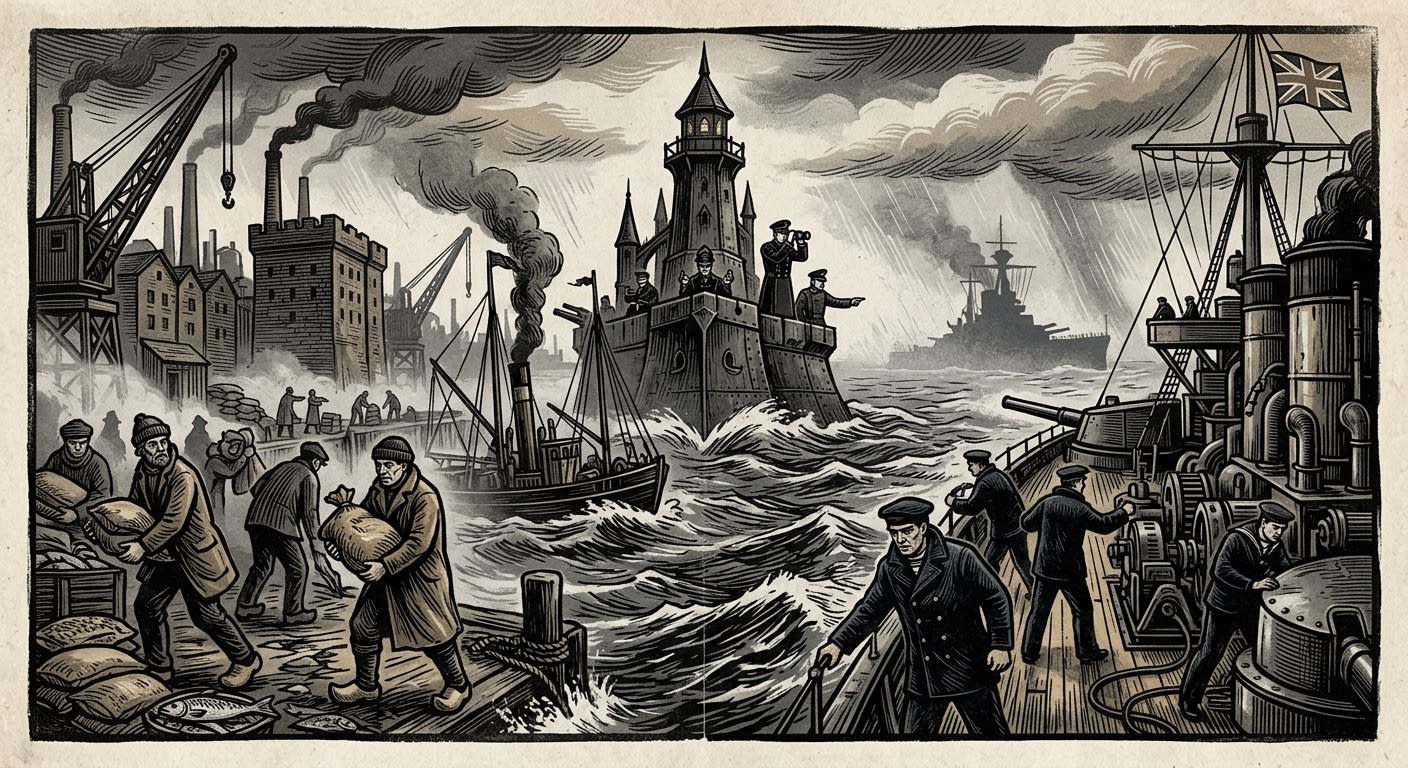
The British grain captains are maddeningly efficient. They arrive with holds full, invoices clean, sailors irreverent, and contracts written in legal English that slithers around Synodal assumptions like an eel through choir stalls. They do not bow enough. They do not explain enough. Their chaplains, when present, smell of damp wool and dynastic compromise. Their ships arrive.
The Dutch are worse because they understand paper. A British captain may offend Doctrine by failing to kneel. A Dutch factor offends the entire Synod by kneeling at exactly the right moment, producing an addendum, defining the kneel as nonbinding, and charging interest on the delay. Dutch pilots know fog routes along the Channel and North Sea that our own captains pretend not to need until weather tastes of the East. Dutch bankers finance War through Hamburg intermediaries while mocking Tithes in footnotes so narrow they cut wax.
The Scandinavians bring a colder insult: usefulness without paperwork. The Fractured North has no patience for Strasbourg's categories and no paper mills to satisfy them. It sends cod, herring, halibut, seal-oil, timber, men, women, axes, harpoons, and a species of silence the Bureau has repeatedly failed to prosecute. Its ships carry warm-papers stamped by elders who deny stamping them unless the stamp is needed. Purity's investigation into forged Northern transit documents began in A.S. 174 and has produced no arrests because arresting an elder requires reaching the settlement, reaching the settlement requires warm-paper, and warm-paper requires the elder's stamp.
The North Sea holds these humiliations together. It is a negotiating table with waves. Every foreign factor knows the Synod's need. Every Bureau knows the foreign factor knows. The result is maritime diplomacy: polite theft, licensed delay, sanctified extortion, and cargo discharge before anyone says aloud how little command survives beyond the harbour light.
The Bureau of Doctrine names this arrangement Providential Cooperation. Tithes calls it foreign pressure in private memoranda and then seals the memoranda before Doctrine can object to the word. Halske calls it Tuesday, which is why Hamburg survives her superiors.
#On Fish, Rot, and the Year Without Dawn
The North Sea remembers A.S. 32. I dislike attributing memory to water, because poets do it and poets should be licensed only in emergencies, but the evidence offends restraint. During the Year Without Dawn, the fisheries reported catches that arrived already decomposing. Cod came up soft and translucent, flesh loosening from bone as if weeks dead though pulled from living water. Herring nets rose heavy with silver bodies whose eyes had gone milk-white before the fish stopped moving. Several boats returned with holds that smelled less of rot than of cellars under churches after flood.
Professor Gérard Molyneaux, in his decorated error, folded the North Sea reports into prolonged low-light marine distress. His phrase was elegant, cowardly, and cited four hundred and twelve times. Fishermen used shorter words. They said the fish had been waiting.
The Bureau of Medicine's later notes divide the A.S. 32 catches into three categories: ordinary spoilage under abnormal conditions; rapid post-capture dissolution; and pre-capture decay, a phrase that should have caused the note-taker to drop his pen and seek a priest. The third category was quietly transferred to Records, then to Doctrine, then to a cabinet whose label has been revised so often the glue is thicker than the paper.
The fisher settlements kept their own books. Scarborough (Unregistered) marked thirteen boats returned, nine boats lost, four boats with crews alive and cargo unfit for dogs. Dutch logs from Texel (Unregistered) record one vessel whose deck was covered in fish scales though no nets had been deployed. A Hamburg customs slip lists forty-two barrels of cod rejected for devotional foulness, which is not a category Tithes admits to using. A Scandinavian elder near Bergen reported a catch that thawed, breathed once in the hold, and spoiled every barrel of grain aboard.
FISHERY EVENT — A.S. 32, NORTH SEA BASIN Vessel: ████████████ of Whitby (Unregistered). Cargo: cod, herring, one unregistered body wearing no crew mark. Observation: body contained fishhooks from six ports, three eras, and one pattern discontinued before A.S. 0. Disposition: cargo burned; hull scuttled; crew statements sealed under pre-Concordat anomaly transfer. Later Doctrine note: connect to Greyling births? █████████████.
After the Dawn returned, fish recovered. This is the official sentence. It is tidy enough to be false in several useful ways. Catches resumed. Markets reopened. Salt houses filled. Men ate what the sea provided because hunger outranks metaphysics. Yet certain fisheries remained avoided for years: the eastern Dogger, the black drift north of Heligoland, the shoals whose water in grey weather turns the colour of old pewter and gives back no echo to the sounding lead.
The North Sea's present fisheries feed the Fractured North and supply Hamburg with surplus protein when grain falters. Halske's contingency for British grain stoppage begins with commandeering every fishing vessel in the basin and feeding the front herring and sawdust for six weeks. It would fail. It would fail slower than starvation, and in wartime that is enough for a memorandum, a ration order, and several thousand ugly bowls.
#On Fog, Bells, and the Watch
Fog is the North Sea's priest. It arrives without invitation, erases the horizon, muffles bells, confuses distance, and makes every ship perform a private confession. Ordinary fog is troublesome. Eastern-smelling fog is another office.
Sailors know the difference. Ordinary fog beads on rope, wets the beard, hides light, and lifts under sun or wind. The wrong fog lies flat on water like lead poured thin. Lanterns blur inward. Sound travels in corners. A bell struck from the foredeck answers from behind the stern. Men taste copper. Dogs crawl under tarpaulins. Captains stop joking. The Dutch mark it with chalk lines on private charts. British captains call it bishop-weather, because it arrives severe, unwanted, and convinced of its own authority.
The Fractured North's Watch (Unregistered) maintains cliff-fires and bells against such fog. Their bells are older than the Bell Codex, tuned in intervals Strasbourg cannot measure without inventing new embarrassment. A Rites observer named Aldric Moen spent six weeks near Bergen in A.S. 178 and returned with a three-page report: two pages of weather, one sentence of sense. The bells work. Do not change them. Rites classified the report as inconclusive, which is what a Bureau calls a conclusion that did not ask permission.
The Synod has tried to harmonise Northern bell practice since A.S. 92. It has failed for excellent reasons. First, the Scandinavians refuse to admit their bells require correction. Second, the Bureau of Bells cannot prove the bells are wrong without proving they do something Strasbourg's bells do not. Third, every attempt to retune a cliff-bell has coincided with bad weather, missing inspectors, or elders shrugging in a manner too well timed to be innocent.
The Bureau of Bells Northern Office classified all non-standard sea-bell tunings as deprecated liturgical variants requiring harmonisation.
Suspended. Harmonisation remains pending until the Bureau determines whether correction can occur without disabling whatever the bells are tuned against. The investigation has been pending since A.S. 186. Long may it age in its own cowardice.
Convoys carry bell-frames for the same reason soldiers carry knives after receiving rifles: older tools remain useful when modern doctrine begins screaming. A ship in wrong fog strikes low, waits, strikes again. If the answer comes from shore, she turns toward it. If the answer comes from open water, she prays by gesture and changes course. If no answer comes, the captain counts crew, seals the hold, and orders no man to speak a childhood name aloud.
The sea listens. That is the sentence sailors use. Doctrine dislikes it because listening implies intention. War dislikes it because intention implies opponent. Tithes dislikes it because an opponent should be billed. I dislike it because it may be true.
#On Wrecks, Relics, and the Profits of Drowning
Every coast facing the North Sea is a reliquary pretending to be geology. Hulls lie under sand. Bells sit in mud. Figureheads rot in church porches. Cargo manifests survive in bottles, oilskin, sailor memory, and court cases older than the judges. Calais built its breakwater around wrecks from the Year Without Dawn and authenticated two hulls as maritime reliquaries, involuntary. The phrase is hideous. It is also useful, which condemns it to permanence.
Wreck law differs by coast and greed. Dutch salvage contracts name percentages before prayers. British admiralty courts name jurisdiction before corpses. Hamburg names customs liability before ownership, since even wrecked cargo may owe duty if it comes ashore with sufficient structural integrity to be taxed. Scandinavian settlements name the dead first, the cargo second, and the weather last, because they understand hierarchy in ways Strasbourg discovers only during famine.
The Relics officers along the coast are overworked, undertrained, and spiritually vulnerable to barnacles. A sailor's bone found in a wreck may be martyr-remnant, accident, piracy evidence, demonic bait, or lunch interrupted by drowning. A ship's bell rung under panic may become devotional object if enough widows kneel before it. A cargo of rosaries lost in storm and recovered with shells inside the beads may require classification beyond the competence of a junior examiner who expected driftwood and got theology with teeth.
Contraband thrives among wrecks. Demon-glass travels wrapped in fish skins. Forbidden optics ride inside salted cod barrels. Dutch pamphlets enter under flour seals. British naval maps vanish into Hamburg's Merchant Quarter (Unregistered) and return as rumours in taverns where Purity officers pretend to drink. Fractured North warm-papers pass from sailor to longshoreman to clerk with the serene confidence of documents that know everyone needs them.
The sea makes criminals of honest men by delaying cargo until law becomes starvation. A captain who cuts a seal to jettison spoiled grain commits violation. A captain who keeps sealed spoiled grain may poison a garrison. The law, sitting dry in Strasbourg, chooses purity. The captain, standing over a hold full of rot, chooses smell. I trust smell more often than law at sea.
#On Storm Discipline and Shipboard Piety
Every North Sea vessel carries two chapels: the legal one, registered in the ship's papers, and the real one, improvised wherever fear gathers. The legal chapel is a locker, shelf, brass icon, rope-bound missal, or tiny painted saint screwed to the bulkhead with the expression of a bishop assigned to cargo. The real chapel is the foredeck when fog answers, the bilge when the pump fails, the galley when the cook finds a fishhook in bread, and the captain's cabin when a sealed crate begins sweating through its wax.
Shipboard piety offends shore clergy because it is practical, dirty, and successful. Sailors bargain with saints as they bargain with chandlers: directly, suspiciously, and with records kept by memory rather than form. Saint Nicholas (Unregistered) receives candle ends. Saint Varda receives nails. Saint Harrowglass receives glass beads, quietly, from men who deny knowing his name. The Bureau of Rites disapproves of half these devotions and relies on all of them once the pilot loses sight of harbour.
Storm discipline is older than Synod discipline and less forgiving. Hatches are sealed by the youngest hand aboard, so youth learns consequence. Manifests are wrapped in oilskin and tied above the chart table, because cargo may drown but paperwork must arrive bloated and legible. Bells are muffled until needed. Names of the dead are not spoken until harbour, lest the water hear an inventory and request additions. Men cut hair before long winter crossings and burn it ashore, a custom Rites has failed to abolish because every abolition circular sent to the Dogger fleet has returned damp, unread, and smelling faintly of cod.
The foreign crews add their own blasphemous competence. British captains nail horseshoes over cabin doors and pretend this is decorative ironwork. Dutch pilots keep private tide saints in ledgers disguised as depreciation tables. Scandinavian crews scratch runes under devotional paint and look at the inspector with such calm that the inspector records “minor ornamentation, non-actionable.” Hamburg crews make offerings to cranes, which is idolatry only if one has never watched a crane decide whether six tons of grain will become shipment or homicide.
A captain's true sacrament is the count. Crew at departure. Crew after fog. Crew after storm. Crew before harbour. The count is made by face, hand, scar, cough, superstition, and abuse. A written crew roll is useful to Records and widows. A living count is made in the dark by a man touching shoulders and knowing which shoulder should flinch. If the number is correct and the faces are wrong, no one sleeps. If the faces are correct and the number is wrong, no one speaks.
There are shipboard tales of double crews appearing in fog, dead sailors answering roll from the hold, boys aging a decade between watch bells, Dutch pilots returning with maps that show harbours not yet built, and one British coal ship that arrived at Hamburg with every man aboard convinced they had sailed for six hours when the harbour clocks insisted seventeen days had passed. Tithes fined them for late entry. War unloaded the coal. Doctrine requested statements. The crew deserted before Purity could interview them, which shows admirable instinct.
#On Present Strategic Assessment
As of A.S. 201, the North Sea sustains the Northern Corridor while threatening it by existing. Hamburg depends on it. Kanzleiburg depends on Hamburg. Bastion-Königsberg and Bastion-Brest depend on the Corridor. The Line, which sermons describe as stone, is fed by wet wood, foreign credit, dirty coal, fish, rope, fog judgment, and sailors who would rather be paid than blessed.
The Bureau of War maintains convoy schedules by season: heavy grain in late summer and autumn, coal before winter closure, seal-oil through cold months, timber and iron by opportunity, fish whenever hunger outruns dignity. The Bureau of Tithes audits manifests with more success than virtue. The Bureau of Purity screens crews for eastern contamination and foreign literature. The Bureau of Records attempts to reconcile sea-loss reports with dock arrivals and has learned to leave a column for “unreturned but heard.”
Halske's office holds the present system together with boards, threats, waivers, and the brutal grace of a woman who knows which rule must be broken before which regiment starves. Dutch pilots continue to sell routes no Synod chart admits needing. British captains continue to arrive late, curse the weather, unload grain, and charge demurrage with Protestant efficiency. Scandinavian boats continue to appear out of fog with fish, oil, and silence.
The risks are plain enough for even a committee. A hard freeze closes Hamburg's outer lanes. Wrong fog scatters convoys. Foreign policy in London (Unregistered) or Amsterdam tightens grain or credit. The Fractured North withdraws oil after some Tithes idiot discovers courage in a tax schedule. A second Year Without Dawn poisons the fisheries. A hostile intelligence learns to imitate Watch bells. Any one of these would thin the northern front. Two would break ration discipline. Three would make sermons taste of sawdust.
At dawn from the Hamburg quays the North Sea is not visible as a grand thing. It arrives as smell: salt, tar, fish, coal smoke, wet hemp, bilge, foreign tobacco, old rain, and bread sealed in holds before it becomes ammunition against despair. Gulls shriek over customs roofs. Dock bells answer ship bells. Clerks stamp paper that will be damp before noon. Somewhere beyond the estuary a captain leans into fog, counts his crew by touch, and decides whether the bell he hears is shore, ship, or invitation.
The sea keeps its own ledger. We merely borrow pages.