
#On the Second Ravelin and the Marsh That Eats Names
The Ravelin of Purity is the Second Outer Ravelin of Bastion-Constantinople, sunwise after Vigilance and before Obedience, facing the marshes where Kargath has taught water to hunger. The old plan names it Ravelin Two. The soldiers call it the White Lip, because lime dust gathers along its parapet and every mouth posted there cracks by the third watch. The Bureau of Purity calls it a forward instrument of doctrinal hygiene. The garrison calls it what it is: the place where appetite is inspected before it becomes treason.
Its enemy is near. Kargath's dominion begins where the reeds begin to crawl. The marshes opposite Purity blackened after the Blackening of the Bosporus, when water soured, algae rose like bile scum, and supply wagons meant for Constantinople arrived as mobile rot with seals still hanging from the axle hooks. Men blamed bad road discipline at first. Men always blame roads before they blame Hell. Roads cannot defend themselves. Hell, regrettably, can.
The ravelin's virtue is not innocence. Innocence died somewhere east of Debrecen and was eaten before Records could assign a file. Purity means separation: clean from foul, ration from lure, thirst from invitation, confession from hunger-talk, comrade from meat. It is a knife word. The Synod has wrapped it in white cloth to spare parish sensibilities. The blade remains.
#On Its Raising, Whitewash, and First Offences
Bastion-Constantinople was fixed as southern anchor in A.S. 68, when chain, curtain, emergency palisade, and refugee panic became a fortification by the simple miracle of being taxed in one name. The outer ravelins hardened through the next decades into six public virtues: Vigilance, Purity, Obedience, Fortitude, Sorrow, Correction. The order is sunwise along the Sagittal Line. The theology arrived afterward and has been pretending seniority ever since.
Purity began as a drainage and quarantine face. The ground there lay low, wet, and mean, taking seep from the old works and the eastern approaches. Early engineers cut sluices, built reed screens, laid lime beds, and stationed two chaplains to bless runoff because no one in A.S. 70 had yet learned that runoff in Constantinople has opinions. By A.S. 91 the temporary face had acquired a permanent parapet. By A.S. 104 it had its own ration inspection porch. By A.S. 113, after three sentries were found chewing chalk from the embrasure stones and calling it bread, the Purity name stopped being decorative.
Whitewash is its sacrament. Lime on the parapet. Lime on the ration benches. Lime in the drainage mouths. Lime under the fingernails of soldiers who have forgotten how clean hands feel. The walls are whitened weekly during ordinary season and daily when the marsh exhales. The Bureau of Engineering objects that excessive lime damages stone. The Bureau of Purity answers that insufficient lime damages souls. Both are correct, a condition that always slows repair.
The founding offence of Purity was small enough to be believed. A ration cart from the western granaries arrived with proper seals, dry sacks, and a driver who could recite the weigh-prayer. The sacks contained grain. The grain passed visual inspection. At boiling, the first kettle formed teeth. One cook lost three fingers. One chaplain declared the teeth symbolic. A quartermaster beat him with the ladle and was reprimanded for striking clergy with kitchen property. The reprimand survives. The cook's fingers do not.
The cart seal later matched a warehouse chit from the Hammers, though the cart had never passed through the conscript quarter. Records filed this as routing confusion. Purity filed it as appetite contamination. War filed it as lunch delayed by argument and demanded another kettle.
#On the Marsh Face and the Hunger Drills
The upper parapet of Purity looks eastward over ground that refuses every honest category. Marsh, trench, tidal flat, corpse pond, supply road, reed bed, devotional warning, military inconvenience: all these words have been stamped on the map and all of them have come away wet. The reeds move without wind. The water froths with algae the colour of old bile. On warm mornings a smell rises from it like a butcher's ledger left open in rain.
Kargath does not assault Purity the way Maldrake assaults stone. He tests digestion. A dead mule at the marsh edge, still wearing a western harness. A sack of flour found dry atop black water. A voice below the parapet asking for broth in a child's accent. Bread in a soldier's pocket turning warm after midnight. The first lesson of Purity is that hunger has grammar. It asks. It flatters. It uses names.
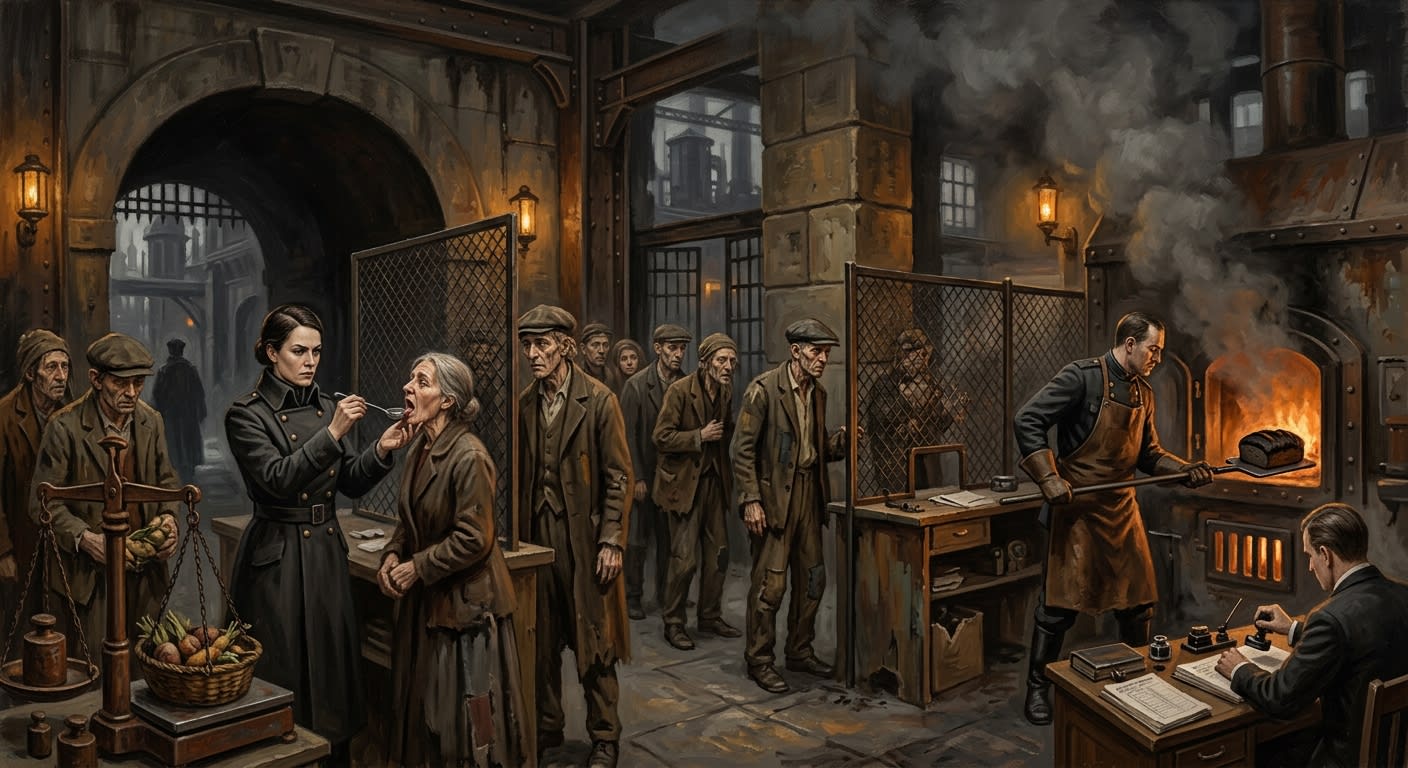
The ravelin maintains three inspection porches. The First Porch weighs incoming rations. The Second smells them. The Third asks the men what they remember eating. The third test catches more corruption than scales or dogs. Kargath may turn bread to larvae, water to bile, flour to white worms that recite saints' names in the sack, but he is careless with memory. A soldier who insists he has not eaten while grease shines on his lips is not yet damned. He is useful evidence. The worst sacks are sent to the Foundry Quarter for burning in sealed furnaces; the worst men are sent to the Ash Gardens if Mercy can still claim them and to the white cells if it cannot.
An early field pamphlet advised soldiers on Purity watch to “master hunger through disciplined contemplation.”
Withdrawn after the pamphlet writer spent one night on the Second Porch and attempted to eat the corner of his own credential. Current guidance reads: report hunger, bind hands if necessary, mock inspirational language.
The marsh guns are short, ugly, and beloved by practical men. They fire salt canister, lime pots, ash shells, and weighted chain into reed movement. A high shell wastes itself in vapour. A low charge tears the stems and shows what has been using them as ribs. The gunners learn to watch for movement against growth: a reed bending toward smell, a ripple travelling uphill, a fly cloud keeping formation around nothing the eye admits. When doubt persists, they fire. Doubt is cheaper than funeral tallow, but only barely.
#On the Night of the Fourth Watch
The sealed matter everyone knows and no one names occurred in a year the public plate has politely misplaced. A parish regiment assigned to Purity consumed what the redacted file calls prohibited substance before the chaplains arrived with the wake-bell. Kargath's article permits a fragment: the Night of the Fourth Watch, A.S. ███, sealed under Ninth-Ratification. That is the public wound. The private scar is wider.
The regiment had been on second extension. Rations were short by ordinary arithmetic and abundant by official communiqué. The men had taken the hunger oath at Vespers: hands shown, tongues inspected, ration memory recited, leather tabs issued for biting during appetite surge. At fourth watch the ward bell failed to sound. At fourth watch the marsh became quiet enough for the sentries to hear chewing behind them. Across the way, the Abundance Fields were said to be ripening beyond season, which is Kargath's idea of humour and a capital offence in theology.
NIGHT OF THE FOURTH WATCH — PURITY ANNEX Mess Room Two found barred from within. Wake-bell delayed by missing clapper pin. Survivors kneeling in lime circle, mouths white, hands bound with their own belts. Substance consumed: ██████████. Names of consumed: sealed. Names of consumers: reassigned under dietary restriction. Chaplain's note: “They wept while asking for more.”
Valenne's predecessor ordered the mess room burned. Purity ordered the ashes sifted for contraband appetite marks. War asked whether the regiment remained deployable. Doctrine asked whether cannibal hunger under demonic pressure constituted sin, corruption, wound, or enemy action. Records asked for names. Tithes asked whether death benefits applied to the consumed if the consumers remained on payroll. I would call this grotesque if it were not merely government under stress.
The wake-bell was recast in A.S. 151 with a white clapper and a black handle. It hangs beside the Second Porch. Recruits are told it is for appetite variance. Veterans know better. At fourth watch it is touched by the duty chaplain, never rung without cause, and never polished. White metal holds fingerprints poorly. The men prefer that.
#On Valenne's Discipline and the Lime Men
Purity answers to Valenne because every ravelin answers to Valenne, but the Second has always been the least comfortable under a soldier's hand. Bureau of Purity detachments consider it theirs by name, by whitewash, by the old right of men who arrive late to a crisis wearing cleaner gloves. War considers it a gun platform with inconvenient chaplains. Doctrine considers it a sermon. The marsh considers it a plate edge.
Valenne made one rule when she took the six gates into her hand: no Ordeal team may countermand a gun captain while reeds are moving. Purity objected with twelve citations. Valenne returned one sentence: “Lime does not outrank canister.” The sentence is now scratched inside Gun Two's loading hood. Purity has requested removal. Gun Two continues to enjoy literature.
The Lime Men are the ravelin's peculiar corps: soldiers detailed to whitewash, ash-scatter, ration-burn, corpse-hook, and mouth inspection. They wear pale canvas overcoats, leather masks soaked in vinegar, and gloves that stiffen after a week from lime and old saliva. Their work is obscene and necessary. They hook floating animals before dawn, drag sacks from suspicious carts, burn bread that smells too good, and hold bowls while officers vomit after seeing what a loaf may contain when Kargath has been kind enough to leave it shaped like loaf.
The ravelin chapel is small, white, and almost empty. No painted feasts. No fruiting saints. No chalice imagery. The altar cloth is plain linen boiled weekly. The only ornament is a nailed ration token from A.S. 143, the Year of Ash Rain, when hunger inside Constantinople nearly answered hunger outside it and the Ninth Bell Famine made virtue thin. The token bears tooth marks. Rites wanted it replaced with a proper icon. The soldiers threatened to eat the icon. Rites withdrew with admirable speed.
#On Present Condition
As of A.S. 201, the Ravelin of Purity remains active, lime-sealed, underfed, over-inspected, and cleaner than any place so filthy has the right to be. Its parapet is white. Its drainage mouths are black. Its ration porches open before dawn. Its marsh guns fire salt canister twice a week for drills and more often when reeds behave like clergy approaching a budget. The wake-bell still hangs by the Second Porch. Nobody jokes beneath it.
Kargath advances by patience. Half-mile per generation, the best estimates say, though marshes do not respect survey pins and hunger dislikes straight lines. Each year the reed line is cut back. Each year it returns with thicker roots. Each year convoys arrive with seals intact and something wrong beneath the sacks. Purity does not defeat this. Purity delays, separates, burns, records, denies, spits, rinses, rings, and begins again before first bell.
A recent devotional tract described the Ravelin of Purity as “the white wall before the unclean East.”
Corrected. The East is not unclean in a way that permits theatrical geography. The unclean thing is appetite without measure, and appetite crosses walls inside men who have passed inspection. The tract has been pulped into ration labels, which at least makes it useful near food.
At dawn the Lime Men scatter ash across the porch stones. The cooks bring test kettles. The sentries show their tongues. Across the marsh, something makes the reeds lean toward the smell of boiling grain. Purity rings the white clapper once, and every man on the parapet bites down on leather.