

#On the Saint with the Correct Throat
Saint Orla of the Steady Note is patron of the Iron Choir Brand-Singers, which is to say she intercedes for those licensed souls who hold pitch while the Bureau of Purity commits confession to living skin. Every profession deserves a patron. Some deserve a warning label. Orla, in the Bureau's charity, serves as both.
Her motto appears above the eastern warm-up corridor of the Strasbourg penitence halls, stamped in violet enamel beneath a small icon of a woman holding one hand against her ribs and the other over a bowl of ash-water:
A clean note wards a dirty mouth.
The sentence is ugly, memorable, and doctrinally efficient, which explains its survival. Brand-Singers mutter it before a hard rite. Ash Choristers (Unregistered) copy it until their knuckles cramp. Cantor-Marshals (Unregistered) quote it when a novice's pitch wanders during the Opening Hymn, then strike the novice with a tuning rod in the ribs, where the bell should have been kept.
The Bureau of Rites recognises Orla's cult under acoustic-vocational patronage. The Bureau of Orison and Song claims an interest, naturally, since no sound may exist anywhere in Europe without Orison appearing at the door with a genealogy. Purity owns her in practice. Her feast is observed by silence until Prime, then a single sustained drone held by all licensed Singers in the district. Civilians hear it through stone and decide, wisely, to finish breakfast without conversation.
#On the Hagiography, Which Has Been Tuned
The official Life of Orla begins in the borrowed-choir years before the corps received its Writ 14-C form. Between A.S. 94 and A.S. 104, Purity used trenchline psalmists from the Bureau of Orison and Song to steady condemned bodies during branding rites. The arrangement was called provisional. Provisional arrangements in the Synod last until someone dies usefully enough to sanctify them.
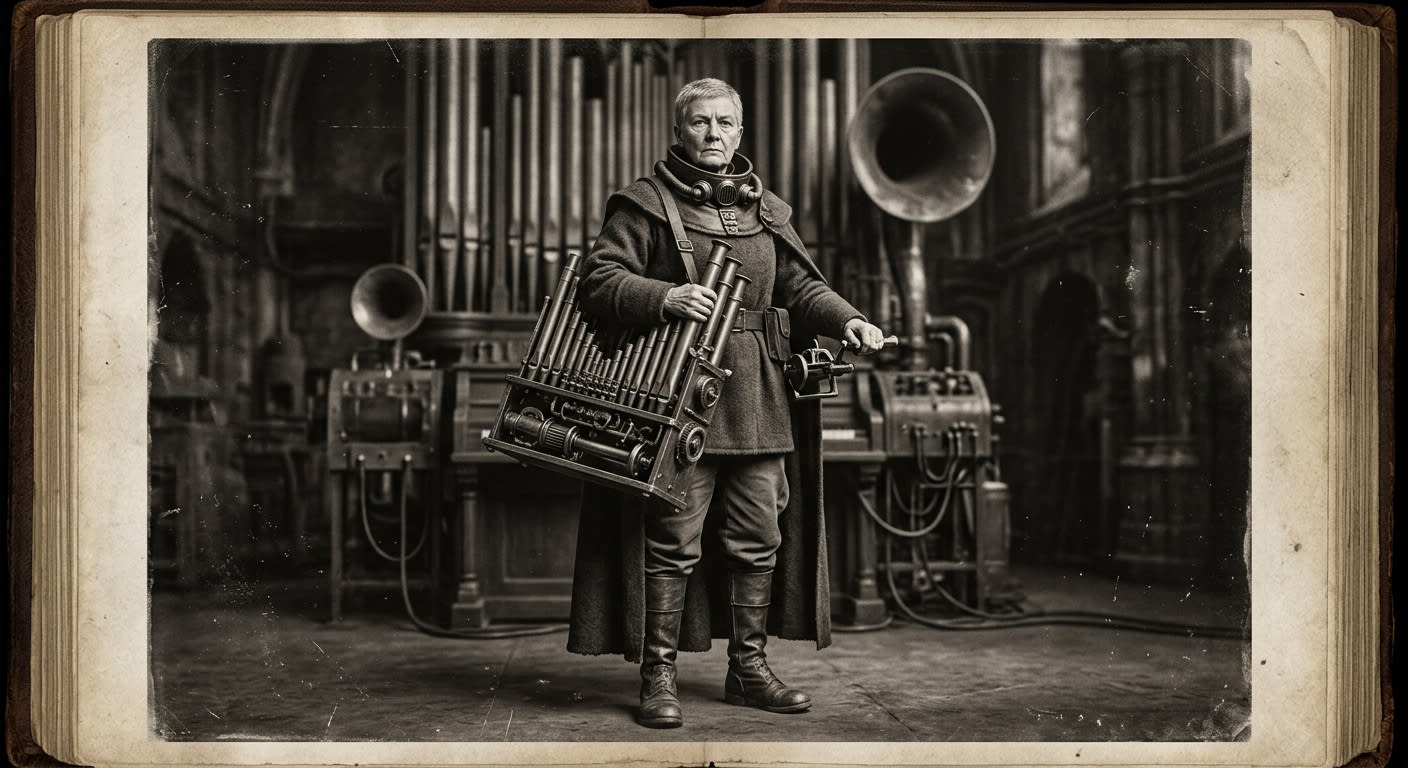
Orla appears in the hagiographic register as a psalmist assigned to the first Strasbourg iron chapels (Unregistered) during the late Market Drift (Unregistered) years, when public creed recitation faltered and Purity found itself with more bodies than legible procedures. A condemned lecturer from Cologne — unnamed in devotional copies, named in one sealed appendix as Father Arnolt Deiss, a detail inconvenient enough to merit omission — thrashed so violently under the forearm iron that two brands slipped, one scribe fainted, and a Lictor lost a tooth to a chain. Orla, stationed at the threshold, began a low drone without order.
The body stilled. The iron landed. The inscription held.
Popular chapbooks describe Orla calming a mob, healing a condemned man, and causing a branding iron to cool by singing the Third Psalm.
Corrected. The iron did not cool. The condemned did not heal. The mob, if present, was already behind locked doors. The miracle ratified by the Bureau is narrower and better suited to the facts: her note made the confession legible.
This is the first approved miracle. It lacks the sentimental furniture of village holiness. No lilies. No golden vapour. No child restored to a mother's arms. A man stopped moving long enough for a sentence to be burned into him accurately. The Bureau of Doctrine examined the testimony and found it sound.
The second miracle concerns the Closing Tone. Early rites ended messily. Pain lingered in the room after the subject was removed; scribes reported false echoes; Brand-Smiths heard syllables in the cooling bucket; one Ash Chorister confessed to a sin committed by the man he had just sung over, which raised an administrative question of such ugliness that Records begged Purity to invent an ending. Orla, according to the approved Life, prescribed three descending notes followed by fourteen heartbeats of silence. Standing Order 22-S would later codify the pattern.
The third miracle is death. The Bureau prefers saints who have the tact to die before their methods become policy.
#On Death by Breath
Orla's final rite occurred in the winter before formal constitution of the Brand-Singer corps. The date is disputed between A.S. 103 and A.S. 104, depending on whether one accepts the Orison calendar (Unregistered), the Purity roster (Unregistered), or the private notation scratched into the back of the earliest icon. I accept A.S. 104 because the Bureau of Doctrine sealed the file in that year and because precision, when impossible, should at least flatter the filing cabinet.
The rite involved three condemned prisoners brought from a cellar academy whose students had been teaching the Doctrine of the Inaudible Voice backward. Backward doctrine is still doctrine, but the Bureau dislikes improvisation from amateurs. The room had been repaired that morning after a ceiling crack opened above the north wall. Orla tested the stone, found the baseline unstable, and requested a different chamber. The request was denied by a tribunal prefect with a quota sheet, a warm office, and the kind of confidence produced by never listening to stone.
At the third brand the room answered.
This was no echo. Echo repeats. This response anticipated by half a breath, sounding the note before Orla's own throat completed it. The condemned began to breathe in unison. The Brand-Smith dropped the iron. The scribe wrote the same word eleven times and then attempted to eat his slate. Orla held her drone lower, forced the room down by interval and will, and kept the condemned alive until the Closing Tone could be completed.
Post-rite chamber inspection records indicate ███████████████ harmonic residue in the north wall, ███████████████ blood-pattern alignment inconsistent with subject position, and ███████████████ a fourth breathing signature recorded by three witnesses. Orla's final statement, preserved in Purity transcript, reads: “Do not answer it.” The transcript has been authenticated twice and burned once.
She died after fourteen heartbeats of silence. The hagiography says her throat remained warm for three days. The infirmary account says her cords had torn in three places and her lungs were full of ash. Both may be true. Sanctity has never objected to anatomy; it merely insists anatomy be filed in the subordinate clause.
#On the Cult of Controlled Breath
Orla's canonisation followed the formal constitution of the corps. This is presented as devotion. It was also governance. A new profession requires three things: a licence, a punishment schedule, and a saint whose icon explains why the work is holy before the worker has time to notice what the work is.
Her approved iconography is severe. Orla wears an iron-grey mantle with the white wrist cord of licence. Her throat is marked by a violet seal. One hand rests against her ribs, fingers spread to keep time by bone; the other holds a pitch-fork, though the earliest chapel paintings give her a simple psalm slate. Later artists add ash, iron, and a condemned silhouette in the rear of the frame. Artists, like bureaucrats, improve clarity by adding menace.
Brand-Singers invoke her at the beginning of shift with salt and ash. The mouth is rinsed. The tuning rod is tapped three times. The Singer touches ribs, throat, and slate, then speaks the motto. Silence follows until the first assigned note. During examinations, candidates are asked to sustain “Orla's Line,” a low drone that must remain steady while an auditor reads false charges, family names, bribe offers, and fragments of forbidden melody. Candidates who drift are failed. Candidates who weep and hold pitch pass.
A devotional manual once recommended “singing with compassion in imitation of Saint Orla's tenderness.”
Struck by Purity Circular 14-C/9 (Unregistered). The approved wording is “singing with steadiness in imitation of Saint Orla's control.” Compassion may occur privately, provided it does not affect tempo, inscription, subject survival beyond authorised interval, or audit legibility.
Her relics are suitably divided and suitably suspicious. Strasbourg claims the pitch-fork. Mainz claims a throat seal impressed in wax. Bastion-Przemyśl keeps a cracked tuning rod said to have belonged to her first examiner. Orison maintains a small vial of ash-water from her final rinse, which Purity refuses to authenticate because Orison insists on singing during inventory. The faithful do not care. Relics function by petition, proximity, and repetition. Proof is a luxury for people whose corridors do not answer back.
#On Orla's Usefulness to the Living
Saint Orla is invoked by Mercy Tone singers who need stamina, by Judgment Tone singers who need precision, and by Silentists who need the courage to stop before the room grows teeth; her motto is also scratched under hymn slates by those who have heard echo weather answer from stone. Each school claims her. Each is wrong in a different key.
Mercy Tone paints her as the singer who preserved breath. Judgment Tone praises the clean landing of the iron. Silentists cite her final command as proof that every sanctioned note risks reply. The Bureau permits all three interpretations because internal factional war keeps professionals from uniting around pay, conditions, or the obvious fact that the penitence hall is a machine that eats throats.
The more private cult is darker. Brand-Singers who have survived room-response audits (Unregistered) scratch Orla's motto into the underside of their slates. Retired Scar-Voices (Unregistered) place her icon facing the wall, claiming she listens better that way. Ash Choristers sleep with a bell-hour metronome token beneath the tongue and dream of a woman in grey telling them to breathe through stone. The Bureau of Medicine calls this bell-sickness. The Bureau of Doctrine calls it occupational devotion. The distinction determines pension eligibility, so naturally it remains contested.
Her presence also disciplines the civilians. Mothers whose children are taken into choir service pray to Orla with the furious politeness of the powerless: keep the voice, spare the throat, let the note hold, let the auditors be bored. Condemned families pray to her too, though quietly and with bad theology, asking that the Singer assigned to their blood use Mercy intervals. Purity would prosecute this if it could decide which part was heresy: praying to an approved saint, hoping for an approved rite, or believing mercy might enter by tone.
The saint's lesson is mercilessly small. Hold the note. Do not answer the room. Let silence seal what sound has wounded. If holiness enters, it enters on pitch.