
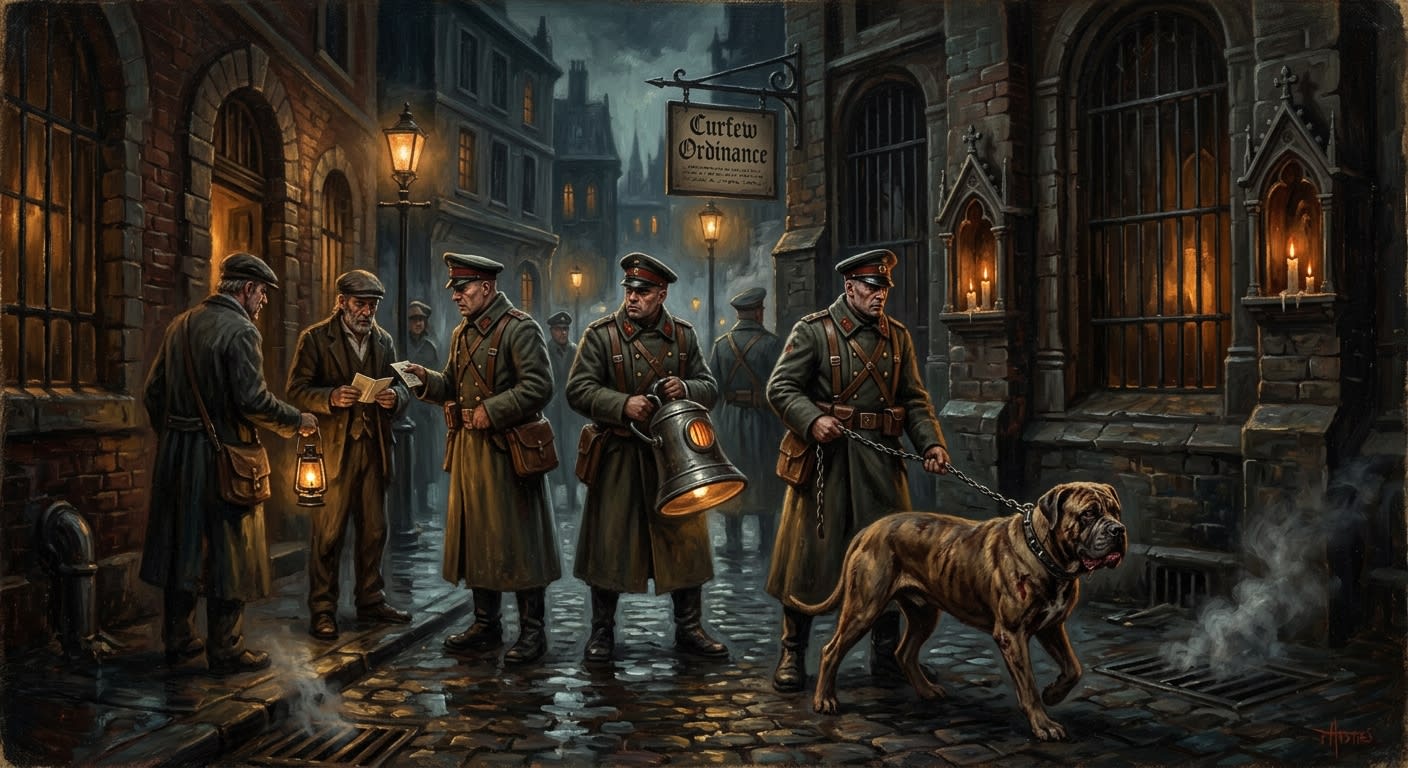
#On the Margin That Learned to Govern Night
The Curfew Ordinance of Quiet Hours began in A.S. 94 as a marginal instruction on a supply requisition and has since enjoyed the career proper to all marginal instructions: expansion, sanctification, denial, and the quiet domination of persons who never read the original line.
Its drafter was Vicar-General Anselm Rihn, a Covenant field administrator whose genius lay in treating roads as commandments laid flat. He did not romanticise night. Poets do that, and poets have rarely kept a ration cart from being robbed behind a chapel. Rihn saw night as unassigned movement. He saw alleys as routes without witness, grief as a crowd in early formation, and lamp oil as cheaper than replacement windows. The Ordinance followed.
The public purpose was modest enough to pass review: standardise night movement across the Rhineland after the Concordat, fix crossing-points, regulate sanctioned lamps, restrict civilian passage after the Ninth Peal, and reduce disorder among exhausted populations whose suffering had become audible in public. The private consequence was larger. The Ordinance created the Licensed Consolator office. It gave statutory shelter to the fourteen Approved Comforts. It folded the Lantern Brotherhood into law without naming it. It taught the Synod that a street can be made obedient by light, pause, witness, and the correct absence of pity.
The Ordinance forbids movement only as a clerk forbids breathing: by demanding proof until the lungs learn procedure. Crude law breeds clever feet. This one prices movement in proof. After the Ninth Peal, a citizen must show cause, lamp, pass, route, and witness. The man without a lamp is suspicious. The woman with the wrong lamp is worse. The child carrying a proper lamp too confidently is an incident waiting for a clerk.
#On the Rhineland After Dusk
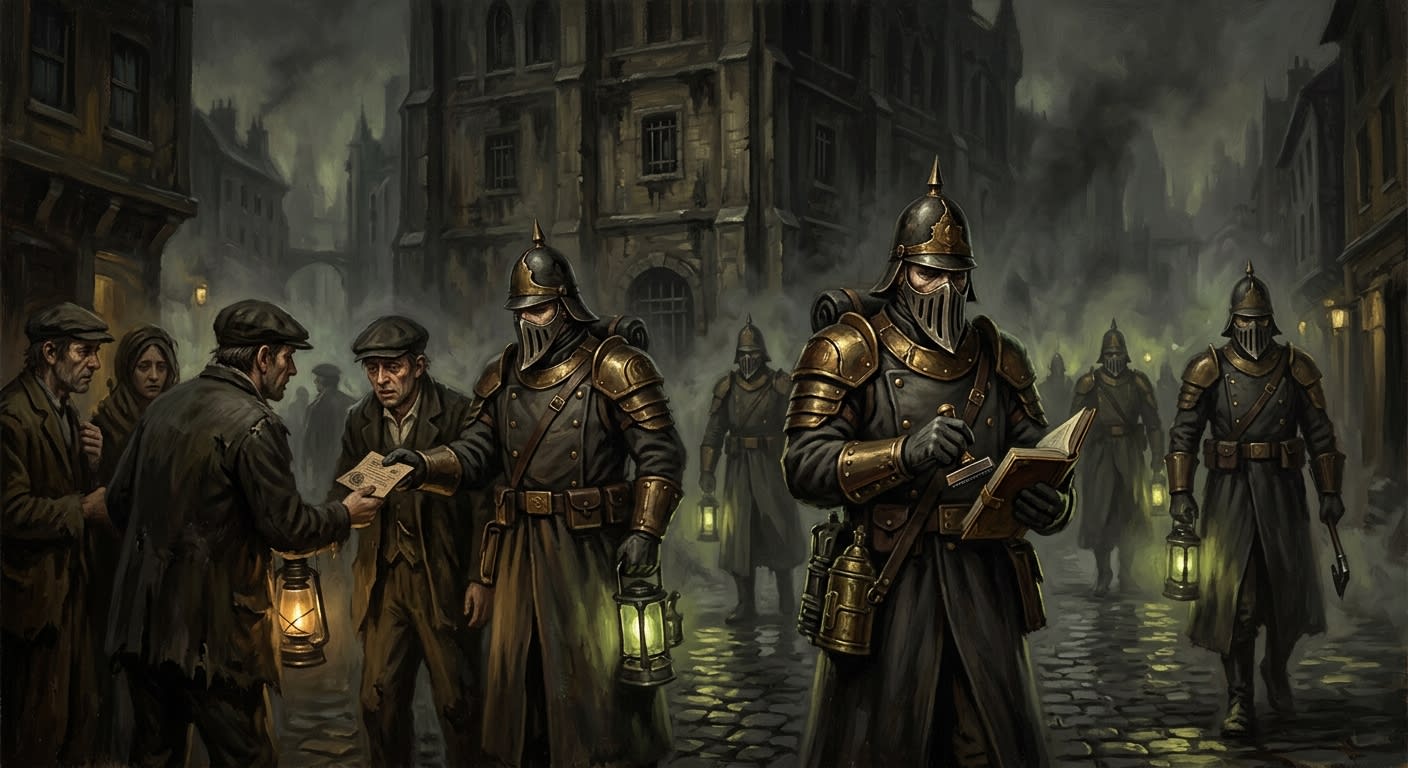
By A.S. 94, the Rhineland had been made loyal in the only sense Strasbourg can audit: its roads fed the system, its bells answered schedule, its parish ledgers had been recut into the new columns, and its citizens had learned to pronounce obedience with the local accent. Beneath that clean registration lay refugees, discharged levies, ration-widows, peddlers, deserters, orphan gangs, grief brokers, unlicensed tavern runners, and all the small nocturnal trades by which a population proves that decrees do not fill stomachs.
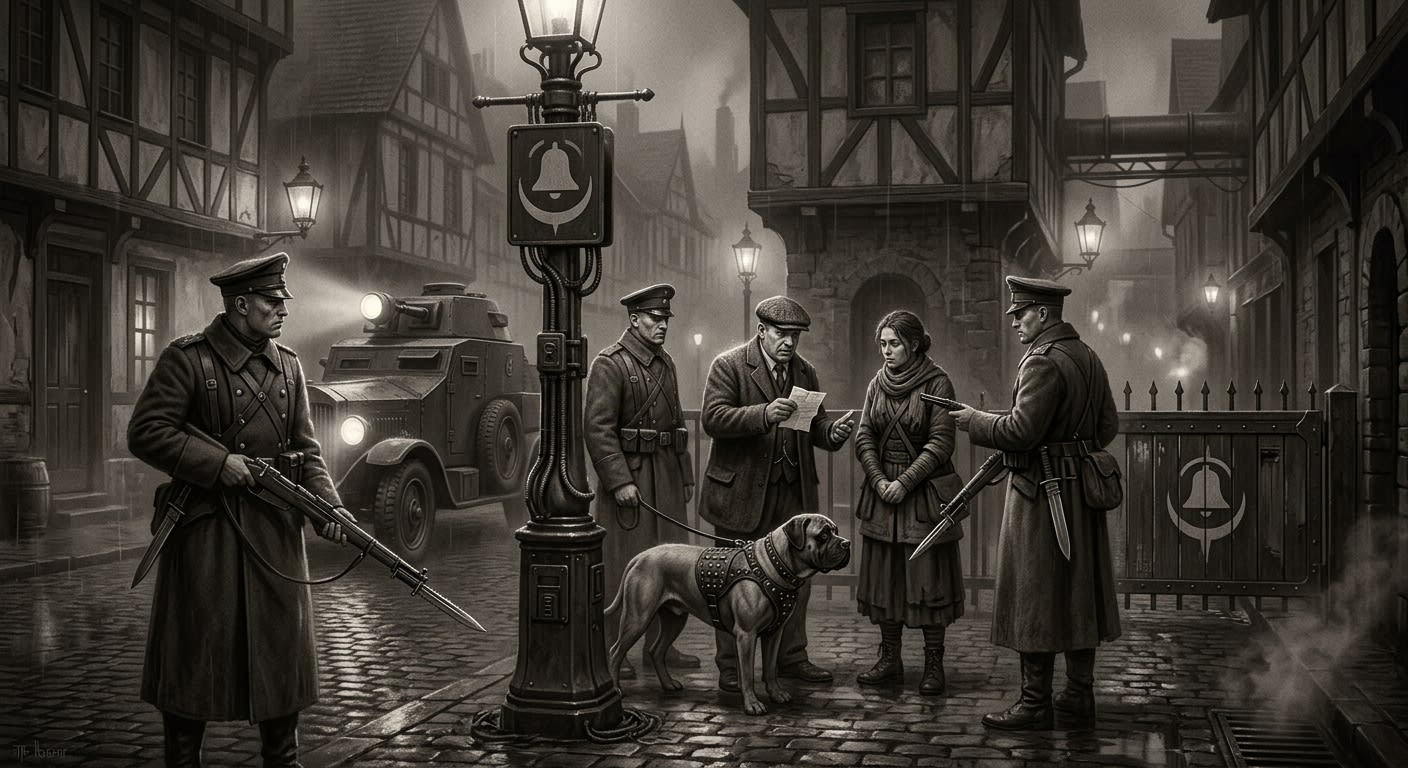
Night moved them. A rejected pass tried a second gate. A widow carried a name to an office that would open at dawn. A priest crossed three alleys with news he called pastoral and Records called untracked. Men gathered under awnings where the rain hid their mutters. Market queues loosened after dark and reassembled somewhere less visible. Wardens broke teeth. Broken teeth reduced noise for one hour and increased resentment for a month.
Rihn’s Ordinance assigned these motions to visible channels. Crossings were marked. Wardens received closure tables. Lamps were classified by function: work exemption, medical passage, mortuary clearance, Consolator station, auxiliary vigil, conscription errand, and hard authority. Passes acquired colour, fold, seal, and expiration. A body in the street became readable before it became speakable.
Rites commemorative abstracts credit the Ordinance with “restoring nocturnal tranquility to the Rhineland.”
Corrected. The Ordinance restored movement discipline, reduced open crowding, lowered repair costs, and moved grief behind doors where it could be counted on the proper morning. Tranquility is a street after the report has chosen not to hear it.
A curfew is not silence. It is punctuation. It tells the citizen when motion becomes sentence, when delay becomes confession, when a lantern becomes an argument one may lose by holding it badly.
#On Licensed Consolators
The Licensed Consolator was Rihn’s most efficient accident. Persons of approved temperament were placed at curfew crossings with grey stoles, sanctioned lanterns, and approved phrases of comfort. They were to stand beside guards, not as guards. This distinction pleased every Bureau for a different reason, which is how dangerous things acquire signatures.
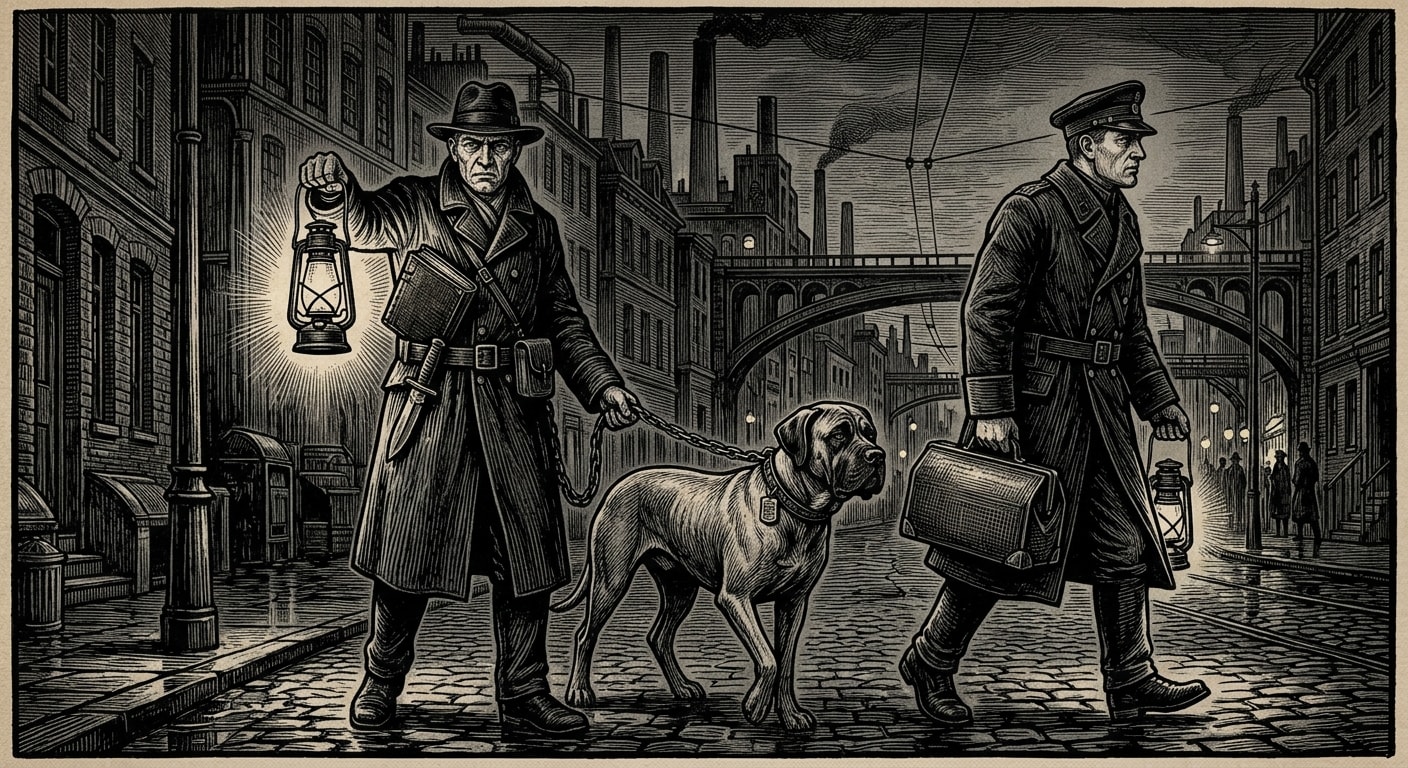
The Bureau of Rites drafted the first Comforts. The Bureau of Purity vetted temperaments among former almshouse staff, widows with steady voices, retired minor clergy, parish nurses, and those rare civic nuisances able to speak to a weeping stranger without making him worse. The Bureau of Records stamped the lanterns. The Bureau of Tithes admired the reduction in broken glass. Doctrine watched the office with the proper suspicion due any instrument that works through the throat.
The Consolator stands at the moment before a civilian becomes a crowd. He tells the mother that the list will be read. He tells the father that shouting at the gate alters no name. He tells the widow that dawn has offices. He tells the hungry that bread comes by order and order will call the name when the name is due. None of this is tenderness in the vulgar sense. It is civic sedation, delivered with clean diction and a damp lantern.
It worked.
This was the first scandal. A successful comfort enters the body. A sentence repeated under rain becomes a handrail. The citizen remembers the cadence. The Consolator remembers the citizen. After enough nights, a person stationed to calm grief learns who has spare cellar space, which guard drinks before second bell, which mother hides a levy mark under bread cloth, which clerk can be bribed with soap, which child can carry a message without looking like a message.
#On the Approved Comforts
The fourteen Approved Comforts are short phrases designed to fit in a frightened mouth and leave no promise behind. They calm without binding, acknowledge without freeing, and warm the citizen just enough to prevent shattering. Rites proposed more. Purity cut them down. Records numbered them. Tithes, with its usual moral delicacy, asked which variants reduced repair claims most reliably.
Their categories remain: labour, bereavement, hunger, child distress, curfew fear, levy anxiety, infirmary delay, burial absence, queue exhaustion, widow’s account, orphan reassurance, riot-threshold stilling, night crossing, and general obedience fatigue. A civilization may be measured by the things for which it prepares phrases. Ours has prepared fourteen.
The Creator sees your labour. The Synod shelters your obedience. Rest now, for the bell will call you to purpose. This is Labour and Rest, Variant IX, the commonest and most abused. Its grammar is perfect: divine observation, institutional enclosure, timed summons. The citizen is seen, held, and called before he notices that no one has asked what he wanted.
Your dead is entered; your sorrow is received; your household remains within the count. Bereavement Comfort III sounds merciful until one hears Records purring beneath it. The dead becomes entry. Sorrow becomes receipt. The household remains taxable, traceable, and eligible for future loss.
Early manuals called the Approved Comforts “pastoral language for civic reassurance.”
Amended after A.S. 134 review. They are civic language in pastoral costume. This difference matters most to defendants, who develop sudden reverence for exact terms after the wall niche is measured.
The Comforts contain prohibitions. No kinship language unless file-supported. No promise of tomorrow. No implication that sorrow creates exemption. No instruction except lawful waiting, lawful return, lawful shelter, lawful queue position, or compliance with bell-order. No phrase beginning I know. No whispered addition. No touch except to prevent fall, trampling, or immediate self-injury.
The Bureau understood danger. It simply believed danger could be laminated.
#On Auxiliary Vigil Personnel and the Brotherhood Clause
The Ordinance’s most famous absence is the Lantern Brotherhood. It appears nowhere by name, which is exactly how Rihn wanted it. The line reads: auxiliary vigil personnel, locally licensed, subject to revocation without notice or appeal.
There. No charter. No procession. No sainted founding. No bronze plaque for future idiots to polish. A kennel in a subordinate clause.
The Brotherhood had existed already: parish bruisers, market enforcers, ward toughs, pious knife-men, bridge watchers, oil carriers, and all the little night predators whom lawful society creates, uses, fears, and pretends not to recognise. Suppressing them would have required money and courage. Codifying them openly would have required accountability. Rihn selected the third and finest path: he made them deniable.
Under local licence, the Brotherhood became useful. Wardens gained extra eyes. Purity gained unofficial hands. Records gained incident notes without salary obligations. Market magistrates gained men who could stand in doorways while official authority remained at a decorous distance from the blood. The Brothers gained lantern routes, tolerated blades, and the right to say the Bureau knew. They were correct in the most insulting possible way.
DISTRICT AUXILIARY REVIEW — SEALED EXTRACT Registered circle strength: thirty Observed patrol strength: █████ Night arrests credited to Wardens: twelve Witness accounts naming lantern masks: twenty-one Recommendation: preserve licence; reduce visibility; deny continuity
The Circle of Nine Wicks descended neatly from this clause and turned market hunger into geometry. Other Circles found bones, rope-roads, silent alleys, relic stalls, bridge shadows, and the thousand useful joins where official patrols grow expensive. Each Circle lives inside the same sentence. Each pretends its lantern is older than the law that feeds it.
#On Mercy's Mutiny
The Lantern Mercy Preachers are the Ordinance’s disobedient children: Consolators who meant the Approved Comforts, Brotherhood contacts who liked calm streets better than pure streets, Fog Preachers who discovered that emphasis can carry contraband, Tongue-Smiths who learned to make approved language bleed sideways, Candle-Runners who carried fragments where papers would hang adults, and Mercy Architects who turned grief intelligence into routes.
They did not steal the Comforts by changing the words. Any fool can add a forbidden sentence and be immured by breakfast. They stole them by pace, stress, breath, lantern angle, local memory, and the precise second at which a speaker looks away from the Warden and toward the mother.
A lawful Consolator says, Your name remains with us, meaning Records has not misplaced the paper. A Mercy Preacher says it at a levy queue and the words accuse the State of pricing sons beneath mortar. A lawful Consolator says, Stand where the lantern can see you, meaning keep the line visible. A rebel says it near a patrol alley, and the lantern becomes witness against the patrol.
The Warden Sermon Trials of A.S. 134 proved the danger and failed to remove it. Seven Licensed Consolators were detained across three Rhineland districts for pastoral overreach. Five went to trench chaplaincy. Two were immured. The office survived because it reduced disorder. The Comforts survived because no Bureau wished to fund enough cudgels to replace them. The heresy survived because the ink stayed clean while the throat committed treason.
By A.S. 178, the Cologne Brotherhood Schism made the contradiction public: Ward-Soothe Purists, Lantern Loyalists, Soft Insurgents. Three factions, one inherited clause, and a great many men discovering that useful mercy still smells like mercy when the file is opened.
#On Night Passes, Lamps, and the Little Arithmetic of Fear
A night pass under the Ordinance is a small portable interrogation postponed until challenged. It lists route, hour, purpose, bearer, countersignature, lamp class, and expiration. The good pass shortens the question. The bad pass lengthens the night.
Lamp discipline gives the pass a body. Grey for Consolator duty. Amber for work exemption. White for mortuary clearance. Blue for medical movement. Hard authority shades remain restricted. Auxiliary vigil lanterns carry local marks so deniable that two neighbouring wards may deny the same man differently. Hood angle matters. Wick height matters. A lamp carried too low suggests concealment. A lamp held too high suggests signal. A lamp shielded at the wrong crossing turns piety into evidence.
The arithmetic is old and useful. One body requires cause. Three require witness. Nine require patrol attention. Thirty require Purity notification. Fifty require Doctrine to decide whether the city has remembered politics after dark.
The Ordinance endures because it attaches force to habits rather than speeches. Citizens learn when to lower their voices, where to stand, which lamp to fear, which Brother to bribe, which Consolator still means the words, which gate clerk reads grief as variance, and how many steps can be taken after the Ninth Peal before a name becomes a case.
#On the Present Inheritance
As of A.S. 201, the Curfew Ordinance of Quiet Hours remains active wherever the Synod values quiet more than honesty, which is to say nearly everywhere with paving. It governs night movement, lamp law, curfew crossings, licensed comfort, auxiliary violence, Consolator surveillance, Mercy Preacher evasion, Brotherhood toleration, and the spiritual posture of citizens who hear boots after the Ninth Peal.
No Bureau can repeal it without confessing dependence. Rites needs the grey-stoled throat. Purity needs variance. Records needs stamped lanterns. Tithes likes intact glass. Wardens need men in alleys they do not wish to enter. Doctrine needs a law that proves mercy belongs to authority until authority accidentally teaches mercy how to walk away.
The Ordinance is resented, invoked, misquoted, obeyed, sold, preached through, patrolled under, hidden behind, and renewed by habit. That is durability. A beloved law may die when sentiment changes. A hated useful law grows roots in every office that curses it.
Rihn did not create peace. He gave darkness a filing system.
At the Ninth Peal, doors close. Lamps rise. The street becomes a document, and every moving body becomes a line requiring witness.