
#On the Sentence That Saved the Offices
Determination 198-K/7 is the Bureau of Doctrine's authorized explanation for the Silence of Thessaloniki, issued after the Twin Bells failed to sound for seventy-two hours, the submerged chains kept the correct schedule beneath the water, and the bells returned on the fourth dawn with their voices exchanged. The phrase is known because it was designed to be known: a test of fidelity administered by mechanisms beyond current doctrinal scope.
There. Admire the shape. It is balanced, pious, grave, and almost entirely hollow. This is not failure. Hollow things carry echoes.
The Determination did what doctrine is paid to do after fact has already behaved indecently. It prevented panic from acquiring lawyers. It prevented the Bureau of Rites from having to connect the Drowned Choir to the bell-failure. It prevented the Bureau of Bells from admitting that its instruments had measured impact without sound, metal without voice, obedience without authority. It prevented Records from reopening every chain-window, passage permit, harbour toll, drowning entry, and quarantine admission filed during the three silent days. It gave Iolana a sentence she could stamp and Sera a sentence she could despise.
#On the Three Days Before Language Arrived
On 14 Ashmonth, A.S. 198, Andros Pell struck the Elder Tower bell and received no sound. Katerin Liss struck the Younger and received the same occupied absence. Clappers moved. Bronze received force. Instruments registered impact. Air received nothing it could carry. Thessaloniki, a city whose harbour lives by bells, chain-windows, tide marks, and the moral terror of schedules, found its throat confiscated.
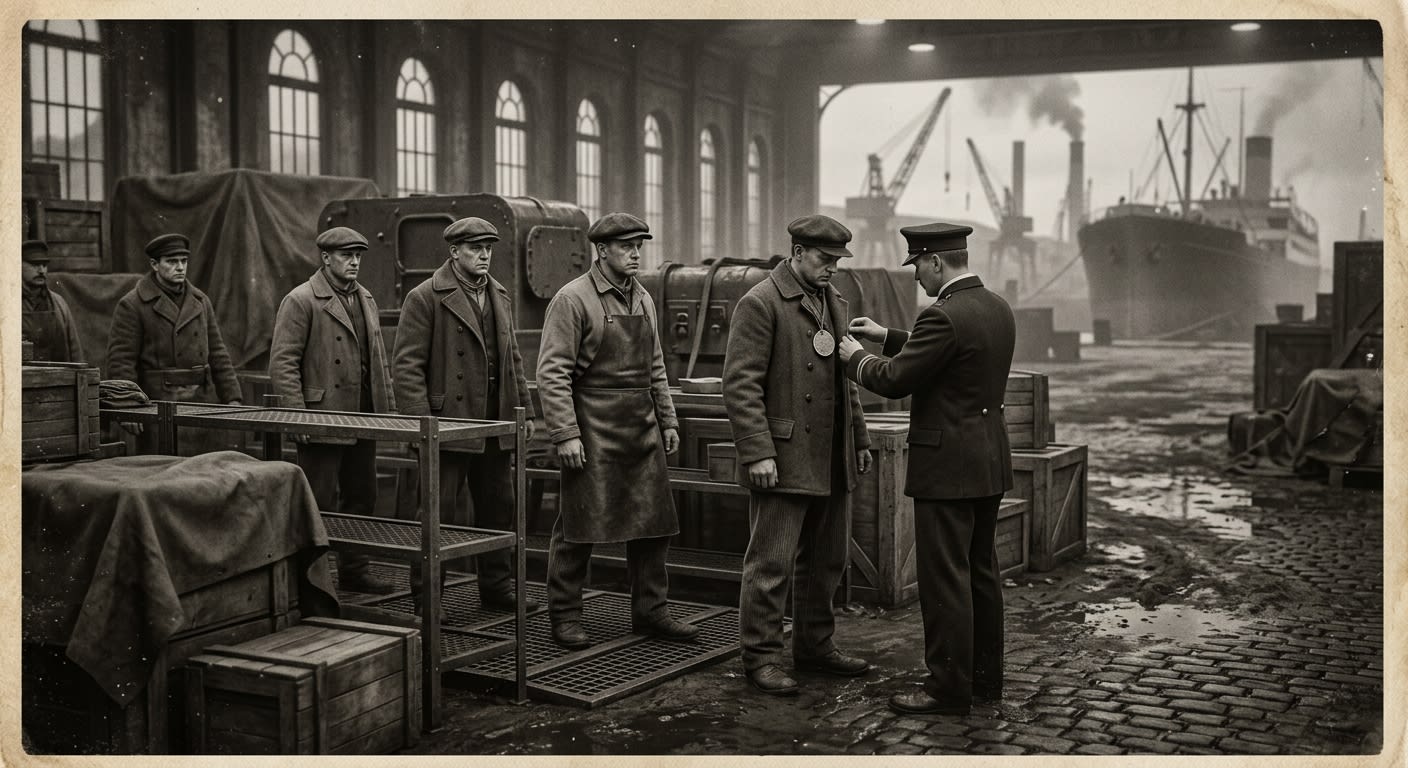
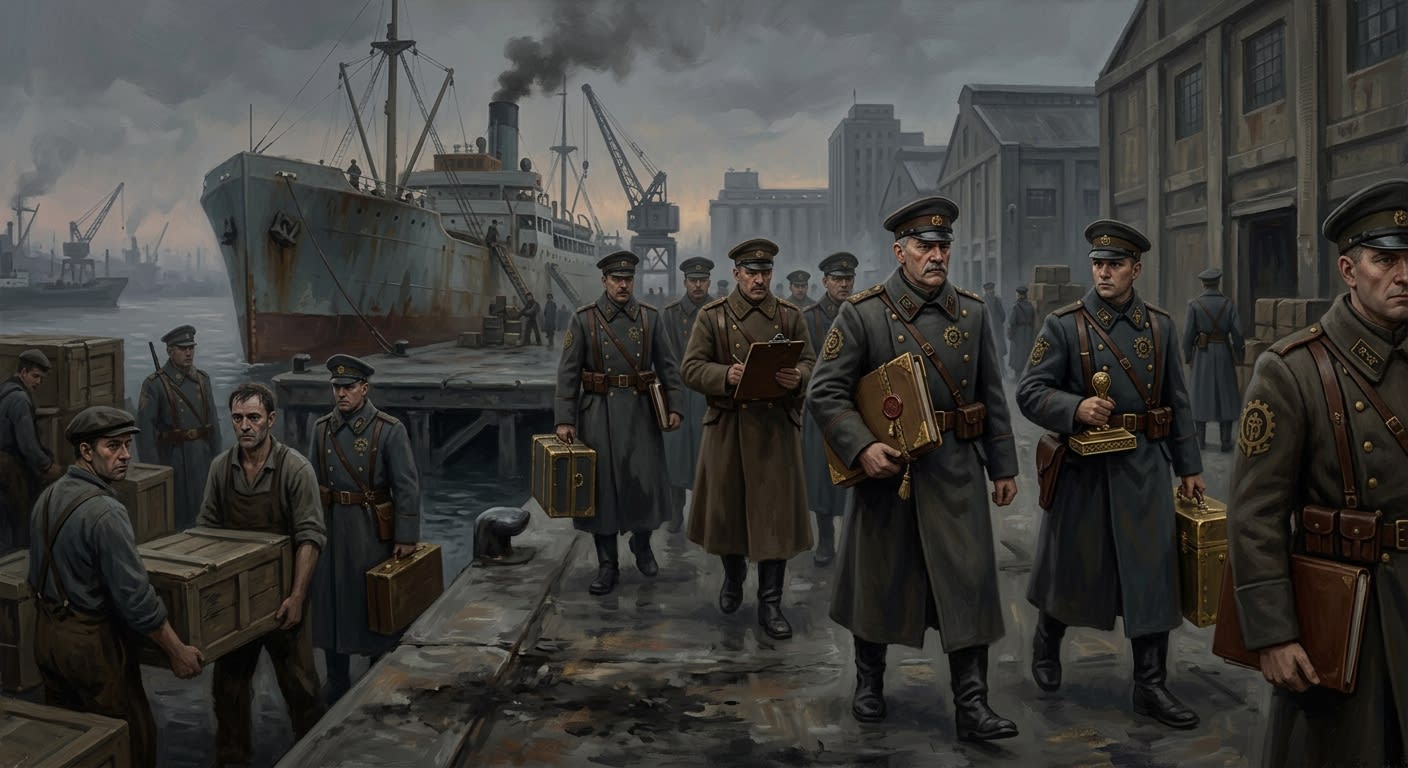
The harbour did not collapse into riot, despite later reports drafted by men who enjoy imagining civilians helpless until doctrine arrives wearing boots. Kosta held the gates. Iolana filed emergency legality from the Ledger Steps. The Custodians doubled watches, hooded lamps, readied divers, and kept hands on windlasses. Nenos refused to guide a vessel because the sea was listening too hard. This objection, though superstitious in diction, proved operationally immaculate.
Sera descended. Six times. In black water, with the harbour above her pretending silence was surface-deep, she placed her hand on the chain-links and felt the schedule continue. Dawn and dusk. Elder and Younger. Below, the iron kept time. Above, bronze stood mute. The city heard nothing. The water counted.
DIVER'S SLATE — RESTRICTED COPY, A.S. 198 LINKS COUNTING. BELL ABOVE EMPTY. IRON BELOW NOT EMPTY. HAND ON LINK HEARS ███████████████. DO NOT LET CHILDREN SLEEP NEAR WATER.
This was the fact the Determination had to swallow without choking: the failure was not total. The bells failed where citizens could hear them. The chains continued where the Choir could hear them. Seven Quarantine admissions reported correct bells under the harbour floor. Three children from the Refugee Sheds reached the shallows sounding a note from below. On the fourth dawn, the bells returned in exchanged voices. The Elder rang the Younger. The Younger rang the Elder. The reversal persists.
#On the Construction of the Lie
The Determination's first word is test. A test implies purpose without naming author. It suggests pedagogy, discipline, and moral structure while declining to identify the examiner. Had we written miracle, Rites would have claimed custody and Bells would have demanded formal recalibration rites. Had we written attack, Purity would have demanded suspects, and the harbour would still be burning their cousins. Had we written anomaly, Engineering would have brought calipers, and calipers are excellent for bronze, less so for dread.

Fidelity was chosen because it flatters the governed while accusing them. If the Silence was a test of fidelity, the citizens of Thessaloniki became examinees rather than victims. Their restraint, their whispers, their halted vessels, their hummed countertones in the Refugee Sheds, their refusal to answer the water: all could be treated as devotional performance. The Bureau is at its most efficient when converting survival into obedience after the invoice has already been paid.
Administered gave the event hands without showing wrists. Administration belongs to offices, angels, judges, physicians, and executioners. The word allowed every Bureau to hear its own dignity in the sentence. It also suggested that the three days had been governed by someone. Citizens tolerate terror more easily when assured it had a supervisor.
Mechanisms beyond current doctrinal scope is the velvet sack into which the knives went. Mechanisms admitted system. Beyond admitted ignorance. Current promised future mastery. Doctrinal scope kept the ignorance inside our jurisdiction. There are sentences one writes with ink, and sentences one writes with barred doors.
A preliminary Rites memorandum proposed the phrase “unclassified marine interference with sacred acoustic apparatus.”
Rejected. Marine interference invited investigation of the water. Sacred acoustic apparatus invited litigation by the Bureau of Bells. Unclassified invited every ambitious clerk in Strasbourg to classify it. The memorandum was retained as an example of how accuracy may endanger the state.
The full line committed us to nothing that a later fact could not survive. A test may be passed, failed, deferred, misread, repeated, or sealed. Fidelity may be civic, liturgical, maritime, familial, acoustic, or tax-related if Tithes is allowed too near the ink. Mechanisms may be divine, demonic, natural, bureaucratic, submerged, or merely embarrassing. Scope expands. Doctrine clarifies. The sentence lives.
#On What It Refused to Say
Determination 198-K/7 refused to say the Drowned Choir. This omission was the Determination's spine.
Since the A.S. 121 file, the Choir had sat beneath Thessaloniki as Category Three Harmonic investigation: a song below the harbour that gathers names, pulls sleepers toward water, stains corrosion, and treats childhood names with predatory tenderness. The A.S. 145 Crying Choir incident had already taught the Refugee Sheds what happens when children sleep too close to tower stone and wake without tongues. The communal hum existed because the Choir existed. During the Silence, when bells failed, the hum faltered, sleep-singing increased, and three children reached the shallows with bell-notes in their mouths. Sera felt the chain count below. Kosta's hidden ledger later gained fourteen names in an unidentified hand, all living at the time, all drowned within a year.
The Determination said none of this.
The omission protected Rites from confessing that eighty years of investigation had produced vocabulary rather than mastery. It protected Bells from hearing that the tower schedule had survived outside the tower's competence. It protected Records from admitting that Kosta's unlawful sea-taken ledger possessed predictive authority. It protected Doctrine, sweetest office in the Church's lands, from the vulgar possibility that a drowned chorus had answered sacred bronze through secular chain.
It also protected Thessaloniki from worse. That must be said because truth, when properly supervised, is sometimes permitted a chair. Had the Determination named the Choir, the city would have received investigators, inquisitors, quarantine expansions, child removals, chain closures, seizure of Custodian under-ledgers, public burnings of harmless singers, and ten years of committees congratulating each other while the harbour starved. Ambiguity kept ships moving. Ambiguity fed the southern line.
#On Bureau Receptions
The Bureau of Bells hated the Determination because it was too successful to refute. Their instruments had confirmed force, failed to register sound, and later confirmed exchanged tones in unchanged bronze. Bells prefers problems in metal, rope, clapper, tuning, tower, air, or schedule. 198-K/7 placed the problem in fidelity and mechanisms. You cannot retune fidelity with a wrench, though I have known archdeacons who tried.
Rites accepted the Determination with the face of a man being handed a sealed box that ticks. It preserved their Choir file without requiring conclusion. It allowed them to classify the Silence as related enough for concern, separate enough for dignity. Rites has lived for decades on that distinction. Many offices have fattened on thinner gruel.
Records liked the Determination once Iolana taught it how to charge. Within days, forms bore separate boxes for Tower struck and Tone received. Within weeks, delayed movements acquired revised acoustic cross-references. Within a month, retroactive tonal correction fees appeared under pre-existing categories, proving again that Records can make coin out of metaphysical injury faster than alchemists make smoke.
The Custodians took the sentence, spat beside it, and kept working. Their conclusion remained local and blunt: bronze failed; iron kept count. Sera disliked the line for better reasons. Her reported comment, passed through a lunch wrapper, a Records clerk, a Rites assistant, and wine before reaching me, deserves preservation: “If the test was fidelity, the iron passed and the bronze lied.”
#On Civilian Obedience and the Night That Followed
The Determination did not create the Night of Quiet Bells. Civilians did, which is why Festivals calls it coincidence and watches it with the resentment of a man whose calendar has been corrected by grief.
Each year on 14 Ashmonth, after the dusk peal, Thessaloniki quiets itself. Taverns serve without song. The Pitch Markets lower voices. Families eat in silence. The Refugee Sheds continue their defensive hum because the Choir does not observe anniversaries and sentiment is no substitute for rhythm. The Night has no sanction, no approved rite, no indulgence, no official colour, no procession route. It is tolerated because suppression would require admitting it exists.
Determination 198-K/7 made that tolerance possible. A test of fidelity may produce reverent silence. A city commemorating an unanswered bell may be gently ignored. A population privately suspecting that the sea learned the schedule better than the towers must be handled with care, vinegar, and no sudden theology.
The Bureau of Festivals described the annual quiet as “uncoordinated devotional temperance.”
Corrected for Doctrine use. The quiet is coordinated by memory, fear, household discipline, harbour custom, refugee necessity, and the Bureau's failure to forbid what it cannot safely name. Temperance has nothing to do with it. Thessaloniki drinks plenty that night.
The citizens understand the Determination more accurately than its readers in Strasbourg. They know it does not explain. They know it permits. It permits bells to ring wrong and schedules to continue. It permits mothers to hum children awake. It permits captains to wait when chain-hum feels late. It permits Iolana to file the reversal as standing condition. It permits Kosta to keep the hidden ledger under lock and never hand it to Records. It permits everyone to ask the forbidden question quietly enough that no office must answer.
#On the Dangerous Mercy of Ambiguity
Ambiguity is not weakness. Ambiguity is a sealed corridor between offices that would otherwise murder each other in daylight. The Determination survived because every Bureau found a private use for it. Doctrine kept authority. Rites kept mystery. Bells kept apparatus. Records kept forms. Harbor offices kept traffic. Custodians kept local command. The refugees kept their hum. The Choir, being unconsulted and uncivil, kept singing.
A cleaner ruling would have been catastrophic. Divine test? Rites would own the city. Demonic attack? Purity would own the children. Mechanical failure? Bells would close the towers. Maritime anomaly? Engineering would close the harbour. Civic disorder? War would send troops. Harmonic contagion? Medicine would quarantine the Sheds. I have spent too many years in Strasbourg to mistake clarity for mercy.
The Determination's mercy is ugly because all governmental mercy is ugly once stripped of hymn. It allowed operations under revised acoustic parameters. That phrase kept grain moving toward Shipka, munitions moving through southern routes, medical freight entering the harbour, refugees receiving rations, and chain crews employed beside water that had just proved itself literate in bells. Men lived because a sentence declined to explain them.
#On Present Force
As of A.S. 201, Determination 198-K/7 remains in force. The Elder still rings the Younger's note. The Younger still rings the Elder's. Plaques call the tones reassigned. Tower instruments confirm the new pitch. Metallurgists confirm the old bronze. Sera's logs report increasing tonal complexity beneath the harbour. Kosta's ledger carries waiting names. Iolana's forms distinguish tower struck from tone received with admirable brutality. The Custodians maintain gate discipline and do not ask Strasbourg how iron feels.
External auditors continue to request supporting materials. They receive copies. The copies are accurate where accuracy is safe and silent where silence is cheaper. Sera's slate is cited, rarely shown. Kosta's hidden ledger does not exist in any file that would survive a question. The Quarantine Crescent's seven acoustic distress admissions are cross-noted, not foregrounded. The children's shallows incident remains under refugee welfare, a category broad enough to bury a cathedral.
The sentence continues to work. That is the highest praise a bureaucratic theorem can receive and the lowest praise a truth can endure. It keeps the harbour open, the offices separate, the bells licensed, the chains touched, the citizens quiet, and the question submerged.
At dusk, the Elder speaks in the Younger's voice. At dawn, the Younger answers low. The sea listens. The file remains sealed.