
#On the Fever That Made Silence Expensive
The Great Plague of A.S. 78 is known in proper administrative usage as the Lull of Names, because the Synod prefers to remember catastrophe by the defect it corrected rather than the bodies it failed to save. Plague killed. Silence embarrassed. Silence received the title.
It is filing discipline.
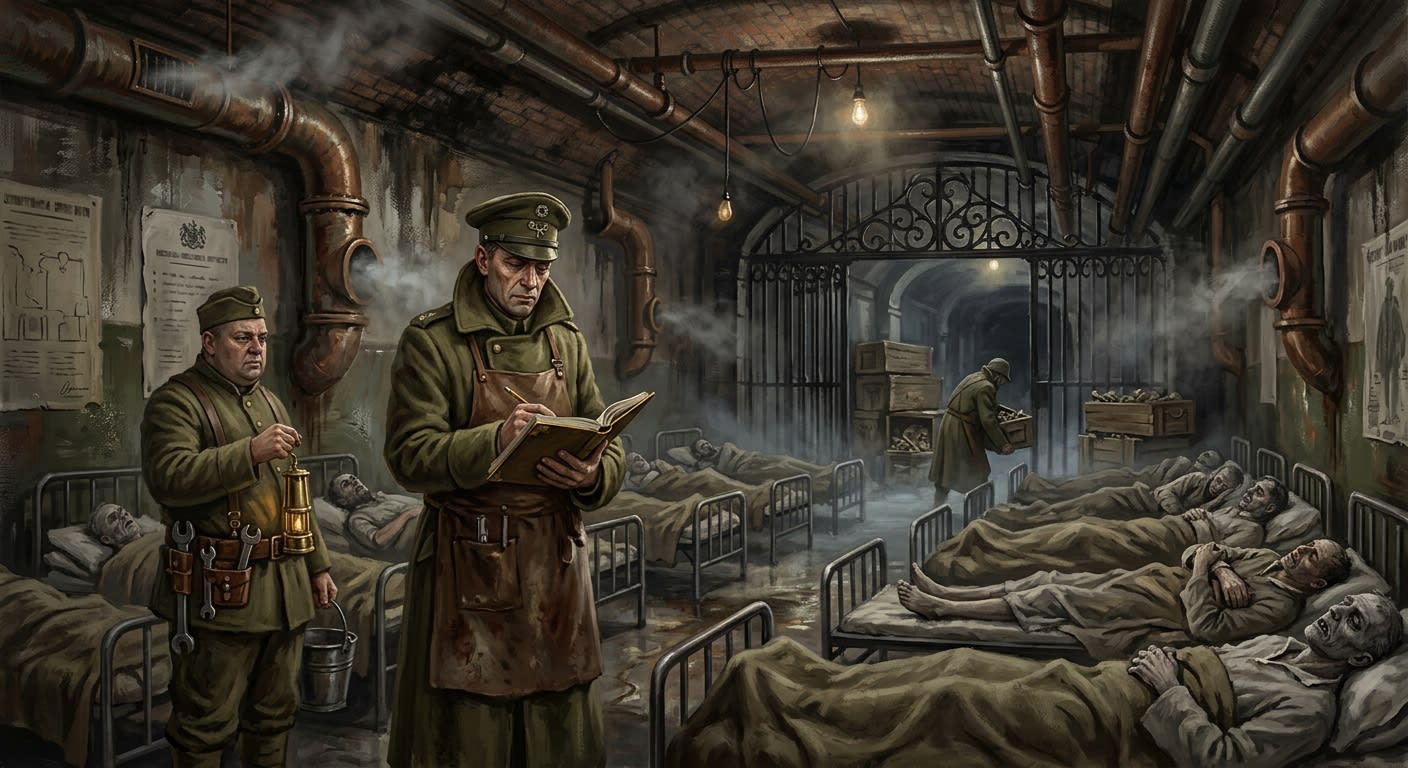
The disease moved first through the southern trench infirmary belt: the ward roads behind Bastion-Irongate, the fever sheds below Bastion-Shipka, the cart-annexes feeding Bastion-Constantinople, and every damp storehouse converted by desperation into a Mercy ward because someone had hung a curtain, blessed a bucket, and written infirmary on the door. Men arrived with shell wounds and died of breath. Laundresses died in borrowed beds. Broth carriers died standing. Ward-Sisters wrote names on sleeves when tags ran out, then washed the sleeves and lost the names.
The fever had many symptoms and no patience. Blackened gums. Brown fans on linen after coughing. A sweet rot under the tongue. Tremors that made men sign confessions in alphabets they had never learned. The Bureau of Medicine now calls it compound ward fever aggravated by crowding, bad drains, corpse proximity, and the usual criminal optimism of quartermasters. The Bureau of Mercy calls it visitation. Doctrine permits both statements, provided visitation receives the better chair.
#On the Southern Wards
The southern wards were built for injury. Injury is orderly. A severed arm has the decency to present its problem at once. Fever spreads its paperwork across the room.
By the fourth week, cots had become a theory. Patients lay under tables, between ammunition crates, along chapel aisles, inside empty ration wagons whose wheels were chalked with ward numbers. Field chaplains whispered absolutions into rooms where three men died during the same sentence. Proto-medical cutters demanded vinegar, heat, drains, isolation, knives boiled longer than prayers, and fewer priests in the washbasins. The Bureau of Rites demanded sequence. The Bureau of War demanded cots cleared for incoming casualties. The Bureau of Records demanded names.
The fever gave them none.
The dead outran the clerks by a ratio Records has classified, which means the ratio was either shameful, mathematically impressive, or useful in budget negotiations. Fever carts arrived with twelve bodies and seven tags. Estate claims collapsed within days. Debt chains snapped. Three quartermaster offices reported stores missing after the only witnesses expired untranscribed. Fourteen heresy cells survived because their dead members kept their accomplices in the grave.
That last figure made the plague doctrinal.
#On Vellum-Anna and Edrin at the Same Door
Two saints entered A.S. 78 by different thresholds.
Blessed Vellum-Anna belongs to the bedside tale: a Mercy novice who heard a dying soldier whisper names and tore a flyleaf from a prayer book, writing until the man stopped speaking. The sweet version gives her seventeen leaves by morning. The bitter version withholds water until the seal dries. Both versions are true enough for ward instruction, which is to say each damages a different innocence.
Saint Edrin of the Three Nails belongs to the door. The Gate-Carver tale places him before a plague-house where fever had entered through a laundry girl and begun its vulgar multiplication. He measured the lintel with a tri-cord, cut a single Triune Knot, set a bar across the door, fastened it with three nails, and wrote the household names outside in chalk so no later clerk could pretend the sealed had never existed.
Provincial devotionals occasionally merge Vellum-Anna and Edrin into a single “Plague Pair” who together founded Mercy's bedside witness and Heraldry's threshold closure rites in one coordinated miracle.
Corrected. No coordination is attested. Anna wrote beside the dying. Edrin barred the living. Later committees arranged them into symmetry because committees mistake neatness for Providence.
The pairing endures because it teaches the two legal answers to plague: record the breath that is leaving; restrain the breath that may carry infection into the street. Quill and doorbar. Compress and chisel. Mercy and refusal, both stamped clean after the fact.
SOUTHERN WARD ROAD REPORT — A.S. 78 Household sealed under emergency threshold authority: ███████████ Names chalked outside: ███ Names later legible: ██ Survivors: disputed Complaint filed by kin: received, indexed, mislaid, recovered in A.S. ███ with additional names in same hand Disposition: sealed as instructive irregularity
#On the Cells That Lived
The fourteen heresy cells discovered after the plague were small, which made them dangerous. Large conspiracies announce themselves by their appetite for banners. Small ones live in ration counters, laundry drains, borrowed catechisms, sympathetic clerks, and men who die before the question reaches their lips.
Purity reconstructed the cells from scraps: a fevered half-name remembered by a Ward-Sister, three bodies buried under wrong tags, a debt ledger whose creditor died during Sext, a sack of pamphlets found in a drain, a hand sign repeated by a boy too young to understand why his mother struck him silent. The arrests were clumsy. A dead witness is a locked archive without a key, and Purity hates nothing so much as a lock that will not scream.
The Bureau of Records' A.S. 79 annual report contains the famous margin: We lost more intelligence to silence than to enemy action. The line became scripture for functionaries. It deserves the honour. Fear wrote it better than Doctrine could have.
#On the Orders That Followed
The Great Plague produced laws because the Synod metabolises shame into procedure. A.S. 80 brought Standing Order 22-C: no soul departing a licensed ward without terminal confession, witnessed, stamped, and forwarded within one bell-cycle. The Deathbed Confession Harvester was born from the cot-side wreckage — grey apron, minuteglass, quill, witness ribbon, seal-ring, and the blessedly indecent habit of asking names before comfort.
The First Ossuary Panic of the same plague year hardened another lesson. Unsealed burial pits along the Rhine corridor made noises at night, which Records classified as post-interment atmospheric settling because Records has a brave vocabulary and cowardly ears. The joint Remains Processing Protocol (Unregistered) followed: no remains interred, transported, processed, or displayed without stamped clearance from a licensed clerk. The Dead-Goods Tariffer grew from that mandate like mould from damp bread.
Threshold doctrine (Unregistered) hardened as well. Plague doors, quarantine boards, chalk names, emergency Knots, barred houses, angry kin, surviving children, and the unspeakable relief of neighbours whose own doors stayed open all passed into the Gate-Carver catechism. A door without a Knot had long been a mouth. A plague door without a record became a throat swallowing evidence.
Early Mercy commemorations described A.S. 78 as “the year compassion learned to listen.”
Withdrawn for decorative excess. Compassion had listened for centuries and produced no reliable filing trail. The approved phrasing is harsher and more accurate: A.S. 78 was the year Mercy learned to write before the mouth closed.
#On the Present Commemoration
The Great Plague is commemorated under three names because one name cannot carry all the institutional appetites attached to it. Mercy says Lull of Names and hangs grey ribbons from terminal stools. Records says Terminal Disclosure Failure and trains clerks with blank folios. Heraldry says Edrin's Closure and oils the doorbar icons. Medicine says compound ward fever in memoranda nobody reads aloud during services.
At Marrowgate, a blank folio is carried through the intake quays before Matins. At Shipka, Harvesters leave the minuteglass empty until the first patient speaks. In Knotwright shops, apprentices strike three nails into practice planks and recite: Mark the threshold; name the living; bind the dead. Children are told the rites teach reverence. They teach inventory.
The plague remains useful. That is its afterlife. It justifies the stool beside the cot, the witness ribbon, the sealed addendum, the ossuary clearance, the chalked household name, the barred plague door, the Gate-Carver's nail token, and every little cruelty by which the Synod insists that dying, like living, must occur under supervision.