

Reverse Index
Referencing “The Penitential Shadows”
Every codex entry that links to The Penitential Shadows. 37 entries.
Return to The Penitential Shadows
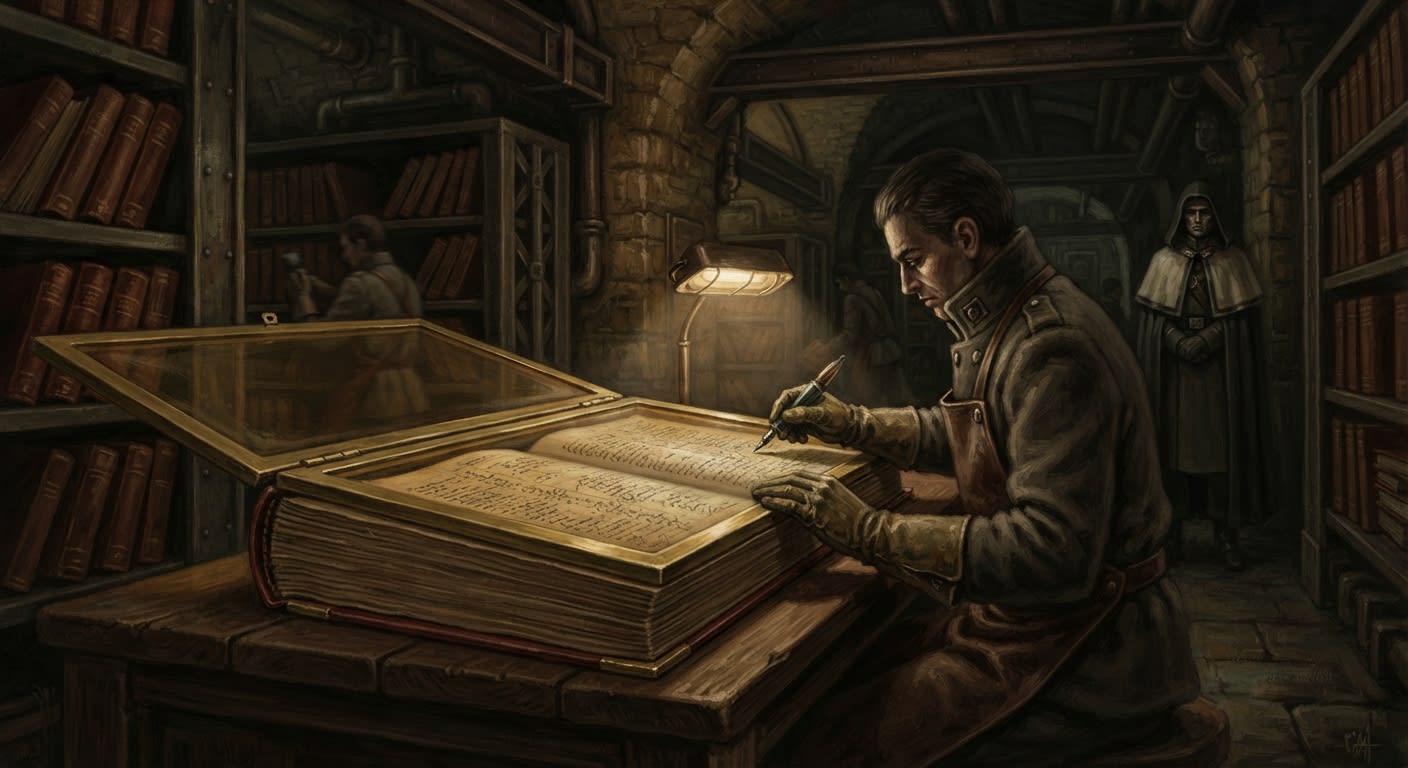
Amber Book
The ledger Purity refuses to close
The Amber Book is Purity's tacky ledger of suspended warrants: names kept breathing under glass until the charge written for them catches up.
Codex Ref. XIII.1.06-002
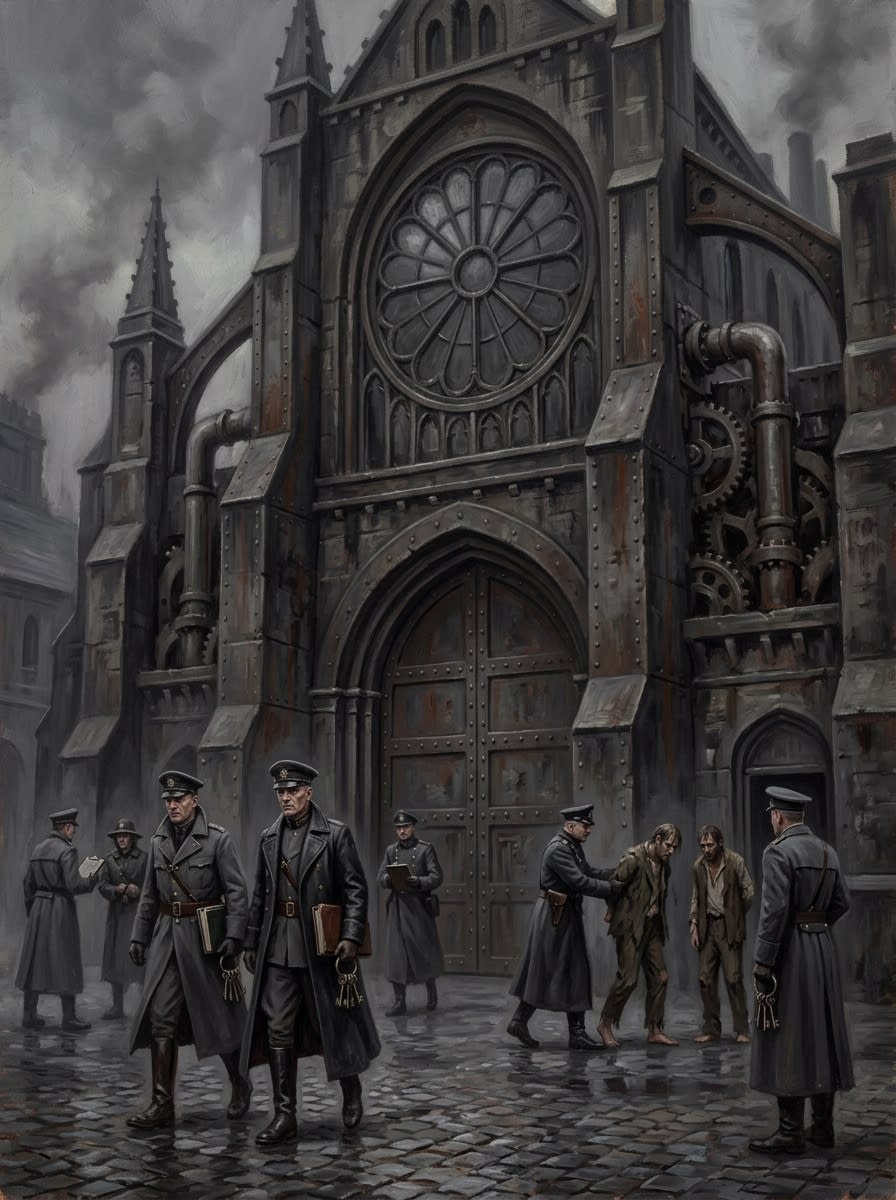
Ashen Cloister
Purity's house has handles only on the outside
The Ashen Cloister is Purity's Strasbourg seat: gate without welcome, court without mercy, archive with appetite, and the cleanest terror in the Synod.
Codex Ref. II.1.04-003
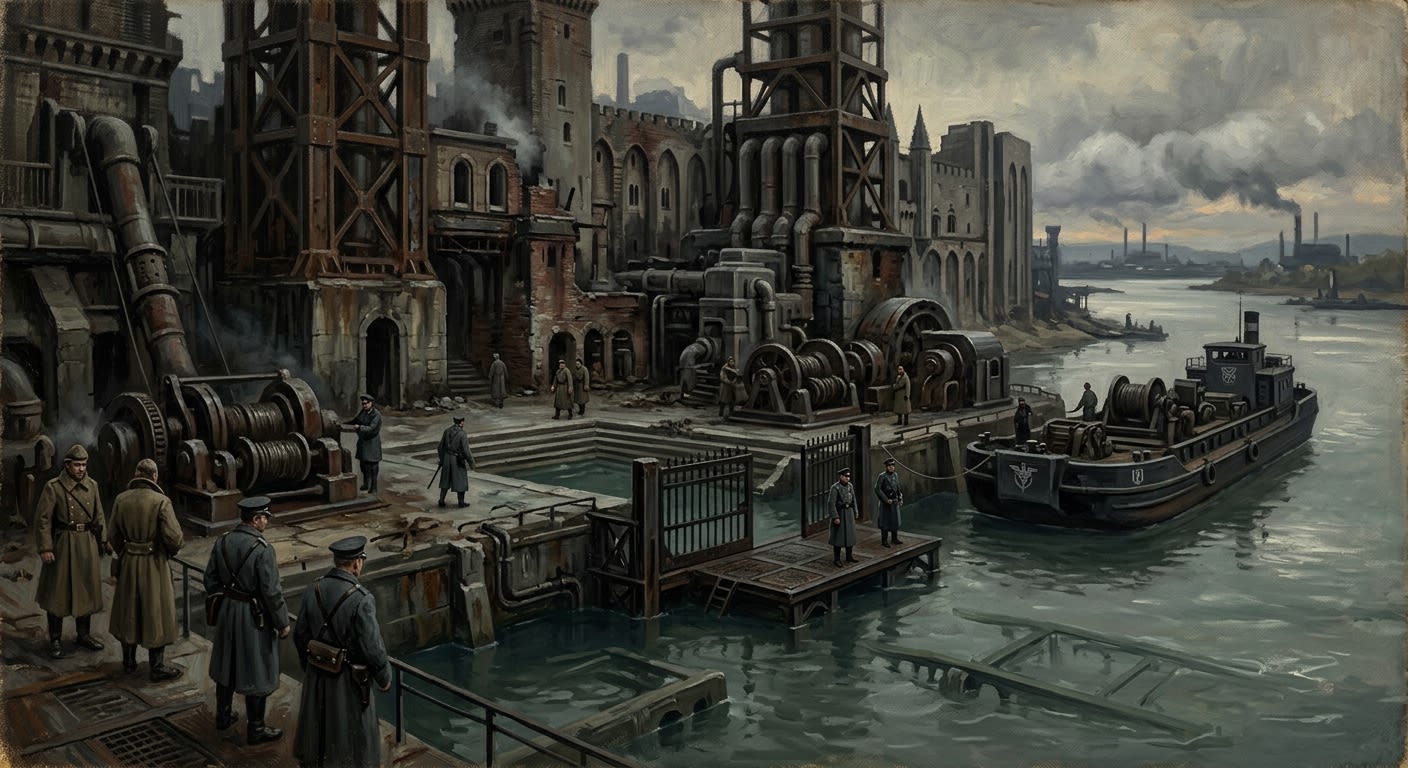
Avignon
A city corrected so thoroughly the river kept the receipt
Penitential ruins on the Rhône, where the Pontifex Submersis was crowned beneath water in A.S. 111, Avignon was razed into correction, and A.S. 145 burned the calendars into agreement.
Codex Ref. II.1.08-111
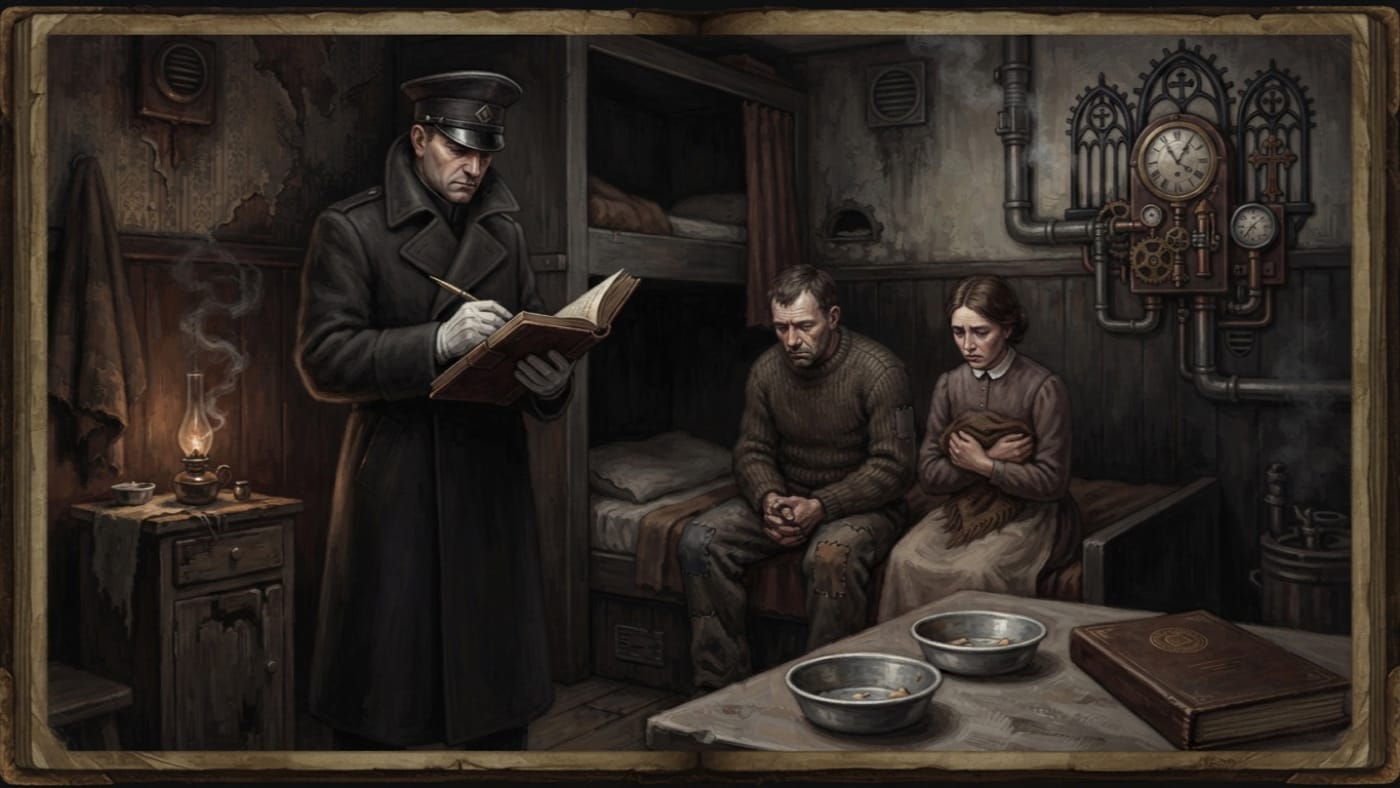
Bed Audits
The Bureau Counts Nights; the Household Counts Bread
Purity requires married couples to share a bed at least thrice per week. Failure is theft of fertility, answered by reduced rations. The Bureau counts nights; the household counts what remains in the bowl.
Codex Ref. XIII.1.02-197
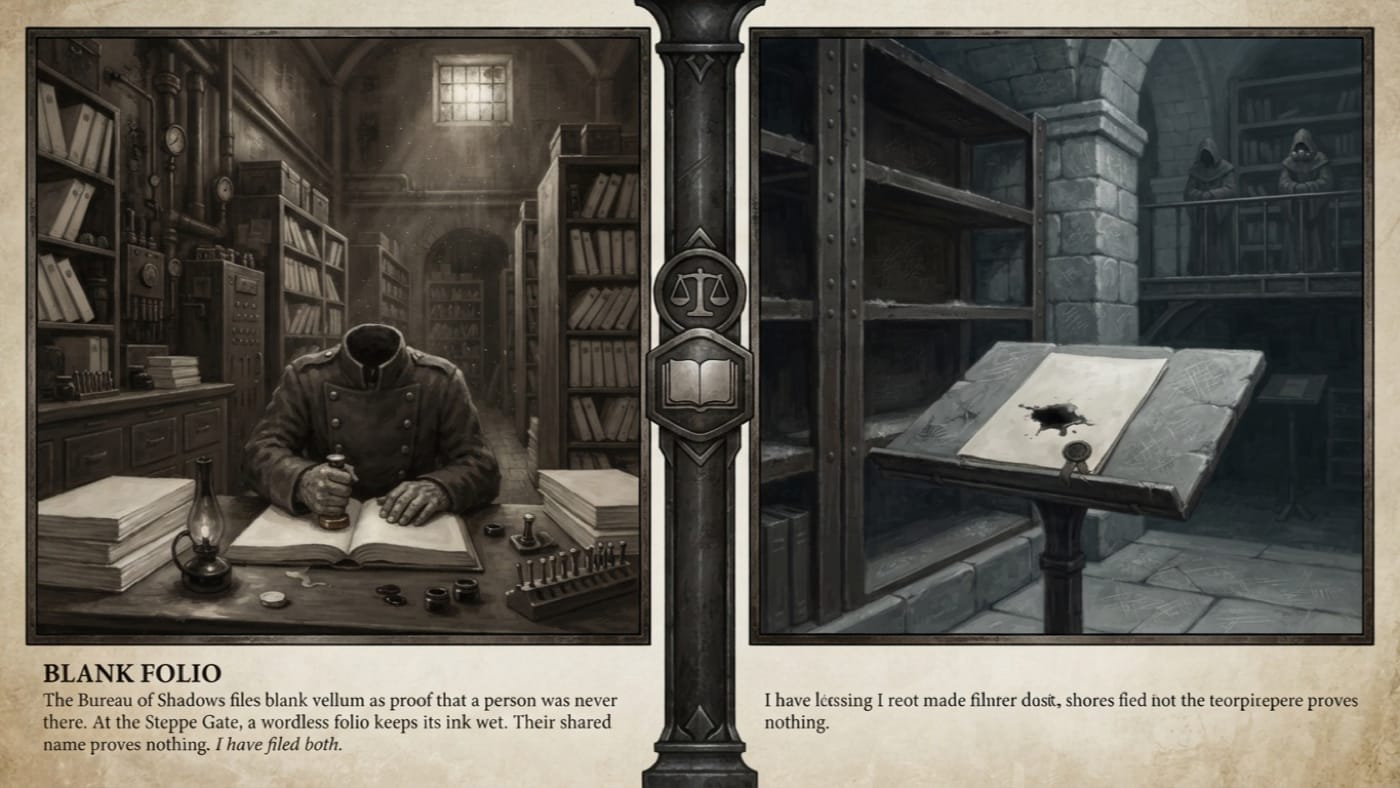
Blank Folio
One page erases a name. Another refuses to dry.
The Bureau of Shadows files blank vellum as proof that a person was never there. At the Steppe Gate, a wordless folio keeps its ink wet. Their shared name proves nothing. I have filed both.
Codex Ref. XIII.1.29-001
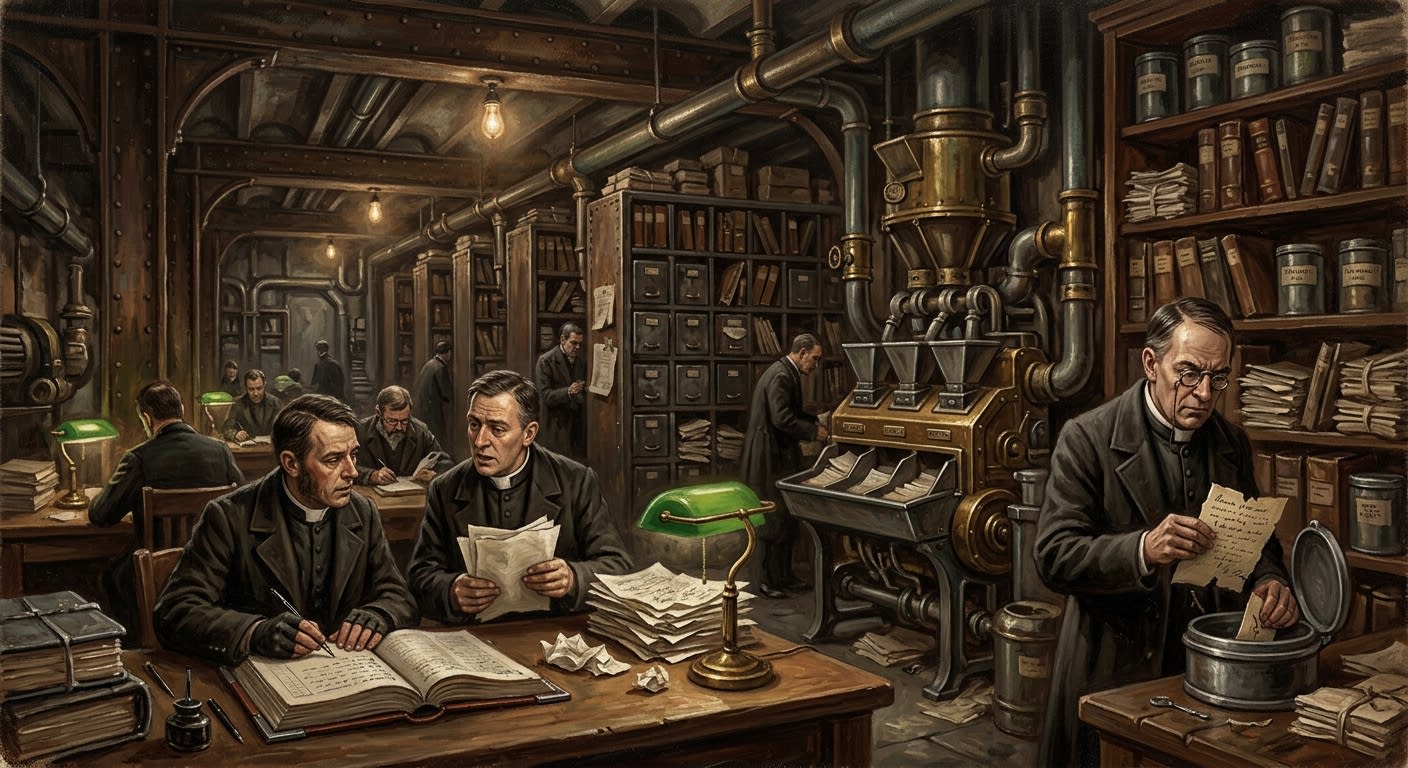
Bureau of Hearsay
Copy the ugly sentence before a cleaner office teaches it to lie
The Bureau of Hearsay preserves rumour before proof can disinfect it: tavern scraps, trench gossip, enemy jokes, and every ugly sentence that later becomes doctrine.
Codex Ref. VIII.8.02-112
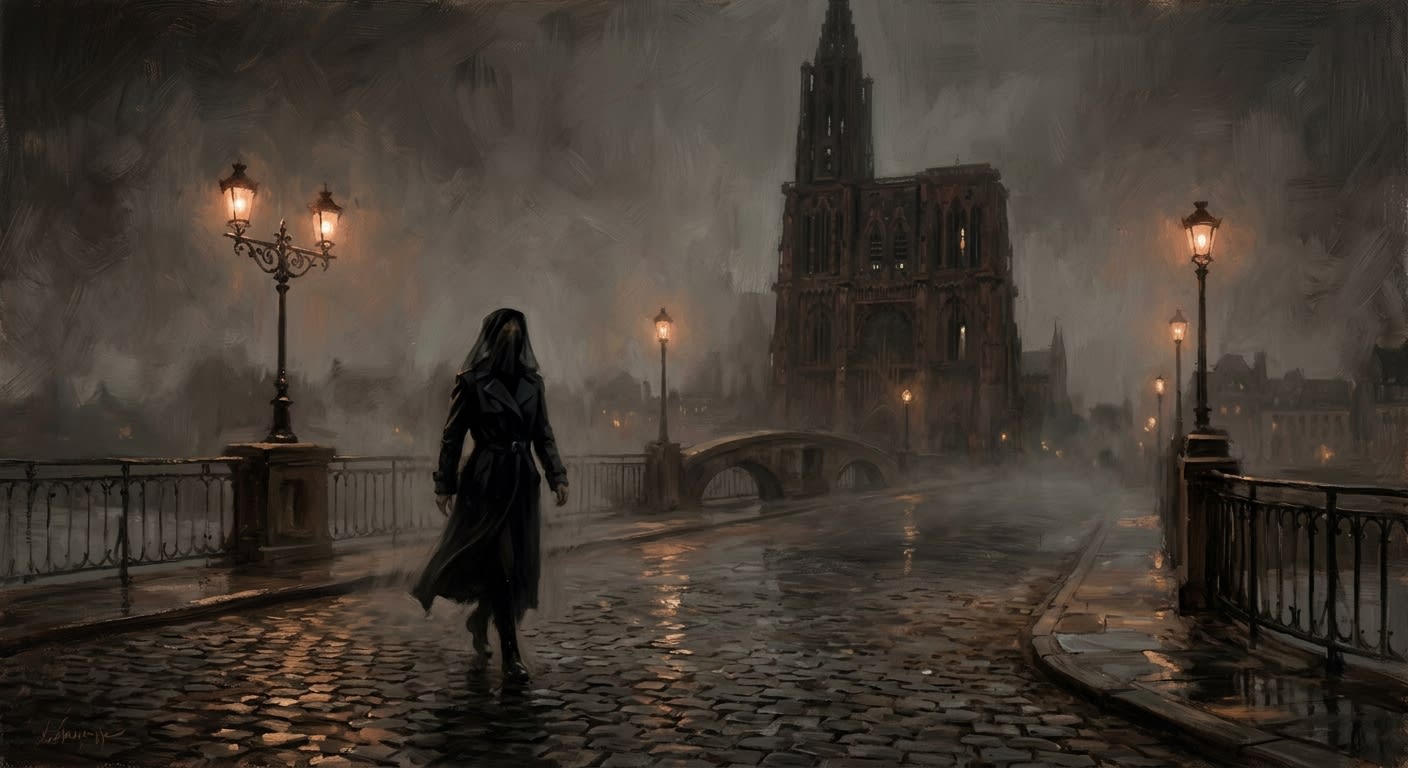
Bureau of Shadows
Fourteen confirmations of nonexistence. The grave-dust wax alone cost more than silence is supposed to.
The Bureau of Shadows does not exist. Fourteen decrees confirm this, each bearing between three and seven counter-seals, each filed under a category the Bureau of Records insists is empty.
Codex Ref. VIII.8.01-001
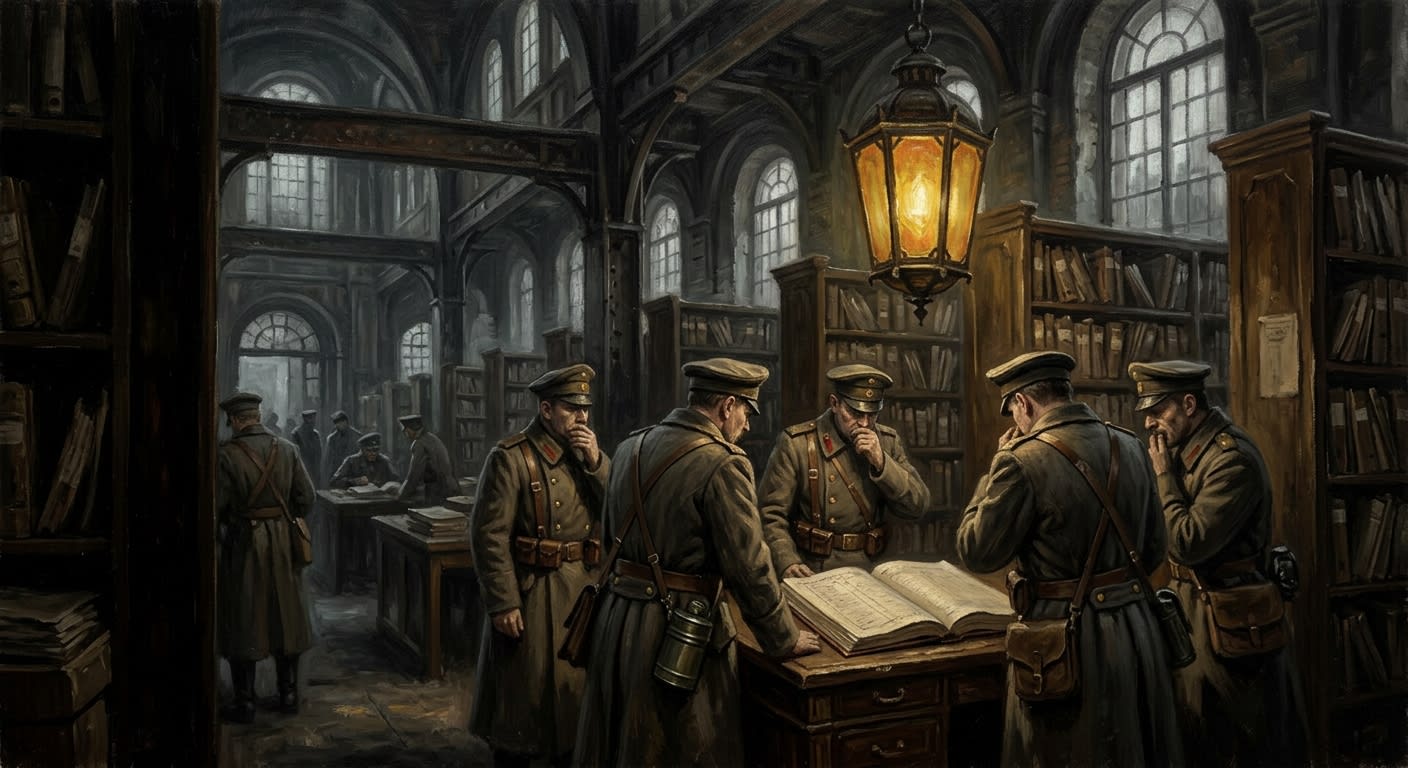
Classification Amber
The honeyed prison where Purity keeps suspicion alive
Classification Amber is Purity's suspended warrant: suspicion preserved in colour, fear extended by procedure, and mercy sharpened into watchfulness.
Codex Ref. XIII.1.06-001
Committee on Public Serenity
Accuracy Has Its Hazards
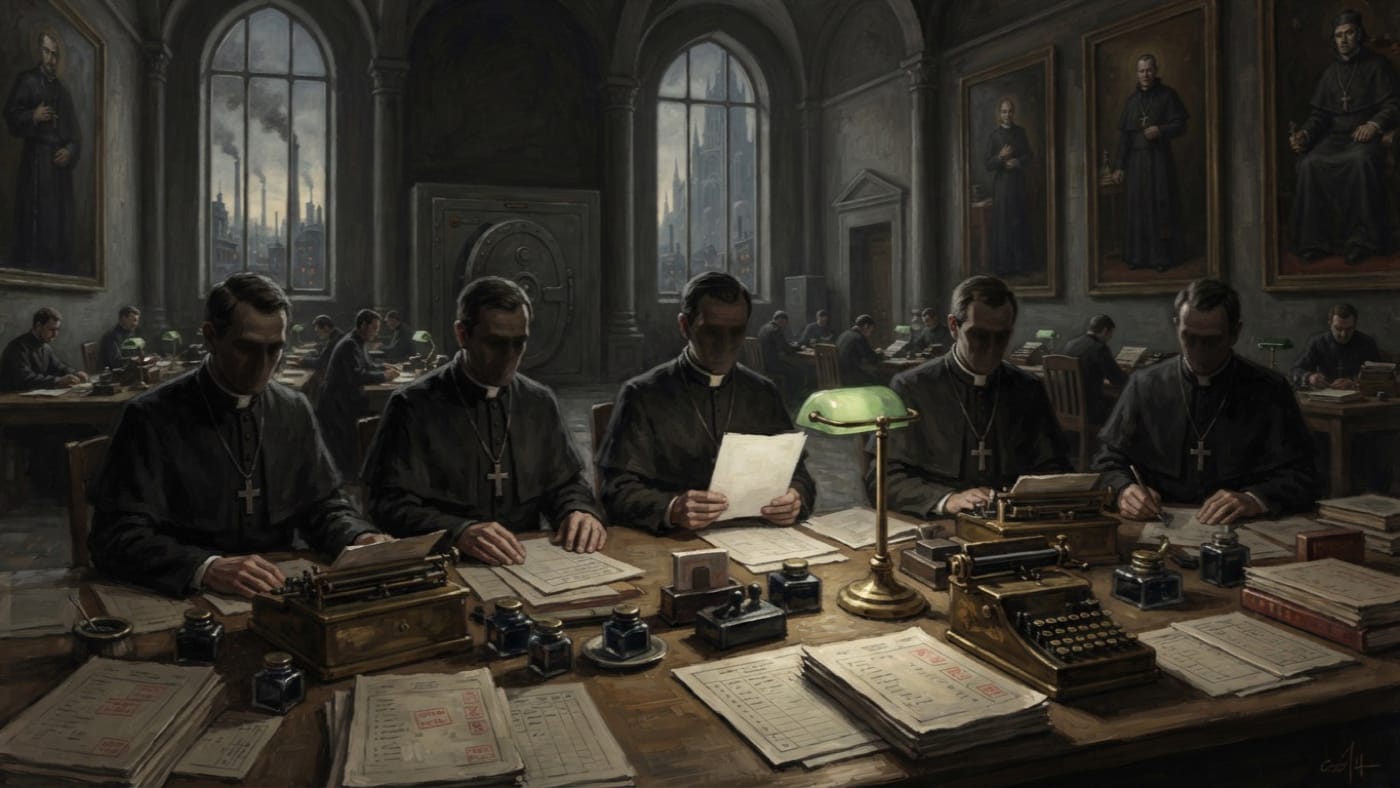
Orison's A.S. 194 inquiry recorded the Penitential Shadows as the western faithful's greatest fear. The committee was disbanded in A.S. 195; its members ceased to appear in correspondence. Accuracy has its hazards.
Codex Ref. VI.3.12-043
Confessarii
Two hundred and eighty-six reports filed; three blank pages received; the system functions as intended
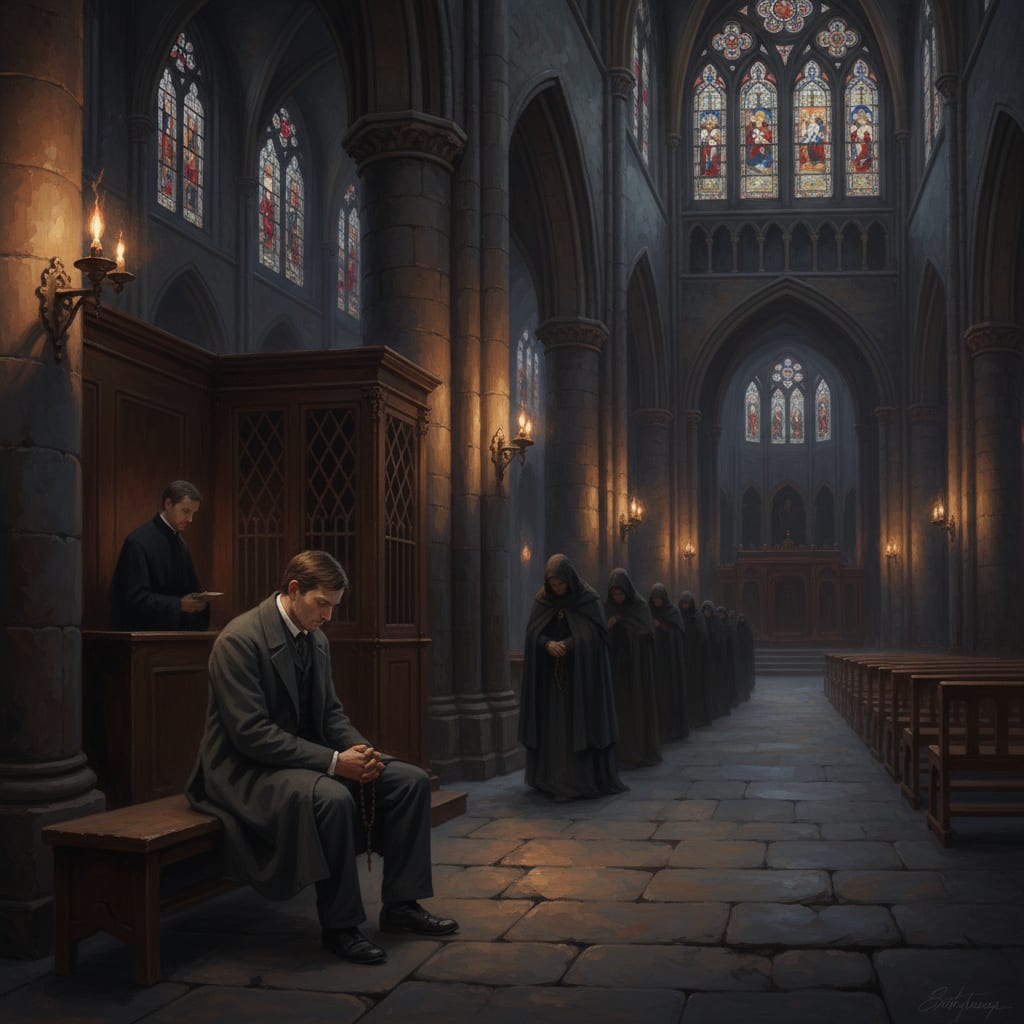
The Confessarii are the Bureau of Shadows' listening network, which does not exist because the Bureau does not exist. They attend. They absorb. They file. The courier departs. Nothing is acknowledged. The system functions as designed.
Codex Ref. XIII.1.06-001

Deputy Archon Werrenrath
A warm hymn, a clean absence, and the road east
Deputy Archon Werrenrath, a Strasbourg administrator with dangerous warmth for unlicensed hymns, was transferred cleanly to Bastion-Shipka, where his fault became operationally useful.
Codex Ref. III.2.01-104
Hierarch of Purity
The silence before confession has a chair and wears white
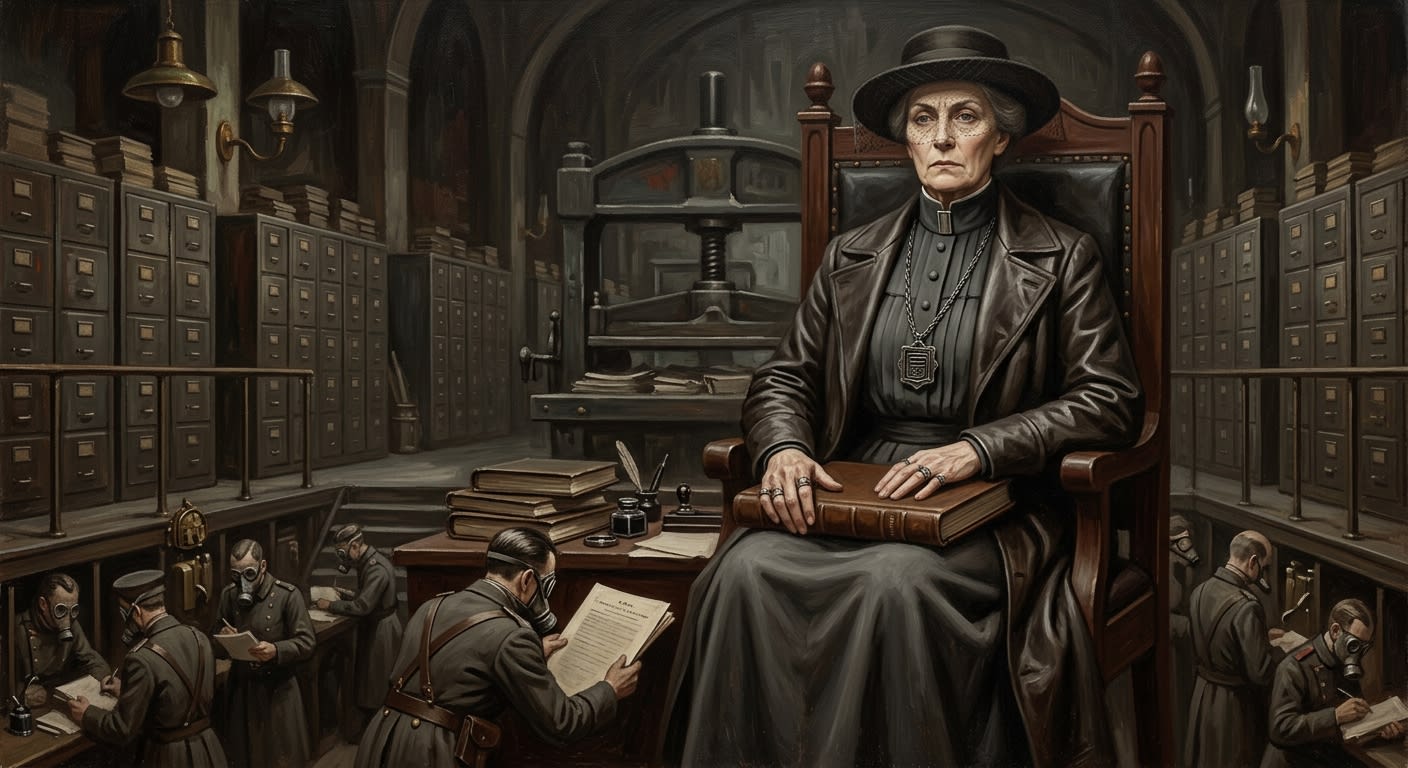
The unnamed current holder of the Fifth Seal commands Purity, the Inquisition, and the administrative terror by which impurity becomes whatever her silence permits.
Codex Ref. III.2.01-072
High Censor of Strasbourg
An empty name at the summit of the Inquisition
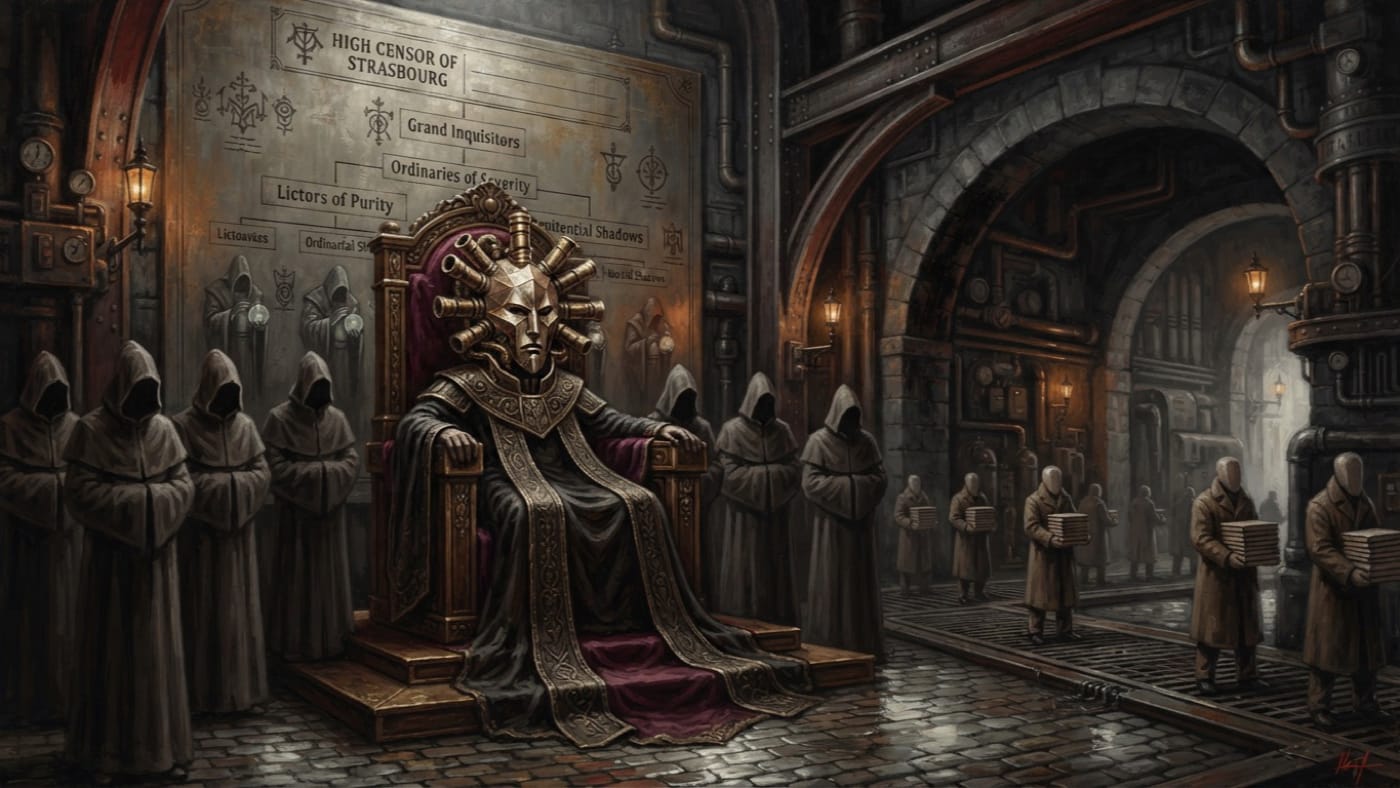
The High Censor of Strasbourg crowns the Inquisition's command chart. The title is current, the bearer's name remains empty, and even the summit may tremble before its silent subordinates.
Codex Ref. VI.3.02-003
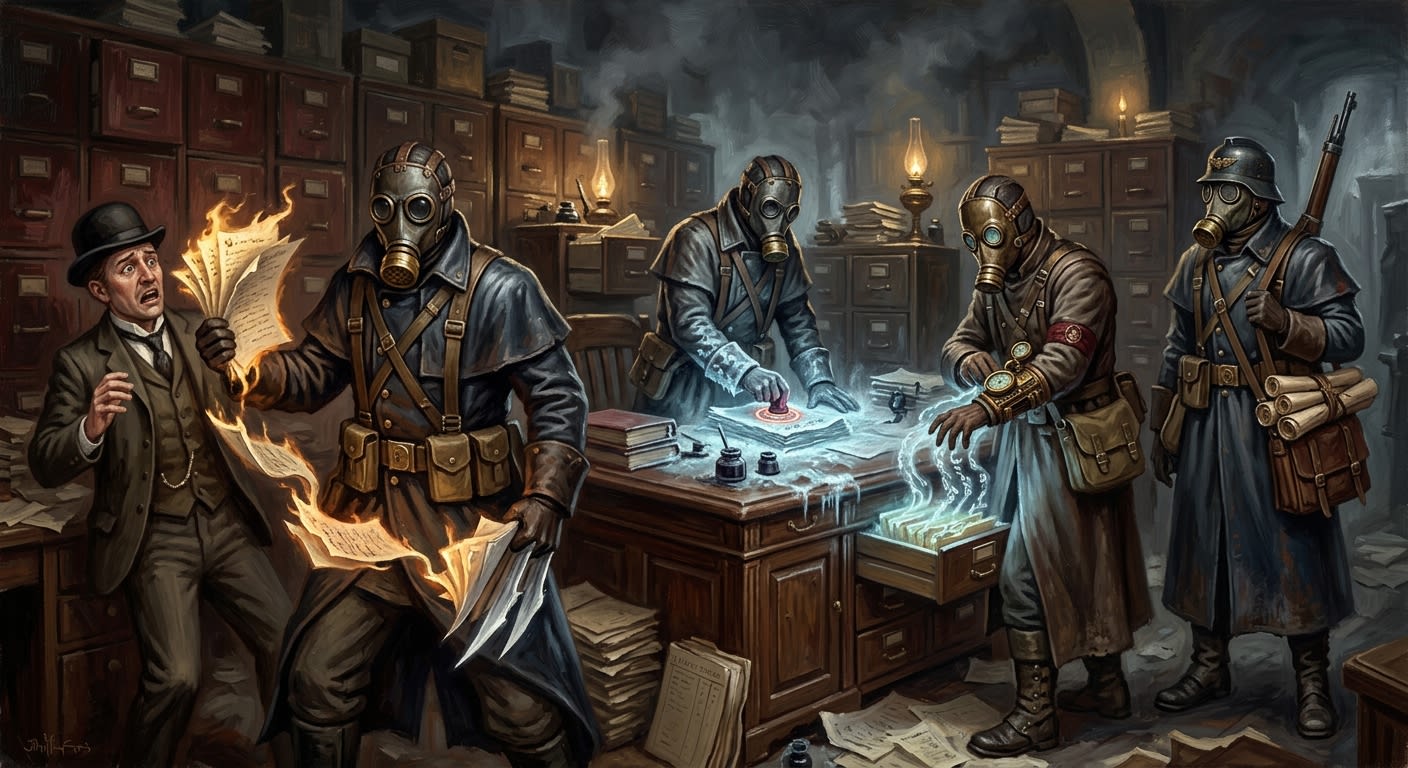
Indiction Shadows
The mask, the writ, and the courtesy of procedural terror
The Indiction Shadows are masked Bureau of Records audit-operatives whose writs freeze rooms, suspend names, retrieve hostile files, and make paperwork behave like a knife with witnesses.
Codex Ref. VIII.1.06-001
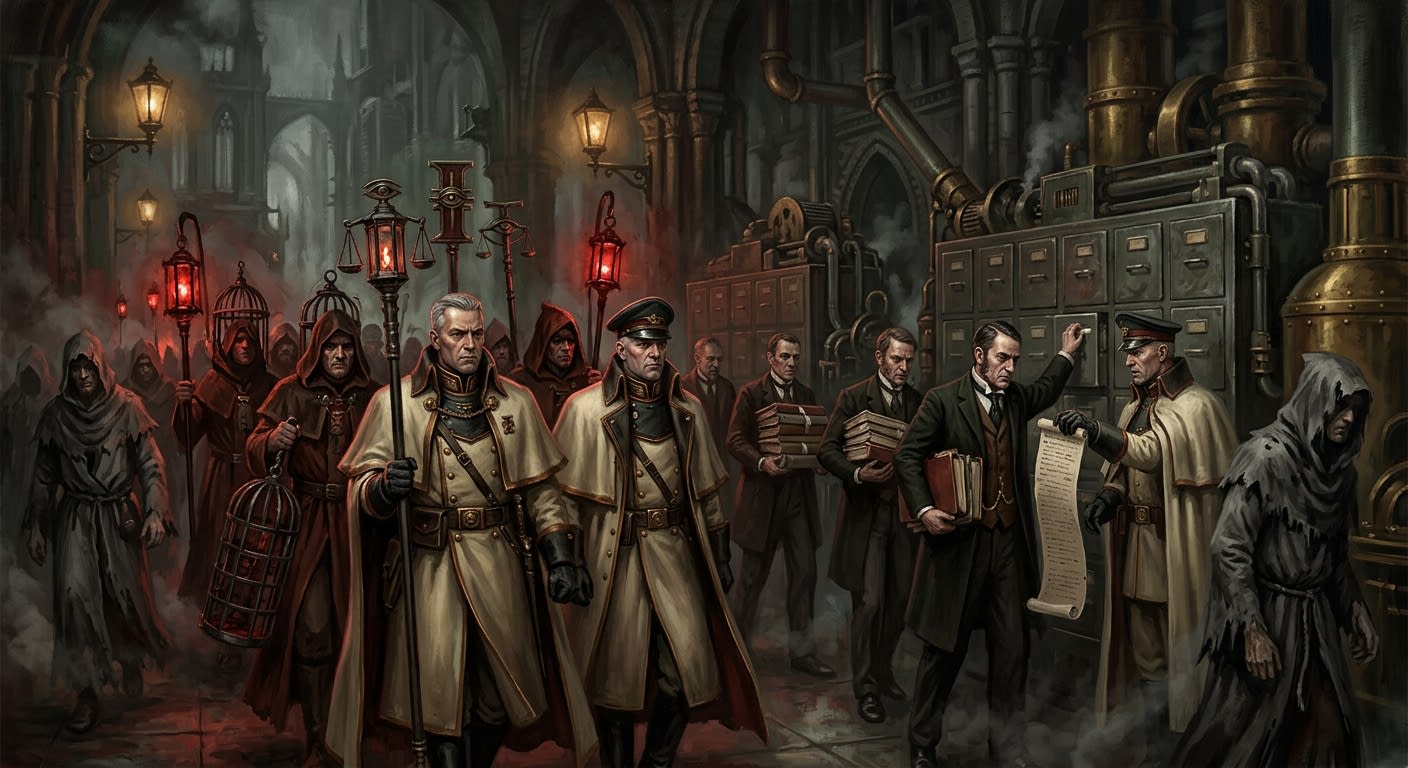
Inquisition
The white hand closes with a receipt
The Inquisition is Purity's authorised appetite for correction: White Cloaks, Lictors, Red Lanterns, Ashmen, Shadows, Index packets, denunciation law, and the clerkly miracle by which fear learns to file itself.
Codex Ref. VIII.1.08-093

Inquisitor Shadow Crew
Purity with a private counter and a locked drawer
The denied corrupt current inside the White-Mantled Inquisitors: protection sellers, denunciation brokers, chain-slack artists, and traffickers in seized words.
Codex Ref. XII.49.03-003
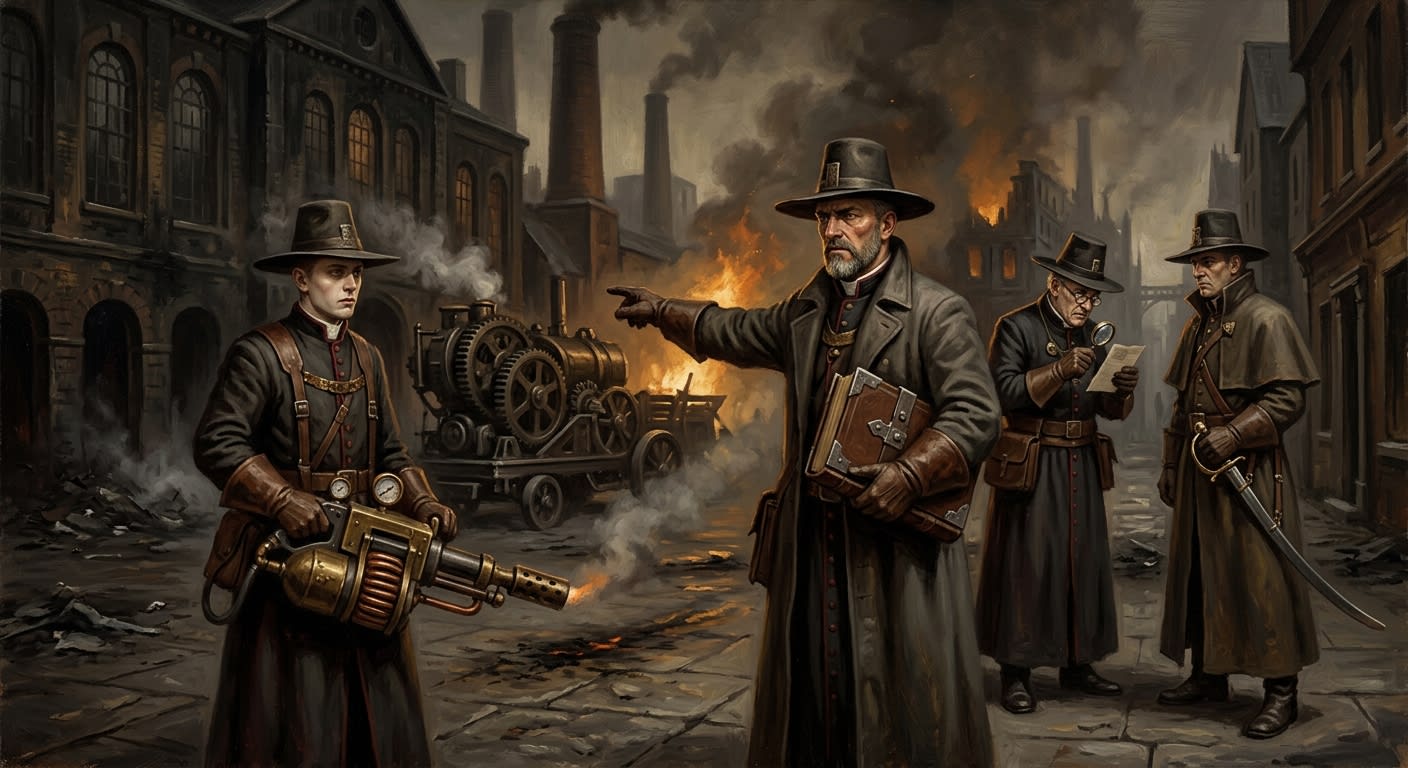
Inquisitor-Purists
They call it clarity because ash does not argue
The hard current within the White-Mantled Inquisitors: Purity officers who burn first, file afterward, and leave districts obedient, silent, and commercially dead.
Codex Ref. XII.49.03-001

Inquisitorial Corps
The street sees one mantle; the ledger holds the Corps
Behind each white mantle stands a district of rolls, seized words, and inspected chains. I record the Corps that turns forbidden speech into cases, corrections, and silence.
Codex Ref. XII.49.02-001
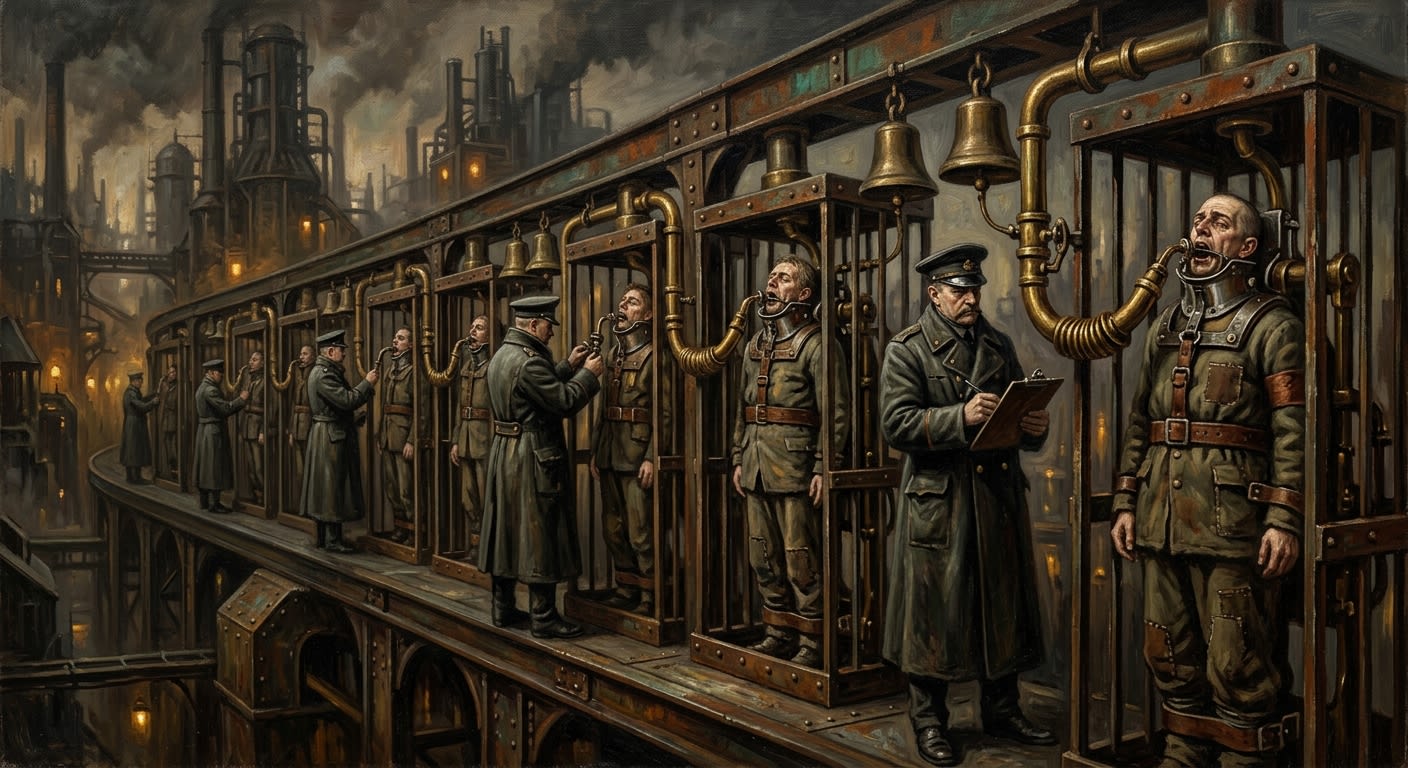
Iron Choir of Mainz
Where the road learned to keep a throat open
The Iron Choir of Mainz turns condemned throats into civic instruction: a Purity road of cages, bells, Brand-Singers, witness columns.
Codex Ref. VIII.1.09-134
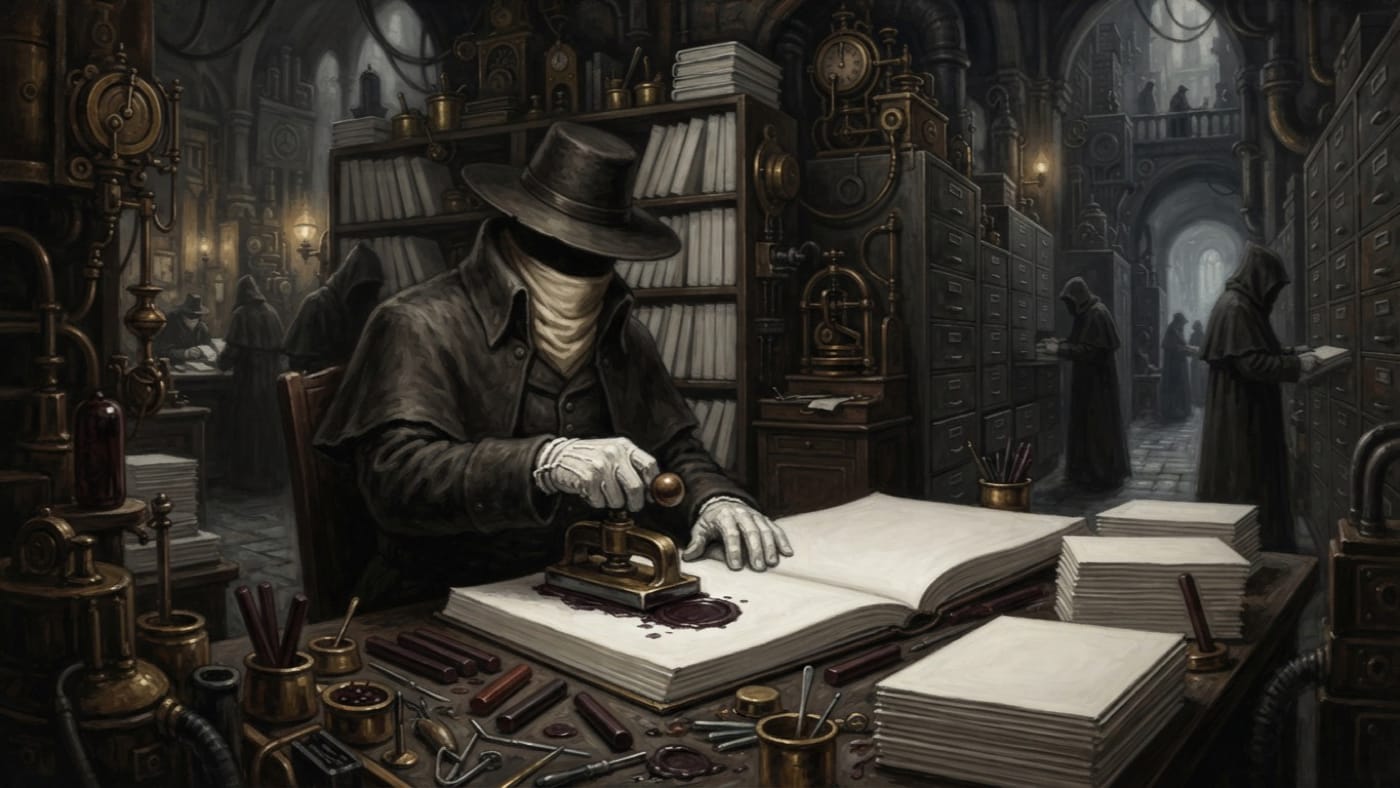
Omission Notaries
The page contains nothing. The wax makes it official.
The Omission Notaries authenticate blank folios for the Bureau of Shadows. No signature, no named incumbent, and no assurance that the person omitted is dead. The wax makes absence official.
Codex Ref. VIII.8.03-001
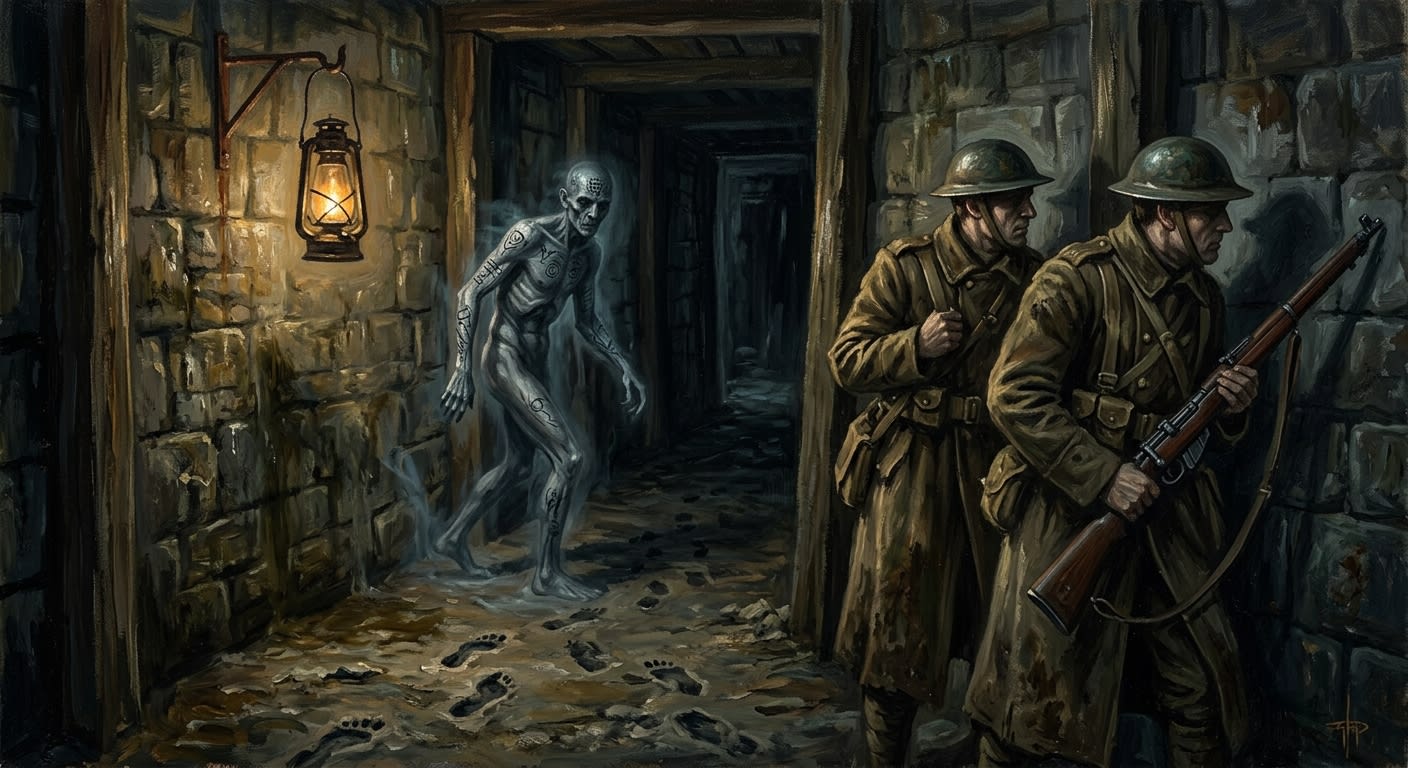
On the Veil-Stalkers
The enemy the eye refuses to see
A taxonomy of the Shadow Court's concealment-inscribed mortal stealth auxiliaries — five modes of glyph-fed invisibility, a lifespan measured in weeks, and the Bureau's admission that a knife you cannot see kills morale more efficiently than a cannon you can.
Codex Ref. IX.1.05-001
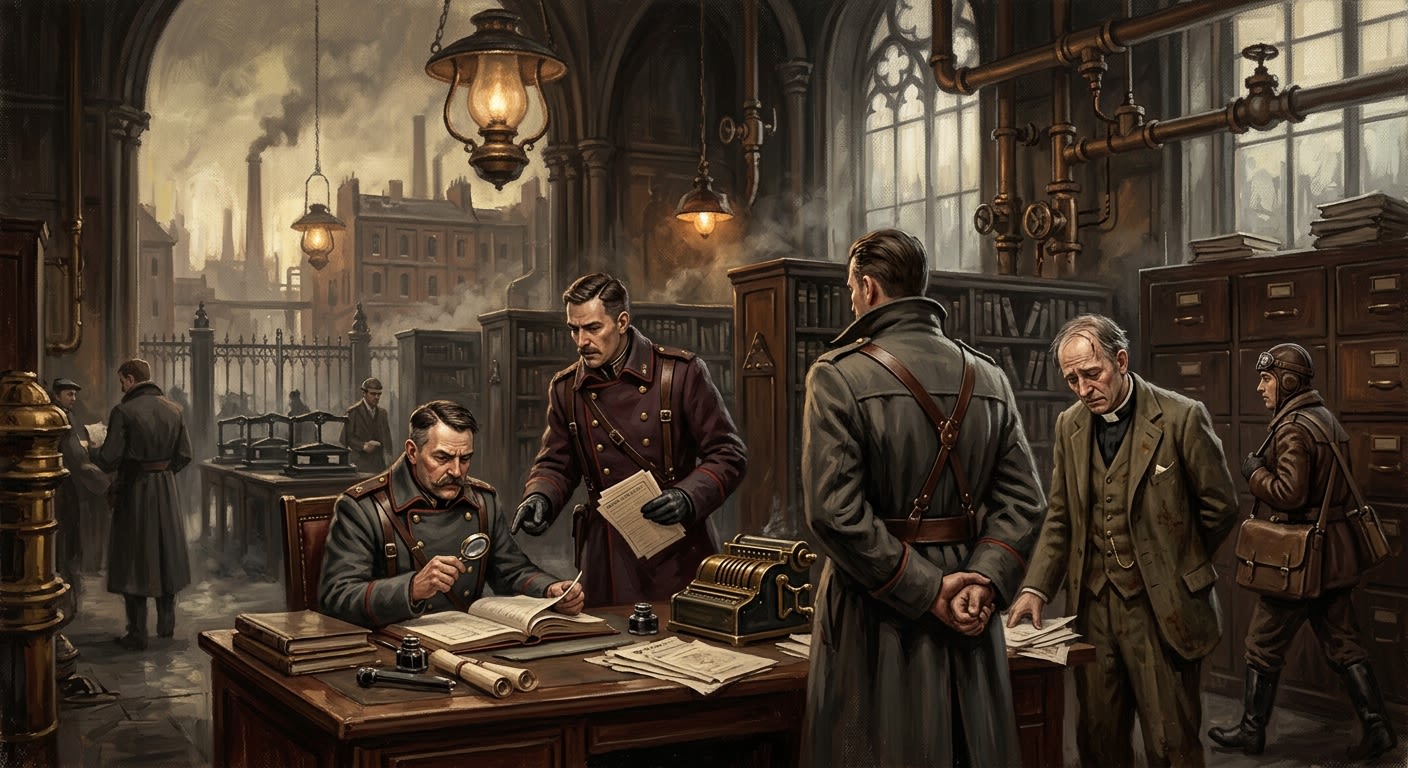
Order of Severance
The inward knife that cuts office from affection before affection becomes a kingdom
The Order of Severance is the Bureau of Purity's inward knife: an inquisitorial fraternity that hunts clerical and bureaucratic heresy where clean cuffs, perfect ledgers, and trusted colleagues become shelter.
Codex Ref. VIII.1.07-134
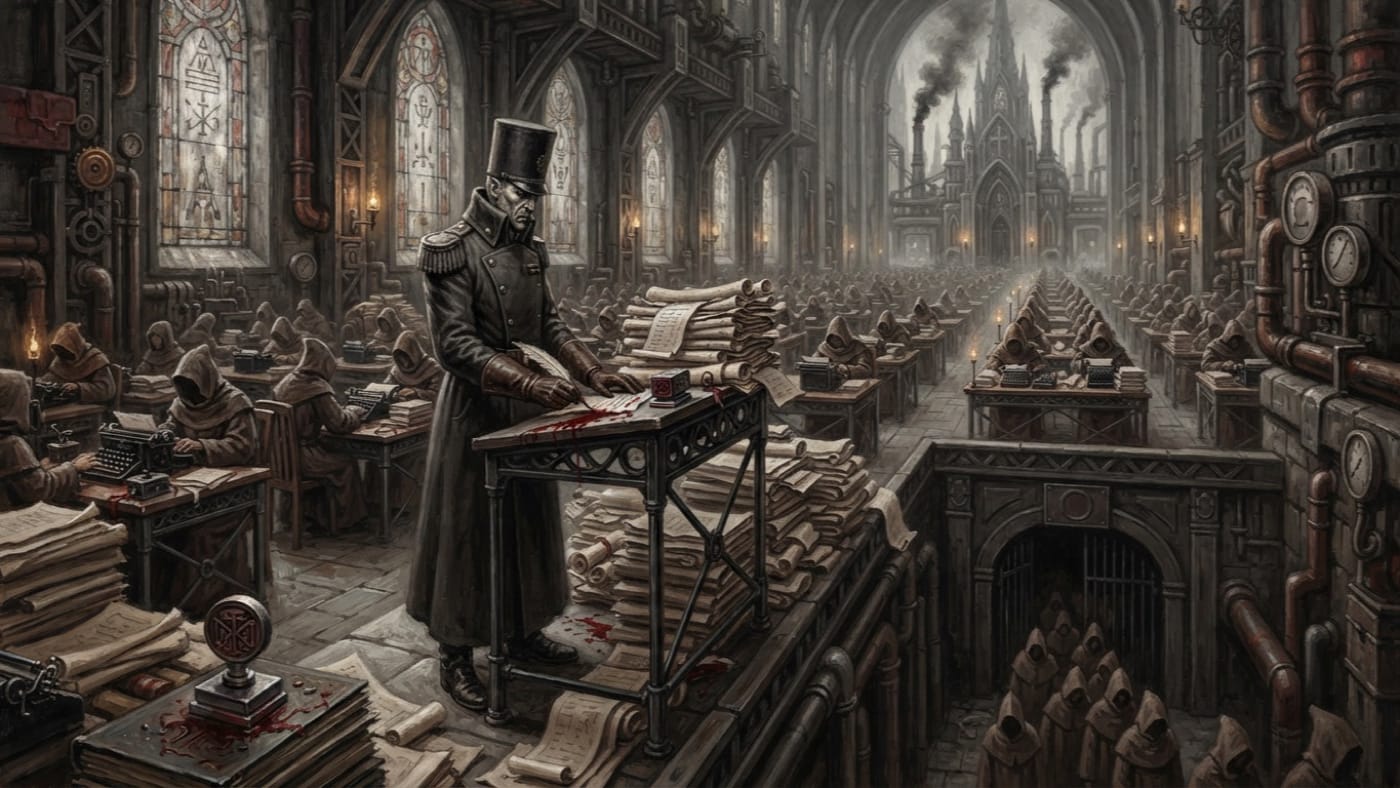
Ordinaries of Severity
The Lictor carries the knife; the Ordinary keeps the calendar
A.S. 201 survey of the Inquisition's middle tier. Ordinaries organize purges, penances and trials, often ruling a single diocese with absolute authority. The faithful learn the office through the names they fear.
Codex Ref. VIII.1.08-2029
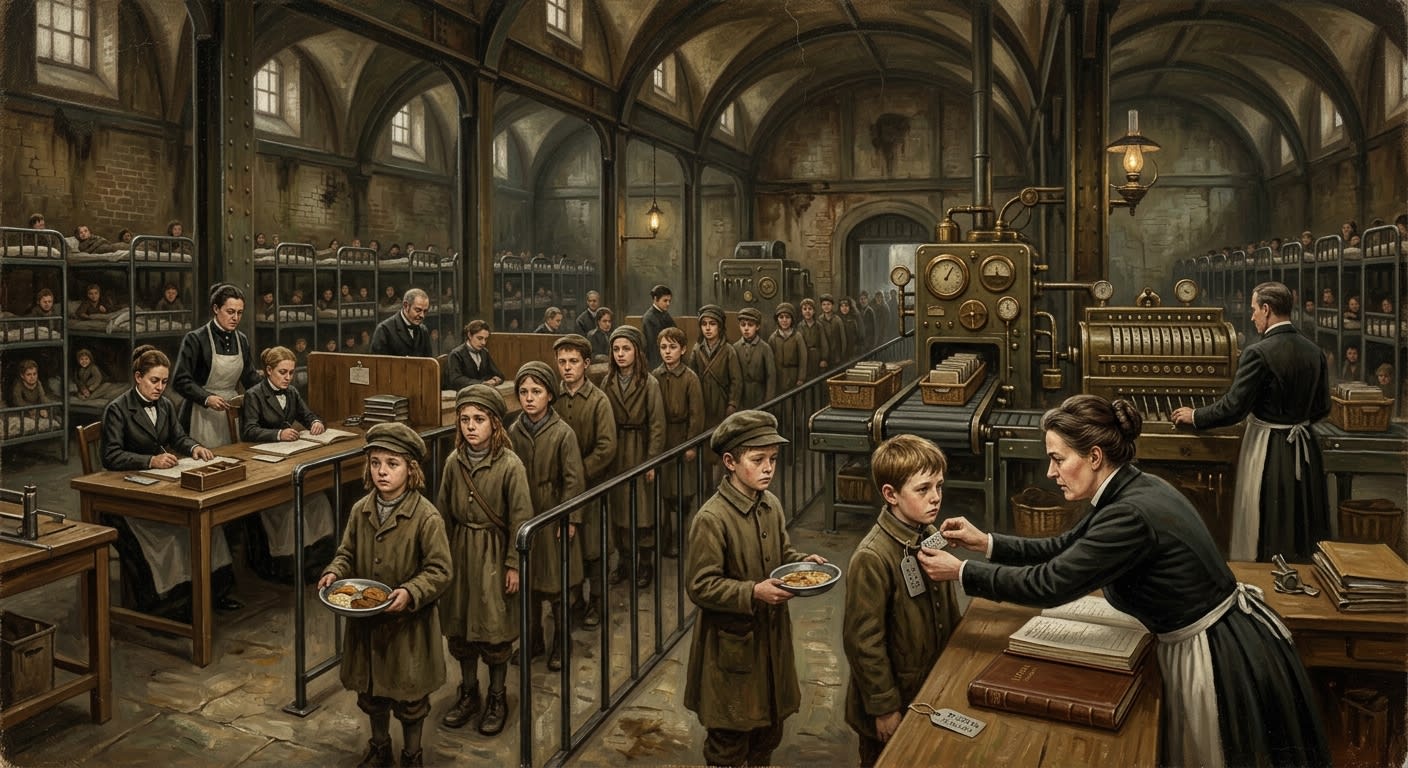
Orphanarii
Mercy with a cot, a tag-punch, and the legal courage to rename a child before breakfast
The Orphanarii are the Synod's state orphanage system: Mercy houses that wash, tag, rename, sort, feed, place, and sometimes erase children until grief becomes legible.
Codex Ref. VIII.2.12-134
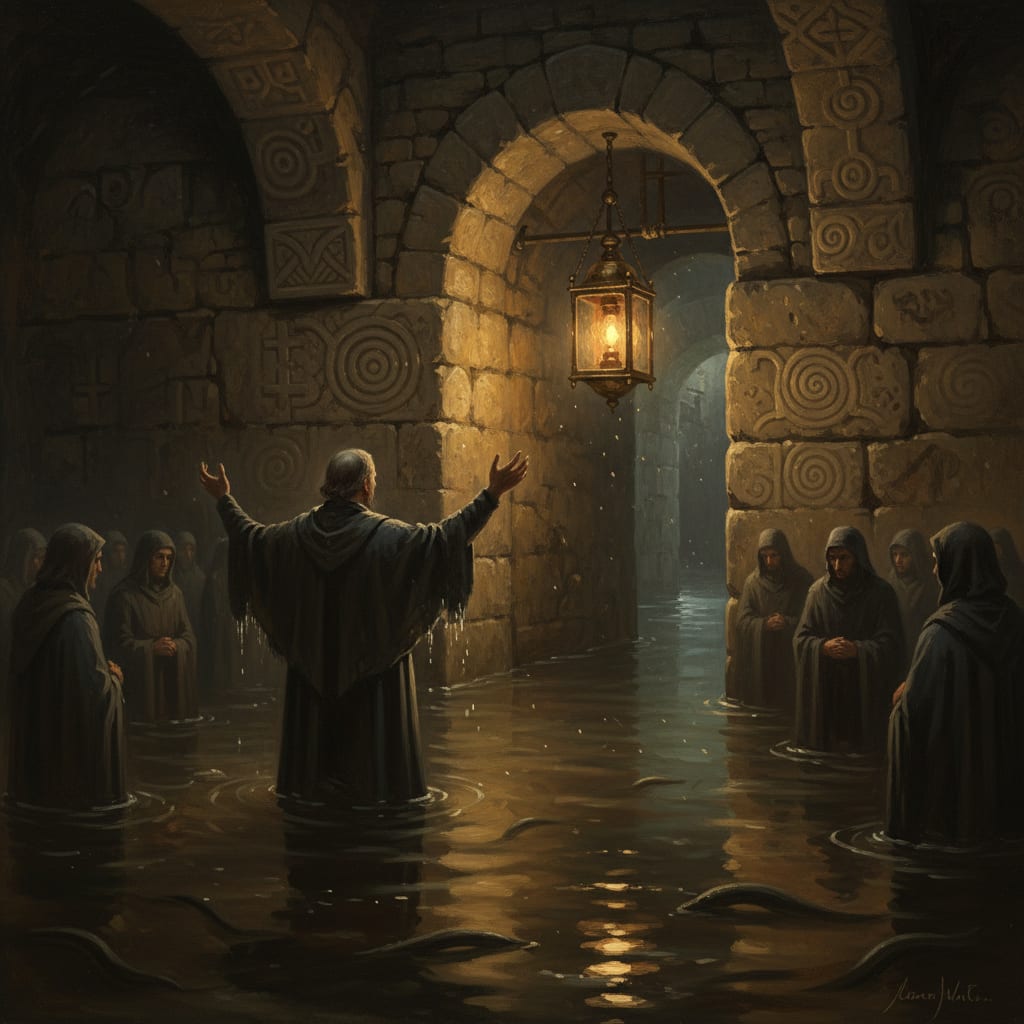
Pontifex Submersis
The name is gone; the chains still hum; the Bureau has no comment
The man the Bureau erased so thoroughly it must write eleven pages explaining what he was not: the Drowned Pontiff of Avignon, non-person, non-event, non-theology. His name is gone. The chains hum in B-flat.
Codex Ref. III.2.02-001
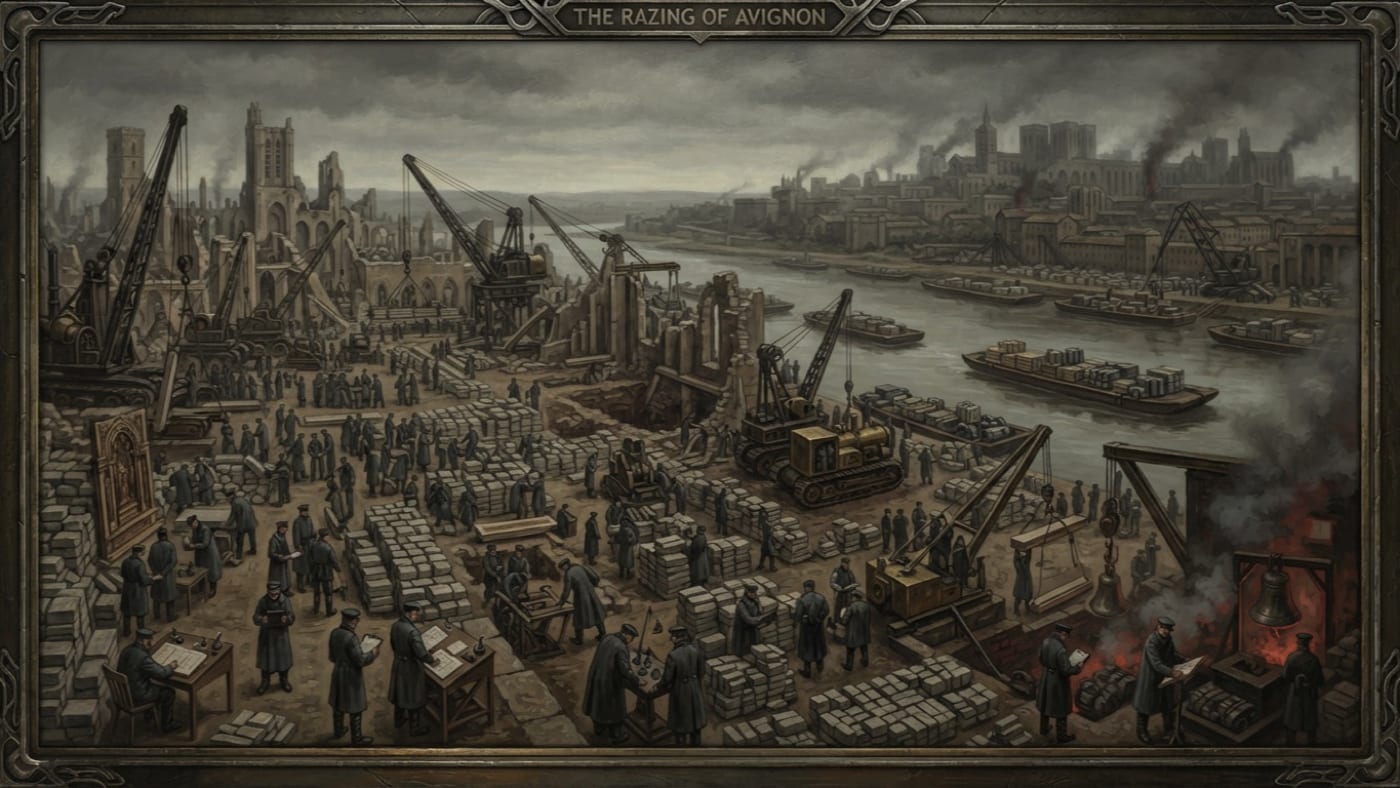
Razing of Avignon
Every Stone Accounted For, Every Name Removed
In A.S. 111, the Synod dismantled Avignon stone by stone, recast its bells as ammunition, and erased its schismatic clergy from the record. The inventory is immaculate; the city is absent.
Codex Ref. III.2.07-002
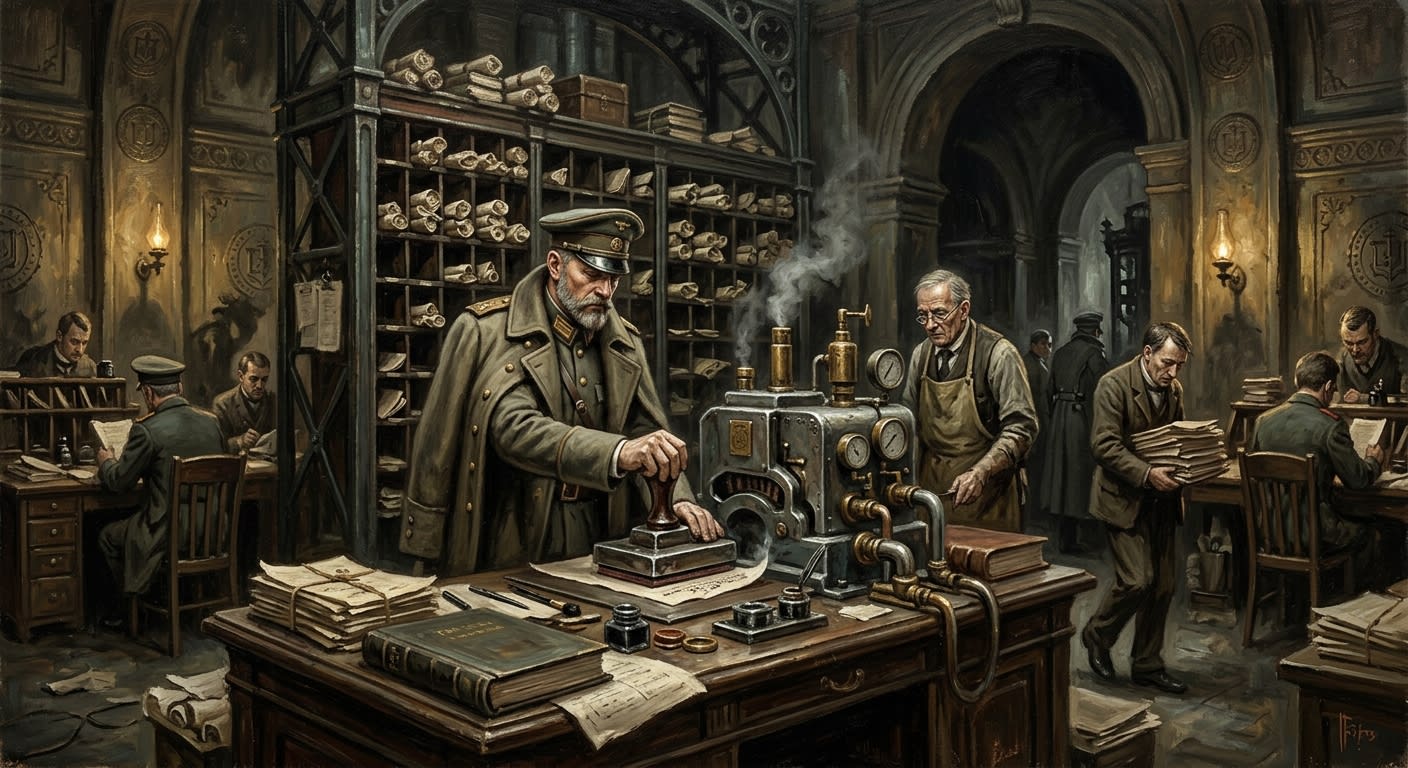
Seal Standardisation Edict
The law that taught rubber to confess and plumbers to keep two ledgers
The Seal Standardisation Edict answered Shipka's Unhymn with hymn-gaskets: a successful law, which means it created an office around the scar.
Codex Ref. XIII.1.92-164
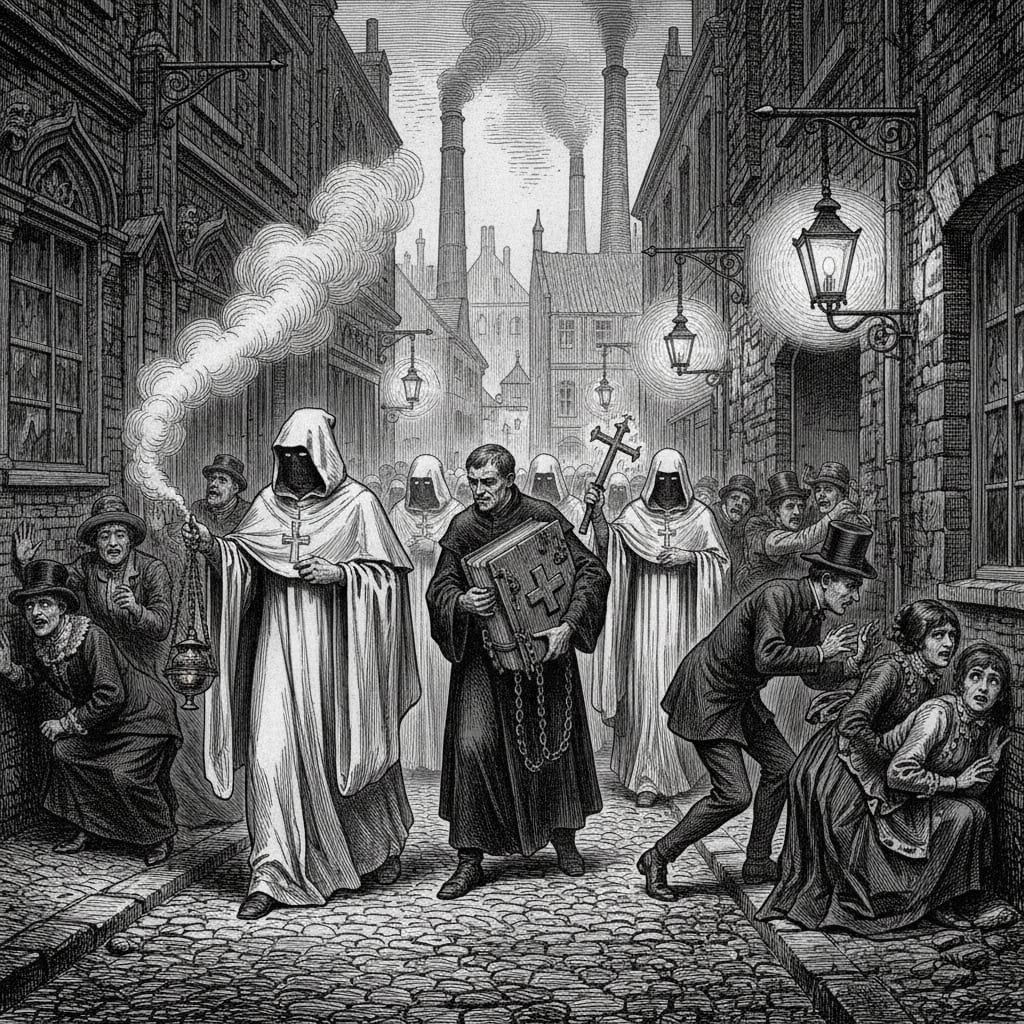
The Bureau of Purity
The White Cloaks Are Watching
The most feared organ of the Synod. Born in the Witch-Hunts of Toulouse, keepers of the Index Damnatus, enforcers of everything Doctrine defines and everyone else regrets. Where they walk, the air tastes of censer-smoke and branded confession.
Codex Ref. III.3.02-001
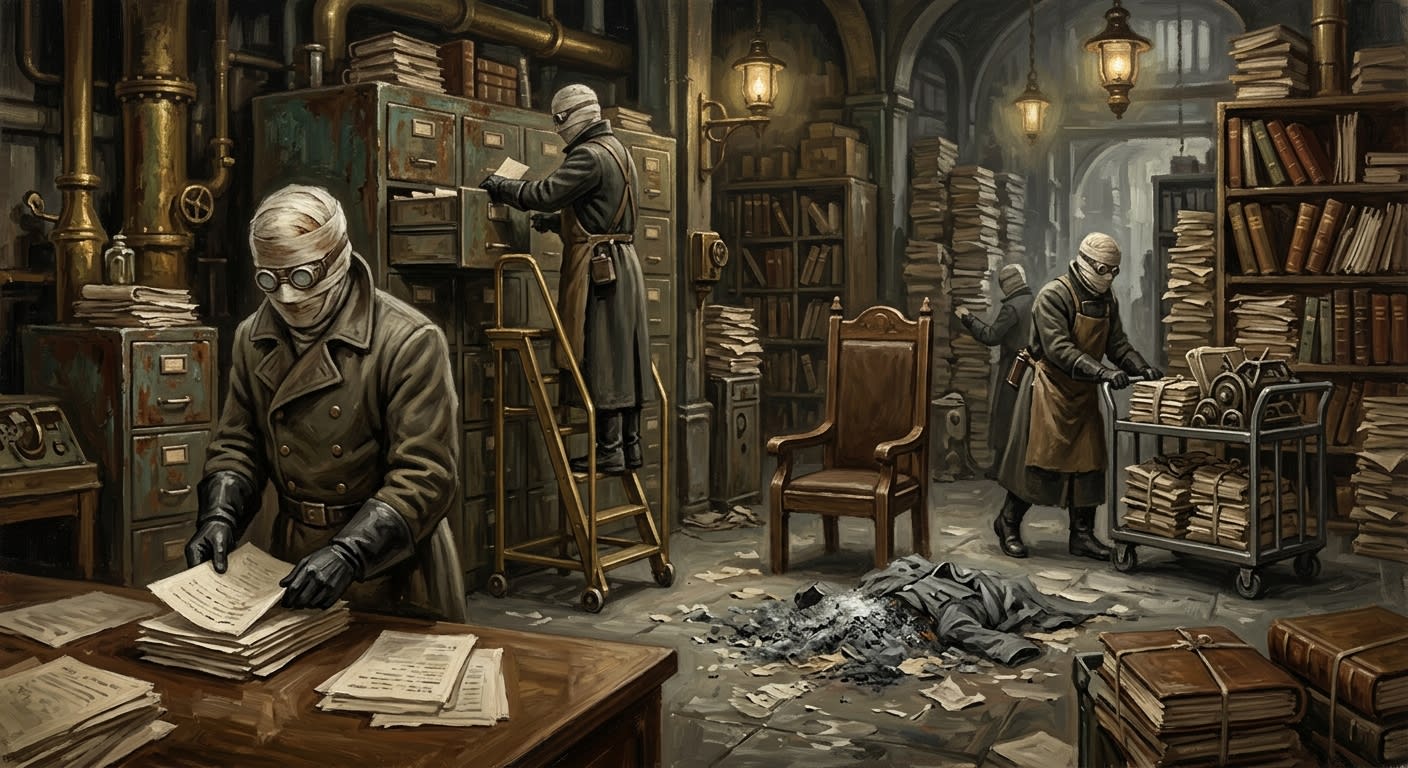
The Custodians
The broom, the knife, and the blank page share one handle
The Custodians preserve Synodic continuity by omission: gauze-veiled operatives who collect contradictions, file absence, and leave the chair cleaner than the corpse.
Codex Ref. VIII.8.02-001
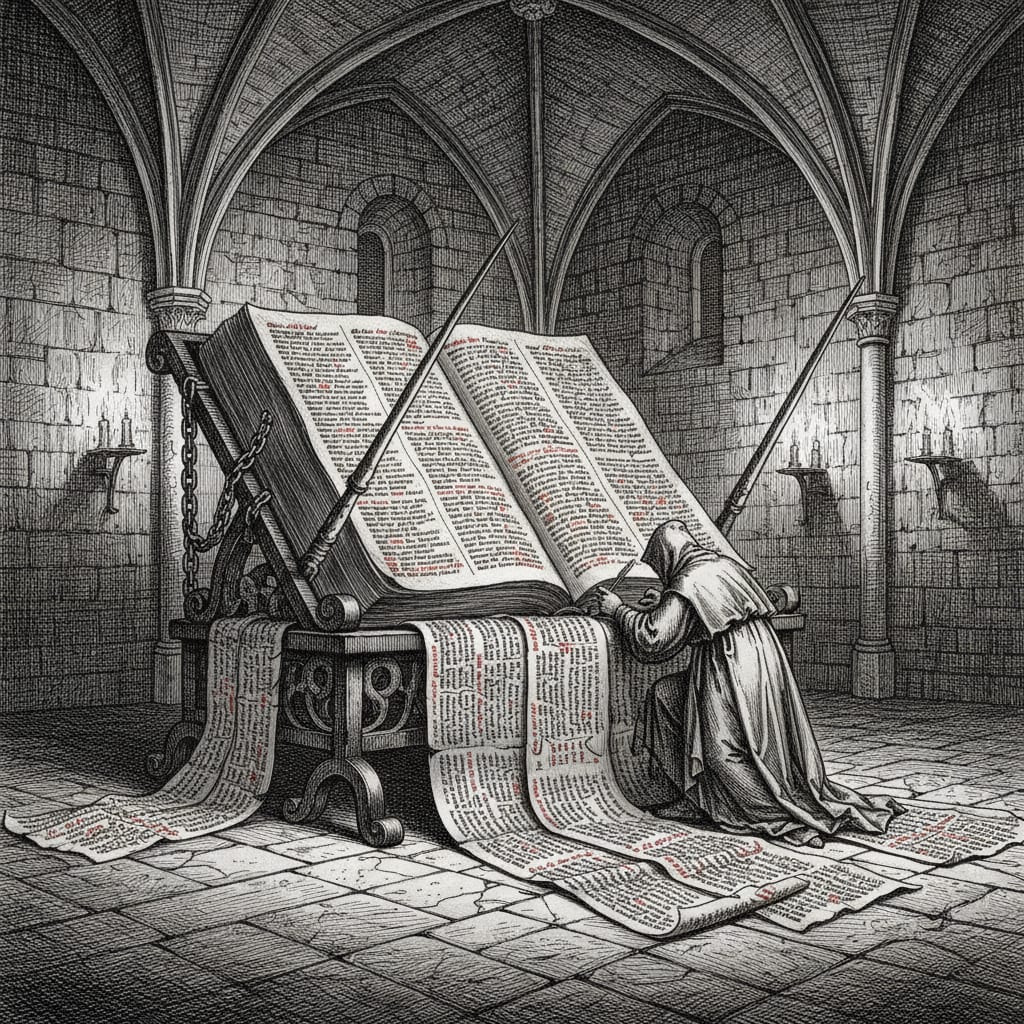
The Great Ledger of Souls
Census of the Living, Archive of the Damned
The Bureau of Records' supreme instrument of spiritual governance — an unbroken registry of every baptized soul since A.S. 80, kept in the subterranean vaults of Strasbourg, where forgetting is treason and being forgotten is worse.
Codex Ref. IV.1.09-003
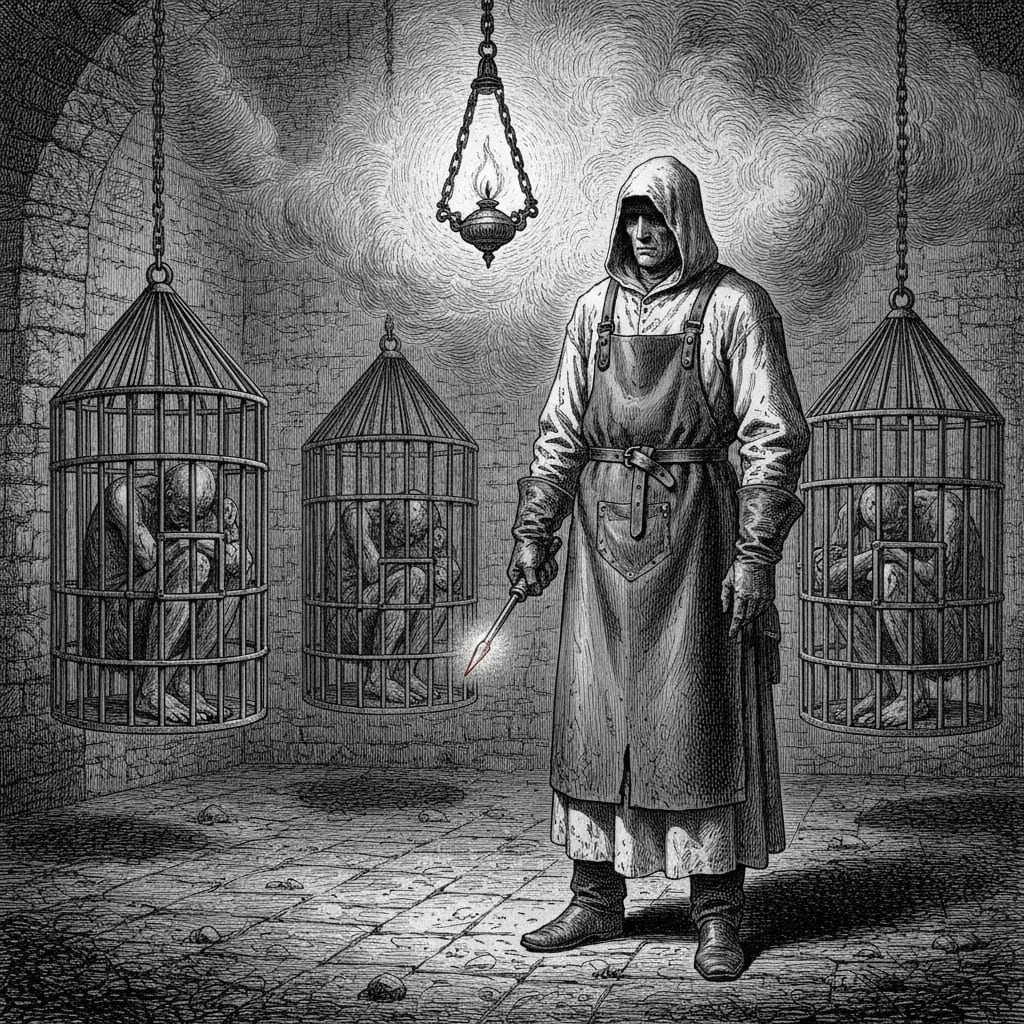
The Lictors of Purity
The Fingers That Write in Flesh
The Bureau of Purity's flesh-interrogators — those who brand confession into living skin, who carry the brazier and the stylus, and who have elevated punishment to a form of calligraphy the Bureau of Doctrine cannot help but admire.
Codex Ref. III.3.02-004
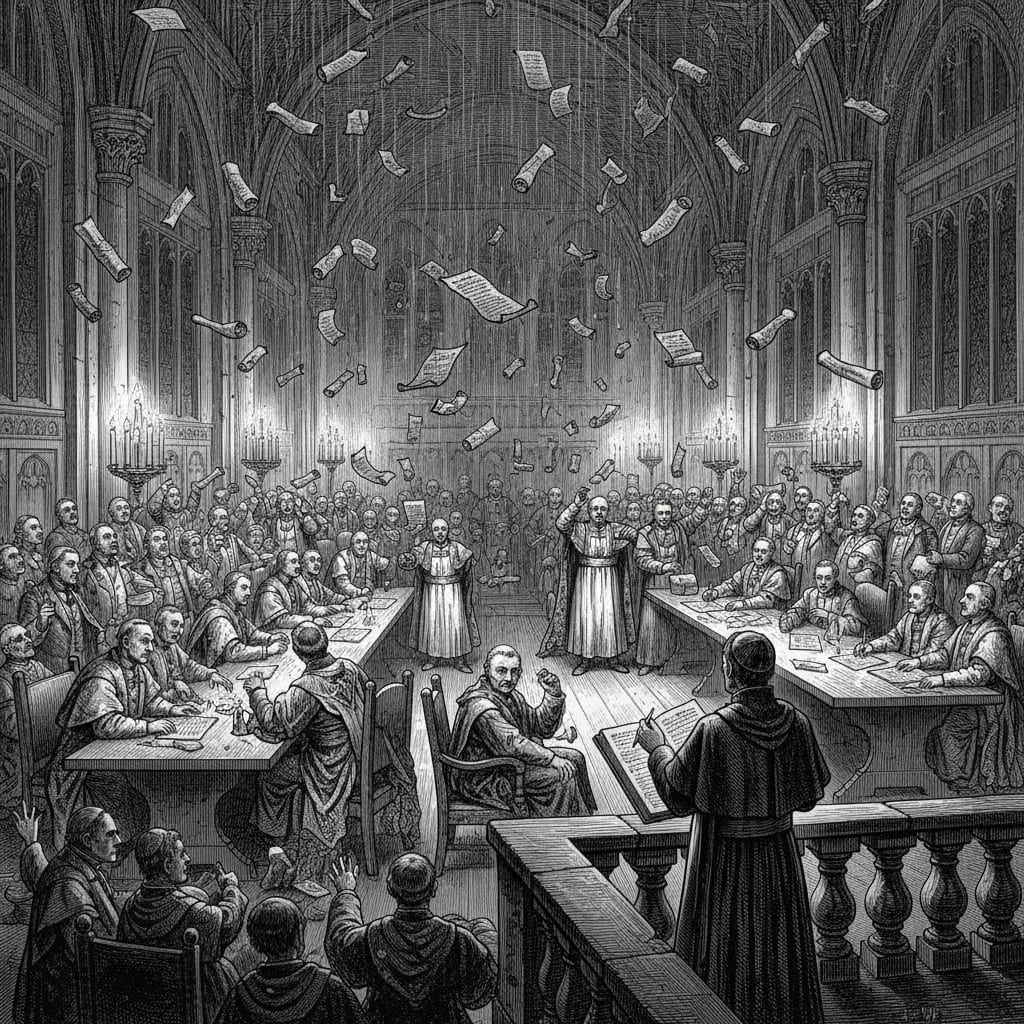
The Night of Black Decrees
When paper pressed the reluctant into obedience
The A.S. 58 writs pressed local subscriptions across the emerging Church authority's reach. Their seals and responses varied; the Bureau's story of overnight unanimity is a later claim.
Codex Ref. IV.3.07-041
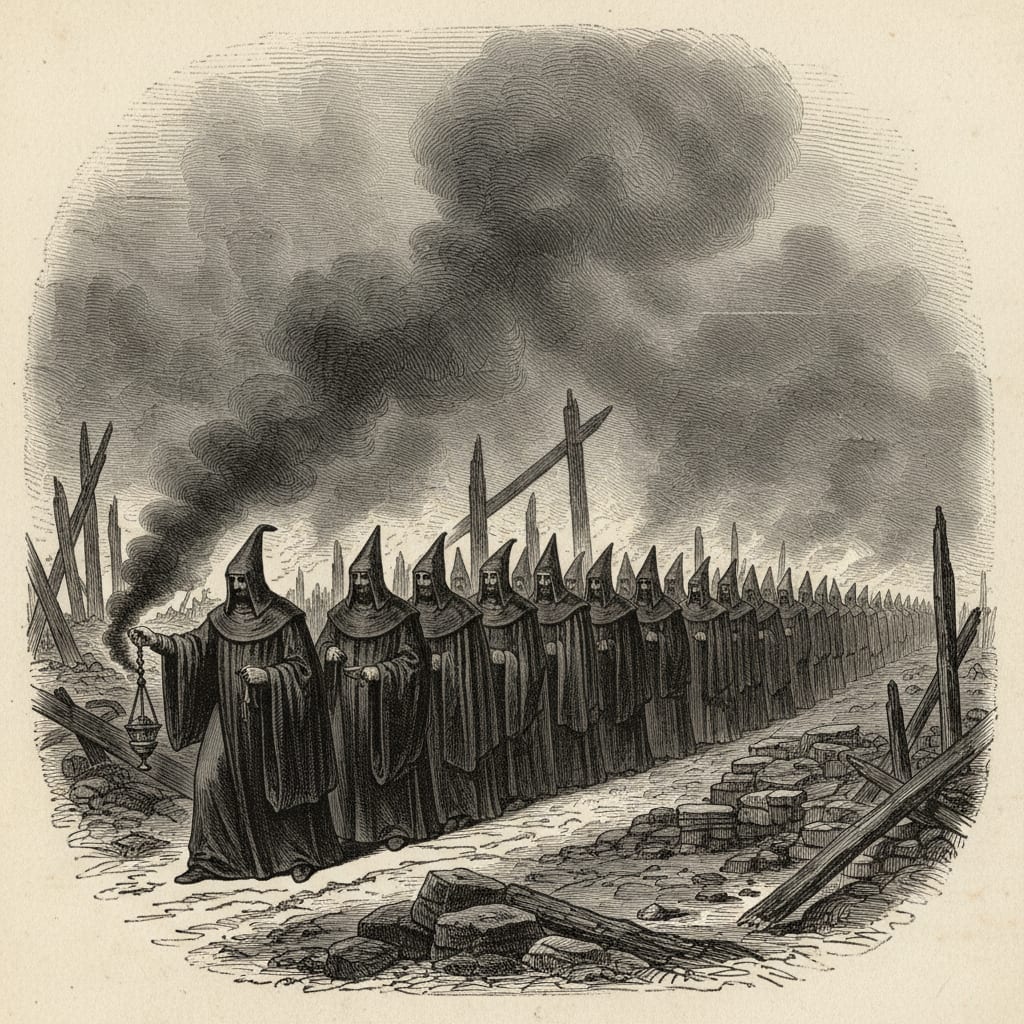
The Order of Ash
Liturgists of Fire, Archivists of Cinder
The Inquisition's first and fiercest instrument of annihilation. Where the Ashmen pass, the well-stones glass smooth and the children's slates bake into reliquaries of obedience.
Codex Ref. III.3.06-041
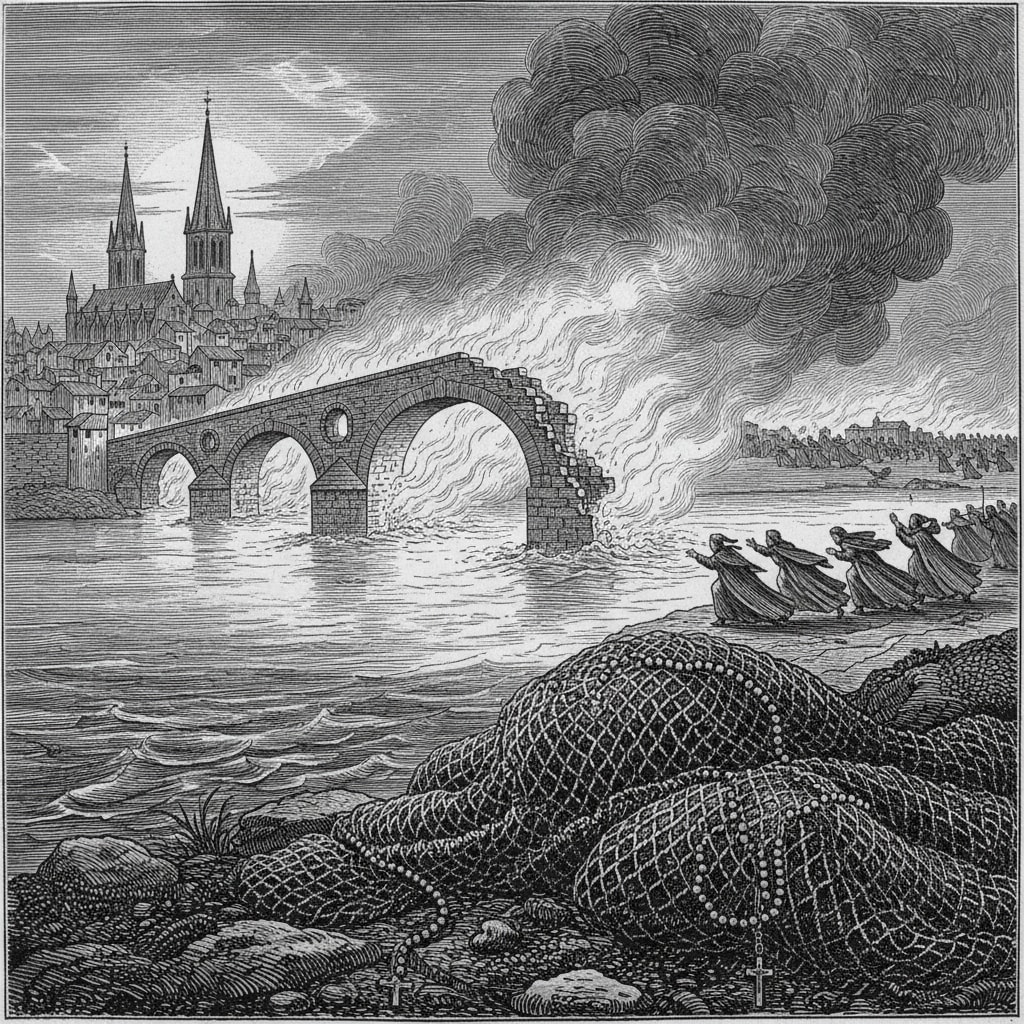
The Schism of Avignon
On the Rival Pontiff, the Drowned Crown, and the Rosaries That Will Not Stay Buried
The clerical secession of A.S. 111, in which a rival pontiff was crowned beneath the Rhône and Avignon was razed so thoroughly that its stones now form staircases in Strasbourg — a crisis requiring three stamps of denial.
Codex Ref. III.2.07-001

The White-Mantled Inquisitor
The Bureau does not silence speech; it teaches the population to do it themselves
Bureau of Purity's language constables — Chalklings, Mantle Examiners, Chainmasters, and Glass-Canons — charged with containing unregistered speech, enforcing the Index Claritatis, and hunting the phrases that make the chain sing.
Codex Ref. XII.49.01-001
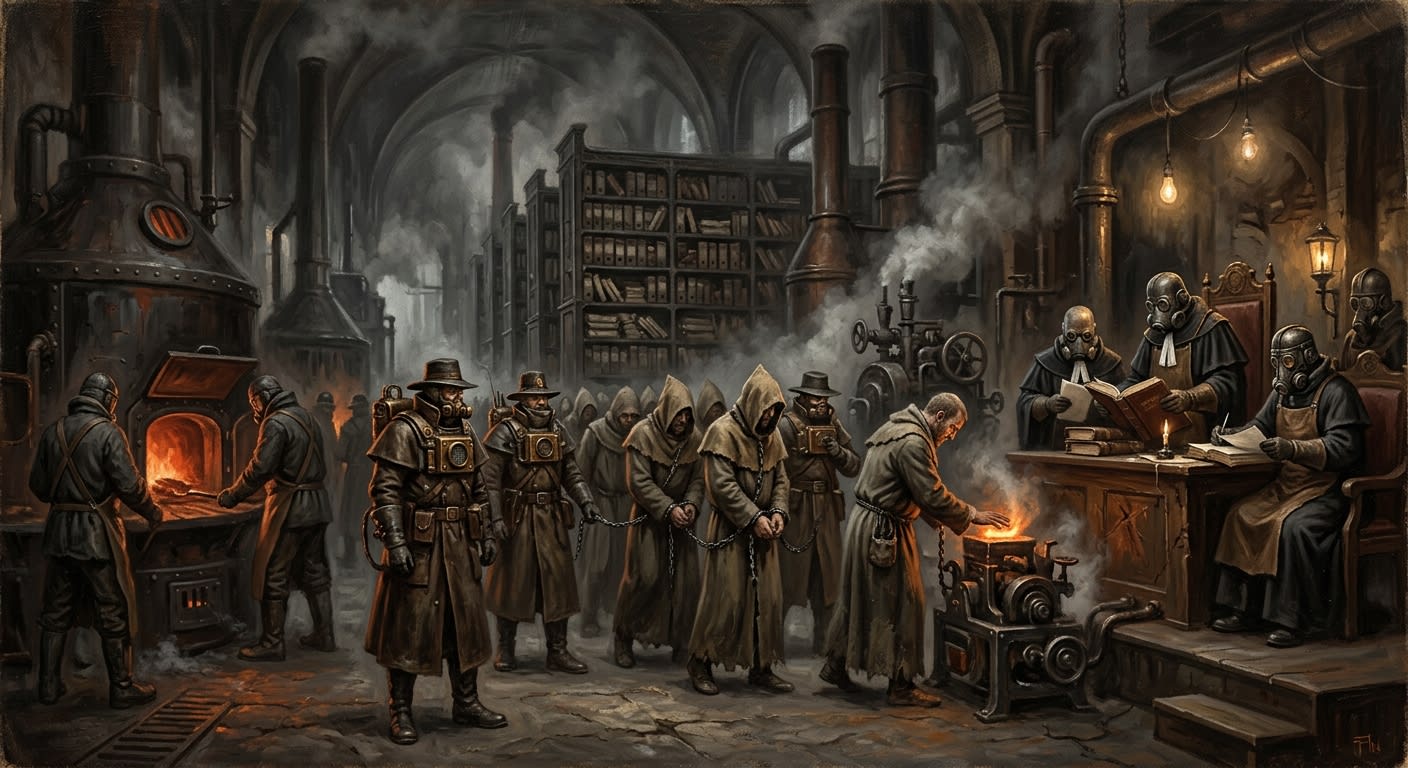
The Witch-Hunts of Toulouse
The fire that learned to file its victims
Toulouse taught Purity its grammar for cruelty: warrant before fire, confession before brand, spectacle before silence, silence before archive.
Codex Ref. VII.8.02-001
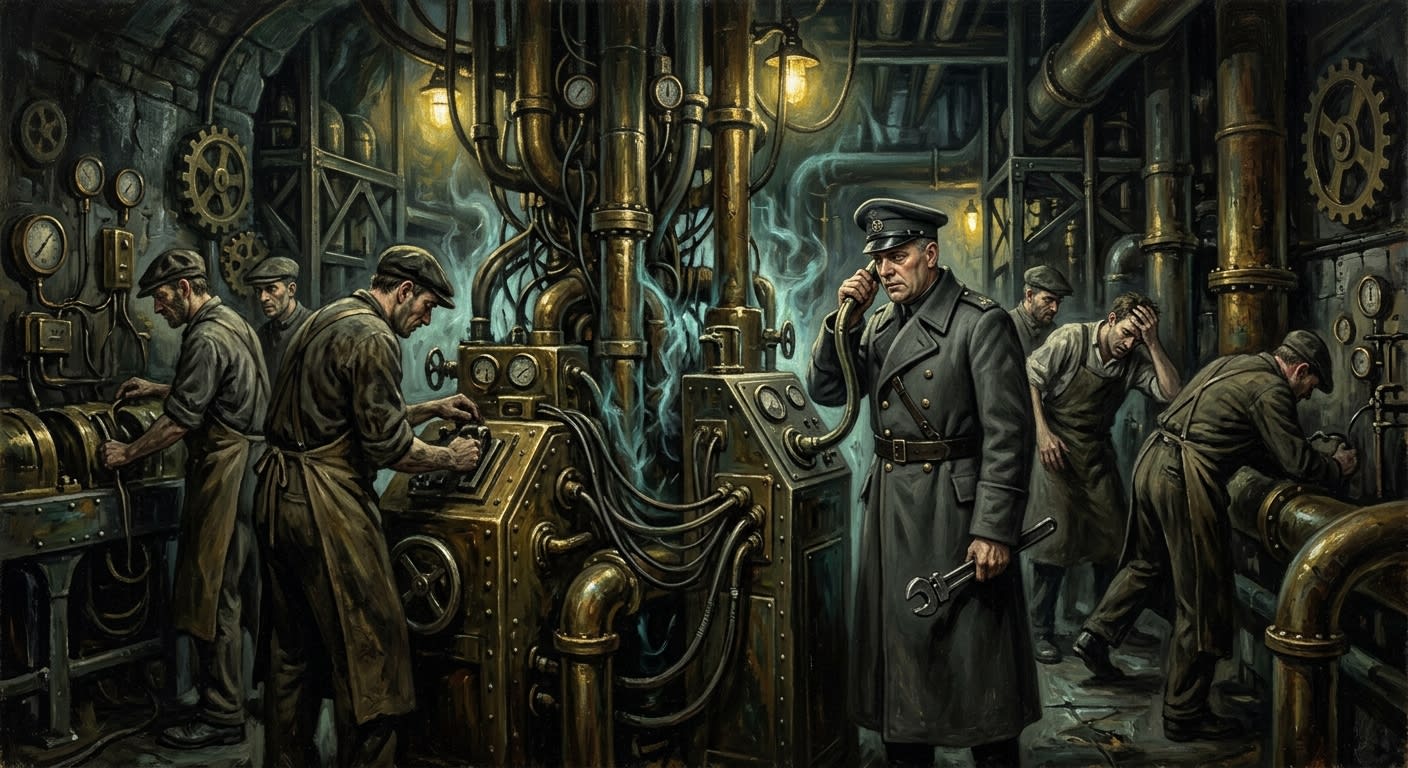
Unhymn Infiltration of A.S. 163
When the [[the-bureaucratic-synod|Synod's]] own pipes sang Later
The Unhymn Infiltration of A.S. 163 turned Shipka's resonance conduits into authorised lullabies, proving that hostile cadence could travel through honest metal.
Codex Ref. VII.4.23-001